

Paper Menu >>
Journal Menu >>
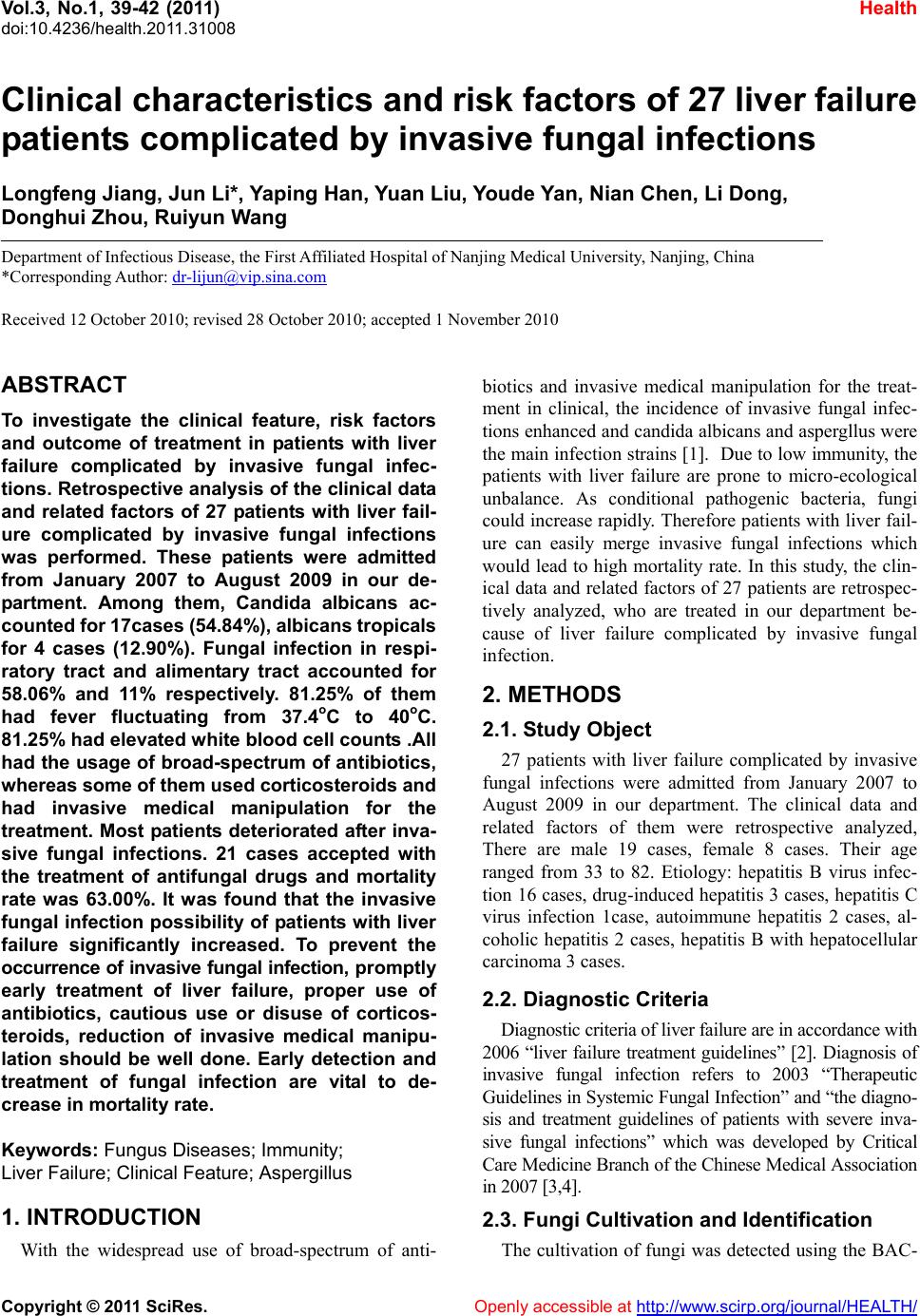 Vol.3, No.1, 39-42 (2011) Health doi:10.4236/health.2011.31008 Copyright © 2011 SciRes. Openly accessible at htt p://www.scirp.org/journal/HEALTH/ Clinical characteristics an d risk factors of 27 liver failure patients complicated by invasive fungal infections Longfeng Jiang, Jun Li*, Yaping Han, Yuan Liu, Youde Yan, Nian Chen, Li Dong, Donghui Zhou, Ruiyun Wang Department of Infectious Disease, the First Affiliated Hospital of Nanjing Medical University, Nanjing, China *Corresponding Author: [email protected] Received 12 October 2010; revised 28 October 2010; accepted 1 November 2010 ABSTRACT To investigate the clinical feature, risk factors and outcome of treatment in patients with liver failure complicated by invasive fungal infec- tions. Retrospective analysis of the clinical data and related factors of 27 patients with liver fail- ure complicated by invasive fungal infections was performed. These patients were admitted from January 2007 to August 2009 in our de- partment. Among them, Candida albicans ac- counted for 17cases (54.84% ), albicans tropic als for 4 cases (12.90%). Fungal infection in respi- ratory tract and alimentary tract accounted for 58.06% and 11% respectively. 81.25% of them had fever fluctuating from 37.4oC to 40oC. 81.25% had elevated white blood cell counts .All had the usage of broad-spectrum of antibiotics, whereas some of them used cor ticosteroid s and had invasive medical manipulation for the treatment. Most patients deteriorated after inva- sive fungal infections. 21 cases accepted with the treatment of antifungal drugs and mortality rate was 63.00%. It was found that the invasive fungal infection possibility of patients with liver failure significantly increased. To prevent the occurrence of invasive fungal infection, promptly early treatment of liver failure, proper use of antibiotics, cautious use or disuse of corticos- teroids, reduction of invasive medical manipu- lation should be well done. Early detection and treatment of fungal infection are vital to de- crease in mortality rate. Keywords: Fungus Diseases; Immunity; Liver Failure; Clinical Feature; Aspergillus 1. INTRODUCTION With the widespread use of broad-spectrum of anti- biotics and invasive medical manipulation for the treat- ment in clinical, the incidence of invasive fungal infec- tions enhanced and candida albicans and aspergllus were the main infection strain s [1]. Due to low immunity, the patients with liver failure are prone to micro-ecological unbalance. As conditional pathogenic bacteria, fungi could increase rapidly. Therefore patients with liver fail- ure can easily merge invasive fungal infections which would lead to high mortality rate. In this study, the clin- ical data and related factors of 27 patients are retrospec- tively analyzed, who are treated in our department be- cause of liver failure complicated by invasive fungal infection. 2. METHODS 2.1. Study Object 27 patients with liver failure complicated by invasive fungal infections were admitted from January 2007 to August 2009 in our department. The clinical data and related factors of them were retrospective analyzed, There are male 19 cases, female 8 cases. Their age ranged from 33 to 82. Etiology: hepatitis B virus infec- tion 16 cases, drug-induced hepatitis 3 cases, hepatitis C virus infection 1case, autoimmune hepatitis 2 cases, al- coholic hepatitis 2 cases, hepatitis B with hepatocellular carcinoma 3 cases. 2.2. Diagnostic Criteria Diagnostic criteria of liver failure are in accordance with 2006 “liver failure treatment guidelines ” [2]. Diagnosis of invasive fungal infection refers to 2003 “Therapeutic Guidelines in Systemic Fungal Infection” and “th e d iagno- sis and treatment guidelines of patients with severe inva- sive fungal infections” which was developed by Critical Care Medic ine Br anc h of th e Chinese Medical Association in 2007 [3,4]. 2.3. Fungi Cultivation and Identification The cultivation of fungi was d etected using the BAC- 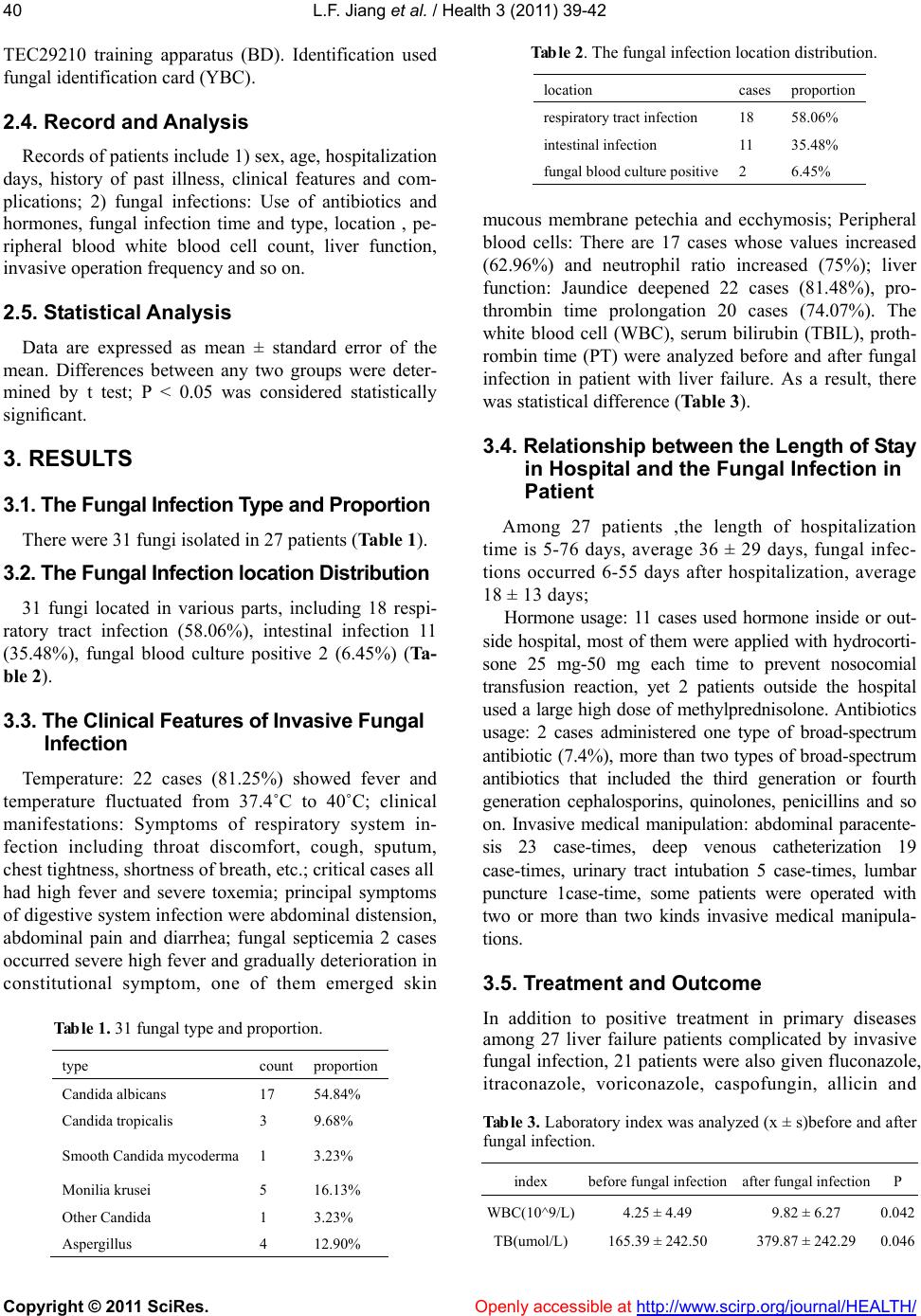 L.F. Jiang et al. / Health 3 (2011) 39-42 Copyright © 2011 SciRes. Openly accessible at htt p://www. scirp.org/journa l/HEALTH/ 40 TEC29210 training apparatus (BD). Identification used fungal identification card (YBC) . 2.4. Record and Anal ysis Records of patients include 1) sex, age, hospitalization days, history of past illness, clinical features and com- plications; 2) fungal infections: Use of antibiotics and hormones, fungal infection time and type, location , pe- ripheral blood white blood cell count, liver function, invasi ve operation freque nc y a nd s o on. 2.5. Statistical Analysis Data are expressed as mean ± standard error of the mean. Differences between any two groups were deter- mined by t test; P < 0.05 was considered statistically significant. 3. RESULTS 3.1. The Fungal Infection Type and Proportion There were 31 fu ngi isolated in 27 patients (Table 1). 3.2. The Fungal Infection location Distribution 31 fungi located in various parts, including 18 respi- ratory tract infection (58.06%), intestinal infection 11 (35.48%), fungal blood culture positive 2 (6.45%) (Ta- ble 2). 3.3. The C linical Featur es of Invasi ve Fun gal Infection Temperature: 22 cases (81.25%) showed fever and temperature fluctuated from 37.4˚C to 40˚C; clinical manifestation s: Symptoms of respiratory system in- fection in clud ing throat discomfort, cough, sputum, chest tightness, shortness of breath, etc.; critical cases all had high fever and severe toxemia; principal symptoms of digestive system infection were abdominal distension, abdominal pain and diarrhea; fungal septicemia 2 cases occurred severe h igh fever and gradually de terioration in constitutional symptom, one of them emerged skin Table 1. 31 fungal type and proportion. type count proportion Candida albicans 17 54.84% Candida tropicalis 3 9.68% Smooth Candida mycoderma 1 3.23% Monilia krusei 5 16.13% Other Candida 1 3.23% Aspergillus 4 12.90% Tab le 2. The fungal infection location distribution. location cases proportion respiratory tract infection 18 58.06% intestinal infection 11 35.48% fungal blood culture positive 2 6.45% mucous membrane petechia and ecchymosis; Peripheral blood cells: There are 17 cases whose values increased (62.96%) and neutrophil ratio increased (75%); liver function: Jaundice deepened 22 cases (81.48%), pro- thrombin time prolongation 20 cases (74.07%). The white blood cell (WBC), serum bilirubin (TBIL), proth- rombin time (PT) were analyzed before and after fungal infection in patient with liver failure. As a result, there was statistical difference (Table 3). 3.4. Relationship between the Length of Stay in Hospital and the Fungal Infection in Patient Among 27 patients ,the length of hospit aliza tio n time is 5-76 days, average 36 ± 29 days, fungal infec- tions occu rred 6-55 days after hospitaliz ation , average 18 ± 13 days; Hormone usage: 11 cases used hormone inside or out- side hospital, most of them were applied with hydrocorti- sone 25 mg-50 mg each time to prevent nosocomial transfusion reaction, yet 2 patients outside the hospital used a larg e high dose of methylprednisolone. Antibiotic s usage: 2 cases administered one type of broad-spectrum antibiotic (7.4%), more than two types of broad-spectrum antibiotics that included the third generation or fourth generation cephalosporins, quinolones, penicillins and so on. Invasive medical manipulation: abdominal paracente- sis 23 case-times, deep venous catheterization 19 case-times, urinary tract intubation 5 case-times, lumbar puncture 1case-time, some patients were operated with two or more than two kinds invasive medical manipula- tions. 3.5. Treatment and Outcome In addition to positive treatment in primary diseases among 27 liver failure patients complicated by invasive fungal infection , 21 patients were also given fluconazole, itraconazole, voriconazole, caspofungin, allicin and Table 3. Laboratory index was analyzed (x ± s)before and after fungal infection. index before fungal infection after fungal infection P WBC(10^9/L) 4.25 ± 4.49 9.82 ± 6.27 0.042 TB(umol/L) 165.39 ± 242.50 379.87 ± 242.29 0.046 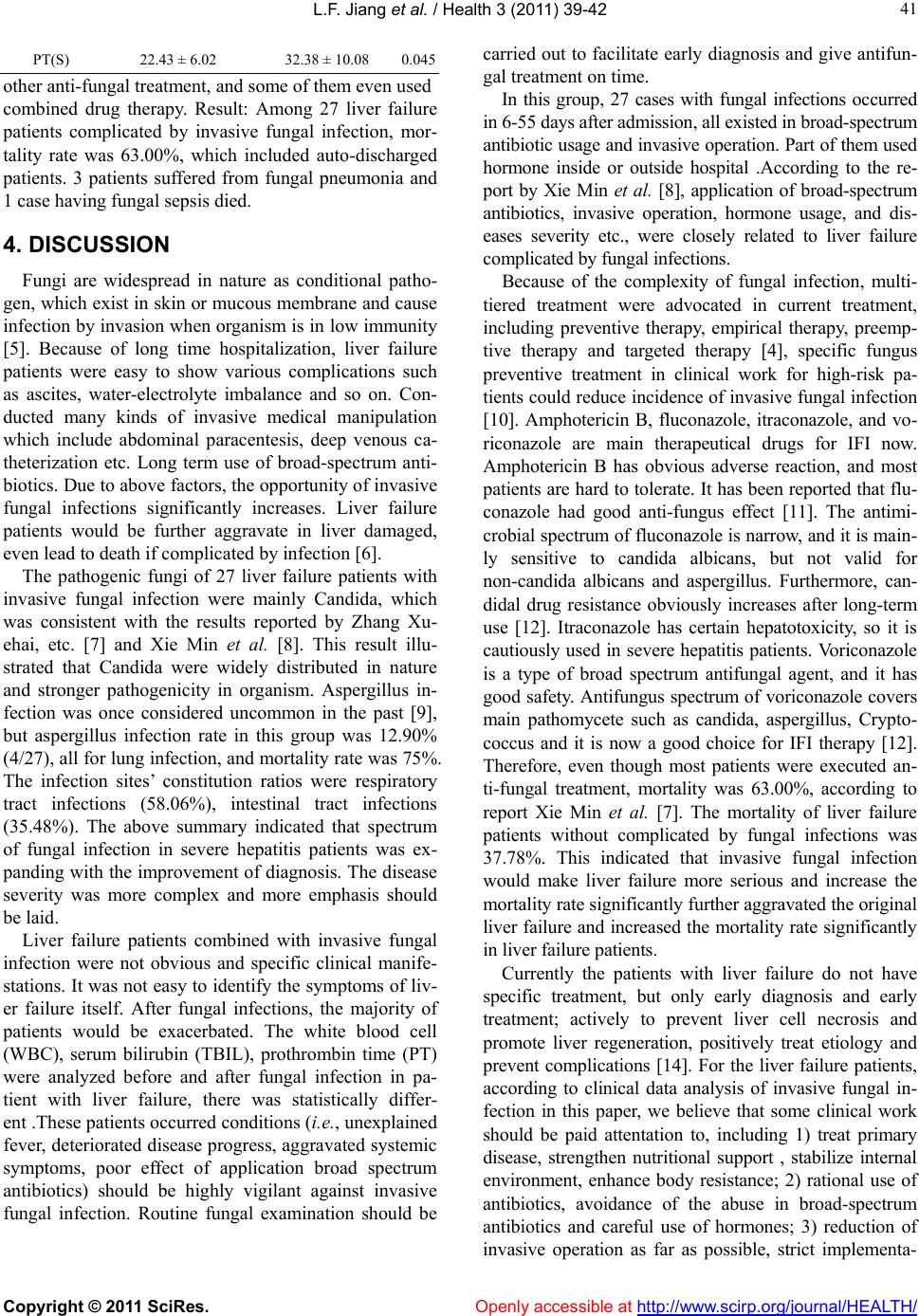 L.F. Jiang et al. / Health 3 (2011) 39-42 Copyright © 2011 SciRes. Openly accessible at http:/ /www.scirp.org/journal/HE ALTH/ 41 PT(S) 22.43 ± 6.02 32.38 ± 10.08 0.045 other anti-fungal treatment, and some of them even used combined drug therapy. Result: Among 27 liver failure patients complicated by invasive fungal infection, mor- tality rate was 63.00%, which included auto-discharged patients. 3 patients suffered from fungal pneumonia and 1 case having fungal sepsis died. 4. DISCUSSIO N Fungi are widespread in nature as conditional patho- gen, which exist in skin or mucous membrane and cause infection by invasion when organism is in low immunity [5]. Because of long time hospitalization, liver failure patients were easy to show various complications such as ascites, water-electrolyte imbalance and so on. Con- ducted many kinds of invasive medical manipulation which include abdominal paracentesis, deep venous ca- theterization etc. Long term use of broad-spectrum anti- biotics. Due to above factors, the opportunity of invasive fungal infections significantly increases. Liver failure patients would be further aggravate in liver damaged, even lead to death if complicated by infection [6]. The pathogenic fungi of 27 liver failure patients with invasive fungal infection were mainly Candida, which was consistent with the results reported by Zhang Xu- ehai, etc. [7] and Xie Min et al. [8]. This result illu- strated that Candida were widely distributed in nature and stronger pathogenicity in organism. Aspergillus in- fection was once considered uncommon in the past [9], but aspergillus infection rate in this group was 12.90% (4/27), all for lung infection, and mortality rate was 75%. The infection sites’ constitution ratios were respiratory tract infections (58.06%), intestinal tract infections (35.48%). The above summary indicated that spectrum of fungal infection in severe hepatitis patients was ex- panding with the improvement of diagnosis. The disease severity was more complex and more emphasis should be laid. Liver failure patients combined with invasive fungal infection were not obvious and specific clinical manife- stations. It was not easy to identify the sym ptoms of liv- er failure itself. After fungal infections, the majority of patients would be exacerbated. The white blood cell (WBC), serum bilirubin (TBIL), prothrombin time (PT) were analyzed before and after fungal infection in pa- tient with liver failure, there was statistically differ- ent .These patients occurred conditions ( i.e., unexplained fever, deteriorated disease progress, aggravated systemic symptoms, poor effect of application broad spectrum antibiotics) should be highly vigilant against invasive fungal infection. Routine fungal examination should be carried out to facilitate early diagnosis and give antifun- gal treatment on time. In this group, 27 cases with fungal infections occurred in 6-55 days after adm is sion, al l exi sted in br oad-spectrum antibiotic usage and invasive operation. Part of them used hormone inside or outside hospital .According to the re- port by Xie Min et al. [8], application of broad-spectrum antibiotics, invasive operation, hormone usage, and dis- eases severity etc., were closely related to liver failure complicat ed by funga l i nfe cti ons. Because of the complexity of fungal infection, multi- tiered treatment were advocated in current treatment, including preventive therapy, empirical therapy, preemp- tive therapy and targeted therapy [4], specific fungus preventive treatment in clinical work for high-risk pa- tients could reduce incidence of invasive fungal infection [10]. Amphotericin B, fluconazole, itraconazole, and vo- riconazole are main therapeutical drugs for IFI now. Amphotericin B has obvious adverse reaction, and most patients are hard to tolerate. It has been reported that flu- conazole had good anti-fungus effect [11]. The antimi- crobial spectrum of fluconazole is nar row, and it is mai n- ly sensitive to candida albicans, but not valid for non-candida albicans and aspergillus. Furthermore, can- didal drug resistance obviously increases after long-term use [12]. Itraconazole has certain hepatotoxicity, so it is cautiously used in severe hepatitis patients. Voriconazole is a type of broad spectrum antifungal agent, and it has good safety. Antifungus spectrum of voriconazole covers main pathomycete such as candida, aspergillus, Crypto- coccus and it is now a good choice for IFI therapy [12]. Therefore, even though most patients were executed an- ti-fungal treatment, mortality was 63.00%, according to report Xie Min et al. [7]. The mortality of liver failure patients without complicated by fungal infections was 37.78%. This indicated that invasive fungal infection would make liver failure more serious and increase the mortality rate sig n ifican tly f urth er aggravated the original liver failure an d increased the mortality ra te sign ificantly in liver failure patients. Currently the patients with liver failure do not have specific treatment, but only early diagnosis and early treatment; actively to prevent liver cell necrosis and promote liver regeneration, positively treat etiology and prevent complications [14]. For the liver failure patients, according to clinical data analysis of invasive fungal in- fection in this paper, we believe that some clinical work should be paid attentation to, including 1) treat primary disease, strengthen nutritional support , stabilize internal environment, enhance body resistance; 2) rational use of antibiotics, avoidance of the abuse in broad-spectrum antibiotics and careful use of hormones; 3) reduction of invasive operation as far as possible, strict implementa-  L.F. Jiang et al. / Health 3 (2011) 39-42 Copyright © 2011 SciRes. Openly accessible at htt p://www. scirp.org/journa l/HEALTH/ 42 tion of the aseptic operation, intensive care etc., which will be helpful to decrease the incidence of fungal infec- tion in liver failure patients; 4) for liver failure patients, closely monitor the changes of clinical manifestations in the course of treatment, if situations appear such as the new symptoms or signs unexplained original disease, sudden deterioration of stable condition , invalidity of antibiotic therapy. We should be highly vigilant against the occurrence of fungal infection, retaining appropriate specimens for etiology isolation, identification and ac- quisition of drug susceptibility results as soon as possi- ble, in order to achieve early diagnosis in fungal infec- tion. Moreover, a number of new rapid detection me- thods included fungal cell wall compounds and fungal genes DNA etc. were increasingly concerned [15]. Com- bination of Various diagnostic methods was beneficial to the early diagnosis of invasive fungal, and provided evi- dence for the early and effective treatment of fungal in- fections, thus further improving the survival rate of liver failure patients. 5. ACKNOWLEDGE MENTS This study was supported by the National Natural Science Founda- tion, the funding for Jiangsu Province Key Laboratory and key medical personnel in Infectious Diseas es and the funding for Guiding Research Projects of Health Departmen t of Jiangsu Province, China. REFERENCES [1] Zhou, H.H., De, M.T., Guo, Z.L., et al. (2010) Clinical characteristics and therapeutic analysis of invasive fungal infection in chronic severe hepatitis patients. Medical Science, 35, 537-542. [2] Liver Failure and Artificial Liver Group, Chinese Society of Infectious Diseases, Chinese Medical Association, Severe Liver Diseases and Artificial Liver Group, Chi- nese Society of Hepatology, Chinese Medical Associa- tion (2006) Diagnostic and treatment guidelines for liver failure. Journal of Clinical Hepatology, 9, 321-324. [3] Richardson, I.M.D. and Jones, B.L. (2003) Therapeutic guidelines in systemic fungal infections. 3rd Edition, Current Medical Literature, 19-20. [4] Critical Care Medicine Branch of the Chinese Medical Association (2007) Diagnosis and treatment guidelines of patients with severe invasive fungal infections. Chinese Journal of Internal Medicine, 46, 960-966. [5] Dong, C.H., We i , J., Zhi, H., et al. (2005) Infection and resistance of fungus. Chinese Journal of Nosocomiology, 15, 345-347. [6] Julie, P. and William, M.L. (2005) The management of acute liver failure. Hepatology, 41, 1179-1196. doi:10.1002/hep.20703 [7] Zhang, X.H., Zhang, G.H., Man, C.J., et al. (2004) Clini- cal study on the severe hepatitis with nosocomial fungal infections and risk factors. Chinese Journal of Hepatol- ogy, 12, 389-391. [8] Min, X., Qiang, C. and Qian, C.F. (2007) Clinical analy- sis of 186 severe hepatitis and cirrhosis patients with no- socomial fungal infections. Journal of Clinical Hepatol- ogy, 10, 24-27. [9] Qi, F.X., Mei, L., Bing, L., et al. (2004) Risk factors of fungal colonization in patients with chronic liver disease: a prospective study. Chinese Journal of Nosocomiology, 14, 1344-1346. [10] Segal, B.H., Amyroudis, N.G., Battiwalla, M., et al. (2007) Prevention and early treatment of invasive fungal infection in patients with cancer and neutropenia and in stem cell transplant recipients in the era of newer broad- spectrum antifungal agents and diagnostic adjuncts. Clinical Infective Disease, 44, 402-409. doi:10.1086/510677 [11] Rex, J.H. and Sobel, J.D. (2001) Prophylactic antifungal therapy in the intensive care unit. Clinical Infective Dis- ease, 32, 1191-1200. doi:10.1086/319763 [12] Pfaller, M.A., Jones, R.N., Messer, S.A., et al. (1998) National surveillance of nosocomial blood stream infec- tion due to Candida albicans: Frequency of occurrence and antifungal susceptibility in the SCOPE Program. Diagnostic Microbiology and Infectious Disease, 31, 327-332. doi:10.1016/S0732-8893(97)00240-X [13] Vehreschild, J.J., Bohme, A., Reichert, D., et al. (2008) Treatment of invasive fungal infections in clinical prac- tice: A multi-centre survey on customary dosing, treat- ment indications, efficacy and safety of voriconazole. International Journal of Hematology, 87, 126-131. doi:10.1007/s12185-008-0045-z [14] Yi ng, J.W. (2008) Liver failure: Definitions, diagnosis and treatment. Journal of Clinical Hepatology, 16, 725- 727. [15] Ju, P.D. and Chun, H.L., et al. (2007) Invasive diagnosis and treatment of fungal infections. Chinese Journal of Infection Control, 6, 359-364. |