

Paper Menu >>
Journal Menu >>
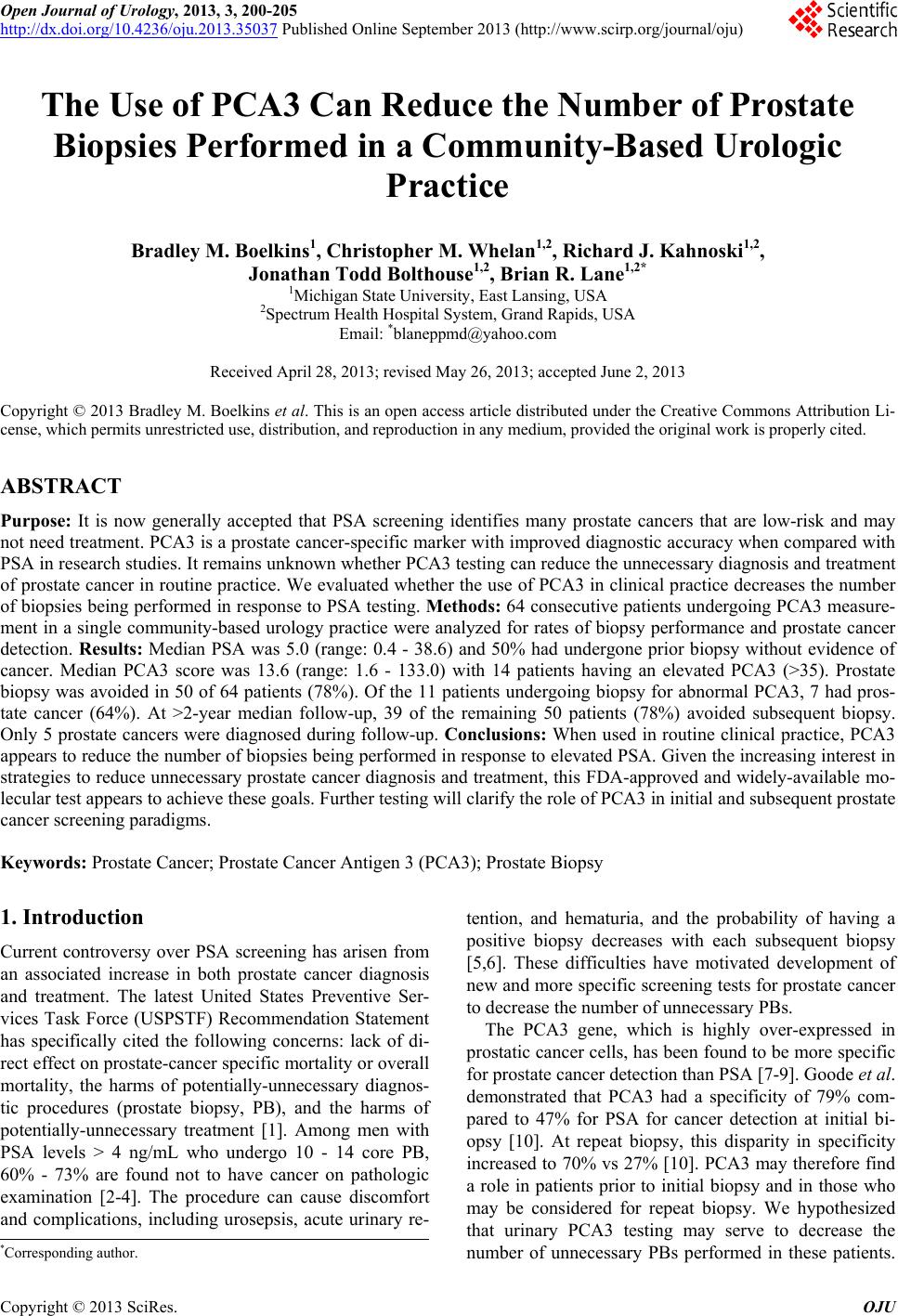 Open Journal of Urology, 2013, 3, 200-205 http://dx.doi.org/10.4236/oju.2013.35037 Published Online September 2013 (http://www.scirp.org/journal/oju) The Use of PCA3 Can Reduce the Number of Prostate Biopsies Performed in a Community-Based Urologic Practice Bradley M. Boelkins1, Christopher M. Whelan1,2, Richard J. Kahnoski1,2, Jonathan Todd Bolthouse1,2, Brian R. Lane1,2* 1Michigan State University, East Lansing, USA 2Spectrum Health Hospital System, Grand Rapids, USA Email: *[email protected] Received April 28, 2013; revised May 26, 2013; accepted June 2, 2013 Copyright © 2013 Bradley M. Boelkins et al. This is an open access article distributed under the Creative Commons Attribution Li- cense, which permits unrestricted use, distribution, and reproduction in any medium, provided the original work is properly cited. ABSTRACT Purpose: It is now generally accepted that PSA screening identifies many prostate cancers that are low-risk and may not need treatment. PCA3 is a prostate cancer-specific marker with improved diagnostic accuracy when compared with PSA in research studies. It remains unknown whether PCA3 testing can reduce the unnecessary diagnosis and treatment of prostate cancer in routine practice. We evaluated whether the use of PCA3 in clinical practice decreases the number of biopsies being performed in response to PSA testing. Methods: 64 consecutive patients undergoing PCA3 measure- ment in a single community-based urology practice were analyzed for rates of biopsy performance and prostate cancer detection. Results: Median PSA was 5.0 (range: 0.4 - 38.6) and 50% had undergone prior biopsy without evidence of cancer. Median PCA3 score was 13.6 (range: 1.6 - 133.0) with 14 patients having an elevated PCA3 (>35). Prostate biopsy was avoided in 50 of 64 patients (78%). Of the 11 patients undergoing biopsy for abnormal PCA3, 7 had pros- tate cancer (64%). At >2-year median follow-up, 39 of the remaining 50 patients (78%) avoided subsequent biopsy. Only 5 prostate cancers were diagnosed during follow-up. Conclusions: When used in routine clinical practice, PCA3 appears to reduce the number of biopsies being performed in response to elevated PSA. Given the increasing interest in strategies to reduce unnecessary prostate cancer diagnosis and treatment, this FDA-approved and widely-available mo- lecular test appears to achieve these goals. Further testing will clarify the role of PCA3 in initial and subsequent prostate cancer screening paradigms. Keywords: Prostate Cancer; Prostate Cancer Antigen 3 (PCA3); Prostate Biopsy 1. Introduction Current controversy over PSA screening has arisen from an associated increase in both prostate cancer diagnosis and treatment. The latest United States Preventive Ser- vices Task Force (USPSTF) Recommendation Statement has specifically cited the following concerns: lack of di- rect effect on prostate-cancer specific mortality or overall mortality, the harms of potentially-unnecessary diagnos- tic procedures (prostate biopsy, PB), and the harms of potentially-unnecessary treatment [1]. Among men with PSA levels > 4 ng/mL who undergo 10 - 14 core PB, 60% - 73% are found not to have cancer on pathologic examination [2-4]. The procedure can cause discomfort and complications, including urosepsis, acute urinary re- tention, and hematuria, and the probability of having a positive biopsy decreases with each subsequent biopsy [5,6]. These difficulties have motivated development of new and more specific screening tests for prostate cancer to decrease the number of unnecessary PBs. The PCA3 gene, which is highly over-expressed in prostatic cancer cells, has been found to be more specific for prostate cancer detection than PSA [7-9]. Goode et al. demonstrated that PCA3 had a specificity of 79% com- pared to 47% for PSA for cancer detection at initial bi- opsy [10]. At repeat biopsy, this disparity in specificity increased to 70% vs 27% [10]. PCA3 may therefore find a role in patients prior to initial biopsy and in those who may be considered for repeat biopsy. We hypothesized that urinary PCA3 testing may serve to decrease the number of unnecessary PBs performed in these patients. *Corresponding author. C opyright © 2013 SciRes. OJU 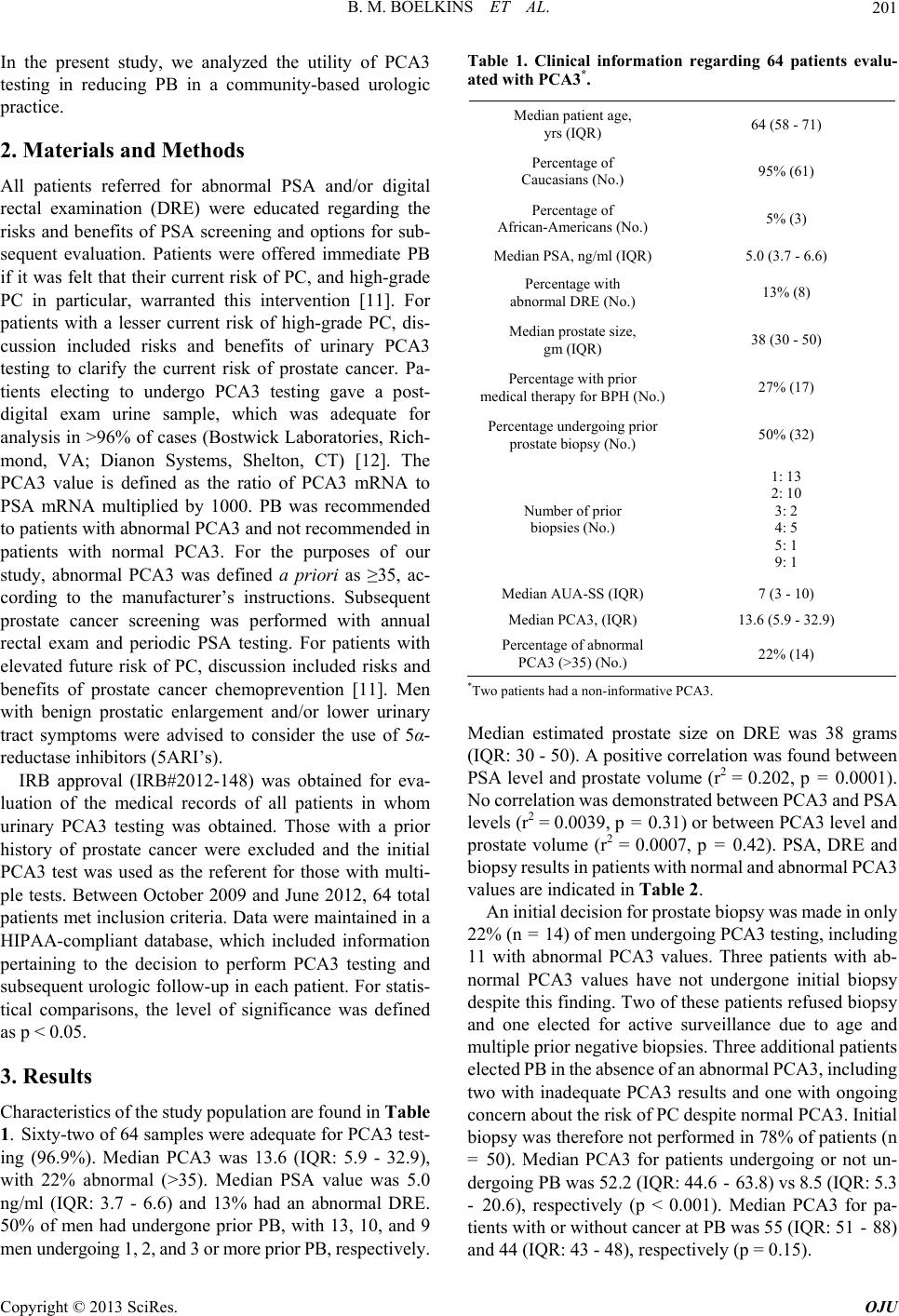 B. M. BOELKINS ET AL. 201 Table 1. Clinical information regarding 64 patients evalu- ated with PCA3*. In the present study, we analyzed the utility of PCA3 testing in reducing PB in a community-based urologic practice. 2. Materials and Methods All patients referred for abnormal PSA and/or digital rectal examination (DRE) were educated regarding the risks and benefits of PSA screening and options for sub- sequent evaluation. Patients were offered immediate PB if it was felt that their current risk of PC, and high-grade PC in particular, warranted this intervention [11]. For patients with a lesser current risk of high-grade PC, dis- cussion included risks and benefits of urinary PCA3 testing to clarify the current risk of prostate cancer. Pa- tients electing to undergo PCA3 testing gave a post- digital exam urine sample, which was adequate for analysis in >96% of cases (Bostwick Laboratories, Rich- mond, VA; Dianon Systems, Shelton, CT) [12]. The PCA3 value is defined as the ratio of PCA3 mRNA to PSA mRNA multiplied by 1000. PB was recommended to patients with abnormal PCA3 and not recommended in patients with normal PCA3. For the purposes of our study, abnormal PCA3 was defined a priori as ≥35, ac- cording to the manufacturer’s instructions. Subsequent prostate cancer screening was performed with annual rectal exam and periodic PSA testing. For patients with elevated future risk of PC, discussion included risks and benefits of prostate cancer chemoprevention [11]. Men with benign prostatic enlargement and/or lower urinary tract symptoms were advised to consider the use of 5α- reductase inhibitors (5ARI’s). IRB approval (IRB#2012-148) was obtained for eva- luation of the medical records of all patients in whom urinary PCA3 testing was obtained. Those with a prior history of prostate cancer were excluded and the initial PCA3 test was used as the referent for those with multi- ple tests. Between October 2009 and June 2012, 64 total patients met inclusion criteria. Data were maintained in a HIPAA-compliant database, which included information pertaining to the decision to perform PCA3 testing and subsequent urologic follow-up in each patient. For statis- tical comparisons, the level of significance was defined as p < 0.05. 3. Results Median patient age, yrs (IQR) 64 (58 - 71) Percentage of Caucasians (No.) 95% (61) Percentage of African-Americans (No.) 5% (3) Median PSA, ng/ml (IQR) 5.0 (3.7 - 6.6) Percentage with abnormal DRE (No.) 13% (8) Median prostate size, gm (IQR) 38 (30 - 50) Percentage with prior medical therapy for BPH (No.)27% (17) Percentage undergoing prior prostate biopsy (No.) 50% (32) Number of prior biopsies (No.) 1: 13 2: 10 3: 2 4: 5 5: 1 9: 1 Median AUA-SS (IQR) 7 (3 - 10) Median PCA3, (IQR) 13.6 (5.9 - 32.9) Percentage of abnormal PCA3 (>35) (No.) 22% (14) *Two patients had a non-informative PCA3. Median estimated prostate size on DRE was 38 grams (IQR: 30 - 50). A positive correlation was found between PSA level and prostate volume (r2 = 0.202, p = 0.0001). No correlation was demonstrated between PCA3 and PSA levels (r2 = 0.0039, p = 0.31) or between PCA3 level and prostate volume (r2 = 0.0007, p = 0.42). PSA, DRE and biopsy results in patients with normal and abnormal PCA3 values are indicated in Tabl e 2. An initial decision for prostate biopsy was made in only 22% (n = 14) of men undergoing PCA3 testing, including 11 with abnormal PCA3 values. Three patients with ab- normal PCA3 values have not undergone initial biopsy despite this finding. Two of these patients refused biopsy and one elected for active surveillance due to age and multiple prior negative biopsies. Three additional patients elected PB in the absence of an abnormal PCA3, including two with inadequate PCA3 results and one with ongoing concern about the risk of PC despite normal PCA3. Initial biopsy was therefore not performed in 78% of patients (n = 50). Median PCA3 for patients undergoing or not un- dergoing PB was 52.2 (IQR: 44.6 - 63.8) vs 8.5 (IQR: 5.3 - 20.6), respectively (p < 0.001). Median PCA3 for pa- tients with or without cancer at PB was 55 (IQR: 51 - 88) an 44 (IQR: 43 - 48), respectively (p = 0.15). Characteristics of the study population are found in Table 1. Sixty-two of 64 samples were adequate for PCA3 test- ing (96.9%). Median PCA3 was 13.6 (IQR: 5.9 - 32.9), with 22% abnormal (>35). Median PSA value was 5.0 ng/ml (IQR: 3.7 - 6.6) and 13% had an abnormal DRE. 50% of men had undergone prior PB, with 13, 10, and 9 men undergoing 1, 2, and 3 or more prior PB, respectively. d Copyright © 2013 SciRes. OJU 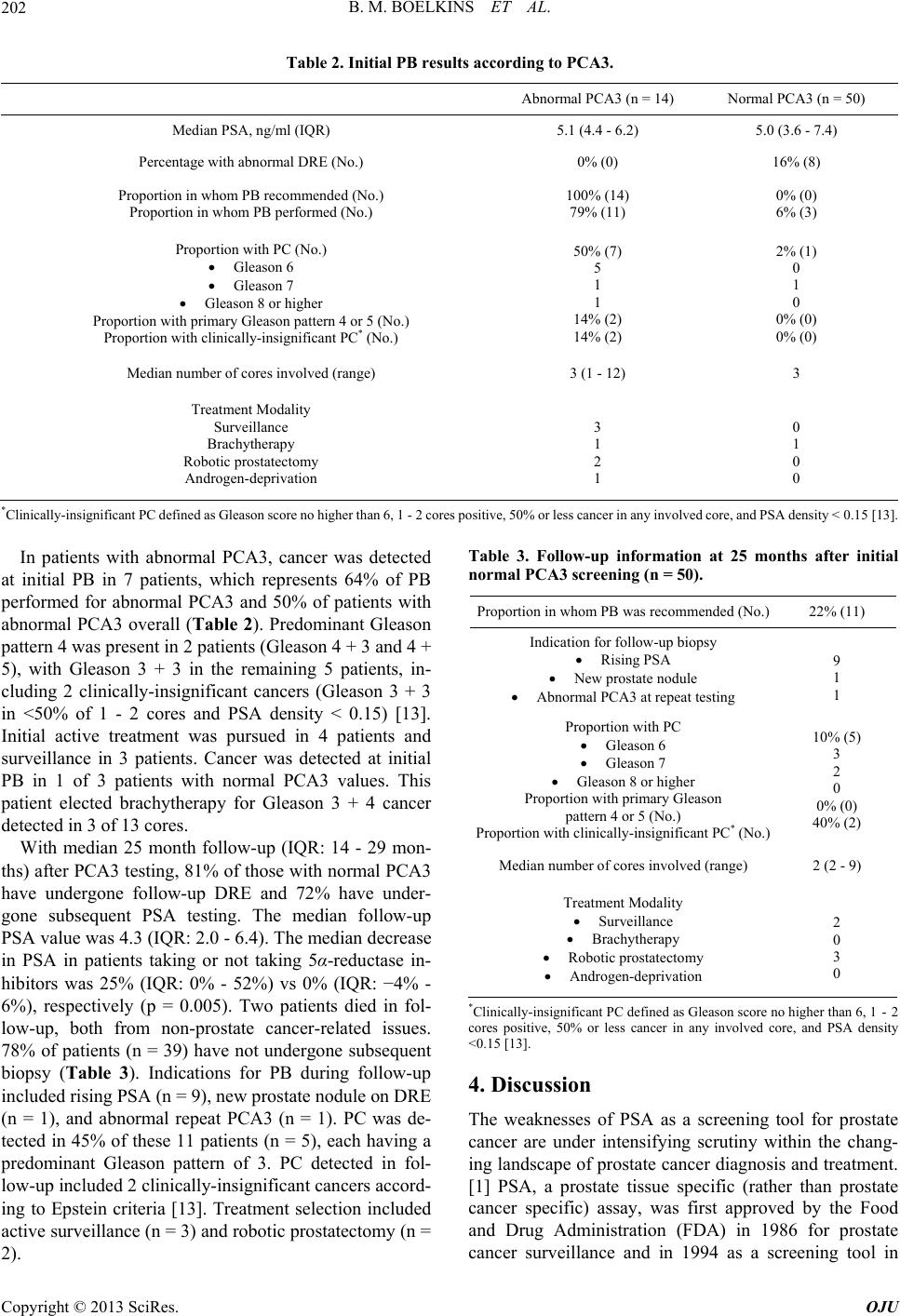 B. M. BOELKINS ET AL. Copyright © 2013 SciRes. OJU 202 Table 2. Initial PB results according to PCA3. Abnormal PCA3 (n = 14) Normal PCA3 (n = 50) Median PSA, ng/ml (IQR) 5.1 (4.4 - 6.2) 5.0 (3.6 - 7.4) Percentage with abnormal DRE (No.) 0% (0) 16% (8) Proportion in whom PB recommended (No.) Proportion in whom PB performed (No.) 100% (14) 79% (11) 0% (0) 6% (3) Proportion with PC (No.) Gleason 6 Gleason 7 Gleason 8 or higher Proportion with primary Gleason pattern 4 or 5 (No.) Proportion with clinically-insignificant PC* (No.) 50% (7) 5 1 1 14% (2) 14% (2) 2% (1) 0 1 0 0% (0) 0% (0) Median number of cores involved (range) 3 (1 - 12) 3 Treatment Modality Surveillance Brachytherapy Robotic prostatectomy Androgen-deprivation 3 1 2 1 0 1 0 0 *Clinically-insignificant PC defined as Gleason score no higher than 6, 1 - 2 cores positive, 50% or less cancer in any involved core, and PSA density < 0.15 [13]. In patients with abnormal PCA3, cancer was detected at initial PB in 7 patients, which represents 64% of PB performed for abnormal PCA3 and 50% of patients with abnormal PCA3 overall (Table 2). Predominant Gleason pattern 4 was present in 2 patients (Gleason 4 + 3 and 4 + 5), with Gleason 3 + 3 in the remaining 5 patients, in- cluding 2 clinically-insignificant cancers (Gleason 3 + 3 in <50% of 1 - 2 cores and PSA density < 0.15) [13]. Initial active treatment was pursued in 4 patients and surveillance in 3 patients. Cancer was detected at initial PB in 1 of 3 patients with normal PCA3 values. This patient elected brachytherapy for Gleason 3 + 4 cancer detected in 3 of 13 cores. With median 25 month follow-up (IQR: 14 - 29 mon- ths) after PCA3 testing, 81% of those with normal PCA3 have undergone follow-up DRE and 72% have under- gone subsequent PSA testing. The median follow-up PSA value was 4.3 (IQR: 2.0 - 6.4). The median decrease in PSA in patients taking or not taking 5α-reductase in- hibitors was 25% (IQR: 0% - 52%) vs 0% (IQR: −4% - 6%), respectively (p = 0.005). Two patients died in fol- low-up, both from non-prostate cancer-related issues. 78% of patients (n = 39) have not undergone subsequent biopsy (Table 3). Indications for PB during follow-up included rising PSA (n = 9), new prostate nodule on DRE (n = 1), and abnormal repeat PCA3 (n = 1). PC was de- tected in 45% of these 11 patients (n = 5), each having a predominant Gleason pattern of 3. PC detected in fol- low-up included 2 clinically-insignificant cancers accord- ing to Epstein criteria [13]. Treatment selection included active surveillance (n = 3) and robotic prostatectomy (n = 2). Table 3. Follow-up information at 25 months after initial normal PCA3 screening (n = 50). Proportion in whom PB was recommended (No.) 22% (11) Indication for follow-up biopsy Rising PSA New prostate nodule Abnormal PCA3 at repeat testing 9 1 1 Proportion with PC Gleason 6 Gleason 7 Gleason 8 or higher Proportion with primary Gleason pattern 4 or 5 (No.) Proportion with clinically-insignificant PC* (No.) 10% (5) 3 2 0 0% (0) 40% (2) Median number of cores involved (range) 2 (2 - 9) Treatment Modality Surveillance Brachytherapy Robotic prostatectomy Androgen-deprivation 2 0 3 0 *Clinically-insignificant PC defined as Gleason score no higher than 6, 1 - 2 cores positive, 50% or less cancer in any involved core, and PSA density <0.15 [13]. 4. Discussion The weaknesses of PSA as a screening tool for prostate cancer are under intensifying scrutiny within the chang- ing landscape of prostate cancer diagnosis and treatment. [1] PSA, a prostate tissue specific (rather than prostate cancer specific) assay, was first approved by the Food and Drug Administration (FDA) in 1986 for prostate cancer surveillance and in 1994 as a screening tool in 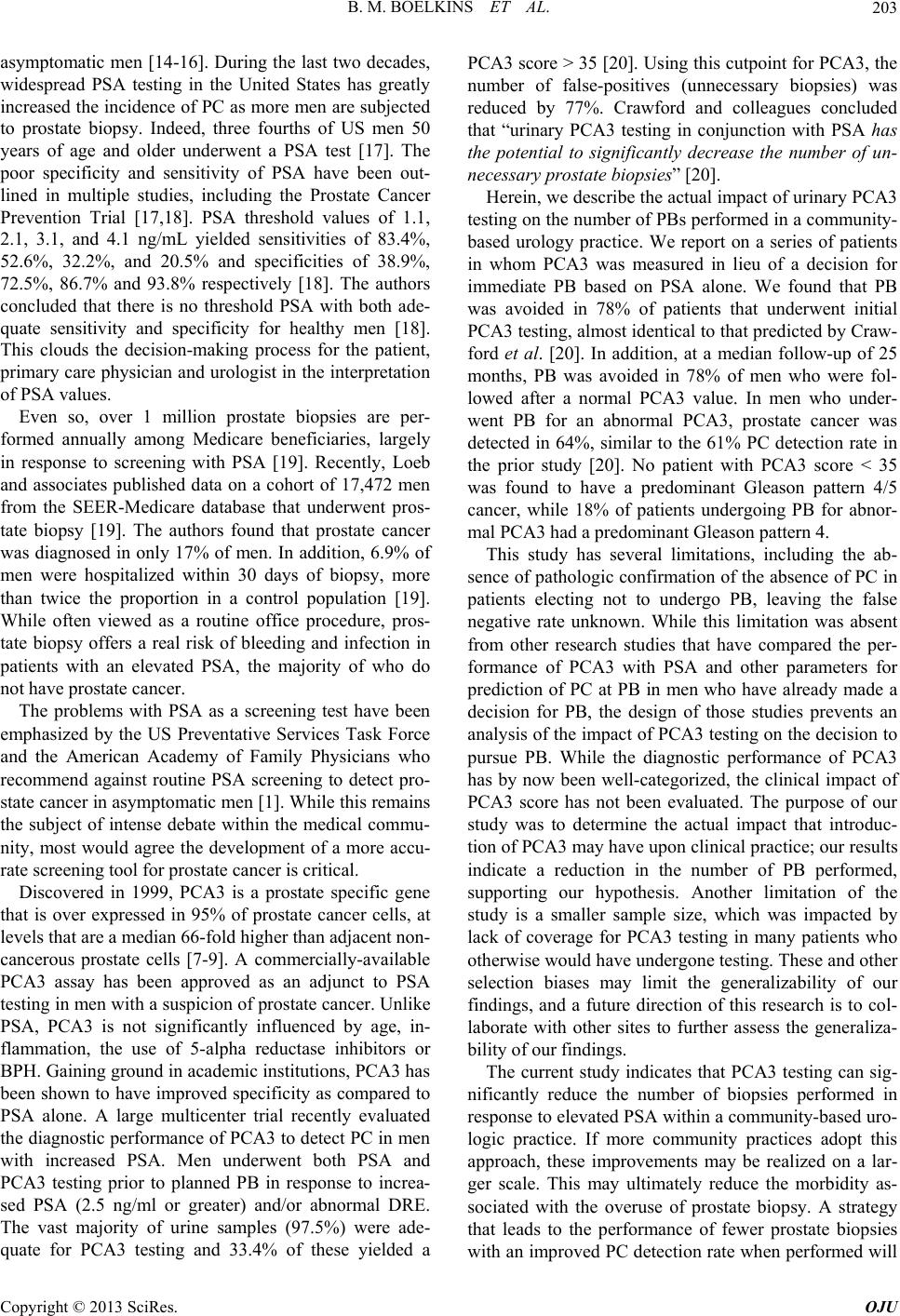 B. M. BOELKINS ET AL. 203 asymptomatic men [14-16]. During the last two decades, widespread PSA testing in the United States has greatly increased the incidence of PC as more men are subjected to prostate biopsy. Indeed, three fourths of US men 50 years of age and older underwent a PSA test [17]. The poor specificity and sensitivity of PSA have been out- lined in multiple studies, including the Prostate Cancer Prevention Trial [17,18]. PSA threshold values of 1.1, 2.1, 3.1, and 4.1 ng/mL yielded sensitivities of 83.4%, 52.6%, 32.2%, and 20.5% and specificities of 38.9%, 72.5%, 86.7% and 93.8% respectively [18]. The authors concluded that there is no threshold PSA with both ade- quate sensitivity and specificity for healthy men [18]. This clouds the decision-making process for the patient, primary care physician and urologist in the interpretation of PSA values. Even so, over 1 million prostate biopsies are per- formed annually among Medicare beneficiaries, largely in response to screening with PSA [19]. Recently, Loeb and associates published data on a cohort of 17,472 men from the SEER-Medicare database that underwent pros- tate biopsy [19]. The authors found that prostate cancer was diagnosed in only 17% of men. In addition, 6.9% of men were hospitalized within 30 days of biopsy, more than twice the proportion in a control population [19]. While often viewed as a routine office procedure, pros- tate biopsy offers a real risk of bleeding and infection in patients with an elevated PSA, the majority of who do not have prostate cancer. The problems with PSA as a screening test have been emphasized by the US Preventative Services Task Force and the American Academy of Family Physicians who recommend against routine PSA screening to detect pro- state cancer in asymptomatic men [1]. While this remains the subject of intense debate within the medical commu- nity, most would agree the development of a more accu- rate screening tool for prostate cancer is critical. Discovered in 1999, PCA3 is a prostate specific gene that is over expressed in 95% of prostate cancer cells, at levels that are a median 66-fold higher than adjacent non- cancerous prostate cells [7-9]. A commercially-available PCA3 assay has been approved as an adjunct to PSA testing in men with a suspicion of prostate cancer. Unlike PSA, PCA3 is not significantly influenced by age, in- flammation, the use of 5-alpha reductase inhibitors or BPH. Gaining ground in academic institutions, PCA3 has been shown to have improved specificity as compared to PSA alone. A large multicenter trial recently evaluated the diagnostic performance of PCA3 to detect PC in men with increased PSA. Men underwent both PSA and PCA3 testing prior to planned PB in response to increa- sed PSA (2.5 ng/ml or greater) and/or abnormal DRE. The vast majority of urine samples (97.5%) were ade- quate for PCA3 testing and 33.4% of these yielded a PCA3 score > 35 [20]. Using this cutpoint for PCA3, the number of false-positives (unnecessary biopsies) was reduced by 77%. Crawford and colleagues concluded that “urinary PCA3 testing in conjunction with PSA has the potential to significantly decrease the number of un- necessary prostate biopsies” [20]. Herein, we describe the actual impact of urinary PCA3 testing on the number of PBs performed in a community- based urology practice. We report on a series of patients in whom PCA3 was measured in lieu of a decision for immediate PB based on PSA alone. We found that PB was avoided in 78% of patients that underwent initial PCA3 testing, almost identical to that predicted by Craw- ford et al. [20]. In addition, at a median follow-up of 25 months, PB was avoided in 78% of men who were fol- lowed after a normal PCA3 value. In men who under- went PB for an abnormal PCA3, prostate cancer was detected in 64%, similar to the 61% PC detection rate in the prior study [20]. No patient with PCA3 score < 35 was found to have a predominant Gleason pattern 4/5 cancer, while 18% of patients undergoing PB for abnor- mal PCA3 had a predominant Gleason pattern 4. This study has several limitations, including the ab- sence of pathologic confirmation of the absence of PC in patients electing not to undergo PB, leaving the false negative rate unknown. While this limitation was absent from other research studies that have compared the per- formance of PCA3 with PSA and other parameters for prediction of PC at PB in men who have already made a decision for PB, the design of those studies prevents an analysis of the impact of PCA3 testing on the decision to pursue PB. While the diagnostic performance of PCA3 has by now been well-categorized, the clinical impact of PCA3 score has not been evaluated. The purpose of our study was to determine the actual impact that introduc- tion of PCA3 may have upon clinical practice; our results indicate a reduction in the number of PB performed, supporting our hypothesis. Another limitation of the study is a smaller sample size, which was impacted by lack of coverage for PCA3 testing in many patients who otherwise would have undergone testing. These and other selection biases may limit the generalizability of our findings, and a future direction of this research is to col- laborate with other sites to further assess the generaliza- bility of our findings. The current study indicates that PCA3 testing can sig- nificantly reduce the number of biopsies performed in response to elevated PSA within a community-based uro- logic practice. If more community practices adopt this approach, these improvements may be realized on a lar- ger scale. This may ultimately reduce the morbidity as- sociated with the overuse of prostate biopsy. A strategy that leads to the performance of fewer prostate biopsies with an improved PC detection rate when performed will Copyright © 2013 SciRes. OJU  B. M. BOELKINS ET AL. 204 greatly improve the quality of PC care within the com- munity. Previous studies have shown the sensitivity of PCA3 score to be lower than PSA testing, indicating that PCA3 should not replace PSA as a screening tool [10,12, 16,17]. Instead, given its superior specificity, PCA3 score could be used to stratify men with elevated PSA based on risk of PC. The addition of PCA3 score to PSA and other clinical parameters within a nomogram pre- dicting PC and high-grade PC has been proposed and warrants further validation [21]. 5. Conclusion Measurement of PCA3 score in a community-based uro- logic practice successfully reduced the number of pros- tate biopsies performed in response to PSA testing by 78%. At a median of >2 year follow-up of these patients, 78% of these men also avoided subsequent biopsy. Con- versely, PC was detected in 64% of men undergoing PB for a PCA3 score > 35. Measurement of PCA3 score in lieu of PB for men with elevated PSA has the potential to reduce unnecessary prostate cancer diagnosis and treat- ment if used more widely. 6. Acknowledgements The authors would like to thank Kevin Hinton, Bonnie Dykstra and Maureen Gebben for assistance with re- search activities. REFERENCES [1] V. A. Moyer, on Behalf of the US Preventive Services Task Force, “Screening for Prostate Cancer: US Preven- tive Services Task Force Recommendation Statement,” Annals of Internal Medicine, Vol. 157, No. 2, 2012, pp. 120-134. [2] R. J. Babaian, A. Toi, K. Kamoi, P. Troncoso, J. Sweet, R. Evans, et al., “A Comparative Analysis of Sextant and an Extended 11-Core Multisite Directed Biopsy Strategy,” Journal of Urology, Vol. 163, No. 1, 2000, pp. 152-157. doi:10.1016/S0022-5347(05)67993-1 [3] C. K. Naughton, D. C. Miller, D. E. Mager, D. K. Orn- stein and W. J. Catalona, “A Prospective Randomized Trial Comparing 6 versus 12 Prostate Biopsy Cores: Im- pact on Cancer Detection,” Journal of Urology, Vol. 164, No. 2, 2000, pp. 388-392. doi:10.1016/S0022-5347(05)67367-3 [4] J. C. Presti Jr., J. J. Chang, V. Bhargava and K. Shino- hara, “The Optimal Systematic Prostate Biopsy Scheme Should Include 8 Rather than 6 Biopsies: Results of a Prospective Clinical Trial,” Journal of Urology, Vol. 163, No. 1, 2000, pp. 163-167. doi:10.1016/S0022-5347(05)67995-5 [5] B. Djavan, V. Ravery, A. Zlotta, P. Dobronski, M. Do- brovits, M. Fakhari, et al., “Prospective Evaluation of Prostate Cancer Detected on Biopsies 1, 2, 3 and 4: When Should We Stop?” Journal of Urology, Vol. 166, No. 5, 2001, pp. 1679-1683. doi:10.1016/S0022-5347(05)65652-2 [6] G. I. Pinkhasov, Y. K. Lin, R Palmerola, P. Smith, F. Mahon, M. G. Kaag, et al., “Complications Following Prostate Needle Biopsy Requiring Hospital Admission or Emergency Department Visits—Experience from 1000 Consecutive Cases,” BJU International, Vol. 110, No. 3, 2012, pp. 369-374. doi:10.1111/j.1464-410X.2011.10926.x [7] M. J. Bussemakers, A. van Bokhoven, G. W. Verhaegh, F. P. Smit, H. F. Karthaus, J. A. Schalken, et al., “DD3: A New Prostate-Specific Gene, Highly Overexpressed in Prostate Cancer,” Cancer Research, Vol. 59, No. 23, 1999, pp. 5975-5979. [8] J. B. de Kok, G. W. Verhaegh, R. W. Roelofs, D. Hessels, L. A. Kiemeney, T. W. Aalders, et al., “DD3(PCA3), a very Sensitive and Specific Marker to Detect Prostate Tumors,” Cancer Research, Vol. 62, No. 9, 2002, pp. 2695-2698. [9] D. Hessels, M. P. van Gils, O. van Hooij, S. A. Jannink, J. A. Witjes, G. W. Verhaegh, et al., “Predictive Value of PCA3 in Urinary Sediments in Determining Clinico- Pathological Characteristics of Prostate Cancer,” Prostate, Vol. 70, No. 1, 2010, pp. 10-16. doi:10.1002/pros.21032 [10] R. R. Goode, S. J. Marshall, M. Duff, E. Chevli and K. K. Chevli, “Use of PCA3 in Detecting Prostate Cancer in Initial and Repeat Prostate Biopsy Patients,” Prostate, Vol. 73, No. 1, 2012, pp. 48-53. [11] M. J. Roobol, F. H. Schroder, E. D. Crawford, S. J. Freedland, A. O. Sartor, N. Fleshner, et al., “A Frame- work for the Identification of Men at Increased Risk for Prostate Cancer,” Journal of Urology, Vol. 182, No. 5, 2009, pp. 2112-2120. doi:10.1016/j.juro.2009.07.018 [12] J. Groskopf, S. M. Aubin, I. L. Deras, A. Blase, S. Bod- rug, C. Clark, et al., “APTIMA PCA3 Molecular Urine Test: Development of a Method to Aid in the Diagnosis of Prostate Cancer,” Clinical Chemistry, Vol. 52, No. 6, 2006, pp. 1089-1095. doi:10.1373/clinchem.2005.063289 [13] J. I. Epstein, D. W. Chan, L. J. Sokoll, P. C. Walsh, J. L. Cox, H. Rittenhouse, et al., “Nonpalpable Stage T1c Prostate Cancer: Prediction of Insignificant Disease Using Free/Total Prostate Specific Antigen Levels and Needle Biopsy Findings,” Journal of Urology, Vol. 160, No. 6, 1998, pp. 2407-2411. [14] M. C. Wang, L. A. Valenzuela, G. P. Murphy and T. M. Chu, “Purification of a Human Prostate Specific Anti- gen,” Investigative Urology, Vol. 17, No. 2, 1979, pp. 159-163. [15] M. Kuriyama, M. C. Wang, C. L. Lee, C. S. Killian, L. D. Papsidero, H. Inaji, et al., “Multiple Marker Evaluation in Human Prostate Cancer with the Use of Tissue-Specific Antigens,” Journal of the National Cancer Institute, Vol. 68, No. 1, 1982, pp. 99-105. [16] W. H. Cooner, B. R. Mosley, C. L. Rutherford Jr., J. H. Beard, H. S. Pond, W. J. Terry, et al., “Prostate Cancer Detection in a Clinical Urological Practice by Ultrasono- graphy, Digital Rectal Examination and Prostate Specific Antigen,” Journal of Urology, Vol. 143, No. 6, 1990, pp. Copyright © 2013 SciRes. OJU  B. M. BOELKINS ET AL. Copyright © 2013 SciRes. OJU 205 1146-1154. [17] I. M. Thompson, D. P. Ankerst, C. Chi, M. S. Lucia, P. J. Goodman, J. J. Crowley, et al., “Operating Characteristics of Prostate-Specific Antigen in Men with an Initial PSA Level of 3.0 ng/ml or Lower,” JAMA, Vol. 294, No. 1, 2005, pp. 66-70. doi:10.1001/jama.294.1.66 [18] I. M. Thompson, P. J. Goodman, C. M. Tangen, M. S. Lucia, G. J. Miller, L. G. Ford, et al., “The Influence of Finasteride on the Development of Prostate Cancer,” The New England Journal of Medicine, Vol. 349, No. 3, 2003, pp. 215-224. doi:10.1056/NEJMoa030660 [19] S. Loeb, H. B. Carter, S. I. Berndt, W. Ricker and E. M. Schaeffer, “Complications after Prostate Biopsy: Data from SEER-Medicare,” Journal of Urology, Vol. 186, No. 5, 2011, pp. 1830-1834. doi:10.1016/j.juro.2011.06.057 [20] E. D. Crawford, K. O. Rove, E. J. Trabulsi, J. Qian, K. P. Drewnowska, J. C. Kaminetsky, et al., “Diagnostic Per- formance of PCA3 to Detect Prostate Cancer in Men with Increased Prostate Specific Antigen: A Prospective Study of 1962 Cases,” Journal of Urology, Vol. 188, No. 5, 2012, pp. 1726-1731. doi:10.1016/j.juro.2012.07.023 [21] A. K. Wu, A. C. Reese, M. R. Cooperberg, N. Sadetsky and K. Shinohara, “Utility of PCA3 in Patients Undergo- ing Repeat Biopsy for Prostate Cancer,” Prostate Cancer and Prostatic Diseases, Vol. 15, No. 1, 2012, pp. 100- 105. doi:10.1038/pcan.2011.52 |