

Paper Menu >>
Journal Menu >>
 Vol.4, No.9, 509-515 (2013) Agricultural Sciences http://dx.doi.org/10.4236/as.2013.49068 Spatial distribution of Pb and its correlation at different grain positions among wheat varieties for specific end-uses Fei Xiong1*, Zhaodi Dong2, Xurun Yu1, Liang Zhou1, Zhong Wang1 1College of Bioscience and Biotechnology, Yangzhou University, Yangzhou, China; *Corresponding Author: [email protected] 2College of Agriculture, Yangzhou University, Yangzhou, China Received 23 June 2013; revised 23 July 2013; accepted 15 August 2013 Copyright © 2013 Fei Xiong et al. This is an open access article distributed under the Creative Commons Attribution License, which permits unrestricted use, distribution, and reproduction in any medium, provided the original work is properly cited. ABSTRACT The relative content of Pb and its correlation were investigated in endosperm, aleurone layer and pericarp respectively among different wheat varieties for specific end-uses (WVFSE) using scanning electron microscope (SEM) equipped with the energy dispersive X-ray spectroscope (EDS). The results showed that Pb contents in grains at different positions followed the order of endosperm > pericarp > aleurone. The differ- ences of Pb contents varied among the WVFSE, and wheat with strong gluten had a highest av- erage content of Pb, while wheat with medium gluten had a lowest one. There were significant third order equation correlations between Pb content in endosperm and that in aleurone layer and that in pericarp, respectively. And good correlation coefficients were obtained. However, the correlation differed at different position among WVFSE, which indicated that Pb con- tents in endosperm, aleurone layer and pericarp were regulated by each other. Keywords: Lead; Correlation; Wheat Varieties for Specific End-Uses; Grain Position 1. INTRODUCTION The contamination of heavy metals into the environ- ment is becoming a worldwide concern due to their tran- sfer in food chain via the uptake of crops [1,2]. Pb has long been recognized as one of most toxic heavy miner- als to human beings [3,4]. Pb absorbed by human body disturbs many body processes and is harmful to many organs and tissues such as the heart, bones, nervous sys- tems and so on [5,6]. Wheat is one of most important food crops in the world, especially in China, due to the highest total yields and the most abundant types of food processing [7,8]. However, there are quite large differences in grain com- position and processing quality among wheat cultivars. Based on the gluten contents and specific end uses, wheat cultivars are divided into three classes, i.e. wheat with strong gluten, wheat with medium gluten and wheat with weak gluten, respectively [7]. As Pb has strong wall penetrating ability and migra- tion ability, its toxicity in wheat causes swelling of chloroplast in leaves cells [9], mitosis disturbances in root meristematic cells [10] and decreasing activities of antioxidant enzymes [11]. There were many factors af- fecting absorption of Pb in wheat including soil features [12,13], PH values [14], other mineral nutrients [15] and wheat varieties [16,17]. Study about Pb has been docu- mented well, however, not much information is available about distribution of Pb and its correlation analysis at different position in wheat varieties for specific end-uses. With this background, in this report 15 genotypes of wheat grains were chosen to investigate the differences among the Pb contents at different positions and their relationships. 2. MATERIAL AND METHODS 2.1. Materials The experiment was done at Yangzhou University, Yangzhou, China (32˚30'N, 119˚25'E) from October 2011 to July 2012. Based on wheat specific end-uses, 3 classes of wheat varieties, i.e., wheat with strong gluten, wheat with medium gluten and wheat with weak gluten respec- tively, were used and grown on the same field (Table 1). The sowing date was 25 November. The field soil is Copyright © 2013 SciRes. OPEN ACCESS 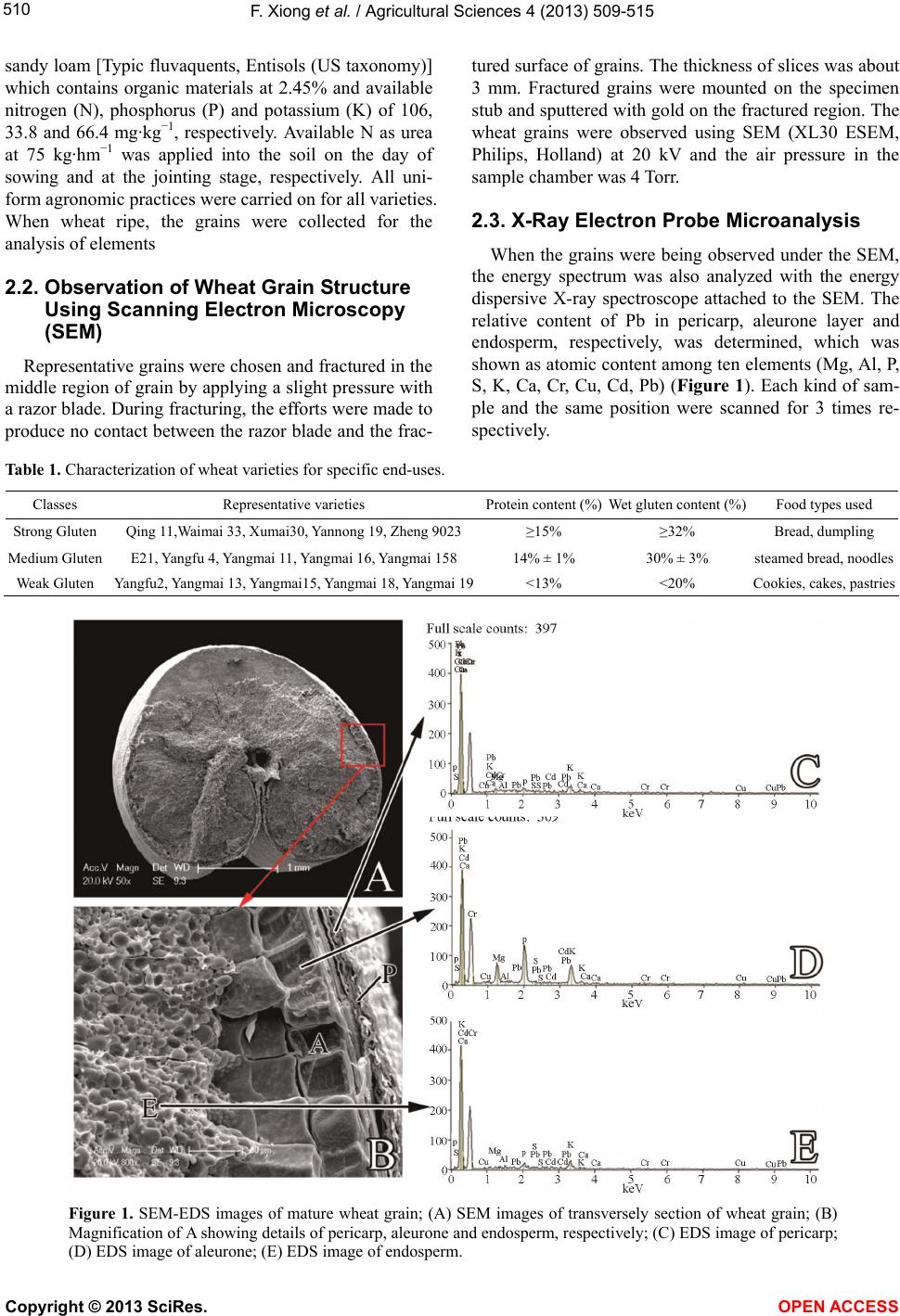 F. Xiong et al. / Agricultural Sciences 4 (2013) 509-515 510 sandy loam [Typic fluvaquents, Entisols (US taxonomy)] which contains organic materials at 2.45% and available nitrogen (N), phosphorus (P) and potassium (K) of 106, 33.8 and 66.4 mg·kg−1, respectively. Available N as urea at 75 kg·hm−1 was applied into the soil on the day of sowing and at the jointing stage, respectively. All uni- form agronomic practices were carried on for all varieties. When wheat ripe, the grains were collected for the analysis of elements 2.2. Observation of Wheat Grain Structure Using Scanning Electron Microscopy (SEM) Representative grains were chosen and fractured in the middle region of grain by applying a slight pressure with a razor blade. During fracturing, the efforts were made to produce no contact between the razor blade and the frac- tured surface of grains. The thickness of slices was about 3 mm. Fractured grains were mounted on the specimen stub and sputtered with gold on the fractured region. The wheat grains were observed using SEM (XL30 ESEM, Philips, Holland) at 20 kV and the air pressure in the sample chamber was 4 Torr. 2.3. X-Ray Electron Probe Microanalysis When the grains were being observed under the SEM, the energy spectrum was also analyzed with the energy dispersive X-ray spectroscope attached to the SEM. The relative content of Pb in pericarp, aleurone layer and endosperm, respectively, was determined, which was shown as atomic content among ten elements (Mg, Al, P, S, K, Ca, Cr, Cu, Cd, Pb) (Fig ure 1). Each kind of sam- ple and the same position were scanned for 3 times re- spectively. Table 1. Characterization of wheat varieties for specific end-uses. Classes Representative varieties Protein content (%)Wet gluten content (%) Food types used Strong Gluten Qing 11,Waimai 33, Xumai30, Yannong 19, Zheng 9023 ≥15% ≥32% Bread, dumpling Medium Gluten E21, Yangfu 4, Yangmai 11, Yangmai 16, Yangmai 158 14% ± 1% 30% ± 3% steamed bread, noodles Weak Gluten Yangfu2, Yangmai 13, Yangmai15, Yangmai 18, Yangmai 19<13% <20% Cookies, cakes, pastries Figure 1. SEM-EDS images of mature wheat grain; (A) SEM images of transversely section of wheat grain; (B) Magnification of A showing details of pericarp, aleurone and endosperm, respectively; (C) EDS image of pericarp; (D) EDS image of aleurone; (E) EDS image of endosperm. Copyright © 2013 SciRes. OPEN ACCESS 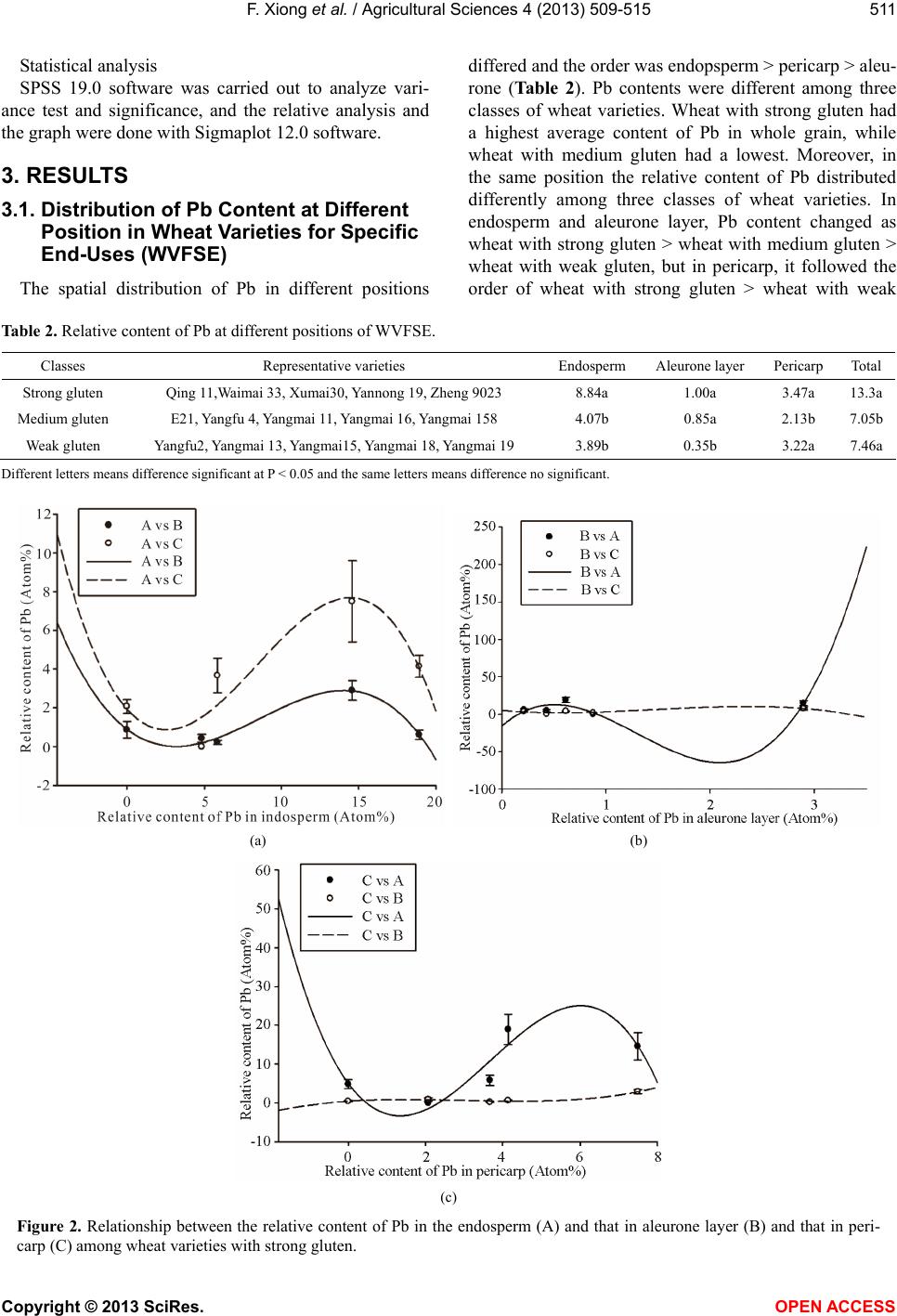 F. Xiong et al. / Agricultural Sciences 4 (2013) 509-515 511 Statistical analysis SPSS 19.0 software was carried out to analyze vari- ance test and significance, and the relative analysis and the graph were done with Sigmaplot 12.0 software. 3. RESULTS 3.1. Distribution of Pb Content at Different Position in Wheat Varieties for Specific End-Uses (WVFSE) The spatial distribution of Pb in different positions differed and the order was endopsperm > pericarp > aleu- rone (Table 2). Pb contents were different among three classes of wheat varieties. Wheat with strong gluten had a highest average content of Pb in whole grain, while wheat with medium gluten had a lowest. Moreover, in the same position the relative content of Pb distributed differently among three classes of wheat varieties. In endosperm and aleurone layer, Pb content changed as wheat with strong gluten > wheat with medium gluten > wheat with weak gluten, but in pericarp, it followed the order of wheat with strong gluten > wheat with weak Table 2. Relative content of Pb at different positions of WVFSE. Classes Representative varieties EndospermAleurone layer PericarpTotal Strong gluten Qing 11,Waimai 33, Xumai30, Yannong 19, Zheng 9023 8.84a 1.00a 3.47a 13.3a Medium gluten E21, Yangfu 4, Yangmai 11, Yangmai 16, Yangmai 158 4.07b 0.85a 2.13b 7.05b Weak gluten Yangfu2, Yangmai 13, Yangmai15, Yangmai 18, Yangmai 19 3.89b 0.35b 3.22a 7.46a Different letters means difference significant at P < 0.05 and the same letters means difference no significant. (a) (b) (c) Figure 2. Relationship between the relative content of Pb in the endosperm (A) and that in aleurone layer (B) and that in peri- arp (C) among wheat varieties with strong gluten. c Copyright © 2013 SciRes. OPEN ACCESS 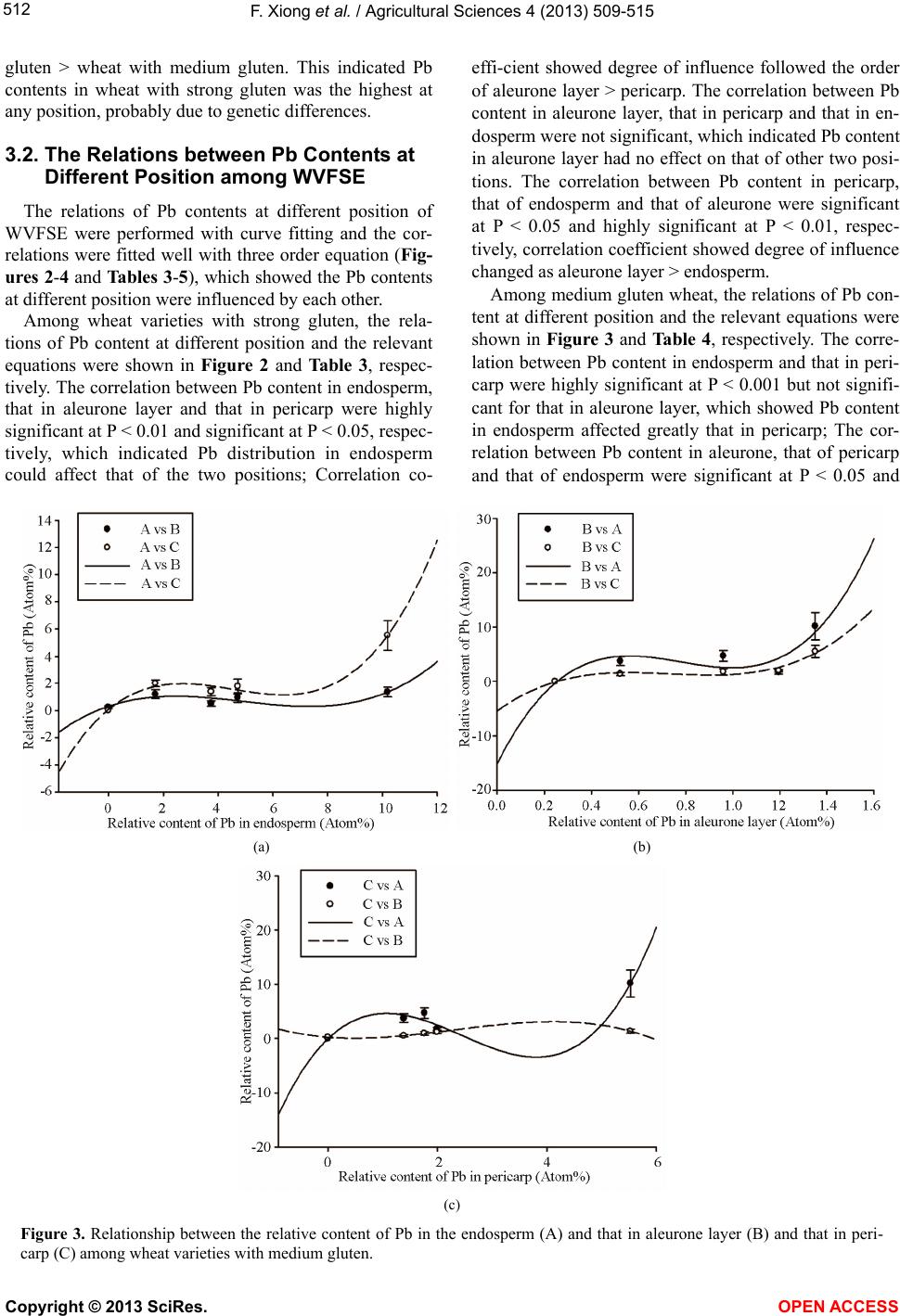 F. Xiong et al. / Agricultural Sciences 4 (2013) 509-515 512 gluten > wheat with medium gluten. This indicated Pb contents in wheat with strong gluten was the highest at any position, probably due to genetic differences. 3.2. The Relations between Pb Contents at Different Position among WVFSE The relations of Pb contents at different position of WVFSE were performed with curve fitting and the cor- relations were fitted well with three order equation (Fig- ures 2-4 and Tables 3-5), which showed the Pb contents at different position were influenced by each other. Among wheat varieties with strong gluten, the rela- tions of Pb content at different position and the relevant equations were shown in Figure 2 and Ta ble 3, respec- tively. The correlation between Pb content in endosperm, that in aleurone layer and that in pericarp were highly significant at P < 0.01 and significant at P < 0.05, respec- tively, which indicated Pb distribution in endosperm could affect that of the two positions; Correlation co- effi-cient showed degree of influence followed the order of aleurone layer > pericarp. The correlation between Pb content in aleurone layer, that in pericarp and that in en- dosperm were not significant, which indicated Pb content in aleurone layer had no effect on that of other two posi- tions. The correlation between Pb content in pericarp, that of endosperm and that of aleurone were significant at P < 0.05 and highly significant at P < 0.01, respec- tively, correlation coefficient showed degree of influence changed as aleurone layer > endosperm. Among medium gluten wheat, the relations of Pb con- tent at different position and the relevant equations were shown in Figure 3 and Ta ble 4, respectively. The corre- lation between Pb content in endosperm and that in peri- carp were highly significant at P < 0.001 but not signifi- cant for that in aleurone layer, which showed Pb content in endosperm affected greatly that in pericarp; The cor- relation between Pb content in aleurone, that of pericarp and that of endosperm were significant at P < 0.05 and (a) (b) (c) Figure 3. Relationship between the relative content of Pb in the endosperm (A) and that in aleurone layer (B) and that in peri- carp (C) among wheat varieties with medium gluten. Copyright © 2013 SciRes. OPEN ACCESS 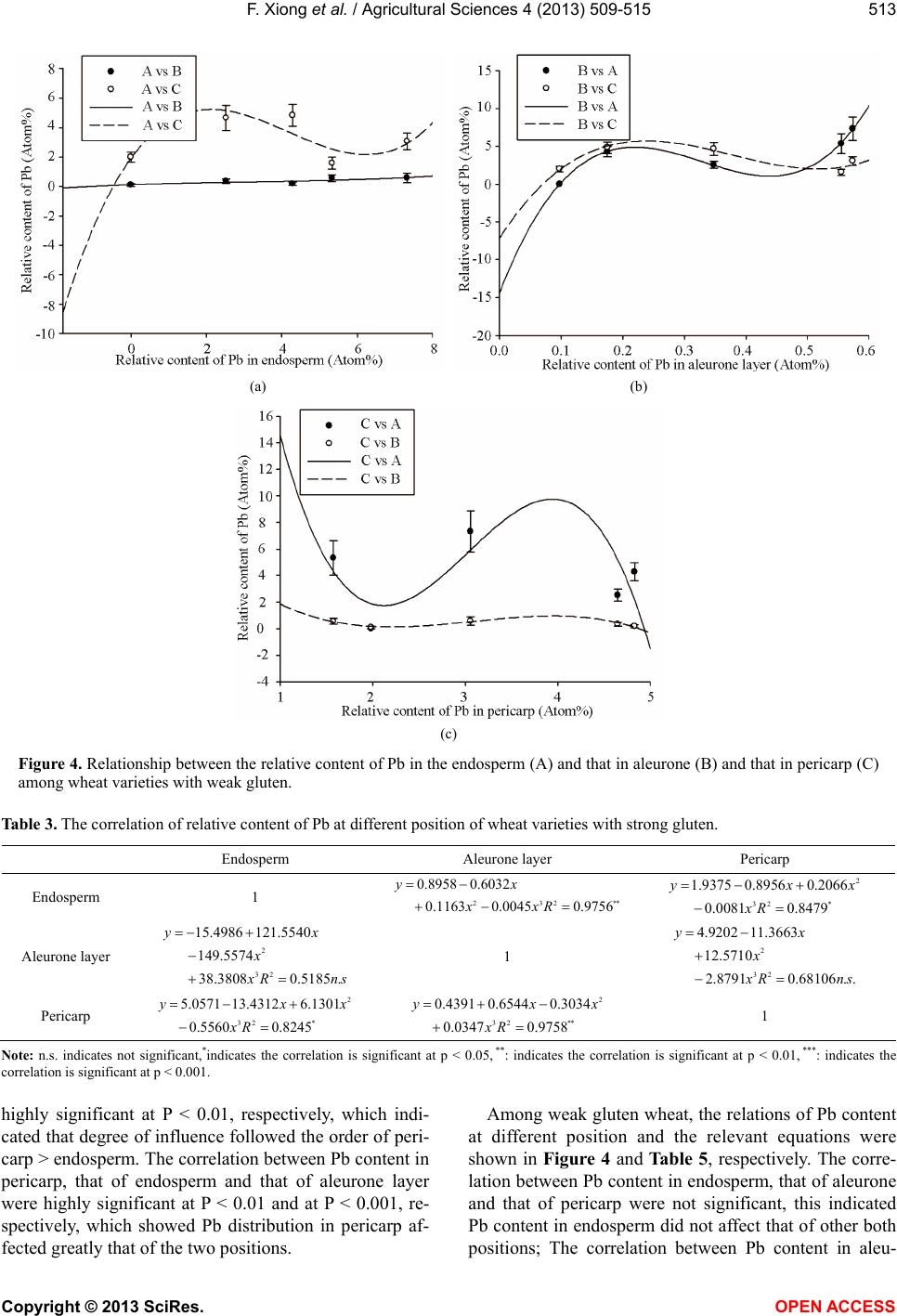 F. Xiong et al. / Agricultural Sciences 4 (2013) 509-515 513 (a) (b) (c) Figure 4. Relationship between the relative content of Pb in the endosperm (A) and that in aleurone (B) and that in pericarp (C) among wheat varieties with weak gluten. Table 3. The correlation of relative content of Pb at different position of wheat varieties with strong gluten. Endosperm Aleurone layer Pericarp Endosperm 1 232 0.8958 0.6032 0.1163 0.00450.9756 yx xxR** 2 32 * 1.93750.89560.2066 0.0081 0.8479 yx xR x Aleurone layer 2 32 15.4986 121.5540 149.5574 38.38080.5185. yx x x Rn s 1 2 32 4.9202 11.3663 12.5710 2.87910.68106.. yx x x Rn s xx Pericarp 2 32 * 5.0571 13.43126.1301 0.5560 0.8245 yx xR 2 32 ** 0.4391 0.65440.3034 0.0347 0.9758 yx xR 1 Note: n.s. indicates not significant,*indicates the correlation is significant at p < 0.05, **: indicates the correlation is significant at p < 0.01, ***: indicates the correlation is significant at p < 0.001. highly significant at P < 0.01, respectively, which indi- cated that degree of influence followed the order of peri- carp > endosperm. The correlation between Pb content in pericarp, that of endosperm and that of aleurone layer were highly significant at P < 0.01 and at P < 0.001, re- spectively, which showed Pb distribution in pericarp af- fected greatly that of the two positions. Among weak gluten wheat, the relations of Pb content at different position and the relevant equations were shown in Figure 4 and Ta b le 5, respectively. The corre- lation between Pb content in endosperm, that of aleurone and that of pericarp were not significant, this indicated Pb content in endosperm did not affect that of other both ositions; The correlation between Pb content in aleu- p Copyright © 2013 SciRes. OPEN ACCESS 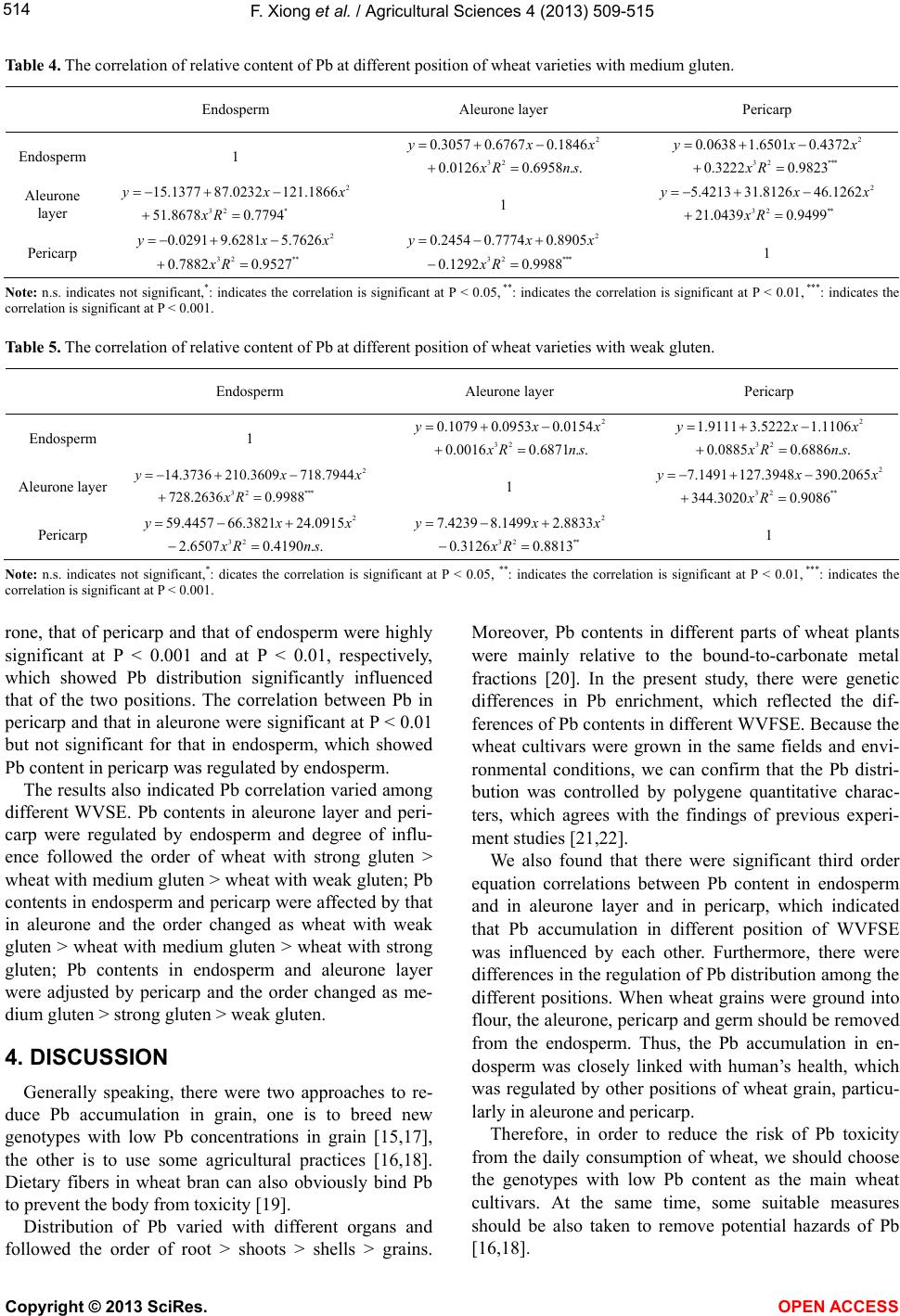 F. Xiong et al. / Agricultural Sciences 4 (2013) 509-515 514 Table 4. The correlation of relative content of Pb at different position of wheat varieties with medium gluten. Endosperm Aleurone layer Pericarp Endosperm 1 2 32 0.3057 0.67670.1846 0.01260.6958.. yx xR ns xx 2 3 2*** 0.0638 1.65010.4372 0.32220.9823 yx xR Aleurone layer 2 32 * 15.137787.0232121.1866 51.8678 0.7794 yx xR 2 xx xx 1 2 32 ** 5.4213 31.812646.1262 21.0439 0.9499 yx xR Pericarp 32 ** 0.02919.62815.7626 0.7882 0.9527 yx xR 2 3 2*** 0.2454 0.77740.8905 0.1292 0.9988 yx xR 1 Note: n.s. indicates not significant,*: indicates the correlation is significant at P < 0.05, **: indicates the correlation is significant at P < 0.01, ***: indicates the correlation is significant at P < 0.001. Table 5. The correlation of relative content of Pb at different position of wheat varieties with weak gluten. Endosperm Aleurone layer Pericarp Endosperm 1 2 32 0.1079 0.09530.0154 0.00160.6871 . . yxx x Rns 2 32 1.91113.52221.1106 0.08850.6886.. yxx x Rn s Aleurone layer 2 32 *** 14.3736 210.3609718.7944 728.2636 0.9988 yx xR xx x 1 2 32 ** 7.1491 127.3948390.2065 344.3020 0.9086 yx xR Pericarp 2 32 59.4457 66.382124.0915 2.65070.4190.. yx xR ns x2 32 ** 7.4239 8.14992.8833 0.3126 0.8813 yx xR 1 Note: n.s. indicates not significant,*: dicates the correlation is significant at P < 0.05, **: indicates the correlation is significant at P < 0.01, ***: indicates the correlation is significant at P < 0.001. rone, that of pericarp and that of endosperm were highly significant at P < 0.001 and at P < 0.01, respectively, which showed Pb distribution significantly influenced that of the two positions. The correlation between Pb in pericarp and that in aleurone were significant at P < 0.01 but not significant for that in endosperm, which showed Pb content in pericarp was regulated by endosperm. The results also indicated Pb correlation varied among different WVSE. Pb contents in aleurone layer and peri- carp were regulated by endosperm and degree of influ- ence followed the order of wheat with strong gluten > wheat with medium gluten > wheat with weak gluten; Pb contents in endosperm and pericarp were affected by that in aleurone and the order changed as wheat with weak gluten > wheat with medium gluten > wheat with strong gluten; Pb contents in endosperm and aleurone layer were adjusted by pericarp and the order changed as me- dium gluten > strong gluten > weak gluten. 4. DISCUSSION Generally speaking, there were two approaches to re- duce Pb accumulation in grain, one is to breed new genotypes with low Pb concentrations in grain [15,17], the other is to use some agricultural practices [16,18]. Dietary fibers in wheat bran can also obviously bind Pb to prevent the body from toxicity [19]. Distribution of Pb varied with different organs and followed the order of root > shoots > shells > grains. Moreover, Pb contents in different parts of wheat plants were mainly relative to the bound-to-carbonate metal fractions [20]. In the present study, there were genetic differences in Pb enrichment, which reflected the dif- ferences of Pb contents in different WVFSE. Because the wheat cultivars were grown in the same fields and envi- ronmental conditions, we can confirm that the Pb distri- bution was controlled by polygene quantitative charac- ters, which agrees with the findings of previous experi- ment studies [21,22]. We also found that there were significant third order equation correlations between Pb content in endosperm and in aleurone layer and in pericarp, which indicated that Pb accumulation in different position of WVFSE was influenced by each other. Furthermore, there were differences in the regulation of Pb distribution among the different positions. When wheat grains were ground into flour, the aleurone, pericarp and germ should be removed from the endosperm. Thus, the Pb accumulation in en- dosperm was closely linked with human’s health, which was regulated by other positions of wheat grain, particu- larly in aleurone and pericarp. Therefore, in order to reduce the risk of Pb toxicity from the daily consumption of wheat, we should choose the genotypes with low Pb content as the main wheat cultivars. At the same time, some suitable measures should be also taken to remove potential hazards of Pb [16,18]. Copyright © 2013 SciRes. OPEN ACCESS 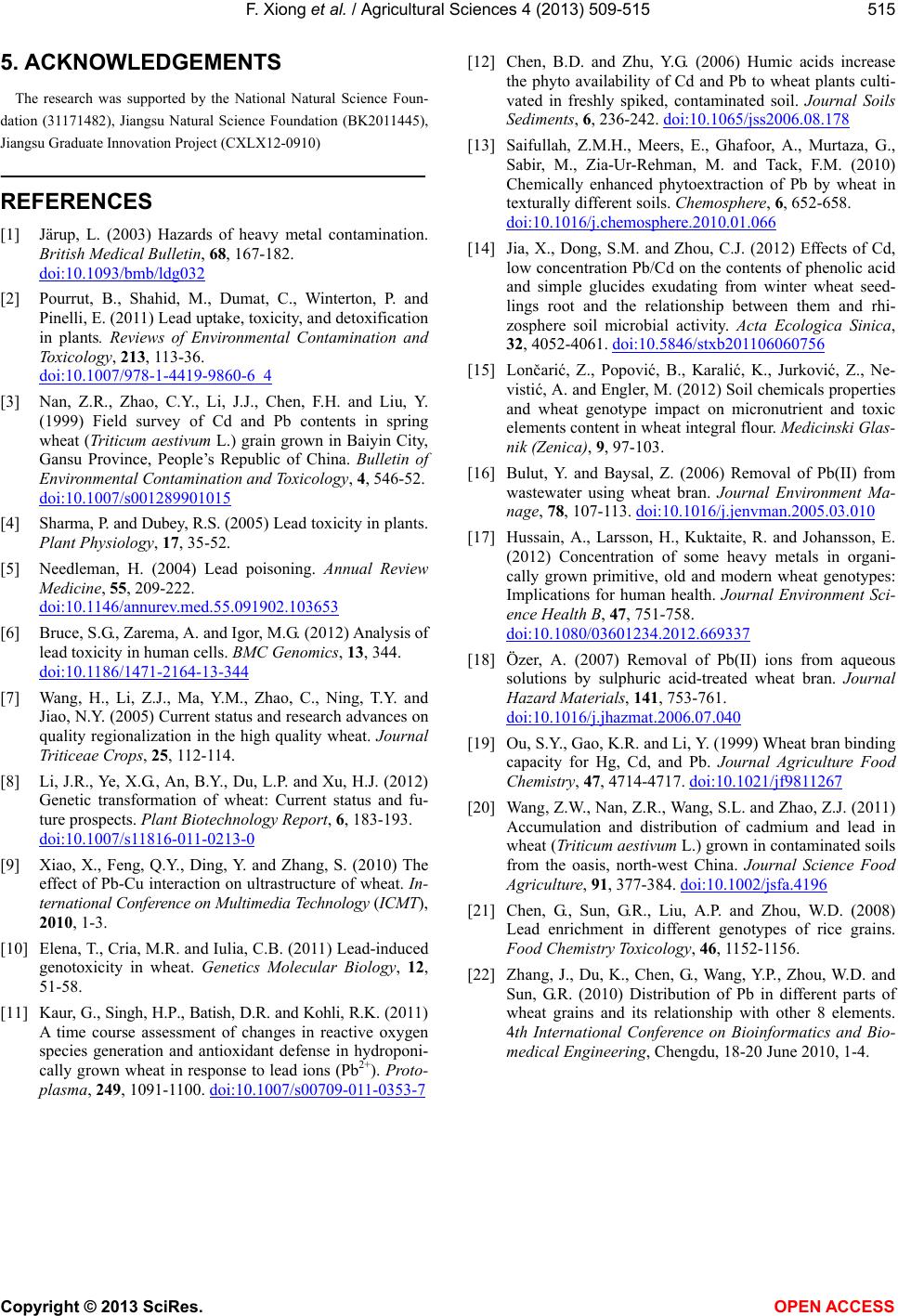 F. Xiong et al. / Agricultural Sciences 4 (2013) 509-515 515 5. ACKNOWLEDGEMENTS The research was supported by the National Natural Science Foun- dation (31171482), Jiangsu Natural Science Foundation (BK2011445), Jiangsu Graduate Innovation Project (CXLX12-0910) REFERENCES [1] Järup, L. (2003) Hazards of heavy metal contamination. British Medical Bulletin, 68, 167-182. doi:10.1093/bmb/ldg032 [2] Pourrut, B., Shahid, M., Dumat, C., Winterton, P. and Pinelli, E. (2011) Lead uptake, toxicity, and detoxification in plants. Reviews of Environmental Contamination and Toxicology, 213, 113-36. doi:10.1007/978-1-4419-9860-6_4 [3] Nan, Z.R., Zhao, C.Y., Li, J.J., Chen, F.H. and Liu, Y. (1999) Field survey of Cd and Pb contents in spring wheat (Triticum aestivum L.) grain grown in Baiyin City, Gansu Province, People’s Republic of China. Bulletin of Environmental Contamination and Toxicology, 4, 546-52. doi:10.1007/s001289901015 [4] Sharma, P. and Dubey, R.S. (2005) Lead toxicity in plants. Plant Physiology, 17, 35-52. [5] Needleman, H. (2004) Lead poisoning. Annual Review Medicine, 55, 209-222. doi:10.1146/annurev.med.55.091902.103653 [6] Bruce, S.G., Zarema, A. and Igor, M.G. (2012) Analysis of lead toxicity in human cells. BMC Genomics, 13, 344. doi:10.1186/1471-2164-13-344 [7] Wang, H., Li, Z.J., Ma, Y.M., Zhao, C., Ning, T.Y. and Jiao, N.Y. (2005) Current status and research advances on quality regionalization in the high quality wheat. Journal Triticeae Crops, 25, 112-114. [8] Li, J.R., Ye, X.G., An, B.Y., Du, L.P. and Xu, H.J. (2012) Genetic transformation of wheat: Current status and fu- ture prospects. Plant Biotec hno logy Report, 6, 183-193. doi:10.1007/s11816-011-0213-0 [9] Xiao, X., Feng, Q.Y., Ding, Y. and Zhang, S. (2010) The effect of Pb-Cu interaction on ultrastructure of wheat. In- ternational Conference on Multimedia Technology (ICMT), 2010, 1-3. [10] Elena, T., Cria, M.R. and Iulia, C.B. (2011) Lead-induced genotoxicity in wheat. Genetics Molecular Biology, 12, 51-58. [11] Kaur, G., Singh, H.P., Batish, D.R. and Kohli, R.K. (2011) A time course assessment of changes in reactive oxygen species generation and antioxidant defense in hydroponi- cally grown wheat in response to lead ions (Pb2+). Proto- plasma, 249, 1091-1100. doi:10.1007/s00709-011-0353-7 [12] Chen, B.D. and Zhu, Y.G. (2006) Humic acids increase the phyto availability of Cd and Pb to wheat plants culti- vated in freshly spiked, contaminated soil. Journal Soils Sediments, 6, 236-242. doi:10.1065/jss2006.08.178 [13] Saifullah, Z.M.H., Meers, E., Ghafoor, A., Murtaza, G., Sabir, M., Zia-Ur-Rehman, M. and Tack, F.M. (2010) Chemically enhanced phytoextraction of Pb by wheat in texturally different soils. Chemosphere, 6, 652-658. doi:10.1016/j.chemosphere.2010.01.066 [14] Jia, X., Dong, S.M. and Zhou, C.J. (2012) Effects of Cd, low concentration Pb/Cd on the contents of phenolic acid and simple glucides exudating from winter wheat seed- lings root and the relationship between them and rhi- zosphere soil microbial activity. Acta Ecologica Sinica, 32, 4052-4061. doi:10.5846/stxb201106060756 [15] Lončarić, Z., Popović, B., Karalić, K., Jurković, Z., Ne- vistić, A. and Engler, M. (2012) Soil chemicals properties and wheat genotype impact on micronutrient and toxic elements content in wheat integral flour. Medicinski Glas- nik (Zenica), 9, 97-103. [16] Bulut, Y. and Baysal, Z. (2006) Removal of Pb(II) from wastewater using wheat bran. Journal Environment Ma- nage, 78, 107-113. doi:10.1016/j.jenvman.2005.03.010 [17] Hussain, A., Larsson, H., Kuktaite, R. and Johansson, E. (2012) Concentration of some heavy metals in organi- cally grown primitive, old and modern wheat genotypes: Implications for human health. Journal Environment Sci- ence Health B, 47, 751-758. doi:10.1080/03601234.2012.669337 [18] Özer, A. (2007) Removal of Pb(II) ions from aqueous solutions by sulphuric acid-treated wheat bran. Journal Hazard Materials, 141, 753-761. doi:10.1016/j.jhazmat.2006.07.040 [19] Ou, S.Y., Gao, K.R. and Li, Y. (1999) Wheat bran binding capacity for Hg, Cd, and Pb. Journal Agriculture Food Chemistry, 47, 4714-4717. doi:10.1021/jf9811267 [20] Wang, Z.W., Nan, Z.R., Wang, S.L. and Zhao, Z.J. (2011) Accumulation and distribution of cadmium and lead in wheat (Triticum aestivum L.) grown in contaminated soils from the oasis, north-west China. Journal Science Food Agriculture, 91, 377-384. doi:10.1002/jsfa.4196 [21] Chen, G., Sun, G.R., Liu, A.P. and Zhou, W.D. (2008) Lead enrichment in different genotypes of rice grains. Food Chemistry Toxicology, 46, 1152-1156. [22] Zhang, J., Du, K., Chen, G., Wang, Y.P., Zhou, W.D. and Sun, G.R. (2010) Distribution of Pb in different parts of wheat grains and its relationship with other 8 elements. 4th International Conference on Bioinformatics and Bio- medical Engineering, Chengdu, 18-20 June 2010, 1-4. Copyright © 2013 SciRes. OPEN ACCESS |