

Paper Menu >>
Journal Menu >>
 American Journal of Plant Sciences, 2013, 4, 1693-1700 http://dx.doi.org/10.4236/ajps.2013.49206 Published Online September 2013 (http://www.scirp.org/journal/ajps) Auxin Producing Pseudomonas Strains: Biological Candidates to Modulate the Growth of Triticum aestivum Beneficially Atia Iqbal1, Shahida Hasnain1,2 1Department of Microbiology and Molecular Genetics, University of Punjab, Lahore, Pakistan; 2The Women University of Multan, Multan, Pakistan. Email: [email protected] Received May 24th, 2013; revised June 25th, 2013; accepted July 15th, 2013 Copyright © 2013 Atia Iqbal, Shahida Hasnain. This is an open access article distributed under the Creative Commons Attribution License, which permits unrestricted use, distribution, and reproduction in any medium, provided the original work is properly cited. ABSTRACT The screening of plant growth promoting rhizobacteria is a crucial step for their utilization as beneficial input in im- proving the crop productivity. This study was carried out to screen and evaluate the auxin producing rhizospheric iso- lated Pseudomonas strains for their potential to improve growth of Triticum aestivum (wheat) plant under laboratory and natural conditions. Three strains PNS-4, PNS-6 and PNS-15 were evaluated for auxin production by Salkowski’s method and further confirmed by high performance liquid chromatography (HPLC). The PNS-4, PNS-6 and PNS-15 strains were identified by I6S rRNA gene sequencing that showed maximum resemblance with Pseudomonas mendo- cina (99%), Pseudomonas alcaliphila (99%) and Pseudomonas sp. (99%) respectively. Selected strains were found to produce auxin with and without the amendment of exogenously applied L-tryptophan, a major precursor for auxin bio- synthesis and an important constituent of plant root exudates. Efficacy of these strains on wheat plant growth was checked under laboratory and field conditions. All Pseudomonas species were found to improve the % seed germination and growth parameters (shoot length, root length, fresh weight and dry weight) of the wheat seedlings significantly (P = 0.05) as compared to the un-inoculated seedlings under laboratory condition. The biochemical parameters (total soluble protein content and endogenous auxin content) of the bacterial inoculated wheat seedling were also increased signifi- cantly than that of uninoculated ones. Under natural condition, seed bacterization also showed the significant effect (P = 0.05) on yield parameters (shoot length, number of tillers, spike length and weight of seeds in grams) of the wheat plants when compared with non-inoculated plants. Our results reported the three most promising Pseudomonas candi- dates and revealed the fact that experiments under laboratory and natural conditions may be helpful in selecting the best candidates as bio fertilizers for future agricultural practices. Keywords: Auxin; Pseudomonas; Triticum aestivum; PGPR; Rhizobacteria 1. Introduction Complex diversity of microbes interacts with plant roots continuously in rhizospheric soil region. These microbes can influence the plant growth in various ways that can be beneficial or detrimental to the plant development [1,2]. Beneficial rhizospheric microorganisms gained special attention due to their potential to enhance the plant growth by variety of mechanisms. Some mecha- nisms are involved in plant growth promotion directly i.e. phytohormone [3] and siderophore production [4], phos- phate solublization [5], nitrogen fixation and denitrifica- tion [6,7] and 1-amino-cyclopropane-1-carboxylate de- aminase production [8]. Whereas HCN (and antifungal metabolite and siderophore production are bacterial char- acteristics that are involved in plant growth promotion indirectly [9]. Beneficial rhizobacteria that increase the plant yield and productivity are considered as plant growth promoting rhizobacteria (PGPR) [10]. Phytohor- mone production has been studied as one of the main me- chanisms by which PGPR may enhance the plant growth [11]. Several genera of Pseudomonas, Bacillus, Arthro- bacter, Azospirillum, Klebsiella, and Enterobacter, iso- lated from rhizospheric region of variety of crops, have been evaluated for plant growth promoting attributes and illustrated their synergistic effects on plant growth and development [12,13]. Copyright © 2013 SciRes. AJPS  Auxin Producing Pseudomonas Strains: Biological Candidates to Modulate the Growth of Triticum aestivum Beneficially 1694 Auxin especially IAA production by rhizobacteria is involved in plant microbe signaling, which can lead the change in root morphology by proliferation and elonga- tion of adventitious and lateral roots to the plant [14,15]. Therefore, facilitation of plant growth by rhizobacteria has been ascribed to the auxin production [16]. Barea et al. [17] reported that about 86% of the bacterial strains, isolated from the rhizosphere of various plants, produced auxins. IAA biosynthesis by these bacteria has been cor- related with promoting of root proliferation [3,18,19]. Ef- fect of IAA on plant growth mainly depends upon its concentration. Low concentration enhances the root length while high concentration retards the plant root length [20]. In order to select the most promising plant growth promoting bacteria, effective selection and screening pro- cedures are considered very important [21]. This selec- tion helps to assist the development of database of the microbes essential for plant growth that can be further used as bio fertilizers. Genera Pseudomonas especially P. fluorescens and P. putida are the most important kinds of PGPR. Production of auxin is one of the main reasons to promote plant yield with these Bacteria [22]. The main objective of the present study was to screen the most ef- fective Pseudomonas species on the basis of auxin pro- duction and their further evaluation in promoting the growth and development of wheat plant under laboratory and field conditions. 2. Material and Methods 2.1. Isolation The root adhering soil samples from the rhizosphere of Lycopersicon esculentum, Vigna radiate and Corundum sativum plants, grown in different location of Punjab, Pa- kistan were collected from the rhizosphere region in ster- ile bags, carried to the laboratory and stored at 4˚C for further processing. In order to screen the auxin producing rhizobacteria, one gram soil from each soil sample was homogenized in test tube containing 9 ml saline solution (0.85% NaCl) separately. The suspension was vortexed and dilutions of autoclaved water were made up to 10–6 by using the serial dilution method. The 0.1 ml of each dilution was spread on Luria Bertani medium plates. The plates were incubated at 28˚C ± 2˚C for 24 hours. After the development of growth, different colonies were se- lected on the basis of morphology and purified by fur- ther sub culturing [23]. 2.2. Molecular Identification In order to identify the selected strains, 16S rRNA gene sequence analysis was done by extraction and ampli- fication of genomic DNA done by the method of Cui et al. [24]. DNA extraction was done by extraction kit (QIAGEN) and amplified by using universal primers forward primer 27f (5’AGAGTTTGATCCTGGCTCAG3’) and reverse primer 1522r (5’AAGGAGATGATCCA- GCC3’). The amplified product was purified and sent for sequencing at Cancer research Centre, University of Chi- cago. The obtained sequence was edited and submitted to BLAST to search phylogentically closely related bacteria already submitted in the GENBANK. The final sequence was submitted to GENBANK for accession numbers. 2.3. Auxin Production under in Vitro Condition For auxin estimation, bacterial cell suspension adjusted to 106 to 107 CFU ml–1 was inoculated in autoclaved L-broth supplemented without and with a filter sterilized solution of 1000 µg L-tryptophan. Inoculated flasks were incubated at 28˚C for 72 hours. After incubation, bacte- rial cells were removed from culture medium by centri- fugation at 14.000 rpm for 15 minutes. After centrifuga- tion, auxin was detected by taking 1 ml of supernatant and 2 ml of Salkowski’s reagent, mixed them properly and placed in dark for 30 minutes. After the color devel- opment, O.D was taken at 535 nm by spectrophotometer. A standard curve of synthetic auxin (Oxoid) with differ- ent concentration was drawn to quantify the auxin pro- duced by bacteria [25]. The presence of IAA was further confirmed by thin layer chromatography and HPLC. 2.4. HPLC Bacterial auxin was extracte by centifugation of the sta- tionary phase cultue at 10.000 rpm for 20 minutes at 4˚C. The pH of the supernatent was adjusted to 2.5 with 1.0 M HCL and extracted three times with three volumes of ethyl acetate. Extracts were evaporated in rotary evapo- rator (Heidolph LABOROTA, Cole-Parmer, IL, USA) and dissolved in absolute methanol. For further confir- mation of bacterial IAA, HPLC (Sykam Model 203) equipped with a sykam S1122 solvent delivery system and Sykam S 3210 uv/vis detector was used for extracted bacterial samples. Extracted sample (10 µl) dissolved in methanol was injected into Reverse-phase C 18 column (4.6 × 15 mm). The mobile phase was methanol: water 80:20 (v/v) at a flow rate of 1 ml/min. Peak was detected comparable to synthetic IAA. 2.5. Plant Microbe Experiment 2.5.1. A xe ni c /Labora tory Condition Effect of auxin producing rhizobacteria was checked on plant growth by providing the natural system of soil under the controlled conditions in the laboratory. Effect of bacterial auxin on wheat plant was done by the me- Copyright © 2013 SciRes. AJPS  Auxin Producing Pseudomonas Strains: Biological Candidates to Modulate the Growth of Triticum aestivum Beneficially 1695 thod of Ali et al. [23]. Bacterial culture was grown in LB broth for 24 hour at 28˚C and centrifuged at 10.000 rpm for 10 minutes to get the pellet. Washing of bacterial pellet was done with I ml of phosphate buffer (PBS, 20 mM sodium phosphate, 150 mM NaCl, pH 7.4) and sus- pended in the same buffer. Cell density of 107 CFU ml–1 was achieved by taking the O.D at 600 nm of suspension. Certified Seeds of wheat var Uqab-2000 were obtained from Punjab seed corporation Lahore Pakistan and sur- face sterilized with 0.1% HgCl2 followed by several washings (7 times) of water. After incubating the seeds in bacterial inoculum for 30 minutes, they were sown in plastic pots having 200 gm autoclaved soil, at the depth of 2 - 2 cm. Same process was done with the seeds dipped in un-inoculated broth for control setup. The whole experiment was set in five replicates. Soil was moistened with autoclaved water equally in all experi- mental and control pots respectively. The pots were placed at 22˚C in growth chamber with 16:8 daylight (with light intensity of 200 μE·m–2·s–1) regime. The per- centage germination was calculated in treated and control plants soon after germination. After 15 days wheat seed- lings were taken out and root length, shoot length, fresh weight, dry weight were measured. Bio chemical para- meters were also calculated. Experiment was performed three times to check the validity of the results. 2.5.2. N at ural Condit ion In order to check the effect of auxin producing Pseudo- monas strains on the yield of wheat plants, sterilized seeds treated with PGPR strains for 30 minutes as men- tioned above were sown in large pots containing 10 kg of unfertilized garden soil. Initially, 15 sterilized seeds were inoculated in each pot in five replicates. After germina- tion, seedlings were thinned to 10 per pot. After 6 weeks, further thinning was carried out by keeping 5 seedlings per pot, which were grown till maturity. All pots were arranged in a completely randomized design in the wire house of Department of Microbiology and Molecular Ge- netics, University of the Punjab, Lahore, Pakistan. Ex- periment was conducted between December, 2009 to June, 2010 under ambient light and temperature. Plants were irrigated with tap water when required. At full ma- turity, growth parameters including shoot length, number of tillers, spike length, and grain yield were recorded. Experiments were repeated three times to check the va- lidity of the results [16]. 2.6. Statistical Analysis The data obtained were evaluated statistically by using SPSS (version 16; SPSS Inc, Chicago, USA) software for windows. Data were analyzed by ANOVA and mean val- ues of different strains were compared by Duncan’s mul- tiple test (P < 0.05). 3. Results and Discussion Plant growth promoting bacteria have gained the world wide attention, as an alternative of chemical fertilizers that can improve the plant growth by direct or indirect ways. The rhizobacteria have great potential to enhance the growth promotion of wheat crop [26,27]. 3.1. Identification Three Pseudom ona s strains PNS-4, PNS-6 and PNS-15 showed 99% homology to P. mendocina, P. alcaliphila and Pseudomonas sp. (already submitted sequences in GENBANK). The nucleotide sequences have been sub- mitted in GENBANK under accession number of JF 905443.1, JF905444.1 and JQ218449 for PNS-4, PNS-6 and PNS-15 respectively (Table 1). 3.2. Auxin Biosynthesis by Pseudomonas Isolates In vitro auxin production and screening of rhizobacterial isolates for plant growth promotion under gontobiotic conditions are considered as useful approach for select- ing PGPR [28]. In the present study, all strains were found to produce auxin significantly in LB medium which were increased by addition of precursor L-tryptophan. The result showed that auxin production was not the same among all rhizobacterial strains. PNS-6 produced the highest amount of IAA (15.6 µg/ml) followed by PNS-15 (13.3 µg/ml) and PNS-4 (12.6 µg/ml) in the ab- sence of L-tryptophan. But this production was increased by the amendment of L-tryptophan, which were highest in PNS-15 (114 µg/ml) while production in PNS-6 and PNS-4 reached up to 110 µg/ml and 105 µg/ml respec- tively (Figure 1). The result showed that selected isolates produced auxin through tryptophan dependent pathway, which could be helpful while interaction with plants as plants exudates contains tryptophan that may assist the auxin production ability of the colonized bacteria [9,16, 29]. Our work was in accordance with Ali et al. [23] who isolated the auxin producing rhizobacteria and have be- neficial impact on plant growth promotion. 3.3. Identification of Auxin by HPLC HPLC is a useful tool to identify and confirm the me- tabolites that were screened by manually method and not very reliable [30]. All strains showed a peak comparable with the peak of standard IAA on HPLC system. That in- dicated the bacterial ability to synthesize the IAA (Fig- re 2). u Copyright © 2013 SciRes. AJPS 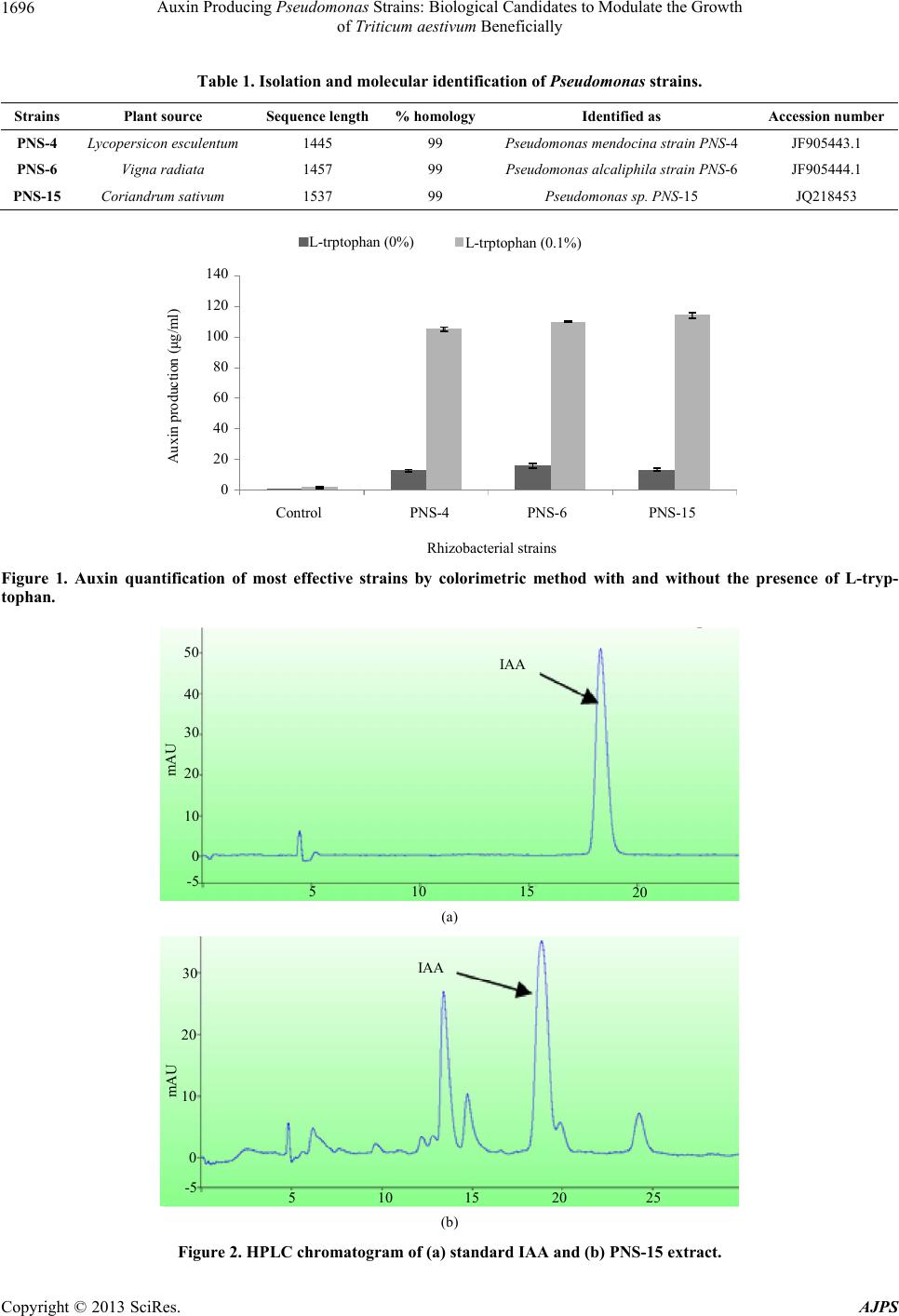 Auxin Producing Pseudomonas Strains: Biological Candidates to Modulate the Growth of Triticum aestivum Beneficially Copyright © 2013 SciRes. AJPS 1696 Table 1. Isolation and molecular identification of Pseudomonas strains. Strains Plant source Sequence length% homologyIdentified as Accession number PNS-4 Lycopersicon esculentum1445 99 Pseudomonas mendocina strain PNS-4 JF905443.1 PNS-6 Vigna radiata 1457 99 Pseudomonas alcaliphila strain PNS-6 JF905444.1 PNS-15 Coriandrum sativum 1537 99 Pseudomonas sp. PNS-15 JQ218453 L-trptophan (0%) L-trptophan (0.1%) Control PNS-4 PNS-6 PNS-15 Rhizobacterial strains 140 120 100 80 60 40 20 0 Auxin production (μg/ml) Figure 1. Auxin quantification of most effective strains by colorimetric method with and without the presence of L-tryp- tophan. IAA 5 101520 -5 0 10 20 30 40 50 mAU (a) IAA 5 101520 -5 0 10 20 30 25 mAU (b) Figure 2. HPLC chromatogram of (a) standard IAA and (b) PNS-15 extract. 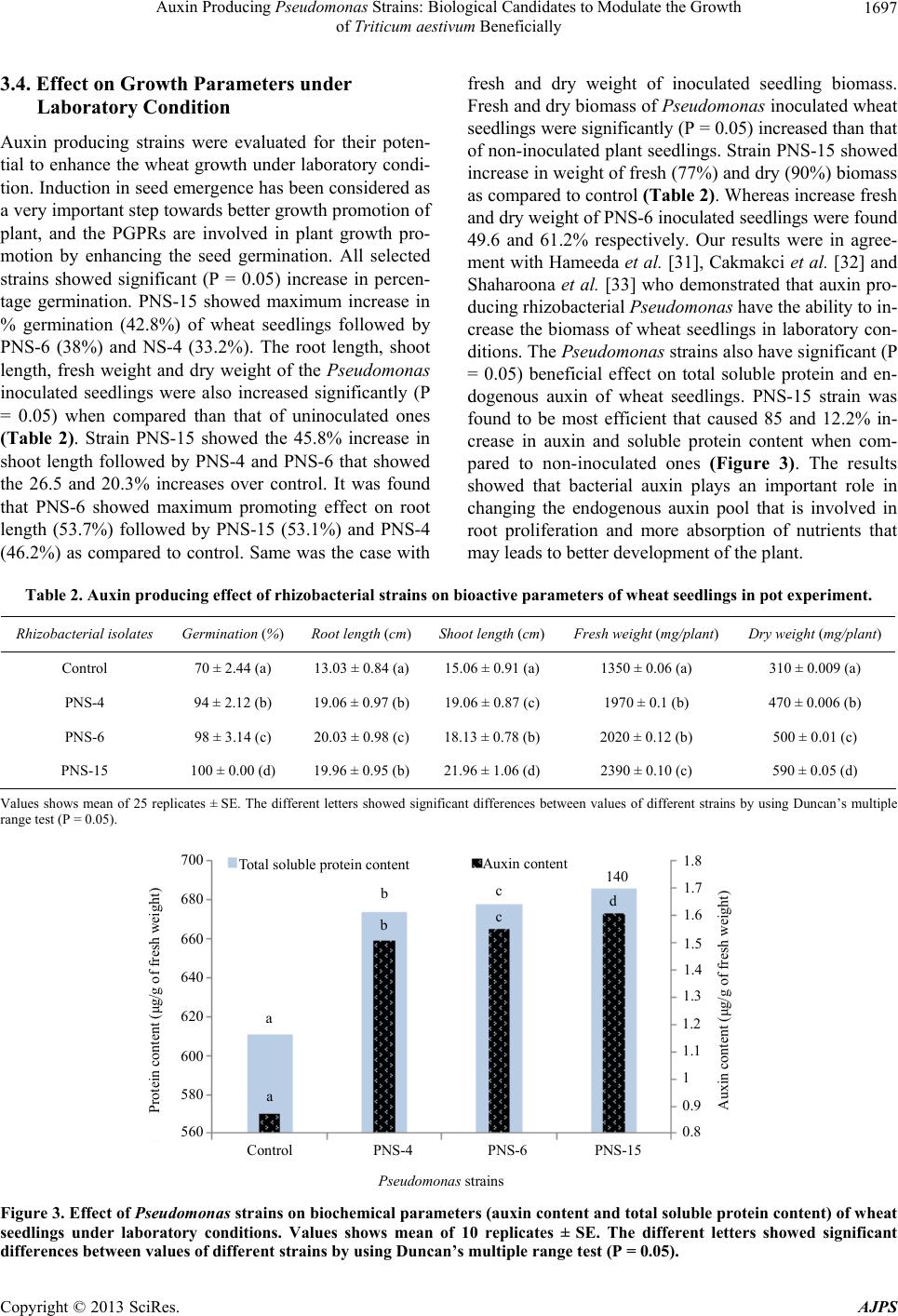 Auxin Producing Pseudomonas Strains: Biological Candidates to Modulate the Growth of Triticum aestivum Beneficially 1697 3.4. Effect on Growth Parameters under Laboratory Condition Auxin producing strains were evaluated for their poten- tial to enhance the wheat growth under laboratory condi- tion. Induction in seed emergence has been considered as a very important step towards better growth promotion of plant, and the PGPRs are involved in plant growth pro- motion by enhancing the seed germination. All selected strains showed significant (P = 0.05) increase in percen- tage germination. PNS-15 showed maximum increase in % germination (42.8%) of wheat seedlings followed by PNS-6 (38%) and NS-4 (33.2%). The root length, shoot length, fresh weight and dry weight of the Pseudomonas inoculated seedlings were also increased significantly (P = 0.05) when compared than that of uninoculated ones (Table 2). Strain PNS-15 showed the 45.8% increase in shoot length followed by PNS-4 and PNS-6 that showed the 26.5 and 20.3% increases over control. It was found that PNS-6 showed maximum promoting effect on root length (53.7%) followed by PNS-15 (53.1%) and PNS-4 (46.2%) as compared to control. Same was the case with fresh and dry weight of inoculated seedling biomass. Fresh and dry biomass of Pseudomonas inoculated wheat seedlings were significantly (P = 0.05) increased than that of non-inoculated plant seedlings. Strain PNS-15 showed increase in weight of fresh (77%) and dry (90%) biomass as compared to control (Table 2). Whereas increase fresh and dry weight of PNS-6 inoculated seedlings were found 49.6 and 61.2% respectively. Our results were in agree- ment with Hameeda et al. [31], Cakmakci et al. [32] and Shaharoona et al. [33] who demonstrated that auxin pro- ducing rhizobacterial Pseudomonas have the ability to in- crease the biomass of wheat seedlings in laboratory con- ditions. The Pseudomonas strains also have significant (P = 0.05) beneficial effect on total soluble protein and en- dogenous auxin of wheat seedlings. PNS-15 strain was found to be most efficient that caused 85 and 12.2% in- crease in auxin and soluble protein content when com- pared to non-inoculated ones (Figure 3). The results showed that bacterial auxin plays an important role in changing the endogenous auxin pool that is involved in root proliferation and more absorption of nutrients that may leads to better development of the plant. Table 2. Auxin producing effect of rhizobacterial strains on bioactive parameters of wheat seedlings in pot experiment. Rhizobacterial isolates Germination (%) Root length (cm)Shoot length (cm)Fresh weight (mg/plant) Dry weight (mg/plant) Control 70 ± 2.44 (a) 13.03 ± 0.84 (a) 15.06 ± 0.91 (a) 1350 ± 0.06 (a) 310 ± 0.009 (a) PNS-4 94 ± 2.12 (b) 19.06 ± 0.97 (b) 19.06 ± 0.87 (c) 1970 ± 0.1 (b) 470 ± 0.006 (b) PNS-6 98 ± 3.14 (c) 20.03 ± 0.98 (c) 18.13 ± 0.78 (b) 2020 ± 0.12 (b) 500 ± 0.01 (c) PNS-15 100 ± 0.00 (d) 19.96 ± 0.95 (b) 21.96 ± 1.06 (d) 2390 ± 0.10 (c) 590 ± 0.05 (d) Values shows mean of 25 replicates ± SE. The different letters showed significant differences between values of different strains by using Duncan’s multiple range test (P = 0.05). Total soluble protein content Auxin content Control PNS-4PNS-6PNS-15 Pseudomonas strains 140 1.7 1.6 1.5 1.4 1.3 1.2 1.1 Auxin content (μg/g of fresh weight) b a c 1.8 1 0.9 0.8 560 580 600 620 640 660 680 700 Protein content (μg/g of fresh weight) b a c d Figure 3. Effect of Pseudomonas strains on biochemical parameters (auxin content and total soluble protein content) of wheat seedlings under laboratory conditions. Values shows mean of 10 replicates ± SE. The different letters showed significant differences between values of different strains by using Duncan’s multiple range test (P = 0.05). Copyright © 2013 SciRes. AJPS 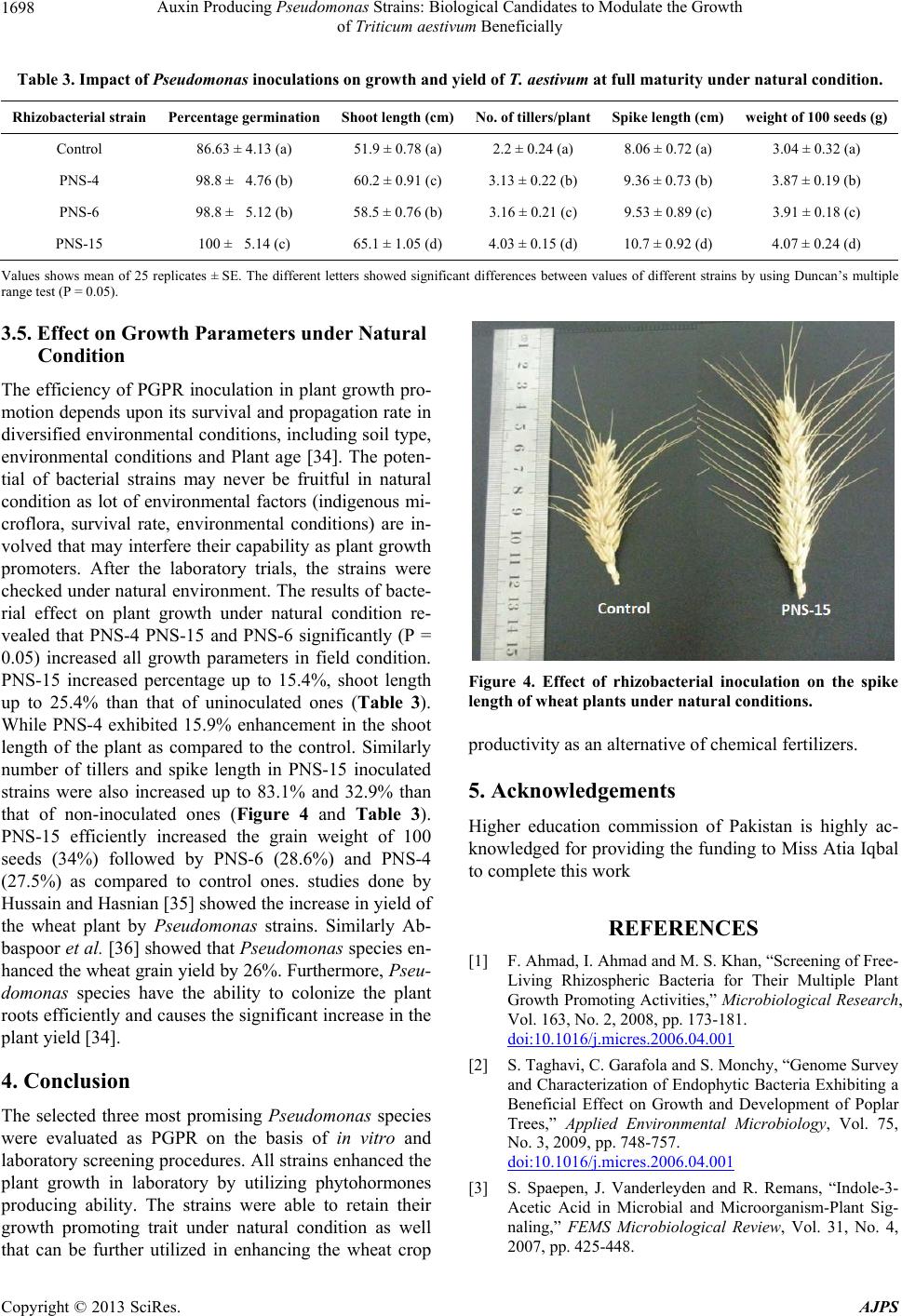 Auxin Producing Pseudomonas Strains: Biological Candidates to Modulate the Growth of Triticum aestivum Beneficially 1698 Table 3. Impact of Pseudomonas inoculations on growth and yield of T. aestivum at full maturity under natural condition. Rhizobacterial strain Percentage germination Shoot length (cm)No. of tillers/plantSpike length (cm) weight of 100 seeds (g) Control 86.63 ± 4.13 (a) 51.9 ± 0.78 (a) 2.2 ± 0.24 (a) 8.06 ± 0.72 (a) 3.04 ± 0.32 (a) PNS-4 98.8 ± 4.76 (b) 60.2 ± 0.91 (c) 3.13 ± 0.22 (b) 9.36 ± 0.73 (b) 3.87 ± 0.19 (b) PNS-6 98.8 ± 5.12 (b) 58.5 ± 0.76 (b) 3.16 ± 0.21 (c) 9.53 ± 0.89 (c) 3.91 ± 0.18 (c) PNS-15 100 ± 5.14 (c) 65.1 ± 1.05 (d) 4.03 ± 0.15 (d) 10.7 ± 0.92 (d) 4.07 ± 0.24 (d) Values shows mean of 25 replicates ± SE. The different letters showed significant differences between values of different strains by using Duncan’s multiple range test (P = 0.05). 3.5. Effect on Growth Parameters under Natural Condition The efficiency of PGPR inoculation in plant growth pro- motion depends upon its survival and propagation rate in diversified environmental conditions, including soil type, environmental conditions and Plant age [34]. The poten- tial of bacterial strains may never be fruitful in natural condition as lot of environmental factors (indigenous mi- croflora, survival rate, environmental conditions) are in- volved that may interfere their capability as plant growth promoters. After the laboratory trials, the strains were checked under natural environment. The results of bacte- rial effect on plant growth under natural condition re- vealed that PNS-4 PNS-15 and PNS-6 significantly (P = 0.05) increased all growth parameters in field condition. PNS-15 increased percentage up to 15.4%, shoot length up to 25.4% than that of uninoculated ones (Table 3). While PNS-4 exhibited 15.9% enhancement in the shoot length of the plant as compared to the control. Similarly number of tillers and spike length in PNS-15 inoculated strains were also increased up to 83.1% and 32.9% than that of non-inoculated ones (Figure 4 and Table 3). PNS-15 efficiently increased the grain weight of 100 seeds (34%) followed by PNS-6 (28.6%) and PNS-4 (27.5%) as compared to control ones. studies done by Hussain and Hasnian [35] showed the increase in yield of the wheat plant by Pseudomonas strains. Similarly Ab- baspoor et al. [36] showed that Pseudomonas species en- hanced the wheat grain yield by 26%. Furthermore, Pseu- domonas species have the ability to colonize the plant roots efficiently and causes the significant increase in the plant yield [34]. 4. Conclusion The selected three most promising Pseudomonas species were evaluated as PGPR on the basis of in vitro and laboratory screening procedures. All strains enhanced the plant growth in laboratory by utilizing phytohormones producing ability. The strains were able to retain their growth promoting trait under natural condition as well that can be further utilized in enhancing the wheat crop Figure 4. Effect of rhizobacterial inoculation on the spike length of wheat plants under natural conditions. productivity as an alternative of chemical fertilizers. 5. Acknowledgements Higher education commission of Pakistan is highly ac- knowledged for providing the funding to Miss Atia Iqbal to complete this work REFERENCES [1] F. Ahmad, I. Ahmad and M. S. Khan, “Screening of Free- Living Rhizospheric Bacteria for Their Multiple Plant Growth Promoting Activities,” Microbiological Research, Vol. 163, No. 2, 2008, pp. 173-181. doi:10.1016/j.micres.2006.04.001 [2] S. Taghavi, C. Garafola and S. Monchy, “Genome Survey and Characterization of Endophytic Bacteria Exhibiting a Beneficial Effect on Growth and Development of Poplar Trees,” Applied Environmental Microbiology, Vol. 75, No. 3, 2009, pp. 748-757. doi:10.1016/j.micres.2006.04.001 [3] S. Spaepen, J. Vanderleyden and R. Remans, “Indole-3- Acetic Acid in Microbial and Microorganism-Plant Sig- naling,” FEMS Microbiological Review, Vol. 31, No. 4, 2007, pp. 425-448. Copyright © 2013 SciRes. AJPS 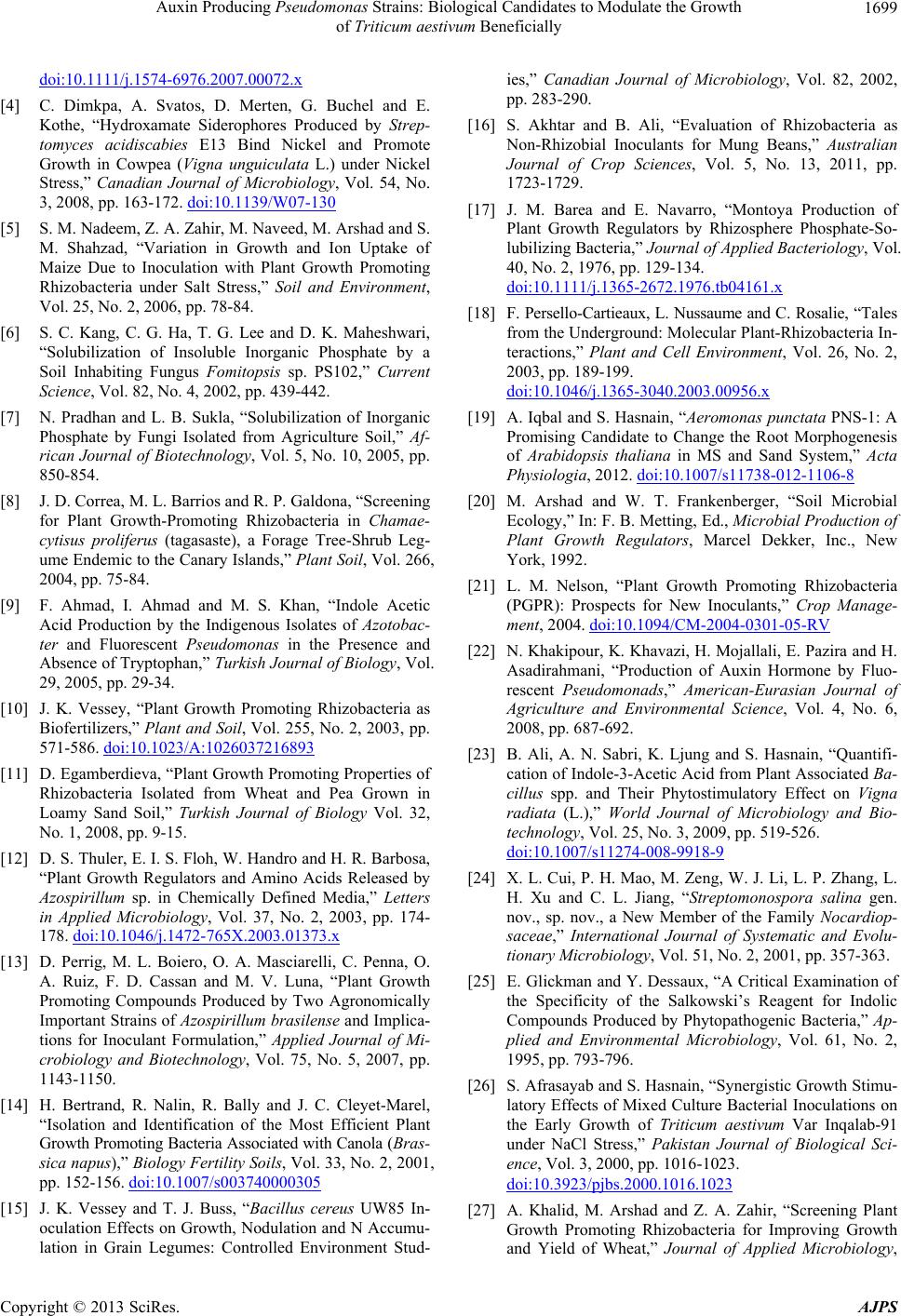 Auxin Producing Pseudomonas Strains: Biological Candidates to Modulate the Growth of Triticum aestivum Beneficially 1699 doi:10.1111/j.1574-6976.2007.00072.x [4] C. Dimkpa, A. Svatos, D. Merten, G. Buchel and E. Kothe, “Hydroxamate Siderophores Produced by Strep- tomyces acidiscabies E13 Bind Nickel and Promote Growth in Cowpea (Vigna unguiculata L.) under Nickel Stress,” Canadian Journal of Microbiology, Vol. 54, No. 3, 2008, pp. 163-172. doi:10.1139/W07-130 [5] S. M. Nadeem, Z. A. Zahir, M. Naveed, M. Arshad and S. M. Shahzad, “Variation in Growth and Ion Uptake of Maize Due to Inoculation with Plant Growth Promoting Rhizobacteria under Salt Stress,” Soil and Environment, Vol. 25, No. 2, 2006, pp. 78-84. [6] S. C. Kang, C. G. Ha, T. G. Lee and D. K. Maheshwari, “Solubilization of Insoluble Inorganic Phosphate by a Soil Inhabiting Fungus Fomitopsis sp. PS102,” Current Science, Vol. 82, No. 4, 2002, pp. 439-442. [7] N. Pradhan and L. B. Sukla, “Solubilization of Inorganic Phosphate by Fungi Isolated from Agriculture Soil,” Af- rican Journal of Biotechnology, Vol. 5, No. 10, 2005, pp. 850-854. [8] J. D. Correa, M. L. Barrios and R. P. Galdona, “Screening for Plant Growth-Promoting Rhizobacteria in Chamae- cytisus proliferus (tagasaste), a Forage Tree-Shrub Leg- ume Endemic to the Canary Islands,” Plant Soil, Vol. 266, 2004, pp. 75-84. [9] F. Ahmad, I. Ahmad and M. S. Khan, “Indole Acetic Acid Production by the Indigenous Isolates of Azotobac- ter and Fluorescent Pseudomonas in the Presence and Absence of Tryptophan,” Turkish Journal of Biology, Vol. 29, 2005, pp. 29-34. [10] J. K. Vessey, “Plant Growth Promoting Rhizobacteria as Biofertilizers,” Plant and Soil, Vol. 255, No. 2, 2003, pp. 571-586. doi:10.1023/A:1026037216893 [11] D. Egamberdieva, “Plant Growth Promoting Properties of Rhizobacteria Isolated from Wheat and Pea Grown in Loamy Sand Soil,” Turkish Journal of Biology Vol. 32, No. 1, 2008, pp. 9-15. [12] D. S. Thuler, E. I. S. Floh, W. Handro and H. R. Barbosa, “Plant Growth Regulators and Amino Acids Released by Azospirillum sp. in Chemically Defined Media,” Letters in Applied Microbiology, Vol. 37, No. 2, 2003, pp. 174- 178. doi:10.1046/j.1472-765X.2003.01373.x [13] D. Perrig, M. L. Boiero, O. A. Masciarelli, C. Penna, O. A. Ruiz, F. D. Cassan and M. V. Luna, “Plant Growth Promoting Compounds Produced by Two Agronomically Important Strains of Azospirillum brasilense and Implica- tions for Inoculant Formulation,” Applied Journal of Mi- crobiology and Biotechnology, Vol. 75, No. 5, 2007, pp. 1143-1150. [14] H. Bertrand, R. Nalin, R. Bally and J. C. Cleyet-Marel, “Isolation and Identification of the Most Efficient Plant Growth Promoting Bacteria Associated with Canola (Bras- sica napus),” Biology Fertility Soils, Vol. 33, No. 2, 2001, pp. 152-156. doi:10.1007/s003740000305 [15] J. K. Vessey and T. J. Buss, “Bacillus cereus UW85 In- oculation Effects on Growth, Nodulation and N Accumu- lation in Grain Legumes: Controlled Environment Stud- ies,” Canadian Journal of Microbiology, Vol. 82, 2002, pp. 283-290. [16] S. Akhtar and B. Ali, “Evaluation of Rhizobacteria as Non-Rhizobial Inoculants for Mung Beans,” Australian Journal of Crop Sciences, Vol. 5, No. 13, 2011, pp. 1723-1729. [17] J. M. Barea and E. Navarro, “Montoya Production of Plant Growth Regulators by Rhizosphere Phosphate-So- lubilizing Bacteria,” Journal of Applied Bacteriology, Vol. 40, No. 2, 1976, pp. 129-134. doi:10.1111/j.1365-2672.1976.tb04161.x [18] F. Persello-Cartieaux, L. Nussaume and C. Rosalie, “Tales from the Underground: Molecular Plant-Rhizobacteria In- teractions,” Plant and Cell Environment, Vol. 26, No. 2, 2003, pp. 189-199. doi:10.1046/j.1365-3040.2003.00956.x [19] A. Iqbal and S. Hasnain, “Aeromonas punctata PNS-1: A Promising Candidate to Change the Root Morphogenesis of Arabidopsis thaliana in MS and Sand System,” Acta Physiologia, 2012. doi:10.1007/s11738-012-1106-8 [20] M. Arshad and W. T. Frankenberger, “Soil Microbial Ecology,” In: F. B. Metting, Ed., Microbial Production of Plant Growth Regulators, Marcel Dekker, Inc., New York, 1992. [21] L. M. Nelson, “Plant Growth Promoting Rhizobacteria (PGPR): Prospects for New Inoculants,” Crop Manage- ment, 2004. doi:10.1094/CM-2004-0301-05-RV [22] N. Khakipour, K. Khavazi, H. Mojallali, E. Pazira and H. Asadirahmani, “Production of Auxin Hormone by Fluo- rescent Pseudomonads,” American-Eurasian Journal of Agriculture and Environmental Science, Vol. 4, No. 6, 2008, pp. 687-692. [23] B. Ali, A. N. Sabri, K. Ljung and S. Hasnain, “Quantifi- cation of Indole-3-Acetic Acid from Plant Associated Ba- cillus spp. and Their Phytostimulatory Effect on Vigna radiata (L.),” World Journal of Microbiology and Bio- technology, Vol. 25, No. 3, 2009, pp. 519-526. doi:10.1007/s11274-008-9918-9 [24] X. L. Cui, P. H. Mao, M. Zeng, W. J. Li, L. P. Zhang, L. H. Xu and C. L. Jiang, “Streptomonospora salina gen. nov., sp. nov., a New Member of the Family Nocardiop- saceae,” International Journal of Systematic and Evolu- tionary Microbiology, Vol. 51, No. 2, 2001, pp. 357-363. [25] E. Glickman and Y. Dessaux, “A Critical Examination of the Specificity of the Salkowski’s Reagent for Indolic Compounds Produced by Phytopathogenic Bacteria,” Ap- plied and Environmental Microbiology, Vol. 61, No. 2, 1995, pp. 793-796. [26] S. Afrasayab and S. Hasnain, “Synergistic Growth Stimu- latory Effects of Mixed Culture Bacterial Inoculations on the Early Growth of Triticum aestivum Var Inqalab-91 under NaCl Stress,” Pakistan Journal of Biological Sci- ence, Vol. 3, 2000, pp. 1016-1023. doi:10.3923/pjbs.2000.1016.1023 [27] A. Khalid, M. Arshad and Z. A. Zahir, “Screening Plant Growth Promoting Rhizobacteria for Improving Growth and Yield of Wheat,” Journal of Applied Microbiology, Copyright © 2013 SciRes. AJPS 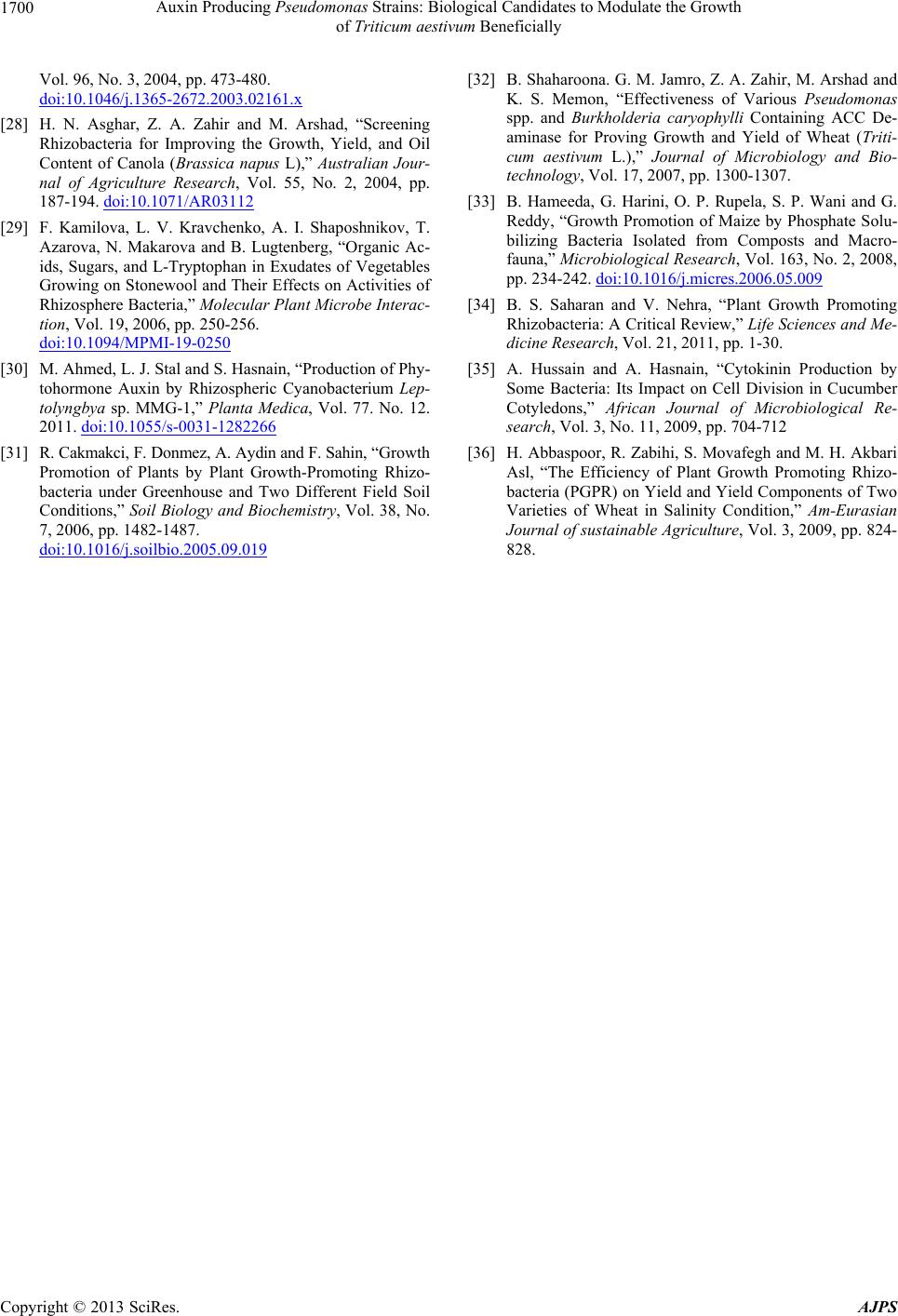 Auxin Producing Pseudomonas Strains: Biological Candidates to Modulate the Growth of Triticum aestivum Beneficially Copyright © 2013 SciRes. AJPS 1700 Vol. 96, No. 3, 2004, pp. 473-480. doi:10.1046/j.1365-2672.2003.02161.x [28] H. N. Asghar, Z. A. Zahir and M. Arshad, “Screening Rhizobacteria for Improving the Growth, Yield, and Oil Content of Canola (Brassica napus L),” Australian Jour- nal of Agriculture Research, Vol. 55, No. 2, 2004, pp. 187-194. doi:10.1071/AR03112 [29] F. Kamilova, L. V. Kravchenko, A. I. Shaposhnikov, T. Azarova, N. Makarova and B. Lugtenberg, “Organic Ac- ids, Sugars, and L-Tryptophan in Exudates of Vegetables Growing on Stonewool and Their Effects on Activities of Rhizosphere Bacteria,” Molecular Plant Microbe Interac- tion, Vol. 19, 2006, pp. 250-256. doi:10.1094/MPMI-19-0250 [30] M. Ahmed, L. J. Stal and S. Hasnain, “Production of Phy- tohormone Auxin by Rhizospheric Cyanobacterium Lep- tolyngbya sp. MMG-1,” Planta Medica, Vol. 77. No. 12. 2011. doi:10.1055/s-0031-1282266 [31] R. Cakmakci, F. Donmez, A. Aydin and F. Sahin, “Growth Promotion of Plants by Plant Growth-Promoting Rhizo- bacteria under Greenhouse and Two Different Field Soil Conditions,” Soil Biology and Biochemistry, Vol. 38, No. 7, 2006, pp. 1482-1487. doi:10.1016/j.soilbio.2005.09.019 [32] B. Shaharoona. G. M. Jamro, Z. A. Zahir, M. Arshad and K. S. Memon, “Effectiveness of Various Pseudomonas spp. and Burkholderia caryophylli Containing ACC De- aminase for Proving Growth and Yield of Wheat (Triti- cum aestivum L.),” Journal of Microbiology and Bio- technology, Vol. 17, 2007, pp. 1300-1307. [33] B. Hameeda, G. Harini, O. P. Rupela, S. P. Wani and G. Reddy, “Growth Promotion of Maize by Phosphate Solu- bilizing Bacteria Isolated from Composts and Macro- fauna,” Microbiological Research, Vol. 163, No. 2, 2008, pp. 234-242. doi:10.1016/j.micres.2006.05.009 [34] B. S. Saharan and V. Nehra, “Plant Growth Promoting Rhizobacteria: A Critical Review,” Life Sciences and Me- dicine Research, Vol. 21, 2011, pp. 1-30. [35] A. Hussain and A. Hasnain, “Cytokinin Production by Some Bacteria: Its Impact on Cell Division in Cucumber Cotyledons,” African Journal of Microbiological Re- search, Vol. 3, No. 11, 2009, pp. 704-712 [36] H. Abbaspoor, R. Zabihi, S. Movafegh and M. H. Akbari Asl, “The Efficiency of Plant Growth Promoting Rhizo- bacteria (PGPR) on Yield and Yield Components of Two Varieties of Wheat in Salinity Condition,” Am-Eurasian Journal of sustainable Agriculture, Vol. 3, 2009, pp. 824- 828. |