

Paper Menu >>
Journal Menu >>
 Vol.5, No.8, 1210-1215 (2013) Health http://dx.doi.org/10.4236/health.2013.58164 Effect of onion (Allium cepa L.) as an antibiotic growth promoter substitution on performance, immune responses and serum biochemical parameters in broiler chicks Majid Goodarzi1*, Nasir Landy2, Shahram Nanekarani1 1Department of Animal Science, Borujerd Branch, Islamic Azad University, Lorestan, Iran; *Corresponding Author: [email protected] 2Young Researchers Club of Islamic Azad University, Khorasgan Branch, Isfahan, Iran Received 6 May 2013; revised 6 June 2013; accepted 1 July 2013 Copyright © 2013 Majid Goodarzi et al. This is an open access article distributed under the Creative Commons Attribution License, which permits unrestricted use, distribution, and reproduction in any medium, provided the original work is properly cited. ABSTRACT This experiment was conducted to evaluate the effect of onion (Allium cepa L.) as an antibiotic growth promoter substitute on growth perfor- mance, immune responses and serum bio- chemistry in broilers. A total of 192 one-d-old as hatched broiler chicks (Ross 308) were weighed and randomly allocated to four treatment groups, each with 4 replicate pens of 12 chicks. The die- tary treatments consisted of the basal diet (con- trol), antibiotic (15 mg Virginiamycin/kg), and control +10 or 30 g fresh onion bulb/kg diet. Body weights of broilers were determined at d 1, 21 and 42, feed intake was determined at the same periods, and feed conversion ratio was calculated accordingly. At 14th and 21st days blood samples were taken for measuring anti- body titers against NDV and at 42nd day for bio- chemical analysis. At d 42, two birds per repli- cate were slaughtered for determination of lym- phoid organ weight s. Dietary supplement ation of 30 g/kg onion increased final body weight of broilers at 42nd d of age compared to the other treatments (P < 0.05). Birds fed 30 g onion/kg in the diet had the highest feed intake than other treatments at different growth periods (P < 0.05). Dietary treatments failed to induce any signifi- cant effect on antibody titers against NDV, al- though the weight of lymphoid organs was sig- nificantly (P < 0.05) higher for birds fed diets supplemented with 30 g/kg Onion. Broilers re- ceiving 30 g/kg onion had a significantly higher HDL and lower triglyceride concentrations com- pared to control groups (P < 0.05). Feeding 30 g/kg onion resulted in a marked reduction in the concentration of the glucose comp ared to control groups (P < 0.05). The results suggested that die- t ary inclusion of 30 g/kg onion can be applied as alternatives to in-feed antibiotics for broiler diet s. Keywords: Allium cepa; Onion; Broiler Chickens; Immune Response; Serum Biochemical Parameters 1. INTRODUCTION Subtherapeutic feeding of antibiotics has historically been a practice in some sectors of the commercial broiler industry to promote growth performance and protect flock health [1,2]. However, the use of dietary antibiotics has resulted in controversial problems such as devel- opment of antibiotic resistant bacteria and drug residue in the final products [3] which can be harmful to con- sumers. Thus, the use of antibiotics as a growth promoter is no longer acceptable and it is forbidden in European Union countries. As a result new alternatives are being introduced to livestock producers, among which phyto- genic and herbal products have been given considerable attention as possible in-feed antibiotics substitutions. In recent years, the use of phytogenic compounds has gained momentum for their potential role as natural al- ternatives to antibiotic growth promoters in animal nu- triation [4,5]. The genus Allium includes about 550 species. A few of these are important as food plants and as drugs in folk medicine, notably onion (Allium cepa L.) and garlic (Al- lium sativum L.). Onion is a bulbous plant widely culti- vated in almost every country of the world with leading Copyright © 2013 SciRes. OPEN A CCESS 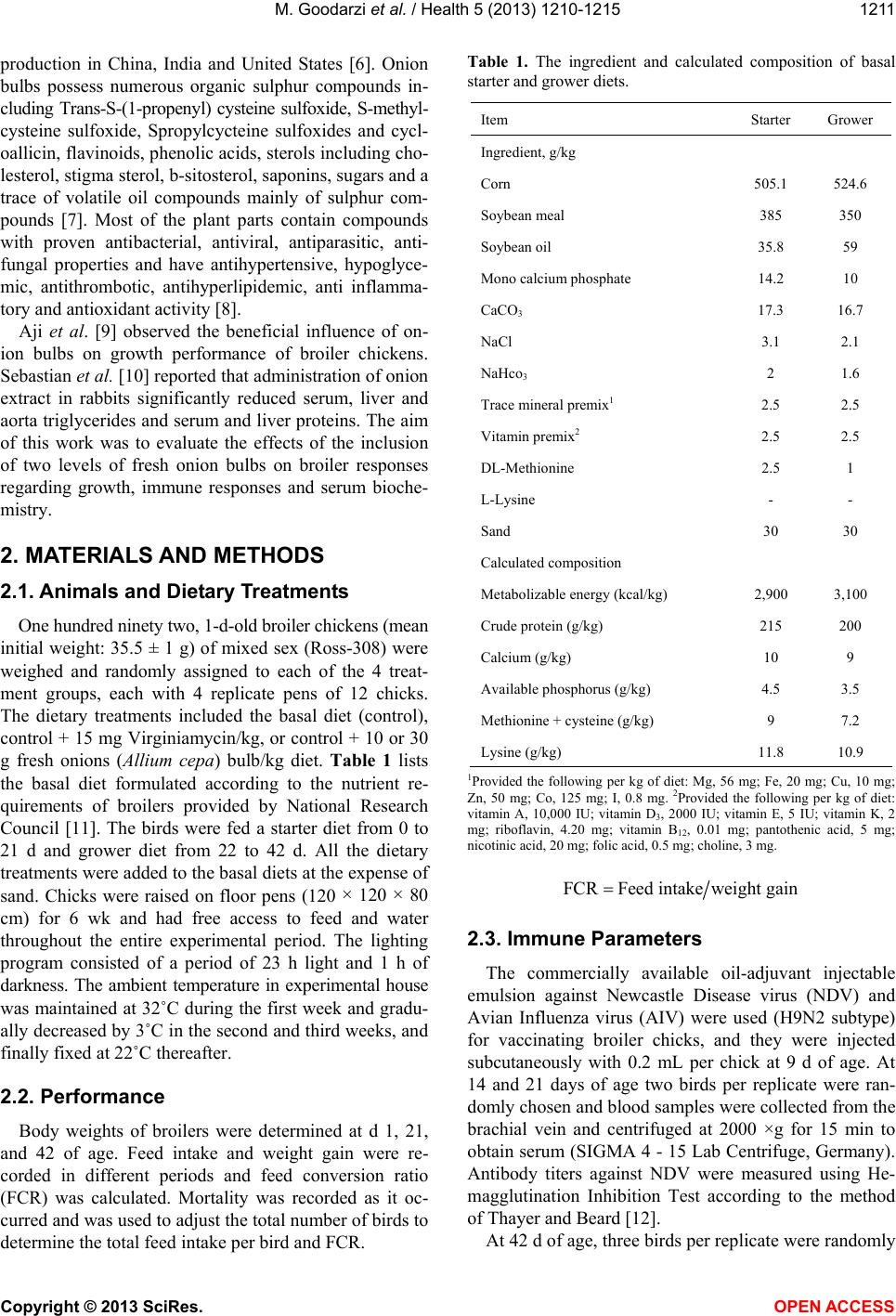 M. Goodarzi et al. / Health 5 (2013) 1210-12 15 1211 production in China, India and United States [6]. Onion bulbs possess numerous organic sulphur compounds in- cluding Trans-S-(1-propenyl) cysteine sulfoxide, S-methyl- cysteine sulfoxide, Spropylcycteine sulfoxides and cycl- oallicin, flavinoid s, phenolic acids, stero ls including cho- lesterol, stigma sterol, b-sitosterol, saponins, sugars and a trace of volatile oil compounds mainly of sulphur com- pounds [7]. Most of the plant parts contain compounds with proven antibacterial, antiviral, antiparasitic, anti- fungal properties and have antihypertensive, hypoglyce- mic, antithrombotic, antihyperlipidemic, anti inflamma- tory and antioxidan t activity [8]. Aji et al. [9] observed the beneficial influence of on- ion bulbs on growth performance of broiler chickens. Sebastian et al. [10] r eport ed that administr at ion of on ion extract in rabbits significantly reduced serum, liver and aorta triglycerides and serum and liver proteins. The aim of this work was to evaluate the effects of the inclusion of two levels of fresh onion bulbs on broiler responses regarding growth, immune responses and serum bioche- mistry. 2. MATERIALS AND METHODS 2.1. Animals and Dietary Treatments One hundred ninety two, 1-d-old broi ler chickens (mean initial weight: 3 5.5 ± 1 g) of mixed sex (Ross-308) were weighed and randomly assigned to each of the 4 treat- ment groups, each with 4 replicate pens of 12 chicks. The dietary treatments included the basal diet (control), control + 15 mg Virginiamycin/kg, or control + 10 or 30 g fresh onions (Allium cepa) bulb/kg diet. Table 1 lists the basal diet formulated according to the nutrient re- quirements of broilers provided by National Research Council [11]. The birds were fed a starter diet from 0 to 21 d and grower diet from 22 to 42 d. All the dietary treatments were added to the basal diets at the expense of sand. Chicks were raised on floor pens (120 × 120 × 80 cm) for 6 wk and had free access to feed and water throughout the entire experimental period. The lighting program consisted of a period of 23 h light and 1 h of darkness. The ambient temperature in experimental house was maintained at 32˚C during the first week and gradu- ally decreased by 3˚C in the second and third weeks, and finally fixed at 22˚C thereafter. 2.2. Performance Body weights of broilers were determined at d 1, 21, and 42 of age. Feed intake and weight gain were re- corded in different periods and feed conversion ratio (FCR) was calculated. Mortality was recorded as it oc- curred and was used to adj ust the to tal nu mber of birds to determine the total feed intake per bird and FCR. Table 1. The ingredient and calculated composition of basal starter and grower diets. Item Starter Grower Ingredient, g/kg Corn 505.1 524.6 Soybean meal 385 350 Soybean oil 35.8 59 Mono calcium phosphate 14.2 10 CaCO3 17.3 16.7 NaCl 3.1 2.1 NaHco3 2 1.6 Trace mineral premix1 2.5 2.5 Vitamin premix2 2.5 2.5 DL-Methionine 2.5 1 L-Lysine - - Sand 30 30 Calculated composition Metabolizable energy (kcal/kg) 2,900 3,100 Crude protein (g/kg) 215 200 Calcium (g/kg) 10 9 Available phosphorus (g/kg) 4.5 3.5 Methionine + cysteine (g/kg) 9 7.2 Lysine (g/kg) 11.8 10.9 1Provided the following per kg of diet: Mg, 56 mg; Fe, 20 mg; Cu, 10 mg; Zn, 50 mg; Co, 125 mg; I, 0.8 mg. 2Provided the following per kg of diet: vitamin A, 10,000 IU; vitamin D3, 2000 IU; vitamin E, 5 IU; vitamin K, 2 mg; riboflavin, 4.20 mg; vitamin B12, 0.01 mg; pantothenic acid, 5 mg; nicotinic acid, 20 mg; folic acid, 0.5 mg; choline, 3 mg. FCRFeed intakeweight gain 2.3. Immune Parameters The commercially available oil-adjuvant injectable emulsion against Newcastle Disease virus (NDV) and Avian Influenza virus (AIV) were used (H9N2 subtype) for vaccinating broiler chicks, and they were injected subcutaneously with 0.2 mL per chick at 9 d of age. At 14 and 21 days of age two birds per replicate were ran- domly chosen and blood samples were collected from the brachial vein and centrifuged at 2000 ×g for 15 min to obtain serum (SIGMA 4 - 15 Lab Centrifuge, Germany). Antibody titers against NDV were measured using He- magglutination Inhibition Test according to the method of Thayer and Beard [12]. At 42 d of age, three birds per replicate were randomly Copyright © 2013 SciRes. OPEN A CCESS 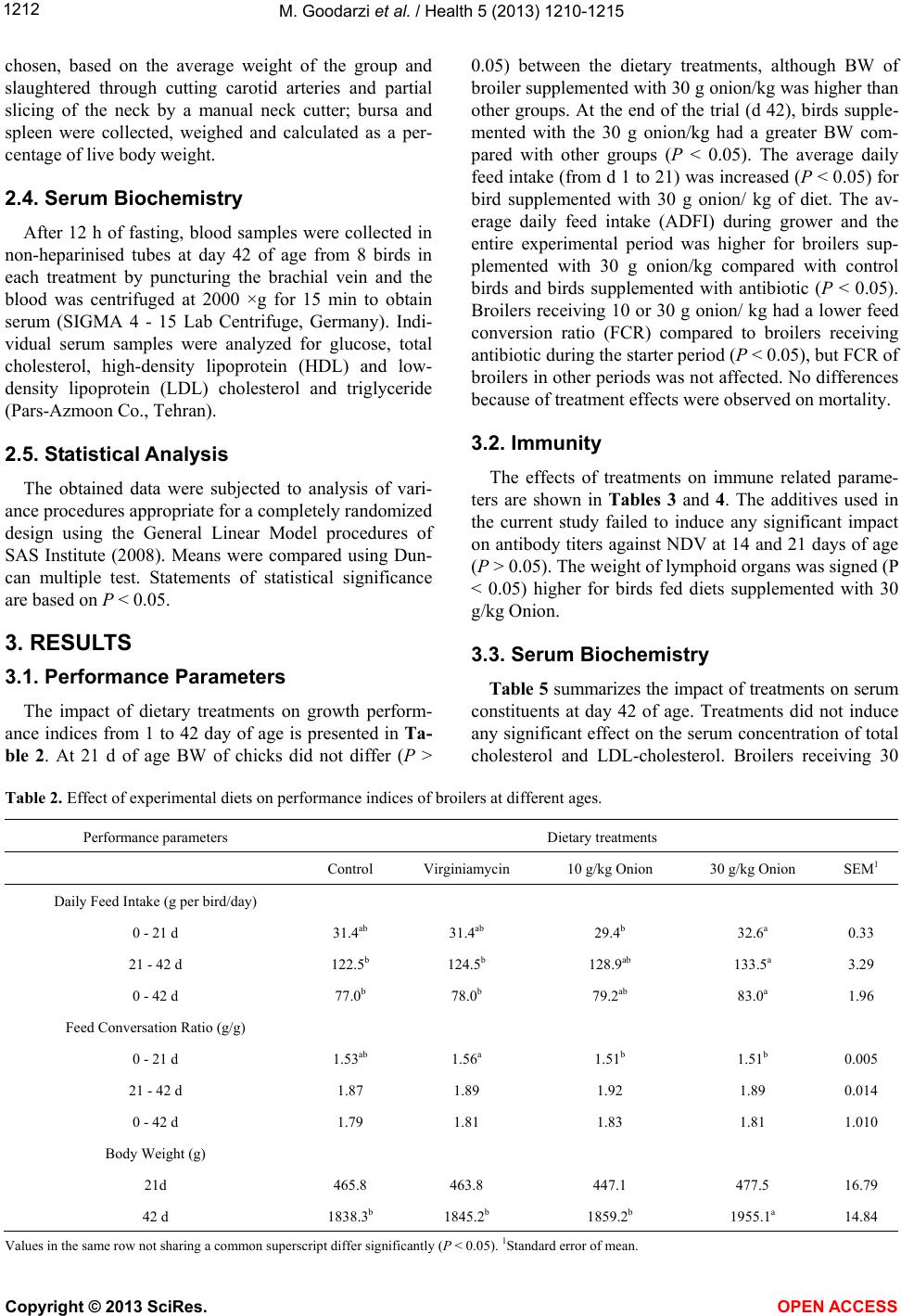 M. Goodarzi et al. / Health 5 (2013) 1210-12 15 Copyright © 2013 SciRes. OPEN A CCESS 1212 chosen, based on the average weight of the group and slaughtered through cutting carotid arteries and partial slicing of the neck by a manual neck cutter; bursa and spleen were collected, weighed and calculated as a per- centage of live body wei g ht . 2.4. Serum Biochemistry After 12 h of fasting, blood samples were collected in non-heparinised tubes at day 42 of age from 8 birds in each treatment by puncturing the brachial vein and the blood was centrifuged at 2000 ×g for 15 min to obtain serum (SIGMA 4 - 15 Lab Centrifuge, Germany). Indi- vidual serum samples were analyzed for glucose, total cholesterol, high-density lipoprotein (HDL) and low- density lipoprotein (LDL) cholesterol and triglyceride (Pars-Azm oo n C o., Tehran). 2.5. Statistical Analysis The obtained data were subjected to analysis of vari- ance procedures appropriate for a completely randomized design using the General Linear Model procedures of SAS Institute (2008). Means were compared using Dun- can multiple test. Statements of statistical significance are based on P < 0.05. 3. RESULTS 3.1. Performance Parameters The impact of dietary treatments on growth perform- ance indices from 1 to 42 day of age is presented in Ta- ble 2. At 21 d of age BW of chicks did not differ (P > 0.05) between the dietary treatments, although BW of broiler supplemented with 30 g onion/kg was higher than other groups. At the end of the trial (d 42), birds supple- mented with the 30 g onion/kg had a greater BW com- pared with other groups (P < 0.05). The average daily feed intake (from d 1 to 21) was increased (P < 0.05) for bird supplemented with 30 g onion/ kg of diet. The av- erage daily feed intake (ADFI) during grower and the entire experimental period was higher for broilers sup- plemented with 30 g onion/kg compared with control birds and birds supplemented with antibiotic (P < 0.05). Broilers receiving 10 or 30 g onion/ kg had a lower feed conversion ratio (FCR) compared to broilers receiving antibiotic during the starter period (P < 0.05), but FCR of broilers in other periods was not affected. No differences because of treatment effects were observed on mortality. 3.2. Immunity The effects of treatments on immune related parame- ters are shown in Tables 3 and 4. The additives used in the current study failed to induce any significant impact on antibody titers against NDV at 14 and 21 days of age (P > 0.05). The weight of lymphoid organs was signed (P < 0.05) higher for birds fed diets supplemented with 30 g/kg Onion. 3.3. Serum Biochemistry Table 5 summarizes the impact of treatments on serum constituents at day 42 of age. Treatments did not induce any significant effect on the serum concentration of total cholesterol and LDL-cholesterol. Broilers receiving 30 Table 2. Effect of experimental diets on performance indices of broilers at different ages. Performance parameters Dietary treatments Control Virginiamycin 10 g/kg Onion 30 g/kg Onion SEM1 Daily Feed Intake (g per bird/day) 0 - 21 d 31.4ab 31.4ab 29.4b 32.6a 0.33 21 - 42 d 122.5b 124.5b 128.9ab 133.5a 3.29 0 - 42 d 77.0b 78.0b 79.2ab 83.0a 1.96 Feed Conversation Ratio (g/g) 0 - 21 d 1.53ab 1.56a 1.51b 1.51b 0.005 21 - 42 d 1.87 1.89 1.92 1.89 0.014 0 - 42 d 1.79 1.81 1.83 1.81 1.010 Body Weight (g) 21d 465.8 463.8 447.1 477.5 16.79 42 d 1838.3b 1845.2b 1859.2b 1955.1a 14.84 Values in the same row not sharing a common superscript differ significantly (P < 0.05). 1Standard error of mean. 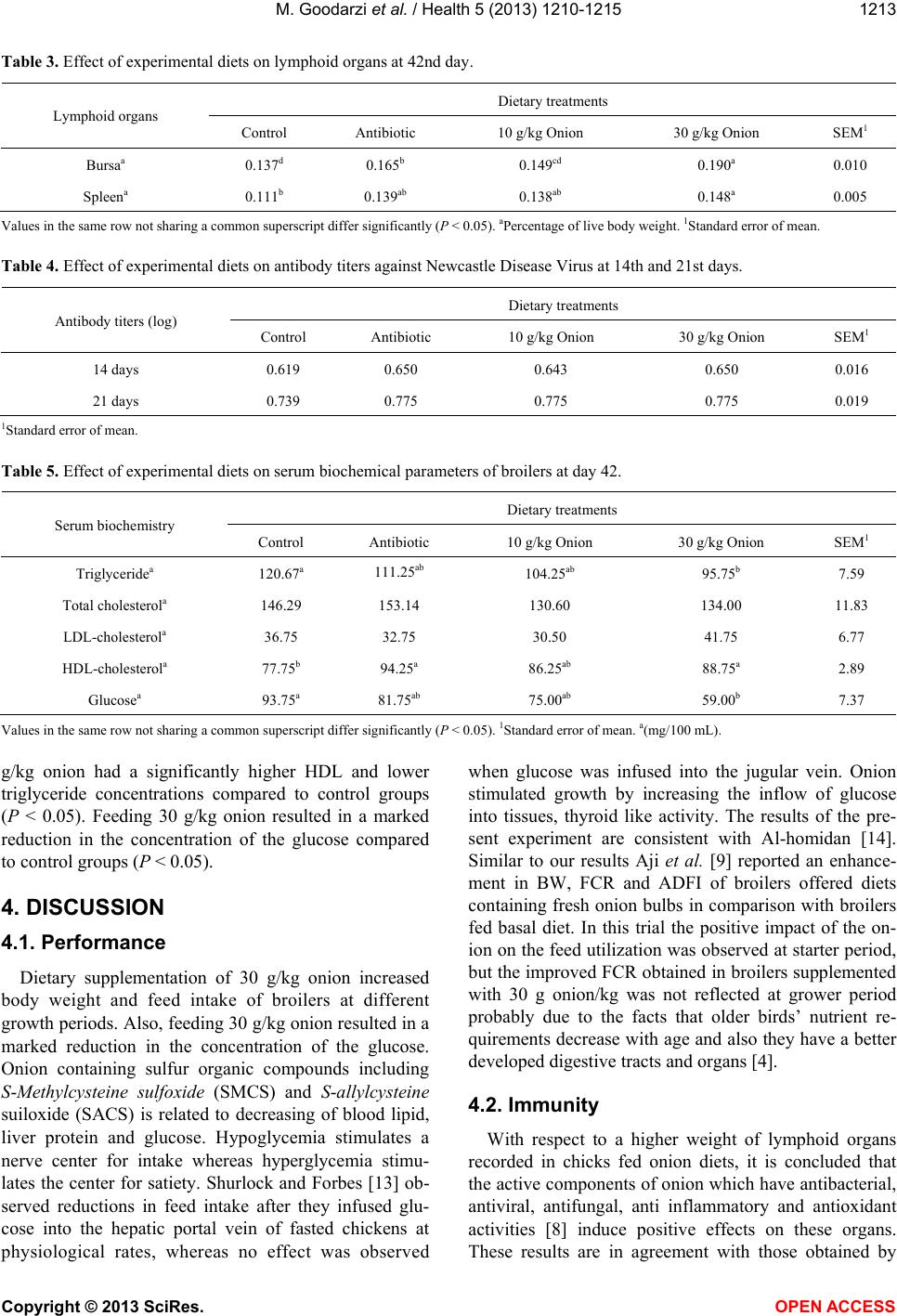 M. Goodarzi et al. / Health 5 (2013) 1210-12 15 1213 Table 3. Effect of experimental diet s on lymphoid organs at 42nd day. Dietary treatments Lymphoid organs Control Antibiotic 10 g/kg Onion 30 g/kg Onion SEM1 Bursaa 0.137d 0.165b 0.149cd 0.190a 0.010 Spleena 0.111b 0.139ab 0.138ab 0.148a 0.005 Values in the same row not sharing a common superscript differ significantly (P < 0.05). aPercentage of live body weight. 1Standard error of mean. Table 4. Effect of experimental die ts on antibod y titers against Newcastle Disease Virus at 14th and 21st days. Dietary treatments Antibody titers (log) Control Antibiotic 10 g/kg Onion 30 g/kg Onion SEM1 14 days 0.619 0.650 0.643 0.650 0.016 21 days 0.739 0.775 0.775 0.775 0.019 1Standard error of mean. Table 5. Effect of experimental diets on serum biochemical parameters of broilers at day 42. Dietary treatments Serum biochemistry Control Antibiotic 10 g/kg Onion 30 g/kg Onion SEM1 Triglyceridea 120.67a 111.25ab 104.25ab 95.75b 7.59 Total cholesterola 146.29 153.14 130.60 134.00 11.83 LDL-cholesterola 36.75 32.75 30.50 41.75 6.77 HDL-cholesterola 77.75b 94.25a 86.25ab 88.75a 2.89 Glucosea 93.75a 81.75ab 75.00ab 59.00b 7.37 Values in the same row not sharing a common superscript differ significantly (P < 0.05). 1Standard error of mean. a(mg/100 mL). g/kg onion had a significantly higher HDL and lower triglyceride concentrations compared to control groups (P < 0.05). Feeding 30 g/kg onion resulted in a marked reduction in the concentration of the glucose compared to control groups (P < 0.05). 4. DISCUSSION 4.1. Performance Dietary supplementation of 30 g/kg onion increased body weight and feed intake of broilers at different growth periods. Also, feeding 30 g/kg onion resulted in a marked reduction in the concentration of the glucose. Onion containing sulfur organic compounds including S-Methylcysteine sulfoxide (SMCS) and S-allylcysteine suiloxide (SACS) is related to decreasing of blood lipid, liver protein and glucose. Hypoglycemia stimulates a nerve center for intake whereas hyperglycemia stimu- lates the center for satiety. Shurlock and Forbes [13] ob- served reductions in feed intake after they infused glu- cose into the hepatic portal vein of fasted chickens at physiological rates, whereas no effect was observed when glucose was infused into the jugular vein. Onion stimulated growth by increasing the inflow of glucose into tissues, thyroid like activity. The results of the pre- sent experiment are consistent with Al-homidan [14]. Similar to our results Aji et al. [9] reported an enhance- ment in BW, FCR and ADFI of broilers offered diets containing fresh onion bulbs in comparison with broilers fed basal diet. In this trial the positive impact of the on- ion on the feed utilization was ob served at starter period, but the improved FCR obtained in bro ilers supplemented with 30 g onion/kg was not reflected at grower period probably due to the facts that older birds’ nutrient re- quirements decrease with age and also they have a better developed digestive tracts and organs [4]. 4.2. Immunity With respect to a higher weight of lymphoid organs recorded in chicks fed onion diets, it is concluded that the active components of onion which have antibacterial, antiviral, antifungal, anti inflammatory and antioxidant activities [8] induce positive effects on these organs. These results are in agreement with those obtained by Copyright © 2013 SciRes. OPEN A CCESS 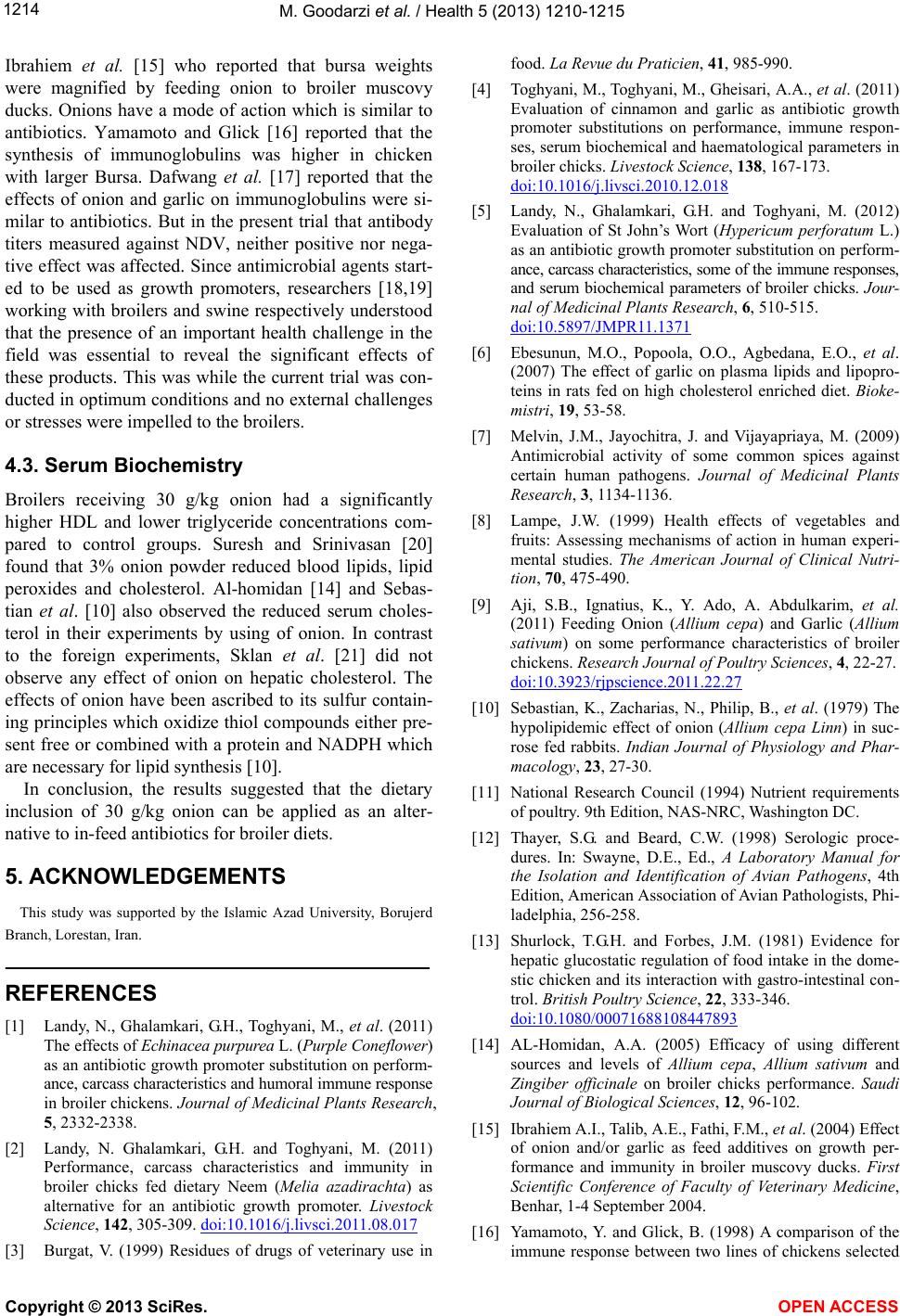 M. Goodarzi et al. / Health 5 (2013) 1210-12 15 1214 Ibrahiem et al. [15] who reported that bursa weights were magnified by feeding onion to broiler muscovy ducks. Onions have a mode of action which is similar to antibiotics. Yamamoto and Glick [16] reported that the synthesis of immunoglobulins was higher in chicken with larger Bursa. Dafwang et al. [17] reported that the effects of onion and garlic on immunoglobulins were si- milar to antibiotics. But in the present trial that antibody titers measured against NDV, neither positive nor nega- tive effect was affected. Since antimicrobial agents start- ed to be used as growth promoters, researchers [18,19] working with broilers and swine respectively understood that the presence of an important health challenge in the field was essential to reveal the significant effects of these products. This was while the current trial was con- ducted in optimum cond itions and no external challeng es or stresses were impelled to the broilers. 4.3. Serum Biochemistry Broilers receiving 30 g/kg onion had a significantly higher HDL and lower triglyceride concentrations com- pared to control groups. Suresh and Srinivasan [20] found that 3% onion powder reduced blood lipids, lipid peroxides and cholesterol. Al-homidan [14] and Sebas- tian et al. [10] also observed the reduced serum choles- terol in their experiments by using of onion. In contrast to the foreign experiments, Sklan et al. [21] did not observe any effect of onion on hepatic cholesterol. The effects of onion have been ascribed to its sulfur contain- ing principles wh ich oxidize thiol compound s either pre- sent free or combined with a protein and NADPH which are necessary for lipid synthesis [10]. In conclusion, the results suggested that the dietary inclusion of 30 g/kg onion can be applied as an alter- native to in-feed antibio tics for broiler diets. 5. ACKNOWLEDGEMENTS This study was supported by the Islamic Azad University, Borujerd Branch, Lorestan, Iran. REFERENCES [1] Landy, N., Ghalamkari, G.H., Toghyani, M., et al. (2011) The effects of Echinacea purpurea L. (Purple Coneflower) as an antibiotic growth promoter substitution on perform- ance, carcass characteristics and humoral immune response in broiler chickens. Journal of Medicinal Plants Research, 5, 2332-2338. [2] Landy, N. Ghalamkari, G.H. and Toghyani, M. (2011) Performance, carcass characteristics and immunity in broiler chicks fed dietary Neem (Melia azadirachta) as alternative for an antibiotic growth promoter. Livestock Science, 142, 305-309. doi:10.1016/j.livsci.2011.08.017 [3] Burgat, V. (1999) Residues of drugs of veterinary use in food. La Revue du Praticien, 41, 985-990. [4] Toghya ni, M., Toghyani , M., Gheisari, A.A. , et al. (2011) Evaluation of cinnamon and garlic as antibiotic growth promoter substitutions on performance, immune respon- ses, serum biochemical and haematological parameters in broiler chicks. Livestock Science, 138, 167-173. doi:10.1016/j.livsci.2010.12.018 [5] Landy, N., Ghalamkari, G.H. and Toghyani, M. (2012) Evaluation of St John’s Wort (Hypericum perforatum L.) as an antibiotic growth promoter substitution on perform- ance, carcass characteri stics, some of the immune responses, and serum biochemical parameters of broiler chicks. Jour- nal of Medicinal Plants Research, 6, 510-515. doi:10.5897/JMPR11.1371 [6] Ebesunun, M.O., Popoola, O.O., Agbedana, E.O., et al. (2007) The effect of garlic on plasma lipids and lipopro- teins in rats fed on high cholesterol enriched diet. Bioke- mistri, 19, 53-58. [7] Melvin, J.M., Jayochitra, J. and Vijayapriaya, M. (2009) Antimicrobial activity of some common spices against certain human pathogens. Journal of Medicinal Plants Research, 3, 1134-1136. [8] Lampe, J.W. (1999) Health effects of vegetables and fruits: Assessing mechanisms of action in human experi- mental studies. The American Journal of Clinical Nutri- tion, 70, 475-490. [9] Aji, S.B., Ignatius, K., Y. Ado, A. Abdulkarim, et al. (2011) Feeding Onion (Allium cepa) and Garlic (Allium sativum) on some performance characteristics of broiler chickens. Research Journal of Poultry Sciences, 4, 22-27. doi:10.3923/rjpscience.2011.22.27 [10] Sebastian, K., Zacharias, N., Philip, B., et al. (1979) The hypolipidemic effect of onion (Allium cepa Linn) in suc- rose fed rabbits. Indian Journal of Physiology and Phar- macology, 23, 27-30. [11] National Research Council (1994) Nutrient requirements of poultry. 9th Edition, NAS-NRC, Washington DC. [12] Thayer, S.G. and Beard, C.W. (1998) Serologic proce- dures. In: Swayne, D.E., Ed., A Laboratory Manual for the Isolation and Identification of Avian Pathogens, 4th Edition, American Associa tion of Avi an Pathologists , P hi - ladelphia, 256-258. [13] Shurlock, T.G.H. and Forbes, J.M. (1981) Evidence for hepatic glucostatic regulation of food intake in the dome- stic chicken and its interaction with gastro-intestinal con- trol. British Poultry Science, 22, 333-346. doi:10.1080/00071688108447893 [14] AL-Homidan, A.A. (2005) Efficacy of using different sources and levels of Allium cepa, Allium sativum and Zingiber officinale on broiler chicks performance. Saudi Journal of Biological Sciences, 12, 96-102. [15] Ibrahiem A.I., Talib, A.E., Fathi, F.M., et al. (2004) Effect of onion and/or garlic as feed additives on growth per- formance and immunity in broiler muscovy ducks. First Scientific Conference of Faculty of Veterinary Medicine, Benhar, 1-4 September 2004. [16] Yamamoto, Y. and Glick, B. (1998) A comparison of the immune response between two lines of chickens selected Copyright © 2013 SciRes. OPEN A CCESS  M. Goodarzi et al. / Health 5 (2013) 1210-12 15 Copyright © 2013 SciRes. OPEN A CCESS 1215 for differences in the weight of the bursa of Fabricius. Poultry Science, 61, 2129-2132. doi:10.3382/ps.0612129 [17] Dafwang, L.M.E., Sunde, M.L. and Bird, H.R. (1985) Bursal, intestinal and spleen weight and antibody re- sponse of chicks feed substance therapeutic levels of die- tary. Poultry Science, 64, 634-639. doi:10.3382/ps.0640634 [18] Coates, M.E., Davies, M.K. and Kon, S.K. (1952) The ef- fect of antibiotics on the intestine of the chick. British Journal of Nutrition, 9, 110-119. doi:10.1079/BJN19550016 [19] Whitehair, C.K. and Thompson, C.M. (1956) Observa- tions in raising “disease-free” swine. Journal of the Ame- rican Veterinary Medical Association, 128, 94-98. [20] Suresh Babu, P. and Srinivasan, K. (1997) Influence of dietary capaicin and onion on the metabolic abnormalities associated with streptozotocin induced diabetes mellitus. Molecular and Cellular Biochemistry, 175, 49-57. doi:10.1023/A:1006881027166 [21] Sklan, D., Bernera, Y.N. and Rabinowitch, H.D. (1992) The effect of dietary onion and garlic on hepatic lipid concentrations and activity of antioxidative enzymes in chicks. The Journal of Nutritional Biochemistry, 3, 322- 325. doi:10.1016/0955-2863(92)90022-B Supplement FCR = Feed conversion ratio; NDV = Newcastle Disease virus; AIV = Avian Influenza virus; HDL = High-density lipoprotein; LDL = Low-density lipoprotein; BW = Body Weight; ADFI = Average daily feed intake; NADPH = Nicotinamide adenine dinucl eotide phosphate; SEM = Standard error of mean. |