

Paper Menu >>
Journal Menu >>
 Detection, 2013, 1, 1-6 http://dx.doi.org/10.4236/detction.2013.11001 Published Online July 2013 (http://www.scirp.org/journal/detection) 1 Relationship between Extent of Coffee Intake and Recognition of Its Effects and Ingredients* Hiroki Sugiura1, Shinichi Demura1, Yoshinori Nagasawa2, Shunsuke Yamaji3, Tamotsu Kitabayashi4, Shigeki Matsuda5, Takayoshi Yamada6, Ning Xu7 1Graduate School of Natural Science and Technology, Kanazawa University, Ishikawa, Japan; 2Department of Health and Sports Sciences, Kyoto Pharmaceutical University, Kyoto, Japan; 3Faculty of Medical Sciences, University of Fukui, Fukui, Japan; 4Faculty of Science Division 1, Tokyo University of Science, Tokyo, Japan; 5Junior College, Gifu Shotoku Gakuen University, Gifu, Japan; 6Faculty of Education and Regional Studies, University of Fukui, Fukui, Japan; 7Human and Socio-Environmental Studies, Kana- zawa University, Ishikawa, Japan. Email: [email protected] Received June 12th, 2013; revised July 10th, 2013; accepted July 17th, 2013 Copyright © 2013 Hiroki Sugiura et al. This is an open access article distributed under the Creative Commons Attribution License, which permits unrestricted use, distribution, and reproduction in any medium, provided the original work is properly cited. ABSTRACT This study examined the relationship between number of cups of coffee intake and recognition of the effects of coffee intake and its ingredients in young males and females. The subjects included 624 young people (ages 15 - 24; 359 males, 265 females), who drank coffee habitually. They were classified into three groups on the basis of the number of cups of coffee consumed per day: “one cup,” “two cups,” and “over three cups.” In males, about 25% of the “over three cups” group expected “resolution of stress” from coffee, and this percentage was higher than that in the other groups. In fe- males, about 18% of the same group had similar expectations; however, no significant group difference was found among the three groups. Few persons expected protective effects of diabetes mellitus and cancer in both genders (about 5% answer rate). About 20% of males and 18% of females in the “over three cups” group recognized the “laxative property” of coffee intake, and a significant group difference was found only in males. Even in the “one cup” group, over 77% knew that “caffeine” is an ingredient of coffee; however, few persons (under 15%) knew “poly-phenol,” which has protective effects of diabetes mellitus and cancer. In addition, no significant group difference was found in both genders. In conclusion, regardless of the coffee intake cup-number in both genders, recognition of the effects of coffee intake was low in both males and females and the recognition of effects differs by the intake cup-number in males. Only few persons knew the other ingredients in coffee apart from “caffeine.” Keywords: Coffee; Number of Cups of Intake; Expectation; Recognition 1. Introduction Coffee is a luxury drink that is drunk by people all over the world. It includes ingredients such as caffeine and poly-phenol [1]. The former has effects such as allevia- tion of stress and fatigue and central excitation [2], and the latter has effects that reduce risks such as diabetes, liver cirrhosis, colorectal cancer, and death [1]. On the other hand, caffeine also has negative effects such as diuretic and laxative properties [3,4]. Periodic coffee intake is an effective precaution against lifestyle-related diseases and it may be important that people recognize the positive and negative effects of coffee intake on the body, and drink it. Freedman et al., Hildebrand et al., and Kuchinke and Lux examined the effects on the body of differences in number of cups of coffee consumed per day, and re- ported that higher intake can be expected to produce positive effects [5-7]. Findings on coffee intake have been reported by many papers [8-14], including the above reports, and have also been discussed in the media and magazines. Habitual coffee drinkers are more likely to recognize the effects of coffee intake and its ingredi- ents. In addition, people who drink more coffee may know more about coffee. According to a survey by the All Japan Coffee Asso- ciation in 2010 [15], coffee consumption tends to be lower in people under 24 years old than in people over 25 years old. As stated above, because positive health effects are expected from coffee intake, habitual coffee intake by young people may be regarded as a useful preventive *Research funds were not provided by any institution. Copyright © 2013 SciRes. Detection 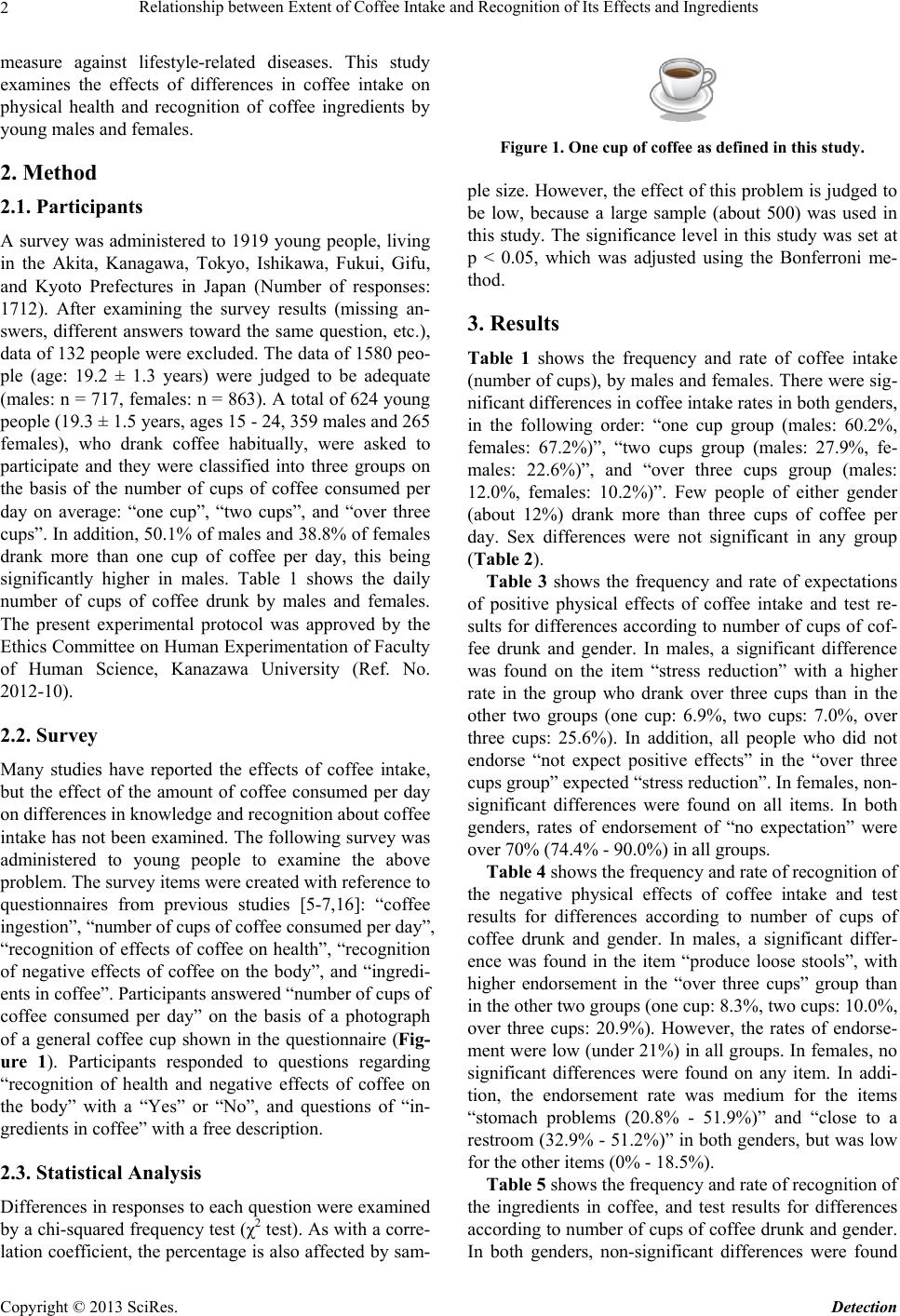 Relationship between Extent of Coffee Intake and Recognition of Its Effects and Ingredients 2 measure against lifestyle-related diseases. This study examines the effects of differences in coffee intake on physical health and recognition of coffee ingredients by young males and females. 2. Method 2.1. Participants A survey was administered to 1919 young people, living in the Akita, Kanagawa, Tokyo, Ishikawa, Fukui, Gifu, and Kyoto Prefectures in Japan (Number of responses: 1712). After examining the survey results (missing an- swers, different answers toward the same question, etc.), data of 132 people were excluded. The data of 1580 peo- ple (age: 19.2 ± 1.3 years) were judged to be adequate (males: n = 717, females: n = 863). A total of 624 young people (19.3 ± 1.5 years, ages 15 - 24, 359 males and 265 females), who drank coffee habitually, were asked to participate and they were classified into three groups on the basis of the number of cups of coffee consumed per day on average: “one cup”, “two cups”, and “over three cups”. In addition, 50.1% of males and 38.8% of females drank more than one cup of coffee per day, this being significantly higher in males. Table 1 shows the daily number of cups of coffee drunk by males and females. The present experimental protocol was approved by the Ethics Committee on Human Experimentation of Faculty of Human Science, Kanazawa University (Ref. No. 2012-10). 2.2. Survey Many studies have reported the effects of coffee intake, but the effect of the amount of coffee consumed per day on differences in knowledge and recognition about coffee intake has not been examined. The following survey was administered to young people to examine the above problem. The survey items were created with reference to questionnaires from previous studies [5-7,16]: “coffee ingestion”, “number of cups of coffee consumed per day”, “recognition of effects of coffee on health”, “recognition of negative effects of coffee on the body”, and “ingredi- ents in coffee”. Participants answered “number of cups of coffee consumed per day” on the basis of a photograph of a general coffee cup shown in the questionnaire (Fig- ure 1). Participants responded to questions regarding “recognition of health and negative effects of coffee on the body” with a “Yes” or “No”, and questions of “in- gredients in coffee” with a free description. 2.3. Statistical Analysis Differences in responses to each question were examined by a chi-squared frequency test (χ2 test). As with a corre- lation coefficient, the percentage is also affected by sam- Figure 1. One cup of coffee as defined in this study. ple size. However, the effect of this problem is judged to be low, because a large sample (about 500) was used in this study. The significance level in this study was set at p < 0.05, which was adjusted using the Bonferroni me- thod. 3. Results Table 1 shows the frequency and rate of coffee intake (number of cups), by males and females. There were sig- nificant differences in coffee intake rates in both genders, in the following order: “one cup group (males: 60.2%, females: 67.2%)”, “two cups group (males: 27.9%, fe- males: 22.6%)”, and “over three cups group (males: 12.0%, females: 10.2%)”. Few people of either gender (about 12%) drank more than three cups of coffee per day. Sex differences were not significant in any group (Table 2). Table 3 shows the frequency and rate of expectations of positive physical effects of coffee intake and test re- sults for differences according to number of cups of cof- fee drunk and gender. In males, a significant difference was found on the item “stress reduction” with a higher rate in the group who drank over three cups than in the other two groups (one cup: 6.9%, two cups: 7.0%, over three cups: 25.6%). In addition, all people who did not endorse “not expect positive effects” in the “over three cups group” expected “stress reduction”. In females, non- significant differences were found on all items. In both genders, rates of endorsement of “no expectation” were over 70% (74.4% - 90.0%) in all groups. Table 4 shows the frequency and rate of recognition of the negative physical effects of coffee intake and test results for differences according to number of cups of coffee drunk and gender. In males, a significant differ- ence was found in the item “produce loose stools”, with higher endorsement in the “over three cups” group than in the other two groups (one cup: 8.3%, two cups: 10.0%, over three cups: 20.9%). However, the rates of endorse- ment were low (under 21%) in all groups. In females, no significant differences were found on any item. In addi- tion, the endorsement rate was medium for the items “stomach problems (20.8% - 51.9%)” and “close to a restroom (32.9% - 51.2%)” in both genders, but was low for the other items (0% - 18.5%). Table 5 shows the frequency and rate of recognition of the ingredients in coffee, and test results for differences according to number of cups of coffee drunk and gender. In both genders, non-significant differences were found Copyright © 2013 SciRes. Detection 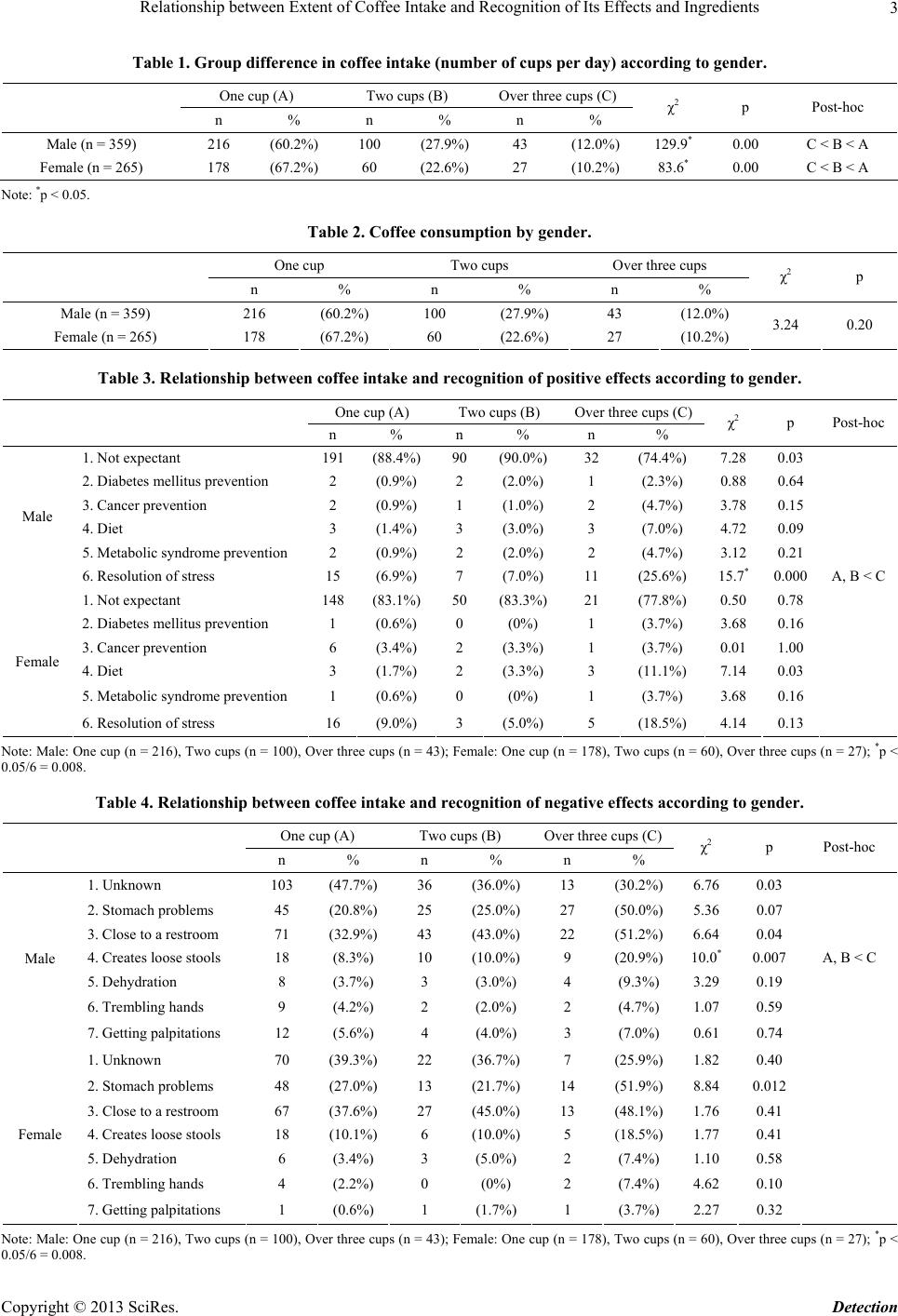 Relationship between Extent of Coffee Intake and Recognition of Its Effects and Ingredients Copyright © 2013 SciRes. Detection 3 Table 1. Group difference in coffee intake (number of cups per day) according to gender. One cup (A) Two cups (B) Over three cups (C) n % n % n % χ2 p Post-hoc Male (n = 359) 216 (60.2%) 100 (27.9%)43 (12.0%)129.9* 0.00 C < B < A Female (n = 265) 178 (67.2%) 60 (22.6%)27 (10.2%)83.6* 0.00 C < B < A Note: *p < 0.05. Table 2. Coffee consumption by gender. One cup Two cups Over three cups n % n % n % χ2 p Male (n = 359) 216 (60.2%) 100 (27.9%) 43 (12.0%) Female (n = 265) 178 (67.2%) 60 (22.6%) 27 (10.2%) 3.24 0.20 Table 3. Relationship between coffee intake and recognition of positive effects according to gender. One cup (A) Two cups (B) Over three cups (C) n % n % n % χ2 p Post-hoc 1. Not expectant 191 (88.4%)90 (90.0%) 32 (74.4%) 7.28 0.03 2. Diabetes mellitus prevention 2 (0.9%) 2 (2.0%) 1 (2.3%) 0.88 0.64 3. Cancer prevention 2 (0.9%) 1 (1.0%) 2 (4.7%) 3.78 0.15 4. Diet 3 (1.4%) 3 (3.0%) 3 (7.0%) 4.72 0.09 5. Metabolic syndrome prevention 2 (0.9%) 2 (2.0%) 2 (4.7%) 3.12 0.21 Male 6. Resolution of stress 15 (6.9%) 7 (7.0%) 11 (25.6%) 15.7* 0.000 A, B < C 1. Not expectant 148 (83.1%)50 (83.3%) 21 (77.8%) 0.50 0.78 2. Diabetes mellitus prevention 1 (0.6%) 0 (0%) 1 (3.7%) 3.68 0.16 3. Cancer prevention 6 (3.4%) 2 (3.3%) 1 (3.7%) 0.01 1.00 4. Diet 3 (1.7%) 2 (3.3%) 3 (11.1%) 7.14 0.03 5. Metabolic syndrome prevention 1 (0.6%) 0 (0%) 1 (3.7%) 3.68 0.16 Female 6. Resolution of stress 16 (9.0%) 3 (5.0%) 5 (18.5%) 4.14 0.13 Note: Male: One cup (n = 216), Two cups (n = 100), Over three cups (n = 43); Female: One cup (n = 178), Two cups (n = 60), Over three cups (n = 27); *p < 0.05/6 = 0.008. Table 4. Relationship between coffee intake and recognition of negative effects according to gender. One cup (A) Two cups (B) Over three cups (C) n % n % n % χ2 p Post-hoc 1. Unknown 103 (47.7%)36 (36.0%)13 (30.2%)6.76 0.03 2. Stomach problems 45 (20.8%)25 (25.0%)27 (50.0%)5.36 0.07 3. Close to a restroom 71 (32.9%)43 (43.0%)22 (51.2%)6.64 0.04 4. Creates loose stools 18 (8.3%)10 (10.0%)9 (20.9%)10.0* 0.007 A, B < C 5. Dehydration 8 (3.7%)3 (3.0%) 4 (9.3%)3.29 0.19 6. Trembling hands 9 (4.2%) 2 (2.0%)2 (4.7%)1.07 0.59 Male 7. Getting palpitations 12 (5.6%)4 (4.0%)3 (7.0%)0.61 0.74 1. Unknown 70 (39.3%) 22 (36.7%)7 (25.9%)1.82 0.40 2. Stomach problems 48 (27.0%)13 (21.7%)14 (51.9%)8.84 0.012 3. Close to a restroom 67 (37.6%)27 (45.0%)13 (48.1%)1.76 0.41 4. Creates loose stools 18 (10.1%)6 (10.0%)5 (18.5%)1.77 0.41 5. Dehydration 6 (3.4%)3 (5.0%) 2 (7.4%)1.10 0.58 6. Trembling hands 4 (2.2%)0 (0%) 2 (7.4%)4.62 0.10 Female 7. Getting palpitations 1 (0.6%) 1 (1.7%) 1 (3.7%)2.27 0.32 Note: Male: One cup (n = 216), Two cups (n = 100), Over three cups (n = 43); Female: One cup (n = 178), Two cups (n = 60), Over three cups (n = 27); *p < 0.05/6 = 0.008. 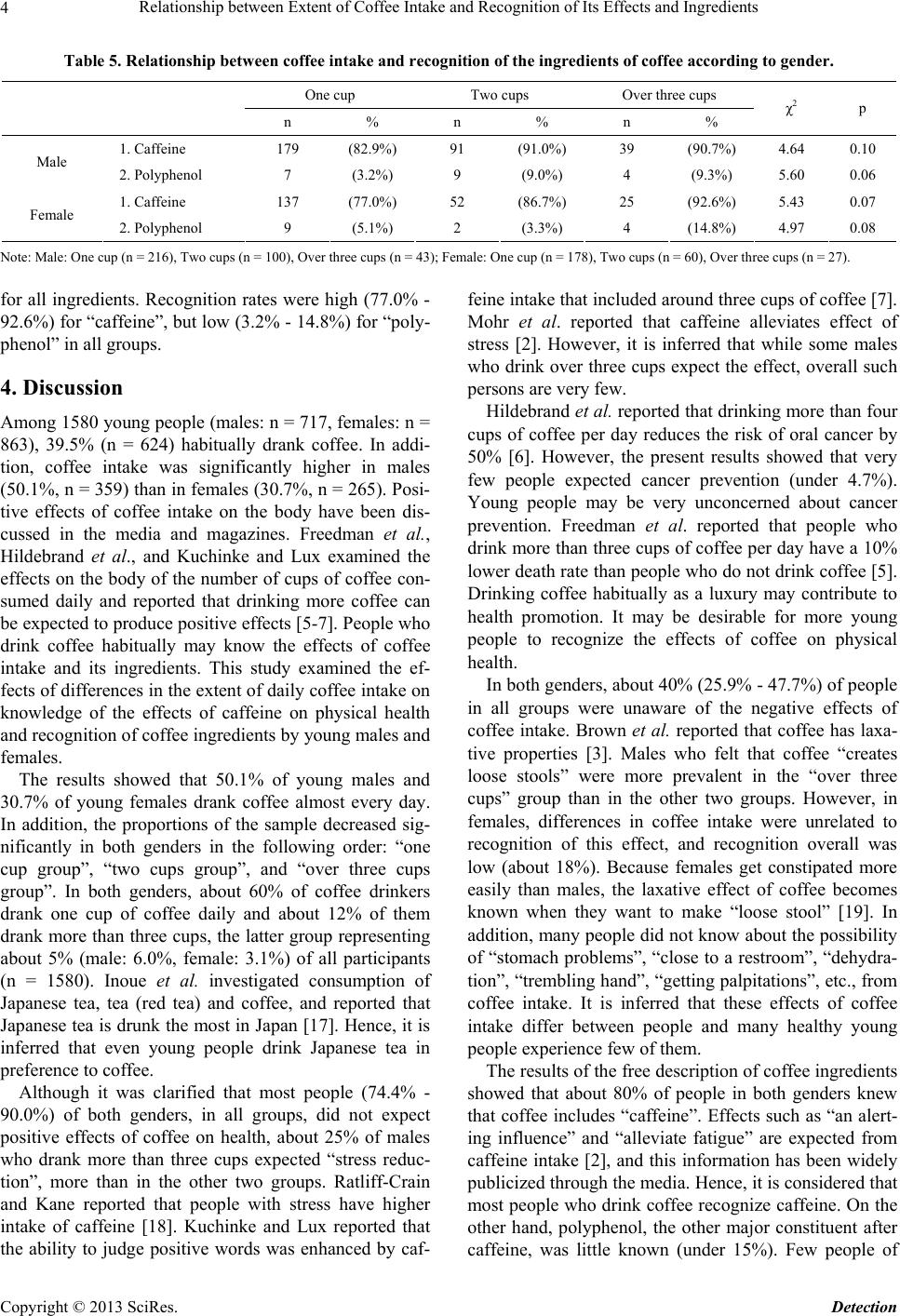 Relationship between Extent of Coffee Intake and Recognition of Its Effects and Ingredients 4 Table 5. Relationship betwee n coffe e intake and recognition of the ingredients of coffee according to gender. One cup Two cups Over three cups n % n % n % χ2 p 1. Caffeine 179 (82.9%) 91 (91.0%) 39 (90.7%) 4.64 0.10 Male 2. Polyphenol 7 (3.2%) 9 (9.0%) 4 (9.3%) 5.60 0.06 1. Caffeine 137 (77.0%) 52 (86.7%) 25 (92.6%) 5.43 0.07 Female 2. Polyphenol 9 (5.1%) 2 (3.3%) 4 (14.8%) 4.97 0.08 Note: Male: One cup (n = 216), Two cups (n = 100), Over three cups (n = 43); Female: One cup (n = 178), Two cups (n = 60), Over three cups (n = 27). for all ingredients. Recognition rates were high (77.0% - 92.6%) for “caffeine”, but low (3.2% - 14.8%) for “poly- phenol” in all groups. 4. Discussion Among 1580 young people (males: n = 717, females: n = 863), 39.5% (n = 624) habitually drank coffee. In addi- tion, coffee intake was significantly higher in males (50.1%, n = 359) than in females (30.7%, n = 265). Posi- tive effects of coffee intake on the body have been dis- cussed in the media and magazines. Freedman et al., Hildebrand et al., and Kuchinke and Lux examined the effects on the body of the number of cups of coffee con- sumed daily and reported that drinking more coffee can be expected to produce positive effects [5-7]. People who drink coffee habitually may know the effects of coffee intake and its ingredients. This study examined the ef- fects of differences in the extent of daily coffee intake on knowledge of the effects of caffeine on physical health and recognition of coffee ingredients by young males and females. The results showed that 50.1% of young males and 30.7% of young females drank coffee almost every day. In addition, the proportions of the sample decreased sig- nificantly in both genders in the following order: “one cup group”, “two cups group”, and “over three cups group”. In both genders, about 60% of coffee drinkers drank one cup of coffee daily and about 12% of them drank more than three cups, the latter group representing about 5% (male: 6.0%, female: 3.1%) of all participants (n = 1580). Inoue et al. investigated consumption of Japanese tea, tea (red tea) and coffee, and reported that Japanese tea is drunk the most in Japan [17]. Hence, it is inferred that even young people drink Japanese tea in preference to coffee. Although it was clarified that most people (74.4% - 90.0%) of both genders, in all groups, did not expect positive effects of coffee on health, about 25% of males who drank more than three cups expected “stress reduc- tion”, more than in the other two groups. Ratliff-Crain and Kane reported that people with stress have higher intake of caffeine [18]. Kuchinke and Lux reported that the ability to judge positive words was enhanced by caf- feine intake that included around three cups of coffee [7]. Mohr et al. reported that caffeine alleviates effect of stress [2]. However, it is inferred that while some males who drink over three cups expect the effect, overall such persons are very few. Hildebrand et al. reported that drinking more than four cups of coffee per day reduces the risk of oral cancer by 50% [6]. However, the present results showed that very few people expected cancer prevention (under 4.7%). Young people may be very unconcerned about cancer prevention. Freedman et al. reported that people who drink more than three cups of coffee per day have a 10% lower death rate than people who do not drink coffee [5]. Drinking coffee habitually as a luxury may contribute to health promotion. It may be desirable for more young people to recognize the effects of coffee on physical health. In both genders, about 40% (25.9% - 47.7%) of people in all groups were unaware of the negative effects of coffee intake. Brown et al. reported that coffee has laxa- tive properties [3]. Males who felt that coffee “creates loose stools” were more prevalent in the “over three cups” group than in the other two groups. However, in females, differences in coffee intake were unrelated to recognition of this effect, and recognition overall was low (about 18%). Because females get constipated more easily than males, the laxative effect of coffee becomes known when they want to make “loose stool” [19]. In addition, many people did not know about the possibility of “stomach problems”, “close to a restroom”, “dehydra- tion”, “trembling hand”, “getting palpitations”, etc., from coffee intake. It is inferred that these effects of coffee intake differ between people and many healthy young people experience few of them. The results of the free description of coffee ingredients showed that about 80% of people in both genders knew that coffee includes “caffeine”. Effects such as “an alert- ing influence” and “alleviate fatigue” are expected from caffeine intake [2], and this information has been widely publicized through the media. Hence, it is considered that most people who drink coffee recognize caffeine. On the other hand, polyphenol, the other major constituent after caffeine, was little known (under 15%). Few people of Copyright © 2013 SciRes. Detection  Relationship between Extent of Coffee Intake and Recognition of Its Effects and Ingredients 5 either gender may be aware of ingredients other than “caffeine,” irrespective of the extent of their coffee in- take. It has been reported that polyphenol has effects that reduce risks such as diabetes, liver cirrhosis, colorectal cancer, and death [1]. It will be necessary to get young people to recognize these effects. From the present results, even if people drink large amounts of coffee, it may not be always be the case that they have high expectations and recognition of positive effects of coffee on the body. In any case, it may be im- portant that people recognize the positive physical effects of coffee intake, and drink it. 5. Conclusion Irrespective of gender, coffee intake has little relation- ship to expectations and recognition of the effects of coffee on the body. Young males who drink a large amount of coffee tend to recognize “resolution of stress” and “creates loose stools”, but overall recognition rates are low. REFERENCES [1] Y. Fukushima, T. Ohie, Y. Yonekawa, K. Yonemoto, H. Aizawa, Y. Mori, M. Watanabe, M. Takeuchi, M. Hase- gawa, C. Taguchi and K. Kondo, “Coffee and Green Tea as a Large Source of Antioxidant Polyphenols in the Japa- nese Population,” Journal of Agricultural and Food Chemistry, Vol. 57, No. 4, 2009, pp. 1253-1259. doi:10.1021/jf802418j [2] M. Mohr, J. J. Nielsen and J. Bangsbo, “Caffeine Intake Improves Intense Intermittent Exercise Performance and Reduces Muscle Interstitial Potassium Accumulation,” Journal of Applied Physiology, Vol. 111, No. 5, 2011, pp. 1372-1379. doi:10.1152/japplphysiol.01028.2010 [3] S. R. Brown, P. A. Cann and N. W. Read, “Effect of Cof- fee on Distal Colon Function,” Gut, Vol. 31, No. 4, 1990, pp. 450-453. doi:10.1136/gut.31.4.450 [4] D. Gniechwitz, N. Reichardt, M. Blaut, H. Steinhart and M. Bunzel, “Dietary Fiber from Coffee Beverage: Deg- radation by Human Fecal Microbiota,” Journal of Agri- cultural and Food Chemistry, Vol. 55, No. 17, 2007, pp. 6989-6996. doi:10.1021/jf070646b [5] N. D. Freedman, Y. Park, C. C. Abnet, A. R. Hollenbeck and R. Sinha, “Association of Coffee Drinking with Total and Cause-Specific Mortality,” New England Journal of Medicine, Vol. 366, No. 20, 2012, pp. 1891-1904. doi:10.1056/NEJMoa1112010 [6] J. S. Hildebrand, A. V. Patel, M. L. McCullough, M. M. Gaudet, A. Y. Chen, R. B. Hayes and S. M. Gapstur, “Coffee, Tea, and Fatal Oral/Pharyngeal Cancer in a Large Prospective US Cohort,” American Journal of Epidemiology, Vol. 177, No. 1, 2012, pp. 50-58. doi:10.1093/aje/kws222 [7] L. Kuchinke and V. Lux, “Caffeine Improves Left Hemi- sphere Processing of Positive Words,” PLoS ONE, Vol. 7, No. 11, 2012, Article ID: e48487. doi:10.1371/journal.pone.0048487 [8] T. Yamaji, T. Mizoue, S. Tabata, S. Ogawa, K. Yamagu- chi, E. Shimizu, M. Mineshita and S. Kono, “Coffee Consumption and Glucose Tolerance Status in Middle- Aged Japanese Men,” Diabetologia, Vol. 47, No. 12, 2004, pp. 2145-2151. doi:10.1007/s00125-004-1590-5 [9] M. Inoue, I. Yoshimi, T. Sobue, S. Tsugane and JPHC Study Group, “Influence of Coffee Drinking on Subse- quent Risk of Hepatocellular of Coffee Drinking on Sub- sequent Risk of Hepatocellular Carcinoma: A Prospective Study in Japan,” Journal of the National Cancer Institute, Vol. 97, No. 4, 2005, pp. 293-300. doi:10.1093/jnci/dji040 [10] C. E. Ruhl and J. E. Everhart, “Coffee and Tea Consump- tion Are Associated with a Lower Incidence of Chronic Liver Disease in the United States,” Gastroenterology, Vol. 129, No. 6, 2005, pp. 1928-1936. doi:10.1053/j.gastro.2005.08.056 [11] T. Shimazu, Y. Tsubono, S. Kuriyama, K. Ohmori, Y. Koizumi, Y. Nishino, D. Shibuya and I. Tsuji, “Coffee Consumption and the Risk of Primary Liver Cancer: Pooled Analysis of Two Prospective Studies in Japan,” International Journal of Cancer, Vol. 116, No. 1, 2005, pp. 150-154. doi:10.1002/ijc.20989 [12] L. F. Andersen, D. R. Jacobs Jr., M. H. Carlsen and R. Blomhoff, “Consumption of Coffee Is Associated with Reduced Risk of Death Attributed to Inflammatory and Cardiovascular Diseases in the Iowa Women’s Health Study,” American Journal of Clinical Nutrition, Vol. 83, No. 5, 2006, pp. 1039-1046. [13] H. Iso, C. Date, K. Wakai, M. Fukui, A. Tamakoshi and JACC Study Group, “The Relationship between Green Tea and Total Caffeine Intake and Risk for Self-Reported Type 2 Diabetes among Japanese Adults,” Annals of In- ternal Medicine, Vol. 144, No. 8, 2006, pp. 554-562. doi:10.7326/0003-4819-144-8-200604180-00005 [14] A. Tverdal and S. Skurtveit, “Coffee Intake and Mortality from Liver Cirrhosis,” Annals of Epidemiology, Vol. 13, No. 6, 2003, pp. 419-423. doi:10.1016/S1047-2797(02)00462-3 [15] All Japan Coffee Association, “The Basic Survey of De- mand Trends for Coffee,” All Japan Coffee Association, Tokyo, 2011, pp. 148-151. [16] S. Demura, H. Aoki, T. Mizusawa, K. Soukura, M. Noda and T. Sato, “Gender Differences in Coffee Consumption and Its Effects in Young People,” Food and Nutrition Sci- ences, Vol. 4, No. 7, 2013, pp. 748-757. doi:10.4236/fns.2013.47096 [17] M. Inoue, K. Tajima, L. Hirose, N. Hamajima, T. Takezaki, T. Kuroishi and S. Tominaga, “Tea and Coffee Consumption and the Risk of Digestive Tract Cancers: Data from a Comparative Case-Referent Study in Japan,” Cancer Causes and Control, Vol. 9, No. 2, 1998, pp. 209-216. doi:10.1023/A:1008890529261 [18] J. Ratliff-Crain and J. Kane, “Predictors for Altering Caf- feine Consumption during Stress,” Addictive Behaviors, Vol. 20, No. 4, 1995, pp. 509-516. doi:10.1016/0306-4603(95)00012-2 Copyright © 2013 SciRes. Detection  Relationship between Extent of Coffee Intake and Recognition of Its Effects and Ingredients Copyright © 2013 SciRes. Detection 6 [19] S. Nakaji, J. Sakamoto, K. Sugawara, T. Osanai, H. Ki- kuchi, K. Tamura, H. Murakami, S. Iwane, A. Munakata and Y. Yoshida, “Studies on the Correlation of Food and Beverage Intake with Bowel Movements and Stool Con- sistency,” Journal of Japan Society of Coloproctology, Vol. 46, No. 3, 1993, pp. 225-239. doi:10.3862/jcoloproctology.46.225 |