

Paper Menu >>
Journal Menu >>
 Vol.3, No.3, 265-271 (2013) Open Journal of Ecology http://dx.doi.org/10.4236/oje.2013.33030 Comparative study of the effect of Bacillus thuringiensis on larval populations of Culex pipiens L. (Diptera-Culicidae) of the City of Tlemcen (Algeria) Nassima Tabti*, Karima Abdellaoui-Hassaïne Laboratory of Valuation of the Actions of the Man for the Environmental Protection and the Application in Public Health, University of Tlemcen, Tlemcen, Algeria; *Cor r e s p o n d i n g A u t h or : [email protected] Received 8 February 2013; revised 3 April 2013; accepted 30 May 2013 Copyright © 2013 Nassima Tabti, Karima Abdellaoui-Hassaïne. This is an open access article distributed under the Creative Com- mons Attribution License, which permits unrestricted use, distribution, and reproduction in any medium, provided the original work is properly cited. ABSTRACT In the cities of Algeria, Culex pipiens L. (Diptera: Culicidae) is the mosquito which presents most interest because of its wide geographical dis- tribution and of its abundance which engender a strong nuisance. Besides, its role of vector of the virus West Nile arouses a particular interest in the Mediterranean Basin. These insects are generally controlled by conventional insecticid- es for the greater part, chemicals which cause in the long term side effects (effects on the not aimed bodies and the resistance of the aimed species). A research for the effect of the bioinsec- ticide Bacillus thuringiensis (granulated com- mercial shape in 200 IUT1/mg) was realized on préimaginales populations of the artificial depo- sits sites (taken directly of them natural the de- posits sites) and cleansed populations (stem- ming from a breeding) having never been han- dled previously, taking into account local wea- ther and physico-chemical conditions. Analyses of variance, allowed to determine the combined effect of the factor measure and of the factor time which by increasing, increase the efficiency of the product. The results of the rates of mor- talities registered after treatment allowed to loo- sen the DL50 and the DL90 for every embryonic st age. From the results, we estimated the degree of sensibility of the larva populations of Culex pipiens which have proved heterogeneous in partial tolerance in Bacillus thuringiensis for the populations of the sensitive artificial and homo- geneous the deposits sites for those stemming from the breeding. Keywords: Tlemcen; C ul ex pipiens; Bacillus Thuringiensis israelensis; Nuisance; Bio Insecticide 1. INTRODUCTION The situation of nuisance, caused by Culex pipiens L. 1758 and strongly felt in most cities in Algeria including the city of Tlemcen [1], interested us to stud y its ecolog y, for the sole purpose of establishing a more effective fight. The ecological plasticity of this species allows it to grow in most deposits and to put up with the wider varia- tions of ecological factors [2-6,11]. The creation of the deposits sites remains the result of the man carelessness. The hardly controlled extension of urban and industrial pollutant sector added to the sewage and sanitation systems are generators of deposits of Cx. pipiens [5]. The resistance of these insects to toxic chemical com- pounds, non-biodegradable, prompts to continually review the ways to fight [7]. Biological control is an alternative and an element of the strategy defined element but difficult to imple- ment. Discovered during research aimed at developing new biological agents for the fight against tropical disease vectors (example: malaria and onchocerciasis...), Baci- llus thuringiensis israelensis (Bti) showed a significant larvicidal effect on many mosquito species. In 1985, 72 species of mosquitoes were susceptible to the action of Bti. Thirteen years later, that number had risen to more than 115 species [8]. In this context, this work aims to estimate and com- pare the effect of this bio insecticide on Cx pipiens larval populations from livesto ck and those taken directly from the deposits, with toxicology tests performed according Copyright © 2013 SciRes. OPEN A CCESS  N. Tabti, K. Abdellaoui-Hassaïne / Open Journal of Ecology 3 (2013) 265-271 266 to the method recommended by the WHO1 [9] in order to demonstrate that the bacteriological and physicoche- mical conditions may play a role in the effectiveness of Bti. Moreover, if the evaluation of the effect of insecticide treatment on larval populations is usually done in the field, in natural environments, this study analyzes the ef- fects on populations from breeding after purification. 2. MATERIALS AND METHODS Toxicological tests are conducted in two ways: - Populations from livestock breeding: the larval hat- chlings of hypogean deposits are grouped in lots of 20 larvae at stage 4 placed in cages. Laid eggs are retrieved in 200 ml crystallizers. Adults (30 males and 10 females) are evenly distributed in five diffe- rent cages. The food, provided daily, of the larvae is composed of a mixture of biscuit and dried yeast (75/25). This is done in May at an ambient tempera- ture of 25˚C and a photoperiod 14/10 hours [10]. - Populations sampled from deposits: the larvae from the four stages are taken directly from three hypogean deposits (crawl spaces) which are located in different neighborhoods of Tlemcen urban group. Water intake is putrid, nauseating and heavily loaded with organic matter from the leakage of defective pipes (rate of conductivity). The bio insecticide used is the standard commercial formula Vectobac at 200 IUT/mg, granules. The tests were repeated three times on the same larval stage and were performed on the same number of larvae (50 larvae of the same stage), placed in the same volume of water in 1000 ml test tubes, at an ambient temperature between 20 and 25˚C. The water used is distilled and seven do ses decreasing from 35 to 2 mg/L were tested on each stage of larvae from breeding and from 100 to 10 mg/L for those taken from the deposits. For each test a control group (50 larvae of the same stage) was placed. Dead larvae are removed at regular time intervals (30 minutes) until the death of all larvae (100% mortality). The results are analyzed by a statistical treatment, de- veloped by the software Minitab12. Mortalities are ex- pressed as m ean a n d st an dard deviatio n, calculated on t he percentage mortalities of the three tests and corrected [1 1], this allows to eliminate th e natural mortality an d to know the actual larvicide toxicity. Variance analyses with con- trolled factor were used to demonstrate the effect of time, the effect of dose and the effect of larval stage. The re- gression lines are based on Swaroop & Uemera (1966) method to determine the LD50 and LD90 of the different larval stages, with a probability of 95%. 3. RESULTS 3.1. Determination of the Efficiency of Bti For all doses tested, the bio insecticide treatment caus- es a significant lengthening of the duration effect (p < 0.001). It goes from 330 minutes in high doses to 510 minutes for the dose of 50 mg/L. The Bti time effect is shorter on populations from breeding than on populations taken directly from depo- sits (Figur es 1 and 2). The analysis of variance shows that under the effect of the same doses, the mortality rates recorded 360 minutes after treatment of larvae are high (Figures 1 and 2). In the four larval stages (p < 0.005), there wa s a highly sig- nificant difference between the average mortality for all instars. Taking into account the statistical analysis, it is clear that the Bti has effects on larval mortality, especially for higher doses, where the larvae are all dead. The first stage treated larvae, appear to be more sen- sitive to Bti, due to mortality rates recorded for the dif- ferent concentrations. For larval stages L2, L3 and L4, doses act the same way on the mortality of larvae as well as purified populations of artificial deposits. The effectiveness of the two factors “dose” and “larval stage” is demonstrated through an analysis of variance with two controlled factors, encompassing the four larval stages and the different doses tested. This analysis shows the impact of each of the two factors; the larval stage and the different doses used, significantly, affect larval mor- tality of Cx. pipiens: probability p < 0.005 (Table 1). 3.2. Determination of Lethal Dose (Table 2) The coefficients of the carried out eight regression lines show that there is a significant relation ship between the dead larvae and the Bti different dosages. The probit analysis allowed us to retain 50% lethal dose (LD50) of Bti which is of the order of 15.87 mg/L for the first larval stage of the breeding population col- lected from polluted deposits, its upper and lower limits are respectively upper 14.74 and 17.09 m g/L. for t his same level of rearing larvae from the LD50 is 2.53 mg/L, its upper and lower limits are 2.26 to 2.83 mg/L. For larvae of the second stage, the LD50 of larvicide is 20.36 mg/L. Confidence intervals of LD50 are from 12.05 to 34.41 mg/L (larvae from polluted deposits). For larvae from breeding, the LD50 is 3.11 mg/L and confidence intervals are from 2.8 to 3.45 mg/L. The lethal dose for 50% mortality for larvae stage 3 is 19.44 mg/L. The lower limit is 10.56 mg/L and the upper limit is 35.76 mg/L, this for individuals collected directly from shelters. LD50 populations from livestock is 5.3 1international toxicity units. 2lethal dose for 50% mortality. 3World Health Organization. Copyright © 2013 SciRes. OPEN A CCESS 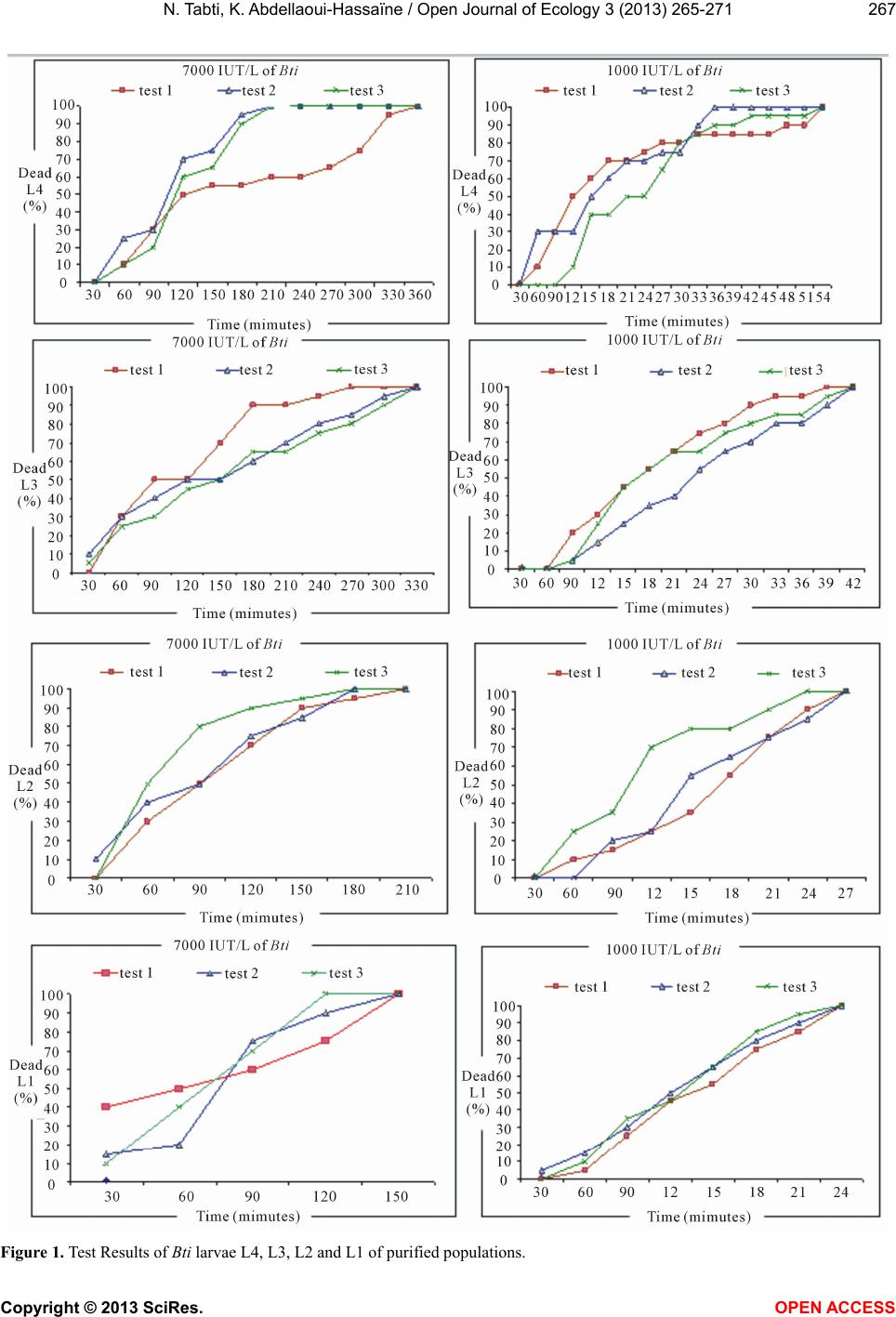 N. Tabti, K. Abdellaoui-Hassaïne / Open Journal of Ecology 3 (2013) 265-271 Copyright © 2013 SciRes. 267 Figure 1. Test Results of Bti larvae L4, L3, L2 and L1 of purified populations. OPEN A CCESS 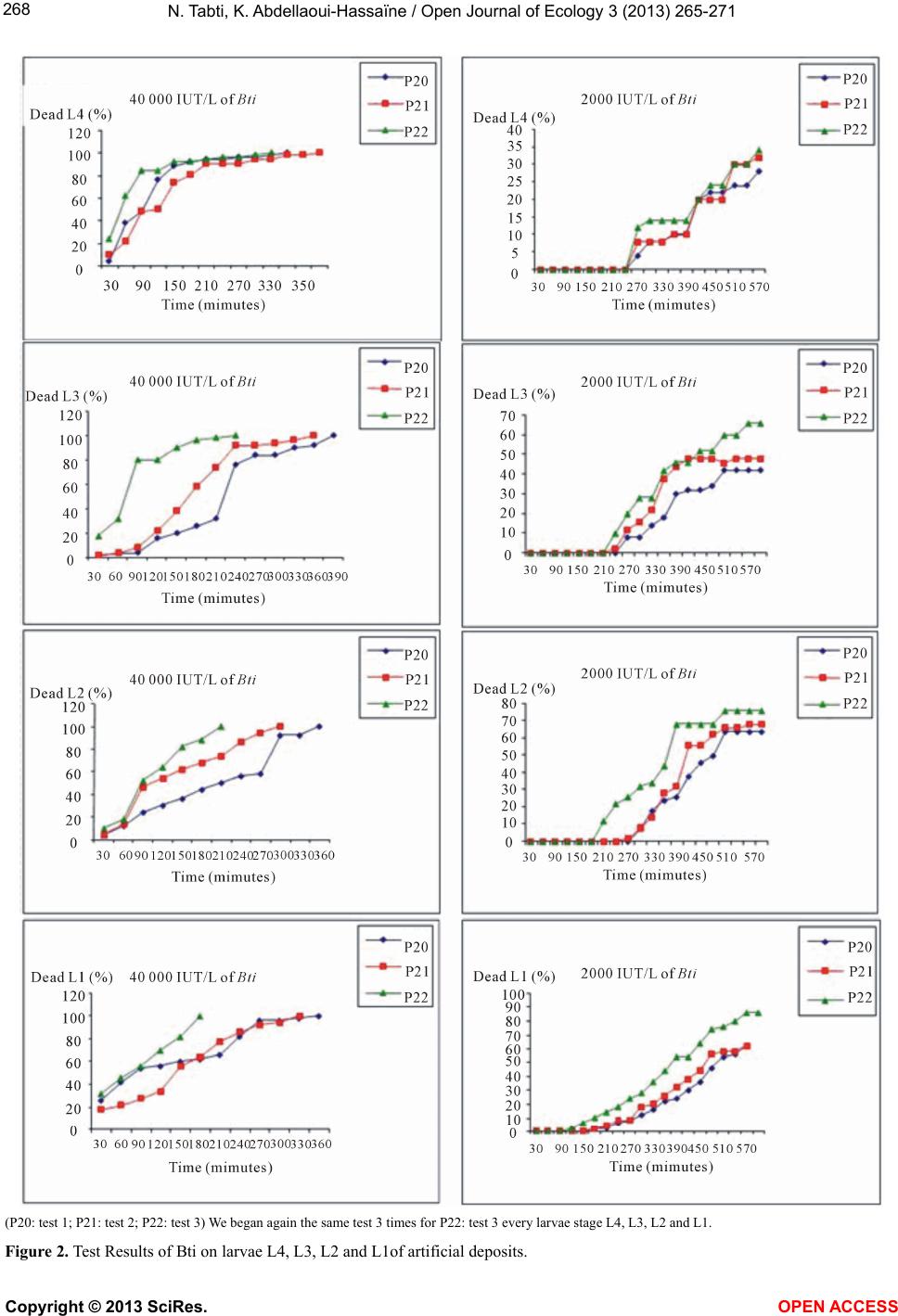 N. Tabti, K. Abdellaoui-Hassaïne / Open Journal of Ecology 3 (2013) 265-271 268 (P20: test 1; P21: test 2; P22: test 3) We began again th e same test 3 ti mes for P22: test 3 every larvae stage L4, L3, L2 and L1. Figure 2. Test Results of Bti on larvae L4, L3, L2 and L1of artificial deposits. Copyright © 2013 SciRes. OPEN A CCESS 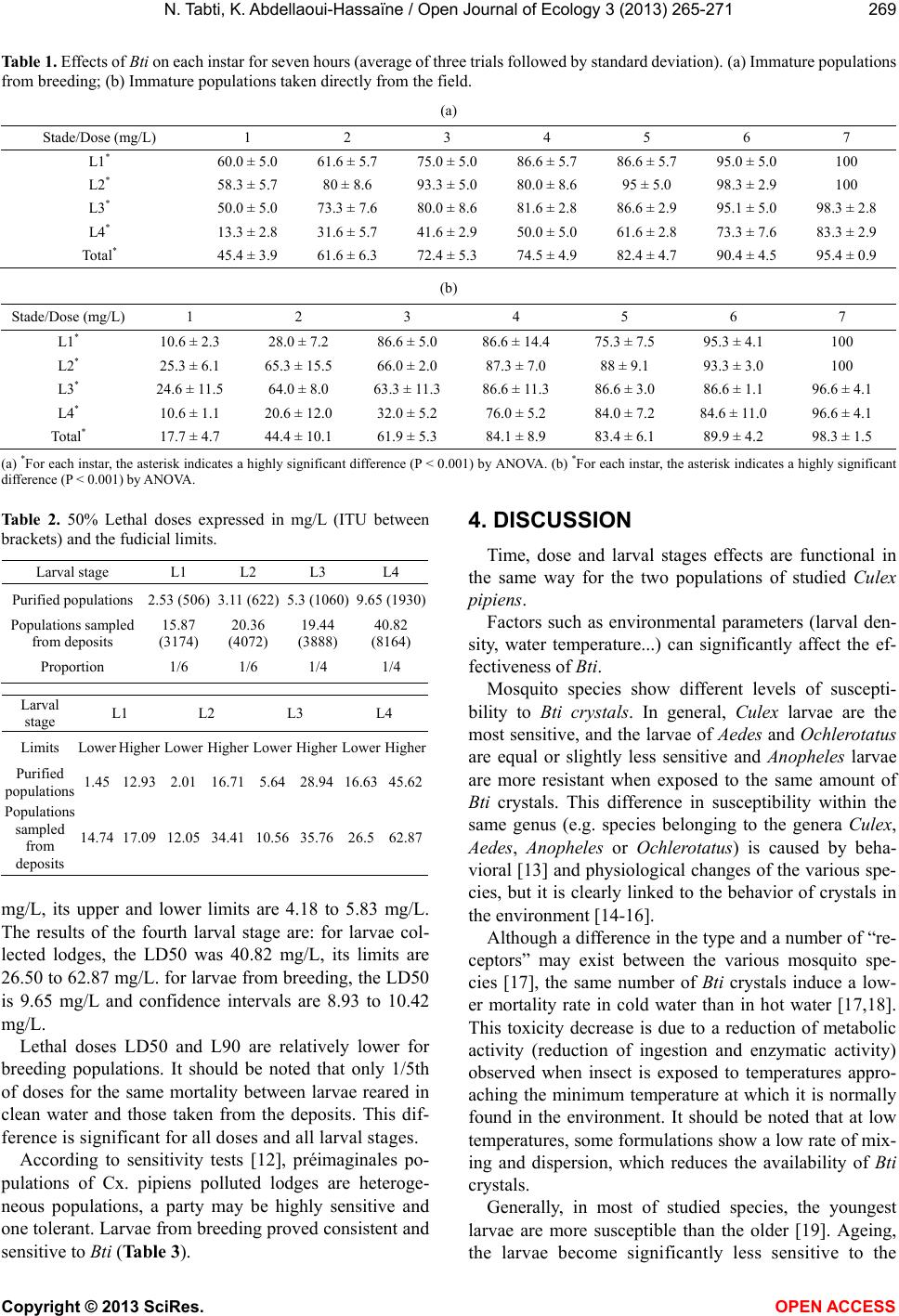 N. Tabti, K. Abdellaoui-Hassaïne / Open Journal of Ecology 3 (2013) 265-271 Copyright © 2013 SciRes. OPEN A CCESS 269 Table 1. Ef fects of Bti on each instar f or seven h ours (aver age of thr ee trials followed by standard deviation). (a) Immature populatio ns from breeding; (b) Immature populations taken directly from the field. (a) Stade/Dose (mg/L) 1 2 3 4 5 6 7 L1* 60.0 ± 5.0 61.6 ± 5.7 75.0 ± 5.0 86.6 ± 5.7 86.6 ± 5.7 95.0 ± 5.0 100 L2* 58.3 ± 5.7 80 ± 8.6 93.3 ± 5.0 80.0 ± 8.6 95 ± 5.0 98.3 ± 2.9 100 L3* 50.0 ± 5.0 73.3 ± 7.6 80.0 ± 8.6 81.6 ± 2.8 86.6 ± 2.9 95.1 ± 5.0 98.3 ± 2.8 L4* 13.3 ± 2.8 31.6 ± 5.7 41.6 ± 2.9 50.0 ± 5.0 61.6 ± 2.8 73.3 ± 7.6 83.3 ± 2.9 Tot al * 45.4 ± 3.9 61.6 ± 6.3 72.4 ± 5.3 74.5 ± 4.9 82.4 ± 4.7 90.4 ± 4.5 95.4 ± 0.9 (b) Stade/Dose (mg/L) 1 2 3 4 5 6 7 L1* 10.6 ± 2.3 28.0 ± 7.2 86.6 ± 5.0 86.6 ± 14.4 75.3 ± 7.5 95.3 ± 4.1 100 L2* 25.3 ± 6.1 65.3 ± 15.5 66.0 ± 2.0 87.3 ± 7.0 88 ± 9.1 93.3 ± 3.0 100 L3* 24.6 ± 11.5 64.0 ± 8.0 63.3 ± 11.3 86.6 ± 11.3 86.6 ± 3.0 86.6 ± 1.1 96.6 ± 4.1 L4* 10.6 ± 1.1 20.6 ± 12.0 32.0 ± 5.2 76.0 ± 5.2 84.0 ± 7.2 84.6 ± 11.0 96.6 ± 4.1 Tot al* 17.7 ± 4.7 44.4 ± 10.1 61.9 ± 5.3 84.1 ± 8.9 83.4 ± 6.1 89.9 ± 4.2 98.3 ± 1.5 (a) *For each in star, the asteri sk indi cates a h ighl y signif icant d ifference (P < 0.001) by ANOVA. (b) *For each inst ar, the asterisk in dicates a hig hly si gnifican t difference (P < 0.001) by ANOVA. Table 2. 50% Lethal doses expressed in mg/L (ITU between brackets) and the fudicial limits. Larval stage L1 L2 L3 L4 Purified populations 2.53 (506) 3.11 (622) 5.3 (1060) 9.65 (1930) Populations sampled from deposits 15.87 (3174) 20.36 (4072) 19.44 (3888) 40.82 (8164) Proportion 1/6 1/6 1/4 1/4 Larval stage L1 L2 L3 L4 Limits Lower Higher Lower Higher Lower Higher LowerHigher Purified populations 1.45 12.93 2.01 16.71 5.64 28.94 16.6345.62 Populations sampled from deposits 14.74 17.09 12.05 34.41 10.56 35.76 26.562.87 mg/L, its upper and lower limits are 4.18 to 5.83 mg/L. The results of the fourth larval stage are: for larvae col- lected lodges, the LD50 was 40.82 mg/L, its limits are 26.50 to 62.87 mg/L. for larvae from breed ing, the LD50 is 9.65 mg/L and confidence intervals are 8.93 to 10.42 mg/L. Lethal doses LD50 and L90 are relatively lower for breeding populations. It should be noted that only 1/5th of doses for the same mortality between larvae reared in clean water and those taken from the deposits. This dif- ference is significant for all doses and all larval stages. According to sensitivity tests [12], préimaginales po- pulations of Cx. pipiens polluted lodges are heteroge- neous populations, a party may be highly sensitive and one tolerant. Larvae from breeding proved consistent and sensitive to Bti (Table 3). 4. DISCUSSION Time, dose and larval stages effects are functional in the same way for the two populations of studied Culex pipiens. Factors such as environmental parameters (larval den- sity, water temperature...) can significantly affect the ef- fectiveness of Bti. Mosquito species show different levels of suscepti- bility to Bti crystals. In general, Culex larvae are the most sensitive, and the larvae o f Aedes and Ochlerotatus are equal or slightly less sensitive and Anopheles larvae are more resistant when exposed to the same amount of Bti crystals. This difference in susceptibility within the same genus (e.g. species belonging to the genera Culex, Aedes, Anopheles or Ochlerotatus) is caused by beha- vioral [13] and physio logical changes of the various sp e- cies, but it is clearly linked to the behavior of crystals in the environment [14-16]. Although a difference in the type and a number of “re- ceptors” may exist between the various mosquito spe- cies [17], the same number of Bti crystals induce a low- er mortality rate in cold water than in hot water [17,18]. This toxicity decrease is due to a reduction of metabolic activity (reduction of ingestion and enzymatic activity) observed when insect is exposed to temperatures appro- aching the minimum temperature at which it is normally found in the environment. It should be noted that at low temperatures, some formulations show a low rate of mix- ing and dispersion, which reduces the availability of Bti crystals. Generally, in most of studied species, the youngest larvae are more susceptible than the older [19]. Ageing, the larvae become significantly less sensitive to the 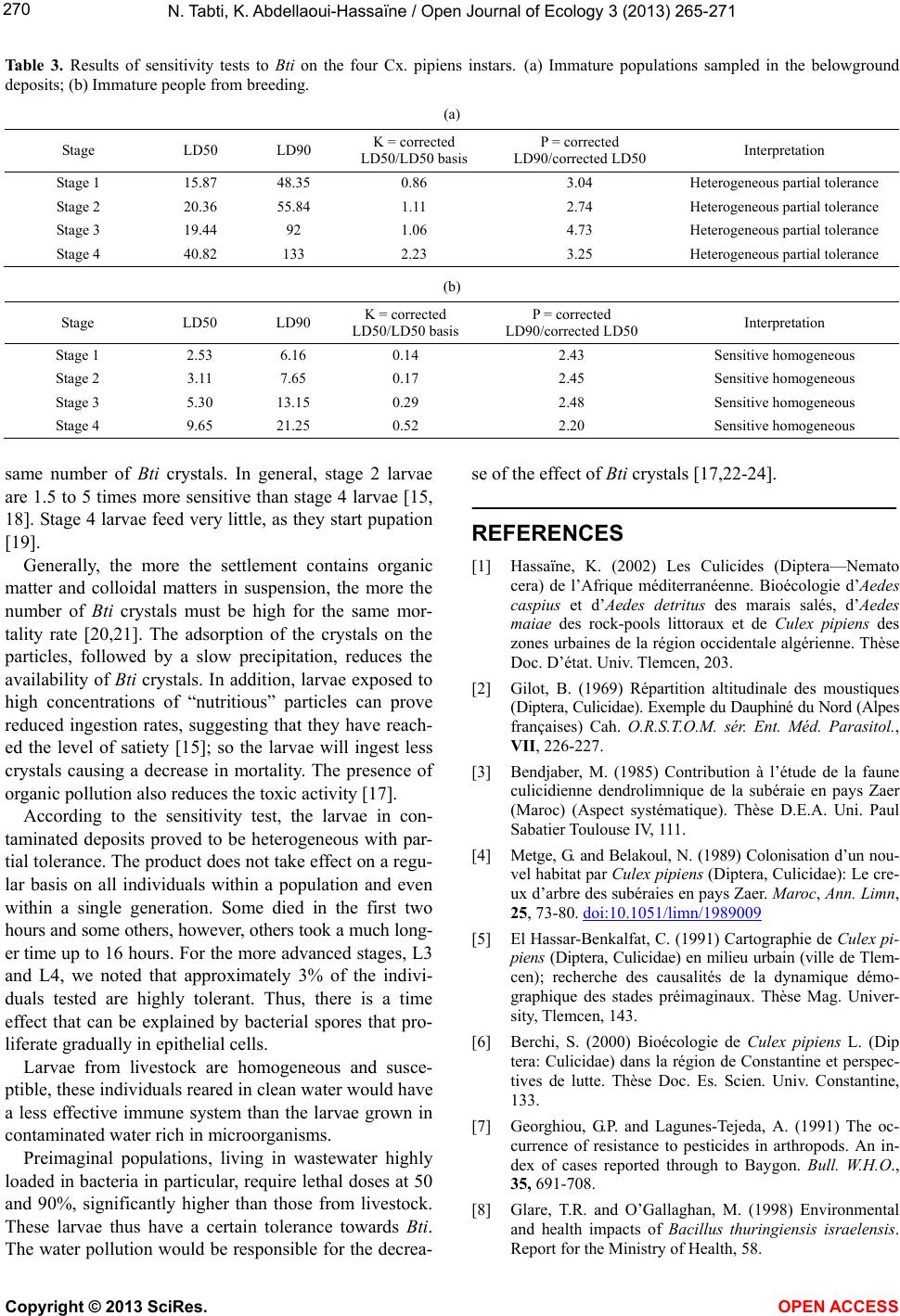 N. Tabti, K. Abdellaoui-Hassaïne / Open Journal of Ecology 3 (2013) 265-271 270 Table 3. Results of sensitivity tests to Bti on the four Cx. pipiens instars. (a) Immature populations sampled in the belowground deposits; (b) Immature people from breeding. (a) Stage LD50 LD90 K = corrected LD50/LD50 basi s P = corrected LD90/corrected LD50 Interpretation Stage 1 15.87 48.35 0.86 3.04 Heterogeneous partial tolerance Stage 2 20.36 55.84 1.11 2.74 Heterogeneous partial tolerance Stage 3 19.44 92 1.06 4.73 Heterogeneous partial tolerance Stage 4 40.82 133 2.23 3.25 Heterogeneous partial toler ance (b) Stage LD50 LD90 K = corrected LD50/LD50 basisP = corrected LD90/corrected LD50 Interpretation Stage 1 2.53 6.16 0.14 2.43 Sensitive homogeneous Stage 2 3.11 7.65 0.17 2.45 Sensitive homogeneous Stage 3 5.30 13.15 0.29 2.48 Sensitive homogeneous Stage 4 9.65 21.25 0.52 2.20 Sensitive homogeneous same number of Bti crystals. In general, stage 2 larvae are 1.5 to 5 times more sensitive than stage 4 larvae [15 , 18]. Stage 4 larvae feed very little, as they start pupation [19]. Generally, the more the settlement contains organic matter and colloidal matters in suspension, the more the number of Bti crystals must be high for the same mor- tality rate [20,21]. The adsorption of the crystals on the particles, followed by a slow precipitation, reduces the availability of Bti crystals. In addition, larvae exposed to high concentrations of “nutritious” particles can prove reduced ingestion rates, suggesting that they have reach- ed the level of satiety [15]; so the larvae will ingest less crystals causing a decrease in mortality. The presence of organic pollution also reduces the toxic activity [17]. According to the sensitivity test, the larvae in con- taminated deposits proved to be heterogeneous with par- tial tolerance. The product does not take effect on a regu- lar basis on all individuals within a population and even within a single generation. Some died in the first two hours and some others, however, others took a much long- er time up to 16 hours. For the more advanced stages, L3 and L4, we noted that approximately 3% of the indivi- duals tested are highly tolerant. Thus, there is a time effect that can be explained by bacterial spores that pro- liferate gradually in epithelial cells. Larvae from livestock are homogeneous and susce- ptible, these individuals reared in clean water would have a less effective immune system than the larvae grown in contaminat ed wa ter r ic h in microorganisms. Preimaginal populations, living in wastewater highly loaded in bacteria in particular, require lethal doses at 50 and 90%, significantly higher than those from livestock. These larvae thus have a certain tolerance towards Bti. The water pollution would be respon sible for the decrea- se of the effect of Bti crystals [1 7,22-24]. REFERENCES [1] Hassaïne, K. (2002) Les Culicides (Diptera—Nemato cera) de l’Afrique méditerranéenne. Bioécologie d’Aedes caspius et d’Aedes detritus des marais salés, d’Aedes maiae des rock-pools littoraux et de Culex pipiens des zones urbaines de la région occidentale algérienne. Thèse Doc. D’état. Univ. Tlemcen, 203. [2] Gilot, B. (1969) Répartition altitudinale des moustiques (Diptera, Culi cidae). Exemple du Dauphiné du Nord (Alpe s françaises) Cah. O.R.S.T.O.M. sér. Ent. Méd. Parasitol., VII, 226-227. [3] Bendjaber, M. (1985) Contribution à l’étude de la faune culicidienne dendrolimnique de la subéraie en pays Zaer (Maroc) (Aspect systématique). Thèse D.E.A. Uni. Paul Sabatier Toulouse IV, 111. [4] Metge, G. and Belakoul, N. (1989) Colonisation d’un nou- vel habitat par Culex pi piens (Diptera, Culicidae): Le cre- ux d’arbre des subéraies en pays Zaer. Maroc, Ann. Limn, 25, 73-80. doi:10.1051/limn/1989009 [5] El Hassar-Benkalfat, C. (1991) Cartographie de Culex pi- piens (Diptera, Culicidae) en milieu urbain (ville de Tlem- cen); recherche des causalités de la dynamique démo- graphique des stades préimaginaux. Thèse Mag. Univer- sity, Tlemcen , 143. [6] Berchi, S. (2000) Bioécologie de Culex pipiens L. (Dip tera: Culicidae) dans la région de Constantine et perspec- tives de lutte. Thèse Doc. Es. Scien. Univ. Constantine, 133. [7] Georghiou, G.P. and Lagunes-Tejeda, A. (1991) The oc- currence of resistance to pesticides in arthropods. An in- dex of cases reported through to Baygon. Bull. W.H.O., 35, 691-708. [8] Glare, T.R. and O’Gallaghan, M. (1998) Environmental and health impacts of Bacillus thuringiensis israelensis. Report for the Ministry of Health, 58. Copyright © 2013 SciRes. OPEN A CCESS 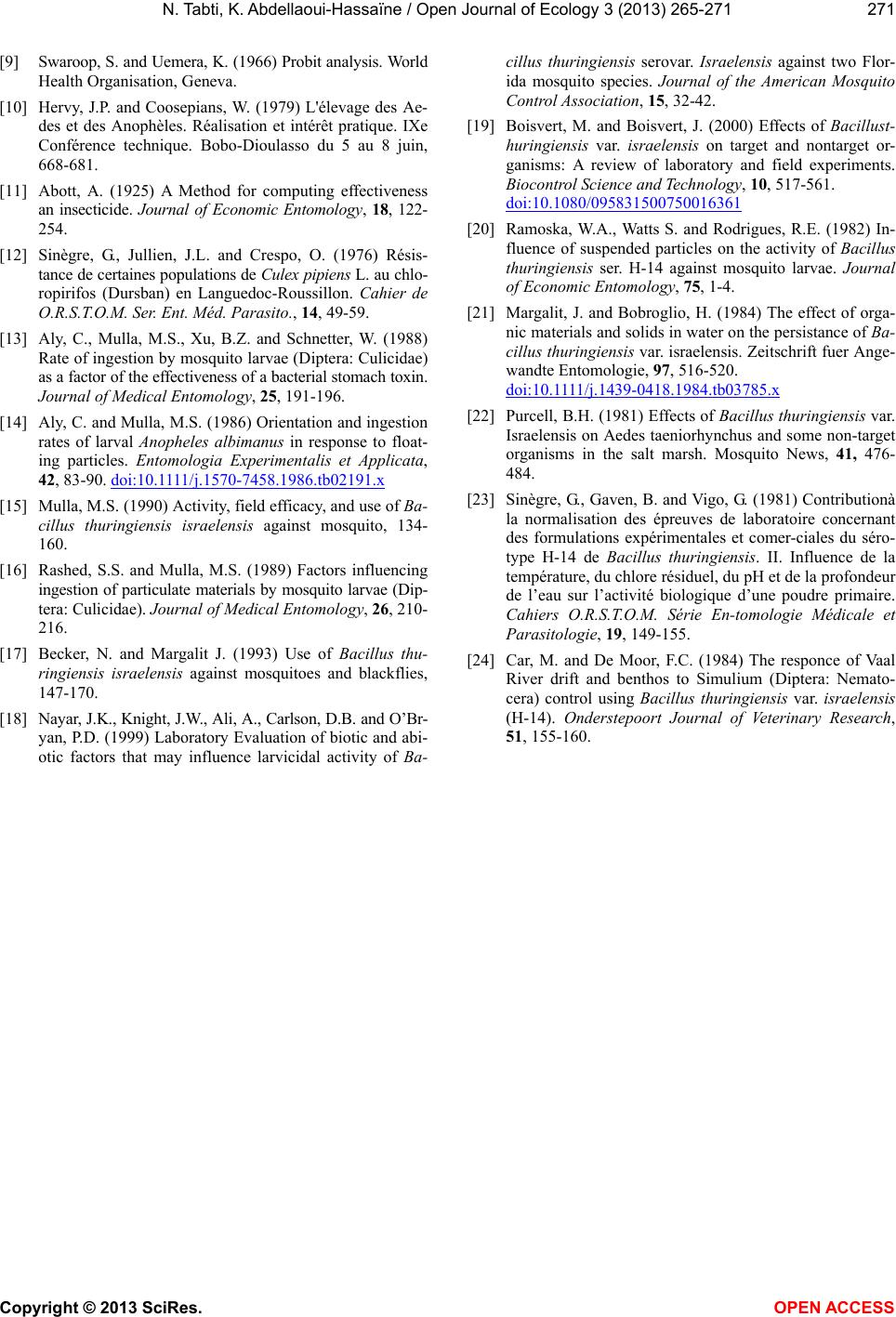 N. Tabti, K. Abdellaoui-Hassaïne / Open Journal of Ecology 3 (2013) 265-271 271 [9] Swaroop, S. and Uemera, K. (1966) Probit analysis. World Health Organisation, Geneva. [10] Hervy, J.P. and Coosepians, W. (1979) L'élevage des Ae- des et des Anophèles. Réalisation et intérêt pratique. IXe Conférence technique. Bobo-Dioulasso du 5 au 8 juin, 668-681. [11] Abott, A. (1925) A Method for computing effectiveness an insecticide. Journal of Economic Entomology, 18, 122- 254. [12] Sinègre, G., Jullien, J.L. and Crespo, O. (1976) Résis- tance de certaines populations de Culex pipiens L. au chlo- ropirifos (Dursban) en Languedoc-Roussillon. Cahier de O.R.S.T.O.M. Ser. Ent. Méd. Parasito., 14, 49-59. [13] Aly, C., Mulla, M.S., Xu, B.Z. and Schnetter, W. (1988) Rate of ingestion by mosquito larvae (Diptera: Culicidae) as a factor of the effectiveness of a bacterial stomach toxin. Journal of Medical Entomology, 25, 191-196. [14] Aly, C. and Mulla, M.S. (1986) Orientation and ingestion rates of larval Anopheles albimanus in response to float- ing particles. Entomologia Experimentalis et Applicata, 42, 83-90. doi:10.1111/j.1570-7458.1986.tb02191.x [15] Mulla, M.S. (1990) Activity, field efficacy, and use of Ba- cillus thuringiensis israelensis against mosquito, 134- 160. [16] Rashed, S.S. and Mulla, M.S. (1989) Factors influencing ingestion of particulate material s by mosquito larvae (Dip- tera: Culicidae). Journal of Medical Entomology, 26, 210- 216. [17] Becker, N. and Margalit J. (1993) Use of Bacillus thu- ringiensis israelensis against mosquitoes and blackflies, 147-170. [18] Nayar, J.K., Knight, J.W., Ali, A., Carlson, D.B. and O’Br- yan, P.D. (1999) Laboratory Evaluation of biotic and abi- otic factors that may influence larvicidal activity of Ba- cillus thuringiensis serovar. Israelensis against two Flor- ida mosquito species. Journal of the American Mosquito Control Association, 15, 32-42. [19] Boisvert, M. and Boisvert, J. (2000) Effects of Bacillust- huringiensis var. israel ensis on target and nontarget or- ganisms: A review of laboratory and field experiments. Biocontrol Science and Technology, 10, 517-561. doi:10.1080/095831500750016361 [20] Ramoska, W.A., Watts S. and Rodrigues, R.E. (1982) In- fluence of suspended particles on the activity of Bacillus thuringiensis ser. H-14 against mosquito larvae. Journal of Economic Entomology, 75, 1-4. [21] Margalit, J. and Bobroglio, H. (1984) The effect of orga- nic materials and solids in water on the persistance of Ba- cillus thuringiensis var. israelensis. Zeitschrift fuer Ange- wandte Entomologie, 97, 516-520. doi:10.1111/j.1439-0418.1984.tb03785.x [22] Purcell, B.H. (1981) Effects of Bacillus thuringiensis var. Israelensis on Aedes taeniorhynchus and some non-target organisms in the salt marsh. Mosquito News, 41, 476- 484. [23] Sinègre, G., Gaven, B. and Vigo, G. (1981) Contributionà la normalisation des épreuves de laboratoire concernant des formulations expérimentales et comer-ciales du séro- type H-14 de Bacillus thuringiensis. II. Influence de la température, du chlore résiduel, du pH et de la profondeur de l’eau sur l’activité biologique d’une poudre primaire. Cahiers O.R.S.T.O.M. Série En-tomologie Médicale et Parasitologie, 19, 149-155. [24] Car, M. and De Moor, F.C. (1984) The responce of Vaal River drift and benthos to Simulium (Diptera: Nemato- cera) control using Bacillus thuringiensis var. israelensis (H-14). Onderstepoort Journal of Veterinary Research, 51, 155-160. Copyright © 2013 SciRes. OPEN A CCESS |