

Paper Menu >>
Journal Menu >>
 Food and Nutrition Sciences, 2013, 4, 748-757 http://dx.doi.org/10.4236/fns.2013.47096 Published Online July 2013 (http://www.scirp.org/journal/fns) Gender Differences in Coffee Consumption and Its Effects in Young People Shinichi Demura1, Hiroki Aoki2, Toshihide Mizusawa3, Kei Soukura3, Masahiro Noda4, Toshiro Sato5 1Graduate School of Natural Science & Technology, Kanazawa University, Kanazawa, Japan; 2Fukui National College of Technol- ogy, Sabae, Japan; 3University of Fukui, Fukui, Japan; 4Jin-ai University, Echizen, Japan; 5Niigata University of Health and Welfare, Niigata, Japan. Email: [email protected] Received November 28th, 2012; revised January 5th, 2013; accepted January 14th, 2013 Copyright © 2013 Shinichi Demura et al. This is an open access article distributed under the Creative Commons Attribution License, which permits unrestricted use, distribution, and reproduction in any medium, provided the original work is properly cited. ABSTRACT This study aimed to ex amine gender differences in coffee consumption and awareness of its effects in young people. To examine the above problem, a survey was conducted in 1189 young people (567 males aged 19.3 ± 1.5 years; 622 fe- males aged 19.1 ± 1.2 years). The coffee consumption rate was significantly higher in males (50.8%) than in females (32.8%). In the coffee consumption group, no significant differences were found in the reasons for consumption, the components of coffee, and its effects on health. In the coffee nonconsumption group, significant gender differences were noted in the reasons for avoiding coffee; females (64.8%) disliked its taste more than males (39.4%). More young people of both genders in the consumption group were aware that coffee contains caffeine (79.9% - 86.5%) as com- pared with the nonconsumption group (67.0% - 74.2%). However, few people in both groups were aware about the components other than caffeine. In addition, more people in the nonconsumption group were unaware of the adverse effects of coffee on the body. The results of this study demonstrated that young males drink coffee more than young females. Among those who avoided coffee consumption, females disliked its taste more than males. Many people re- gardless of coffee consumption were aware about the components of coffee, but few knew about the other ingredients in this beverage. In addition, few people were aware of the negative effects of coffee on the health and body. Keywords: Young; Males; Females; Coffee; Ingredients 1. Introduction Coffee is a luxury drink that is widely consumed by peo- ple all over the world (70% - 80%) [1]. Coffee has a re- laxing effect and it alleviat es stress [2]. In additi on, regular coffee drinking has been reported to reduce the risk of diabetes mellitus, hepatic cirrhosis, rectal cancer, car- diovascular disease, and other illnesses [3-9]. According to Garzaro et al. in 2011 [10], majority of the 100 sub- jects found the tested coffee-flavored iced dessert pleas- ant, on the basis of the Organoleptic-Sensorial Question- naire (OSQ), in terms of taste, aspect, texture, and smell. No statistically significant differences were observed be- tween the male and female subjects. Many people in Ja- pan drink coffee regardless of age or gender [2]. How- ever, gender differences in coffee consumption have not been adequately determined, although Yamazawa et al. [11] reported gender differences in coffee-flavored des- serts and coffee consumption. People drink coffee for different reasons, and these reasons may differ between males and females. Mirmiran et al. [12] reported gender as a factor influencing nutrient consumption. Du et al. [13] demonstrated that females have higher interest in the nutrients than males. Thus, knowledge about coffee may also differ between males and females. Many studies have examined the effects of coffee con- sumption [5-9]. Information about the advantages and disadvantages of coffee consumption is easily available through the media. Compared with the nonconsumers, coffee consumers have more interest in and more knowl- edge about the various components in this beverage and its effects on the body. In addition, the sanative proper- ties of coffee as a luxury drink have been the focus of one recent study [14]. However, coffee drinkers may have overly high expectations of the beneficial effects of coffee on health. In this study, the effects of coffee consumption were examined in terms of gender differences in young people. Copyright © 2013 SciRes. FNS 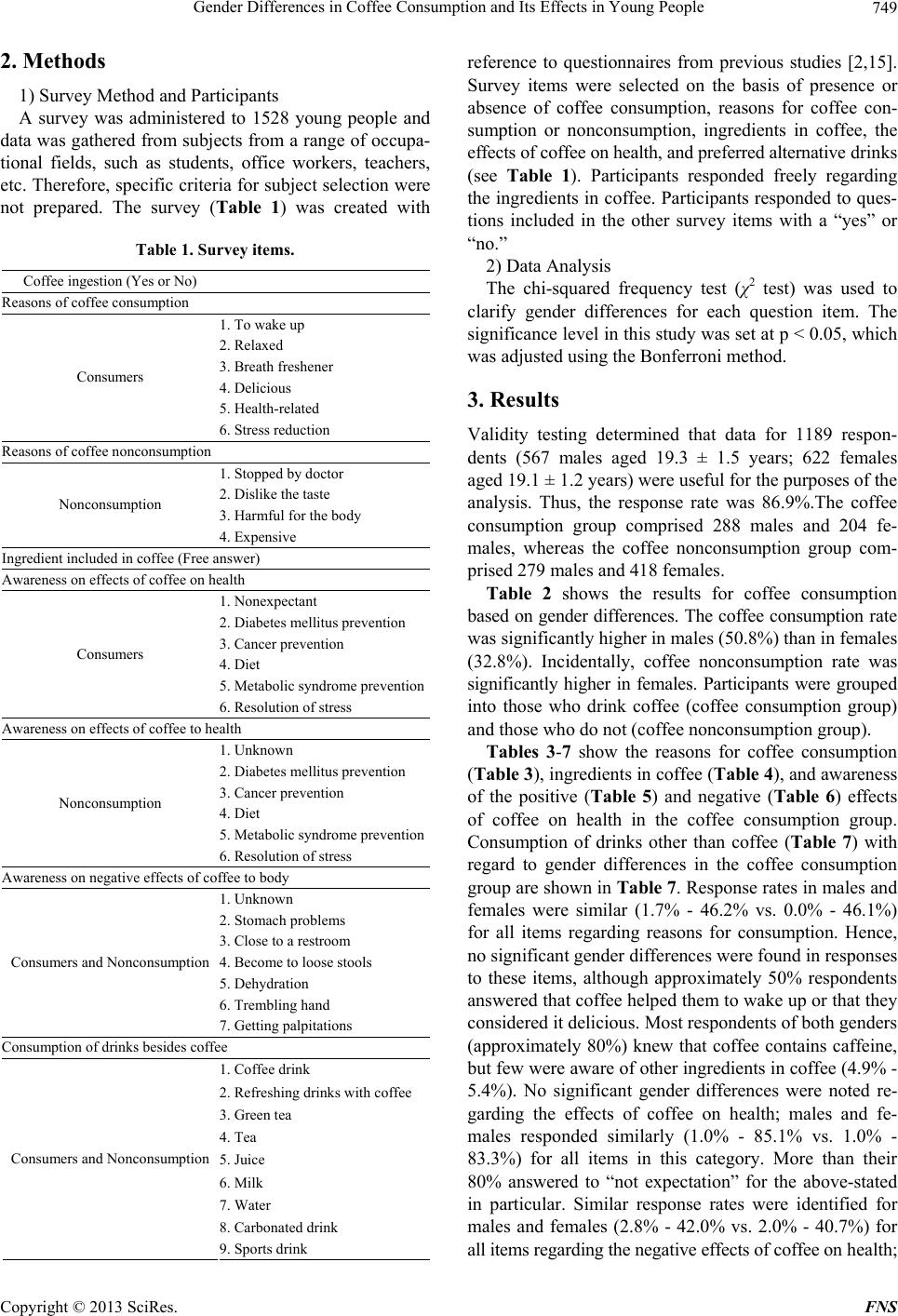 Gender Differences in Coffee Consumption and Its Effects in Young People 749 2. Methods 1) Survey Method and Participants A survey was administered to 1528 young people and data was gathered from subjects from a range of occupa- tional fields, such as students, office workers, teachers, etc. Therefore, specific criteria for subject selection were not prepared. The survey (Table 1) was created with Table 1. Survey items. Coffee ingestion (Yes or No) Reasons of coffee consumption 1. To wake up 2. Relaxed 3. Breath freshener 4. Delicious 5. Health-related Consumers 6. Stress reduction Reasons of coffee nonconsumption 1. Stopped by doctor 2. Dislike the taste 3. Harmful for the body Nonconsumption 4. Expensive Ingredient included in coffee (Free answer) Awareness on effects of coffee on health 1. Nonexpectant 2. Diabetes mellitus prevention 3. Cancer pre vention 4. Diet 5. Metabolic syndrome prevention Consumers 6. Resolution of stress Awareness on effects of coffee to health 1. Unknown 2. Diabetes mellitus prevention 3. Cancer pre vention 4. Diet 5. Metabolic syndrome prevention Nonconsumption 6. Resolution of stress Awareness on negative effects of coffee to body 1. Unknown 2. Stomach problems 3. Close to a restroom 4. Become to loose stools 5. Dehydration 6. Trembling hand Consumers and Nonconsumpt ion 7. Getting palpitations Consumption of drinks besides coffee 1. Coffee drink 2. Refreshing drinks with coffee 3. Green tea 4. Tea 5. Juice 6. Milk 7. Water 8. Carbonated drink Consumers and Nonconsumpt ion 9. Sports drink reference to questionnaires from previous studies [2,15]. Survey items were selected on the basis of presence or absence of coffee consumption, reasons for coffee con- sumption or nonconsumption, ingredients in coffee, the effects of coffee on health, and preferred alternative drinks (see Table 1). Participants responded freely regarding the ingredients in coffee. Participants responded to ques- tions included in the other survey items with a “yes” or “no.” 2) Data Analysis The chi-squared frequency test (χ2 test) was used to clarify gender differences for each question item. The significance level in this study was set at p < 0.05, which was adjusted using the Bonferroni method. 3. Results Validity testing determined that data for 1189 respon- dents (567 males aged 19.3 ± 1.5 years; 622 females aged 19.1 ± 1.2 years) were useful for the purposes of the analysis. Thus, the response rate was 86.9%.The coffee consumption group comprised 288 males and 204 fe- males, whereas the coffee nonconsumption group com- prised 279 males and 418 females. Table 2 shows the results for coffee consumption based on gender differences. The coffee consumption ra te was significantly higher in males (50.8%) than in females (32.8%). Incidentally, coffee nonconsumption rate was significantly higher in females. Participants were grouped into those who drink coffee (coffee consumption group) and those who do not (co ffee nonconsumption grou p) . Tables 3-7 show the reasons for coffee consumption (Table 3), ingredients in coffee (Table 4), and a war en ess of the positive (Table 5) and negative (Table 6) effects of coffee on health in the coffee consumption group. Consumption of drinks other than coffee (Table 7) with regard to gender differences in the coffee consumption group are shown in Ta bl e 7. Respo nse rates in males and females were similar (1.7% - 46.2% vs. 0.0% - 46.1%) for all items regarding reasons for consumption. Hence, no significant gender differences were found in responses to these items, although approximately 50% respondents answered that coffee helped them to wake up or that they considered it delicious. Most respondents of both genders (approximately 80%) knew that coffee contains caffeine, but few were aware of other ingredients in coffee (4.9% - 5.4%). No significant gender differences were noted re- garding the effects of coffee on health; males and fe- males responded similarly (1.0% - 85.1% vs. 1.0% - 83.3%) for all items in this category. More than their 80% answered to “not expectation” for the above-stated in particular. Similar response rates were identified for males and females (2.8% - 42.0% vs. 2.0% - 40.7%) for all items regarding the negative effects of coffee on health; Copyright © 2013 SciRes. FNS 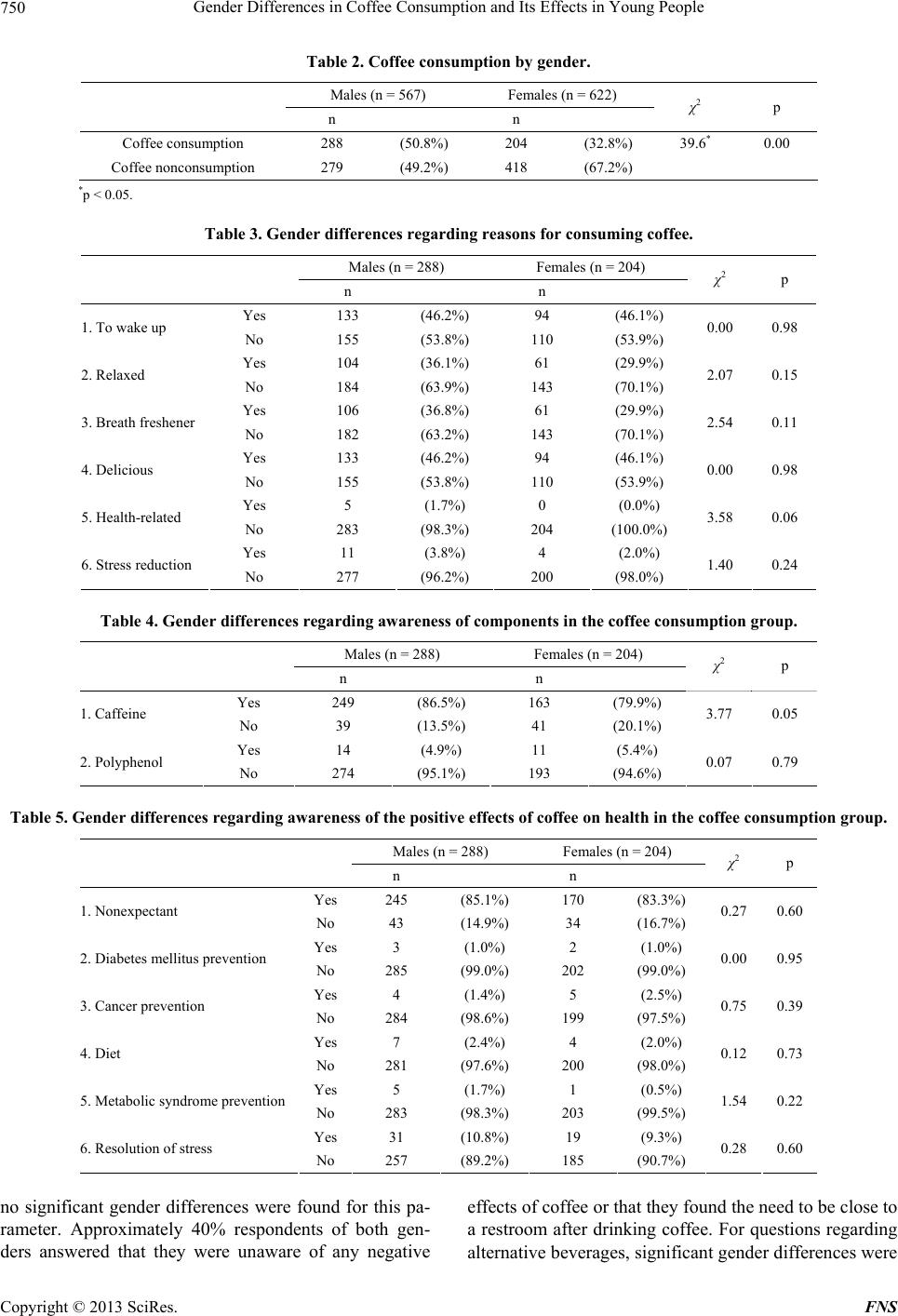 Gender Differences in Coffee Consumption and Its Effects in Young People Copyright © 2013 SciRes. FNS 750 Table 2. Coffee consumption by gender. Males (n = 567) Females (n = 622) n n χ2 p Coffee consumption 288 (50.8%) 204 (32.8%) 39.6* 0.00 Coffee nonconsumption 279 (49.2%) 418 (67.2%) *p < 0.05. Table 3. Gender differences regarding reasons for consuming coffee. Males (n = 288) Females (n = 204) n n χ2 p Yes 133 (46.2%) 94 (46.1%) 1. To wake up No 155 (53.8%) 110 (53.9%) 0.00 0.98 Yes 104 (36.1%) 61 (29.9%) 2. Relaxed No 184 (63.9%) 143 (70.1%) 2.07 0.15 Yes 106 (36.8%) 61 (29.9%) 3. Breath freshener No 182 (63.2%) 143 (70.1%) 2.54 0.11 Yes 133 (46.2%) 94 (46.1%) 4. Delicious No 155 (53.8%) 110 (53.9%) 0.00 0.98 Yes 5 (1.7%) 0 (0.0%) 5. Health-related No 283 (98.3%) 204 (100.0%) 3.58 0.06 Yes 11 (3.8%) 4 (2.0%) 6. Stress reduction No 277 (96.2%) 200 (98.0%) 1.40 0.24 Table 4. Gender differences regarding awareness of components in the coffee consumption group. Males (n = 288) Females (n = 204) n n χ2 p Yes 249 (86.5%) 163 (79.9%) 1. Caffeine No 39 (13.5%) 41 (20.1%) 3.77 0.05 Yes 14 (4.9%) 11 (5 .4%) 2. Polyphenol No 274 (95.1%) 193 (94.6%) 0.07 0.79 Table 5. Gender differences regarding awareness of the positive effects of coffee on health in the coffee consumption group. Males (n = 288) Females (n = 204) n n χ2 p Yes 245 (85.1%) 170 (83.3%) 1. Nonexpectant No 43 (14.9%) 34 (16.7%) 0.27 0.60 Yes 3 (1.0%) 2 (1.0%) 2. Diabetes mellitus prevention No 285 (99.0%) 202 (99.0%) 0.00 0.95 Yes 4 (1.4%) 5 (2.5%) 3. Cancer pre vention No 284 (98.6%) 199 (97.5%) 0.75 0.39 Yes 7 (2.4%) 4 (2.0%) 4. Diet No 281 (97.6%) 200 (98.0%) 0.12 0.73 Yes 5 (1.7%) 1 (0.5%) 5. Metabolic syndrome prevention No 283 (98.3%) 203 (99.5%) 1.54 0.22 Yes 31 (10.8%) 19 (9.3%) 6. Resolution of stress No 257 (89.2%) 185 (90.7%) 0.28 0.60 no significant gender differences were found for this pa- rameter. Approximately 40% respondents of both gen- ders answered that they were unaware of any negative effects of coffee or that they found the need to be close to a restroom after drinking coffee. For questions regarding alternative beverages, significant gend er differen ces were 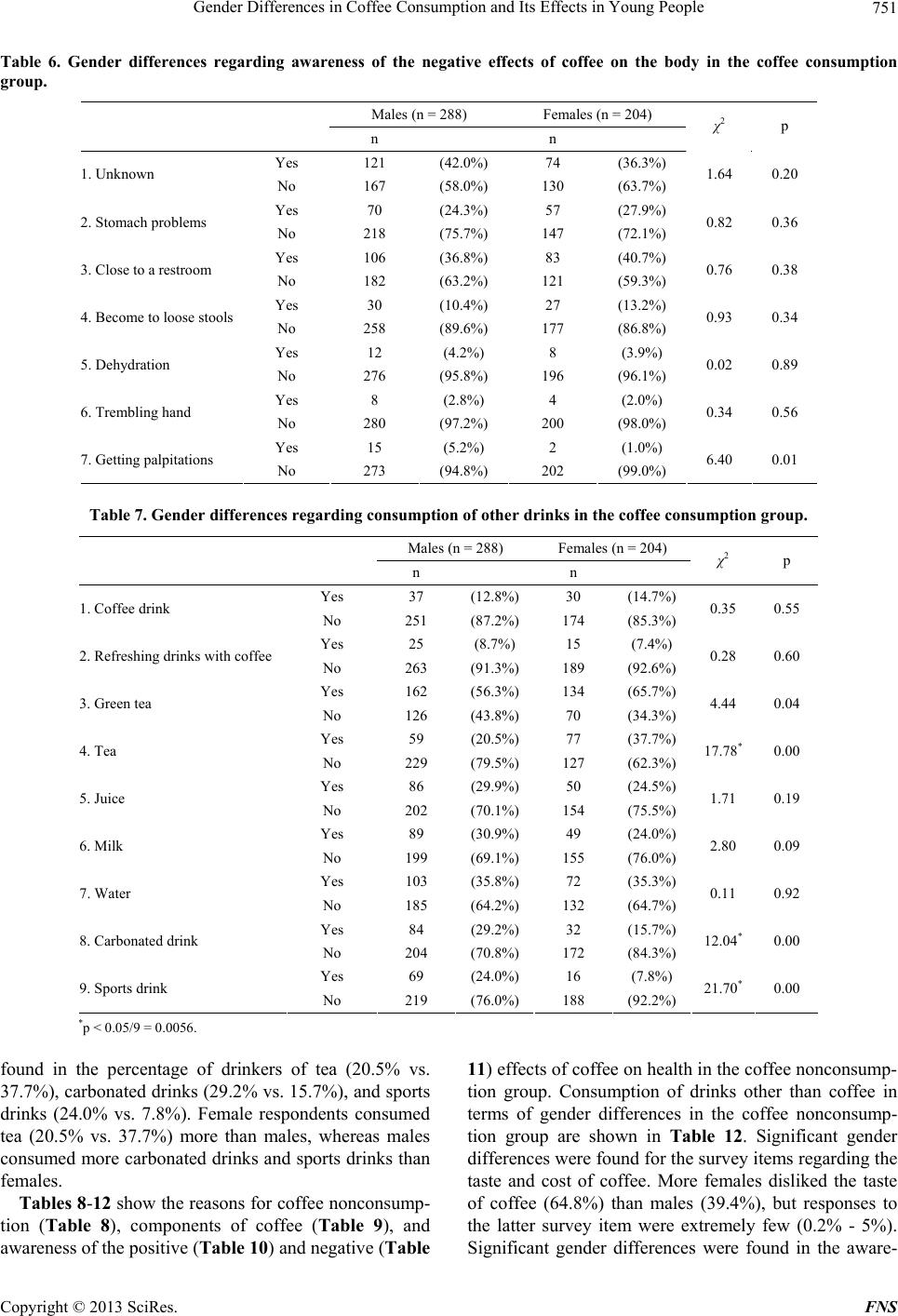 Gender Differences in Coffee Consumption and Its Effects in Young People 751 Table 6. Gender differences regarding awareness of the negative effects of coffee on the body in the coffee consumption group. Males (n = 288) Females (n = 204) n n χ2 p Yes 121 (42.0%) 74 (36.3%) 1. Unknown No 167 (58.0%) 130 (63.7%) 1.64 0.20 Yes 70 (24.3%) 57 (27.9%) 2. Stomach problems No 218 (75.7%) 147 (72.1%) 0.82 0.36 Yes 106 (36.8%) 83 (40.7%) 3. Close to a restroom No 182 (63.2%) 121 (59.3%) 0.76 0.38 Yes 30 (10.4%) 27 (13.2%) 4. Become to loose stoolsNo 258 (89.6%) 177 (86.8%) 0.93 0.34 Yes 12 (4.2%) 8 (3.9%) 5. Dehydration No 276 (95.8%) 196 (96.1%) 0.02 0.89 Yes 8 (2.8%) 4 (2.0%) 6. Trembling hand No 280 (97.2%) 200 (98.0%) 0.34 0.56 Yes 15 (5.2%) 2 (1.0%) 7. Getting palpitations No 273 (94.8%) 202 (99.0%) 6.40 0.01 Table 7. Gender differences regar ding consumption of other drinks in the coffee consumption group. Males (n = 288) Females (n = 204) n n χ2 p Yes 37 (12.8%) 30 (14.7%) 1. Coffee drink No 251 (87.2%) 174 (85.3%) 0.35 0.55 Yes 25 (8.7%) 15 (7.4%) 2. Refreshing drinks with coffee No 263 (91.3%) 189 (92.6%) 0.28 0.60 Yes 162 (56.3%) 134 (65.7%) 3. Green tea No 126 (43.8%) 70 (34.3%) 4.44 0.04 Yes 59 (20.5%)77 (37.7%) 4. Tea No 229 (79.5%)127 (62.3%)17.78* 0.00 Yes 86 (29.9%)50 (24.5%) 5. Juice No 202 (70.1%)154 (75.5%)1.71 0.19 Yes 89 (30.9%)49 (24.0%) 6. Milk No 199 (69.1%)155 (76.0%)2.80 0.09 Yes 103 (35.8%)72 (35.3%) 7. Water No 185 (64.2%)132 (64.7%)0.11 0.92 Yes 84 (29.2%)32 (15.7%) 8. Carbonated drink No 204 (70.8%)172 (84.3%)12.04* 0.00 Yes 69 (24.0%)16 (7.8%) 9. Sports drink No 219 (76.0%)188 (92.2%)21.70* 0.00 *p < 0.05/9 = 0. 0056. found in the percentage of drinkers of tea (20.5% vs. 37.7%), carbonated drink s (29.2% vs. 15.7%), and sports drinks (24.0% vs. 7.8%). Female respondents consumed tea (20.5% vs. 37.7%) more than males, whereas males consumed more carbonated dr inks and sports drinks than females. Tables 8-12 show the reasons for coffee nonconsump- tion (Table 8), components of coffee (Table 9), and awareness of the positive (Tab l e 10) and negative (Table 11) effects of coffee on health in the coffee nonconsump- tion group. Consumption of drinks other than coffee in terms of gender differences in the coffee nonconsump- tion group are shown in Table 12. Significant gender differences were found for the survey items regarding the taste and cost of coffee. More females disliked the taste of coffee (64.8%) than males (39.4%), but responses to the latter survey item were extremely few (0.2% - 5%). Significant gender differences were found in the aware- Copyright © 2013 SciRes. FNS 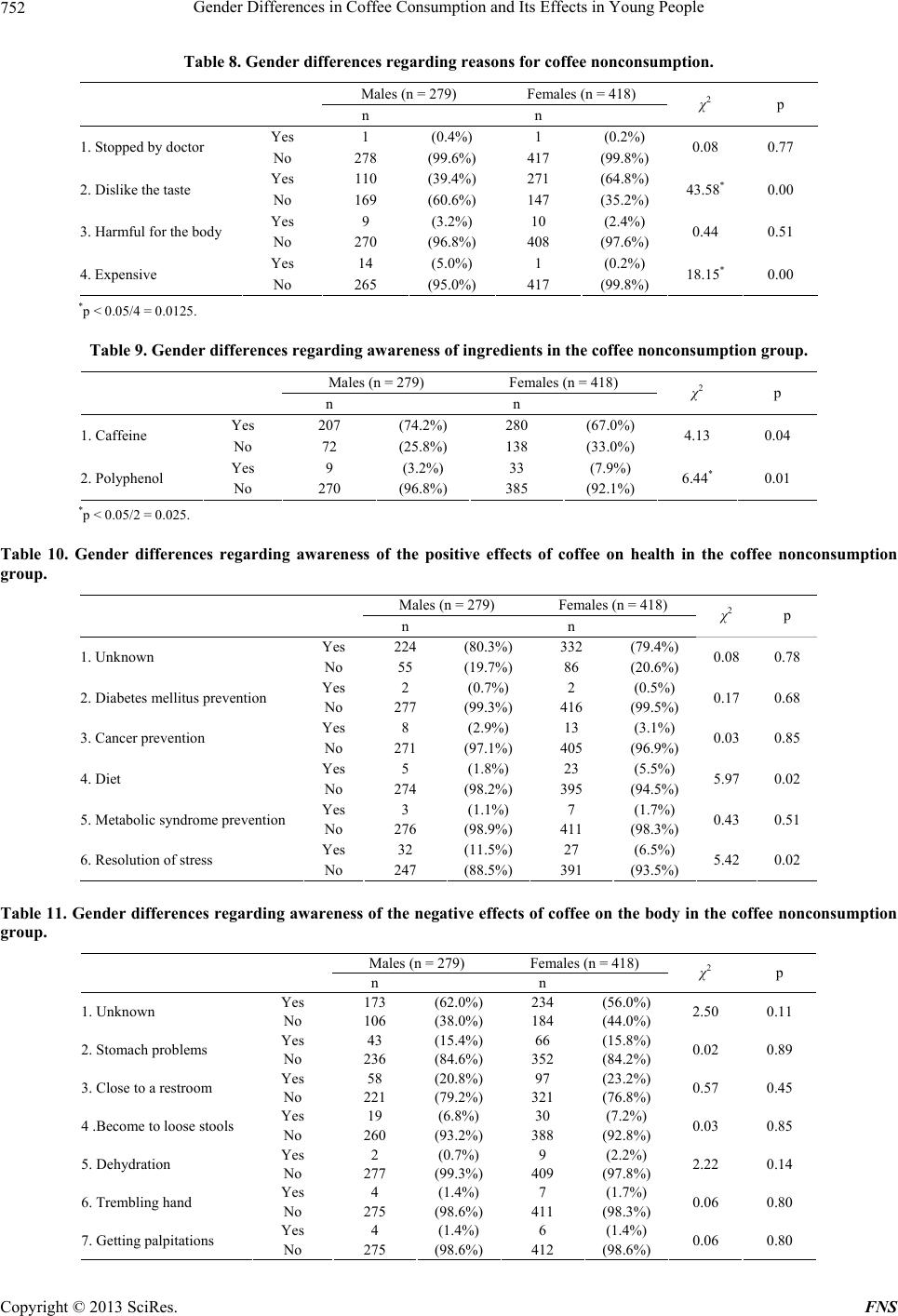 Gender Differences in Coffee Consumption and Its Effects in Young People 752 Table 8. Gender differences regarding reasons for coffee nonconsumption. Males (n = 279) Females (n = 418) n n χ2 p Yes 1 (0.4%) 1 (0.2%) 1. Stopped by doctor No 278 (99.6%) 417 (99.8%) 0.08 0.77 Yes 110 (39.4%) 271 (64.8%) 2. Dislike the taste No 169 (60.6%) 147 (35.2%) 43.58* 0.00 Yes 9 (3.2%) 10 (2.4%) 3. Harmful for the body No 270 (96.8%) 408 (97.6%) 0.44 0.51 Yes 14 (5.0%) 1 (0.2%) 4. Expensive No 265 (95.0%) 417 (99.8%) 18.15* 0.00 *p < 0.05/4 = 0. 0125. Table 9. Gender differences regarding awareness of ingredients in the coffee nonconsumption group. Males (n = 279) Females (n = 418) n n χ2 p Yes 207 (74.2%) 280 (67.0%) 1. Caffeine No 72 (25.8%) 138 (33.0%) 4.13 0.04 Yes 9 (3.2%) 33 (7.9%) 2. Polyphenol No 270 (96.8%) 385 (92.1%) 6.44* 0.01 *p < 0.05/2 = 0. 025. Table 10. Gender differences regarding awareness of the positive effects of coffee on health in the coffee nonconsumption group. Males (n = 279) Females (n = 418) n n χ2 p Yes 224 (80.3%) 332 (79.4%) 1. Unknown No 55 (19.7%) 86 (20.6%) 0.08 0.78 Yes 2 (0.7%) 2 (0.5%) 2. Diabetes mellitus prevention No 277 (99.3%) 416 (99.5%) 0.17 0.68 Yes 8 (2.9%) 13 (3.1%) 3. Cancer pre vention No 271 (97.1%) 405 (96.9%) 0.03 0.85 Yes 5 (1.8%) 23 (5.5%) 4. Diet No 274 (98.2%) 395 (94.5%) 5.97 0.02 Yes 3 (1.1%) 7 (1.7%) 5. Metabolic syndrome prevention No 276 (98.9%) 411 (98.3%) 0.43 0.51 Yes 32 (11.5%) 27 (6.5%) 6. Resolution of stress No 247 (88.5%) 391 (93.5%) 5.42 0.02 Table 11. Gender differenc es regarding awareness of the negative effects of coffee on the body in the coffee nonconsumption group. Males (n = 279) Females (n = 418) n n χ2 p Yes 173 (62.0%) 234 (56.0%) 1. Unknown No 106 (38.0%) 184 (44.0%) 2.50 0.11 Yes 43 (15.4%) 66 (15.8%) 2. Stomach problems No 236 (84.6%) 352 (84.2%) 0.02 0.89 Yes 58 (20.8%) 97 (23.2%) 3. Close to a restroom No 221 (79.2%) 321 (76.8%) 0.57 0.45 Yes 19 (6.8%) 30 (7.2%) 4 .Become to loose stools No 260 (93.2%) 388 (92.8%) 0.03 0.85 Yes 2 (0.7%) 9 (2.2%) 5. Dehydration No 277 (99.3%) 409 (97.8%) 2.22 0.14 Yes 4 (1.4%) 7 (1.7%) 6. Trembling hand No 275 (98.6%) 411 (98.3%) 0.06 0.80 Yes 4 (1.4%) 6 (1.4%) 7. Getting palpitations No 275 (98.6%) 412 (98.6%) 0.06 0.80 Copyright © 2013 SciRes. FNS 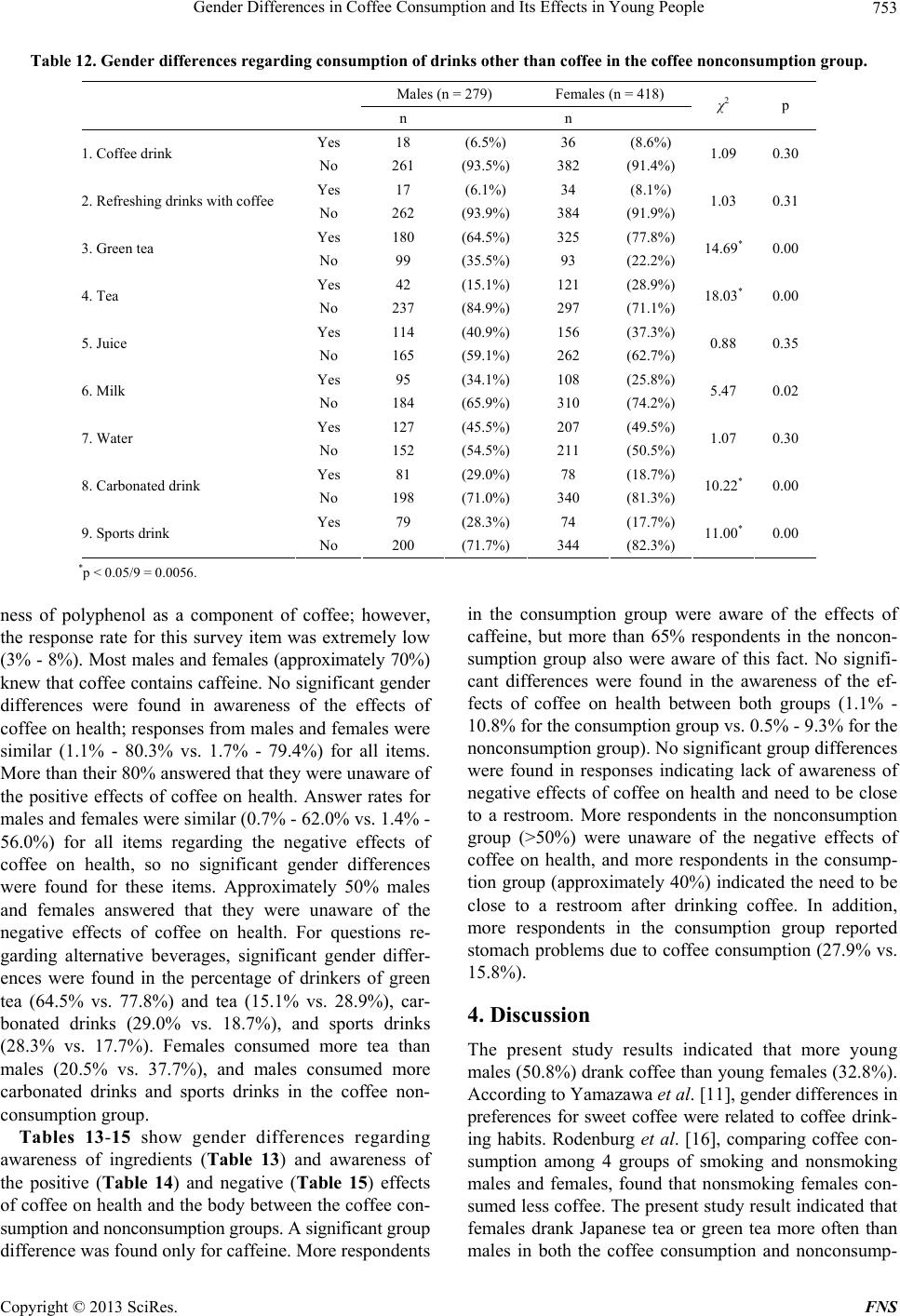 Gender Differences in Coffee Consumption and Its Effects in Young People 753 Table 12. Gender differences regarding consumption of drinks other than coffee in the coffee nonconsumption group. Males (n = 279) Females (n = 418) n n χ2 p Yes 18 (6.5%) 36 (8.6%) 1. Coffee drink No 261 (93.5%) 382 (91.4%) 1.09 0.30 Yes 17 (6.1%) 34 (8.1%) 2. Refreshing drinks with coffee No 262 (93.9%) 384 (91.9%) 1.03 0.31 Yes 180 (64.5%) 325 (77.8%) 3. Green tea No 99 (35.5%) 93 (22.2%) 14.69* 0.00 Yes 42 (15.1%) 121 (28.9%) 4. Tea No 237 (84.9%) 297 (71.1%) 18.03* 0.00 Yes 114 (40.9%) 156 (37.3%) 5. Juice No 165 (59.1%) 262 (62.7%) 0.88 0.35 Yes 95 (34.1%) 108 (25.8%) 6. Milk No 184 (65.9%) 310 (74.2%) 5.47 0.02 Yes 127 (45.5%) 207 (49.5%) 7. Water No 152 (54.5%) 211 (50.5%) 1.07 0.30 Yes 81 (29.0%) 78 (18.7%) 8. Carbonated drink No 198 (71.0%) 340 (81.3%) 10.22* 0.00 Yes 79 (28.3%) 74 (17.7%) 9. Sports drink No 200 (71.7%) 344 (82.3%) 11.00* 0.00 *p < 0.05/9 = 0. 0056. ness of polyphenol as a component of coffee; however, the response rate for this survey item was extremely low (3% - 8%). Most males and females (approximately 70%) knew that coffee contains caffeine. No significant gender differences were found in awareness of the effects of coffee on health; responses from males and females were similar (1.1% - 80.3% vs. 1.7% - 79.4%) for all items. More than their 80% answered that they were unaware of the positive effects of coffee on health. Answer rates for males and females were similar (0.7% - 62.0% vs. 1.4% - 56.0%) for all items regarding the negative effects of coffee on health, so no significant gender differences were found for these items. Approximately 50% males and females answered that they were unaware of the negative effects of coffee on health. For questions re- garding alternative beverages, significant gender differ- ences were found in the percentage of drinkers of green tea (64.5% vs. 77.8%) and tea (15.1% vs. 28.9%), car- bonated drinks (29.0% vs. 18.7%), and sports drinks (28.3% vs. 17.7%). Females consumed more tea than males (20.5% vs. 37.7%), and males consumed more carbonated drinks and sports drinks in the coffee non- consumption group. Tables 13-15 show gender differences regarding awareness of ingredients (Table 13) and awareness of the positive (Table 14) and negative (Table 15) effects of coffee on health and the body between the coffee con- sumption and nonconsum ption groups. A sign ifi cant group difference was found only for caffeine. More respondents in the consumption group were aware of the effects of caffeine, but more than 65% respondents in the noncon- sumption group also were aware of this fact. No signifi- cant differences were found in the awareness of the ef- fects of coffee on health between both groups (1.1% - 10.8% for the consumption group vs. 0.5% - 9.3% for the nonconsumption group). No significant group differences were found in responses indicating lack of awareness of negative effects of coffee on health and need to be close to a restroom. More respondents in the nonconsumption group (>50%) were unaware of the negative effects of coffee on health, and more respondents in the consump- tion group (approximately 40%) indicated the need to be close to a restroom after drinking coffee. In addition, more respondents in the consumption group reported stomach problems due to coffee consumption (27.9% vs. 15.8%). 4. Discussion The present study results indicated that more young males (50.8%) drank coffee than young females (32.8%). According to Yamazawa et al. [11], gender differences in preferences for sweet coffee were related to coffee drink- ing habits. Rodenburg et al. [16], comparing coffee con- sumption among 4 groups of smoking and nonsmoking males and females, found that nonsmoking females con- sumed less coffee. The present study result indicated that females drank Japanese tea or green tea more often than males in both the coffee consumption and nonconsump- Copyright © 2013 SciRes. FNS 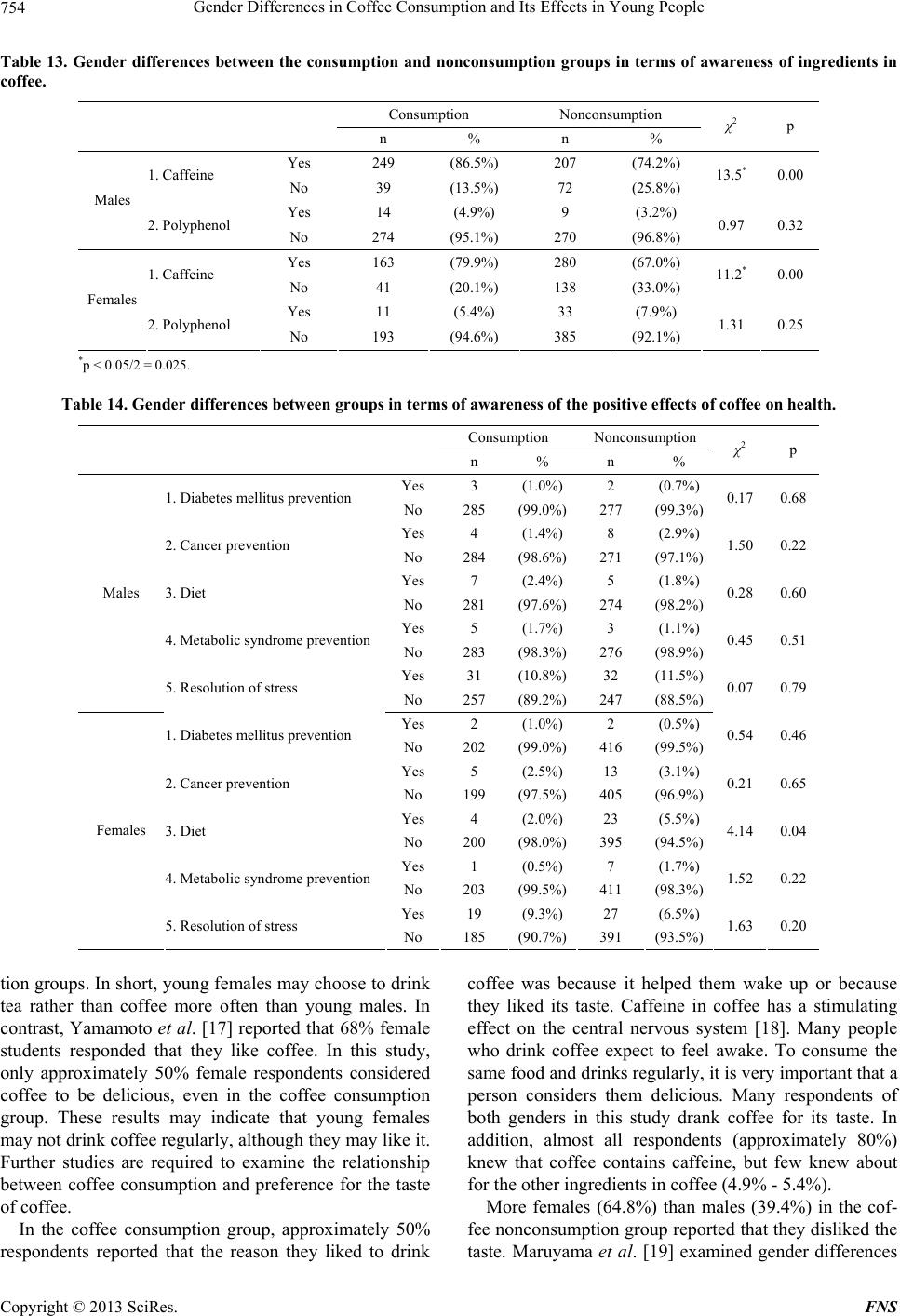 Gender Differences in Coffee Consumption and Its Effects in Young People 754 Table 13. Gender differences between the consumption and nonconsumption groups in terms of awareness of ingredients in coffee. Consumption Nonconsumption n % n % χ2 p Yes 249 (86.5%) 207 (74.2%) 1. Caffeine No 39 (13.5%) 72 (25.8%) 13.5* 0.00 Yes 14 (4.9%) 9 (3.2%) Males 2. Polyphenol No 274 (95.1%) 270 (96.8%) 0.97 0.32 Yes 163 (79.9%) 280 (67.0%) 1. Caffeine No 41 (20.1%) 138 (33.0%) 11.2* 0.00 Yes 11 (5.4%) 33 (7.9%) Females 2. Polyphenol No 193 (94.6%) 385 (92.1%) 1.31 0.25 *p < 0.05/2 = 0. 025. Table 14. Gender differences between groups in terms of awareness of the positive effects of coffee on health. Consumption Nonconsumption n % n % χ2 p Yes 3 (1.0%) 2 (0.7%) 1. Diabetes mellitus prevention No 285 (99.0%) 277 (99.3%) 0.17 0.68 Yes 4 (1.4%) 8 (2.9%) 2. Cancer pre vention No 284 (98.6%) 271 (97.1%) 1.50 0.22 Yes 7 (2.4%) 5 (1.8%) 3. Diet No 281 (97.6%) 274 (98.2%) 0.28 0.60 Yes 5 (1.7%) 3 (1.1%) 4. Metabolic syndrome prevention No 283 (98.3%) 276 (98.9%) 0.45 0.51 Yes 31 (10.8%) 32 (11.5%) Males 5. Resolution of stress No 257 (89.2%) 247 (88.5%) 0.07 0.79 Yes 2 (1.0%) 2 (0.5%) 1. Diabetes mellitus prevention No 202 (99.0%) 416 (99.5%) 0.54 0.46 Yes 5 (2.5%) 13 (3.1%) 2. Cancer pre vention No 199 (97.5%) 405 (96.9%) 0.21 0.65 Yes 4 (2.0%) 23 (5.5%) 3. Diet No 200 (98.0%) 395 (94.5%) 4.14 0.04 Yes 1 (0.5%) 7 (1.7%) 4. Metabolic syndrome prevention No 203 (99.5%) 411 (98.3%) 1.52 0.22 Yes 19 (9.3%) 27 (6.5%) Females 5. Resolution of stress No 185 (90.7%) 391 (93.5%) 1.63 0.20 tion groups. In short, young females may choose to drink tea rather than coffee more often than young males. In co ntras t, Ya mamoto et al. [17] reported that 68% female students responded that they like coffee. In this study, only approximately 50% female respondents considered coffee to be delicious, even in the coffee consumption group. These results may indicate that young females may not drink coffee regu larly, although they may lik e it. Further studies are required to examine the relationship between coffee consumption and preference for the taste of coffee. In the coffee consumption group, approximately 50% respondents reported that the reason they liked to drink coffee was because it helped them wake up or because they liked its taste. Caffeine in coffee has a stimulating effect on the central nervous system [18]. Many people who drink coffee expect to feel awake. To consume the same food and drinks regularly, it is very important that a person considers them delicious. Many respondents of both genders in this study drank coffee for its taste. In addition, almost all respondents (approximately 80%) knew that coffee contains caffeine, but few knew about for the other ingredients in coffee (4.9% - 5.4%). More females (64.8%) than males (39.4%) in the cof- fee nonconsumption group reported that they disliked the taste. Maruyama et al. [19] examined gender differences Copyright © 2013 SciRes. FNS 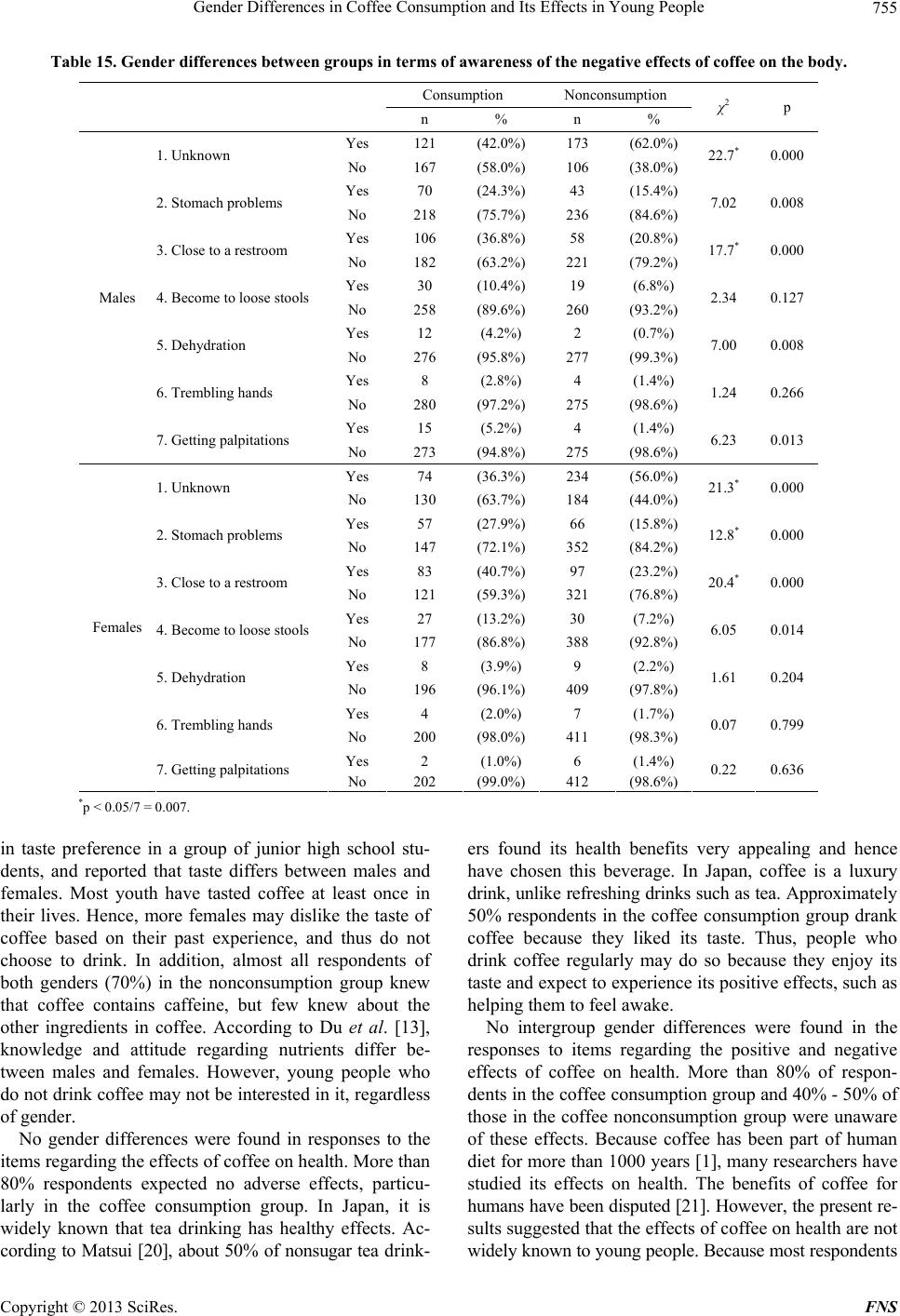 Gender Differences in Coffee Consumption and Its Effects in Young People 755 Table 15. Gender differences between groups in terms of awareness of the negative effects of coffee on the body. Consumption Nonconsumption n % n % χ2 p Yes 121 (42.0%) 173 (62.0%) 1. Unknown No 167 (58.0%)106 (38.0%) 22.7* 0.000 Yes 70 (24.3%) 43 (15.4%) 2. Stomach problems No 218 (75.7%)236 (84.6%) 7.02 0.008 Yes 106 (36.8%)58 (20.8%) 3. Close to a restroom No 182 (63.2%)221 (79.2%) 17.7* 0.000 Yes 30 (10.4%) 19 (6.8%) 4. Become to loose stools No 258 (89.6%)260 (93.2%) 2.34 0.127 Yes 12 (4.2%) 2 (0.7%) 5. Dehydration No 276 (95.8%)277 (99.3%) 7.00 0.008 Yes 8 (2.8%) 4 (1.4%) 6. Trembling h a n d s No 280 (97.2%)275 (98.6%) 1.24 0.266 Yes 15 (5.2%) 4 (1.4%) Males 7. Getting palpitations No 273 (94.8%)275 (98.6%) 6.23 0.013 Yes 74 (36.3%)234 (56.0%) 1. Unknown No 130 (63.7%)184 (44.0%) 21.3* 0.000 Yes 57 (27.9%) 66 (15.8%) 2. Stomach problems No 147 (72.1%)352 (84.2%) 12.8* 0.000 Yes 83 (40.7%) 97 (23.2%) 3. Close to a restroom No 121 (59.3%)321 (76.8%) 20.4* 0.000 Yes 27 (13.2%)30 (7.2%) 4. Become to loose stools No 177 (86.8%) 388 (92.8%) 6.05 0.014 Yes 8 (3.9%) 9 (2.2%) 5. Dehydration No 196 (96.1%)409 (97.8%) 1.61 0.204 Yes 4 (2.0%) 7 (1.7%) 6. Trembling h a n d s No 200 (98.0%) 411 (98.3%) 0.07 0.799 Yes 2 (1.0%) 6 (1.4%) Females 7. Getting palpitations No 202 (99.0%) 412 (98.6%) 0.22 0.636 *p < 0.05/7 = 0. 007. in taste preference in a group of junior high school stu- dents, and reported that taste differs between males and females. Most youth have tasted coffee at least once in their lives. Hence, more females may dislike the taste of coffee based on their past experience, and thus do not choose to drink. In addition, almost all respondents of both genders (70%) in the nonconsumption group knew that coffee contains caffeine, but few knew about the other ingredients in coffee. According to Du et al. [13], knowledge and attitude regarding nutrients differ be- tween males and females. However, young people who do not drink coffee may not be interested in it, regardless of gender. No gender differences were found in responses to the items regarding the effects of coffee on health. More than 80% respondents expected no adverse effects, particu- larly in the coffee consumption group. In Japan, it is widely known that tea drinking has healthy effects. Ac- cording to Matsui [20], about 50% of nonsugar tea drink- ers found its health benefits very appealing and hence have chosen this beverage. In Japan, coffee is a luxury drink, unlike refreshing drinks such as tea. Approximatel y 50% respondents in the coffee consumption group drank coffee because they liked its taste. Thus, people who drink coffee regularly may do so because they enjoy its taste and expect to experience its po sitive effects, such as helping them to feel awake. No intergroup gender differences were found in the responses to items regarding the positive and negative effects of coffee on health. More than 80% of respon- dents in the coffee consumption group and 40% - 50% of those in the coffee nonconsumption group were unaware of these effects. Because coffee has been part of human diet for more than 1000 years [1], many researchers have studied its effects on health. The benefits of coffee for humans have been disputed [21]. However, the present re- sults suggested that the effects of coffee on health are not widely known to young people. Because most responden t s Copyright © 2013 SciRes. FNS  Gender Differences in Coffee Consumption and Its Effects in Young People 756 in the consumption group and more than 65% of those in the nonconsumption group knew that coffee contains caffeine, it is considered that the caffeine is a widely known component among young people. However, no significant gender differences between the consumption and nonconsumption groups were found regarding the effects of coffee on health. In Japan, alternative healthy drinks such as water or lactic acid bacteria beverages have been manufactured. In addition, many people rec- ognize the healthy effect of tea [20]. On the other hand, the risk of myocardial infarction and glaucoma are increased by coffee consumption [22, 23]. However, regarding the adverse effects of coffee on the body, both male and female respondents in the non- consumption group (>50%) were unaware of these ef- fects, and approximately 40% of those in the consump- tion group were unaware of these effects. In addition, approximately 40% of those in the consumption group felt the need to be close to a restroom after drinking cof- fee. Many studies have reported results of tests of coffee from the medical and pharmaceutical viewpoints [3-7]. The media also frequently reports the effects of coffee. However, the adverse effects of coffee consumption may not be adequately reported. Therefore, young people may know little about these effects regardless of their prefer- ence for coffee. It is necessary to spread awareness re- garding the positive and negative effects of coffee on health, regardless of coffee consumption. Similar to the coffee-drinking habit of westerners, many Japanese, in- cluding the youth, tend to drink coffee during business or social meetings. Moreover, coffee can be freely ordered at a coffee-specialty store, tea shop, or fast food center and can be easily bought at a supermarket or from vend- ing machines. Such circumstances are responsible for giving ri s e to many cof f ee drinkers. 5. Conclusion In conclusion, in this study, young males reported drink- ing more coffee than young females. Among coffee non- consumers, females disliked the taste of coffee more of- ten than males. Many young people know that coffee contains caffeine, but few know about other components of this beverage. In addition, few people know the posi- tive and negative effects of coffee on health. REFERENCES [1] B. Schilter, C. Cavin, A. Tritscher and A. Constable, “Health Effects and Safety Consideration,” In R. J. Clarke and O. G. Vitzthum, Eds., Coffee Recent Developments, Blackwell Science Company, Ames, 2001, p. 166. [2] T. Yamato, M. Kino, T. Obata, H. Ohta and M. Aomine, “Modulatory Effect of Coffee on Restrained Stress-In- duced Release of Neurotransmitters in Rat,” Journal of Japanese Society of Nutrition and Food Science, Vol. 55, No. 2, 2002, pp. 85-91. doi:10.4327/jsnfs.55.85 [3] E. Giovannucci, “Meta-Analysis of Coffee Consumption and Risk of Colorectal Cancer,” American Journal of Epidemiology, Vol. 147, No. 11, 1998, pp. 1043-1052. doi:10.1093/oxfordjournals.aje.a009398 [4] A. Tverdal and S. Skurtveit, “Coffee Intake and Mortality from Liver Cirrhosis,” Annals of Epidemiology, Vol. 13, No. 6, 2003, pp. 419-423. doi:10.1016/S1047-2797(02)00462-3 [5] T. Yamaji , T. Mizoue, S. Tabata, S. Ogawa, K. Yamagu- chi, E. Shimizu, M. Mineshita and S. Kono, “Coffee Consumption and Glucose Tolerance Status in Middle- Aged Japanese Men,” Diabetologia, Vol. 47, No. 12, 2004, pp. 2145-2151. doi:10.1007/s00125-004-1590-5 [6] C. E. Ruhl and J. E. Everhart, “Coffee and Tea Consump- tion Are Associated with a Lower Incidence of Chronic Liver Disease in the United States,” Gastroenterology, Vol. 129, No. 6, 2005, pp. 1928-1936. doi:10.1053/j.gastro.2005.08.056 [7] M. Inoue, I. Yoshimi, T. Sobue, S. Tsugane and J.P.H.C. Study Group, “Influence of Coffee Drinking on Subse- quent Risk of Hepatocellular of Coffee Drinking on Sub- sequent Risk of Hepatocellular Carcinoma: A Prospective Study in Japan,” Journal of the National Cancer Institute, Vol. 97, No. 4, 2005, pp. 293-300. doi:10.1093/jnci/dji040 [8] L. F. Andersen, D. R. Jacobs Jr., M. H. Carlsen and R. Blomhoff, “Consumption of Coffee Is Associated with Reduced Risk of Death Attributed to Inflammatory and Cardiovascular Diseases in the Iowa Women’s Health Study,” American Journal of Clinical Nutrition, Vol. 83, No. 5, 2006, pp. 1039-1046. [9] H. Iso, C. Date, K. Wakai, M. Fukui, A. Tamakoshi and J.A.C.C. Study Group, “The Relationship between Green Tea and Total Caffeine Intake and Risk for Self-Reported Type 2 Diabetes among Japanese Adults,” Annals of In- ternal Medicine, Vol. 144, No. 8, 2006, pp. 554-562. doi:10.7326/0003-4819-144-8-200604180-00005 [10] M.Garzaro, L. Raimondo, G. Pecorari, M. Sensini, G. Riva, A. Palmo and C. Giordano, “Digestibility, Palat- ability and Emotional Status after Ingestion of an Iced Dessert: Analysis of Subjective Responses in 100 Healthy Volunteers,” Journal of Biological Regulators & Homeo- static Agents, Vol. 25, No. 1, 2011, pp. 101-107. [11] K. Yamazawa, K. Hirokawa and H. Shimizu, “Sex Dif- ferences in Preferences for Coffee Sweetness among Japa- nese Students,” Perceptual and Motor Skills, Vol. 105, No. 2, 2007, pp. 403-404. [12] P. Mirmiran, F. Mohammadi-Nasrabadi, N. Omidvar, F. Hosseini-Esfahani, H. Hamayeli-Mehrabani, Y. Mehrabi and F. Azizi, “Nutritional Knowledge, Attitude and Prac- tice of Tehranian Adults and Their Relation to Serum Li- pid and Lipoproteins: Tehran Lipid and Glucose Study,” Annals of Nutrition & Metabolism, Vol. 56, No. 3, 2010, pp. 233-240. doi:10.1159/000288313 [13] W. Du, J. Fu, C. Su, Q. Zhang, F. Zhai and B. Zhang, “Surveys on the Nutrition Literacy of 802 Adults in Ji- angxi Province,” Wei Sheng Yan Jiu, Vol. 39, No. 6, 2010, Copyright © 2013 SciRes. FNS  Gender Differences in Coffee Consumption and Its Effects in Young People Copyright © 2013 SciRes. FNS 757 pp. 735-738. [14] M. Izumi and M. Takaya,” Influence of Various of Ex- traction Conditions and Amount of Chlorogenic Acid on the Taste of Coffee,” Journal of Cookery Science of Ja- pan, Vol. 41, No. 4, 2008, pp. 257-261. [15] A.Drewnowski, S.A. Henderson, A. Levine and C. Hann, “Taste and Food Preferences as Predictors of Dietary Practices in Young Women,” Public Health Nutrition, Vol. 2, No. 4, 1999, pp. 513-519. [16] E. M. Rodenburg, M. Eijgelsheim, J. M. Geleijnse, N. Amin, C. M. van Duijn, A. Hofman, A. G. Uitterlinden, B. H. Stricker and L. E. Visser, “CYP1A2 and Coffee Intake and the Modifying Effect of Sex, Age, and Smoking,” American Journal of Clinical Nutrition, Vol. 96, No. 1, 2012, pp. 182-187. doi:10.3945/ajcn.111.027102 [17] T. Yamato, M. Aomine, T. Koga and H. Ohta, “Relation- ship between Coffee Drinking and Reduction of Mental Stress in Young Women,” Food Science and Technology Research, Vol. 11, No. 4, 2005, pp. 395-399. doi:10.3136/fstr.11.395 [18] B. B. Fredholm, “On the Mechanism of Action of Theo- phylline and Caffeine,” Acta Medica Scandinavica, Vol. 217, No. 2, 1985, pp. 149-153. [19] S. Maruyama, T. Koda and T. Takahashi, “Gender Dif- ferences among Junior High School Students Regarding Taste Preference of Dried Bonito Soup Stocks,” Japanese Journal of Adolescentology, Vol. 28, No. 1, 2010, pp. 170-176. [20] Y. Matsui, “The Attractive Power of Oolong Tea,” Jour- nal for the Integrated Study of Dietary Habits, Vol. 11, No. 1, 2000, pp. 2-15. doi:10.2740/jisdh.11.2 [21] H. S. Seo, M. Hirano, J. Shibato, R. Rakwal, I. K. Hwang and Y. Masuo, “Effects of Coffee Bean Aroma on the Rat Brain Stressed by Sleep Deprivation: A Selected Tran- script- and 2D Gel-Based Proteome Analysis,” Journal of Agricultural and Food Chemistry, Vol. 56, No. 12, 2008, pp. 4665-4673. doi:10.1021/jf8001137 [22] M. C. Cornelis, A. El-Sohemy, E. K. Kabagambe and H. Campos, “Coffee, CYP1A2 Genotype, and Risk of Myo- cardial Infarction,” The Journal of the American Medical Association, Vol. 295, No. 10, 2006, pp. 1135-1141. doi:10.1001/jama.295.10.1135 [23] L. R. Pasquale, J. L. Wiggs, W. C. Willett and J. H. Kang, “The Relationship between Caffeine and Coffee Con- sumption and Exfoliation Glaucoma or Glaucoma Sus- pect: A Prospective Study in Two Cohorts,” Investigative Ophthalmology & Visual Science, Vol. 53, No. 10, 2012, pp. 6427-6433. doi:10.1167/iovs.12-10085 |