

Paper Menu >>
Journal Menu >>
 American Journal of Analytical Chemistry, 2013, 4, 33-39 http://dx.doi.org/10.4236/ajac.2013.47A005 Published Online July 2013 (http://www.scirp.org/journal/ajac) Surface Modification of PEEK-WC Membranes by Wet Phase Inversion for Ni(II) Adsorption Said Bey1, Mohamed Benamor1, Enrico Drioli2 1Membrane Process and Separation, Recuperation Techniques Laboratory, Faculty of Technology, Bejaia University, Bejaia, Algeria 2Institute on Membrane Technology (ITM-CNR), Università della Calabria, Rende, Italy Email: [email protected] Received May 2, 2013; revised June 3, 2013; accepted June 19, 2013 Copyright © 2013 Said Bey et al. This is an open access article distributed under the Creative Commons Attribution License, which permits unrestricted use, distribution, and reproduction in any medium, provided the original work is properly cited. ABSTRACT This work focuses on the preparation and characterization of flat sheet membrane based on modified polyether ether keetone (PEEK-WC). Additives, such as dibutyl phatalate (DBP) and diethyl hexyl phosphoric acid (DEHPA), were used to investigate their effect on membranes properties which are prepared by immersion precipitation. For that, sev- eral techniques were used to characterize membranes like thermal analyses, scanning electron microscopy and micro- analyses. SEM pictures show versatile structures of the membranes from dense to porous membranes characterized by a sponge and finger like structure. Moreover, microanalyses of both surfaces, bottom and top surfaces show an aggrega- tion of DEHPA at the top surface of the membrane. However, by adding dibutylphtalate, a well dispersion of the ex- tractant was observed. Initially, micro-porous membranes were used in supported liquid membranes experiments for Ni(II) metal ions transpor ts using diethyl hexyl phospho ric acid (DEHPA) as carrier. The extraction efficiency was very low about 28%, but enhanced by adding xylene to the organic phase. However, the modified membranes (with additives) by DBP and DEHPA were used on solid liquid extraction of Ni(II). The results show that by adding the plasticizer and the extractant, the efficiency of the system reached 63%. Keywords: DEHPA; Phase Inversion; PEEK-WC; Ni(II); SLM 1. Introduction Up to now, the majority of synthetic polymeric mem- branes are produced by the phase inversion process w her e a thin layer of polymer, dissolved in an appropriate sol- vent, is casted on suitable support and phase separation is introduced by a non solvent [1-3]. The final membrane structure depends on several experimental parameters: the composition of polymer solution (additives, solvent, concentration), temperature, etc. In general, additives, with low molecular weight, are used in order to affect the morphology of the membrane or as pore former such as polyvinyli pyrrolidone (PVP), polyethylene glycol (PEG), maleic acid [4-7]. However, a large number of additives with polymers that can possibly be used remain unex- plored. Hence, the aim of the present work is to investi- gate the effect of the dibutyl phthalate (DBP), used as plasticizer, and diethyl hexyl phosphoric acid (DEHPA) on the properties and surface modification of membranes based on a modified polyether ether ketone (PEEK-WC) prepared by wet phase inversion. A microanalysis of both surfaces, the top and the bottom surfaces, is introduced to understand the displacement of the components. The vir- gin micro-porous membranes were used for the trans- port of Ni(II) by supported liquid membrane and DEHPA as carrier and a modified one, DEHPA and DBP were used for solid-liquid extraction of Ni(II). 2. Experimental 2.1. Membrane Preparation For membrane sample preparation, 14% (wt) of the PEEK-WC polymer (Mw = 224 kg/mol; Tg = 225˚C; Chang Chung institute—China) has been dissolved in dimethyl acetamide (DMAc, Fluka). The carrier con- tained in the membrane is an organo-phosphoric acid derivative with plasticizing properties. After complete dissolution of the polymer, the DBP (DBP; bp: 340˚C, PROLABO) or DEHPA (DEHPA, bp: 200˚C, SIGMA) (or mixture of them) was added to the polymer solution. DBP is used, as plasticizer, due to its compatibility with several polymers and for a high dispersion of the extrac- tant (DEHPA) in polymer matrix. Then the mixture was C opyright © 2013 SciRes. AJAC 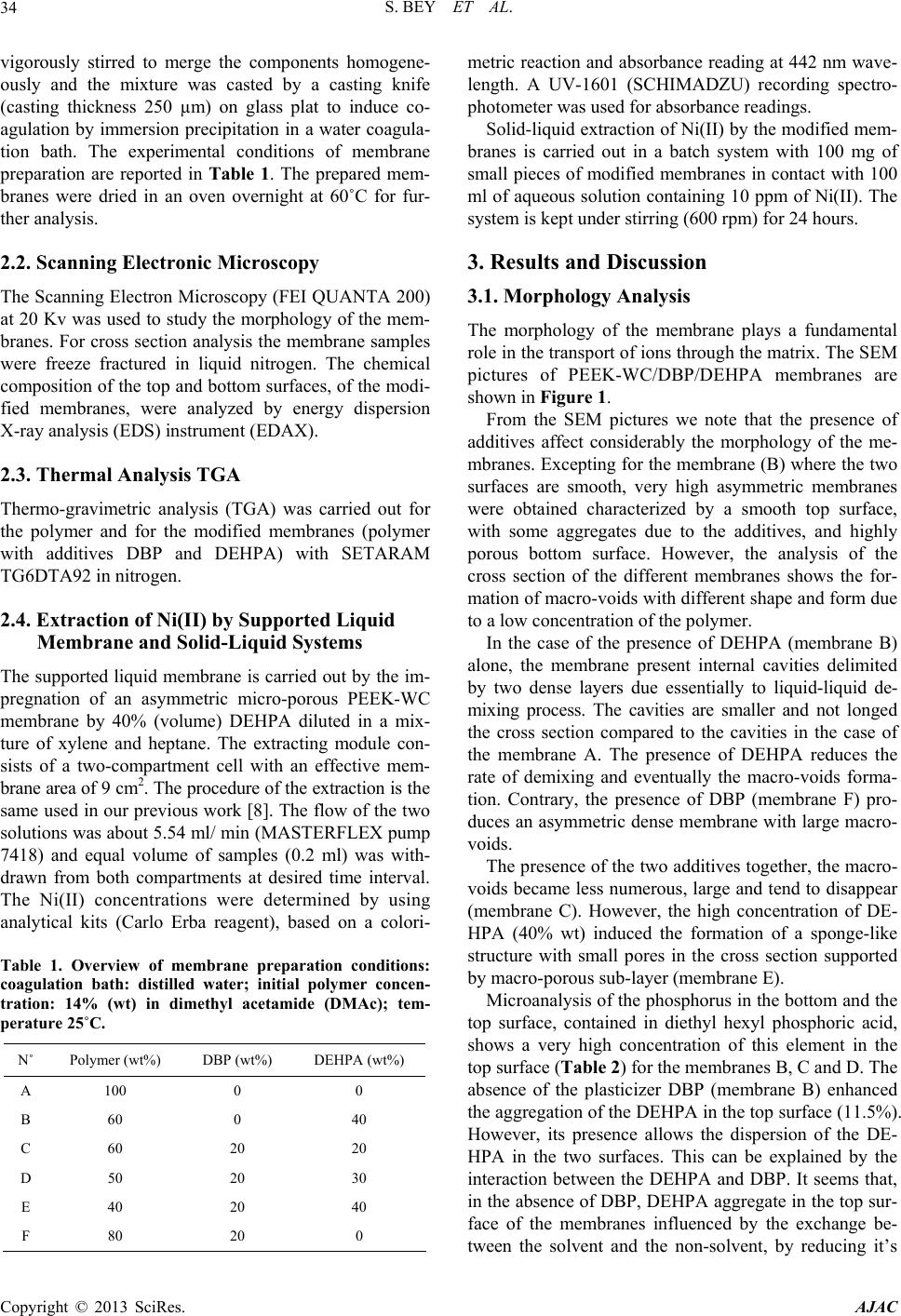 S. BEY ET AL. 34 vigorously stirred to merge the components homogene- ously and the mixture was casted by a casting knife (casting thickness 250 µm) on glass plat to induce co- agulation by immersion precipitation in a water coagula- tion bath. The experimental conditions of membrane preparation are reported in Table 1. The prepared mem- branes were dried in an oven overnight at 60˚C for fur- ther analysis. 2.2. Scanning Electronic Microscopy The Scanning Electron Microscopy (FEI QUANTA 200) at 20 Kv was used to study the morphology of the mem- branes. For cross section analysis the membrane samples were freeze fractured in liquid nitrogen. The chemical composition of the top and bottom surfaces, of the modi- fied membranes, were analyzed by energy dispersion X-ray analysis (EDS) instrument (EDAX). 2.3. Thermal Analysis TGA Thermo-gravimetric analysis (TGA) was carried out for the polymer and for the modified membranes (polymer with additives DBP and DEHPA) with SETARAM TG6DTA92 in nitrogen. 2.4. Extraction of Ni(II) by Supported Liquid Membrane and Solid-Liquid Systems The supported liquid membrane is carried out by the im- pregnation of an asymmetric micro-porous PEEK-WC membrane by 40% (volume) DEHPA diluted in a mix- ture of xylene and heptane. The extracting module con- sists of a two-compartment cell with an effective mem- brane area of 9 cm2. The procedure of the extraction is th e same used in our previous work [8]. The flow of the two solutions was about 5.54 ml/ min (MASTERFLEX pump 7418) and equal volume of samples (0.2 ml) was with- drawn from both compartments at desired time interval. The Ni(II) concentrations were determined by using analytical kits (Carlo Erba reagent), based on a colori- Table 1. Overview of membrane preparation conditions: coagulation bath: distilled water; initial polymer concen- tration: 14% (wt) in dimethyl acetamide (DMAc); tem- perature 25˚C. N˚ Polymer (wt%) DBP (wt%) DEHPA (wt%) A 100 0 0 B 60 0 40 C 60 20 20 D 50 20 30 E 40 20 40 F 80 20 0 metric reaction and absorbance reading at 442 nm wave- length. A UV-1601 (SCHIMADZU) recording spectro- photometer was used for absorbance readings. Solid-liquid extraction of Ni(II) by the modified mem- branes is carried out in a batch system with 100 mg of small pieces of modified membranes in contact with 100 ml of aqueous solution containing 10 ppm of Ni(II). The system is kept under stirring (600 rpm) for 24 hours. 3. Results and Discussion 3.1. Morphology Analysis The morphology of the membrane plays a fundamental role in the transport of ions through the matrix. The SEM pictures of PEEK-WC/DBP/DEHPA membranes are shown in Figure 1. From the SEM pictures we note that the presence of additives affect considerably the morphology of the me- mbranes. Excepting for the membrane (B) where the two surfaces are smooth, very high asymmetric membranes were obtained characterized by a smooth top surface, with some aggregates due to the additives, and highly porous bottom surface. However, the analysis of the cross section of the different membranes shows the for- mation of macro-voids with different shape and form due to a low concentration of the polymer. In the case of the presence of DEHPA (membrane B) alone, the membrane present internal cavities delimited by two dense layers due essentially to liquid-liquid de- mixing process. The cavities are smaller and not longed the cross section compared to the cavities in the case of the membrane A. The presence of DEHPA reduces the rate of demixing and eventually the macro-voids forma- tion. Contrary, the presence of DBP (membrane F) pro- duces an asymmetric dense membrane with large macro- voids. The presence of the two additiv es together, the macro- voids became less numerous, large and tend to disappear (membrane C). However, the high concentration of DE- HPA (40% wt) induced the formation of a sponge-like structure with small pores in the cross section supported by macro-porous sub-layer (membrane E). Microanalysis of the phosphorus in the bottom and the top surface, contained in diethyl hexyl phosphoric acid, shows a very high concentration of this element in the top surface (Table 2) for the membranes B, C and D. The absence of the plasticizer DBP (membrane B) enhanced the aggregation of the DEHPA in the top surface (11.5%). However, its presence allows the dispersion of the DE- HPA in the two surfaces. This can be explained by the interaction between the DEHPA and DBP. It seems that, in the abs ence of DBP, DEHPA aggrega te in the top sur - face of the membranes influenced by the exchange be- tween the solvent and the non-solvent, by reducing it’s Copyright © 2013 SciRes. AJAC 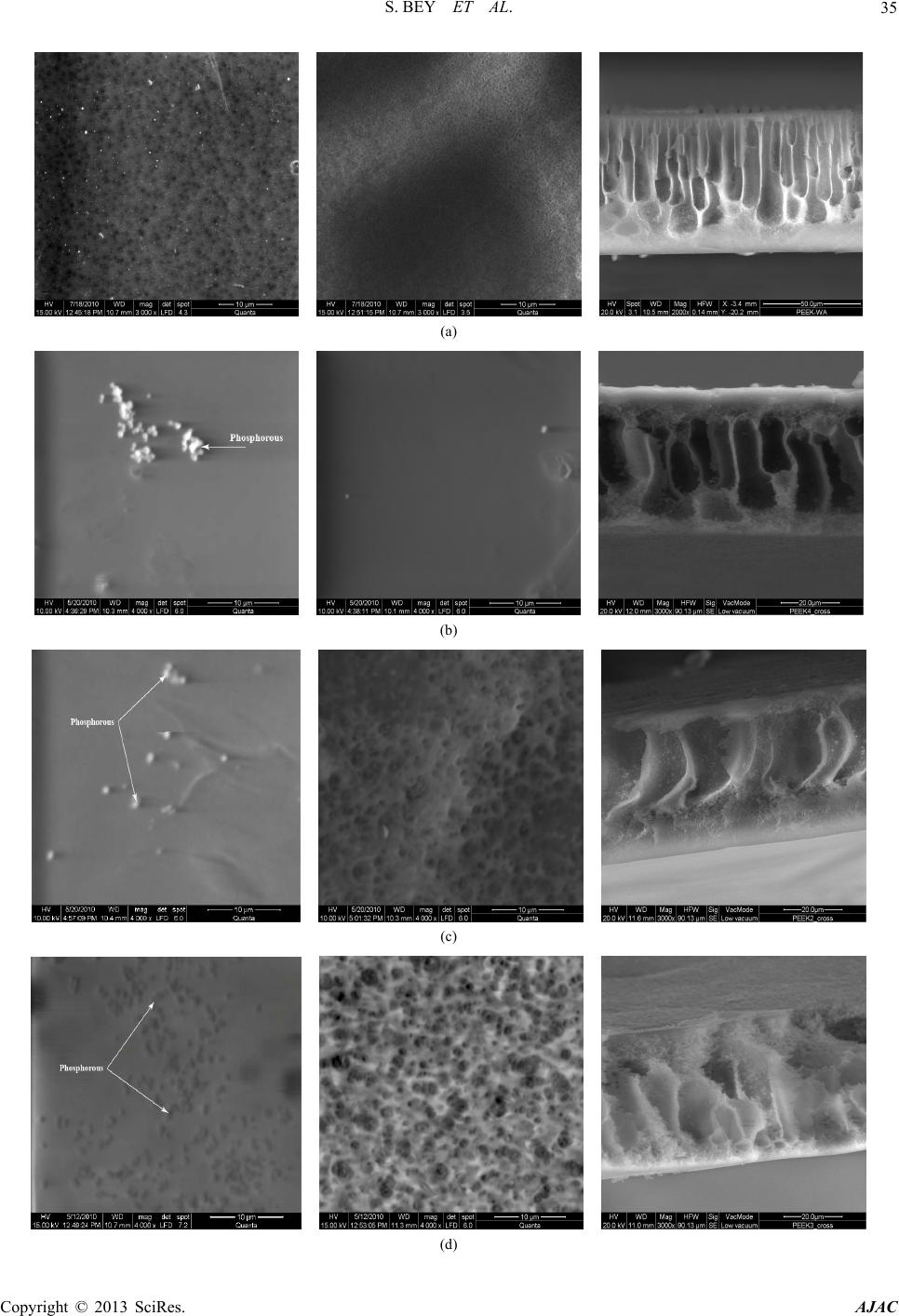 S. BEY ET AL. Copyright © 2013 SciRes. AJAC 35 (a) (b) (c) (d) 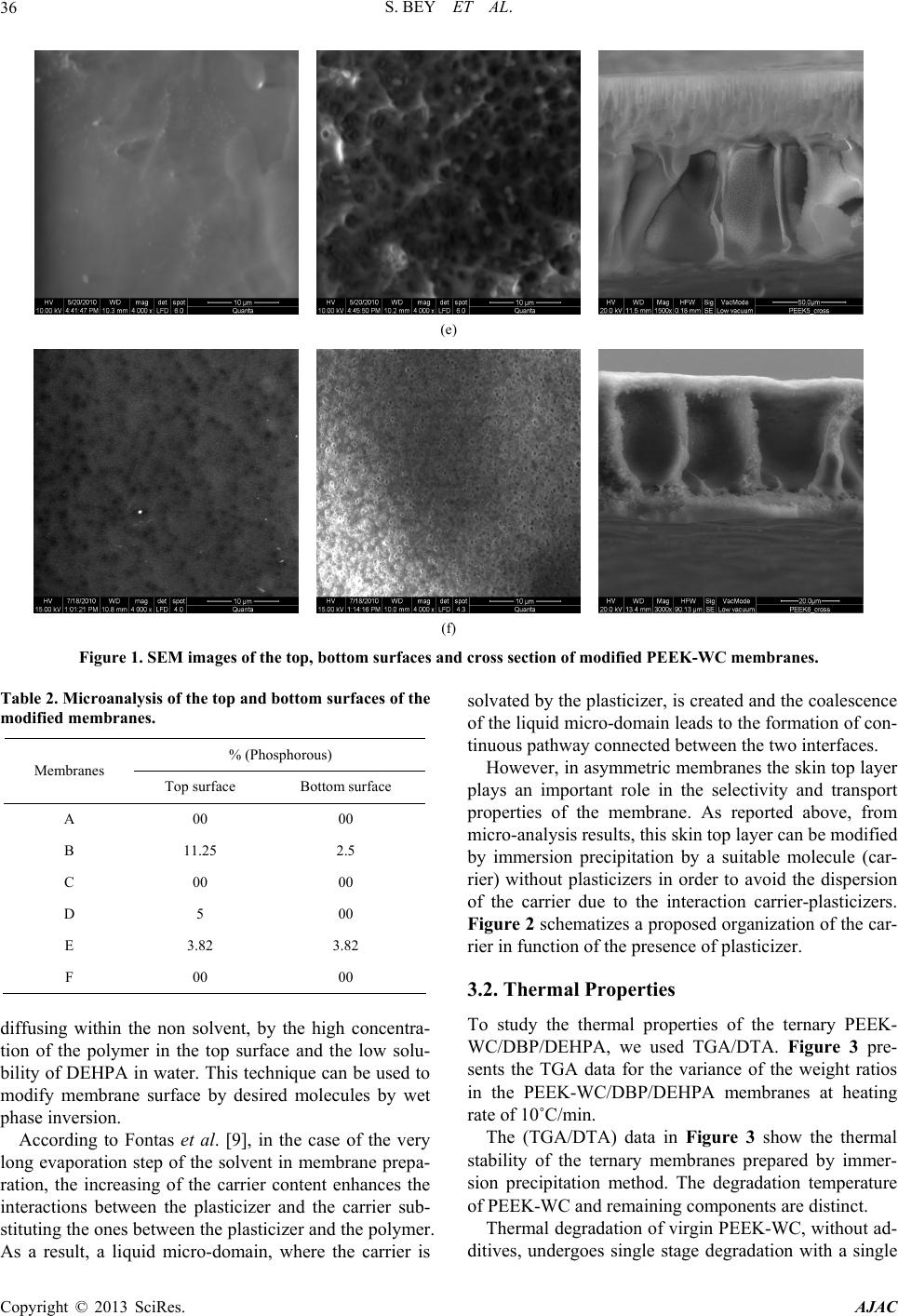 S. BEY ET AL. 36 (e) (f) Figure 1. SEM images of the top, bottom surfaces and cross section of modified PEEK-WC membranes. Table 2. Microanalysis of the top and bottom surfaces of the modified membranes. % (Phosphorous) Membranes Top surface Bottom surface A 00 00 B 11.25 2.5 C 00 00 D 5 00 E 3.82 3.82 F 00 00 diffusing within the non solvent, by the high concentra- tion of the polymer in the top surface and the low solu- bility of DEHPA in water. This techniqu e can be used to modify membrane surface by desired molecules by wet phase inversion. According to Fontas et al. [9], in the case of the very long evaporation step of the solvent in membrane prepa- ration, the increasing of the carrier content enhances the interactions between the plasticizer and the carrier sub- stituting the ones between the plasticizer and the polymer. As a result, a liquid micro-domain, where the carrier is solvated by the plasticizer, is created and the coalescence of the liquid micro-do main leads to the formatio n of con- tinuous pathway connected between the two interfaces. However, in asymmetric memb ranes the skin top layer plays an important role in the selectivity and transport properties of the membrane. As reported above, from micro-analysis results, this skin top layer can be modified by immersion precipitation by a suitable molecule (car- rier) without plasticizers in order to avoid the dispersion of the carrier due to the interaction carrier-plasticizers. Figure 2 schematizes a proposed organization of the car- rier in function of the presence of plasticizer. 3.2. Thermal Properties To study the thermal properties of the ternary PEEK- WC/DBP/DEHPA, we used TGA/DTA. Figure 3 pre- sents the TGA data for the variance of the weight ratios in the PEEK-WC/DBP/DEHPA membranes at heating rate of 10˚C/min. The (TGA/DTA) data in Figure 3 show the thermal stability of the ternary membranes prepared by immer- sion precipitation method. The degradation temperature of PEEK-WC and remaining components are distinct. Thermal degradation of virgin PEEK-WC, without ad- ditives, undergoes single stage degradation with a single Copyright © 2013 SciRes. AJAC 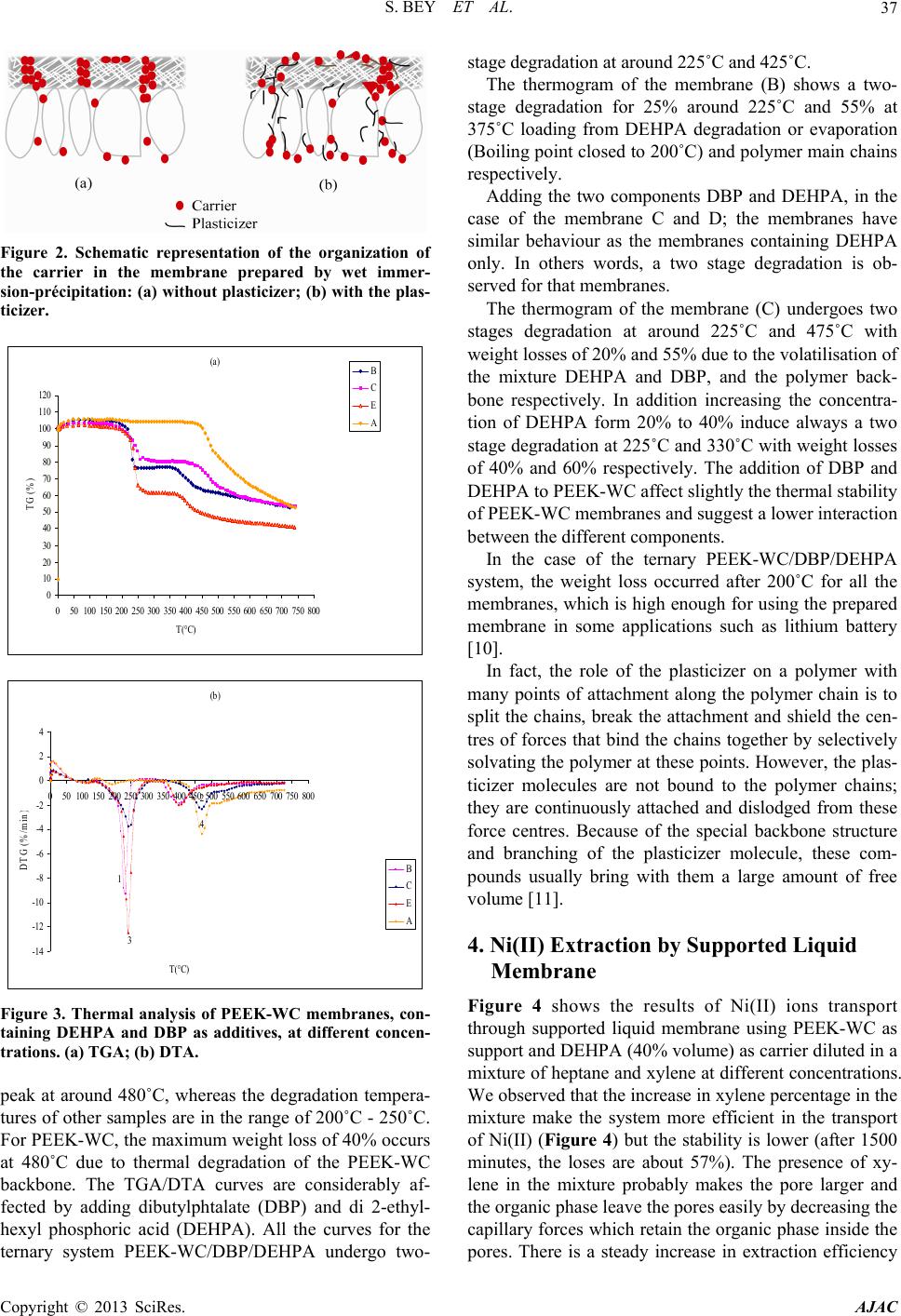 S. BEY ET AL. 37 Figure 2. Schematic representation of the organization of the carrier in the membrane prepared by wet immer- sion-précipitation: (a) without plasticizer; (b) with the plas- ticizer. (a ) 0 10 20 30 40 50 60 70 80 90 100 110 120 050100150 200 250 300350 400 450 500550 600 650 700750 800 T(°C) TG (%) B C E A (b) -14 -12 -10 -8 -6 -4 -2 0 2 4 050100 150 200250 300 350 400450 500 550600 650 700750 800 T(°C) DTG (%/min ) B C E A 4 3 2 1 Figure 3. Thermal analysis of PEEK-WC membranes, con- taining DEHPA and DBP as additives, at different concen- trations. (a) TGA; (b) DTA. peak at around 480˚C, whereas the degradation tempera- tures of other samples are in the range of 200˚C - 250˚C. For PEEK-WC, the maximum weight loss of 40% occurs at 480˚C due to thermal degradation of the PEEK-WC backbone. The TGA/DTA curves are considerably af- fected by adding dibutylphtalate (DBP) and di 2-ethyl- hexyl phosphoric acid (DEHPA). All the curves for the ternary system PEEK-WC/DBP/DEHPA undergo two- stage degradation at around 225˚C and 425 ˚C. The thermogram of the membrane (B) shows a two- stage degradation for 25% around 225˚C and 55% at 375˚C loading from DEHPA degradation or evaporation (Boiling poin t closed to 200˚C) and polymer main chains respectively. Adding the two components DBP and DEHPA, in the case of the membrane C and D; the membranes have similar behaviour as the membranes containing DEHPA only. In others words, a two stage degradation is ob- served f or that membranes. The thermogram of the membrane (C) undergoes two stages degradation at around 225˚C and 475˚C with weight losses of 20% and 55% due to the volatilisation of the mixture DEHPA and DBP, and the polymer back- bone respectively. In addition increasing the concentra- tion of DEHPA form 20% to 40% induce always a two stage degradation at 225˚C and 330˚C with weight losses of 40% and 60% respectively. The addition of DBP and DEHPA to PEEK-WC affect slightly the thermal stability of PEEK-WC membranes and suggest a lower interaction between the different components. In the case of the ternary PEEK-WC/DBP/DEHPA system, the weight loss occurred after 200˚C for all the membranes, which is high enough for using the prepared membrane in some applications such as lithium battery [10]. In fact, the role of the plasticizer on a polymer with many points of attachment along the polymer chain is to split the chains, break the attachment and shield the cen- tres of forces that bind the chains together by selectively solvating the poly mer at these points. However, the plas- ticizer molecules are not bound to the polymer chains; they are continuously attached and dislodged from these force centres. Because of the special backbone structure and branching of the plasticizer molecule, these com- pounds usually bring with them a large amount of free volume [11]. 4. Ni(II) Extraction by Supported Liquid Membrane Figure 4 shows the results of Ni(II) ions transport through supported liquid membrane using PEEK-WC as support and DEHPA (40% volume) as carrier diluted in a mixture of heptane and xylene at different concentrations. We observed that the increase in xylene percentage in the mixture make the system more efficient in the transport of Ni(II) (Figure 4) but the stability is lower (after 1500 minutes, the loses are about 57%). The presence of xy- lene in the mixture probably makes the pore larger and the organic phase leave the pores easily by decreasing the capillary forces which retain the organic phase in side the pores. There is a steady increase in extraction efficiency Copyright © 2013 SciRes. AJAC 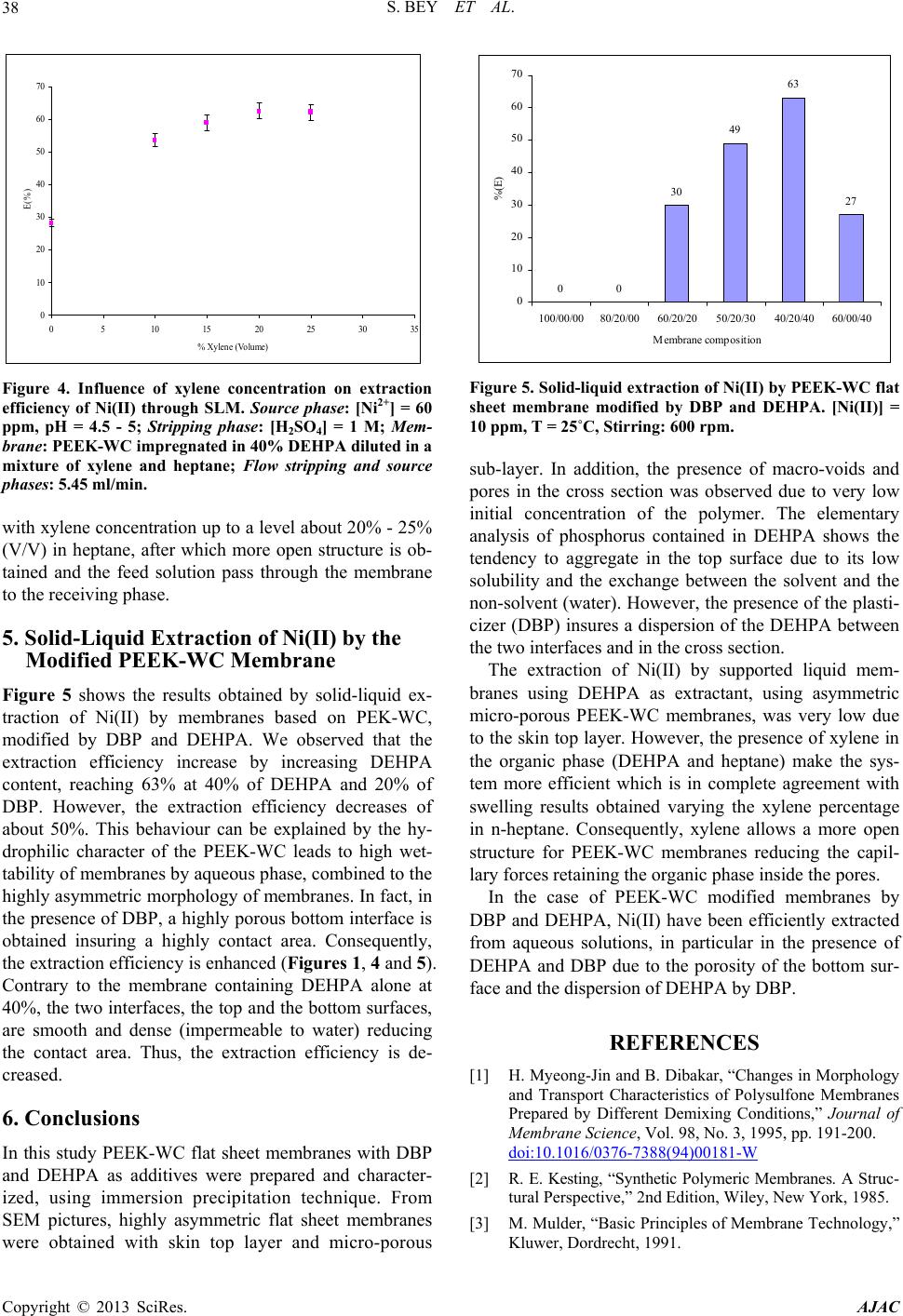 S. BEY ET AL. 38 0 10 20 30 40 50 60 70 0510 1520 25 % Xylene (Volume) E(%) 30 35 00 30 49 63 27 0 10 20 30 40 50 60 70 100/00/0080/20/00 60/20/2050/20/3040/20/40 60/00/40 Membr ane composition %(E) Figure 4. Influence of xylene concentration on extraction efficiency of Ni(II) through SLM. Source phase: [Ni2+] = 60 ppm, pH = 4.5 - 5; Stripping phase: [H2SO4] = 1 M; Mem- brane: PEEK-WC impregnated in 40% DEHPA diluted in a mixture of xylene and heptane; Flow stripping and source phases: 5.45 ml/min. with xylene concen tration up to a level about 20% - 25% (V/V) in heptane, after which more open structure is ob- tained and the feed solution pass through the membrane to the receiving phase. 5. Solid-Liquid Extraction of Ni(II) by the Modified PEEK-WC Membrane Figure 5 shows the results obtained by solid-liquid ex- traction of Ni(II) by membranes based on PEK-WC, modified by DBP and DEHPA. We observed that the extraction efficiency increase by increasing DEHPA content, reaching 63% at 40% of DEHPA and 20% of DBP. However, the extraction efficiency decreases of about 50%. This behaviour can be explained by the hy- drophilic character of the PEEK-WC leads to high wet- tability of membranes by aqueou s phase, combin ed to the highly asymmetric morphology of membranes. In fact, in the presence of DBP, a highly porous bo ttom interface is obtained insuring a highly contact area. Consequently, the extraction efficiency is enhanced (Figures 1, 4 and 5). Contrary to the membrane containing DEHPA alone at 40%, the two interfaces, the top and the bottom surfaces, are smooth and dense (impermeable to water) reducing the contact area. Thus, the extraction efficiency is de- creased. 6. Conclusions In this study PEEK-WC flat sheet membranes with DBP and DEHPA as additives were prepared and character- ized, using immersion precipitation technique. From SEM pictures, highly asymmetric flat sheet membranes were obtained with skin top layer and micro-porous Figure 5. Solid-liquid extraction of Ni(II) by PEEK-WC flat sheet membrane modified by DBP and DEHPA. [Ni(II)] = 10 ppm, T = 25˚C, Stirring: 600 rpm. sub-layer. In addition, the presence of macro-voids and pores in the cross section was observed due to very low initial concentration of the polymer. The elementary analysis of phosphorus contained in DEHPA shows the tendency to aggregate in the top surface due to its low solubility and the exchange between the solvent and the non-solvent (water). However, the presence of the plasti- cizer (DBP) insures a dispersion of the DEHPA between the two interfaces and in the cros s section. The extraction of Ni(II) by supported liquid mem- branes using DEHPA as extractant, using asymmetric micro-porous PEEK-WC membranes, was very low due to the skin top layer. However, the presen ce of xylene in the organic phase (DEHPA and heptane) make the sys- tem more efficient which is in complete agreement with swelling results obtained varying the xylene percentage in n-heptane. Consequently, xylene allows a more open structure for PEEK-WC membranes reducing the capil- lary forces retaining the organic phase inside the pores. In the case of PEEK-WC modified membranes by DBP and DEHPA, Ni(II) have been efficiently extracted from aqueous solutions, in particular in the presence of DEHPA and DBP due to the porosity of the bottom sur- face and the dispersion of DEHPA by DBP. REFERENCES [1] H. Myeong-Jin and B. Dibakar, “Changes in Morphology and Transport Characteristics of Polysulfone Membranes Prepared by Different Demixing Conditions,” Journal of Membrane Science, Vol. 98, No. 3, 1995, pp. 191-200. doi:10.1016/0376-7388(94)00181-W [2] R. E. Kesting, “Synthetic Polymeric Membranes. A S truc - tural Perspective,” 2nd Edition, Wiley, New York, 1985. [3] M. Mulder, “Basic Principles of Membrane Technology,” Kluwer, Dordrecht, 1991. Copyright © 2013 SciRes. AJAC 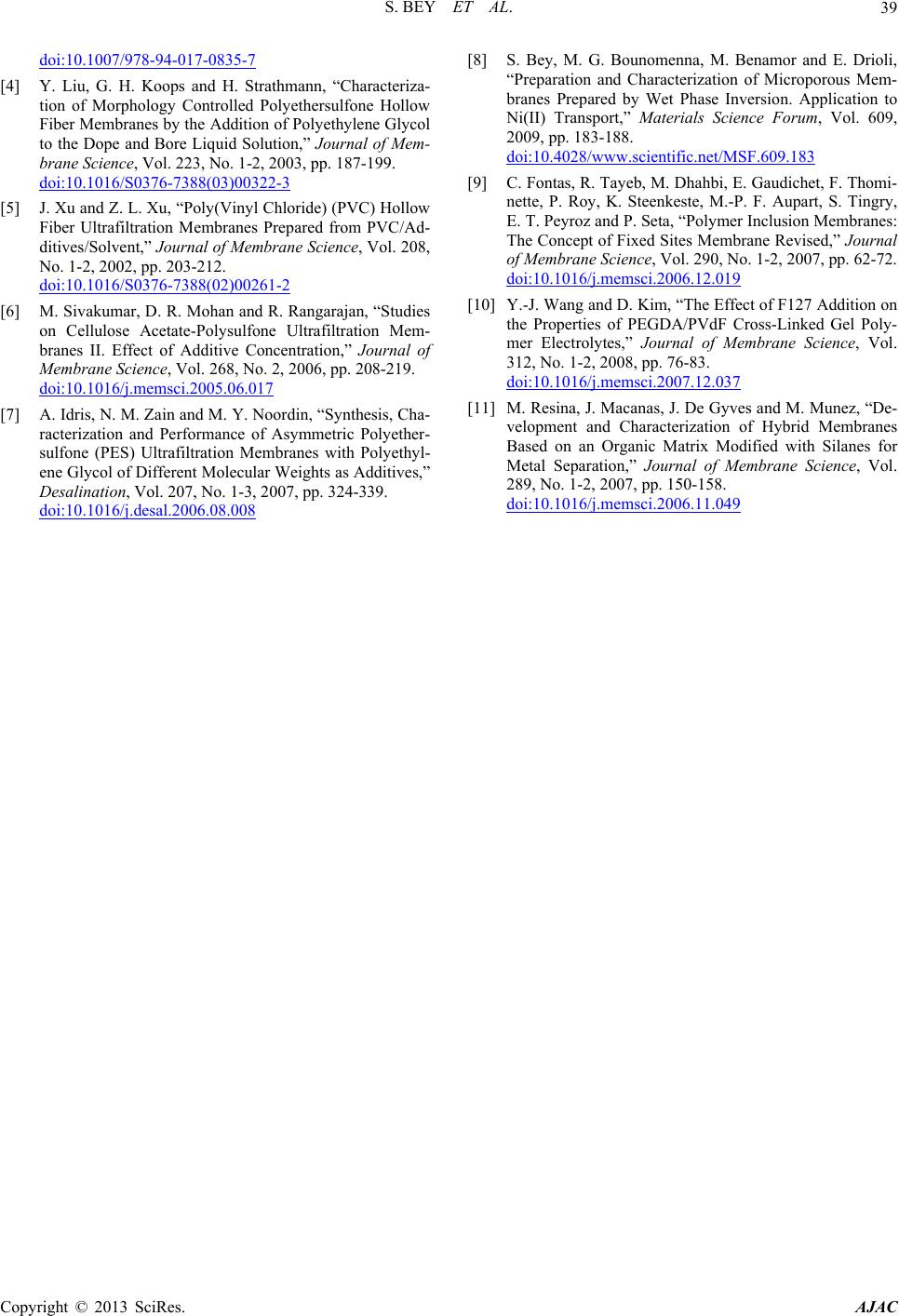 S. BEY ET AL. Copyright © 2013 SciRes. AJAC 39 doi:10.1007/978-94-017-0835-7 [4] Y. Liu, G. H. Koops and H. Strathmann, “Characteriza- tion of Morphology Controlled Polyethersulfone Hollow Fiber Membranes by the Addition of Polyethylene Glycol to the Dope and Bore Liquid Solution,” Journal of Mem- brane Science, Vol. 223, No. 1-2, 2003, pp. 187-199. doi:10.1016/S0376-7388(03)00322-3 [5] J. Xu and Z. L. Xu, “Poly(Vinyl Chloride) (PVC) Hollow Fiber Ultrafiltration Membranes Prepared from PVC/Ad- ditives/Solvent,” Journal of Membrane Science, Vol. 208, No. 1-2, 2002, pp. 203-212. doi:10.1016/S0376-7388(02)00261-2 [6] M. Sivakumar, D. R. Mohan and R. Rangarajan, “Studies on Cellulose Acetate-Polysulfone Ultrafiltration Mem- branes II. Effect of Additive Concentration,” Journal of Membrane Science, Vol. 268, No. 2, 2006, pp. 208-219. doi:10.1016/j.memsci.2005.06.017 [7] A. Idris, N. M. Zain and M. Y. Noordin, “Synthesis, Cha- racterization and Performance of Asymmetric Polyether- sulfone (PES) Ultrafiltration Membranes with Polyethyl- ene Glycol of Different Molecular Weights as Additives,” Desalination, Vol. 207, No. 1-3, 2007, pp. 324-339. doi:10.1016/j.desal.2006.08.008 [8] S. Bey, M. G. Bounomenna, M. Benamor and E. Drioli, “Preparation and Characterization of Microporous Mem- branes Prepared by Wet Phase Inversion. Application to Ni(II) Transport,” Materials Science Forum, Vol. 609, 2009, pp. 183-188. doi:10.4028/www.scientific.net/MSF.609.183 [9] C. Fontas, R. Tayeb, M. Dhahbi, E. Gaudichet, F. Thomi- nette, P. Roy, K. Steenkeste, M.-P. F. Aupart, S. Tingry, E. T. Peyroz a nd P. Se ta, “P oly mer Inclusion Membranes: The Concept of Fixed Sites Membrane Revised,” Journal of Membrane Science, Vol. 290, No. 1-2, 2007, pp. 62-72. doi:10.1016/j.memsci.2006.12.019 [10] Y.-J. Wang and D. Kim, “The Effect of F127 Addition on the Properties of PEGDA/PVdF Cross-Linked Gel Poly- mer Electrolytes,” Journal of Membrane Science, Vol. 312, No. 1-2, 2008, pp. 76-83. doi:10.1016/j.memsci.2007.12.037 [11] M. Resina, J. Macanas, J. De Gyves and M. Munez, “De- velopment and Characterization of Hybrid Membranes Based on an Organic Matrix Modified with Silanes for Metal Separation,” Journal of Membrane Science, Vol. 289, No. 1-2, 2007, pp. 150-158. doi:10.1016/j.memsci.2006.11.049 |