

Paper Menu >>
Journal Menu >>
 Advances in Infectious Diseases, 2013, 3, 10-16 http://dx.doi.org/10.4236/aid.2013.31002 Published Online March 2013 (http://www.scirp.org/journal/aid) Patient Demographics and Characteristics of Infection with Carbapenem-Resistant Acinetobacter baumannii in a Teaching Hosp i ta l fr om t he United States* Nachiket D. Vaze, Christopher L. Emery, Richard J. Hamilton, Ari D. Brooks, Suresh G. Joshi# Surgical & Nosocomial Infection Research and Bacterial Pathogenesis Program, Drexel University College of Medicine, Hahnemann University Hospital, Philadelphia, USA Email: #[email protected] Received November 13th, 2012; revised December 15th, 2012; accepted January 18th, 2013 ABSTRACT A characterization of the clinical demographic features of patients with infection caused Acinetobacter baumannii, and the antibiotyping of the isolates recovered from these patients was undertaken, with a special reference to carbapenem- resistant variants, and their risk factors. This study was conducted retrospectively from January 2010 to March 2011 at a 616-bed tertiary care university hospital. Sixty-four patients were identified. Clinical and microbiological data were analyzed for risk factors and demographic features to derive relative risk and odds ratio. We identified 100 A. bauman- nii from 64 patients during 15 months period. Significant risk factors were working age (18 - 60 years), male gender, hospital stay (>1 week but <1 month), prior hospitalization, in a progressive care nursing units, respiratory/mechanical ventilation, polymicrobial infections and prior antibiotic therapy. Methicillin-resistant staphylococcus aureus (MRSA), Pseudomonas aeruginosa, and Klebsiella pneumoniae were the significant co-infecting agents. The antibiogram dem- onstrated multidrug resistance in a majority of the isolates. Relative risk associated with ventilator, diabetes, and sur- gery was higher in repeat isolates than in first isolates and were multidrug resistant. Repeat isolates were more resistant that the first isolates to most anti-acinetobacter agents, but the overall crude mortality was not significant during this study period, and couldn’t correlated to the choice of treatment. In conclusion, a resistance against all clinically used carbapenems, and colistin is rapidly increasing in repeat isolates of A. baumannii; leaves narrow therapeutic options to treat multidrug-resistant and pandrug-resistant A. baumannii infection. For the first time we report rising incidence of colistin resistance by 20 percent in repeat isolates, and is worrisome for healthcare centers. A combination therapy should be adopted to treat such infection to avoid the emergence of colistin-resistant phenotypes in the United States. Keywords: Acinetobacter ba um anni i ; Carbapenem Resistance; Colistin, Imipenem; Meropenem; Multidrug Resistance; Risk Factor 1. Introduction Acinetobacter baumannii is a third most prevalent noso- comial pathogenic species. It has been isolated from various hospital environments and has been shown to colonize patients. Until recently, this pathogen was found primarily outside the United States, mainly in Europe and Asia [1,2], but it is emerging in the United States [3]. In addition, A. baumann ii infections have been identified in troops returning from military engagements in the Mid- dle East [4]. A. baumannii has been identified as the cau- sative agent in many serious medical conditions such as sepsis and nosocomial pneumonia [5,6]. Although in general the virulence of this species is low; its coloniza- tion poses a threat in a health care setting. Pneumonia caused by A. baumannii is associated with contaminated or colonized surgical and respiratory equipment. Out- breaks of A. baumannii have been reported in hospitals; especially in intensive care units (ICUs) [7]. Its status as an opportunistic organism makes it an unpredictable no- socomial pathogen that can cause significant mortality in such cases [8-10]. A. baumannii is inherently resistant to many antim- icrobials and can further acquire resistance to additional antimicrobials to become multidrug resistant (MDR). MDR- A. ba umannii is a major cause of concern in heal- th care settings, and the infections are extremely difficult to treat [11,12]. MDR- A. baumannii is usually treated with broad-spectrum antibiotics, including carbapenems. Carbapenems such as imipenem and meropenem are of- ten the antibiotics of last resort for such infection, and *All authors report no conflict of interest related to this manuscript. #Corresponding author. Copyright © 2013 SciRes. AID 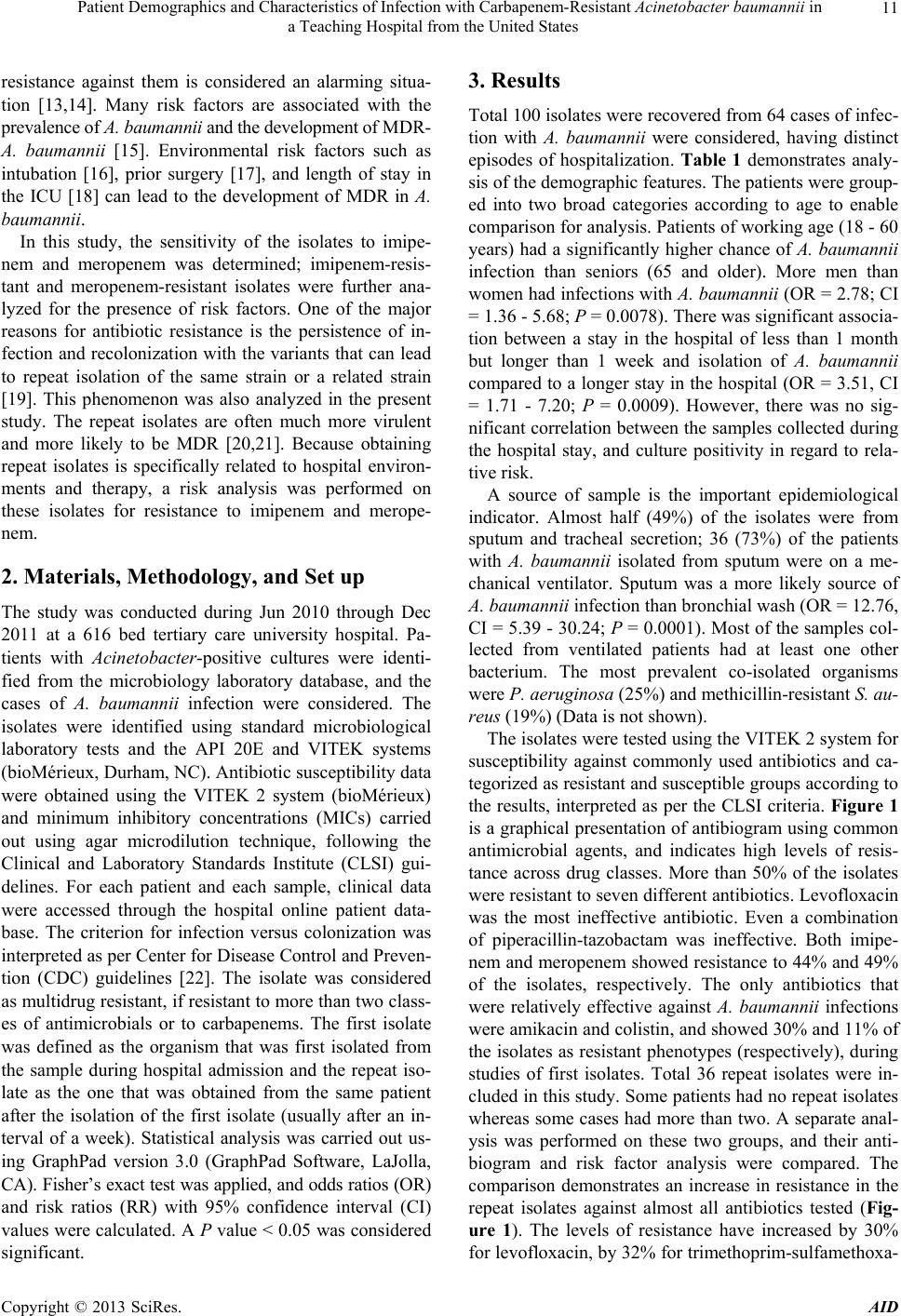 Patient Demographics and Characteristics of Infection with Carbapenem-Resistant Acinetobacter baumannii in a Teaching Hospital from the United States 11 resistance against them is considered an alarming situa- tion [13,14]. Many risk factors are associated with the prevalence of A. baumannii and the development of MDR- A. baumannii [15]. Environmental risk factors such as intubation [16], prior surgery [17], and length of stay in the ICU [18] can lead to the development of MDR in A. baumannii. In this study, the sensitivity of the isolates to imipe- nem and meropenem was determined; imipenem-resis- tant and meropenem-resistant isolates were further ana- lyzed for the presence of risk factors. One of the major reasons for antibiotic resistance is the persistence of in- fection and recolonization with the variants that can lead to repeat isolation of the same strain or a related strain [19]. This phenomenon was also analyzed in the present study. The repeat isolates are often much more virulent and more likely to be MDR [20,21]. Because obtaining repeat isolates is specifically related to hospital environ- ments and therapy, a risk analysis was performed on these isolates for resistance to imipenem and merope- nem. 2. Materials, Methodology, and Set up The study was conducted during Jun 2010 through Dec 2011 at a 616 bed tertiary care university hospital. Pa- tients with Acinetobacter-positive cultures were identi- fied from the microbiology laboratory database, and the cases of A. baumannii infection were considered. The isolates were identified using standard microbiological laboratory tests and the API 20E and VITEK systems (bioMérieux, Durham, NC). Antibiotic susceptibility data were obtained using the VITEK 2 system (bioMérieux) and minimum inhibitory concentrations (MICs) carried out using agar microdilution technique, following the Clinical and Laboratory Standards Institute (CLSI) gui- delines. For each patient and each sample, clinical data were accessed through the hospital online patient data- base. The criterion for infection versus colonization was interpreted as per Center for Disease Control and Preven- tion (CDC) guidelines [22]. The isolate was considered as multidrug resistant, if resistant to more than two class- es of antimicrobials or to carbapenems. The first isolate was defined as the organism that was first isolated from the sample during hospital admission and the repeat iso- late as the one that was obtained from the same patient after the isolation of the first isolate (usually after an in- terval of a week). Statistical analysis was carried out us- ing GraphPad version 3.0 (GraphPad Software, LaJolla, CA). Fisher’s exact test was applied, and odds ratios (OR) and risk ratios (RR) with 95% confidence interval (CI) values were calculated. A P value < 0.05 was considered significant. 3. Results Total 100 isolates were recovered from 64 cases of infec- tion with A. baumannii were considered, having distinct episodes of hospitalization. Table 1 demonstrates analy- sis of the demographic features. The patients were group- ed into two broad categories according to age to enable comparison for analysis. Patients of working age (18 - 60 years) had a significantly higher chance of A. baumannii infection than seniors (65 and older). More men than women had infections with A. baumannii (OR = 2.78; CI = 1.36 - 5.68; P = 0.0078). There was significant associa- tion between a stay in the hospital of less than 1 month but longer than 1 week and isolation of A. baumannii compared to a longer stay in the hospital (OR = 3.51, CI = 1.71 - 7.20; P = 0.0009). However, there was no sig- nificant correlation between the samples collected during the hospital stay, and culture positivity in regard to rela- tive risk. A source of sample is the important epidemiological indicator. Almost half (49%) of the isolates were from sputum and tracheal secretion; 36 (73%) of the patients with A. baumannii isolated from sputum were on a me- chanical ventilator. Sputum was a more likely source of A. baumannii infection than bronchial wash (OR = 12.76, CI = 5.39 - 30.24; P = 0.0001). Most of the samples col- lected from ventilated patients had at least one other bacterium. The most prevalent co-isolated organisms were P. aeruginosa (25%) and methicillin-resistant S. au- reus (19%) (Data is not shown). The isolates were tested using the VITEK 2 system for susceptibility against commonly used antibiotics and ca- tegorized as resistant and susceptible groups according to the results, interpreted as per the CLSI criteria. Figure 1 is a graphical presentation of antibiogram using common antimicrobial agents, and indicates high levels of resis- tance across drug classes. More than 50% of the isolates were resistant to seven different antibiotics. Levofloxacin was the most ineffective antibiotic. Even a combination of piperacillin-tazobactam was ineffective. Both imipe- nem and meropenem showed resistance to 44% and 49% of the isolates, respectively. The only antibiotics that were relatively effective against A. baumannii infections were amikacin and colistin, and showed 30% and 11% of the isolates as resistant phenotypes (respectively), during studies of first isolates. Total 36 repeat isolates were in- cluded in this study. Some patients had no repeat isolates whereas some cases had more than two. A separate anal- ysis was performed on these two groups, and their anti- biogram and risk factor analysis were compared. The comparison demonstrates an increase in resistance in the repeat isolates against almost all antibiotics tested (Fig- ure 1). The levels of resistance have increased by 30% for levofloxacin, by 32% for trimethoprim-sulfamethoxa- Copyright © 2013 SciRes. AID 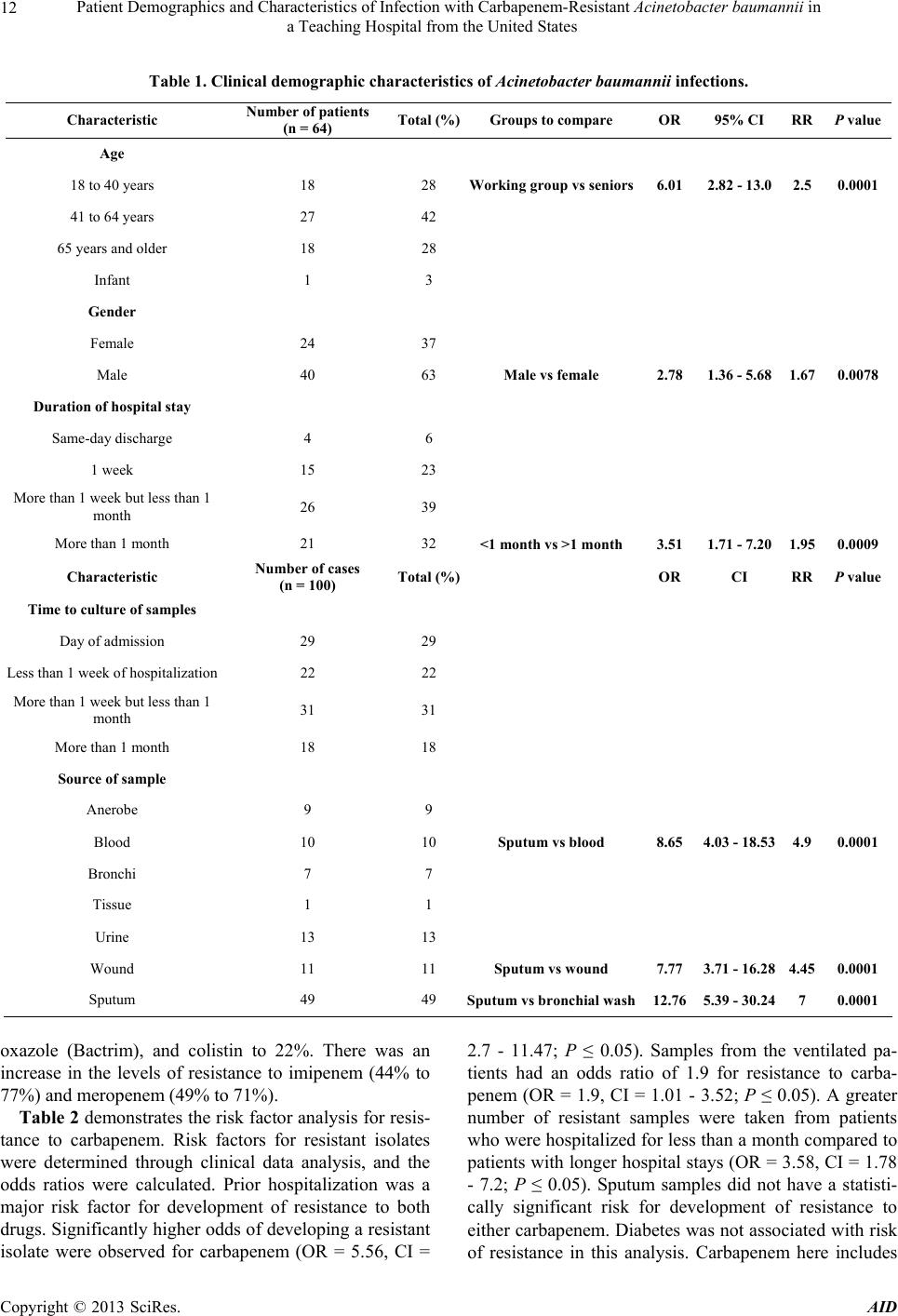 Patient Demographics and Characteristics of Infection with Carbapenem-Resistant Acinetobacter baumannii in a Teaching Hospital from the United States Copyright © 2013 SciRes. AID 12 Table 1. Clinical demographic characteristics of Acinetobacter baumannii infections. Characteristic Number of patients (n = 64) Total (%)Groups to compare OR 95% CI RRP value Age 18 to 40 years 18 28 Working group vs seniors6.01 2.82 - 13.0 2.50.0001 41 to 64 years 27 42 65 years and older 18 28 Infant 1 3 Gender Female 24 37 Male 40 63 Male vs female 2.78 1.36 - 5.68 1.670.0078 Duration of hospital stay Same-day discharge 4 6 1 week 15 23 More than 1 week but less than 1 month 26 39 More than 1 month 21 32 <1 month vs >1 month 3.51 1.71 - 7.20 1.950.0009 Characteristic Number of cases (n = 100) Total (%) OR CI RRP value Time to culture of samples Day of admission 29 29 Less than 1 week of hospitalization 22 22 More than 1 week but less than 1 month 31 31 More than 1 month 18 18 Source of sample Anerobe 9 9 Blood 10 10 Sputum vs blood 8.65 4.03 - 18.53 4.90.0001 Bronchi 7 7 Tissue 1 1 Urine 13 13 Wound 11 11 Sputum vs wound 7.77 3.71 - 16.28 4.450.0001 Sputum 49 49 Sputum vs bronchial wash12.76 5.39 - 30.24 7 0.0001 oxazole (Bactrim), and colistin to 22%. There was an increase in the levels of resistance to imipenem (44% to 77%) and meropenem (49% to 71%). Table 2 demonstrates the risk factor analysis for resis- tance to carbapenem. Risk factors for resistant isolates were determined through clinical data analysis, and the odds ratios were calculated. Prior hospitalization was a major risk factor for development of resistance to both drugs. Significantly higher odds of developing a resistant isolate were observed for carbapenem (OR = 5.56, CI = 2.7 - 11.47; P ≤ 0.05). Samples from the ventilated pa- tients had an odds ratio of 1.9 for resistance to carba- penem (OR = 1.9, CI = 1.01 - 3.52; P ≤ 0.05). A greater number of resistant samples were taken from patients who were hospitalized for less than a month compared to patients with longer hospital stays (OR = 3.58, CI = 1.78 - 7.2; P ≤ 0.05). Sputum samples did not have a statisti- cally significant risk for development of resistance to either carbapenem. Diabetes was not associated with risk of resistance in this analysis. Carbapenem here includes 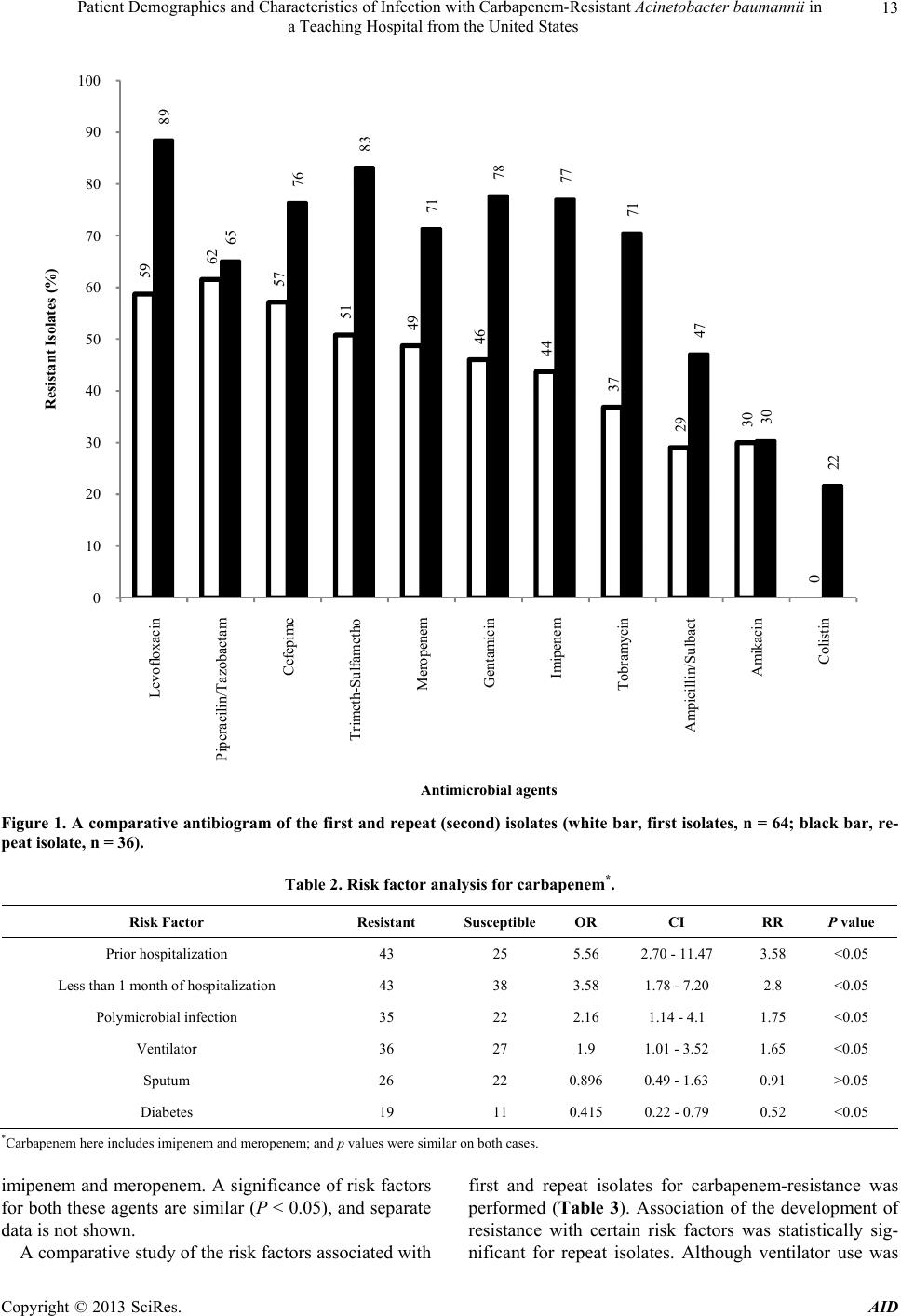 Patient Demographics and Characteristics of Infection with Carbapenem-Resistant Acinetobacter baumannii in a Teaching Hospital from the United States 13 59 62 57 51 49 46 44 37 29 30 0 89 65 76 83 71 78 77 71 47 30 22 0 10 20 30 40 50 60 70 80 90 100 Levofloxacin Piperacilin/Tazobactam Cefepime Trimeth-Sulfametho Meropenem Gentamicin Imipenem Tobramycin Ampicillin/Sulbact Amikacin C olis tin Resistant Isolates (%) Antimicrobial agents Figure 1. A comparative antibiogram of the first and repeat (second) isolates (white bar, first isolates, n = 64; black bar, re- peat isolate, n = 36). Table 2. Risk factor analysis for carbapenem*. Risk Factor Resistant Susceptible OR CI RR P value Prior hospitalization 43 25 5.562.70 - 11.47 3.58 <0.05 Less than 1 month of hospitalization 43 38 3.581.78 - 7.20 2.8 <0.05 Polymicrobial infection 35 22 2.161.14 - 4.1 1.75 <0.05 Ventilator 36 27 1.9 1.01 - 3.52 1.65 <0.05 Sputum 26 22 0.8960.49 - 1.63 0.91 >0.05 Diabetes 19 11 0.4150.22 - 0.79 0.52 <0.05 *Carbapenem here includes imipenem and meropenem; and p values were similar on both cases. imipenem and meropenem. A significance of risk factors for both these agents are similar (P < 0.05), and separate data is not shown. A comparative study of the risk factors associated with first and repeat isolates for carbapenem-resistance was performed (Table 3). Association of the development of resistance with certain risk factors was statistically sig- nificant for repeat isolates. Although ventilator use was Copyright © 2013 SciRes. AID 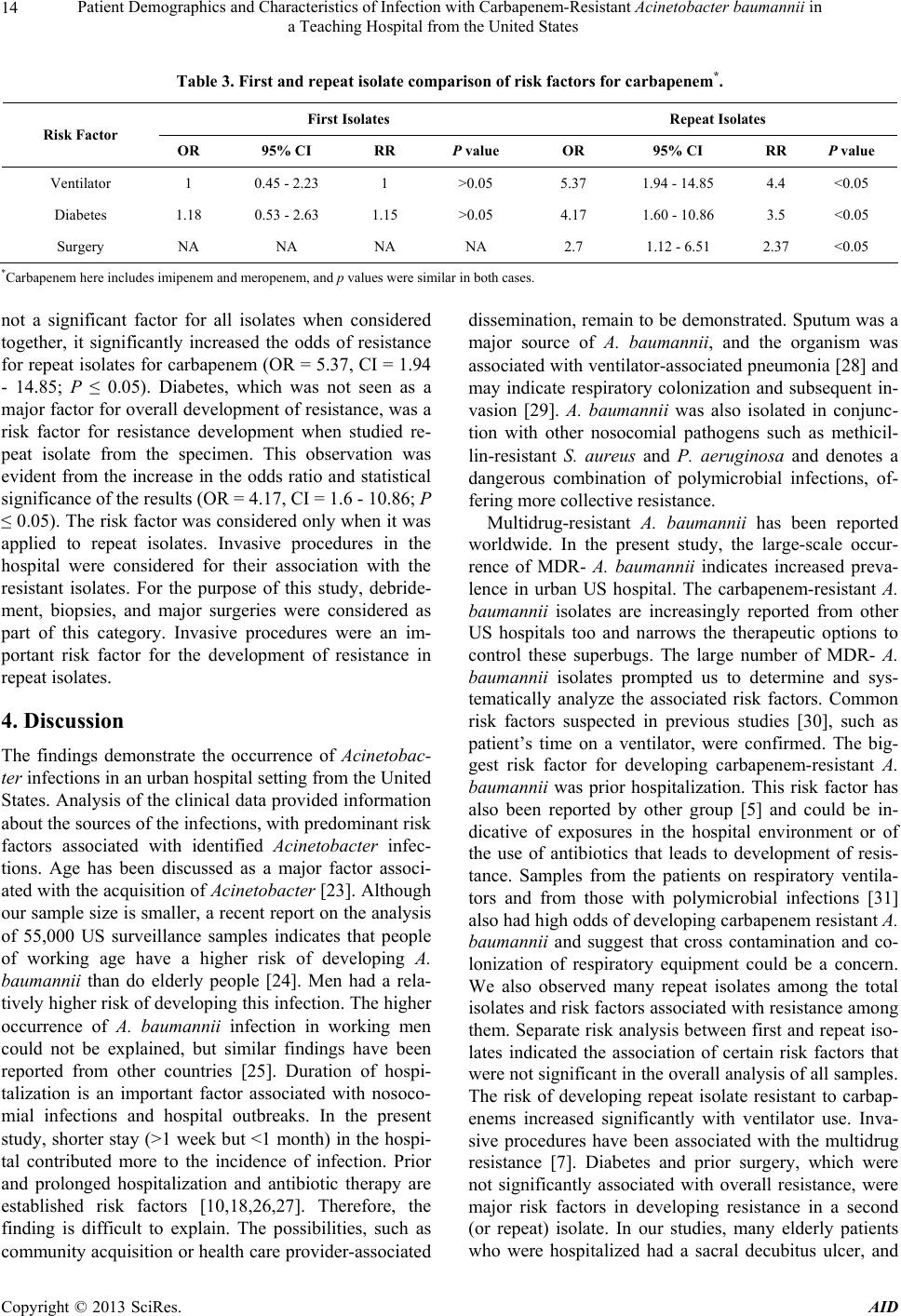 Patient Demographics and Characteristics of Infection with Carbapenem-Resistant Acinetobacter baumannii in a Teaching Hospital from the United States 14 Table 3. First and repeat isolate comparison of risk factors for carbapenem*. First Isolates Repeat Isolates Risk Factor OR 95% CI RR P value OR 95% CI RR P value Ventilator 1 0.45 - 2.23 1 >0.05 5.37 1.94 - 14.85 4.4 <0.05 Diabetes 1.18 0.53 - 2.63 1.15 >0.05 4.17 1.60 - 10.86 3.5 <0.05 Surgery NA NA NA NA 2.7 1.12 - 6.51 2.37 <0.05 *Carbapenem here includes imipenem and meropenem, and p values were similar in both cases. not a significant factor for all isolates when considered together, it significantly increased the odds of resistance for repeat isolates for carbapenem (OR = 5.37, CI = 1.94 - 14.85; P ≤ 0.05). Diabetes, which was not seen as a major factor for overall development of resistance, was a risk factor for resistance development when studied re- peat isolate from the specimen. This observation was evident from the increase in the odds ratio and statistical significance of the results (OR = 4.17, CI = 1.6 - 10.86; P ≤ 0.05). The risk factor was considered only when it was applied to repeat isolates. Invasive procedures in the hospital were considered for their association with the resistant isolates. For the purpose of this study, debride- ment, biopsies, and major surgeries were considered as part of this category. Invasive procedures were an im- portant risk factor for the development of resistance in repeat isolates. 4. Discussion The findings demonstrate the occurrence of Acinetobac- ter infections in an urban hospital setting from the United States. Analysis of the clinical data provided information about the sources of the infections, with predominant risk factors associated with identified Acinetobacter infec- tions. Age has been discussed as a major factor associ- ated with the acquisition of Acinetobacter [23]. Although our sample size is smaller, a recent report on the analysis of 55,000 US surveillance samples indicates that people of working age have a higher risk of developing A. baumannii than do elderly people [24]. Men had a rela- tively higher risk of developing this infection. The higher occurrence of A. baumannii infection in working men could not be explained, but similar findings have been reported from other countries [25]. Duration of hospi- talization is an important factor associated with nosoco- mial infections and hospital outbreaks. In the present study, shorter stay (>1 week but <1 month) in the hospi- tal contributed more to the incidence of infection. Prior and prolonged hospitalization and antibiotic therapy are established risk factors [10,18,26,27]. Therefore, the finding is difficult to explain. The possibilities, such as community acquisition or health care provider-associated dissemination, remain to be demonstrated. Sputum was a major source of A. baumannii, and the organism was associated with ventilator-associated pneumonia [28] and may indicate respiratory colonization and subsequent in- vasion [29]. A. baumannii was also isolated in conjunc- tion with other nosocomial pathogens such as methicil- lin-resistant S. aureus and P. aeruginosa and denotes a dangerous combination of polymicrobial infections, of- fering more collective resistance. Multidrug-resistant A. baumannii has been reported worldwide. In the present study, the large-scale occur- rence of MDR- A. baumannii indicates increased preva- lence in urban US hospital. The carbapenem-resistant A. baumannii isolates are increasingly reported from other US hospitals too and narrows the therapeutic options to control these superbugs. The large number of MDR- A. baumannii isolates prompted us to determine and sys- tematically analyze the associated risk factors. Common risk factors suspected in previous studies [30], such as patient’s time on a ventilator, were confirmed. The big- gest risk factor for developing carbapenem-resistant A. baumannii was prior hospitalization. This risk factor has also been reported by other group [5] and could be in- dicative of exposures in the hospital environment or of the use of antibiotics that leads to development of resis- tance. Samples from the patients on respiratory ventila- tors and from those with polymicrobial infections [31] also had high odds of developing carbapenem resistant A. baumannii and suggest that cross contamination and co- lonization of respiratory equipment could be a concern. We also observed many repeat isolates among the total isolates and risk factors associated with resistance among them. Separate risk analysis between first and repeat iso- lates indicated the association of certain risk factors that were not significant in the overall analysis of all samples. The risk of developing repeat isolate resistant to carbap- enems increased significantly with ventilator use. Inva- sive procedures have been associated with the multidrug resistance [7]. Diabetes and prior surgery, which were not significantly associated with overall resistance, were major risk factors in developing resistance in a second (or repeat) isolate. In our studies, many elderly patients who were hospitalized had a sacral decubitus ulcer, and Copyright © 2013 SciRes. AID 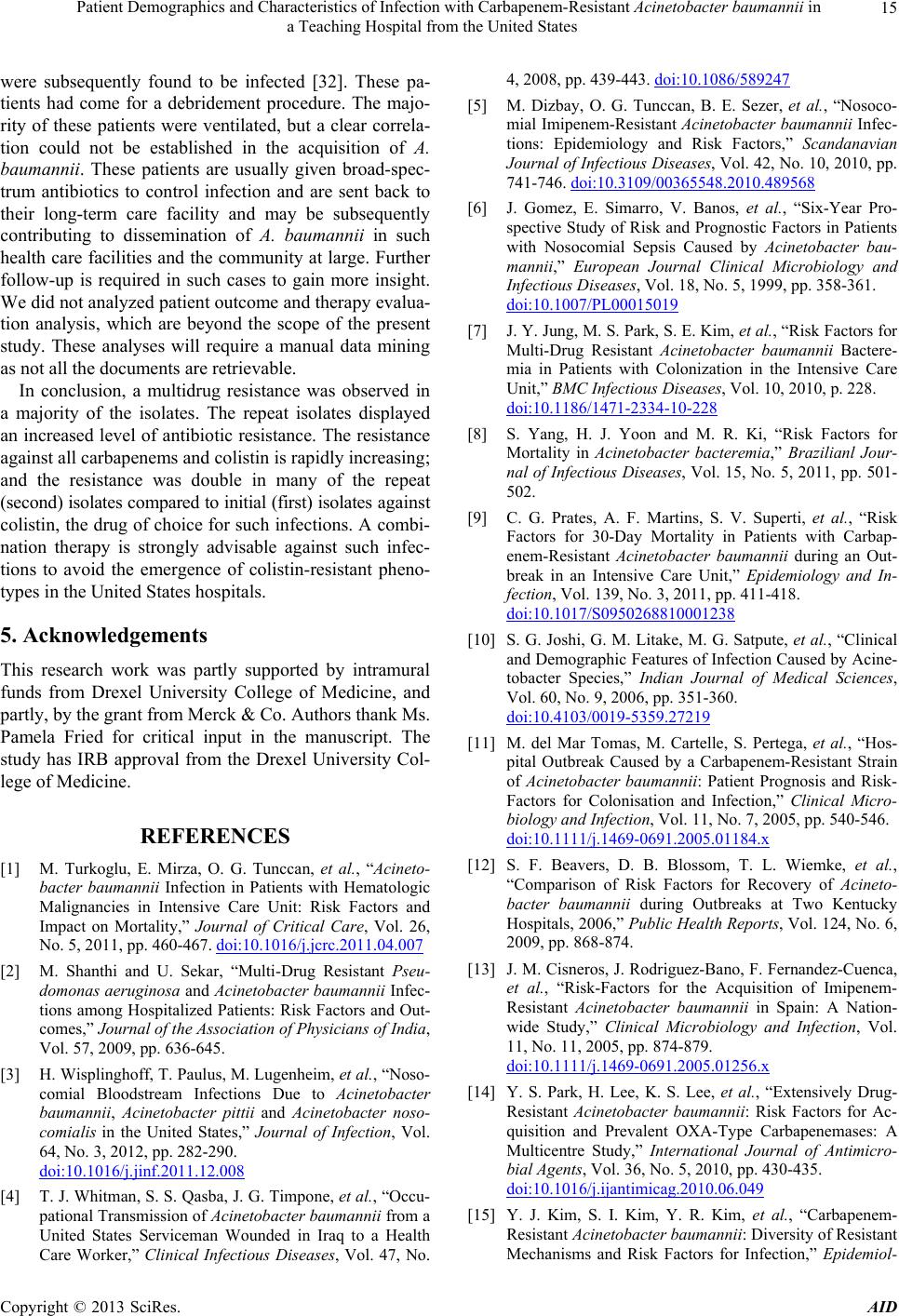 Patient Demographics and Characteristics of Infection with Carbapenem-Resistant Acinetobacter baumannii in a Teaching Hospital from the United States 15 were subsequently found to be infected [32]. These pa- tients had come for a debridement procedure. The majo- rity of these patients were ventilated, but a clear correla- tion could not be established in the acquisition of A. baumannii. These patients are usually given broad-spec- trum antibiotics to control infection and are sent back to their long-term care facility and may be subsequently contributing to dissemination of A. baumannii in such health care facilities and the community at large. Further follow-up is required in such cases to gain more insight. We did not analyzed patient outcome and therapy evalua- tion analysis, which are beyond the scope of the present study. These analyses will require a manual data mining as not all the documents are retrievable. In conclusion, a multidrug resistance was observed in a majority of the isolates. The repeat isolates displayed an increased level of antibiotic resistance. The resistance against all carbapenems and colistin is rapidly increasing; and the resistance was double in many of the repeat (second) isolates compared to initial (first) isolates against colistin, the drug of choice for such infections. A combi- nation therapy is strongly advisable against such infec- tions to avoid the emergence of colistin-resistant pheno- types in the United States hospitals. 5. Acknowledgements This research work was partly supported by intramural funds from Drexel University College of Medicine, and partly, by the grant from Merck & Co. Authors thank Ms. Pamela Fried for critical input in the manuscript. The study has IRB approval from the Drexel University Col- lege of Medicine. REFERENCES [1] M. Turkoglu, E. Mirza, O. G. Tunccan, et al., “Acineto- bacter baumannii Infection in Patients with Hematologic Malignancies in Intensive Care Unit: Risk Factors and Impact on Mortality,” Journal of Critical Care, Vol. 26, No. 5, 2011, pp. 460-467. doi:10.1016/j.jcrc.2011.04.007 [2] M. Shanthi and U. Sekar, “Multi-Drug Resistant Pseu- domonas aeruginosa and Acinetobacter baumannii Infec- tions among Hospitalized Patients: Risk Factors and Out- comes,” Journal of the Association of Physicians of India, Vol. 57, 2009, pp. 636-645. [3] H. Wisplinghoff, T. Paulus, M. Lugenheim, et al., “Noso- comial Bloodstream Infections Due to Acinetobacter baumannii, Acinetobacter pittii and Acinetobacter noso- comialis in the United States,” Journal of Infection, Vol. 64, No. 3, 2012, pp. 282-290. doi:10.1016/j.jinf.2011.12.008 [4] T. J. Whitman, S. S. Qasba, J. G. Timpone, et al., “Occu- pational Transmission of Acinetobacter baumannii from a United States Serviceman Wounded in Iraq to a Health Care Worker,” Clinical Infectious Diseases, Vol. 47, No. 4, 2008, pp. 439-443. doi:10.1086/589247 [5] M. Dizbay, O. G. Tunccan, B. E. Sezer, et al., “Nosoco- mial Imipenem-Resistant Acinetobacter baumannii Infec- tions: Epidemiology and Risk Factors,” Scandanavian Journal of Infectious Diseases, Vol. 42, No. 10, 2010, pp. 741-746. doi:10.3109/00365548.2010.489568 [6] J. Gomez, E. Simarro, V. Banos, et al., “Six-Year Pro- spective Study of Risk and Prognostic Factors in Patients with Nosocomial Sepsis Caused by Acinetobacter bau- mannii,” European Journal Clinical Microbiology and Infectious Diseases, Vol. 18, No. 5, 1999, pp. 358-361. doi:10.1007/PL00015019 [7] J. Y. Jung, M. S. Park, S. E. Kim, et al., “Risk Factors for Multi-Drug Resistant Acinetobacter baumannii Bactere- mia in Patients with Colonization in the Intensive Care Unit,” BMC Infectious Diseases, Vol. 10, 2010, p. 228. doi:10.1186/1471-2334-10-228 [8] S. Yang, H. J. Yoon and M. R. Ki, “Risk Factors for Mortality in Acinetobacter bacteremia,” Brazilianl Jour- nal of Infectious Diseases, Vol. 15, No. 5, 2011, pp. 501- 502. [9] C. G. Prates, A. F. Martins, S. V. Superti, et al., “Risk Factors for 30-Day Mortality in Patients with Carbap- enem-Resistant Acinetobacter baumannii during an Out- break in an Intensive Care Unit,” Epidemiology and In- fection, Vol. 139, No. 3, 2011, pp. 411-418. doi:10.1017/S0950268810001238 [10] S. G. Joshi, G. M. Litake, M. G. Satpute, et al., “Clinical and Demographic Features of Infection Caused by Acine- tobacter Species,” Indian Journal of Medical Sciences, Vol. 60, No. 9, 2006, pp. 351-360. doi:10.4103/0019-5359.27219 [11] M. del Mar Tomas, M. Cartelle, S. Pertega, et al., “Hos- pital Outbreak Caused by a Carbapenem-Resistant Strain of Acinetobacter baumannii: Patient Prognosis and Risk- Factors for Colonisation and Infection,” Clinical Micro- biology and Infection, Vol. 11, No. 7, 2005, pp. 540-546. doi:10.1111/j.1469-0691.2005.01184.x [12] S. F. Beavers, D. B. Blossom, T. L. Wiemke, et al., “Comparison of Risk Factors for Recovery of Acineto- bacter baumannii during Outbreaks at Two Kentucky Hospitals, 2006,” Public Health Reports, Vol. 124, No. 6, 2009, pp. 868-874. [13] J. M. Cisneros, J. Rodriguez-Bano, F. Fernandez-Cuenca, et al., “Risk-Factors for the Acquisition of Imipenem- Resistant Acinetobacter baumannii in Spain: A Nation- wide Study,” Clinical Microbiology and Infection, Vol. 11, No. 11, 2005, pp. 874-879. doi:10.1111/j.1469-0691.2005.01256.x [14] Y. S. Park, H. Lee, K. S. Lee, et al., “Extensively Drug- Resistant Acinetobacter baumannii: Risk Factors for Ac- quisition and Prevalent OXA-Type Carbapenemases: A Multicentre Study,” International Journal of Antimicro- bial Agents, Vol. 36, No. 5, 2010, pp. 430-435. doi:10.1016/j.ijantimicag.2010.06.049 [15] Y. J. Kim, S. I. Kim, Y. R. Kim, et al., “Carbapenem- Resistant Acinetobacter baumannii: Diversity of Resistant Mechanisms and Risk Factors for Infection,” Epidemiol- Copyright © 2013 SciRes. AID  Patient Demographics and Characteristics of Infection with Carbapenem-Resistant Acinetobacter baumannii in a Teaching Hospital from the United States Copyright © 2013 SciRes. AID 16 ogy and Infection, Vol. 140, No. 1, 2012, pp. 137-145. doi:10.1017/S0950268811000744 [16] J. Baraibar, H. Correa, D. Mariscal, et al., “Risk Factors for Infection by Acinetobacter baumannii in Intubated Patients with Nosocomial Pneumonia,” Chest, Vol. 112, No. 4, 1997, pp. 1050-1054. doi:10.1378/chest.112.4.1050 [17] T. H. Wong, B. H. Tan, M. L. Ling, et al., “Multi-Resis- tant Acinetobacter baumannii on a Burns Unit: Clinical Risk Factors and Prognosis,” Burns, Vol. 28, No. 4, 2002, pp. 349-357. doi:10.1016/S0305-4179(02)00012-8 [18] W. H. Sheng, C. H. Liao, T. L. Lauderdale, et al., “A Multicenter Study of Risk Factors and Outcome of Hos- pitalized Patients with Infections Due to Carbapenem- Resistant Acinetobacter baumannii,” International Jour- nal of Infectious Diseases, Vol. 14, No. 9, 2010, pp. 764-769. doi:10.1016/j.ijid.2010.02.2254 [19] M. M. D’Andrea, C. Venturelli, T. Giani, et al., “Persis- tent Carriage and Infection by Multidrug-Resistant Es- cherichia Coli ST405 Producing NDM-1 Carbapenemase: Report on the First Italian Cases,” Journal of Clinical Microbiology, Vol. 49, No. 7, 2011, pp. 2755-2758. doi:10.1128/JCM.00016-11 [20] R. Jayaraman, “Hypermutation and Stress Adaptation in Bacteria,” Journal of Genetics, Vol. 90, No. 2, 2011, pp. 383-391. doi:10.1007/s12041-011-0086-6 [21] J. D. Pitout, K. B. Laupland, D. L. Church, et al., “Viru- lence Factors of Escherichia Coli Isolates that Produce CTX-M-Type Extended-Spectrum Beta-Lactamases,” An- timicrobial Agents and Chemotherapy, Vol. 49, No. 11, 2005, pp. 4667-4670. doi:10.1128/AAC.49.11.4667-4670.2005 [22] J. Rodriguez-Bano, J. M. Cisneros, F. Fernandez-Cuenca, et al., “Clinical Features and Epidemiology of Acineto- bacter baumannii Colonization and Infection in Spanish Hospitals,” Infect Control and Hospital Epidemiology, Vol. 25, No. 10, 2004, pp. 819-824. doi:10.1086/502302 [23] S. M. Poutanen, M. Louie and A. E. Simor, “Risk Factors, Clinical Features and Outcome of Acinetobacter bactere- mia in Adults,” European Journal of Clinical Microbiol- ogy and Infectious Diseases, Vol. 16, No. 10, 1997, pp. 737-740. doi:10.1007/BF01709254 [24] R. M. Mera, L. A. Miller, H. Amrine-Madsen, et al., “Acinetobacter baumannii 2002-2008: Increase of Car- bapenem-Associated Multiclass Resistance in the United States,” Microbial Drug Resistance, Vol. 16, No. 3, 2010, pp. 209-215. doi:10.1089/mdr.2010.0052 [25] A. Abbo, S. Navon-Venezia, O. Hammer-Muntz, et al., “Multidrug-Resistant Acinetobacter baumannii,” Emerg- ing Infectious Diseases, Vol. 11, No. 1, 2005, pp. 22-29. doi:10.3201/eid1101.040001 [26] G. Baran, A. Erbay, H. Bodur, et al., “Risk Factors for Nosocomial Imipenem-Resistant Acinetobacter bauman- nii Infections,” International Journal of Infectious Dis- eases, Vol. 12, No. 1, 2008, pp. 16-21. doi:10.1016/j.ijid.2007.03.005 [27] N. Y. Lee, H. C. Lee, N. Y. Ko, et al. , “Clinical and Eco- nomic Impact of Multidrug Resistance in Nosocomial Acinetobacter baumannii Bacteremia,” Infection Control and Hospital Epidemiology, Vol. 28, No. 6, 2007, pp. 713-719. doi:10.1086/517954 [28] J. Medina, C. Formento, J. Pontet, et al., “Prospective Study of Risk Factors for Ventilator-Associated Pneumo- nia Caused by Acinetobacter Species,” Journal of Critical Care, Vol. 22, No. 1, 2007, pp. 18-26. doi:10.1016/j.jcrc.2006.06.010 [29] A. Martinez-Pellus, J. Ruiz Gomez, F. Jaime Sanchez, et al., “[Incidence of Colonization and Infection by Acine- tobacter baumannii in an Endemic Seting (ICU). Analy- sis of Risk Factors by Means of a Surveillance Study],” Enfermedades Infecciosas y Microbiologia Clinica, Vol. 20, No. 5, 2002, pp. 194-199. [30] H. C. Chang, Y. C. Chen, M. C. Lin, et al., “Mortality Risk Factors in Patients with Acinetobacter baumannii Ventilator: Associated Pneumonia,” Journal of the For- mosan Medical Association, Vol. 110, No. 9, 2011, pp. 564-571. doi:10.1016/j.jfma.2011.07.004 [31] P. A. Tilley and F. J. Roberts, “Bacteremia with Acine- tobacter Species: Risk Factors and Prognosis in Different Clinical Settings,” Clinical Infectious Diseases, Vol. 18, No. 6, 1994, pp. 896-900. doi:10.1093/clinids/18.6.896 [32] J. Koprnova, I. Svetlansky, R. Babel’a, et al., “Prospec- tive Study of Antibacterial Susceptibility, Risk Factors and Outcome of 157 Episodes of Acinetobacter bauman- nii Bacteremia in 1999 in Slovakia,” Scandanavian Jour- nal of Infectious Diseases, Vol. 33, No. 12, 2001, pp. 891-895. doi:10.1080/00365540110076688 Abbreviations ICU: Intensive care unit; MRSA: Methicillin-resistant Staphylococcus aureus; M DR: Multi drug resistance; MIC: Minimum inhibitory concentration; OR: Odds ratio; RR: Relative risk; CI: Confidence interval. |