

Paper Menu >>
Journal Menu >>
 Vol.5, No.2, 292-297 (2013) Health http://dx.doi.org/10.4236/health.2013.52039 Infant mortality rate in Al-Ramadi province from 2000 through 2010, retrospective study Hammodi F. Aljumaily1*, Muhammed M. Al-Ani2, Muhammed M. Hantush3 1College of Medicine, Anbar University, Fallujah, Iraq; *Corresponding Author: [email protected] 2Department of Pediatrics, College of Medicine, Anbar University, Fallujah, Iraq 3Al-Ramadi Maternity and Child Teaching Hospital, Al-Ramadi, Iraq Received 9 October 2012; revised 10 November 2012; accepted 17 November 2012 ABSTRACT Objectives: To determine the IMR in Al-Ramadi province, the center of Al-Anbar Governorate, Western Iraq, from 2000-2010 with rate compa- rison of the three different stages of that period. Methods: Data collected from the birth and death certificate center in Al-Ramadi province, Western Iraq, included; name, age, sex, resi- dence, date of birth and death, in three different stages (the first stage 2000-2002, the second stage 2003-2007, and the third stage 2008-2010) in a study period from July to December, 2010. The IMRs were analyzed and compared with other studies. Results: The IMR of the last 3 years of sanction was 54.3/1000, 55.7/1000 and 50.6/1000 respectively, this rate had been in- creased in the war and violence period to reach its maximum rate 58.6/1000 in 2006, then de- creased to reach its minimum rate 44.5/1000 in 2008. Approximately two-third of deaths oc- curred during the neonatal period and one third in the post neonatal period. Males had higher IMR than females, and rural residence higher than urban. Conclusion: Infant mortality rate is still high in Al-Ramadi province, since the Ame- rican invasion (2003-2007), when compared w ith other developing countries. This study found increase of IMR in Al-Ramadi province during that period more than other stu died years. Keywords: Mortality; Rate; Birth; Death Certificate 1. INTRODUCTION Infant mortality rate is defined as the number of infant deaths (one year of ag e or younger) per 1000 liv e births; components of infant mortality rate include neonatal mortality rate (number of deaths in the first 28 days per 1000 live births) and post neonatal mortality rate (num- ber of deaths at 29 days and over to the end of first year of life per 1000 live births) [1]. From all childhood (0 - 14) mortalities, 70% occur within the first year, 46% within the first month, and 35% within the first week of life [2]. The IMR varies greatly by country and it is highest in developing countries [1]. There is an inverse relationship between the improve- ment of the economic and social situation and the infant mortality rate. While education is often linked to in come, it can also be linked to infant mortality, looking at recent data, parents with no formal education show an infant mortality rate that is twice the normal rate [3]. The method of calculating IMR often varies widely between countries, and is based on how they define a live birth and how many premature infants are born in the country [4,5]. In 2009, the US Center of Disease Control (CDC) is- sued a report that stated that the American rates of infant mortality were affected by the United States high rate of premature babies compared to European countries [6]. In 1977, and before starting of wars in Iraq, the esti- mated Iraqi national IMR was 61/1000 [7]. Target pro- gram were then implemented since 1980s, despite the Iraq-Iran War (1980-1988), to improve the infant heath condition through vaccine coverage, promote breast feed- ing, reduce diarrheal morbidity as well as improve do- mestic hygiene [8]. These measures were successful and followed by accelerated decrease in the national IMR from 63/1000 in 1980, to 48.1/1000 in 1985, and 40/ 1000 in 1990 [9]. Since 1990 many reports recorded in Iraq suggesting significant increase rate in infant morbid ity and mortality with deterioration of socioeconomic conditions and sur- vival chance among young children under the effect of war conflicted and comprehensive UN sanction, then slightly decrease between 2000-2003, this decrease due to improvement in economic condition and decrease the effect of sanction after introduction of oil for food pro- gram [10]. The United Nation Economic and Social Commission Copyright © 2013 SciRes. OPEN A CCESS 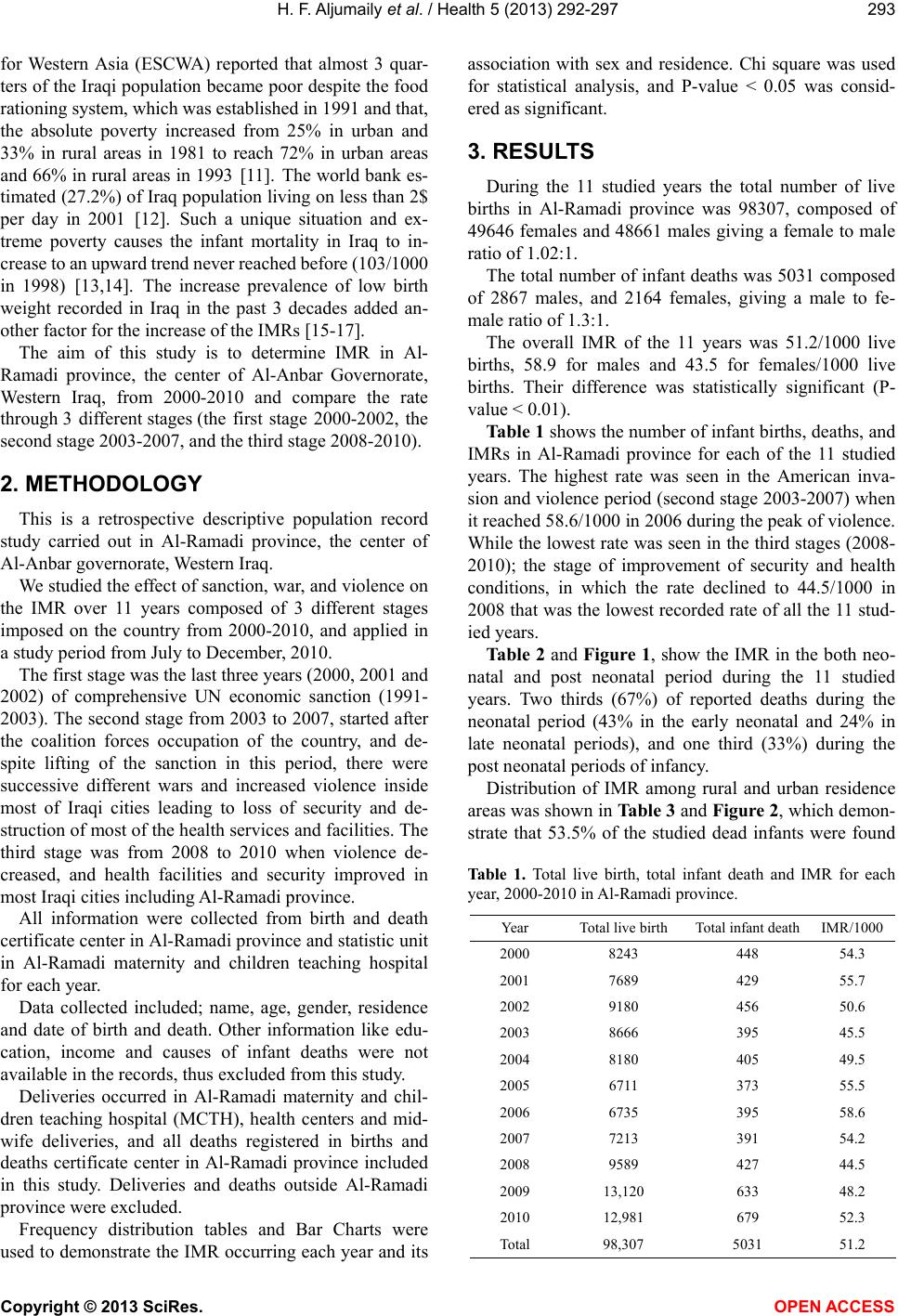 H. F. Aljumaily et al. / Health 5 (2013) 292-297 293 for Western Asia (ESCWA) reported that almost 3 quar- ters of the Iraqi p opulation became poor despite th e food rationing system, which was established in 1991 and that, the absolute poverty increased from 25% in urban and 33% in rural areas in 1981 to reach 72% in urban areas and 66% in rural areas in 1993 [11]. The world bank es- timated (27.2%) of Iraq population liv ing on less than 2$ per day in 2001 [12]. Such a unique situation and ex- treme poverty causes the infant mortality in Iraq to in- crease to a n u pwar d tr end nev er r each ed b efo re ( 103/ 100 0 in 1998) [13,14]. The increase prevalence of low birth weight recorded in Iraq in the past 3 decades added an- other factor for the increase of the IMRs [15-17]. The aim of this study is to determine IMR in Al- Ramadi province, the center of Al-Anbar Governorate, Western Iraq, from 2000-2010 and compare the rate through 3 different stages (the first stage 2000-2002, the second stage 2003-2007, and the th ird stage 2008-2010). 2. METHODOLOGY This is a retrospective descriptive population record study carried out in Al-Ramadi province, the center of Al-Anbar gover norate, Western Iraq. We studied the effect of sanction, war, and violence on the IMR over 11 years composed of 3 different stages imposed on the country from 2000-2010, and applied in a study period from July to December, 2010. The first stage was the last three years (2000, 2001 and 2002) of comprehensive UN economic sanction (1991- 2003). The second stage from 2003 to 2007, started after the coalition forces occupation of the country, and de- spite lifting of the sanction in this period, there were successive different wars and increased violence inside most of Iraqi cities leading to loss of security and de- struction of most of the health services and facilities. The third stage was from 2008 to 2010 when violence de- creased, and health facilities and security improved in most Iraqi cities including Al-Ramadi province. All information were collected from birth and death certificate center in Al-Ramadi province and statistic unit in Al-Ramadi maternity and children teaching hospital for each year. Data collected included; name, age, gender, residence and date of birth and death. Other information like edu- cation, income and causes of infant deaths were not available in the record s, thus excluded from this study. Deliveries occurred in Al-Ramadi maternity and chil- dren teaching hospital (MCTH), health centers and mid- wife deliveries, and all deaths registered in births and deaths certificate center in Al-Ramadi province included in this study. Deliveries and deaths outside Al-Ramadi province were excluded. Frequency distribution tables and Bar Charts were used to demonstrate the IMR occurring each year and its association with sex and residence. Chi square was used for statistical analysis, and P-value < 0.05 was consid- ered as significant. 3. RESULTS During the 11 studied years the total number of live births in Al-Ramadi province was 98307, composed of 49646 females and 48661 males giving a female to male ratio of 1.02:1. The total number of inf ant deaths was 5031 composed of 2867 males, and 2164 females, giving a male to fe- male ratio of 1.3:1. The overall IMR of the 11 years was 51.2/1000 live births, 58.9 for males and 43.5 for females/1000 live births. Their difference was statistically significant (P- value < 0.01). Table 1 shows the number of infant births, deaths, and IMRs in Al-Ramadi province for each of the 11 studied years. The highest rate was seen in the American inva- sion and vi olence period ( second stage 2003- 2007) when it reached 58.6/1000 in 2006 during the peak of violence. While the lowest rate was seen in the third stages (2008- 2010); the stage of improvement of security and health conditions, in which the rate declined to 44.5/1000 in 2008 that was th e lowest recorded rate of all th e 11 stud- ied years. Tabl e 2 and Figure 1, show the IMR in the both neo- natal and post neonatal period during the 11 studied years. Two thirds (67%) of reported deaths during the neonatal period (43% in the early neonatal and 24% in late neonatal periods), and one third (33%) during the post neonatal periods of infancy. Distribution of IMR among rural and urban residence areas was shown in Table 3 and Figure 2, which demon- strate that 53.5% of the studied dead infants were found Table 1. Total live birth, total infant death and IMR for each year, 2000-2010 in Al-Ramadi province. IMR/1000Total infant death Total live birth Year 54.3 448 8243 2000 55.7 429 7689 2001 50.6 456 9180 2002 45.5 395 8666 2003 49.5 405 8180 2004 55.5 373 6711 2005 58.6 395 6735 2006 54.2 391 7213 2007 44.5 427 9589 2008 48.2 633 13,120 2009 52.3 679 12,981 2010 51.2 5031 98,307 Total Copyright © 2013 SciRes. OPEN A CCESS 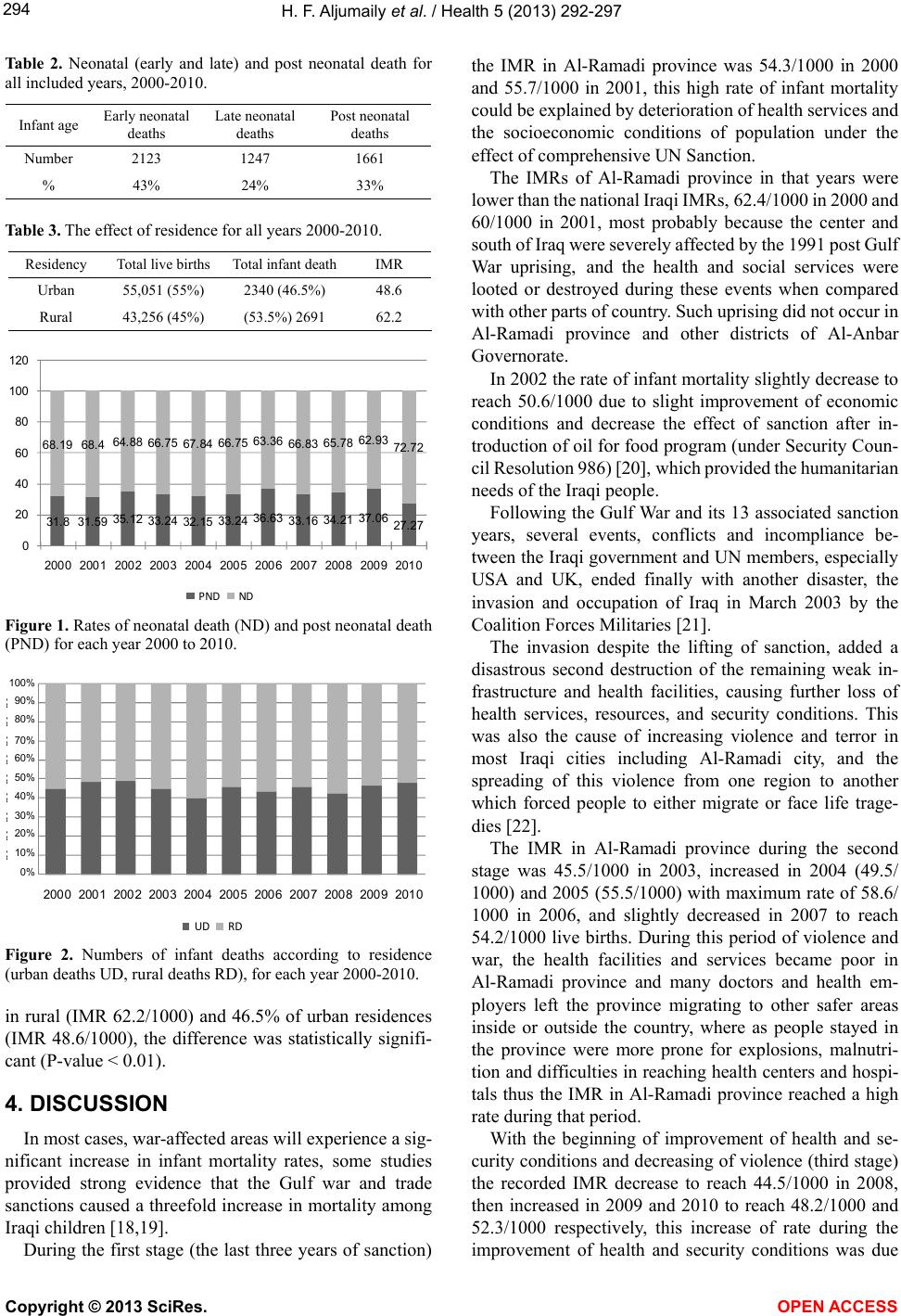 H. F. Aljumaily et al. / Health 5 (2013) 292-297 294 Ta b le 2 . Neonatal (early and late) and post neonatal death for all included years, 2000-2010. Post neonatal deaths Late neonatal deaths Early neonatal deaths Infant age 1661 1247 2123 Number 33% 24% 43% % Table 3. The effect of residence for all years 2000-2010. IMR Total infant death Total live births Residency 48.6 2340 (46.5%) 55,051 (55%) Urban 62.2 (53.5%) 2691 43,256 (45%) Rural 31.8 31.59 35.12 33.24 32.15 33.24 36.63 33.16 34.21 37.0627. 2 7 68.19 68.4 64.88 66.75 67.84 66.75 63.36 66.8365.78 62.9372.72 0 20 40 60 80 100 120 2000200120022003200420052006 2007 200820092010 PND ND Figure 1. Rates of neonatal death (ND) and post neonatal death (PND) for each year 2000 to 2010. 0% 10 % 20 % 30 % 40 % 50 % 60 % 70 % 80 % 90 % 100 20002001 20022003 20042005 20062007 200820092010 UD RD 100% 90% 80% 70% 60% 50% 40% 30% 20% 10% 0% Figure 2. Numbers of infant deaths according to residence (urban deaths UD, rural deaths RD), for each year 2000-2010. in rural (IMR 62.2/1000) and 46.5% of urban residences (IMR 48.6/1000), the difference was statistically signifi- cant (P-value < 0.01). 4. DISCUSSION In most cases, war-affected areas will experience a sig- nificant increase in infant mortality rates, some studies provided strong evidence that the Gulf war and trade sanctions caused a threefold increase in mortality among Iraqi children [18,19]. During the first stage (the last three years of sanction) the IMR in Al-Ramadi province was 54.3/1000 in 2000 and 55.7/1000 in 2001, this high rate of infant mortality coul d b e expl a ined b y d eteriorat i on of he a l t h services and the socioeconomic conditions of population under the effect of comprehensive UN Sanction. The IMRs of Al-Ramadi province in that years were lower than the national Iraqi IMRs, 62.4/1000 in 2000 and 60/1000 in 2001, most probably because the center and sout h of Iraq we re se ver ely af fect ed b y th e 19 91 p ost Gul f War uprising, and the health and social services were looted or destroyed during these events when compared with other pa rts of c ountry. Such upri sing did not occ ur in Al-Ramadi province and other districts of Al-Anbar Governorate. In 2002 the rate of infant mortality slightly decrease to reach 50.6/1000 due to slight improvement of economic conditions and decrease the effect of sanction after in- troduction of oil f or food prog ram (und er Security Coun- cil Resolution 986) [20], which provi ded the huma nitarian needs of the Iraqi people. Following the Gulf War and its 13 associated san ction years, several events, conflicts and incompliance be- tween the Iraqi government and UN members, especially USA and UK, ended finally with another disaster, the invasion and occupation of Iraq in March 2003 by the Coalition Forces Militaries [21 ]. The invasion despite the lifting of sanction, added a disastrous second destruction of the remaining weak in- frastructure and health facilities, causing further loss of health services, resources, and security conditions. This was also the cause of increasing violence and terror in most Iraqi cities including Al-Ramadi city, and the spreading of this violence from one region to another which forced people to either migrate or face life trage- dies [22]. The IMR in Al-Ramadi province during the second stage was 45.5/1000 in 2003, increased in 2004 (49.5/ 1000) and 2005 (55.5 /1000) with maximum rate of 58.6/ 1000 in 2006, and slightly decreased in 2007 to reach 54.2/1000 live births. During this period of violence and war, the health facilities and services became poor in Al-Ramadi province and many doctors and health em- ployers left the province migrating to other safer areas inside or outside the country, where as people stayed in the province were more prone for explosions, malnutri- tion and difficulties in reaching health centers and hospi- tals thus the IMR in Al-Ramadi province reached a high rate during that period. With the beginning of improvement of health and se- curity conditions and decreasin g of violence (third stage) the recorded IMR decrease to reach 44.5/1000 in 2008, then increased in 2009 and 2010 to reach 48.2/1000 and 52.3/1000 respectively, this increase of rate during the improvement of health and security conditions was due Copyright © 2013 SciRes. OPEN A CCESS 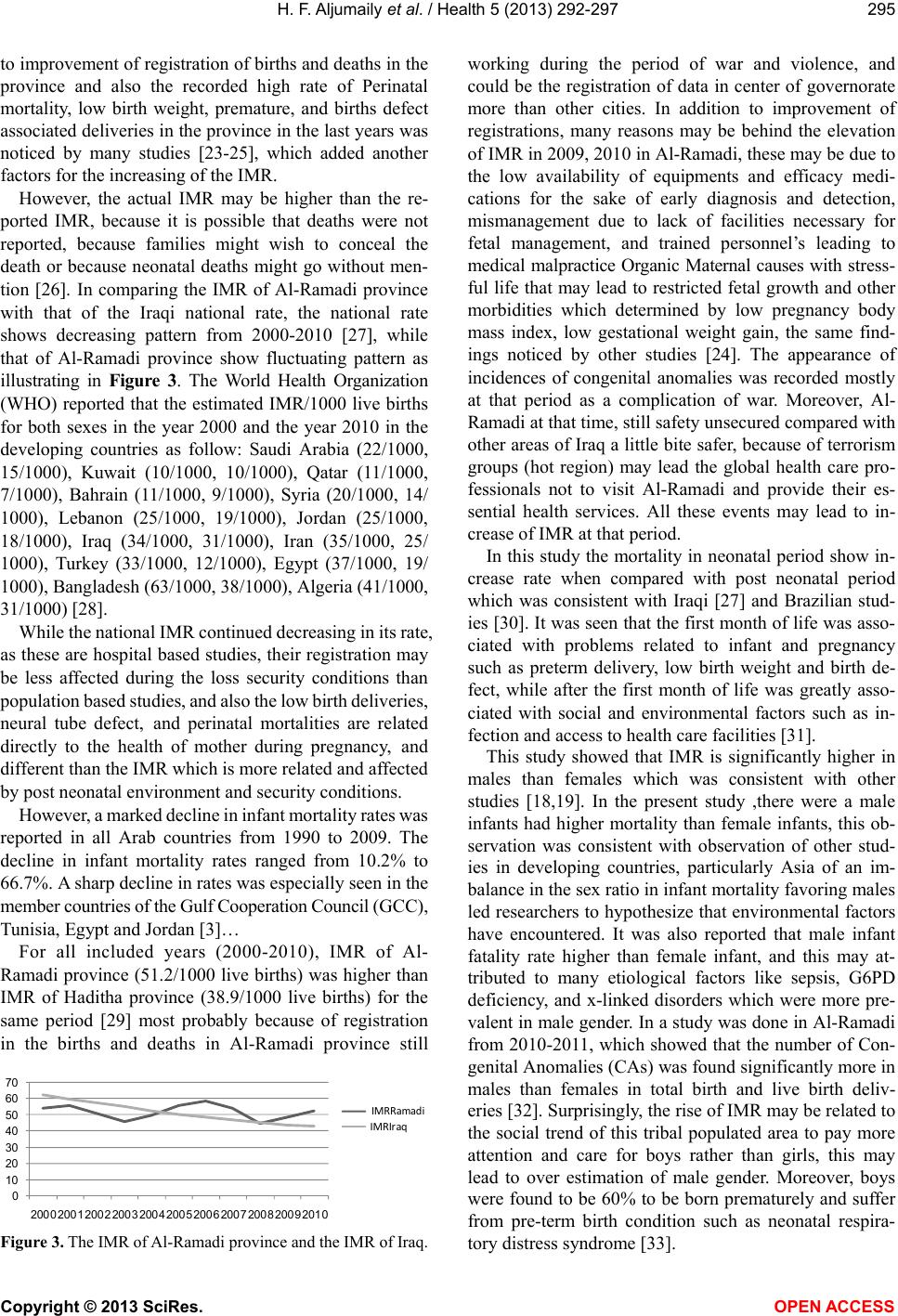 H. F. Aljumaily et al. / Health 5 (2013) 292-297 295 to improvement of registration of births and deaths in the province and also the recorded high rate of Perinatal mortality, low birth weight, premature, and births defect associated deliveries in the province in the last years was noticed by many studies [23-25], which added another factors for the increasing of the IMR. However, the actual IMR may be higher than the re- ported IMR, because it is possible that deaths were not reported, because families might wish to conceal the death or because neonatal deaths might go without men- tion [26]. In comparing the IMR of Al-Ramadi province with that of the Iraqi national rate, the national rate shows decreasing pattern from 2000-2010 [27], while that of Al-Ramadi province show fluctuating pattern as illustrating in Figure 3. The World Health Organization (WHO) reported that the estimated IMR/1000 live births for both sexes in the year 2000 and the year 2010 in the developing countries as follow: Saudi Arabia (22/1000, 15/1000), Kuwait (10/1000, 10/1000), Qatar (11/1000, 7/1000), Bahrain (11/1000, 9/1000), Syria (20/1000, 14/ 1000), Lebanon (25/1000, 19/1000), Jordan (25/1000, 18/1000), Iraq (34/1000, 31/1000), Iran (35/1000, 25/ 1000), Turkey (33/1000, 12/1000), Egypt (37/1000, 19/ 1000), Banglade sh (63/1000, 38/1000), Algeria (41/1000, 31/1000) [28]. While the national IMR continued decreasing in its rate, as these are hospital based studies, their registration may be less affected during the loss security conditions than population based studies, a nd also the l ow birth deliveri es, neural tube defect, and perinatal mortalities are related directly to the health of mother during pregnancy, and different than the IMR which is more related and affected by post neonatal environment and security conditions. However , a marked decline in infant mortality rates was reported in all Arab countries from 1990 to 2009. The decline in infant mortality rates ranged from 10.2% to 66.7%. A sharp decline in rates was especially seen in the member countries of the Gulf Cooperat ion Council (GCC), Tunisia, Egypt and Jordan [3]… For all included years (2000-2010), IMR of Al- Ramadi province (51.2/1000 live births) was higher than IMR of Haditha province (38.9/1000 live births) for the same period [29] most probably because of registration in the births and deaths in Al-Ramadi province still 0 10 20 30 40 50 60 70 200 02001200 2200 3200 4200 5200 6200 7200 8200 9201 0 IMRRamad i IMRIraq Figure 3. The IMR of Al-Ramadi province and the IMR of Iraq. working during the period of war and violence, and could be the registration of data in center of governorate more than other cities. In addition to improvement of registrations, many reasons may be behind the elevation of IMR in 2009, 2010 in Al-Ra madi, these may be du e to the low availability of equipments and efficacy medi- cations for the sake of early diagnosis and detection, mismanagement due to lack of facilities necessary for fetal management, and trained personnel’s leading to medical malpractice Organic Maternal causes with stress- ful life that may lead to restricted fetal growth and other morbidities which determined by low pregnancy body mass index, low gestational weight gain, the same find- ings noticed by other studies [24]. The appearance of incidences of congenital anomalies was recorded mostly at that period as a complication of war. Moreover, Al- Ramadi at that time, still safety unsecured compared with other areas of Iraq a little bite safer, because of terrorism groups (hot region) may lead the global health care pro- fessionals not to visit Al-Ramadi and provide their es- sential health services. All these events may lead to in- crease of IMR at that period. In this study the mortality in neonatal period show in- crease rate when compared with post neonatal period which was consistent with Iraqi [27] and Brazilian stud- ies [30]. It was seen that the first month of life was asso- ciated with problems related to infant and pregnancy such as preterm delivery, low birth weight and birth de- fect, while after the first month of life was greatly asso- ciated with social and environmental factors such as in- fection and access to health care facilities [31]. This study showed that IMR is significantly higher in males than females which was consistent with other studies [18,19]. In the present study ,there were a male infants had higher mortality than female infants, this ob- servation was consistent with observation of other stud- ies in developing countries, particularly Asia of an im- balance in the sex ratio in infant mortality favoring males led researchers to hypo thesize that environmental factors have encountered. It was also reported that male infant fatality rate higher than female infant, and this may at- tributed to many etiological factors like sepsis, G6PD deficiency, and x-linked disorders which were more pre- valent in male gender. In a study was done in Al-Ramadi from 2010-2011, which showed that the number of Con- genital Anomalies (CAs) was found significantly more in males than females in total birth and live birth deliv- eries [32]. Surprisingly, the rise of IMR may be related to the social trend of this tribal populated area to pay more attention and care for boys rather than girls, this may lead to over estimation of male gender. Moreover, boys were found to be 60% to be born prematurely and suffer from pre-term birth condition such as neonatal respira- tory distress syndrome [33]. Copyright © 2013 SciRes. OPEN A CCESS  H. F. Aljumaily et al. / Health 5 (2013) 292-297 296 We record higher IMR among infants from rural areas than urban areas, this was in agreement with other stud- ies [18,19,30]. This is expected since poverty, poor healt h services and facilities are more common in rural than urban areas [34]. In conclusion: the study limited by the fact that it did not record the causes of infant deaths which will clarify whether deaths were due to malnutrition and medical diseases of sanction, or the trauma or injuries of wars or both. Whereas, Iraq still has a high IMR comparing with other developing countries, due to deterioration of so- cioeconomic circumstances and survival chance among young children under the effect of war conflicts and American invasion. However, there is an increase in neonatal mortality rate more than post neonatal mortality rate and increase in early mortality rate more than late mortality rate, probably due to poor antenatal care, increase rate of pre- mature deliveries, and absenc e of modern facilities in the neonatal care unit. In addition to a significant association between IMR and Rural residence, and an association between IMR and Male gender. REFERENCES [1] Stanton, B. and Behrman, R.E. (2008) The field of pedi- atrics, history of infant and child health. In: Behrman, R.E., Kliegman, R.M. and Jenson, H.B., Eds., Nelson Textbook of Pediatrics, 18th Edition, Saunders Company, Philadelphia. [2] Logan, S. (2003) Epidemiology of child health. In: Logan S., McIntosh, N., Helms, P. and Smyth, R., Eds., Forfar and Arneill’s Textbook of Pediatrics. 6th Edition, Chu rchi l Livingstone, Oxford. [3] Abuqamar, M., Coomans, D. and Louckx, F. (2011) Cor- relation between socioeconomic differences and Infant mortality in the Arab World (1990-2009). International Journal of Sociology and Anthropology, 3, 15-21. [4] World Health Organization (2000) The World Health Report, Health systems: Improving performance. World Health Organization, Geneva. [5] Bernadine Healy, M.D. (2012) Behind the baby count. World Reports, US News. [6] MacDorman, M.F. and Mathews, T.J. (2009) Behind in- ternational ranking of infant mortality: How the United State compares with Europe. Centers for Disease Control and Prevention, No. 23. [7] World Health Organization (2011) Humanitarian assis- tance capacity in Iraq; Part 1. GARE International in Iraq, John Hopkins University Center for International Emer- gency, Disaster and Refugee Studies. [8] Ministry of Health (1990) National child survey 1989. Government of Iraq, Baghdad. [9] Global Demographic Ltd. (2011) Mortality rate; infant (per 1000 live births) in Iraq. [10] Federation of American Scientist (2011) Child mortality. Iraq morality estima t e. [11] United Nations Economics and Social Commissions for Western Asia (ESCWA) (1997) Poverty in Iraq before and after Gulf War. Poverty reduction series-4. [12] The World Bank (2011) World development report 2001. [13] Shawky, S. (2001) Infant mortality in Arab countries; so- ciodemographice, perinatal and economic factors. Eastern Mediterranean Health Journal, 7, 956-965. [14] Al-Nouri, L. and Al-Rahim, Q. (2003) The effect of sanc- tion of Iraq. Archives of Disease in Children, 88, 92. doi:10.1136/adc.88.1.92 [15] Abudal Latif, B.L., Al-Diwan, J.K., Al-Hadithi, T.S. and Al-Hadi, A.H. (2006) Low birth weight and prematurity in the neonatal unit of a maternity and pediatric hospital in Iraq. Jou rnal of Tropical Pediatrics, 52, 147-150. [16] Said, N.I. (2003) Trend of perinatal mortality (rate and leading causes). Iraqi Journal of Community Medicine, 12, 28-30. [17] Nasheit, N.A. (2003) Perinatal and neonatal mortality and morbidity in Iraq. Journal of Maternal-Fetal and Neona- tal Medicine, 13, 64-67. doi:10.1080/jmf.13.1.64.67 [18] Ascherio, A., Chase, R., Coté, T. and Dehaes, G. (1992) Effect of the gulf war on infant and child mortality in Iraq. The New England Journal of Medicine, 327, 931-936. doi:10.1056/NEJM199209243271306 [19] Awqati, N.A., Ali, M.M., Al-Ward, N.J., Mageed, F.A., Salman, K. and Al-Alak, M. (2009) Causes and differen- tials of childhood mortality in Iraq. BMC Pediatrics, 9, 40. doi:10.1186/1471-2431-9-40 [20] UN Security Council, Global Policy Forum (2003) Coun- cil on Foreign Relations, Resolution 986, UN Sanctions, Iraq. [21] Events Leading Up to the 2003 Invasion of Iraq (2011) Media coverage of thread posed by Iraq. [22] Department of Professional Employees, AFL-CIO (2011) Health consequences of the war in Iraq. [23] Al-Ani, Z.R., Al-Hiali, S.J. an d Al-Me h imedi, S.M. (2010) Neural tube defect among neonates deliveries in Al- Ramadi maternity and children hospital, western Iraq. Saudi Medical Journal, 31, 163-169. [24] Al- An i, Z.R. , A l- Hiali , S. J. and A l- Mashh adani, W.S. (2009) Perinatal mortality rate in Al-Ramadi maternity and chil- dren hospital, western Iraq. Saudi Medical Journal, 30, 1296-1300. [25] Al-Hiali, S.J., Al-Ani, Z.R, Al-Kaseer, E. and Al-Ani, E.R. (2010) Low birth weight in western Iraq. The Iraqi Post- graduate Medical Journal, 9, 312-315. [26] Roberts, L., Lafta, R., Garfield, R., Khudhairi, J. and Burn - ham, G. (2004) Mortality before and after the 2003 inva- sion of Iraq sample surveys Roberts. Lancet , 364, 1857- 1864. doi:10.1016/S0140-6736(04)17441-2 [27] List of countries by Infant mortality rate (2011). www.wikipedia.org [28] WHO, Health Statistics (2012) Global health indicators. http://www.who.int/gho/ Copyright © 2013 SciRes. OPEN A CCESS  H. F. Aljumaily et al. / Health 5 (2013) 292-297 Copyright © 2013 SciRes. OPEN A CCESS 297 [29] Al-Ani, Z. R., Al-Hi a li, S.J. an d Al-Faraji , H.H. (2011) Secu- lar trend of infant mortality rate during wars and sanc- tions in western of Iraq. Saudi Medical Journal, 32, 1267- 1273. [30] Goldani, M.Z., Barbieri, M.A., Bettiol, H., Barbieri, M.R. and Tomkins, A. (2001) Infant mortality rates according to socioeconomic status in a Brazilian city. Revista de Saude Publica, 35, 256-261. doi:10.1590/S0034-89102001000300007 [31] Garfeild, R. (1997) The Impaction of economic embar- goes on the health of women and children. American Jour- nal of Public Health, 87, 15-20. [32] Al-Ani, Z.R., Al-Hagi, S.A., Al-Ani, M.M., Al-Dulaimy, K.M., Al-Maraie, A.K. and Al-Ubaidi, B.K. (2012) Inci- dence, types, geographical distribution, and risk factors of congenital anomalies in Al-Ramadi maternity and chil- dren’s teaching hospital, western Iraq. Saudi Medical Jour- nal, 33, 979-989. [33] Red Orbit (2012). http://www.redorbit.com/news/health/1310570/male_infa nt_fatality_rate_higher_than_female_infants/ [34] Global Issue (2011) Poverty around the world. www.globalissue.org |