

Paper Menu >>
Journal Menu >>
 Journal of Minerals and Materials Characterization and Engineering, 2013, 1, 1-7 http://dx.doi.org/10.4236/jmmce.2013.11001 Published Online January 2013 (http://www.scirp.org/journal/jmmce) Corrosion Resistance of Heat-Treated NST 37-2 Steel in Hydrochloric Acid Solution David Abimbola Fadare*, Taiwo Gbolarumi Fadara Mechanical Engineering Department, University of Ibadan, P.M.B 1, Ibadan, Nigeria Email: *[email protected] Received July 20, 2012; revised August 27, 2012; accepted September 10, 2012 ABSTRACT Corrosion of metal components constitutes a major challenge in many engineering systems, with appropriate design, proper material selection, and heat treatment as commonly used control strategies. In this study, the corrosion behaviour of heat-treated (annealed, normalised, hardened, and tempered) NST 37-2 steel in three concentrations (1.0, 1.5 and 2.0 M) of hydrochloric acid solution was investigated using weight loss and electrode-potential methods. Results showed that corrosion rate increased with increase in acid concentration. The decreasing order of corrosion resistance was Tempered > Annealed > Normalised > Hardened > Untreated. The surface pictures of the heat-treated and untreated samples showed uniform and pitting corrosion with the latter becoming more pronounced as concentration increased. Keywords: Heat Treatment; Corrosion Resistance; Hydrochloric Acid; NST 37-2 Steel 1. Introduction Corrosion of metal components has been recognized as a major problem in many engineering applications. Failure of engineering systems due to corrosion is as common as failure due to mechanical causes such as brittle fracture and fatigue. The annual cost of corrosion for the US and UK has been estimated at about $70 billion accounting for about 4% of the national Gross Domestic Product (GDP) [1]. This estimate may well be higher in some less developed countries, although it is probably less in the least developed countries [2]. About 15% - 25% of the annual global steel production is estimated to be used for repair or replacement of damages due to corrosion [3]. Corrosion failures are minimized by appropriate design, proper material selection, control of metallurgical struc- ture through heat treatment and use of inhibitors. Of all these control strategies, heat treatment is most commonly used due to its cost effectiveness. Annealing, normalising, hardening and tempering are the most commonly used heat treatment of carbon steels. Annealing is most frequently applied in order to soften carbon steel materials and refines its grains due to ferrite- pearlite microstructure [4,5]. In normalising, the material is heated to the austenitic temperature range and this is followed by air cooling to obtain a mainly pearlite matrix, which results into increase in strength and hardness [6]. In hardening, the material is heated to a temperature high enough to promote the formation of austenite, held at that temperature until the desired amount of carbon has been dissolved and then quench in oil or water at a suitable rate to obtain 100% martensite with maximum yield strength, but it is very brittle and thus quenched steels are used for very few engineering applications. By tempering, the properties of quenched steel are modified to decrease hardness, increase ductility and impact strength mode- rately, resulting microstructures are bainite or carbide precipitate in a matrix of ferrite depending on the tem- pering temperature. Investigations on the effects of heat treatment on the corrosion behavior of different carbon steel materials have been reported by many researchers. In particular, the effects of heat treatment on corrosion behaviour of AISI 403 martensitic stainless steel [7], AISI 420 mar- tensitic stainless steel [8], AISI 52100 steel [9], 304 L stainless steel [10], 14Cr-3Mo martensitic stainless steel [11] have been reported. Corrosion behavior of different carbon steel materials in different media typical of the in-service environments has also been investigated by many researchers. Acidic environment are generally en- countered in many industrial processes. Acid solutions are used especially for the removal of undesirable scales and rust from carbon steel materials. Particularly, hydro- chloric acid are widely used for the picking processes of metals [12]. Corrosion behavior of numerous grades of carbon steels in hydrochloric acid solutions has been widely studied by many researchers [13-18]. However, there are numerous studies on the effect of heat treat- ment of carbon steel grades on the corrosion behaviour in *Corresponding author. C opyright © 2013 SciRes. JMMCE 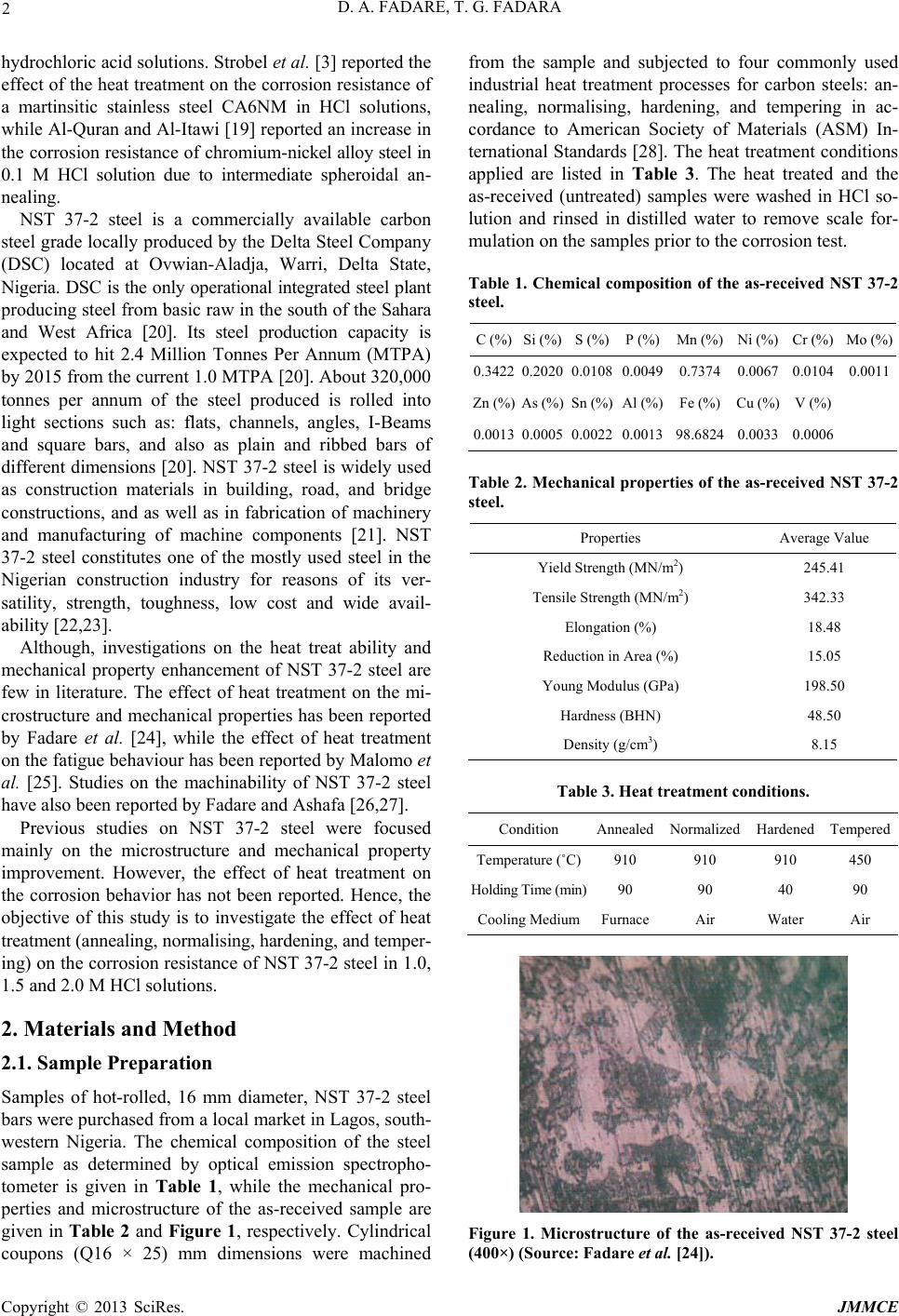 D. A. FADARE, T. G. FADARA 2 hydrochloric acid solutions. Strobel et al. [3] reported the effect of the heat treatment on the corrosion resistance of a martinsitic stainless steel CA6NM in HCl solutions, while Al-Quran and Al-Itawi [19] reported an increase in the corrosion resistance of chromium-nickel alloy steel in 0.1 M HCl solution due to intermediate spheroidal an- nealing. NST 37-2 steel is a commercially available carbon steel grade locally produced by the Delta Steel Company (DSC) located at Ovwian-Aladja, Warri, Delta State, Nigeria. DSC is the only operational integrated steel plant producing steel from basic raw in the south of the Sahara and West Africa [20]. Its steel production capacity is expected to hit 2.4 Million Tonnes Per Annum (MTPA) by 2015 from the current 1.0 MTPA [20]. About 320,000 tonnes per annum of the steel produced is rolled into light sections such as: flats, channels, angles, I-Beams and square bars, and also as plain and ribbed bars of different dimensions [20]. NST 37-2 steel is widely used as construction materials in building, road, and bridge constructions, and as well as in fabrication of machinery and manufacturing of machine components [21]. NST 37-2 steel constitutes one of the mostly used steel in the Nigerian construction industry for reasons of its ver- satility, strength, toughness, low cost and wide avail- ability [22,23]. Although, investigations on the heat treat ability and mechanical property enhancement of NST 37-2 steel are few in literature. The effect of heat treatment on the mi- crostructure and mechanical properties has been reported by Fadare et al. [24], while the effect of heat treatment on the fatigue behaviour has been reported by Malomo et al. [25]. Studies on the machinability of NST 37-2 steel have also been reported by Fadare and Ashafa [26,27]. Previous studies on NST 37-2 steel were focused mainly on the microstructure and mechanical property improvement. However, the effect of heat treatment on the corrosion behavior has not been reported. Hence, the objective of this study is to investigate the effect of heat treatment (annealing, normalising, hardening, and temper- ing) on the corrosion resistance of NST 37-2 steel in 1.0, 1.5 and 2.0 M HCl solutions. 2. Materials and Method 2.1. Sample Preparation Samples of hot-rolled, 16 mm diameter, NST 37-2 steel bars were purchased from a local market in Lagos, south- western Nigeria. The chemical composition of the steel sample as determined by optical emission spectropho- tometer is given in Table 1, while the mechanical pro- perties and microstructure of the as-received sample are given in Table 2 and Figure 1, respectively. Cylindrical coupons (Q16 × 25) mm dimensions were machined from the sample and subjected to four commonly used industrial heat treatment processes for carbon steels: an- nealing, normalising, hardening, and tempering in ac- cordance to American Society of Materials (ASM) In- ternational Standards [28]. The heat treatment conditions applied are listed in Table 3. The heat treated and the as-received (untreated) samples were washed in HCl so- lution and rinsed in distilled water to remove scale for- mulation on the samples prior to the corrosion test. Table 1. Chemical composition of the as-received NST 37-2 steel. C (%)Si (%)S (%)P (%)Mn (%) Ni (%) Cr (%)Mo (%) 0.34220.20200.01080.00490.7374 0.0067 0.01040.0011 Zn (%)As (%)Sn (%)Al (%)Fe (%) Cu (%) V (%) 0.00130.00050.00220.001398.6824 0.0033 0.0006 Table 2. Mechanical properties of the as-received NST 37-2 steel. Properties Average Value Yield Strength (MN/m2) 245.41 Tensile Strength (MN/m2) 342.33 Elongation (%) 18.48 Reduction in Area (%) 15.05 Young Modulus (GPa) 198.50 Hardness (BHN) 48.50 Density (g/cm3) 8.15 Table 3. Heat treatment conditions. Condition AnnealedNormalized HardenedTempered Temperature (˚C)910 910 910 450 Holding Time (min)90 90 40 90 Cooling MediumFurnaceAir Water Air Figure 1. Microstructure of the as-received NST 37-2 steel (400×) (Source: Fadare et al. [24]). Copyright © 2013 SciRes. JMMCE 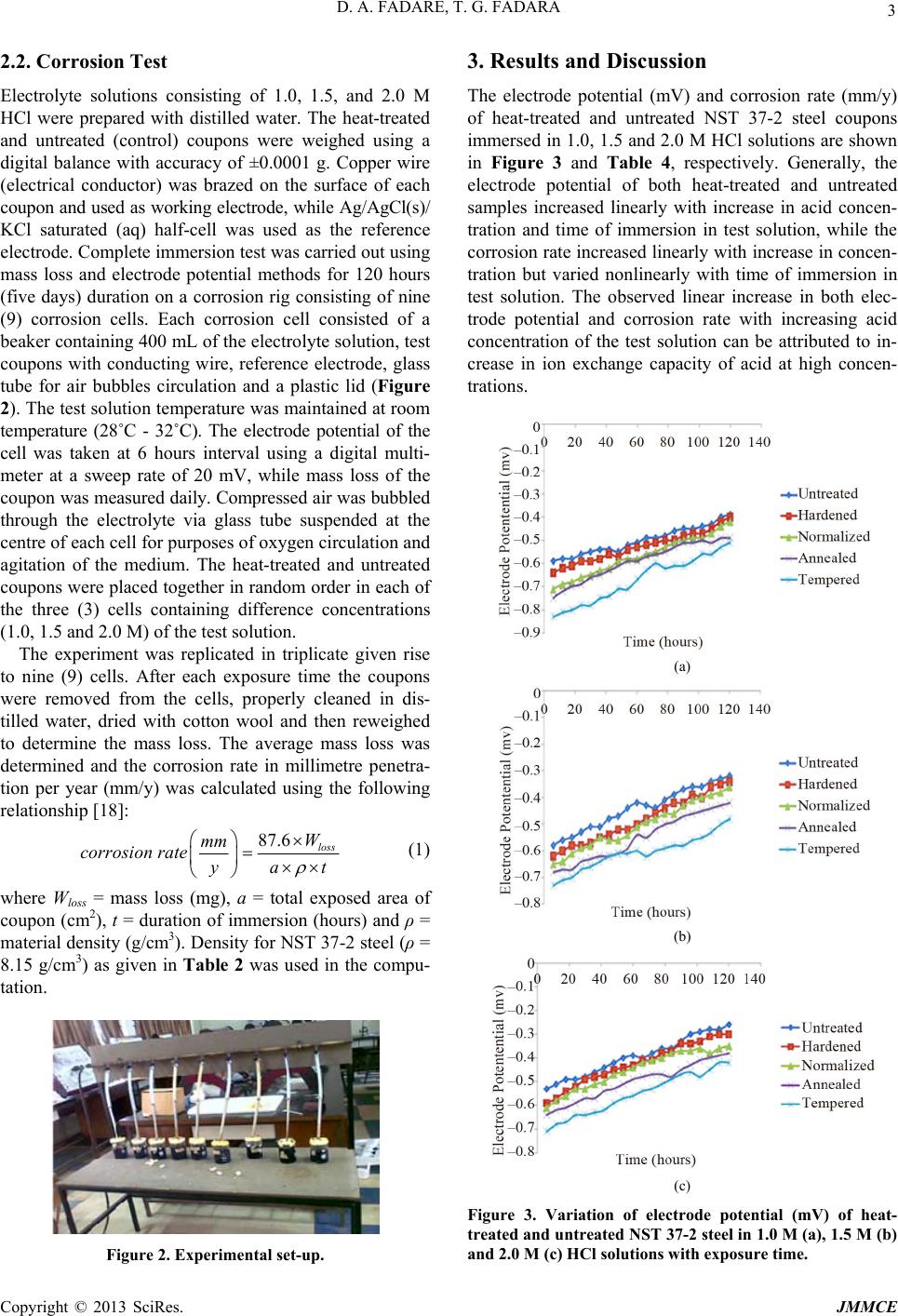 D. A. FADARE, T. G. FADARA 3 2.2. Corrosion Test Electrolyte solutions consisting of 1.0, 1.5, and 2.0 M HCl were prepared with distilled water. The heat-treated and untreated (control) coupons were weighed using a digital balance with accuracy of ±0.0001 g. Copper wire (electrical conductor) was brazed on the surface of each coupon and used as working electrode, while Ag/AgCl(s)/ KCl saturated (aq) half-cell was used as the reference electrode. Complete immersion test was carried out using mass loss and electrode potential methods for 120 hours (five days) duration on a corrosion rig consisting of nine (9) corrosion cells. Each corrosion cell consisted of a beaker containing 400 mL of the electrolyte solution, test coupons with conducting wire, reference electrode, glass tube for air bubbles circulation and a plastic lid (Figure 2). The test solution temperature was maintained at room temperature (28˚C - 32˚C). The electrode potential of the cell was taken at 6 hours interval using a digital multi- meter at a sweep rate of 20 mV, while mass loss of the coupon was measured daily. Compressed air was bubbled through the electrolyte via glass tube suspended at the centre of each cell for purposes of oxygen circulation and agitation of the medium. The heat-treated and untreated coupons were placed together in random order in each of the three (3) cells containing difference concentrations (1.0, 1.5 and 2.0 M) of the test solution. The experiment was replicated in triplicate given rise to nine (9) cells. After each exposure time the coupons were removed from the cells, properly cleaned in dis- tilled water, dried with cotton wool and then reweighed to determine the mass loss. The average mass loss was determined and the corrosion rate in millimetre penetra- tion per year (mm/y) was calculated using the following relationship [18]: 87.6 loss W mm corrosionrate y at (1) where Wloss = mass loss (mg), a = total exposed area of coupon (cm2), t = duration of immersion (hours) and ρ = material density (g/cm3). Density for NST 37-2 steel (ρ = 8.15 g/cm3) as given in Table 2 was used in the compu- tation. Figure 2. Experimental set-up. 3. Results and Discussion The electrode potential (mV) and corrosion rate (mm/y) of heat-treated and untreated NST 37-2 steel coupons immersed in 1.0, 1.5 and 2.0 M HCl solutions are shown in Figure 3 and Table 4, respectively. Generally, the electrode potential of both heat-treated and untreated samples increased linearly with increase in acid concen- tration and time of immersion in test solution, while the corrosion rate increased linearly with increase in concen- tration but varied nonlinearly with time of immersion in test solution. The observed linear increase in both elec- trode potential and corrosion rate with increasing acid concentration of the test solution can be attributed to in- crease in ion exchange capacity of acid at high concen- trations. (a) (b) (c) Figure 3. Variation of electrode potential (mV) of heat- treated and untreated NST 37-2 steel in 1.0 M (a), 1.5 M (b) and 2.0 M (c) HCl solutions with exposure time. Copyright © 2013 SciRes. JMMCE 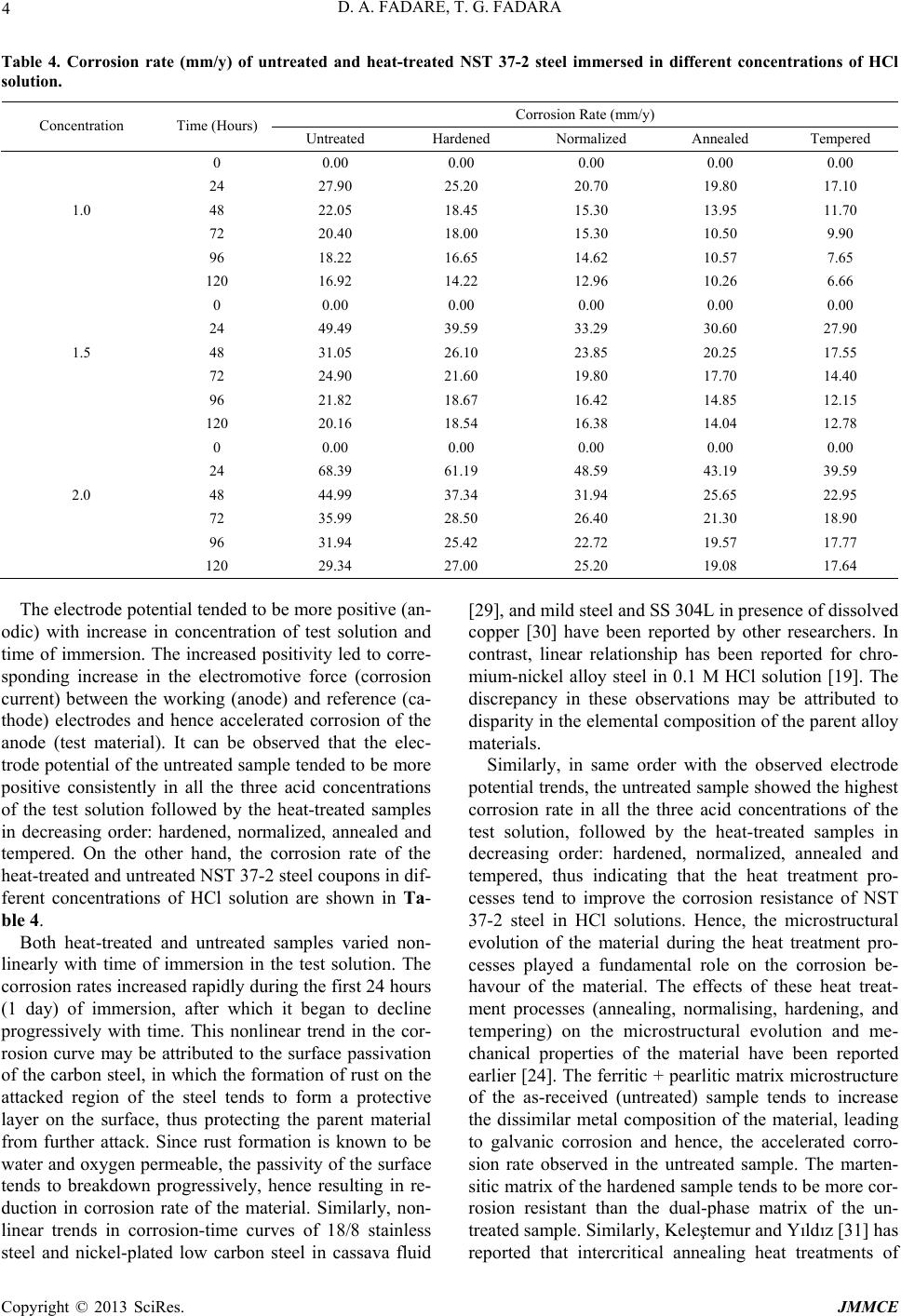 D. A. FADARE, T. G. FADARA Copyright © 2013 SciRes. JMMCE 4 Table 4. Corrosion rate (mm/y) of untreated and heat-treated NST 37-2 steel immersed in different concentrations of HCl solution. Corrosion Rate (mm/y) Concentration Time (Hours) Untreated Hardened Normalized Annealed Tempered 0 0.00 0.00 0.00 0.00 0.00 24 27.90 25.20 20.70 19.80 17.10 1.0 48 22.05 18.45 15.30 13.95 11.70 72 20.40 18.00 15.30 10.50 9.90 96 18.22 16.65 14.62 10.57 7.65 120 16.92 14.22 12.96 10.26 6.66 0 0.00 0.00 0.00 0.00 0.00 24 49.49 39.59 33.29 30.60 27.90 1.5 48 31.05 26.10 23.85 20.25 17.55 72 24.90 21.60 19.80 17.70 14.40 96 21.82 18.67 16.42 14.85 12.15 120 20.16 18.54 16.38 14.04 12.78 0 0.00 0.00 0.00 0.00 0.00 24 68.39 61.19 48.59 43.19 39.59 2.0 48 44.99 37.34 31.94 25.65 22.95 72 35.99 28.50 26.40 21.30 18.90 96 31.94 25.42 22.72 19.57 17.77 120 29.34 27.00 25.20 19.08 17.64 The electrode potential tended to be more positive (an- odic) with increase in concentration of test solution and time of immersion. The increased positivity led to corre- sponding increase in the electromotive force (corrosion current) between the working (anode) and reference (ca- thode) electrodes and hence accelerated corrosion of the anode (test material). It can be observed that the elec- trode potential of the untreated sample tended to be more positive consistently in all the three acid concentrations of the test solution followed by the heat-treated samples in decreasing order: hardened, normalized, annealed and tempered. On the other hand, the corrosion rate of the heat-treated and untreated NST 37-2 steel coupons in dif- ferent concentrations of HCl solution are shown in Ta- ble 4. Both heat-treated and untreated samples varied non- linearly with time of immersion in the test solution. The corrosion rates increased rapidly during the first 24 hours (1 day) of immersion, after which it began to decline progressively with time. This nonlinear trend in the cor- rosion curve may be attributed to the surface passivation of the carbon steel, in which the formation of rust on the attacked region of the steel tends to form a protective layer on the surface, thus protecting the parent material from further attack. Since rust formation is known to be water and oxygen permeable, the passivity of the surface tends to breakdown progressively, hence resulting in re- duction in corrosion rate of the material. Similarly, non- linear trends in corrosion-time curves of 18/8 stainless steel and nickel-plated low carbon steel in cassava fluid [29], and mild steel and SS 304L in presence of dissolved copper [30] have been reported by other researchers. In contrast, linear relationship has been reported for chro- mium-nickel alloy steel in 0.1 M HCl solution [19]. The discrepancy in these observations may be attributed to disparity in the elemental composition of the parent alloy materials. Similarly, in same order with the observed electrode potential trends, the untreated sample showed the highest corrosion rate in all the three acid concentrations of the test solution, followed by the heat-treated samples in decreasing order: hardened, normalized, annealed and tempered, thus indicating that the heat treatment pro- cesses tend to improve the corrosion resistance of NST 37-2 steel in HCl solutions. Hence, the microstructural evolution of the material during the heat treatment pro- cesses played a fundamental role on the corrosion be- havour of the material. The effects of these heat treat- ment processes (annealing, normalising, hardening, and tempering) on the microstructural evolution and me- chanical properties of the material have been reported earlier [24]. The ferritic + pearlitic matrix microstructure of the as-received (untreated) sample tends to increase the dissimilar metal composition of the material, leading to galvanic corrosion and hence, the accelerated corro- sion rate observed in the untreated sample. The marten- sitic matrix of the hardened sample tends to be more cor- rosion resistant than the dual-phase matrix of the un- treated sample. Similarly, Keleştemur and Yıldız [31] has reported that intercritical annealing heat treatments of  D. A. FADARE, T. G. FADARA 5 dualphase steel embedded in concrete has a good corro- sion resistance which increased with increase amount of martensite microstructure in the steel. The single-phase pearlitic and ferritic matrix of the normalised and an- nealed samples respectively tend to be more corrosion resistance compared to the dual-phase of the untreated sample, while the dual-phase martensitic and ferritic ma- trix of the tempered sample tends to be more corrosion resistance than both the single-phase martensite and fer- rite microstructure of the hardened and annealed samples respectively. Lucio-Garcia et al. [32] has shown that the steel with a martensitic microstructure had the highest corrosion rate; up to one order of magnitude higher than the corrosion rate for steels with a ferritic and bainitic microstructure, whereas the steel with the ferritic micro- structure showed the lowest corrosion rate. The surface scan of the corroded surface (Figure 4) revealed that both uniform and pitting corrosion occurred Concentration of HCl Heat Treatment 1.0 M 1.5 M 2.0 M Untreated Hardened Normalised Annealed Tempered Figure 4. Surface scan of the corroded heat-treated and untreated NST 37-2 steel coupons different concentrations of hydro- chloric acid solution. Copyright © 2013 SciRes. JMMCE 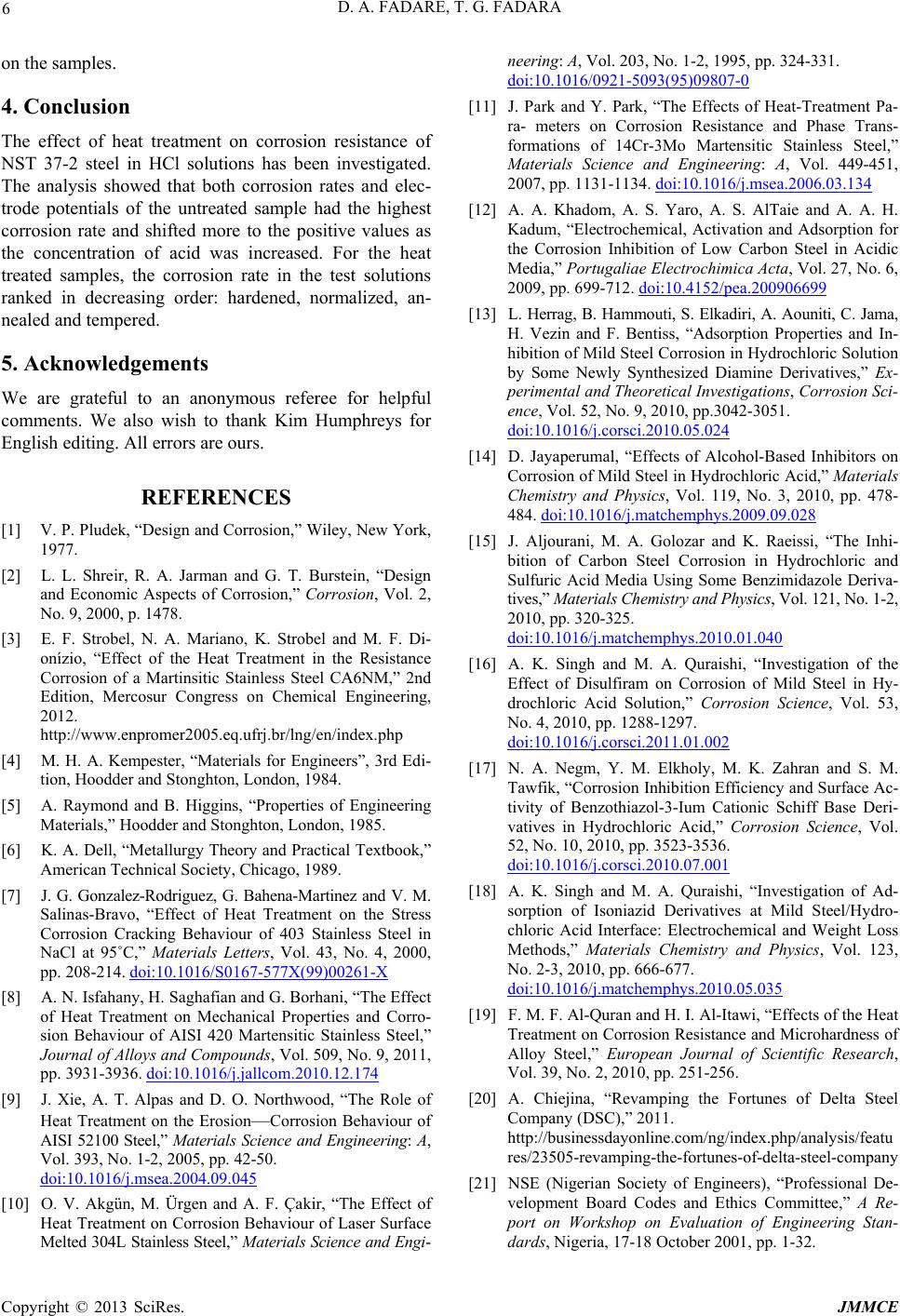 D. A. FADARE, T. G. FADARA 6 on the samples. 4. Conclusion The effect of heat treatment on corrosion resistance of NST 37-2 steel in HCl solutions has been investigated. The analysis showed that both corrosion rates and elec- trode potentials of the untreated sample had the highest corrosion rate and shifted more to the positive values as the concentration of acid was increased. For the heat treated samples, the corrosion rate in the test solutions ranked in decreasing order: hardened, normalized, an- nealed and tempered. 5. Acknowledgements We are grateful to an anonymous referee for helpful comments. We also wish to thank Kim Humphreys for English editing. All errors are ours. REFERENCES [1] V. P. Pludek, “Design and Corrosion,” Wiley, New York, 1977. [2] L. L. Shreir, R. A. Jarman and G. T. Burstein, “Design and Economic Aspects of Corrosion,” Corrosion, Vol. 2, No. 9, 2000, p. 1478. [3] E. F. Strobel, N. A. Mariano, K. Strobel and M. F. Di- onízio, “Effect of the Heat Treatment in the Resistance Corrosion of a Martinsitic Stainless Steel CA6NM,” 2nd Edition, Mercosur Congress on Chemical Engineering, 2012. http://www.enpromer2005.eq.ufrj.br/lng/en/index.php [4] M. H. A. Kempester, “Materials for Engineers”, 3rd Edi- tion, Hoodder and Stonghton, London, 1984. [5] A. Raymond and B. Higgins, “Properties of Engineering Materials,” Hoodder and Stonghton, London, 1985. [6] K. A. Dell, “Metallurgy Theory and Practical Textbook,” American Technical Society, Chicago, 1989. [7] J. G. Gonzalez-Rodriguez, G. Bahena-Martinez and V. M. Salinas-Bravo, “Effect of Heat Treatment on the Stress Corrosion Cracking Behaviour of 403 Stainless Steel in NaCl at 95˚C,” Materials Letters, Vol. 43, No. 4, 2000, pp. 208-214. doi:10.1016/S0167-577X(99)00261-X [8] A. N. Isfahany, H. Saghafian and G. Borhani, “The Effect of Heat Treatment on Mechanical Properties and Corro- sion Behaviour of AISI 420 Martensitic Stainless Steel,” Journal of Alloys and Compounds, Vol. 509, No. 9, 2011, pp. 3931-3936. doi:10.1016/j.jallcom.2010.12.174 [9] J. Xie, A. T. Alpas and D. O. Northwood, “The Role of Heat Treatment on the Erosion—Corrosion Behaviour of AISI 52100 Steel,” Materials Science and Engineering: A, Vol. 393, No. 1-2, 2005, pp. 42-50. doi:10.1016/j.msea.2004.09.045 [10] O. V. Akgün, M. Ürgen and A. F. Çakir, “The Effect of Heat Treatment on Corrosion Behaviour of Laser Surface Melted 304L Stainless Steel,” Materials Science and Engi- neering: A, Vol. 203, No. 1-2, 1995, pp. 324-331. doi:10.1016/0921-5093(95)09807-0 [11] J. Park and Y. Park, “The Effects of Heat-Treatment Pa- ra- meters on Corrosion Resistance and Phase Trans- formations of 14Cr-3Mo Martensitic Stainless Steel,” Materials Science and Engineering: A, Vol. 449-451, 2007, pp. 1131-1134. doi:10.1016/j.msea.2006.03.134 [12] A. A. Khadom, A. S. Yaro, A. S. AlTaie and A. A. H. Kadum, “Electrochemical, Activation and Adsorption for the Corrosion Inhibition of Low Carbon Steel in Acidic Media,” Portugaliae Electrochimica Acta, Vol. 27, No. 6, 2009, pp. 699-712. doi:10.4152/pea.200906699 [13] L. Herrag, B. Hammouti, S. Elkadiri, A. Aouniti, C. Jama, H. Vezin and F. Bentiss, “Adsorption Properties and In- hibition of Mild Steel Corrosion in Hydrochloric Solution by Some Newly Synthesized Diamine Derivatives,” Ex- perimental and Theoretical Investigations, Corrosion Sci- ence, Vol. 52, No. 9, 2010, pp.3042-3051. doi:10.1016/j.corsci.2010.05.024 [14] D. Jayaperumal, “Effects of Alcohol-Based Inhibitors on Corrosion of Mild Steel in Hydrochloric Acid,” Materials Chemistry and Physics, Vol. 119, No. 3, 2010, pp. 478- 484. doi:10.1016/j.matchemphys.2009.09.028 [15] J. Aljourani, M. A. Golozar and K. Raeissi, “The Inhi- bition of Carbon Steel Corrosion in Hydrochloric and Sulfuric Acid Media Using Some Benzimidazole Deriva- tives,” Materials Chemistry and Physics, Vol. 121, No. 1-2, 2010, pp. 320-325. doi:10.1016/j.matchemphys.2010.01.040 [16] A. K. Singh and M. A. Quraishi, “Investigation of the Effect of Disulfiram on Corrosion of Mild Steel in Hy- drochloric Acid Solution,” Corrosion Science, Vol. 53, No. 4, 2010, pp. 1288-1297. doi:10.1016/j.corsci.2011.01.002 [17] N. A. Negm, Y. M. Elkholy, M. K. Zahran and S. M. Tawfik, “Corrosion Inhibition Efficiency and Surface Ac- tivity of Benzothiazol-3-Ium Cationic Schiff Base Deri- vatives in Hydrochloric Acid,” Corrosion Science, Vol. 52, No. 10, 2010, pp. 3523-3536. doi:10.1016/j.corsci.2010.07.001 [18] A. K. Singh and M. A. Quraishi, “Investigation of Ad- sorption of Isoniazid Derivatives at Mild Steel/Hydro- chloric Acid Interface: Electrochemical and Weight Loss Methods,” Materials Chemistry and Physics, Vol. 123, No. 2-3, 2010, pp. 666-677. doi:10.1016/j.matchemphys.2010.05.035 [19] F. M. F. Al-Quran and H. I. Al-Itawi, “Effects of the Heat Treatment on Corrosion Resistance and Microhardness of Alloy Steel,” European Journal of Scientific Research, Vol. 39, No. 2, 2010, pp. 251-256. [20] A. Chiejina, “Revamping the Fortunes of Delta Steel Company (DSC),” 2011. http://businessdayonline.com/ng/index.php/analysis/featu res/23505-revamping-the-fortunes-of-delta-steel-company [21] NSE (Nigerian Society of Engineers), “Professional De- velopment Board Codes and Ethics Committee,” A Re- port on Workshop on Evaluation of Engineering Stan- dards, Nigeria, 17-18 October 2001, pp. 1-32. Copyright © 2013 SciRes. JMMCE  D. A. FADARE, T. G. FADARA 7 [22] S. O. Jakayinfa, J. O. Ojediran and P. O. Okekunle, “An Evaluation of Corrosion Prevention Practices in Agricul- tural Equipment Manu-facture and Used in Nigeria,” An- ti-Corrosion Materials, Vol. 54, No. 5, 2003, pp. 346- 370. [23] S. E. Chukwujekwu, “Locally Designed and Manufac- tured Goods: Prospects for Third Millennium in Nigeria,” A Paper Presented at the COREN Engineering Assembly, 1998, pp. 40-68. [24] D. A. Fadare, T. G. Fadara and O. Y. Akanbi, “Effect of Heat Treatment on Mechanical Properties and Micro- structure of NST 37-2 Steel,” Journal of Minerals and Materials Characterization and Engineering, Vol. 10, No. 3, 2011, pp. 299-308. [25] B. O. Malomo, S. A. Ibitoye and L. O. Adekoya, “The Analysis of the Fatigue Behaviour of NST 37-2 Steel Based on the Probabilistic Stress-Life (P-S-N) Relation- ships,” Proceedings of the Faculty of Technology Interna- tional Conference, Obafemi Awolowo University, Ile-Ife, 25-29 September 2011, pp. 164-174. [26] D. A. Fadare and T. B. Asafa, “Optimization of Turning NST 37-2 Steel with Uncoated Carbide Cutting Tools,” Journal of the Nigerian Institution of Mechanical Engi- neers, Vol. 2, No. 1, 2010, pp. 31-40. [27] D. A. Fadare and T. B. Asafa, “Performance Evaluation of Uncoated Carbide Cutting Tools in Turning NST 37-2 Steel,” Proceedings of 22nd International Conference of the NIMechE, Osogbo, 20-22 October 2009, pp. 20-24. [28] ASM (American Society for Metals) “International ASM Handbook Vol. 4: Heat Treatment,” Park, Ohio, 1991. [29] O. O. Oluwole, P. O. Atanda, O. A. Odekunbi and E. Odeg- baju, “Corrosion Behavior of 18/8 Stain-Less Steel and Nickel-plated Low Carbon Steel in Cassava Fluid,” Jour- nal of Minerals & Materials Characterization & Engi- neering, Vol. 8, No. 10, 2009, pp. 803-811. [30] M. Mobin and H. Shabnam, “Corrosion Behavior of Mild Steel and SS 304L in Presence of Dissolved Copper,” Journal of Minerals & Materials Characterization & En- gineering, Vol. 9, No. 12, 2010, pp.1113-1130. [31] O. Keleştemur and S. Yıldız, “Effect of Various Dual- Phase Heat Treatments on the Corrosion Behaviour of Reinforcing Steel Used in the Reinforced Concrete Struc- tures,” Construction and Building Materials, Vol. 23, No. 1, 2009, pp. 78-84. doi:10.1016/j.conbuildmat.2008.02.001 [32] M. A. Lucio-Garcia, J. G. Gonzalez-Rodriguez, M. Ca- sales, L. Martinez, J. G. Chacon-Nava, M. A. Neri-Flores and A. Martinez-Villafañe, “Effect of Heat Treatment on H2S Corrosion of a Mcro-alloyed C-Mn Steel,” Corrosion Science, Vol. 51, No. 10, 2009, pp. 2380-2386. doi:10.1016/j.corsci.2009.06.022 Copyright © 2013 SciRes. JMMCE |