

Paper Menu >>
Journal Menu >>
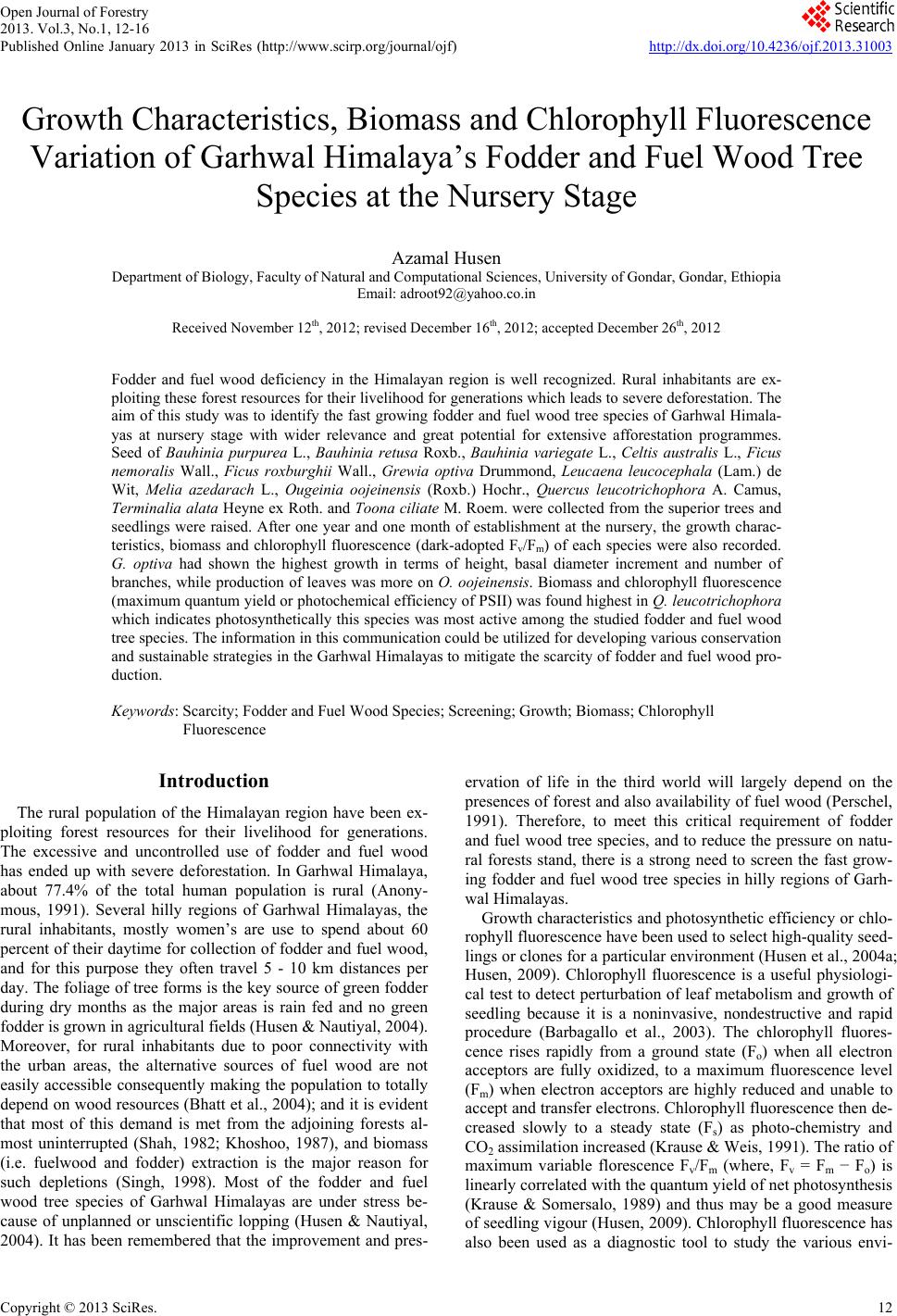 Open Journal of Forestry 2013. Vol.3, No.1, 12-16 Published Online January 2013 in SciRes (http://www.scirp.org/journal/ojf) http://dx.doi.org/10.4236/ojf.2013.31003 Copyright © 2013 SciRes. 12 Growth Characteristics, Biomass and Chlorophyll Fluorescence Variation of Garhwal Himalaya’s Fodder and Fuel Wood Tree Species at the Nursery Stage Azamal Husen Department of Biology, Faculty of Natural and Computational Sciences, University of Gondar, Gondar, Ethiopia Email: [email protected] Received November 12th, 2012; revised December 16th, 2012; accepted December 26th, 2012 Fodder and fuel wood deficiency in the Himalayan region is well recognized. Rural inhabitants are ex- ploiting these forest resources for their livelihood for generations which leads to severe deforestation. The aim of this study was to identify the fast growing fodder and fuel wood tree species of Garhwal Himala- yas at nursery stage with wider relevance and great potential for extensive afforestation programmes. Seed of Bauhinia purpurea L., Bauhinia retusa Roxb., Bauhinia variegate L., Celtis australis L., Ficus nemoralis Wall., Ficus roxburghii Wall., Grewia optiva Drummond, Leucaena leucocephala (Lam.) de Wit, Melia azedarach L., Ougeinia oojeinensis (Roxb.) Hochr., Quercus leucotrichophora A. Camus, Terminalia alata Heyne ex Roth. and Toona ciliate M. Roem. were collected from the superior trees and seedlings were raised. After one year and one month of establishment at the nursery, the growth charac- teristics, biomass and chlorophyll fluorescence (dark-adopted Fv/Fm) of each species were also recorded. G. optiva had shown the highest growth in terms of height, basal diameter increment and number of branches, while production of leaves was more on O. oojeinensis. Biomass and chlorophyll fluorescence (maximum quantum yield or photochemical efficiency of PSII) was found highest in Q. leucotrichophora which indicates photosynthetically this species was most active among the studied fodder and fuel wood tree species. The information in this communication could be utilized for developing various conservation and sustainable strategies in the Garhwal Himalayas to mitigate the scarcity of fodder and fuel wood pro- duction. Keywords: Scarcity; Fodder and Fuel Wood Species; Screening; Growth; Biomass; Chlorophyll Fluorescence Introduction The rural population of the Himalayan region have been ex- ploiting forest resources for their livelihood for generations. The excessive and uncontrolled use of fodder and fuel wood has ended up with severe deforestation. In Garhwal Himalaya, about 77.4% of the total human population is rural (Anony- mous, 1991). Several hilly regions of Garhwal Himalayas, the rural inhabitants, mostly women’s are use to spend about 60 percent of their daytime for collection of fodder and fuel wood, and for this purpose they often travel 5 - 10 km distances per day. The foliage of tree forms is the key source of green fodder during dry months as the major areas is rain fed and no green fodder is grown in agricultural fields (Husen & Nautiyal, 2004). Moreover, for rural inhabitants due to poor connectivity with the urban areas, the alternative sources of fuel wood are not easily accessible consequently making the population to totally depend on wood resources (Bhatt et al., 2004); and it is evident that most of this demand is met from the adjoining forests al- most uninterrupted (Shah, 1982; Khoshoo, 1987), and biomass (i.e. fuelwood and fodder) extraction is the major reason for such depletions (Singh, 1998). Most of the fodder and fuel wood tree species of Garhwal Himalayas are under stress be- cause of unplanned or unscientific lopping (Husen & Nautiyal, 2004). It has been remembered that the improvement and pres- ervation of life in the third world will largely depend on the presences of forest and also availability of fuel wood (Perschel, 1991). Therefore, to meet this critical requirement of fodder and fuel wood tree species, and to reduce the pressure on natu- ral forests stand, there is a strong need to screen the fast grow- ing fodder and fuel wood tree species in hilly regions of Garh- wal Himalayas. Growth characteristics and photosynthetic efficiency or chlo- rophyll fluorescence have been used to select high-quality seed- lings or clones for a particular environment (Husen et al., 2004a; Husen, 2009). Chlorophyll fluorescence is a useful physiologi- cal test to detect perturbation of leaf metabolism and growth of seedling because it is a noninvasive, nondestructive and rapid procedure (Barbagallo et al., 2003). The chlorophyll fluores- cence rises rapidly from a ground state (Fo) when all electron acceptors are fully oxidized, to a maximum fluorescence level (Fm) when electron acceptors are highly reduced and unable to accept and transfer electrons. Chlorophyll fluorescence then de- creased slowly to a steady state (Fs) as photo-chemistry and CO2 assimilation increased (Krause & Weis, 1991). The ratio of maximum variable florescence Fv/Fm (where, Fv = Fm − Fo) is linearly correlated with the quantum yield of net photosynthesis (Krause & Somersalo, 1989) and thus may be a good measure of seedling vigour (Husen, 2009). Chlorophyll fluorescence has also been used as a diagnostic tool to study the various envi- 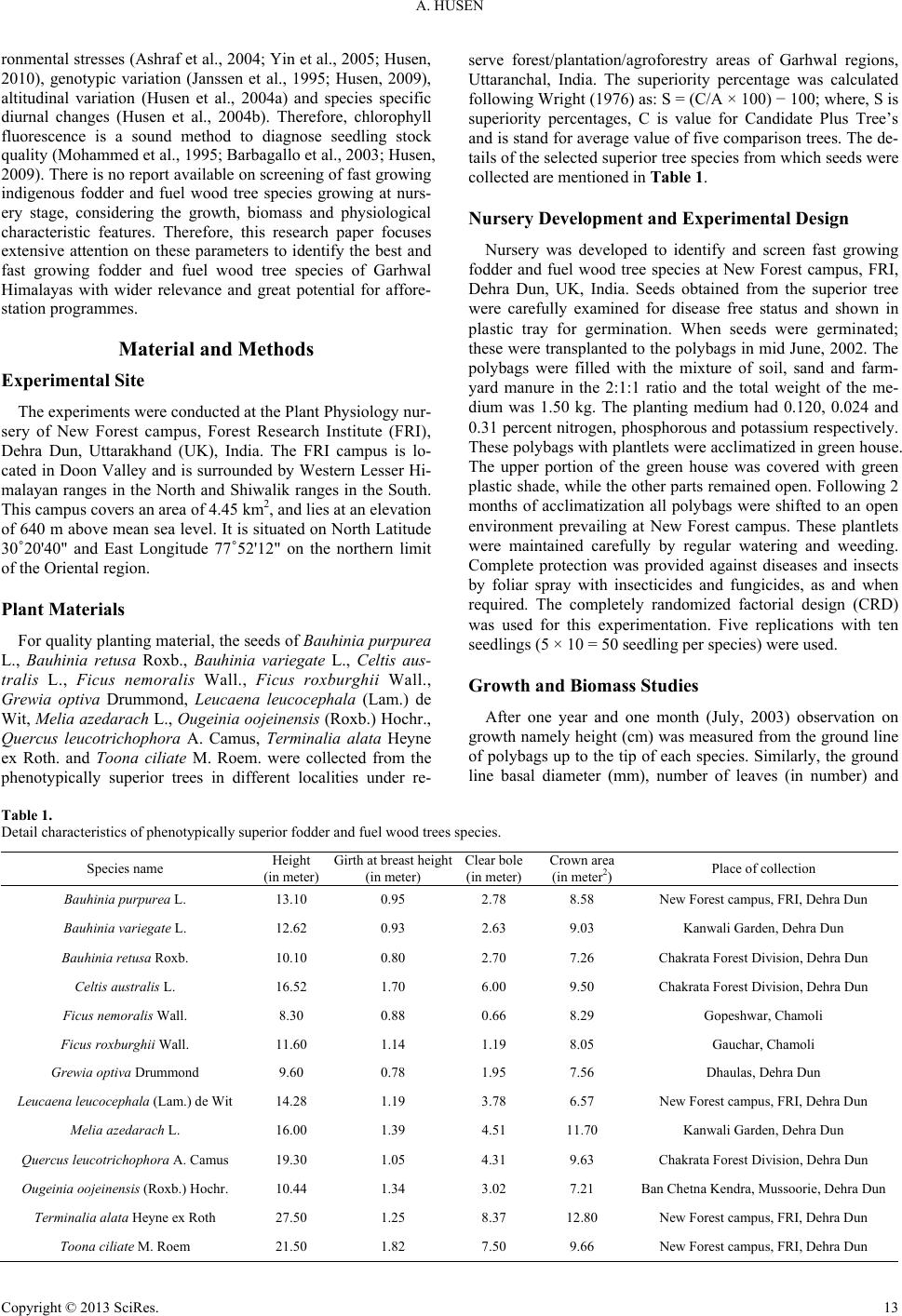 A. HUSEN ronmental stresses (Ashraf et al., 2004; Yin et al., 2005; Husen, 2010), genotypic variation (Janssen et al., 1995; Husen, 2009), altitudinal variation (Husen et al., 2004a) and species specific diurnal changes (Husen et al., 2004b). Therefore, chlorophyll fluorescence is a sound method to diagnose seedling stock quality (Mohammed et al., 1995; Barbagallo et al., 2003; Husen, 2009). There is no report available on screening of fast growing indigenous fodder and fuel wood tree species growing at nurs- ery stage, considering the growth, biomass and physiological characteristic features. Therefore, this research paper focuses extensive attention on these parameters to identify the best and fast growing fodder and fuel wood tree species of Garhwal Himalayas with wider relevance and great potential for affore- station programmes. Material and Methods Experimental Site The experiments were conducted at the Plant Physiology nur- sery of New Forest campus, Forest Research Institute (FRI), Dehra Dun, Uttarakhand (UK), India. The FRI campus is lo- cated in Doon Valley and is surrounded by Western Lesser Hi- malayan ranges in the North and Shiwalik ranges in the South. This campus covers an area of 4.45 km2, and lies at an elevation of 640 m above mean sea level. It is situated on North Latitude 30˚20'40" and East Longitude 77˚52'12" on the northern limit of the Oriental region. Plant Materials For quality planting material, the seeds of Bauhinia purpurea L., Bauhinia retusa Roxb., Bauhinia variegate L., Celtis aus- tralis L., Ficus nemoralis Wall., Ficus roxburghii Wall., Grewia optiva Drummond, Leucaena leucocephala (Lam.) de Wit, Melia azedarach L., Ougeinia oojeinensis (Roxb.) Hochr., Quercus leucotrichophora A. Camus, Terminalia alata Heyne ex Roth. and Toona ciliate M. Roem. were collected from the phenotypically superior trees in different localities under re- serve forest/plantation/agroforestry areas of Garhwal regions, Uttaranchal, India. The superiority percentage was calculated following Wright (1976) as: S = (C/A × 100) − 100; where, S is superiority percentages, C is value for Candidate Plus Tree’s and is stand for average value of five comparison trees. The de- tails of the selected superior tree species from which seeds were collected are mentioned in Table 1. Nursery Dev elop ment and Experimental Design Nursery was developed to identify and screen fast growing fodder and fuel wood tree species at New Forest campus, FRI, Dehra Dun, UK, India. Seeds obtained from the superior tree were carefully examined for disease free status and shown in plastic tray for germination. When seeds were germinated; these were transplanted to the polybags in mid June, 2002. The polybags were filled with the mixture of soil, sand and farm- yard manure in the 2:1:1 ratio and the total weight of the me- dium was 1.50 kg. The planting medium had 0.120, 0.024 and 0.31 percent nitrogen, phosphorous and potassium respectively. These polybags with plantlets were acclimatized in green house. The upper portion of the green house was covered with green plastic shade, while the other parts remained open. Following 2 months of acclimatization all polybags were shifted to an open environment prevailing at New Forest campus. These plantlets were maintained carefully by regular watering and weeding. Complete protection was provided against diseases and insects by foliar spray with insecticides and fungicides, as and when required. The completely randomized factorial design (CRD) was used for this experimentation. Five replications with ten seedlings (5 × 10 = 50 seedling per species) were used. Growth and Biomass Studies After one year and one month (July, 2003) observation on growth namely height (cm) was measured from the ground line of polybags up to the tip of each species. Similarly, the ground line basal diameter (mm), number of leaves (in number) and Table 1. Detail characteristics of phenotypically superior fodder and fuel wood trees species. Species name Height (in meter) Girth at breast height (in meter) Clear bole (in meter) Crown area (in meter2) Place of collection Bauhinia purpurea L. 13.10 0.95 2.78 8.58 New Forest campus, FRI, Dehra Dun Bauhinia variegate L. 12.62 0.93 2.63 9.03 Kanwali Garden, Dehra Dun Bauhinia retusa Roxb. 10.10 0.80 2.70 7.26 Chakrata Forest Division, Dehra Dun Celtis australis L. 16.52 1.70 6.00 9.50 Chakrata Forest Division, Dehra Dun Ficus nemoralis Wall. 8.30 0.88 0.66 8.29 Gopeshwar, Chamoli Ficus roxburghii Wall. 11.60 1.14 1.19 8.05 Gauchar, Chamoli Grewia optiva Drummond 9.60 0.78 1.95 7.56 Dhaulas, Dehra Dun Leucaena le ucocepha la (Lam.) de Wit 14.28 1.19 3.78 6.57 New Forest campus, FRI, Dehra Dun Melia azedarac h L. 16.00 1.39 4.51 11.70 Kanwali Garden, Dehra Dun Quercus leucotrichophora A. Camus 19.30 1.05 4.31 9.63 Chakrata Forest Division, Dehra Dun Ougeinia oojein ensis (Roxb.) Hochr. 10.44 1.34 3.02 7.21 Ban Chetna Kendra, Mussoorie, Dehra Dun Terminalia alata Heyne ex Roth 27.50 1.25 8.37 12.80 New Forest campus, FRI, Dehra Dun Toona ciliate M. Roem 21.50 1.82 7.50 9.66 New Forest campus, FRI, Dehra Dun Copyright © 2013 SciRes. 13 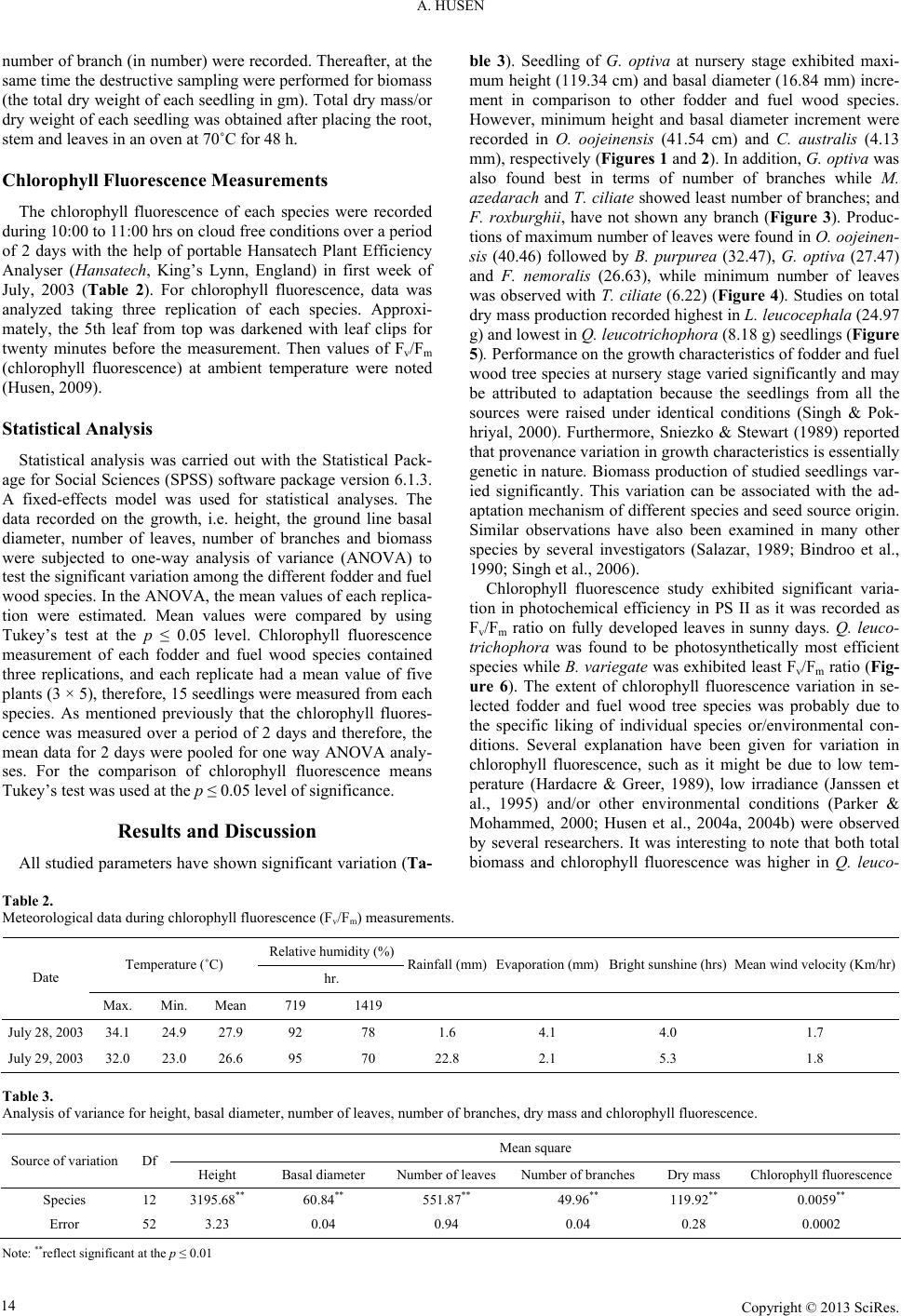 A. HUSEN number of branch (in number) were recorded. Thereafter, at the same time the destructive sampling were performed for biomass (the total dry weight of each seedling in gm). Total dry mass/or dry weight of each seedling was obtained after placing the root, stem and leaves in an oven at 70˚C for 48 h. Chlorophyll Fluorescence Measurements The chlorophyll fluorescence of each species were recorded during 10:00 to 11:00 hrs on cloud free conditions over a period of 2 days with the help of portable Hansatech Plant Efficiency Analyser (Hansatech, King’s Lynn, England) in first week of July, 2003 (Table 2). For chlorophyll fluorescence, data was analyzed taking three replication of each species. Approxi- mately, the 5th leaf from top was darkened with leaf clips for twenty minutes before the measurement. Then values of Fv/Fm (chlorophyll fluorescence) at ambient temperature were noted (Husen, 2009). Statistical Analysis Statistical analysis was carried out with the Statistical Pack- age for Social Sciences (SPSS) software package version 6.1.3. A fixed-effects model was used for statistical analyses. The data recorded on the growth, i.e. height, the ground line basal diameter, number of leaves, number of branches and biomass were subjected to one-way analysis of variance (ANOVA) to test the significant variation among the different fodder and fuel wood species. In the ANOVA, the mean values of each replica- tion were estimated. Mean values were compared by using Tukey’s test at the p ≤ 0.05 level. Chlorophyll fluorescence measurement of each fodder and fuel wood species contained three replications, and each replicate had a mean value of five plants (3 × 5), therefore, 15 seedlings were measured from each species. As mentioned previously that the chlorophyll fluores- cence was measured over a period of 2 days and therefore, the mean data for 2 days were pooled for one way ANOVA analy- ses. For the comparison of chlorophyll fluorescence means Tukey’s test was used at the p ≤ 0.05 level of significance. Results and Discussion All studied parameters have shown significant variation (Ta- ble 3). Seedling of G. optiva at nursery stage exhibited maxi- mum height (119.34 cm) and basal diameter (16.84 mm) incre- ment in comparison to other fodder and fuel wood species. However, minimum height and basal diameter increment were recorded in O. oojeinensis (41.54 cm) and C. australis (4.13 mm), respectively (Figures 1 and 2). In addition, G. optiva was also found best in terms of number of branches while M. azedarach and T. ciliate showed least number of branches; and F. roxburghii, have not shown any branch (Figure 3). Produc- tions of maximum number of leaves were found in O. oojeinen- sis (40.46) followed by B. purpurea (32.47), G. optiva (27.47) and F. nemoralis (26.63), while minimum number of leaves was observed with T. ciliate (6.22) (Figure 4). Studies on total dry mass production recorded highest in L. leucocephala (24.97 g) and lowest in Q. leucotrichophora (8.18 g) seedlings (Figure 5). Performance on the growth characteristics of fodder and fuel wood tree species at nursery stage varied significantly and may be attributed to adaptation because the seedlings from all the sources were raised under identical conditions (Singh & Pok- hriyal, 2000). Furthermore, Sniezko & Stewart (1989) reported that provenance variation in growth characteristics is essentially genetic in nature. Biomass production of studied seedlings var- ied significantly. This variation can be associated with the ad- aptation mechanism of different species and seed source origin. Similar observations have also been examined in many other species by several investigators (Salazar, 1989; Bindroo et al., 1990; Singh et al., 2006). Chlorophyll fluorescence study exhibited significant varia- tion in photochemical efficiency in PS II as it was recorded as Fv/Fm ratio on fully developed leaves in sunny days. Q. leuco- trichophora was found to be photosynthetically most efficient species while B. variegate was exhibited least Fv/Fm ratio (Fig- ure 6). The extent of chlorophyll fluorescence variation in se- lected fodder and fuel wood tree species was probably due to the specific liking of individual species or/environmental con- ditions. Several explanation have been given for variation in chlorophyll fluorescence, such as it might be due to low tem- perature (Hardacre & Greer, 1989), low irradiance (Janssen et al., 1995) and/or other environmental conditions (Parker & Mohammed, 2000; Husen et al., 2004a, 2004b) were observed by several researchers. It was interesting to note that both total biomass and chlorophyll fluorescence was higher in Q. leuco- Table 2. Meteorological data during chlorophyll fluorescence (Fv/Fm) measurements. Relative humidity (%) Temperature (˚C) hr. Rainfall (mm)Evaporation (mm)Bright sunshine (hrs) Mean wind velocity (Km/hr) Date Max. Min. Mean 719 1419 July 28, 2003 34.1 24.9 27.9 92 78 1.6 4.1 4.0 1.7 July 29, 2003 32.0 23.0 26.6 95 70 22.8 2.1 5.3 1.8 Table 3. Analysis of variance for height, basal diameter, number of leaves, number of branches, dry mass and chlorophyll fluorescence. Mean square Source of variation Df Height Basal diameter Number of leavesNumber of branchesDry mass Chlorophyll fluorescence Species 12 3195.68** 60.84** 551.87** 49.96** 119.92** 0.0059** Error 52 3.23 0.04 0.94 0.04 0.28 0.0002 Note: **reflect significant at the p ≤ 0.01 Copyright © 2013 SciRes. 14 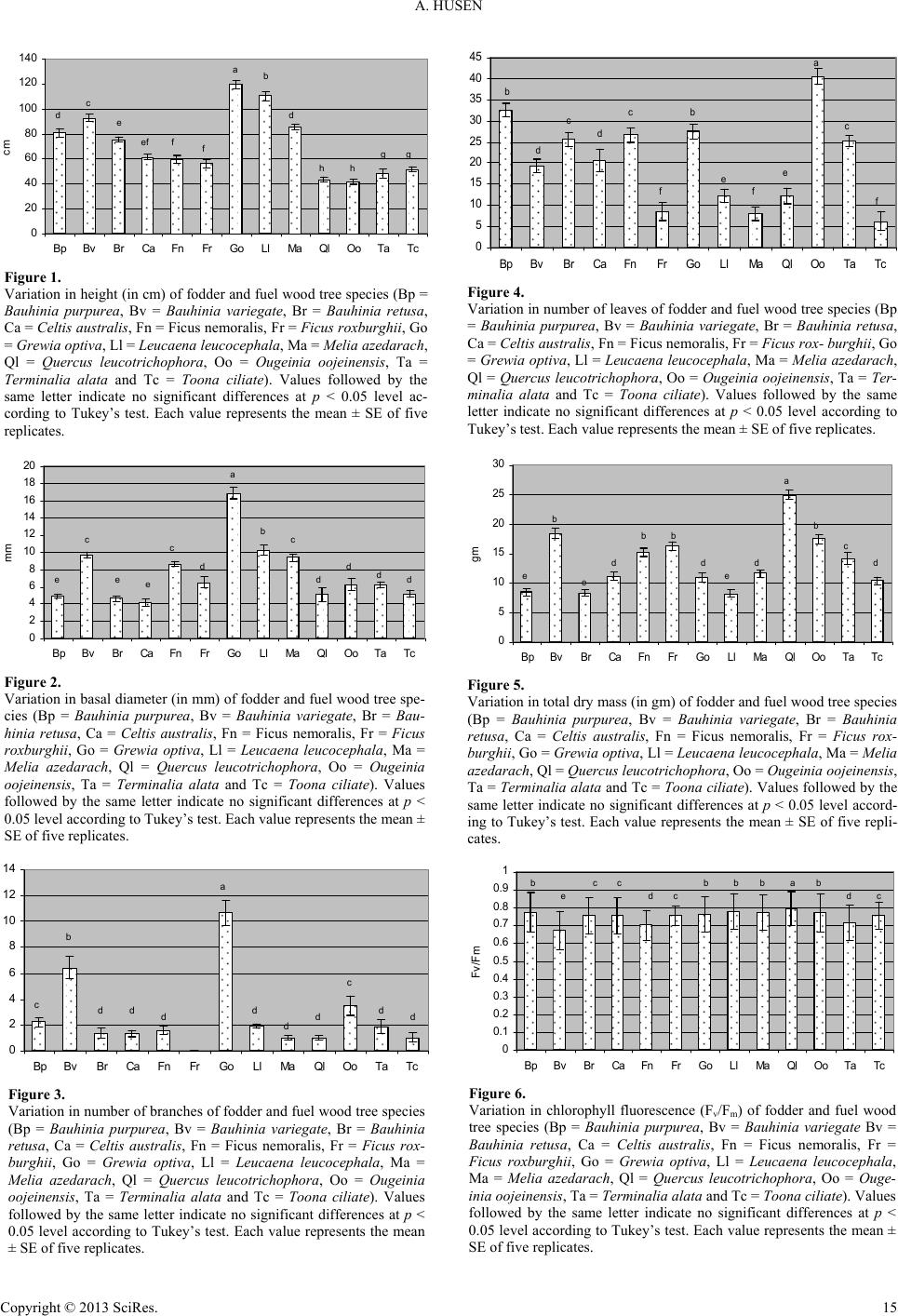 A. HUSEN 0 20 40 60 80 100 120 140 Bp BvBrCa FnFrGoLlMaQlOo TaTc cm gg hh d b a f fef e c d Figure 1. Variation in height (in cm) of fodder and fuel wood tree species (Bp = Bauhinia purpurea, Bv = Bauhinia variegate, Br = Bauhinia retusa, Ca = Celtis australis, Fn = Ficus nemoralis, Fr = Ficus roxburghii, Go = Grewia optiva, Ll = Leucaena leucocephala, Ma = Melia azedarach, Ql = Quercus leucotrichophora, Oo = Ougeinia oojeinensis, Ta = Terminalia alata and Tc = Toona ciliate). Values followed by the same letter indicate no significant differences at p < 0.05 level ac- cording to Tukey’s test. Each value represents the mean ± SE of five replicates. 0 2 4 6 8 10 12 14 16 18 20 Bp BvBrCa FnFrGoLlMaQlOo TaTc mm d d d d c b a d c e e c e Figure 2. Variation in basal diameter (in mm) of fodder and fuel wood tree spe- cies (Bp = Bauhinia purpurea, Bv = Bauhinia variegate, Br = Bau- hinia retusa, Ca = Celtis australis, Fn = Ficus nemoralis, Fr = Ficus roxburghii, Go = Grewia optiva, Ll = Leucaena leucocephala, Ma = Melia azedarach, Ql = Quercus leucotrichophora, Oo = Ougeinia oojeinensis, Ta = Terminalia alata and Tc = Toona ciliate). Values followed by the same letter indicate no significant differences at p < 0.05 level according to Tukey’s test. Each value represents the mean ± SE of five replicates. 0 2 4 6 8 10 12 14 BpBvBrCaFn FrGo Ll Ma QlOoTaTc d d c d d d a d dd b c Figure 3. Variation in number of branches of fodder and fuel wood tree species (Bp = Bauhinia purpurea, Bv = Bauhinia variegate, Br = Bauhinia retusa, Ca = Celtis australis, Fn = Ficus nemoralis, Fr = Ficus rox- burghii, Go = Grewia optiva, Ll = Leucaena leucocephala, Ma = Melia azedarach, Ql = Quercus leucotrichophora, Oo = Ougeinia oojeinensis, Ta = Terminalia alata and Tc = Toona ciliate). Values followed by the same letter indicate no significant differences at p < 0.05 level according to Tukey’s test. Each value represents the mean ± SE of five replicates. 0 5 10 15 20 25 30 35 40 45 Bp BvBrCa FnFrGoLlMaQlOoTaTc f c a e f e b f c d c d b Figure 4. Variation in number of leaves of fodder and fuel wood tree species (Bp = Bauhinia purpurea, Bv = Bauhinia variegate, Br = Bauhinia retusa, Ca = Celtis australis, Fn = Ficus nemoralis, Fr = Ficus rox- burghii, Go = Grewia optiva, Ll = Leucaena leucocephala, Ma = Melia azedarach, Ql = Quercus leucotrichophora, Oo = Ougeinia oojeinensis, Ta = Ter- minalia alata and Tc = Toona ciliate). Values followed by the same letter indicate no significant differences at p < 0.05 level according to Tukey’s test. Each value represents the mean ± SE of five replicates. 0 5 10 15 20 25 30 BpBvBrCaFnFrGoLl MaQlOoTa Tc gm d c b a d e d bb d e b e Figure 5. Variation in total dry mass (in gm) of fodder and fuel wood tree species (Bp = Bauhinia purpurea, Bv = Bauhinia variegate, Br = Bauhinia retusa, Ca = Celtis australis, Fn = Ficus nemoralis, Fr = Ficus rox- burghii, Go = Grewia optiva, Ll = Leucaena leucocephala, Ma = Melia azedarach, Ql = Quercus leucotrichophora, Oo = Ougeinia oojeinensis, Ta = Terminalia alata and Tc = Toona ciliate). Values followed by the same letter indicate no significant differences at p < 0.05 level accord- ing to Tukey’s test. Each value represents the mean ± SE of five repli- cates. 0 0.1 0.2 0.3 0.4 0.5 0.6 0.7 0.8 0.9 1 BpBvBr CaFn Fr GoLl MaQlOoTaTc Fv/F m b e cd babbb cd cc Figure 6. Variation in chlorophyll fluorescence (Fv/Fm) of fodder and fuel wood tree species (Bp = Bauhinia purpurea, Bv = Bauhinia variegate Bv = Bauhinia retusa, Ca = Celtis australis, Fn = Ficus nemoralis, Fr = Ficus roxburghii, Go = Grewia optiva, Ll = Leucaena leucocephala, Ma = Melia azedarach, Ql = Quercus leucotrichophora, Oo = Ouge- inia oojeinensis, Ta = Terminalia alata and Tc = To ona ci liate). Values followed by the same letter indicate no significant differences at p < 0.05 level according to Tukey’s test. Each value represents the mean ± SE of five replicates. Copyright © 2013 SciRes. 15  A. HUSEN trichophora; which is supported by more carbon assimilation. Physiological characterization (chlorophyll fluorescence) has been used more in stock quality assessment (Mohammed et al., 1995; Husen, 2009) because this test is noninvasive, nonde- structive and rapid (Vidaver et al., 1989). However, in this finding Q. leucotrichophora was photosynthetically most active plants while G. optiva exhibited maximum growth in terms of height and basal diameter at the nursery stage. Hence, selection for plantation of Q. leucotrichophora and G. optiva around agricultural fields in different agroforestry systems of Garhwal Himalaya for rapid growth and higher biomass production can be advantageous. In addition, Q. leucotrichophora and G. op- tiva also recommended as a fast growing fodder and fuel wood tree species for Garhwal Himalayas which leads with wider relevance and great potential for extensive afforestation pro- grammes. Acknowledgements Financial assistance by National Agricultural Technology Project (ICAR), New Delhi, India is gratefully acknowledged. I thank Dr. Laxmi Rawat, Forest Research Institute (FRI), Dehra Dun, India for meteorological data. REFERENCES Anonymous (1991). Census data of Garhwal region of Uttar Pradesh. Barbagallo, R. P., Oxborough, K., Pallett, K. E., & Baker, N. R. (2003). Rapid, noninvasive screening for perturbation of metabolism and plant growth using chlorophyll fluorescence imaging. Plant Physiol- ogy, 132, 485-493. doi:10.1104/pp.102.018093 Bhatt, B. P., & Sachan, M. S. (2004). Firewood consumption along an altitudinal gradient in mountain villages of India. Biomass and Bio- energy, 27, 69-75. doi:10.1016/j.biombioe.2003.10.004 Bhatt, B. P., & Verma, N. D. (2002). Some multipurpose tree species for agroforestry systems. Umiam: ICAR Research Complex for NEH Region. Bindroo, B. B., Tiku, A. K., & Pandit, R. K. (1990) Variation of some traits in mulberry varieties. Indian Forester, 106, 320-323. Hardacre, A. K., & Greer, D. H. (1989). Differences in growth in re- sponse to temperature of maize hybrids varying in low temperature tolerance. Australian Journal of Plant P hysiology, 16, 181-187. doi:10.1071/PP9890181 Husen, A. (2009). Growth, chlorophyll fluorescence and biochemical markers in clonal ramets of shisham (Dalbergia sissoo Roxb.) at nur- sery stage. New Forests, 38, 117-129. doi:10.1007/s11056-009-9141-z Husen, A. (2010). Growth characteristics, physiological and metabolic responses of teak (Tectona grandis Linn. f.) clones differencing in rejuvenation capacity subjected to drought stress. Silvae Genetica, 59,124-136. Husen, A., & Nautiyal, S. (2004). Growth performance of some fuel- wood and fodder tree species at the three altitudes of Garhwal Hima- layas. International Conference on Multipurpose Tree in the Tropics: Assessment, Growth and Management, Jodhpur, 22-25 November 2004. Husen, A., Khali, R., & Nautiyal, S. (2004a). Altitudinal variation in chlorophyll fluorescence/photosynthetic efficiency in seedlings of some indigenous fodder species. Indi an Forester, 130, 89-94. Husen, A., Khali, R., & Nautiyal, S. (2004b). Chlorophyll fluorescence in relation to diurnal changes of three Ficus species. Indian Forester, 130, 811-818. Janssen, L. H. J., Von Overen, J. C., Van Hassett, P. R., & Kuiper, P. J. C. (1995). Genotypic variation in chlorophyll fluorescence parame- ters, photosynthesis and growth of tomato grown at low temperature and low irradiance. Photosynthet ic a , 31, 301-314. Khoshoo, T. N. (1987). Strategies for meeting the fire wood needs in the hills. In T. N. Dhar, & P. N. Sharma (Eds.), Himalayan energy system (pp. 11-19). Nainital: Nainital Gyanodaya Prakashan. Krause, G. H., & Somersalo, S. (1989). Fluorescence as a tool in pho- tosynthesis research: Applications in studies of photo inhibition, cold acclimation, and freezing stress. Philosophical Transactions of the Royal Society, 323, 281-293. doi:10.1098/rstb.1989.0010 Mohammed, G. H., Binder, W. D., & Gillies, S. (1995). Chlorophyll fluorescence: A review of its practical forestry application and in- strumentation. Scandia Jo u rnal Forestry Researc h, 10, 383-410. doi:10.1080/02827589509382904 Parker, W. C., & Mohammed, G. H. (2000). Photosynthetic acclimation of shade grow red pine (Pinus resinosa Ait) seedlings to a high light environment. New Forests, 19, 1-11. doi:10.1023/A:1006668928091 Perschel, R. T. (1991). Pioneering a new human/nature relationship. Journal of Forestry, 89 , 18-22. Salazar R. (1989). Genetic variation of 16 provenances of Acacia man- gium at nursery level in Turrialba Costa Rica. Commonwealth For- estry Review, 68, 263-272. Shah, S. L. (1982). Ecological degradation and future of agriculture in the Himalaya. Indian Journal of Agriculture Economics, 37, 1-22. Singh, B., Bhatt, B. P., & Prasad, P. (2006). Variation in seed and seed- ling traits of Celtis australis, a multipurpose tree, in Central Hima- laya, India. Agroforestry Systems, 67 , 115-122. doi:10.1007/s10457-004-2948-x Singh, N., & Pokhriyal, T. C. (2000). Biomass distribution pattern in relation to seed source variation in Dalbergia sissoo seedlings. An- nals of Forestry, 8, 238-249. Singh, R. V. (1982). Fodder trees in India. New Delhi: Oxford & IBH Publication Co. Singh, S. P. (1998). Chronic disturbance, a principal cause of environ- mental degradation in developing countries. Environmental Conser- vation, 25, 1-2. doi:10.1017/S0376892998000010 Sniezko, R. A., & Stewart, H. T. L. (1989). Range wise provenance variation in growth and nutrition of Acacia albida seedlings propa- gated in Zimbabwe. Forest Ecology and Management, 27, 179-197. doi:10.1016/0378-1127(89)90106-0 Vidaver, W. E., Binder, W. D., Brooke, R. C., Lister, G. R., & Toi- vonem, P. M. A. (1991). Assessment of photosynthetic activity of nursery grown Picea glauca seedlings using an integrated fluorome- ter to monitor variable chlorophyll fluorescence. Canadian Journal of Forestry Research, 19, 1478-1482. doi:10.1139/x89-224 Wright, W. J. (1976). Introduction to forest genetics. New York: Aca- demic Press. Copyright © 2013 SciRes. 16 |