

Paper Menu >>
Journal Menu >>
 Beijing Law Review, 2012, 3, 198-205 http://dx.doi.org/10.4236/blr.2012.34025 Published Online December 2012 (http://www.SciRP.org/journal/blr) An Investigation into Potentially Lethal Acts of Male-Perpetrated Intimate Partner Violence Marika Guggisberg The University of Western Australia, Perth, Australia. Email: marika.guggi[email protected] Received September 7th, 2012; revised October 5th, 2012; accepted October 15th, 2012 ABSTRACT Interest in risk assessment in contemporary discussions of criminal justice issues including the treatment of intimate partner violence is ongoing as scholarship has identified lack of empirical knowledge in this area. The purpose of this paper is to add to curren t knowledge by reporting on Au stralian research fin dings on a number of risk factors associated with fear of homicide in intimate partnerships. Quantitative research methods were used to analyse demographic data on 227 Western Australian women, residing in metropolitan Perth, who had been exposed to potentially lethal forms of male-perpetrated intimate partner violence in the six months prior to participating in the study. Results suggested that certain victim characteristics such as the experience of sexual violence, minority status, being separated, and having a prior history of victimisation appear to be important risk indicators for intimate partner homicide. Keywords: Aboriginal; Fear; Homicide; Intimate; Partner; Minority; Risk Factors; Sexual; Violence; Women 1. Introduction Male-perpetrated intimate partner violence (MP-IPV) re- mains a serious social problem despite decades of pre- ventative measures and interventions globally [1]. At its most severe, the outcomes of MP-IPV result not only in significant injury but mortality, albeit homicide is gene- rally a rare event. While women also commit murder, they are much more likely to be victims of intimate ho- micide. The US Bureau of Justice Statistics noted: “Fe- male murder victims are substantially more likely than male murder victims to have been killed by an intimate partner [2]”. Up to 80 intimate partner homicides oc- cu r r ed an n u al l y i n Au s tr a l ia b et w ee n th e la t e 1980s to the mid-2000s [3]. It was reported that “between 1989 and 1998, 57 percent of female deat hs caused by viol ence were perpetrated by an intimate partner [4]”, and evidence from 2006-2007, confirms that “rates of intimate-partner ho- micide remained constant [5]”. Studies examining intimate partner relationships that end in homicide found differences between homicides in- volving intimate partners and homicides involving stran- gers [6]. In keeping with this finding, Decker explained, “… the greater frequency of interaction and attachment to others with whom one is intimately involved creates situations that are likely to lead to disputes, and potentially to fatal violence [7]”. Campbell and colleagues argued that a history of MP- IPV victimisation remains one of the strongest risk fac- tors of homicide for women [8]. Similarly, Dobash and Dobash, asserted that “repeat violence against a woman partner has consistently been shown to be a reliable mar- ker of further non-lethal and lethal violence [9]”. Conse- quently, there appears to be a demand for greater knowl- edge of specific risk “that might help predict where there is risk of further and more serious violence, including the possibility of homicide [3]”. 1.1. Predictors of Increased Risk of Homicide 1.1.1. Threats—Specific Behaviours International research has identified risk factors for po- tentially lethal outcomes (homicide) of MP-IPV as in- cluding a history of violence against a woman partner [10], threats with a weapon, threats to kill the woman and/or the child(ren) [11], attempt to choke/strangle the woman [12], and relationship status [13]. Another important predictor of increased risk of homi- cides involving intimate partners is sexual violence vic- timisation [14]. To clarify, the role of sexual violence in intimate relationships requires specific attention as it is not only almost exclusively perpetrated by men, but the violence has been found to be purposefully used to exer- cise power and dominate the victimised woman [15]. In this regard it is important to note that physical and sexual violence along with no-physical forms of MP-IPV (e.g. controlling behaviours) frequently ov erlap [16] and occur Copyright © 2012 SciRes. BLR  An Investigation into Potentially Lethal Acts of Male-Perpetrated Intimate Partner Violence 199 repeatedly rather than as isolated instances [17]. Victimised women reported burning and attempted drowning [11] or strangulation [12] as outcomes of MP- IPV. In fact, strangulation was identified in 45% of at- tempted homicides and in 43% of homicides [18 ]. 1.1.2. Socio- Demographic Char acteri stics Specific socio-demographic characteristics seem to be associated with increased risk of intimate partner homi- cide. Two key factors have been identified as 1) minority status [8] and 2) relationship status [13]. Minority status has been found to be a risk factor for intimate partner homicide. In an article o utlining the dis- proportionate experience of victimisation of Aboriginal and Torres Strait Islander (ATSI) women in Australia, Stubbs and Tolmie noted that “data consistently demon- strate extreme levels of family violence experienced by Indigenous women and children [19]”. These women are up to 35 times more likely than non-ATSI women to su- stain injuries requiring hospitalisation from IPV victi- misation [20]. Furthermore, intimate partner homicide rates of ATSI Australians are nearly double the propor- tion of non-ATSI homicides despite them making up less than three percent of the Australian population [19]. It is not surprising then, that Campbell and associates’ meta- analysis on intimate partner homicide found that minority status was a statistically significant risk factor [8]. Being married has been found to be a protective factor for MP-IPV victimisation [21]. However, women attempting to leave an abusive and/ or violent intimate partner, seem in greater risk of vic- timisation and even homicide. Leaving the violent rela- tionship seems often unfeasible for the victimised women. Putt contended that “Leaving is not simple—Many wo- men had left or tried to leave or asked the partner to leave, but leaving can increase the risk of violence and risk of death [3]”. Similarly, Block reported that 51% of women victims in Chicago “were killed as they were trying to leave” and that “leaving was an immediate precipitating factor of the homicide [22]”. Dobash and Dobash stated the elevated risk of women who attempt to separate or are separated from an abusive partner stems from issues including possessiveness, jealousy and sometimes cu- stody conflicts [9]. 2. Present Study This analysis examined some of the risk factors for in- timate partner homicide identified in th e literature: sexual violence victimisation, threats with a weapon, threats to kill the woman, prior attempts to choke/strangle the wo- man, as well as socio-demographic characteristics by women victims who experience increased risk of intimate homicide. It was hypothesised that participants with more extensive IPV victimisation (experiencing sexual vio- lence in addition to other forms of MP-IPV) are more likely than other participants to be subjected to physical violence identified as predictive of high risk of potential homicide (e.g. attempts of choking/strangulation, previ- ous threats of homicide). Given the exploratory nature of this study there were no hypotheses about other corre- lates that might influence risk of homicide. The sample of 227 adult women was drawn from a self-selected non-representative community group after ethics approval from the universities and participating agencies were obtained. Study participants were provided with a research pack containing a cover letter, an infor- mation statement, which described the study and a survey questionnaire, asking about their experiences of MP-IPV and other related issues, which are not reported here. The research tool was constructed utilising pre-existing sub- scales, which all returned soun d reliability and validity. Demographic questions were derived from the Austra- lian Bureau of Statistics Census questionnaire, and mea- sures for MP-IPV victimisation reported here utilized items from the Violence Assessment Index [23]. Infor- mation from the following items are reported here: “Th- reatened to kill me”; “Tried to strangle, burn or drown me”; “Used an object to hurt me”; “Threatened to hurt children”; and “Threatened me with an object or wea- pon”. Answers were provided anonymously and no iden tify- ing data were obtained. The questionnaires contained a list of community resour ces for participants to d etach be- fore placing the completed questionnaire into a locked box at participating agencies. Participants were treated in accordance with national guidelines on ethical conduct in human res earch. Data were analysed using SPSS version 17. Descrip- tive statistics, cross-tabulations an d odd s ratios were used to explore the data. Women experiencing different forms of overlapping violence were placed into groups repre- senting different comparison groups. Group 1 consisted of women who had experienced sexual violence in addi- tion to physical violence and controlling behaviour wi- thin the past six months (e.g. was choked, forced to have sex and also restricted in her social life); Group 2 con- sisted of women who had experienced no sexual violence but were subjected to physical violence and controlling behaviour, (e.g. was threatened to be killed and delibera- tely kept short of money). p-values less than 0.05 were considered statistically significant. 3. Results Of the 235 completed and returned questionnaires, eight (3%) had to be excluded due to ineligibility (one woman was 17 years of age) or greater than 20% missing data. A total of 227 questionn aires were included in the final ana- lysis. Of all valid questionnaires, 65% were obtained from Copyright © 2012 SciRes. BLR  An Investigation into Potentially Lethal Acts of Male-Perpetrated Intimate Partner Violence Copyright © 2012 SciRes. BLR 200 a non-government wo men’s health service and 35% were from a government support service. Participants were aged between 19 and 65 years (M = 37.4, SD ± 11.5 years). Ten Aboriginal women (4.4%) participated in the study, none of the women identified as Torres Strait Islander. The majority of participants were married (53.3%), followed by those in a dating relation- ship (19.4%), separated (15.9%), or cohabiting (10.6%) at the time of completing th e survey. Th e maj ority of wo- men in this sample (92.9%) had received at least 10 years of formal schooling and 74.0% currently participated in the workforce. As seen in Figure 1, 64 women (28.2%) experienced sexual violence (defined here as either being forced to have sex or sex on demand). Controlling behaviour was the most prevalent form of IPV with 156 (68.7%) of wo- men reporting this non-physical form of IPV in the past six months. Of these 156 women 122 (78%) also reported the occurrence of physical and/or sexual violence in the same time frame. 3.1. Aboriginal Status and MP-IPV To assess the influence of Aboriginal status, Chi-square statistics (p = 0.05) and risk estimates were calculated (95% CI ). Nine of the ten Aboriginal women in this study experienced sexual violence. Differences in the type of victimisation experienced by Aboriginal women com- pared to non-Ab orig inal wo men (show n in Table 1) w ere observed. Non-Aboriginal women tended to be less likely to experience sexual violence when compared to Abori- ginal participants. Seven out of 10 (70%) Aboriginal women reported a potentially lethal act of violence in the last six months compared to 28 (13%) of non-Aboriginal women. Ex- pressed as an odds ratio, Aboriginal women were 15.75 (95% CI = 3.8 - 64.5) times more likely to repor t any po- tentially lethal act of violence compared to non-Abo- riginal women. When specific potentially lethal ac ts o f v i o- lence were examined, the odds of an Aboriginal woman reporting “threats to kill me” (OR = 21.8; CI = 5.2 - 90.6); “tried to strangle, burn or drown me” (OR = 12.5; CI = 3.1 - 50 .8); “u sed an object to hurt me” (OR = 18 .8; CI = 4.8 - 73.7); “threatened to hurt children” (OR = 15.4; CI = 3.7 - 64.4) or “threaten me with an object or wea- pon” (OR = 22.9; CI = 5.5 - 95.9) were between 12 and 23 times higher than that for non-Aboriginal women. These risk estimates suggest that the relative odds of Abo- riginal women reporting potentially lethal violence by their intimate partner are significantly higher than for non-Aboriginal women. It is noteworthy that in the six month period prior to entry into the study approximately one in four non-Abo- riginal women (25.8%) experienced sexual violence (i.e. forced sex or sex on demand) by their intimate partner whereas eight of the ten Aboriginal women in this study (80%) reported sexual violence. Of these, less than 13% of non-Aboriginal women experienced rape (forced in- tercourse) whereas five of the 10 Aboriginal women re- ported having been raped at least once, four of which frequently (5 or more times). These results suggest that Aboriginal women in this study were 11 times more likely to experience sexual violence than non-Aboriginal women (OR = 11.5; 95% CI = 2.4 - 55.8). 3.2. Relationship Status and MP-IPV Separated women in this study were nearly eight times more likely to report experiences of sexual violence in addition to physical violence and controlling behaviour in the previous six months when compared to married women (OR = 7.6; CI = 3.1 - 19.1) (shown in Table 2). Figure 1. Proportion of different forms of (overlapping) intimate partner violence .  An Investigation into Potentially Lethal Acts of Male-Perpetrated Intimate Partner Violence 201 Table 1. Relative odds of the type of abuse and potentially lethal acts of violence reported in the previous six months by Aboriginal status (N = 227). Aboriginal N = 10 Non-Aboriginal N = 217 IPV Victimisation n % n % OR 95% CI p-value Group 1 (sexual, physical violence & controlling behaviour)7 70.0 48 22.1 8.2 2.1 - 33.0 0.001 Group 2 (physical violence & controlli n g b e h a viour but no sexual violence) 1 10.0 60 27.6 0.3 0.4 - 2.3 0.198 Any Potentially L ethal Acts of Violence 7 70.0 28 12.9 5.4 3 .2 - 9.3 <0.001 Specific potentially lethal acts of violence Threatened to kill me 7 70.0 21 9.7 21.8 5.2 - 90.6 <0.001 Tried to strangle, bur n o r drown me 4 40.0 11 5.1 12.5 3.1 - 50.8 <0.001 Used an object to hurt me 6 60.0 16 7.4 18.8 4.8 - 73.7 <0.001 Threatened to hurt children 4 40.0 9 4.1 15.4 3.7 - 64.4 <0.001 Threatened me with an object or weapon 7 70.0 20 9.2 23.0 5.5 - 95.9 <0.001 OR = odds ratio; CI = Confidence Interval. Table 2. Relative odds of the type of abuse re ported in the previous six months by relationship status (N = 225^). Relationship status versus IPV Vi ctimisation n % OR 95%CI p-value Group 1 (sexual, physical violence & controlling behaviour) Married (n = 121) 17 14.0 Ref* - - Dating (n = 44) 11 25.0 2.0 0.8 - 5.1 0.105 Cohabitating (n = 24) 6 25.0 2.0 0.6 - 6.4 0.219 Separated (n = 36) 20 55.6 7.6 3.1 - 19.1 <0.001 Group 2 (physical violence & controlling behaviour but no sexual violence) Married (n = 121) 31 25.6 Ref* - - Dating (n = 44) 11 25.0 1.0 0.4 - 2.3 1.000 Cohabitating (n = 24) 13 54.2 3.4 1.3 - 9.4 0.008 Separated (n = 36) 6 16.7 0.6 0.2 - 1. 6 0.371 ^Two participants who did not provide information on their relationship status were excluded from analysis; OR = odds ratio; CI = Confidence Interval; *Married w omen were the reference gr oup against whom the other gr o ups were compared. There was no difference between women in dating or cohabitating relationships and married women in terms of reporting. However, no significant differences were found in the likelihood of reporting MP-IPV between married, dating and separated women when no sexual violence was involved. Half of all separated women (18/36) reported at least one potentially lethal act of violence in the previous six months (OR = 7.4; CI = 2.9 - 19.1) (shown in Table 3). Risk estimates suggested that relative to the married wo- men in the study, separated women were found to be more than seven times more likely to report a po tentially lethal act of violence in the previous six months. There was no statistically significant difference observed be- tween the number of reported potentially lethal acts of violence between married, dating and cohabitating women. When specific acts of potentially lethal violence were considered, it was observed that separated women had high increased odds of repor ting “threatened” acts of vio- lence compared to married women: “threatened to kill me (OR = 16.6; CI = 4.9 - 63.0)” and “threatened to hurt children (OR = 11.2; CI = 2.4 - 68.5)”. No statistically significant differences were observed in the specific re- ported acts of potentially lethal violence for dating and cohabitating women compared to married women in this study. 4. Discussion This analysis confirmed that specific experiences of MP- Copyright © 2012 SciRes. BLR 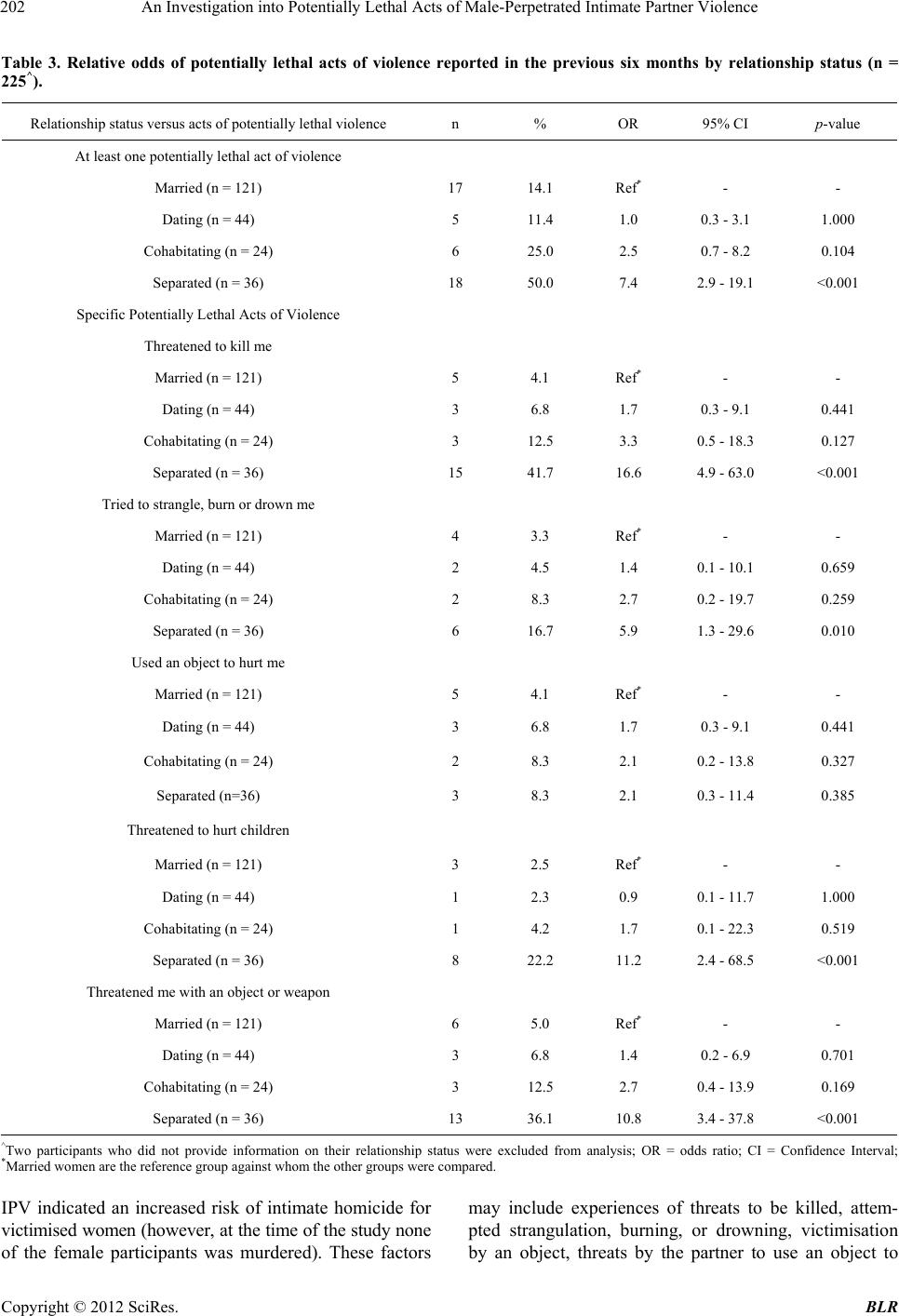 An Investigation into Potentially Lethal Acts of Male-Perpetrated Intimate Partner Violence 202 Table 3. Relative odds of potentially lethal acts of violence reported in the previous six months by relationship status (n = 225^). Relationship status versus acts of potentially lethal violence n % OR 95% CI p-value At least one potentially lethal act of violence Married (n = 121) 17 14.1 Ref* - - Dating (n = 44) 5 11.4 1.0 0.3 - 3.1 1.000 Cohabitating (n = 24) 6 25.0 2.5 0.7 - 8.2 0.104 Separated (n = 36) 18 50.0 7.4 2.9 - 19.1 <0.001 Specific Potentially Lethal Acts of Violence Threatened to kill me Married (n = 121) 5 4.1 Ref* - - Dating (n = 44) 3 6.8 1.7 0.3 - 9.1 0.441 Cohabitating (n = 24) 3 12.5 3.3 0.5 - 18.3 0.127 Separated (n = 36) 15 41.7 16.6 4.9 - 63.0 <0.001 Tried to strangle, burn or drown me Married (n = 121) 4 3.3 Ref* - - Dating (n = 44) 2 4.5 1.4 0.1 - 10.1 0.659 Cohabitating (n = 24) 2 8.3 2.7 0.2 - 19.7 0.259 Separated (n = 36) 6 16.7 5.9 1.3 - 29.6 0.010 Used an object to hurt me Married (n = 121) 5 4.1 Ref* - - Dating (n = 44) 3 6.8 1.7 0.3 - 9.1 0.441 Cohabitating (n = 24) 2 8.3 2.1 0.2 - 13.8 0.327 Separated (n=36) 3 8.3 2.1 0.3 - 11.4 0.385 Threatened to hurt children Married (n = 121) 3 2.5 Ref* - - Dating (n = 44) 1 2.3 0.9 0.1 - 11.7 1.000 Cohabitating (n = 24) 1 4.2 1.7 0.1 - 22.3 0.519 Separated (n = 36) 8 22.2 11.2 2.4 - 68.5 <0.001 Threatened me with an object or weapon Married (n = 121) 6 5.0 Ref* - - Dating (n = 44) 3 6.8 1.4 0.2 - 6.9 0.701 Cohabitating (n = 24) 3 12.5 2.7 0.4 - 13.9 0.169 Separated (n = 36) 13 36.1 10.8 3.4 - 37.8 <0.001 ^Two participants who did not provide information on their relationship status were excluded from analysis; OR = odds ratio; CI = Confidence Interval; *Married w omen are the ref erence group against whom the other group s were compared. IPV indicated an increased risk of intimate homicide for victimised women (however, at the time of the study none of the female participants was murdered). These factors may include experiences of threats to be killed, attem- pted strangulation, burning, or drowning, victimisation by an object, threats by the partner to use an object to Copyright © 2012 SciRes. BLR 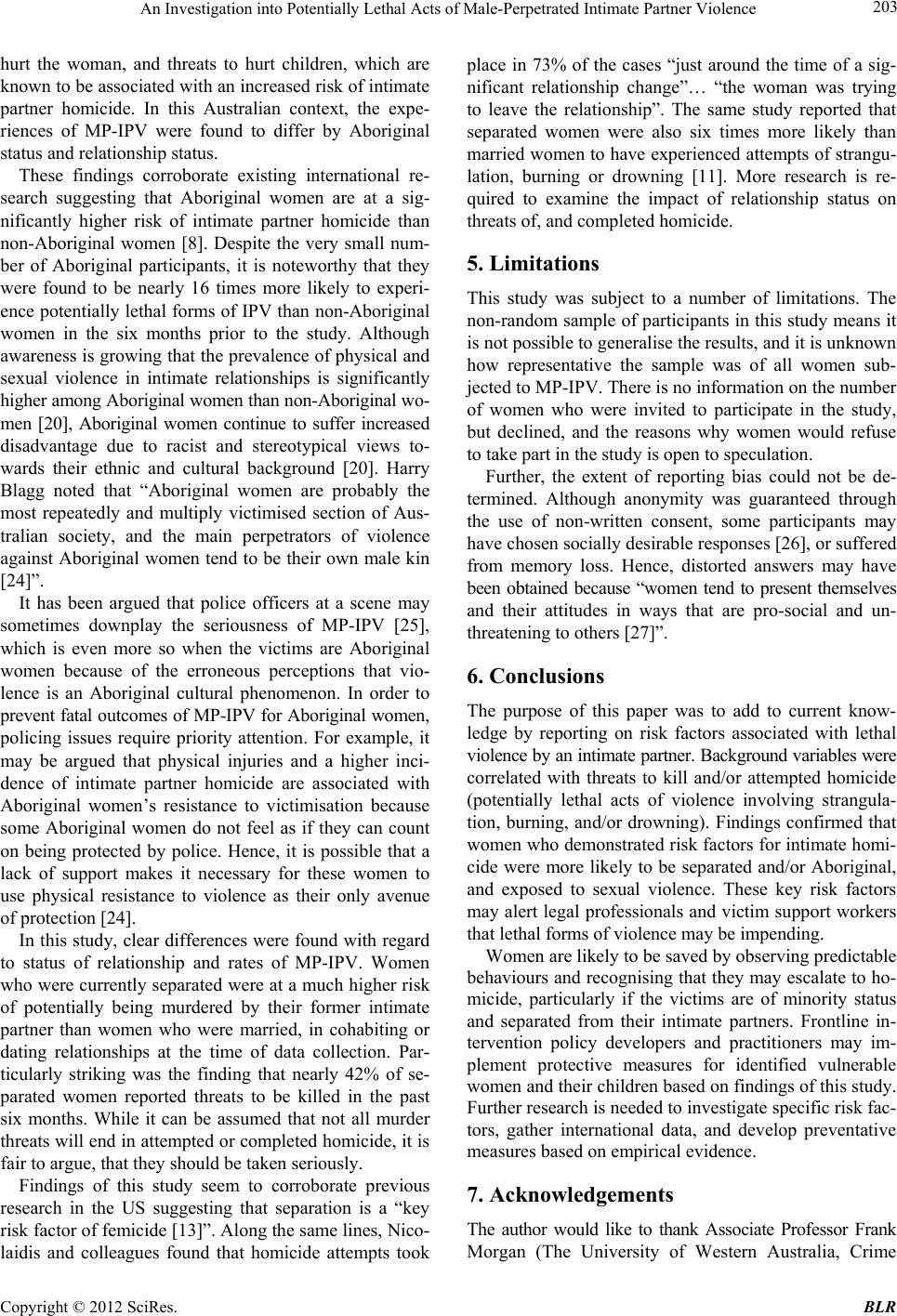 An Investigation into Potentially Lethal Acts of Male-Perpetrated Intimate Partner Violence 203 hurt the woman, and threats to hurt children, which are known to be associated with an increased risk of intimate partner homicide. In this Australian context, the expe- riences of MP-IPV were found to differ by Aboriginal status and relationship status. These findings corroborate existing international re- search suggesting that Aboriginal women are at a sig- nificantly higher risk of intimate partner homicide than non-Aboriginal women [8]. Despite the very small num- ber of Aboriginal participants, it is noteworthy that they were found to be nearly 16 times more likely to experi- ence potentially lethal forms of IPV than non-Aborig inal women in the six months prior to the study. Although awareness is growing that the prevalence of physical and sexual violence in intimate relationships is significantly higher among Aboriginal women than non-Aboriginal wo- men [20], Aboriginal women continue to suffer increased disadvantage due to racist and stereotypical views to- wards their ethnic and cultural background [20]. Harry Blagg noted that “Aboriginal women are probably the most repeatedly and multiply victimised section of Aus- tralian society, and the main perpetrators of violence against Aboriginal women tend to be their own male kin [24]”. It has been argued that police officers at a scene may sometimes downplay the seriousness of MP-IPV [25], which is even more so when the victims are Aboriginal women because of the erroneous perceptions that vio- lence is an Aboriginal cultural phenomenon. In order to prevent fatal outco mes of MP-IPV for Aboriginal women, policing issues require priority attention. For example, it may be argued that physical injuries and a higher inci- dence of intimate partner homicide are associated with Aboriginal women’s resistance to victimisation because some Aboriginal women do not feel as if they can count on being protected by police. Hence, it is possible that a lack of support makes it necessary for these women to use physical resistance to violence as their only avenue of protection [24]. In this study, clear differences were found with regard to status of relationship and rates of MP-IPV. Women who were currently separated were at a much higher risk of potentially being murdered by their former intimate partner than women who were married, in cohabiting or dating relationships at the time of data collection. Par- ticularly striking was the finding that nearly 42% of se- parated women reported threats to be killed in the past six months. While it can be assumed that not all murder threats will end in attempted or completed homicide, it is fair to argue, that they should be taken seriously. Findings of this study seem to corroborate previous research in the US suggesting that separation is a “key risk factor of femicide [13]”. Along the same lines, Nico- laidis and colleagues found that homicide attempts took place in 73% of the cases “just around the time of a sig- nificant relationship change”… “the woman was trying to leave the relationship”. The same study reported that separated women were also six times more likely than married women to have experienced attempts of strangu- lation, burning or drowning [11]. More research is re- quired to examine the impact of relationship status on threats of, and completed homicide. 5. Limitations This study was subject to a number of limitations. The non-random sample of participants in this study means it is not possible to generalise the results, and it is unknown how representative the sample was of all women sub- jected to MP-IPV. There is no information on the number of women who were invited to participate in the study, but declined, and the reasons why women would refuse to take part in the study is open to speculation. Further, the extent of reporting bias could not be de- termined. Although anonymity was guaranteed through the use of non-written consent, some participants may have chosen socially desirable responses [26], or suffered from memory loss. Hence, distorted answers may have been obtained because “women tend to present themselves and their attitudes in ways that are pro-social and un- threatening to others [27]”. 6. Conclusions The purpose of this paper was to add to current know- ledge by reporting on risk factors associated with lethal violence by an intimate partner. Background variables were correlated with threats to kill and/or attempted homicide (potentially lethal acts of violence involving strangula- tion, burning, and/or drowning). Findings confirmed that women who demonstrated risk factors for intimate homi- cide were more likely to be separated and/or Aboriginal, and exposed to sexual violence. These key risk factors may alert legal professionals and victim support workers that lethal forms of violence may be impending. Women are likely to be saved by observing predictable behaviours and recognising that they may escalate to ho- micide, particularly if the victims are of minority status and separated from their intimate partners. Frontline in- tervention policy developers and practitioners may im- plement protective measures for identified vulnerable women and their children based on findings of this study. Furth er r e se ar ch is n eed e d to in v es tig at e s p ecif ic ri sk f ac- tors, gather international data, and develop preventative measures based on empirical evidence. 7. Acknowledgements The author would like to thank Associate Professor Frank Morgan (The University of Western Australia, Crime Copyright © 2012 SciRes. BLR 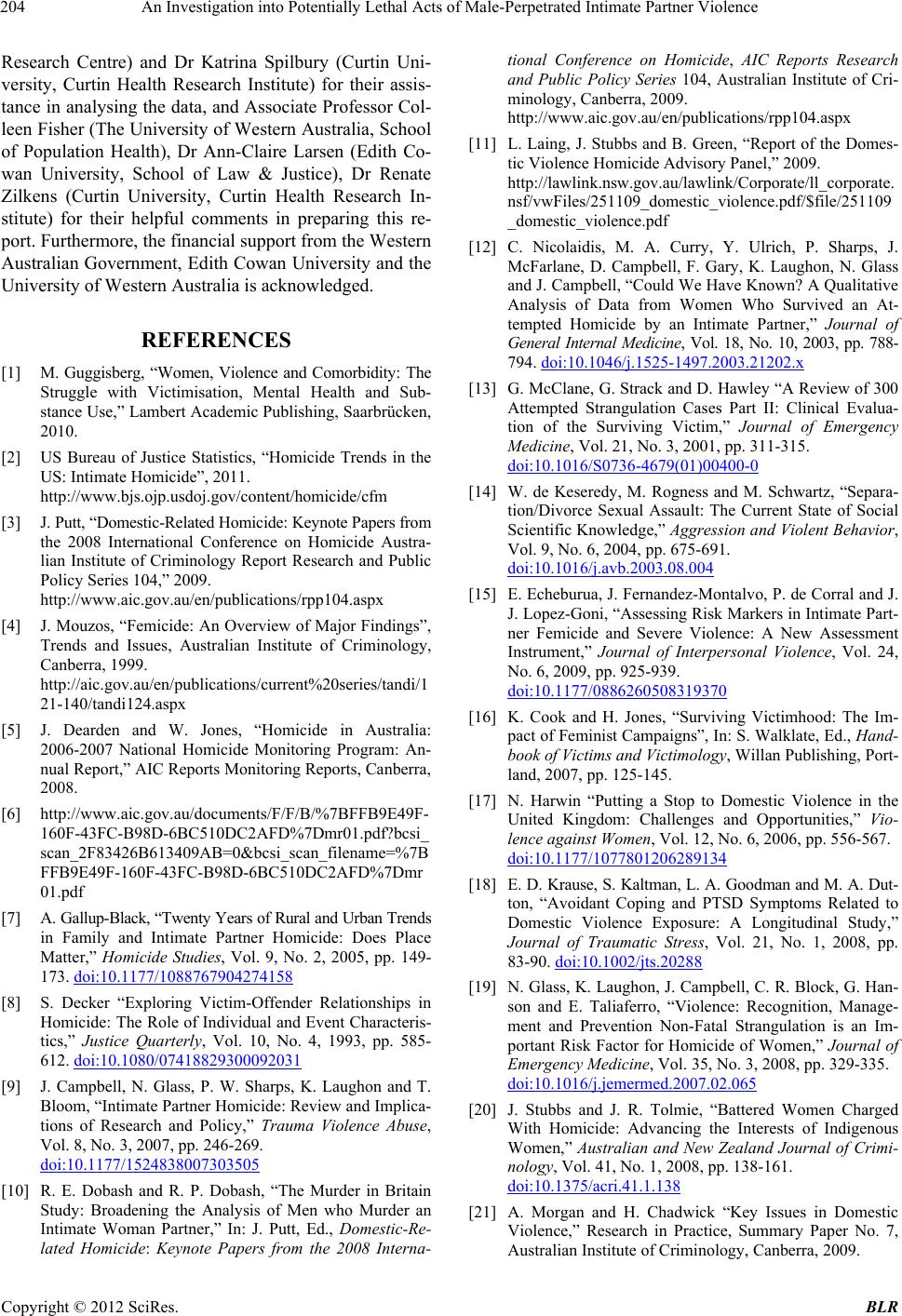 An Investigation into Potentially Lethal Acts of Male-Perpetrated Intimate Partner Violence 204 Research Centre) and Dr Katrina Spilbury (Curtin Uni- versity, Curtin Health Research Institute) for their assis- tance in analysing the data, and Associate Professor Col- leen Fisher (The University of Western Australia, School of Population Health), Dr Ann-Claire Larsen (Edith Co- wan University, School of Law & Justice), Dr Renate Zilkens (Curtin University, Curtin Health Research In- stitute) for their helpful comments in preparing this re- port. Furthermore, the financial support from the Western Australian Government, Edith Cowan University and the University of Western Australia is acknowledged. REFERENCES [1] M. Guggisberg, “Women, Violence and Comorbidity: The Struggle with Victimisation, Mental Health and Sub- stance Use,” Lambert Academic Publishing, Saarbrücken, 2010. [2] US Bureau of Justice Statistics, “Homicide Trends in the US: Intimate Homicide”, 2011. http://www.bjs.ojp.usdoj.gov/content/homicide/cfm [3] J. Putt, “Domestic-Related Homicide: Key note Papers from the 2008 International Conference on Homicide Austra- lian Institute of Criminology Report Research and Public Policy Series 104,” 2009. http://www.aic.gov.au/en/publications/rpp104.aspx [4] J. Mouzos, “Femicide: An Overview of Major Findings”, Trends and Issues, Australian Institute of Criminology, Canberra, 1999. http://aic.gov.au/en/publications/current%20series/tandi/1 21-140/tandi124.aspx [5] J. Dearden and W. Jones, “Homicide in Australia: 2006-2007 National Homicide Monitoring Program: An- nual Report,” AIC Reports Monitoring Reports, Canberra, 2008. [6] http://www.aic.gov.au/documents/F/F/B/%7BFFB9E49F- 160F-43FC-B98D-6BC510DC2AFD%7Dmr01.pdf?bcsi_ scan_2F83426B613409AB=0&bcsi_scan_filename=%7B FFB9E49F-160F-43FC-B98D-6BC510DC2AFD%7Dmr 01.pdf [7] A. Gallup- Black, “Twenty Years of R ural and Ur ban Trends in Family and Intimate Partner Homicide: Does Place Matter,” Homicide Studies, Vol. 9, No. 2, 2005, pp. 149- 173. doi:10.1177/1088767904274158 [8] S. Decker “Exploring Victim-Offender Relationships in Homicide: The Role of Individual and Event Characteris- tics,” Justice Quarterly, Vol. 10, No. 4, 1993, pp. 585- 612. doi:10.1080/07418829300092031 [9] J. Campbell, N. Glass, P. W. Sharps, K. Laughon and T. Bloom, “Intimate Partner Homicide: Review and Implica- tions of Research and Policy,” Trauma Violence Abuse, Vol. 8, No. 3, 2007, pp. 246-269. doi:10.1177/1524838007303505 [10] R. E. Dobash and R. P. Dobash, “The Murder in Britain Study: Broadening the Analysis of Men who Murder an Intimate Woman Partner,” In: J. Putt, Ed., Domestic-Re- lated Homicide: Keynote Papers from the 2008 Interna- tional Conference on Homicide, AIC Reports Research and Public Policy Series 104, Australian Institute of Cri- minology, Canberra, 2009. http://www.aic.gov.au/en/publications/rpp104.aspx [11] L. Laing, J. Stubbs and B. Green, “Report of the Domes- tic Violence Homicide Advisory Panel,” 2009. http://lawlink.nsw.gov.au/lawlink/Corporate/ll_corporate. nsf/vwFiles/251109_domestic_violence.pdf/$file/251109 _domestic_violence.pdf [12] C. Nicolaidis, M. A. Curry, Y. Ulrich, P. Sharps, J. McFarlane, D. Campbell, F. Gary, K. Laughon, N. Glass and J. Campbell, “Could We Have Known? A Qualitative Analysis of Data from Women Who Survived an At- tempted Homicide by an Intimate Partner,” Journal of General Internal Medicine, Vol. 18, No. 10, 2003, pp. 788- 794. doi:10.1046/j.1525-1497.2003.21202.x [13] G. McClane, G. Strack and D. Hawley “A Review of 300 Attempted Strangulation Cases Part II: Clinical Evalua- tion of the Surviving Victim,” Journal of Emergency Medicine, Vol. 21, No. 3, 2001, pp. 311-315. doi:10.1016/S0736-4679(01)00400-0 [14] W. de Keseredy, M. Rogness and M. Schwartz, “Separa- tion/Divorce Sexual Assault: The Current State of Social Scientific Knowledge,” Aggression and Violent Behavior, Vol. 9, No. 6, 2004, pp. 675-691. doi:10.1016/j.avb.2003.08.004 [15] E. Echeburua, J. Fernandez-Montalvo, P. de Corral and J. J. Lopez-Goni, “Assessing Risk Markers in Intimate Part- ner Femicide and Severe Violence: A New Assessment Instrument,” Journal of Interpersonal Violence, Vol. 24, No. 6, 2009, pp. 925-939. doi:10.1177/0886260508319370 [16] K. Cook and H. Jones, “Surviving Victimhood: The Im- pact of Feminist Campai gns”, In: S. Walklate , Ed., Hand- book of Victims and Victimology, Willan Publishing, Port- land, 2007, pp. 125-145. [17] N. Harwin “Putting a Stop to Domestic Violence in the United Kingdom: Challenges and Opportunities,” Vio- lence against Women, Vol. 12, No. 6, 2006, pp. 556-567. doi:10.1177/1077801206289134 [18] E. D. Krause, S. Kalt man, L. A. Goodman and M. A. Dut- ton, “Avoidant Coping and PTSD Symptoms Related to Domestic Violence Exposure: A Longitudinal Study,” Journal of Traumatic Stress, Vol. 21, No. 1, 2008, pp. 83-90. doi:10.1002/jts.20288 [19] N. Glass, K. Laughon, J. Campbell, C. R. Block, G. Han- son and E. Taliaferro, “Violence: Recognition, Manage- ment and Prevention Non-Fatal Strangulation is an Im- portant Risk Factor for Homicide of Wome n,” Journal of Emergency Medicine, Vol. 35, No. 3, 2008, pp. 329-335. doi:10.1016/j.jemermed.2007.02.065 [20] J. Stubbs and J. R. Tolmie, “Battered Women Charged With Homicide: Advancing the Interests of Indigenous Women,” Australian and New Zealand Journal of Crimi- nology, Vol. 41, No. 1, 2008, pp. 138-161. doi:10.1375/acri.41.1.138 [21] A. Morgan and H. Chadwick “Key Issues in Domestic Violence,” Research in Practice, Summary Paper No. 7, Australian Institute of Criminology, Canberra, 2009. Copyright © 2012 SciRes. BLR  An Investigation into Potentially Lethal Acts of Male-Perpetrated Intimate Partner Violence Copyright © 2012 SciRes. BLR 205 [22] http://www.aic.gov.au/documents/5/6/E/%7B56E09295- AF88-4998-A083-B7CCD925B540%7Drip07_001.pdf [23] M. Guggisberg, “Relationship Problems: How Abuse in Intimate Relationships Affects Men, Women and their Children,” Cross Network Journal, Vol. 1, No. 3, 2006, pp. 128-141. [24] C. Block, “Reducing Intimate Partner Homicide Rates: What are the Risk Factors for Death When a Woman Is Being Abused,” In: J. Putt, Ed., Domestic-Related Homi- cide: Keynote Papers from the 2008 International Con- ference on Homicide, AIC Reports Research and Public Policy Series 104, Australian Institute of Criminology, Canberra, 2009. http://www.aic.gov.au/en/publications/rpp104.aspx [25] R. E. Dobash, R. P. Dobash, K. Cavanagh and R. Lewis, “Changing Violent Men,” Sage, London, 2000. [26] H. Blagg, “Restorative Justice and Aboriginal Fa mily Vio- lence: Opening a Space For Healing,” In: H. Strang and J. Braithwaite, Eds., Restorative Justice and Family Vio- lence, Cambridge University Press, Cambridge, 2002, pp. 191-205. [27] A.-C. Larsen and M. Guggisberg, “Police Officers, Wo- men and Interpersonal Violence: Giving Primacy to So- cial Context,” Australian Journal of Gende r and Law, Vol. 1, 2009, pp. 1-18. APPENDIX VAI: VIOLENCE ASSESSMENT INDEX Thinking of ALL the incidents that may have happened in the last six months, please indicate how many times your partner has done any of the following to you? 0 = Never; 1 = Once only; 2 = 2 to 4 times; 3 = 5 or more times A Restrained me from moving or leaving the room B Choked me or held his hand over my mouth C Punched me in the face D Slapped me on the face, body, arms or legs E Pushed, grabbe d or shoved me F Punched me on the body, arms or legs G Used an object to hurt me H Threw things at me or about the room I Punched or kicked the wall s o r fu rnit u re J Tried to strangle, burn or drown me K Kicked me on the body, arms or legs L Threatened me with an object or weapon M Kicked me in the face N Threatened to kill me O Twisted my arm P Dragged me or pulled me by my hair Other vi olent behaviours not mentioned above |