

Paper Menu >>
Journal Menu >>
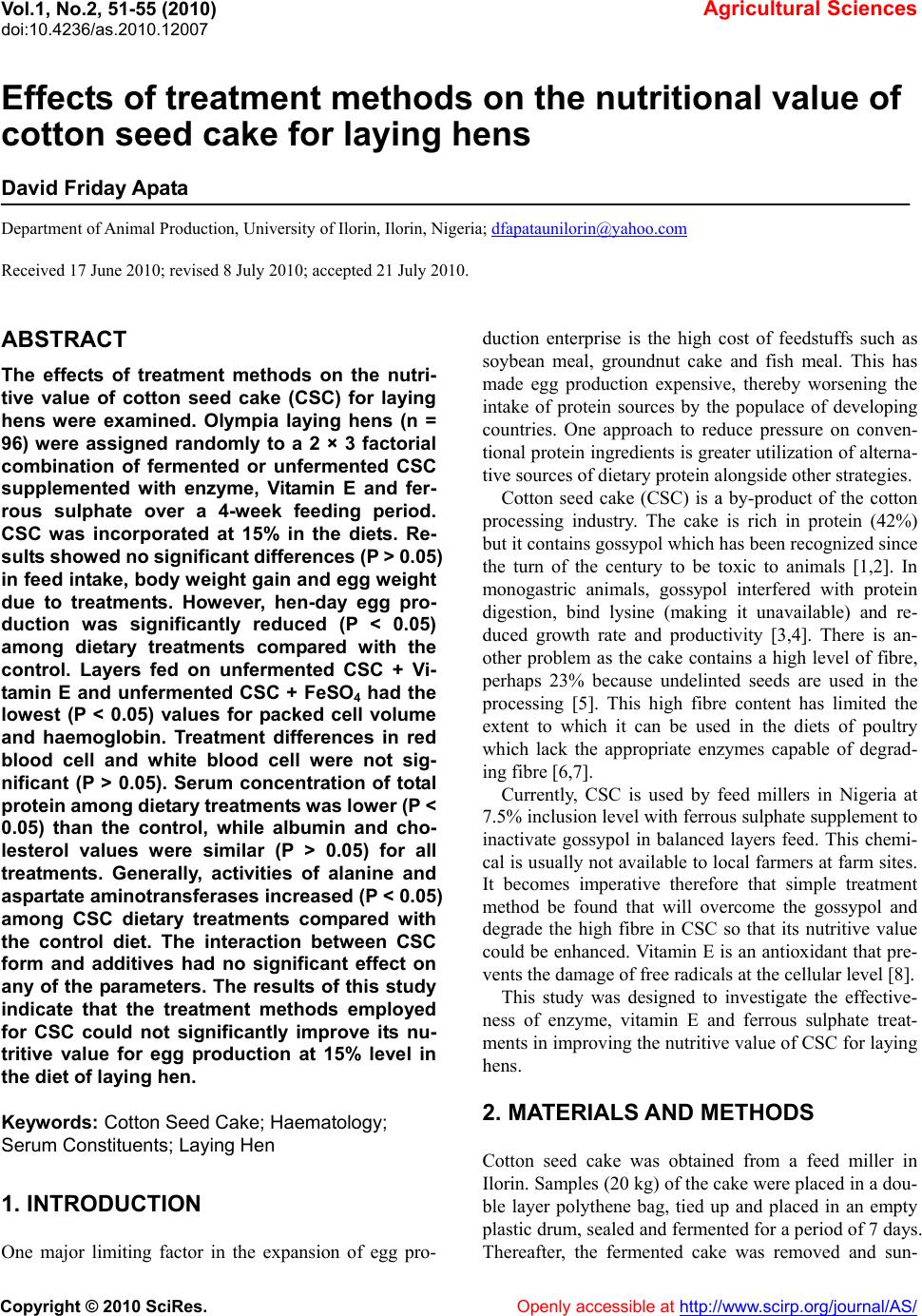 Vol.1, No.2, 51-55 (2010) doi:10.4236/as.2010.12007 Copyright © 2010 SciRes. Openly accessi ble at http://www.scirp.org/journal/AS/ Agricultural Sciences Effects of treatment methods on the nutritional value of cotton seed cake for laying hens David Friday Apata Department of Animal Production, University of Ilorin, Ilorin, Nigeria; [email protected] Received 17 June 2010; revised 8 July 2010; accepted 21 July 2010. ABSTRACT The effects of treatment methods on the nutri- tive value of cotton seed cake (CSC) for laying hens were examined. Olympia laying hens (n = 96) were assigned randomly to a 2 × 3 factorial combination of fermented or unfermented CSC supplemented with enzyme, Vitamin E and fer- rous sulphate over a 4-week feeding period. CSC was incorporated at 15% in the diets. Re- sult s sho wed no significant differenc es (P > 0.05) in feed intake, body weight gain and egg weight due to treatments. However, hen-day egg pro- duction was significantly reduced (P < 0.05) among dietary treatments compared with the control. Layers fed on unfermented CSC + Vi- tamin E and unfermented CSC + FeSO4 had the lowest (P < 0.05) values for packed cell volume and haemoglobin. Treatment differences in red blood cell and white blood cell were not sig- nificant (P > 0.05). Serum concentration of total protein among diet ary treatmen t s was lower (P < 0.05) than the control, while albumin and cho- lesterol values were similar (P > 0.05) for all treatments. Generally, activities of alanine and aspartate aminotransferases increased (P < 0.05) among CSC dietary treatments compared with the control diet. The interaction between CSC form and additives had no significant effect on any of the parameters. The results of this study indicate that the treatment methods employed for CSC could not significantly improve its nu- tritive value for egg production at 15% level in the diet of laying hen. Keywords: Cotton Seed Cake; Haematology; Serum Constituents; Laying Hen 1. INTRODUCTION One major limiting factor in the expansion of egg pro- duction enterprise is the high cost of feedstuffs such as soybean meal, groundnut cake and fish meal. This has made egg production expensive, thereby worsening the intake of protein sources by the populace of developing countries. One approach to reduce pressure on conven- tional protein ingredients is greater utilization of alterna- tive sources of dietary protein alongside other strategies. Cotton seed cake (CSC) is a by-product of the cotton processing industry. The cake is rich in protein (42%) but it contains gossypol which has been recognized since the turn of the century to be toxic to animals [1,2]. In monogastric animals, gossypol interfered with protein digestion, bind lysine (making it unavailable) and re- duced growth rate and productivity [3,4]. There is an- other problem as the cake contains a high level of fibre, perhaps 23% because undelinted seeds are used in the processing [5]. This high fibre content has limited the extent to which it can be used in the diets of poultry which lack the appropriate enzymes capable of degrad- ing fibre [6,7]. Currently, CSC is used by feed millers in Nigeria at 7.5% inclusion level with ferrous sulphate supplement to inactivate gossypol in balanced layers feed. This chemi- cal is usually not available to local farmers at farm sites. It becomes imperative therefore that simple treatment method be found that will overcome the gossypol and degrade the high fibre in CSC so that its nutritive value could be enhanced. Vitamin E is an antioxidant that pre- vents the damage of free radicals at the cellular level [8]. This study was designed to investigate the effective- ness of enzyme, vitamin E and ferrous sulphate treat- ments in improving the nutritive value of CSC for laying hens. 2. MATERIALS AND METHODS Cotton seed cake was obtained from a feed miller in Ilorin. Samples (20 kg) of the cake were placed in a dou- ble layer polythene bag, tied up and placed in an empty plastic drum, sealed and fermented for a period of 7 days. Thereafter, the fermented cake was removed and sun- 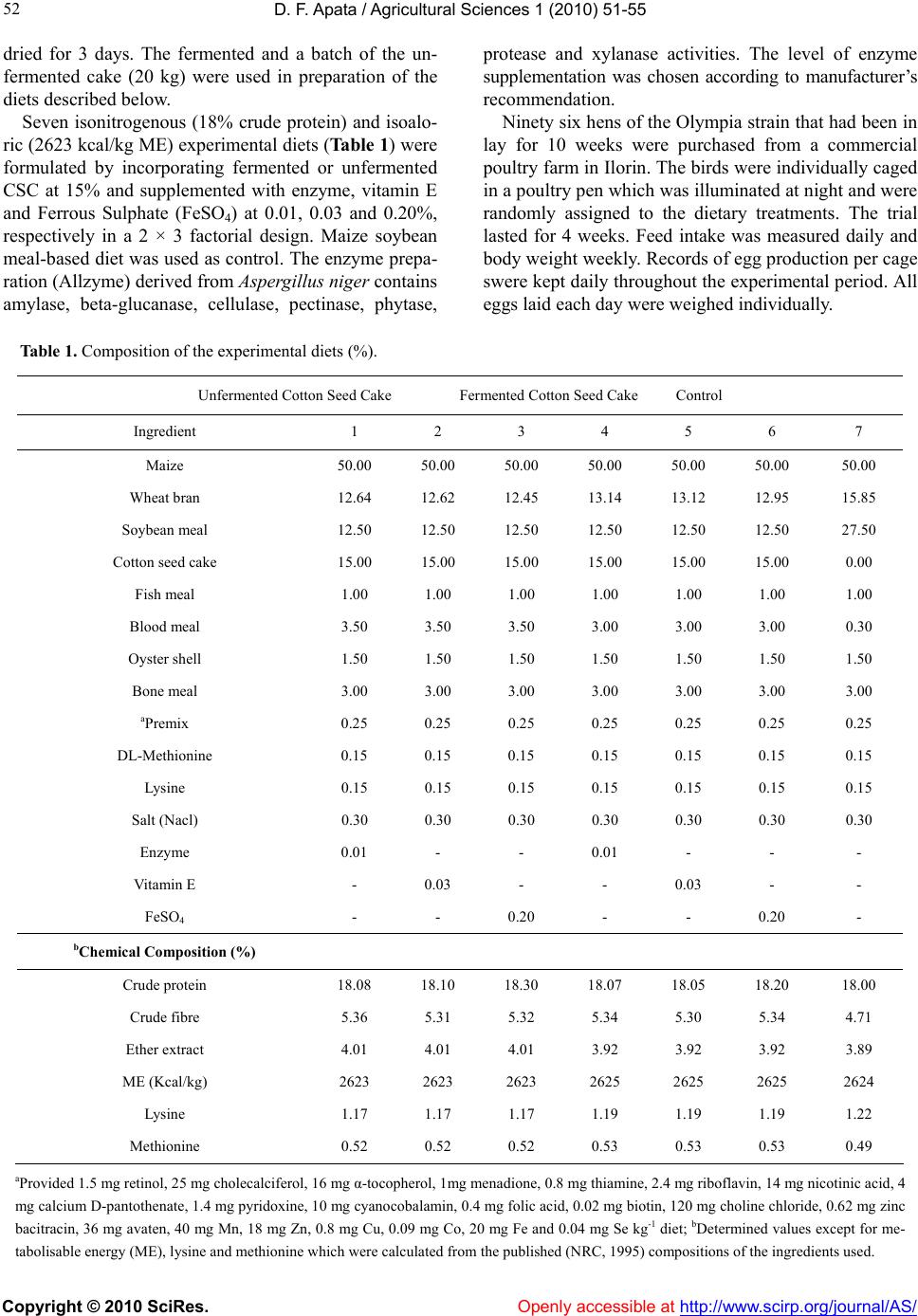 D. F. Apata / Agricultural Sciences 1 (2010) 51-55 Copyright © 2010 SciRes. Openly accessible at http://www.scirp.org/journal/AS/ 52 dried for 3 days. The fermented and a batch of the un- fermented cake (20 kg) were used in preparation of the diets described below. Seven isonitrogenous (18% crude protein) and isoalo- ric (2623 kcal/kg ME) experimental diets (Table 1) were formulated by incorporating fermented or unfermented CSC at 15% and supplemented with enzyme, vitamin E and Ferrous Sulphate (FeSO4) at 0.01, 0.03 and 0.20%, respectively in a 2 × 3 factorial design. Maize soybean meal-based diet was used as control. The enzyme prepa- ration (Allzyme) derived from Aspergillu s niger contains amylase, beta-glucanase, cellulase, pectinase, phytase, protease and xylanase activities. The level of enzyme supplementation was chosen according to manufacturer’s recommendation. Ninety six hens of the Olympia strain that had been in lay for 10 weeks were purchased from a commercial poultry farm in Ilorin. The birds were individually caged in a poultry pen which was illuminated at night and were randomly assigned to the dietary treatments. The trial lasted for 4 weeks. Feed intake was measured daily and body weight weekly. Records of egg production per cage swere kept daily throughout the experimental period. All eggs laid each day were weighed individually. Table 1. Composition of the experimental diets (%). Unfermented Cotton Seed Cake Fermented Cotton Seed Cake Control Ingredient 1 2 3 4 5 6 7 Maize 50.00 50.00 50.00 50.00 50.00 50.00 50.00 Wheat bran 12.64 12.62 12.45 13.14 13.12 12.95 15.85 Soybean meal 12.50 12.50 12.50 12.50 12.50 12.50 27.50 Cotton seed cake 15.00 15.00 15.00 15.00 15.00 15.00 0.00 Fish meal 1.00 1.00 1.00 1.00 1.00 1.00 1.00 Blood meal 3.50 3.50 3.50 3.00 3.00 3.00 0.30 Oyster shell 1.50 1.50 1.50 1.50 1.50 1.50 1.50 Bone meal 3.00 3.00 3.00 3.00 3.00 3.00 3.00 aPremix 0.25 0.25 0.25 0.25 0.25 0.25 0.25 DL-Methionine 0.15 0.15 0.15 0.15 0.15 0.15 0.15 Lysine 0.15 0.15 0.15 0.15 0.15 0.15 0.15 Salt (Nacl) 0.30 0.30 0.30 0.30 0.30 0.30 0.30 Enzyme 0.01 - - 0.01 - - - Vitamin E - 0.03 - - 0.03 - - FeSO4 - - 0.20 - - 0.20 - bChemical Composition (%) Crude protein 18.08 18.10 18.30 18.07 18.05 18.20 18.00 Crude fibre 5.36 5.31 5.32 5.34 5.30 5.34 4.71 Ether extract 4.01 4.01 4.01 3.92 3.92 3.92 3.89 ME (Kcal/kg) 2623 2623 2623 2625 2625 2625 2624 Lysine 1.17 1.17 1.17 1.19 1.19 1.19 1.22 Methionine 0.52 0.52 0.52 0.53 0.53 0.53 0.49 aProvided 1.5 mg retinol, 25 mg cholecalciferol, 16 mg α-tocopherol, 1mg menadione, 0.8 mg thiamine, 2.4 mg riboflavin, 14 mg nicotinic acid, 4 mg calcium D-pantothenate, 1.4 mg pyridoxine, 10 mg cyanocobalamin, 0.4 mg folic acid, 0.02 mg biotin, 120 mg choline chloride, 0.62 mg zinc bacitracin, 36 mg avaten, 40 mg Mn, 18 mg Zn, 0.8 mg Cu, 0.09 mg Co, 20 mg Fe and 0.04 mg Se kg-1 diet; bDetermined values except for me- tabolisable energy (ME), lysine and methionine which were calculated from the published (NRC, 1995) compositions of the ingredients used. 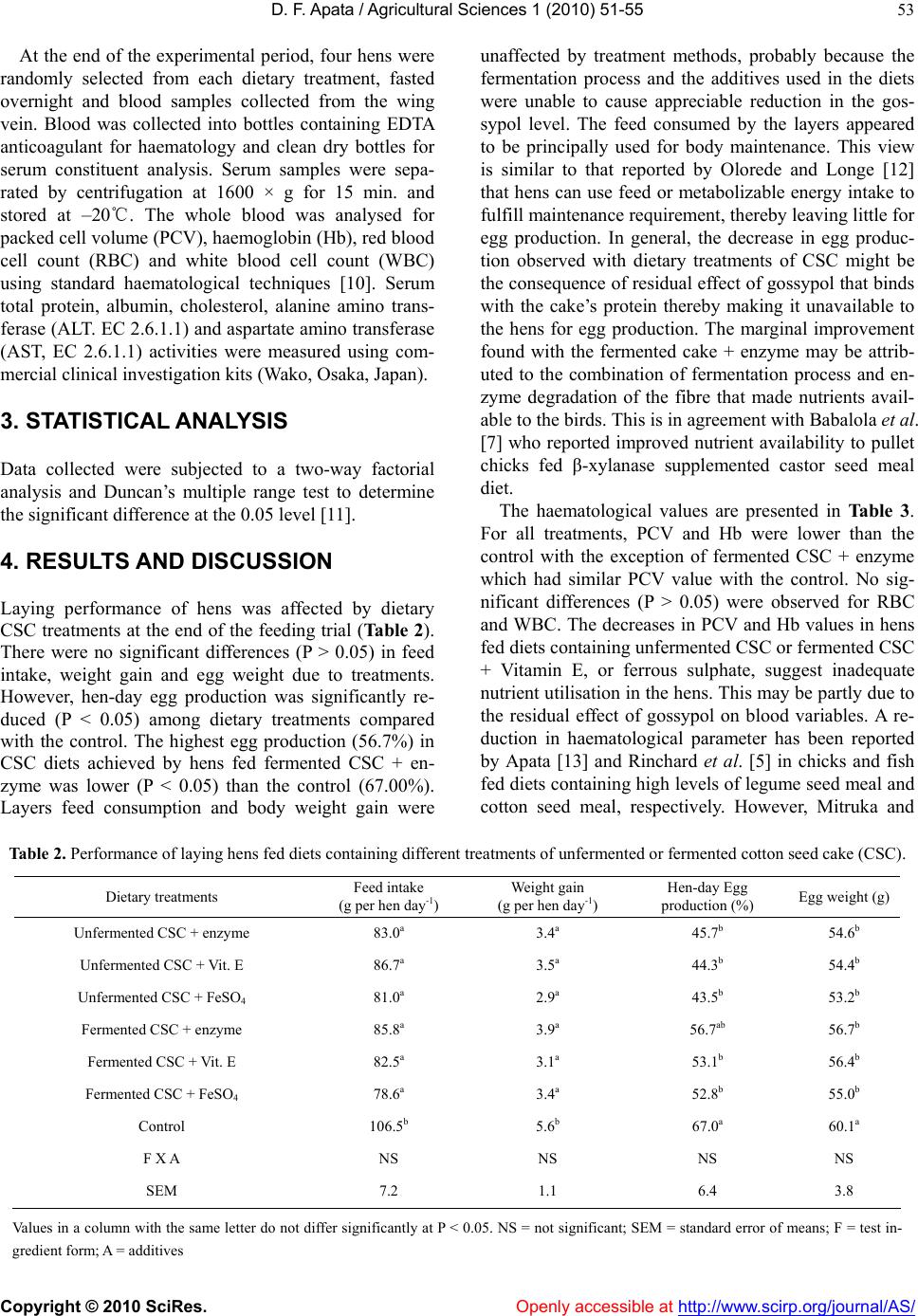 D. F. Apata / Agricultural Sciences 1 (2010) 51-55 Copyright © 2010 SciRes. Openly accessi ble at http://www.scirp.org/journal/AS/ 53 At the end of the experimental period, four hens were randomly selected from each dietary treatment, fasted overnight and blood samples collected from the wing vein. Blood was collected into bottles containing EDTA anticoagulant for haematology and clean dry bottles for serum constituent analysis. Serum samples were sepa- rated by centrifugation at 1600 × g for 15 min. and stored at –20℃. The whole blood was analysed for packed cell volume (PCV), haemoglobin (Hb), red blood cell count (RBC) and white blood cell count (WBC) using standard haematological techniques [10]. Serum total protein, albumin, cholesterol, alanine amino trans- ferase (ALT. EC 2.6.1.1) and aspartate amino transferase (AST, EC 2.6.1.1) activities were measured using com- mercial clinical investigation kits (Wako, Osaka, Japan). 3. STATISTICAL ANALYSIS Data collected were subjected to a two-way factorial analysis and Duncan’s multiple range test to determine the significant difference at the 0.05 level [11]. 4. RESULTS AND DIS CUSSION Laying performance of hens was affected by dietary CSC treatments at the end of the feeding trial (Table 2). There were no significant differences (P > 0.05) in feed intake, weight gain and egg weight due to treatments. However, hen-day egg production was significantly re- duced (P < 0.05) among dietary treatments compared with the control. The highest egg production (56.7%) in CSC diets achieved by hens fed fermented CSC + en- zyme was lower (P < 0.05) than the control (67.00%). Layers feed consumption and body weight gain were unaffected by treatment methods, probably because the fermentation process and the additives used in the diets were unable to cause appreciable reduction in the gos- sypol level. The feed consumed by the layers appeared to be principally used for body maintenance. This view is similar to that reported by Olorede and Longe [12] that hens can use feed or metabolizable energy intake to fulfill maintenance requirement, thereby leaving little for egg production. In general, the decrease in egg produc- tion observed with dietary treatments of CSC might be the consequence of residual effect of gossypol that binds with the cake’s protein thereby making it unavailable to the hens for egg production. The marginal improvement found with the fermented cake + enzyme may be attrib- uted to the combination of fermentation process and en- zyme degradation of the fibre that made nutrients avail- able to the birds. This is in agreement with Babalola et al. [7] who reported improved nutrient availability to pullet chicks fed β-xylanase supplemented castor seed meal diet. The haematological values are presented in Table 3. For all treatments, PCV and Hb were lower than the control with the exception of fermented CSC + enzyme which had similar PCV value with the control. No sig- nificant differences (P > 0.05) were observed for RBC and WBC. The decreases in PCV and Hb values in hens fed diets containing unfermented CSC or fermented CSC + Vitamin E, or ferrous sulphate, suggest inadequate nutrient utilisation in the hens. This may be partly due to the residual effect of gossypol on blood variables. A re- duction in haematological parameter has been reported by Apata [13] and Rinchard et al. [5] in chicks and fish fed diets containing high levels of legume seed meal and cotton seed meal, respectively. However, Mitruka and Table 2. Performance of laying hens fed diets containing different treatments of unfermented or fermented cotton seed cake (CSC). Dietary treatments Feed intake (g per hen day-1) Weight gain (g per hen day-1) Hen-day Egg production (%) Egg weight (g) Unfermented CSC + enzyme 83.0a 3.4a 45.7b 54.6b Unfermented CSC + Vit. E 86.7a 3.5a 44.3b 54.4b Unfermented CSC + FeSO4 81.0a 2.9a 43.5b 53.2b Fermented CSC + enzyme 85.8a 3.9a 56.7ab 56.7b Fermented CSC + Vit. E 82.5a 3.1a 53.1b 56.4b Fermented CSC + FeSO4 78.6a 3.4a 52.8b 55.0b Control 106.5b 5.6b 67.0a 60.1a F X A NS NS NS NS SEM 7.2 1.1 6.4 3.8 Values in a column with the same letter do not differ significantly at P < 0.05. NS = not significant; SEM = standard error of means; F = test in- gredient form; A = additives 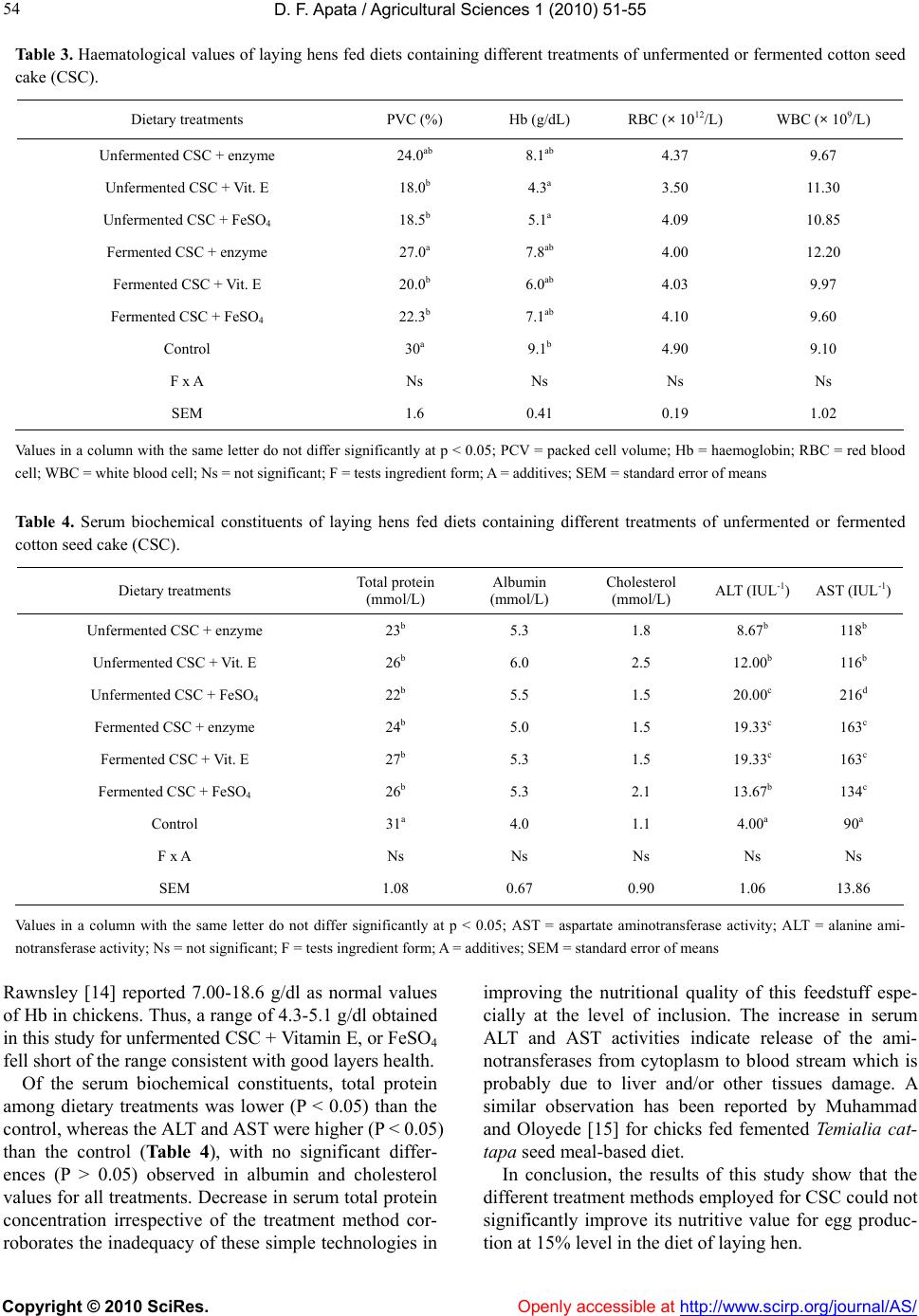 D. F. Apata / Agricultural Sciences 1 (2010) 51-55 Copyright © 2010 SciRes. Openly accessible at http://www.scirp.org/journal/AS/ 54 Tab le 3. Haematological values of laying hens fed diets containing different treatments of unfermented or fermented cotton seed cake (CSC). Dietary treatments PVC (%) Hb (g/dL) RBC (× 1012/L) WBC (× 109/L) Unfermented CSC + enzyme 24.0ab 8.1ab 4.37 9.67 Unfermented CSC + Vit. E 18.0b 4.3a 3.50 11.30 Unfermented CSC + FeSO4 18.5b 5.1a 4.09 10.85 Fermented CSC + enzyme 27.0a 7.8ab 4.00 12.20 Fermented CSC + Vit. E 20.0b 6.0ab 4.03 9.97 Fermented CSC + FeSO4 22.3b 7.1ab 4.10 9.60 Control 30a 9.1b 4.90 9.10 F x A Ns Ns Ns Ns SEM 1.6 0.41 0.19 1.02 Values in a column with the same letter do not differ significantly at p < 0.05; PCV = packed cell volume; Hb = haemoglobin; RBC = red blood cell; WBC = white blood cell; Ns = not significant; F = tests ingredient form; A = additives; SEM = standard error of means Table 4 . Serum biochemical constituents of laying hens fed diets containing different treatments of unfermented or fermented cotton seed cake (CSC). Dietary treatments Total protein (mmol/L) Albumin (mmol/L) Cholesterol (mmol/L) ALT (IUL-1) AST (IUL-1) Unfermented CSC + enzyme 23b 5.3 1.8 8.67b 118b Unfermented CSC + Vit. E 26b 6.0 2.5 12.00b 116b Unfermented CSC + FeSO4 22b 5.5 1.5 20.00c 216d Fermented CSC + enzyme 24b 5.0 1.5 19.33c 163c Fermented CSC + Vit. E 27b 5.3 1.5 19.33c 163c Fermented CSC + FeSO4 26b 5.3 2.1 13.67b 134c Control 31a 4.0 1.1 4.00a 90a F x A Ns Ns Ns Ns Ns SEM 1.08 0.67 0.90 1.06 13.86 Values in a column with the same letter do not differ significantly at p < 0.05; AST = aspartate aminotransferase activity; ALT = alanine ami- notransferase activity; Ns = not significant; F = tests ingredient form; A = additives; SEM = standard error of means Rawnsley [14] reported 7.00-18.6 g/dl as normal values of Hb in chickens. Thus, a range of 4.3-5.1 g/dl obtained in this study for unfermented CSC + Vitamin E, or FeSO4 fell short of the range consistent with good layers health. Of the serum biochemical constituents, total protein among dietary treatments was lower (P < 0.05) than the control, whereas the ALT and AST were higher (P < 0.05) than the control (Table 4), with no significant differ- ences (P > 0.05) observed in albumin and cholesterol values for all treatments. Decrease in serum total protein concentration irrespective of the treatment method cor- roborates the inadequacy of these simple technologies in improving the nutritional quality of this feedstuff espe- cially at the level of inclusion. The increase in serum ALT and AST activities indicate release of the ami- notransferases from cytoplasm to blood stream which is probably due to liver and/or other tissues damage. A similar observation has been reported by Muhammad and Oloyede [15] for chicks fed femented Temialia cat- tapa seed meal-based diet. In conclusion, the results of this study show that the different treatment methods employed for CSC could not significantly improve its nutritive value for egg produc- tion at 15% level in the diet of laying hen.  D. F. Apata / Agricultural Sciences 1 (2010) 51-55 Copyright © 2010 SciRes. Openly accessi ble at http://www.scirp.org/journal/AS/ 55 5. ACKNOWLEDGEMENTS This study was partly funded by the senate research grant of the Uni- versity of Ilorin. The author is grateful for this financial assistance. REFERENCES [1] Morgan, S.E. (1989) Gossypol as a toxicant in livestock. Veterinary Clinics of North America: Food Animal Prac- tice, 5(2), 251-262. [2] Risco, C.A. and Chase, C.C.Jr. (1997) Gossypol. Hand- book of plant and Fungal Toxicants, CRS Press, Boca Raton. [3] Ikurior, S.A. and Fetuga, B.L.A. (1984) Some anti-nutri- tional components in Nigeria cottonseed and cottonseed meals. Nigerian Journal of Animal Production, 11(2), 110-116. [4] Calhoun M.C., Huston, J.E., Kulhmann, S.W., Baldwin B.C.Jr., Engdahi, B.C. and Bales, K.W. (1990) Free gos- sypol intake and erythrocyte fragility of lambs fed cot- tonseed meal processed by different methods. Journal of Animal Science, 68(1), 53-57. [5] Rinchard, J., Lee, K.J., Dabrowski, K., Ciereszko, A., Blom, J.H. and Ottobrc, J.S. (2003) Influence of gossy- pol from dietary cottonseed meal on haematology, re- productive steroids and tissue gossypol enantiomer con- centrations in male rainbow trout (Oncorhynchus mykiss). Aquaculture Nutrition, 9(4), 275-282. [6] Danicke, S., Dusel, G., Jeroch, H. and Kluge, H. (1999) Factors affecting efficiency of NSP-degrading enzymes in rations for pigs and poultry. Agribiology Research, 51(1), 1-24. [7] Babalola, T.O.O., Apata, D.F. and Atteh, J.O. (2006) Effect of -xylanase supplementation of boiled castor seed meal-based diets on the performance, nutrient ab- sorbability and some blood constituents of pullet chicks. Tropical Science, 46(4), 216-223. [8] Risco, C.A., Adams, A.L., Seebohm, S., Thatcher, M.-J., Staples, C.R. Van Horn, H.H., McDowell, L.R., Calhoun, M.C. and Tatcher, W.W. (2002) Effects of Gossypol from Cottonseed on Haematological Responses and Plasma α-Tocopherol Concentration of Dairy Cows. Journal of Dairy Science, 85(12), 3395-3402. [9] The National Research Council (NRC), (1995) Nutrient requirements of poultry (9th rev. edn). National Academy Press, Washington, DC. [10] Dacie, J.V. and Lewis, S.M. (2001) Practical Haematol- ogy. 9th Edition, Churchill Livingstone, London, 633. [11] Steel, R.G.D. and Torrie, J.H. (1980) Principles and Pro- cedures of Statistics. 2nd Edition, McGunfermented-Hill, New York. [12] Olorede, B.R. and Longe, O.G. (2000) Effect of replacing palm kernel cake with sheabutter cake on egg quality characteristics, haematology and serum chemistry of laying hens. Nigerian Journal of Animal production, 27(1), 19-23. [13] Apata, D.F. (2004) Egg production and haematological profile of laying hens fed dietary unfermented or proc- essed Prosopis africana seeds. Journal of Agricultural Research and Development, 3(3), 99-104. [14] Mitruka, B.M. and Rawnsley, H.M. (1977) Clinical, Bio- chemical and Haematological refrence values in norma experimental animals. Masson Publishing USA Inc., New York. [15] Muhammad, N.O. and Oloyede, O.B. (2010) Effects of Aspergillus niger-fermented Terminalia cattapa seed meal-based diet on selected enzymes of some tissues of broiler chicks. Food and Chemical Toxicol, 48(5), 1250- 1254. |