

Paper Menu >>
Journal Menu >>
 American Journal of Plant Sciences, 2012, 3, 1654-1660 http://dx.doi.org/10.4236/ajps.2012.311201 Published Online November 2012 (http://www.SciRP.org/journal/ajps) Evaluation of Biological Soil Fertility Management Practices for Corn Production in Oxisols Mupala G. Muyayabantu1, Bakach D. Kadiata1, Kabwe K. Nkongolo2* 1Faculty of Agronomy, University of Kinshasa, Kinshasa, DR-Congo; 2Department of Biological Sciences, Laurentian University, Sudbury, Canada. Email: *[email protected] Received August 5th, 2012; revised September 12th, 2012; accepted October 15th, 2012 ABSTRACT Field trials on the management of soil biological fertility with aim to increasing corn production were conducted in a savannah region of the DR-Congo. Three organic matters including fresh biomass of Entada abyssinica, Tithonia diver- sifolia, Stylosanthes gracilis and a mineral combination of nitrogen and phosphorus (NP) (115-63-0) along with a con- trol (without fertilization) were evaluated for corn crop growth and production. The field trial was a completely ran- domized design with four replicates. Plant height, basal stem diameter, and yield components were assessed. Irrespec- tive of fertilization treatments and variety, maize showed a similar growth up to 20 days after sowing (DAS), and then two distinct trends were observed. At 60 DAS, plant height and basal diameter were significantly bigger in plots treated with NP, T. diversifolia and E. abyssinica compared to S. gracilis treatment and control (NoF). This pattern was also confirmed with agronomic traits such as cob length, number of kernel per cob, and net grain yield. The local variety was the least productive under any treatment. In general, the response of corn crop to organic and inorganic fertilization showed that the mineral combination (NP) increased the most grain yield and other yield components compared to un- fertilized trial, followed by T. divessifolia and E. abyssinica. NP and T. diversifolia treatments increased significantly and equally soil potassium content compared to control and other treatments. Application of T. diversifolia appears a more cost effective approach for small farmers to improving fertility of the oxisol prevailing in Central Africa compared to mineral fertilizers. Keywords: Oxisols; Organic and Inorganic Fertilization; Corn Crop Production; Soil Fertility; DR-Congo 1. Introduction Maize is the third world most grown grain cereal after wheat and rice and is the main staple food in many sub- Saharan African countries including the DR-Congo. Its production in these region depends on the rain-fed tradi- tional agriculture prone to slash-and-burn characterized by quick soil degradations. This agronomic system makes the soil very impoverished in nutrients. In fact, soil factors are among the most determining constraints which affect the crop production in the de- veloping countries, particularly under the tropics, where low levels of nitrogen and phosphorus especially consti- tute the most limiting factors to plant growth [1,2]. It is therefore necessary to replenish soil with these nutrients in order to sustain its productivity [3-5]. However, inorganic fertilizers which are known to in- crease the productivity of soil are rather difficult to ac- cess for farmers due to their high cost [6,7]. They also induce degradation of the ecosystems and cause some risks for human health. In addition, farmers have limited knowledge on chemical fertilization application and management. Thus, organic farming stands to be the ap- propriate solution for improving and preserving soil fer- tility [8-10]. Use of organic manure remains one of the reliable ways to improving sustainably tropical acid soils in which high deficiency of available phosphorus pre- vails [11,12]. The main challenges are the determination of the required quantity of organic fertilizers, the assess- ment of a balanced ratio of nutrients from organic ma- nures as well as the synchronization of their availability in response to crop demand [7,13]. Kretzschmar et al. [14] reported that mulch application to sandy soil significantly induced a change in soil chemical characteristics such as CEE, pH, available K and P from P solubilization out of Al and Fe chelates in exchange of organic acids. The application of organic manure to soil is proven to improve chemical, physical and biological soil characteristics which increase nutri- ents availability and their assimilation by the crops [15]. Several studies have shown that use of T. diversifolia *Corresponding author. Copyright © 2012 SciRes. AJPS  Evaluation of Biological Soil Fertility Management Practices for Corn Production in Oxisols 1655 foliages increased crop yields through solubilization of available phosphorus [7,16]. It is thus assumed that the use of leafy biomass of S. gracilis, E. abyssinica or T. diversifolia could sustain fertility of nutrient-deficient oxisols. Thus, the present study was undertaken with the ob- jective of assessing three organic matters (E. abyssinica, T. diversifolia and S. gracilis) as manures compared to mineral N-P combination on corn crop production in a savannah region of DR-Congo. 2. Materials and Methods 2.1. Study Site The study was carried out at the research station of the DR-Congo National Institute for Agronomic research (INERA) in Gandajika, in Eastern Kasaï province. The region falls within the Aw4 climate type according to Köppen classification characterized with 4 months of dry season (from mid-may to august) coupled with 8 months of rainy season, sometimes interrupted by a short dry season in January/February. Daily temperature averages 25˚C and annual rainfall is close to 1500 mm. 2.2. Soil Characterization The study site was on one-year fallow and colonized mainly by Imperata cylindrica prior to the experiment setup. In general, the soil of the targeted locations of Eastern Kasaï (Gandajika) is made up of a sandy overlay on loamier sediment that often rests at low depth on an ancient lateritic slab. The adsorbing complex is relatively well saturated and it remains still some alterable minerals. The clay fraction less important seems not only consti- tuted of kaolinite alongside in relation to the depth of loamy sediment. The site topsoil has a high rate of grav- els and very few fine elements. Soil samples were collected according to standard protocols. Soil pH was measured in water and a neutral salt solution pH (CaCl2). Total nutrients in soil samples were analyzed at MIRARCO laboratories in Sudbury (Ontario, Canada) following the procedure outlined by Abedin et al. (2012). Aqua Regia extraction was used. A 0.5 to 0.05 g soil sample was digested with 5 ml each of concentrated HNO3 and HCL using a MARS 5 Micro- wave Oven, with the supernatant made to 50 ml volume with deionized water for analysis by a combination of Inductively-Coupled Plasma-Optical Emission Spectro- metry (ICP-AES), inductively-coupled Pasma-Mass Spec- trometry (ICP-MS) and hydride generation atomic emis- sion spectrometry (HG-AAS). The quality control meas- ures included duplicate samples, internal blind reference materials (IRM’S), spiked blanks, spiked replicates, re- agents/instrument blanks, preparation control samples, certified reference materials and instrument control sam- ples. Detection procedures for carbon and nitrogen were as described by Abedin et al. [17]. Bioavailable potassium and phosphorus were esti- mated by extracting 5 g of soil with 20 ml of 0.01 M LiNO3 in a 50-ml centrifuge tubes in a shaker under am- bient lighting conditions for 24 hours at 20˚C [17]. The pHs (LiNO3) of the suspension was measured prior to centrifugation at 3000 rpm for 20 minutes, with filtration of the supernatant through a 0.45 um filter into a 20 ml polyethylene tube and made to volume with deionized water. The filtrate was preserved at approximately 3˚C for chemical analysis by ICP-MS. The quality control program completed in an ISO 17025 accredited facility (Elliot Lake Research Field Station of Laurentian Uni- versity) included analysis of duplicates, Internal Refer- ence Materials (IRM’s), procedural and calibration blanks, with continuous calibration verification and use of inter- nal standards to correct for any mass bias. All concentra- tions were calculated in mass/mass dry soil basis. The data for the nutrient levels in soil samples were analyzed using SPSS 7.5 for Windows, with all data be- ing transformed using a log10 transformation to achieve a normal distribution. Variance-ratio test was done with an assumption of data normality in the underlying popula- tion distributions of the data. ANOVA, followed by Tukey’s HSD multiple comparison analysis, were per- formed to determine significant differences (p = 0.05) among the sites. Data from analysis of samples from limed and no limed areas were compared using Stu- dent—T test. 2.3. Genetic Material The plant materials include three corn (Zea mays L.) va- rieties, one local (Varloc) and two genetically improved accessions (Mus and Salongo II). All varieties were pro- vided by the INERA research station in Gandajika. Leafy biomass of T. diversifolia and E. abyssinica were col- lected from trees in the surroundings of Gandajika while S. gracilis leaves were collected from old pastures. 2.4. Experimental Trials The land was tractor-plowed, harrowed and surface-lev- eled with hoes before delimitating experimental plots within blocks. Field trials were undertaken using a ran- domized complete block design with four replicates. The treatments include a control (NoF), a mineral fertilizer consisting of a combination of nitrogen and phosphorus (NP 115-63), organic manures with E. abyssinica (E), T. diversifolia (T) and S. gracilis (S). The quantity of or- ganic matters to be applied was determined according to Ikerra et al. (2007) at a rate of 10 kg of leafy biomass per plot representing 8 t·ha−1. Each block measured 21 m × Copyright © 2012 SciRes. AJPS 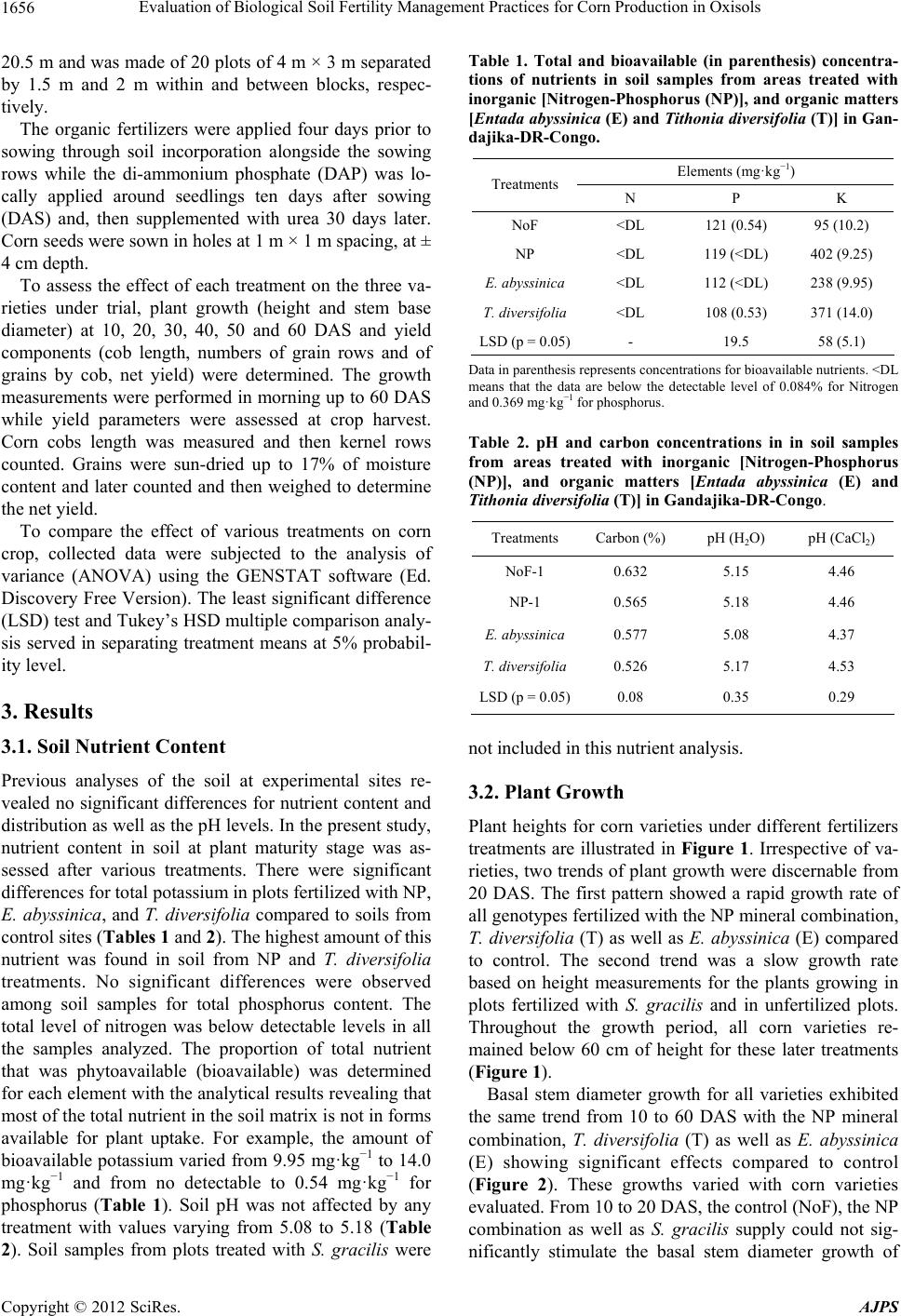 Evaluation of Biological Soil Fertility Management Practices for Corn Production in Oxisols 1656 20.5 m and was made of 20 plots of 4 m × 3 m separated by 1.5 m and 2 m within and between blocks, respec- tively. The organic fertilizers were applied four days prior to sowing through soil incorporation alongside the sowing rows while the di-ammonium phosphate (DAP) was lo- cally applied around seedlings ten days after sowing (DAS) and, then supplemented with urea 30 days later. Corn seeds were sown in holes at 1 m × 1 m spacing, at ± 4 cm depth. To assess the effect of each treatment on the three va- rieties under trial, plant growth (height and stem base diameter) at 10, 20, 30, 40, 50 and 60 DAS and yield components (cob length, numbers of grain rows and of grains by cob, net yield) were determined. The growth measurements were performed in morning up to 60 DAS while yield parameters were assessed at crop harvest. Corn cobs length was measured and then kernel rows counted. Grains were sun-dried up to 17% of moisture content and later counted and then weighed to determine the net yield. To compare the effect of various treatments on corn crop, collected data were subjected to the analysis of variance (ANOVA) using the GENSTAT software (Ed. Discovery Free Version). The least significant difference (LSD) test and Tukey’s HSD multiple comparison analy- sis served in separating treatment means at 5% probabil- ity level. 3. Results 3.1. Soil Nutrient Content Previous analyses of the soil at experimental sites re- vealed no significant differences for nutrient content and distribution as well as the pH levels. In the present study, nutrient content in soil at plant maturity stage was as- sessed after various treatments. There were significant differences for total potassium in plots fertilized with NP, E. abyssinica, and T. diversifolia compared to soils from control sites (Tables 1 and 2). The highest amount of this nutrient was found in soil from NP and T. diversifolia treatments. No significant differences were observed among soil samples for total phosphorus content. The total level of nitrogen was below detectable levels in all the samples analyzed. The proportion of total nutrient that was phytoavailable (bioavailable) was determined for each element with the analytical results revealing that most of the total nutrient in the soil matrix is not in forms available for plant uptake. For example, the amount of bioavailable potassium varied from 9.95 mg·kg−1 to 14.0 mg·kg−1 and from no detectable to 0.54 mg·kg−1 for phosphorus (Table 1). Soil pH was not affected by any treatment with values varying from 5.08 to 5.18 (Table 2). Soil samples from plots treated with S. gracilis were Table 1. Total and bioavailable (in parenthesis) concentra- tions of nutrients in soil samples from areas treated with inorganic [Nitrogen-Phosphorus (NP)], and organic matters [Entada abyssinica (E) and Tithonia diversifolia (T)] in Gan- dajika-DR-Congo. Elements (mg·kg−1) Treatments N P K NoF <DL 121 (0.54) 95 (10.2) NP <DL 119 (<DL) 402 (9.25) E. abyssinica<DL 112 (<DL) 238 (9.95) T. diversifolia<DL 108 (0.53) 371 (14.0) LSD (p = 0.05)- 19.5 58 (5.1) Data in parenthesis represents concentrations for bioavailable nutrients. <DL means that the data are below the detectable level of 0.084% for Nitrogen and 0.369 mg·kg−1 for phosphorus. Table 2. pH and carbon concentrations in in soil samples from areas treated with inorganic [Nitrogen-Phosphorus (NP)], and organic matters [Entada abyssinica (E) and Tithonia diversifolia (T)] in Gandajika-DR-Congo. Treatments Carbon (%) pH (H2O) pH (CaCl2) NoF-1 0.632 5.15 4.46 NP-1 0.565 5.18 4.46 E. abyssinica0.577 5.08 4.37 T. diversifolia0.526 5.17 4.53 LSD (p = 0.05)0.08 0.35 0.29 not included in this nutrient analysis. 3.2. Plant Growth Plant heights for corn varieties under different fertilizers treatments are illustrated in Figure 1. Irrespective of va- rieties, two trends of plant growth were discernable from 20 DAS. The first pattern showed a rapid growth rate of all genotypes fertilized with the NP mineral combination, T. diversifolia (T) as well as E. abyssinica (E) compared to control. The second trend was a slow growth rate based on height measurements for the plants growing in plots fertilized with S. gracilis and in unfertilized plots. Throughout the growth period, all corn varieties re- mained below 60 cm of height for these later treatments (Figure 1). Basal stem diameter growth for all varieties exhibited the same trend from 10 to 60 DAS with the NP mineral combination, T. diversifolia (T) as well as E. abyssinica (E) showing significant effects compared to control (Figure 2). These growths varied with corn varieties evaluated. From 10 to 20 DAS, the control (NoF), the NP combination as well as S. gracilis supply could not sig- nificantly stimulate the basal stem diameter growth of Copyright © 2012 SciRes. AJPS 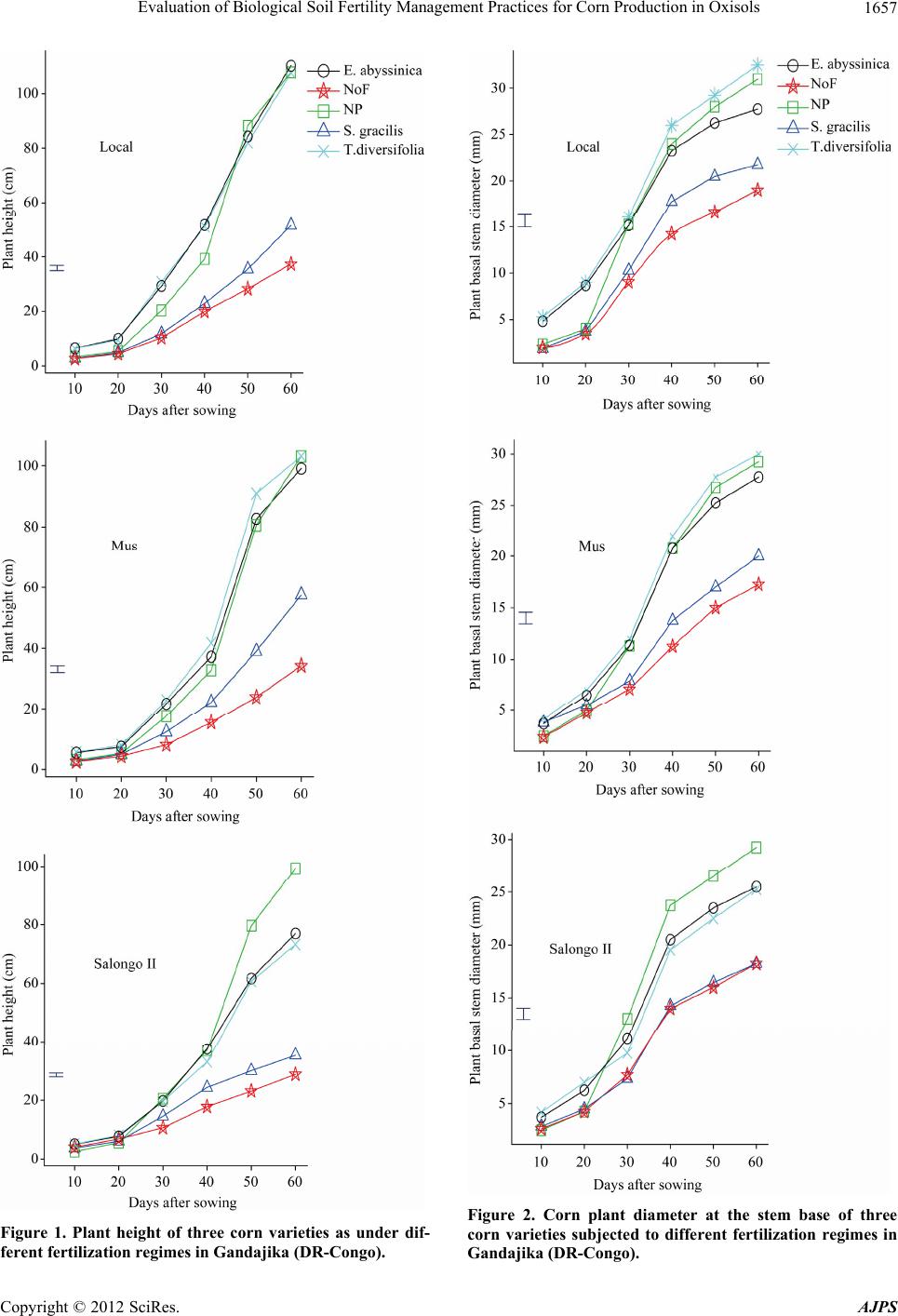 Evaluation of Biological Soil Fertility Management Practices for Corn Production in Oxisols 1657 Figure 1. Plant height of three corn varieties as under dif- ferent fertilization regimes in Gandajika (DR-Congo). Figure 2. Corn plant diameter at the stem base of three corn varieties subjected to different fertilization regimes in Gandajika (DR-Congo). Copyright © 2012 SciRes. AJPS 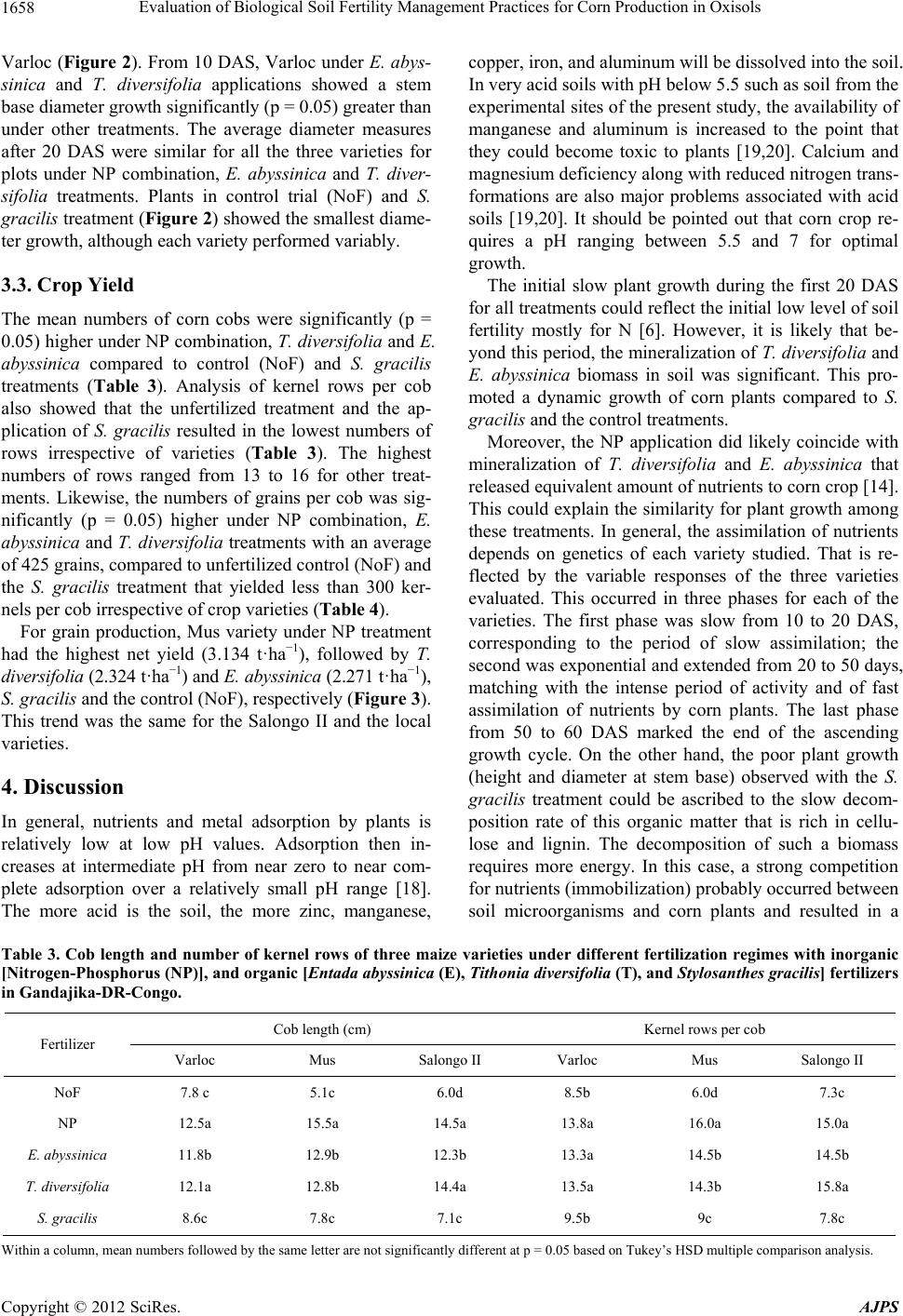 Evaluation of Biological Soil Fertility Management Practices for Corn Production in Oxisols Copyright © 2012 SciRes. AJPS 1658 Varloc (Figure 2). From 10 DAS, Varloc under E. abys- sinica and T. diversifolia ap plications showed a stem base diameter growth significantly (p = 0.05) greater than under other treatments. The average diameter measures after 20 DAS were similar for all the three varieties for plots under NP combination, E. abyssinica and T. diver- sifolia treatments. Plants in control trial (NoF) and S. gracilis treatment (Figure 2) showed the smallest diame- ter growth, although each variety performed variably. 3.3. Crop Yield The mean numbers of corn cobs were significantly (p = 0.05) higher under NP combination, T. diversifolia and E. abyssinica compared to control (NoF) and S. gracilis treatments (Table 3). Analysis of kernel rows per cob also showed that the unfertilized treatment and the ap- plication of S. gracilis resulted in the lowest numbers of rows irrespective of varieties (Table 3). The highest numbers of rows ranged from 13 to 16 for other treat- ments. Likewise, the numbers of grains per cob was sig- nificantly (p = 0.05) higher under NP combination, E. abyssinica and T. diversifolia treatments with an average of 425 grains, compared to unfertilized control (NoF) and the S. gracilis treatment that yielded less than 300 ker- nels per cob irrespective of crop varieties (Table 4). For grain production, Mus variety under NP treatment had the highest net yield (3.134 t·ha−1), followed by T. diversifolia (2.324 t·ha−1) and E. abyssinica (2.271 t·ha−1), S. gracilis and the control (NoF), respectively (Figure 3). This trend was the same for the Salongo II and the local varieties. 4. Discussion In general, nutrients and metal adsorption by plants is relatively low at low pH values. Adsorption then in- creases at intermediate pH from near zero to near com- plete adsorption over a relatively small pH range [18]. The more acid is the soil, the more zinc, manganese, copper, iron, and aluminum will be dissolved into the soil. In very acid soils with pH below 5.5 such as soil from the experimental sites of the present study, the availability of manganese and aluminum is increased to the point that they could become toxic to plants [19,20]. Calcium and magnesium deficiency along with reduced nitrogen trans- formations are also major problems associated with acid soils [19,20]. It should be pointed out that corn crop re- quires a pH ranging between 5.5 and 7 for optimal growth. The initial slow plant growth during the first 20 DAS for all treatments could reflect the initial low level of soil fertility mostly for N [6]. However, it is likely that be- yond this period, the mineralization of T. diversifolia and E. abyssinica biomass in soil was significant. This pro- moted a dynamic growth of corn plants compared to S. gracilis and the control treatments. Moreover, the NP application did likely coincide with mineralization of T. diversifolia and E. abyssinica that released equivalent amount of nutrients to corn crop [14]. This could explain the similarity for plant growth among these treatments. In general, the assimilation of nutrients depends on genetics of each variety studied. That is re- flected by the variable responses of the three varieties evaluated. This occurred in three phases for each of the varieties. The first phase was slow from 10 to 20 DAS, corresponding to the period of slow assimilation; the second was exponential and extended from 20 to 50 days, matching with the intense period of activity and of fast assimilation of nutrients by corn plants. The last phase from 50 to 60 DAS marked the end of the ascending growth cycle. On the other hand, the poor plant growth (height and diameter at stem base) observed with the S. gracilis treatment could be ascribed to the slow decom- position rate of this organic matter that is rich in cellu- lose and lignin. The decomposition of such a biomass requires more energy. In this case, a strong competition for nutrients (immobilization) probably occurred between soil microorganisms and corn plants and resulted in a Table 3. Cob length and number of kernel rows of three maize varieties under different fertilization regimes with inorganic [Nitrogen-Phosphorus (NP)], and organic [Entada abyssinica (E), Tithonia diversifolia (T), and Stylosanthes gracilis] fertilizers in Gandajika-DR-Congo. Cob length (cm) Kernel rows per cob Fertilizer Varloc Mus Salongo II Varloc Mus Salongo II NoF 7.8 c 5.1c 6.0d 8.5b 6.0d 7.3c NP 12.5a 15.5a 14.5a 13.8a 16.0a 15.0a E. abyssinica 11.8b 12.9b 12.3b 13.3a 14.5b 14.5b T. diversifolia 12.1a 12.8b 14.4a 13.5a 14.3b 15.8a S. gracilis 8.6c 7.8c 7.1c 9.5b 9c 7.8c Within a column, mean numbers followed by the same letter are not significantly different at p = 0.05 based on Tukey’s HSD multiple comparison analysis. 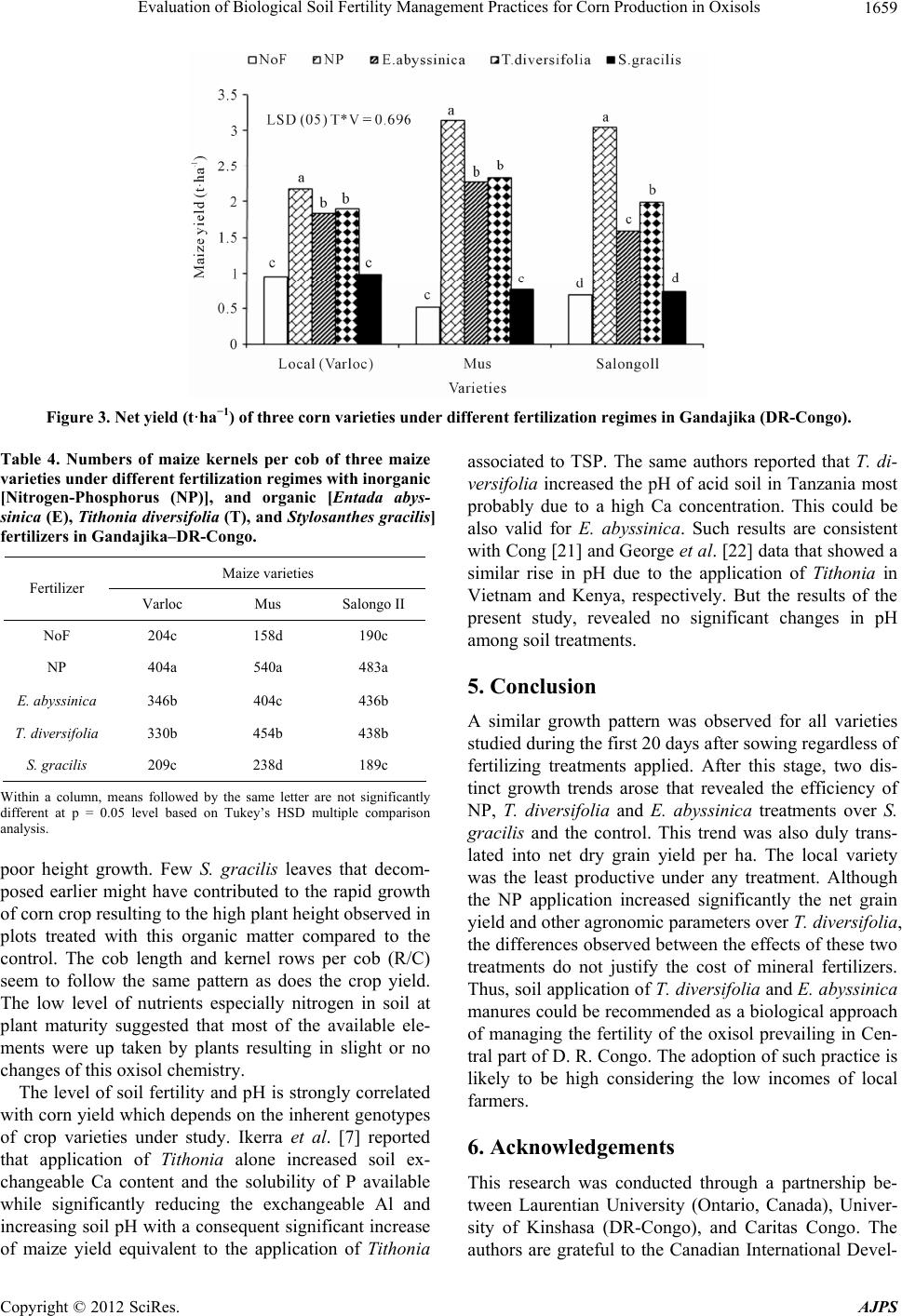 Evaluation of Biological Soil Fertility Management Practices for Corn Production in Oxisols 1659 Figure 3. Net yield (t·ha−1) of three corn varieties under different fertilization regimes in Gandajika (DR-Congo). Table 4. Numbers of maize kernels per cob of three maize varieties under different fertilization regimes with inorganic [Nitrogen-Phosphorus (NP)], and organic [Entada abys- sinica (E), Tithonia diversifolia (T), and Stylosanthes gracilis] fertilizers in Gandajika–DR-Congo. Maize varieties Fertilizer Varloc Mus Salongo II NoF 204c 158d 190c NP 404a 540a 483a E. abyssinica 346b 404c 436b T. diversifolia 330b 454b 438b S. gracilis 209c 238d 189c Within a column, means followed by the same letter are not significantly different at p = 0.05 level based on Tukey’s HSD multiple comparison analysis. poor height growth. Few S. gracilis leaves that decom- posed earlier might have contributed to the rapid growth of corn crop resulting to the high plant height observed in plots treated with this organic matter compared to the control. The cob length and kernel rows per cob (R/C) seem to follow the same pattern as does the crop yield. The low level of nutrients especially nitrogen in soil at plant maturity suggested that most of the available ele- ments were up taken by plants resulting in slight or no changes of this oxisol chemistry. The level of soil fertility and pH is strongly correlated with corn yield which depends on the inherent genotypes of crop varieties under study. Ikerra et al. [7] reported that application of Tithonia alone increased soil ex- changeable Ca content and the solubility of P available while significantly reducing the exchangeable Al and increasing soil pH with a consequent significant increase of maize yield equivalent to the application of Tithonia associated to TSP. The same authors reported that T. di- versifolia increased the pH of acid soil in Tanzania most probably due to a high Ca concentration. This could be also valid for E. abyssinica. Such results are consistent with Cong [21] and George et al. [22] data that showed a similar rise in pH due to the application of Tithonia in Vietnam and Kenya, respectively. But the results of the present study, revealed no significant changes in pH among soil treatments. 5. Conclusion A similar growth pattern was observed for all varieties studied during the first 20 days after sowing regardless of fertilizing treatments applied. After this stage, two dis- tinct growth trends arose that revealed the efficiency of NP, T. diversifolia and E. abyssinica treatments over S. gracilis and the control. This trend was also duly trans- lated into net dry grain yield per ha. The local variety was the least productive under any treatment. Although the NP application increased significantly the net grain yield and other agronomic parameters over T. diversifolia, the differences observed between the effects of these two treatments do not justify the cost of mineral fertilizers. Thus, soil application of T. diversifolia and E. abyssinica manures could be recommended as a biological approach of managing the fertility of the oxisol prevailing in Cen- tral part of D. R. Congo. The adoption of such practice is likely to be high considering the low incomes of local farmers. 6. Acknowledgements This research was conducted through a partnership be- tween Laurentian University (Ontario, Canada), Univer- sity of Kinshasa (DR-Congo), and Caritas Congo. The authors are grateful to the Canadian International Devel- Copyright © 2012 SciRes. AJPS 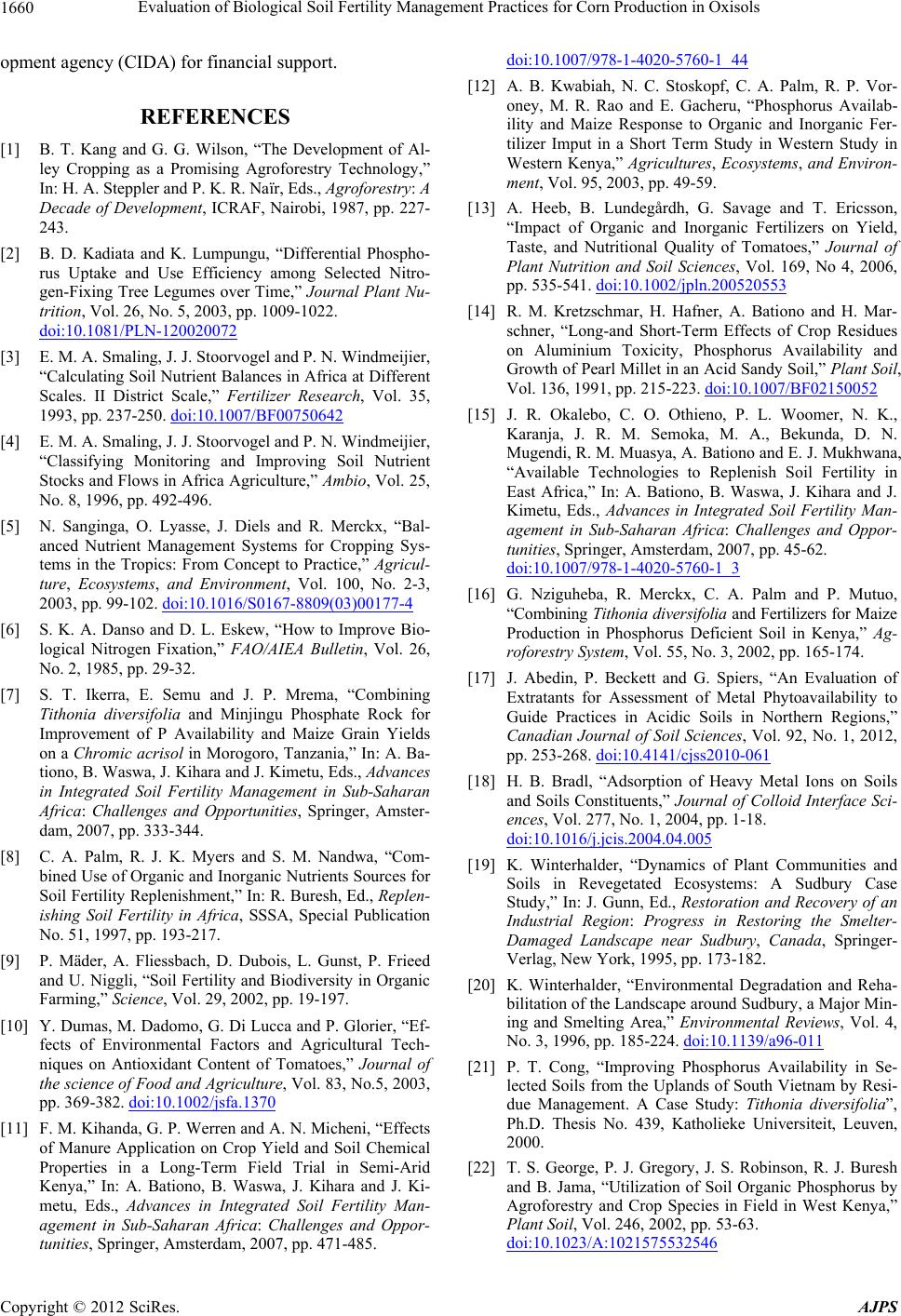 Evaluation of Biological Soil Fertility Management Practices for Corn Production in Oxisols 1660 opment agency (CIDA) for financial support. REFERENCES [1] B. T. Kang and G. G. Wilson, “The Development of Al- ley Cropping as a Promising Agroforestry Technology,” In: H. A. Steppler and P. K. R. Naïr, Eds., Agroforestry: A Decade of Development, ICRAF, Nairobi, 1987, pp. 227- 243. [2] B. D. Kadiata and K. Lumpungu, “Differential Phospho- rus Uptake and Use Efficiency among Selected Nitro- gen-Fixing Tree Legumes over Time,” Journal Plant Nu- trition, Vol. 26, No. 5, 2003, pp. 1009-1022. doi:10.1081/PLN-120020072 [3] E. M. A. Smaling, J. J. Stoorvogel and P. N. Windmeijier, “Calculating Soil Nutrient Balances in Africa at Different Scales. II District Scale,” Fertilizer Research, Vol. 35, 1993, pp. 237-250. doi:10.1007/BF00750642 [4] E. M. A. Smaling, J. J. Stoorvogel and P. N. Windmeijier, “Classifying Monitoring and Improving Soil Nutrient Stocks and Flows in Africa Agriculture,” Ambio, Vol. 25, No. 8, 1996, pp. 492-496. [5] N. Sanginga, O. Lyasse, J. Diels and R. Merckx, “Bal- anced Nutrient Management Systems for Cropping Sys- tems in the Tropics: From Concept to Practice,” Agricul- ture, Ecosystems, and Environment, Vol. 100, No. 2-3, 2003, pp. 99-102. doi:10.1016/S0167-8809(03)00177-4 [6] S. K. A. Danso and D. L. Eskew, “How to Improve Bio- logical Nitrogen Fixation,” FAO/AIEA Bulletin, Vol. 26, No. 2, 1985, pp. 29-32. [7] S. T. Ikerra, E. Semu and J. P. Mrema, “Combining Tithonia diversifolia and Minjingu Phosphate Rock for Improvement of P Availability and Maize Grain Yields on a Chromic acrisol in Morogoro, Tanzania,” In: A. Ba- tiono, B. Waswa, J. Kihara and J. Kimetu, Eds., Advances in Integrated Soil Fertility Management in Sub-Saharan Africa: Challenges and Opportunities, Springer, Amster- dam, 2007, pp. 333-344. [8] C. A. Palm, R. J. K. Myers and S. M. Nandwa, “Com- bined Use of Organic and Inorganic Nutrients Sources for Soil Fertility Replenishment,” In: R. Buresh, Ed., Replen- ishing Soil Fertility in Africa, SSSA, Special Publication No. 51, 1997, pp. 193-217. [9] P. Mäder, A. Fliessbach, D. Dubois, L. Gunst, P. Frieed and U. Niggli, “Soil Fertility and Biodiversity in Organic Farming,” Science, Vol. 29, 2002, pp. 19-197. [10] Y. Dumas, M. Dadomo, G. Di Lucca and P. Glorier, “Ef- fects of Environmental Factors and Agricultural Tech- niques on Antioxidant Content of Tomatoes,” Journal of the science of Food and Agriculture, Vol. 83, No.5, 2003, pp. 369-382. doi:10.1002/jsfa.1370 [11] F. M. Kihanda, G. P. Werren and A. N. Micheni, “Effects of Manure Application on Crop Yield and Soil Chemical Properties in a Long-Term Field Trial in Semi-Arid Kenya,” In: A. Bationo, B. Waswa, J. Kihara and J. Ki- metu, Eds., Advances in Integrated Soil Fertility Man- agement in Sub-Saharan Africa: Challenges and Oppor- tunities, Springer, Amsterdam, 2007, pp. 471-485. doi:10.1007/978-1-4020-5760-1_44 [12] A. B. Kwabiah, N. C. Stoskopf, C. A. Palm, R. P. Vor- oney, M. R. Rao and E. Gacheru, “Phosphorus Availab- ility and Maize Response to Organic and Inorganic Fer- tilizer Imput in a Short Term Study in Western Study in Western Kenya,” Agricultures, Ecosystems, and Environ- ment, Vol. 95, 2003, pp. 49-59. [13] A. Heeb, B. Lundegårdh, G. Savage and T. Ericsson, “Impact of Organic and Inorganic Fertilizers on Yield, Taste, and Nutritional Quality of Tomatoes,” Journal of Plant Nutrition and Soil Sciences, Vol. 169, No 4, 2006, pp. 535-541. doi:10.1002/jpln.200520553 [14] R. M. Kretzschmar, H. Hafner, A. Bationo and H. Mar- schner, “Long-and Short-Term Effects of Crop Residues on Aluminium Toxicity, Phosphorus Availability and Growth of Pearl Millet in an Acid Sandy Soil,” Plant Soil, Vol. 136, 1991, pp. 215-223. doi:10.1007/BF02150052 [15] J. R. Okalebo, C. O. Othieno, P. L. Woomer, N. K., Karanja, J. R. M. Semoka, M. A., Bekunda, D. N. Mugendi, R. M. Muasya, A. Bationo and E. J. Mukhwana, “Available Technologies to Replenish Soil Fertility in East Africa,” In: A. Bationo, B. Waswa, J. Kihara and J. Kimetu, Eds., Advances in Integrated Soil Fertility Man- agement in Sub-Saharan Africa: Challenges and Oppor- tunities, Springer, Amsterdam, 2007, pp. 45-62. doi:10.1007/978-1-4020-5760-1_3 [16] G. Nziguheba, R. Merckx, C. A. Palm and P. Mutuo, “Combining Tithonia diversifolia and Fertilizers for Maize Production in Phosphorus Deficient Soil in Kenya,” Ag- roforestry System, Vol. 55, No. 3, 2002, pp. 165-174. [17] J. Abedin, P. Beckett and G. Spiers, “An Evaluation of Extratants for Assessment of Metal Phytoavailability to Guide Practices in Acidic Soils in Northern Regions,” Canadian Journal of Soil Sciences, Vol. 92, No. 1, 2012, pp. 253-268. doi:10.4141/cjss2010-061 [18] H. B. Bradl, “Adsorption of Heavy Metal Ions on Soils and Soils Constituents,” Journal of Colloid Interface Sci- ences, Vol. 277, No. 1, 2004, pp. 1-18. doi:10.1016/j.jcis.2004.04.005 [19] K. Winterhalder, “Dynamics of Plant Communities and Soils in Revegetated Ecosystems: A Sudbury Case Study,” In: J. Gunn, Ed., Restoration and Recovery of an Industrial Region: Progress in Restoring the Smelter- Damaged Landscape near Sudbury, Canada, Springer- Verlag, New York, 1995, pp. 173-182. [20] K. Winterhalder, “Environmental Degradation and Reha- bilitation of the Landscape around Sudbury, a Major Min- ing and Smelting Area,” Environmental Reviews, Vol. 4, No. 3, 1996, pp. 185-224. doi:10.1139/a96-011 [21] P. T. Cong, “Improving Phosphorus Availability in Se- lected Soils from the Uplands of South Vietnam by Resi- due Management. A Case Study: Tithonia diversifolia”, Ph.D. Thesis No. 439, Katholieke Universiteit, Leuven, 2000. [22] T. S. George, P. J. Gregory, J. S. Robinson, R. J. Buresh and B. Jama, “Utilization of Soil Organic Phosphorus by Agroforestry and Crop Species in Field in West Kenya,” Plant Soil, Vol. 246, 2002, pp. 53-63. doi:10.1023/A:1021575532546 Copyright © 2012 SciRes. AJPS |