

Paper Menu >>
Journal Menu >>
 American Journal of Plant Sciences, 2012, 3, 1588-1593 http://dx.doi.org/10.4236/ajps.2012.311192 Published Online November 2012 (http://www.SciRP.org/journal/ajps) Comparison of Photosynthetic Pigment Contents of the Resurrection Plants Ramonda serbica and Ramonda nathaliae of Some Different Populations from Kosovo, Albania and Macedonia Bekim Gashi1,2, Kasamedin Abdullai1, Efigjeni Kongji k a3 1Department of Biology, Faculty of Mathematics and Natural Sciences, University of Pristina, Pristina, Republic of Kosovo; 2Department of Biotechnology, Faculty of Natural Sciences, University of Tirana, Tirana, Albania; 3Section of Natural and Technical Sciences, Academy of Sciences of Albania, Tirana, Albania Email: bekimgashi[email protected] Received August 17th, 2012; revised September 19th, 2012; accepted October 9th, 2012 ABSTRACT The resurrection plants Ramonda serbica and Ramonda nathaliae are the physiological model plant and endemic spe- cies from Balkan Peninsula. Study was carried out to assess the impact of different populations on photosynthetic pig- ment contents and their effect on physiological activity of these species. The experiment was conducted with leaves of R. serbica collected from nine populations in Kosovo, three in Albania and two in Macedonia, while for R. nathaliae four populations in Macedonia. For this purpose plants after collection from their natural populations were kept for 24 hours at constant temperature and humidity and in natural photoperiod. According to our data the pigment contents (Total chl + Carot) of R. serbica, measured as mg per gram dry weight (DW), were higher (7.06 mg·g−1 DW) in Radaci populations (Kosovo) and lower (4.63 mg·g−1 DW) in Jukniu Mountain-Kruja (Albania). On the other hand, the higher (5.28 mg·g−1 DW) of pigment contents (Total chl + Carot) of R. nathaliae were observed in Vorca populations and the lower (4.24 mg·g−1 DW) in Kaparllëk populations. Ratio chlorophyll a/b of R. serbica in Kruja Castle populations from Albania was the higher (3.68) comparing with Zhlebi populations from Kosovo (1.68). Similarly in case of R. nathaliae the higher (3.36) value was in Kaparllëk populations and the lower (3.12) in Matka populations. The data obtained were further analyzed using one-way ANOVA and a significant change was recorded in the different populations. These studies clearly indicate that the Ramonda plants from different ecological habitats there have been changes of photo- synthetic pigment contents. Keywords: Resurrection Plants; Physiological Model; Populations; Photosynthetic Pigments 1. Introduction A small number of higher plant species, not closely re- lated, have adapted to environments with rapidly devel- oping and often extended periods of extreme dryness, followed by sudden water availability. These are called desiccation-tolerant or resurrection plants. Examples are Ramonda serbica and Ramonda nathaliae, a rare resur- rection plant of the Balkan Peninsula, an endemic relicts of the tertiary period. The species of family Gesneriaceae are good exam- ples of ecophysiological divergence regarding the plant water relations and the adaptations to the conditions of water regime in the habitat. Under the conditions of wa- ter deficit in the habitat, these plants gradually wilt and pass to anabiosis. Resurrection plants are usually subdi- vided into homoiochlorophyllous plants retaining their chlorophyll (Chl) during desiccation and poikilochloro- phyllous plants where desiccation results in the loss of Chl which must be re-synthesized following rehydration [1]. However, pigment loss and destruction of the other thylakoid pigments are highly organised responses to desiccation, realised via a well-defined metabolic path- way [1]. From an ecological point of view, R. serbica is a perennial, herbaceous, shade-adapted species belonging to the group of homoiochlorophyllous poikilohydric plants which preserve more than 80% of the chlorophyll content during dehydration [2,3]. Its ability to survive in harsh environmental conditions has so far been studied in terms of morphologic, physic- ologic, and biochemical as well as the propagation through in vitro cultivation. This research has brought the Copyright © 2012 SciRes. AJPS 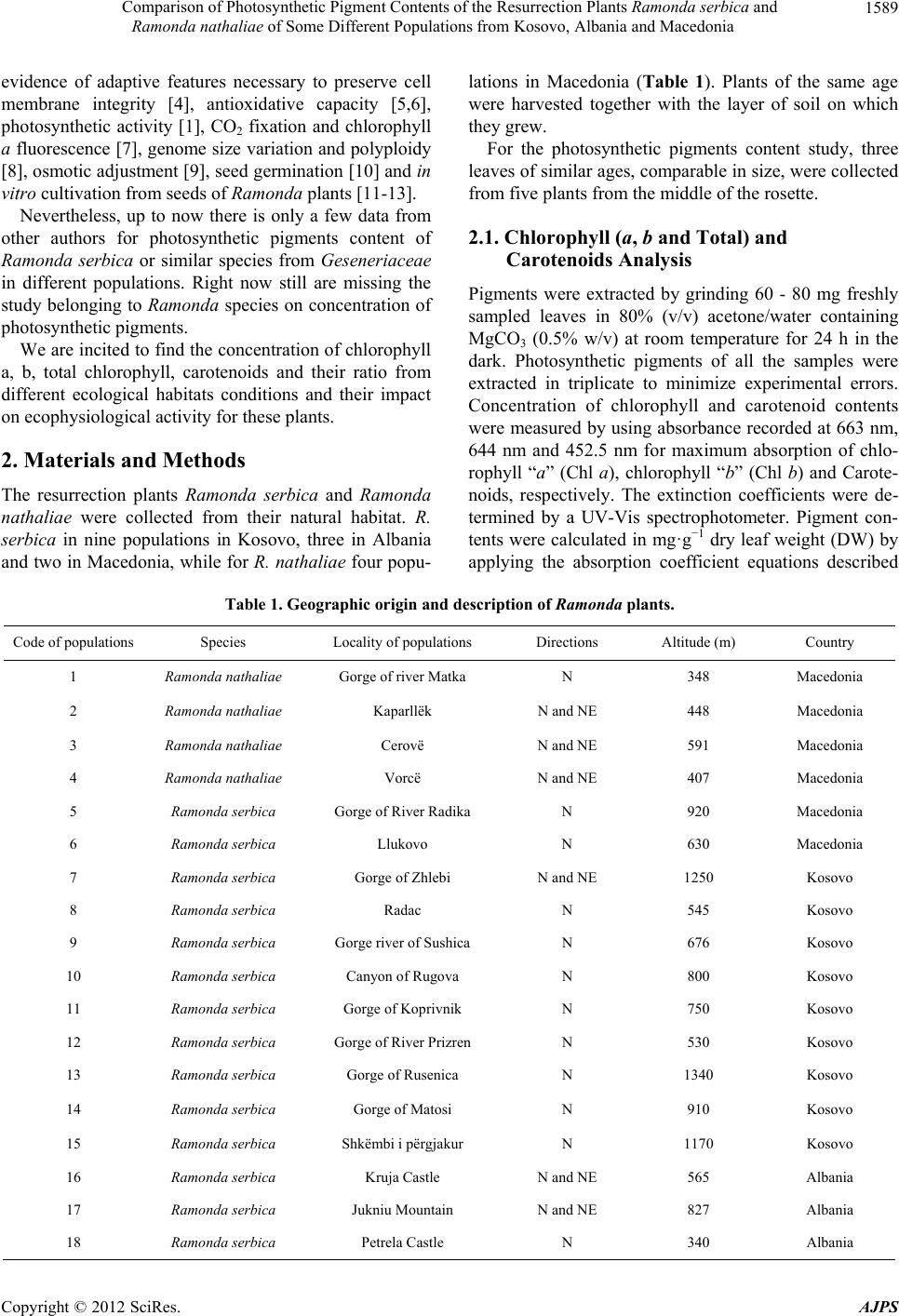 Comparison of Photosynthetic Pigment Contents of the Resurrection Plants Ramonda serbica and Ramonda nathaliae of Some Different Populations from Kosovo, Albania and Macedonia 1589 evidence of adaptive features necessary to preserve cell membrane integrity [4], antioxidative capacity [5,6], photosynthetic activity [1], CO2 fixation and chlorophyll a fluorescence [7], genome size variation and polyploidy [8], osmotic adjustment [9], seed germination [10] and in vitro cultivation from seeds of Ramonda plants [11-13]. Nevertheless, up to now there is only a few data from other authors for photosynthetic pigments content of Ramonda serbica or similar species from Geseneriaceae in different populations. Right now still are missing the study belonging to Ramonda species on concentration of photosynthetic pigments. We are incited to find the concentration of chlorophyll a, b, total chlorophyll, carotenoids and their ratio from different ecological habitats conditions and their impact on ecophysiological activity for these plants. 2. Materials and Methods The resurrection plants Ramonda serbica and Ramonda nathaliae were collected from their natural habitat. R. serbica in nine populations in Kosovo, three in Albania and two in Macedonia, while for R. nathaliae four popu- lations in Macedonia (Table 1). Plants of the same age were harvested together with the layer of soil on which they grew. For the photosynthetic pigments content study, three leaves of similar ages, comparable in size, were collected from five plants from the middle of the rosette. 2.1. Chlorophyll (a, b and Total) and Carotenoids Analysis Pigments were extracted by grinding 60 - 80 mg freshly sampled leaves in 80% (v/v) acetone/water containing MgCO3 (0.5% w/v) at room temperature for 24 h in the dark. Photosynthetic pigments of all the samples were extracted in triplicate to minimize experimental errors. Concentration of chlorophyll and carotenoid contents were measured by using absorbance recorded at 663 nm, 644 nm and 452.5 nm for maximum absorption of chlo- rophyll “a” (Chl a), chlorophyll “b” (Chl b) and Carote- noids, respectively. The extinction coefficients were de- termined by a UV-Vis spectrophotometer. Pigment con- tents were calculated in mg·g−1 dry leaf weight (DW) by applying the absorption coefficient equations described Table 1. Geographic origin and descr iption of Ramonda plants. Code of populations Species Locality of populations Directions Altitude (m) Country 1 Ramonda nathaliae Gorge of river Matka N 348 Macedonia 2 Ramonda nathaliae Kaparllëk N and NE 448 Macedonia 3 Ramonda nathaliae Cerovë N and NE 591 Macedonia 4 Ramonda nathaliae Vorcë N and NE 407 Macedonia 5 Ramonda serbica Gorge of River Radika N 920 Macedonia 6 Ramonda serbica Llukovo N 630 Macedonia 7 Ramonda serbica Gorge of Zhlebi N and NE 1250 Kosovo 8 Ramonda serbica Radac N 545 Kosovo 9 Ramonda serbica Gorge river of Sushica N 676 Kosovo 10 Ramonda serbica Canyon of Rugova N 800 Kosovo 11 Ramonda serbica Gorge of Koprivnik N 750 Kosovo 12 Ramonda serbica Gorge of River Prizren N 530 Kosovo 13 Ramonda serbica Gorge of Rusenica N 1340 Kosovo 14 Ramonda serbica Gorge of Matosi N 910 Kosovo 15 Ramonda serbica Shkëmbi i përgjakur N 1170 Kosovo 16 Ramonda serbica Kruja Castle N and NE 565 Albania 17 Ramonda serbica Jukniu Mountain N and NE 827 Albania 18 Ramonda serbica Petrela Castle N 340 Albania Copyright © 2012 SciRes. AJPS 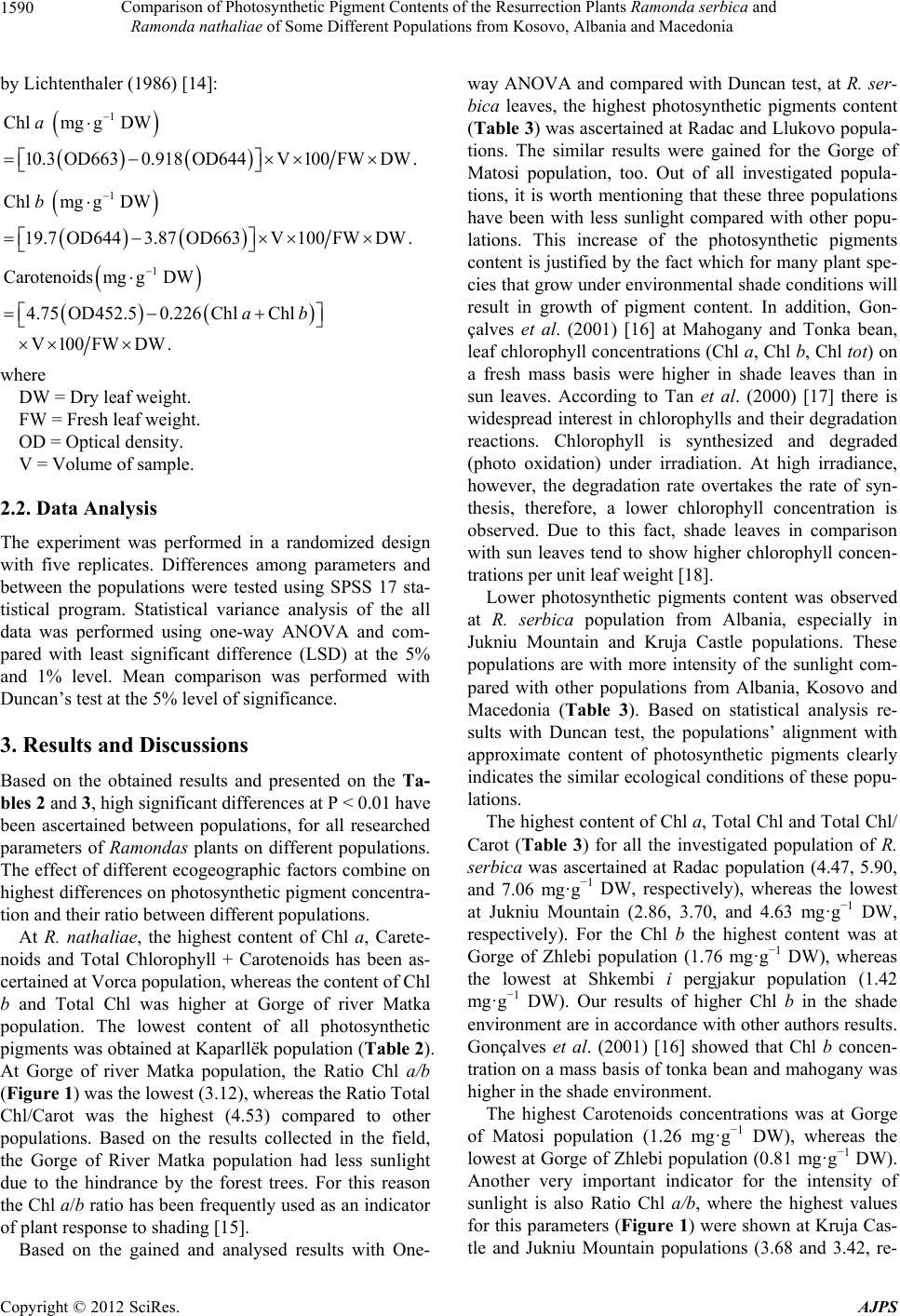 Comparison of Photosynthetic Pigment Contents of the Resurrection Plants Ramonda serbica and Ramonda nathaliae of Some Different Populations from Kosovo, Albania and Macedonia 1590 by Lichtenthaler (1986) [14]: 1 Chl mggDW 10.3OD6630.918OD644V100FWDW. a 1 Chl mggDW 19.7OD6443.87OD663V100 FWDW. b 1 Carotenoids mg gDW 4.75 OD452.50.226 ChlChl V100FW DW. ab where DW = Dry leaf weight. FW = Fresh leaf weight. OD = Optical density. V = Volume of sample. 2.2. Data Analysis The experiment was performed in a randomized design with five replicates. Differences among parameters and between the populations were tested using SPSS 17 sta- tistical program. Statistical variance analysis of the all data was performed using one-way ANOVA and com- pared with least significant difference (LSD) at the 5% and 1% level. Mean comparison was performed with Duncan’s test at the 5% level of significance. 3. Results and Discussions Based on the obtained results and presented on the Ta- bles 2 and 3, high significant differences at P < 0.01 have been ascertained between populations, for all researched parameters of Ramondas plants on different populations. The effect of different ecogeographic factors combine on highest differences on photosynthetic pigment concentra- tion and their ratio between different populations. At R. nathaliae, the highest content of Chl a, Carete- noids and Total Chlorophyll + Carotenoids has been as- certained at Vorca population, whereas the content of Chl b and Total Chl was higher at Gorge of river Matka population. The lowest content of all photosynthetic pigments was obtained at Kaparllëk population (Table 2). At Gorge of river Matka population, the Ratio Chl a/b (Figure 1) was the lowest (3.12), whereas the Ratio Total Chl/Carot was the highest (4.53) compared to other populations. Based on the results collected in the field, the Gorge of River Matka population had less sunlight due to the hindrance by the forest trees. For this reason the Chl a/b ratio has been frequently used as an indicator of plant response to shading [15]. Based on the gained and analysed results with One- way ANOVA and compared with Duncan test, at R. ser- bica leaves, the highest photosynthetic pigments content (Table 3) was ascertained at Radac and Llukovo popula- tions. The similar results were gained for the Gorge of Matosi population, too. Out of all investigated popula- tions, it is worth mentioning that these three populations have been with less sunlight compared with other popu- lations. This increase of the photosynthetic pigments content is justified by the fact which for many plant spe- cies that grow under environmental shade conditions will result in growth of pigment content. In addition, Gon- çalves et al. (2001) [16] at Mahogany and Tonka bean, leaf chlorophyll concentrations (Chl a, Chl b, Chl tot) on a fresh mass basis were higher in shade leaves than in sun leaves. According to Tan et al. (2000) [17] there is widespread interest in chlorophylls and their degradation reactions. Chlorophyll is synthesized and degraded (photo oxidation) under irradiation. At high irradiance, however, the degradation rate overtakes the rate of syn- thesis, therefore, a lower chlorophyll concentration is observed. Due to this fact, shade leaves in comparison with sun leaves tend to show higher chlorophyll concen- trations per unit leaf weight [18]. Lower photosynthetic pigments content was observed at R. serbica population from Albania, especially in Jukniu Mountain and Kruja Castle populations. These populations are with more intensity of the sunlight com- pared with other populations from Albania, Kosovo and Macedonia (Table 3). Based on statistical analysis re- sults with Duncan test, the populations’ alignment with approximate content of photosynthetic pigments clearly indicates the similar ecological conditions of these popu- lations. The highest content of Chl a, Total Chl and Total Chl/ Carot (Table 3) for all the investigated population of R. serbica was ascertained at Radac population (4.47, 5.90, and 7.06 mg·g−1 DW, respectively), whereas the lowest at Jukniu Mountain (2.86, 3.70, and 4.63 mg·g−1 DW, respectively). For the Chl b the highest content was at Gorge of Zhlebi population (1.76 mg·g−1 DW), whereas the lowest at Shkembi i pergjakur population (1.42 mg· g −1 DW). Our results of higher Chl b in the shade environment are in accordance with other authors results. Gonçalves et al. (2001) [16] showed that Chl b concen- tration on a mass basis of tonka bean and mahogany was higher in the shade environment. The highest Carotenoids concentrations was at Gorge of Matosi population (1.26 mg·g−1 DW), whereas the lowest at Gorge of Zhlebi population (0.81 mg·g−1 DW). Another very important indicator for the intensity of sunlight is also Ratio Chl a/b, where the highest values for this parameters (Figure 1) were shown at Kruja Cas- tle and Jukniu Mountain populations (3.68 and 3.42, re- Copyright © 2012 SciRes. AJPS 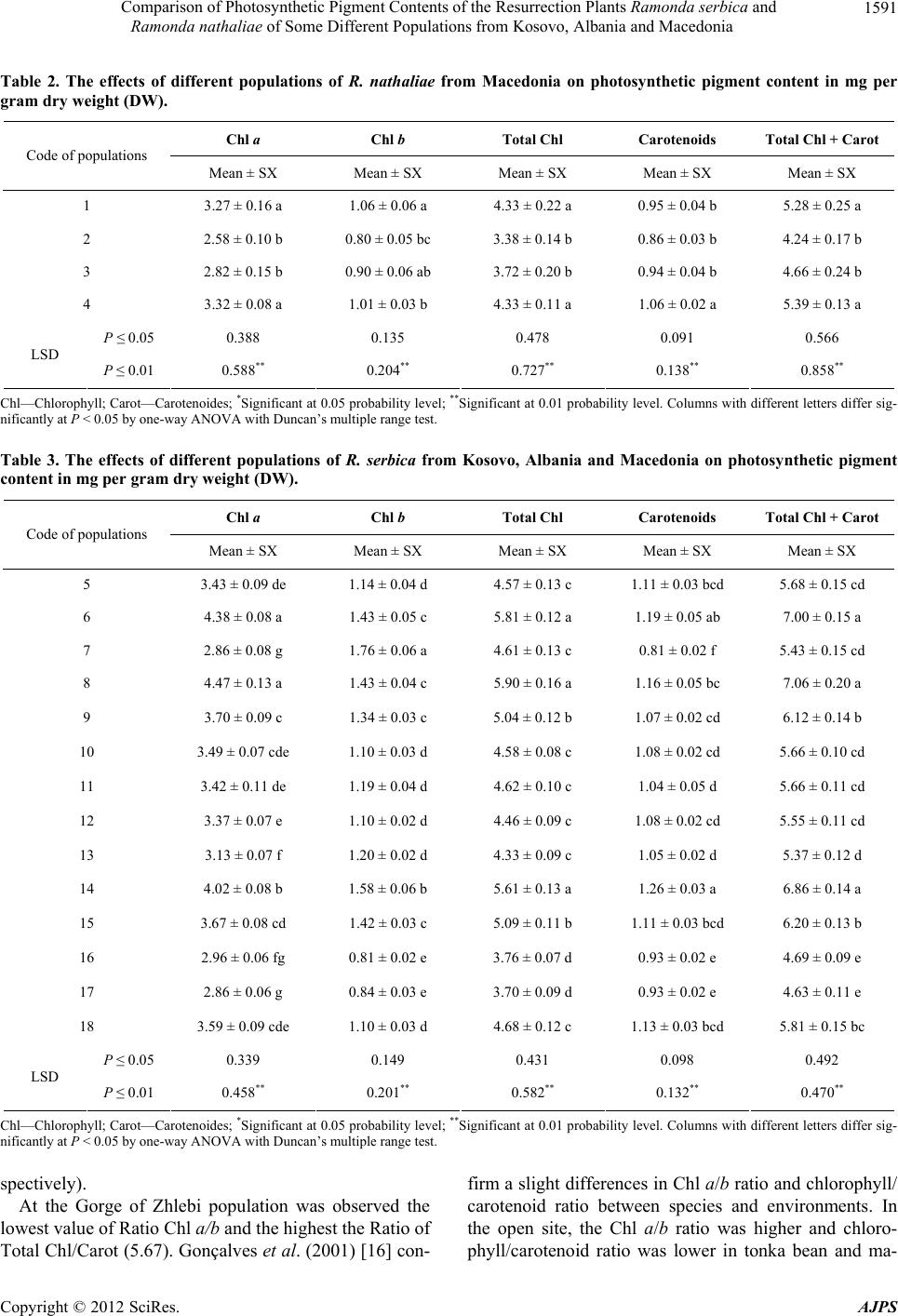 Comparison of Photosynthetic Pigment Contents of the Resurrection Plants Ramonda serbica and Ramonda nathaliae of Some Different Populations from Kosovo, Albania and Macedonia 1591 Table 2. The effects of different populations of R. nathaliae from Macedonia on photosynthetic pigment content in mg per gram dry weight (DW). Chl a Chl b Total Chl Carotenoids Total Chl + Carot Code of populations Mean ± SX Mean ± SX Mean ± SX Mean ± SX Mean ± SX 1 3.27 ± 0.16 a 1.06 ± 0.06 a 4.33 ± 0.22 a 0.95 ± 0.04 b 5.28 ± 0.25 a 2 2.58 ± 0.10 b 0.80 ± 0.05 bc 3.38 ± 0.14 b 0.86 ± 0.03 b 4.24 ± 0.17 b 3 2.82 ± 0.15 b 0.90 ± 0.06 ab 3.72 ± 0.20 b 0.94 ± 0.04 b 4.66 ± 0.24 b 4 3.32 ± 0.08 a 1.01 ± 0.03 b 4.33 ± 0.11 a 1.06 ± 0.02 a 5.39 ± 0.13 a P ≤ 0.05 0.388 0.135 0.478 0.091 0.566 LSD P ≤ 0.01 0.588** 0.204** 0.727** 0.138** 0.858** Chl—Chlorophyll; Carot—Carotenoides; *Significant at 0.05 probability level; **Significant at 0.01 probability level. Columns with different letters differ sig- nificantly at P < 0.05 by one-way ANOVA with Duncan’s multiple range test. Table 3. The effects of different populations of R. serbica from Kosovo, Albania and Macedonia on photosynthetic pigment content in mg per gram dry weight (DW). Chl a Chl b Total Chl Carotenoids Total Chl + Carot Code of populations Mean ± SX Mean ± SX Mean ± SX Mean ± SX Mean ± SX 5 3.43 ± 0.09 de 1.14 ± 0.04 d 4.57 ± 0.13 c 1.11 ± 0.03 bcd 5.68 ± 0.15 cd 6 4.38 ± 0.08 a 1.43 ± 0.05 c 5.81 ± 0.12 a 1.19 ± 0.05 ab 7.00 ± 0.15 a 7 2.86 ± 0.08 g 1.76 ± 0.06 a 4.61 ± 0.13 c 0.81 ± 0.02 f 5.43 ± 0.15 cd 8 4.47 ± 0.13 a 1.43 ± 0.04 c 5.90 ± 0.16 a 1.16 ± 0.05 bc 7.06 ± 0.20 a 9 3.70 ± 0.09 c 1.34 ± 0.03 c 5.04 ± 0.12 b 1.07 ± 0.02 cd 6.12 ± 0.14 b 10 3.49 ± 0.07 cde 1.10 ± 0.03 d 4.58 ± 0.08 c 1.08 ± 0.02 cd 5.66 ± 0.10 cd 11 3.42 ± 0.11 de 1.19 ± 0.04 d 4.62 ± 0.10 c 1.04 ± 0.05 d 5.66 ± 0.11 cd 12 3.37 ± 0.07 e 1.10 ± 0.02 d 4.46 ± 0.09 c 1.08 ± 0.02 cd 5.55 ± 0.11 cd 13 3.13 ± 0.07 f 1.20 ± 0.02 d 4.33 ± 0.09 c 1.05 ± 0.02 d 5.37 ± 0.12 d 14 4.02 ± 0.08 b 1.58 ± 0.06 b 5.61 ± 0.13 a 1.26 ± 0.03 a 6.86 ± 0.14 a 15 3.67 ± 0.08 cd 1.42 ± 0.03 c 5.09 ± 0.11 b 1.11 ± 0.03 bcd 6.20 ± 0.13 b 16 2.96 ± 0.06 fg 0.81 ± 0.02 e 3.76 ± 0.07 d 0.93 ± 0.02 e 4.69 ± 0.09 e 17 2.86 ± 0.06 g 0.84 ± 0.03 e 3.70 ± 0.09 d 0.93 ± 0.02 e 4.63 ± 0.11 e 18 3.59 ± 0.09 cde 1.10 ± 0.03 d 4.68 ± 0.12 c 1.13 ± 0.03 bcd 5.81 ± 0.15 bc P ≤ 0.05 0.339 0.149 0.431 0.098 0.492 LSD P ≤ 0.01 0.458** 0.201** 0.582** 0.132** 0.470** Chl—Chlorophyll; Carot—Carotenoides; *Significant at 0.05 probability level; **Significant at 0.01 probability level. Columns with different letters differ sig- nificantly at P < 0.05 by one-way ANOVA with Duncan’s multiple range test. spectively). At the Gorge of Zhlebi population was observed the lowest value of Ratio Chl a/b and the highest the Ratio of Total Chl/Carot (5.67). Gonçalves et al. (2001) [16] con- firm a slight differences in Chl a/b ratio and chlorophyll/ carotenoid ratio between species and environments. In the open site, the Chl a/b ratio was higher and chloro- phyll/carotenoid ratio was lower in tonka bean and ma- Copyright © 2012 SciRes. AJPS 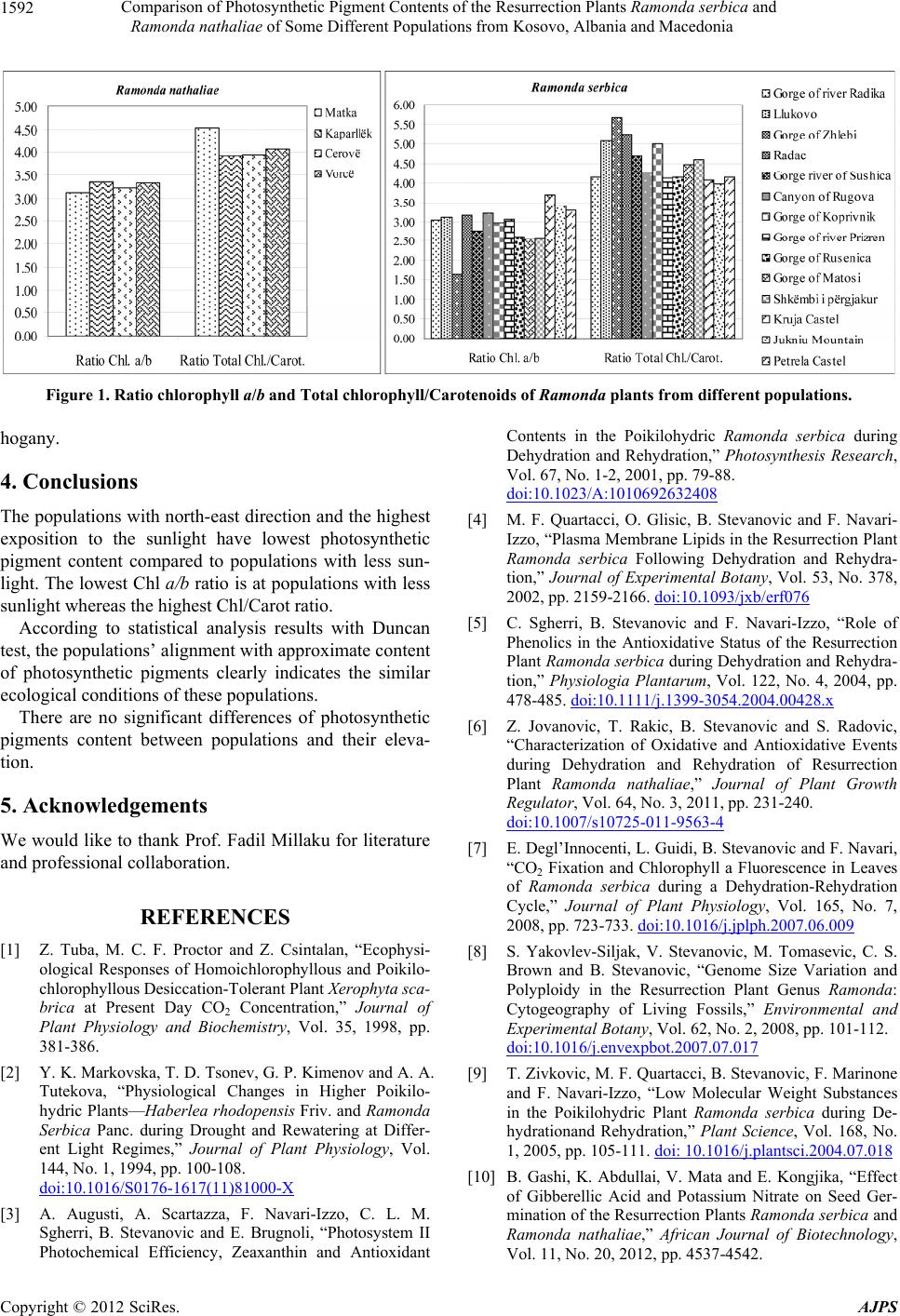 Comparison of Photosynthetic Pigment Contents of the Resurrection Plants Ramonda serbica and Ramonda nathaliae of Some Different Populations from Kosovo, Albania and Macedonia 1592 Figure 1. Ratio chlorophyll a/b and Total chlorophyll/Carotenoids of Ramonda plants from different populations. hogany. 4. Conclusions The populations with north-east direction and the highest exposition to the sunlight have lowest photosynthetic pigment content compared to populations with less sun- light. The lowest Chl a/b ratio is at populations with less sunlight whereas the highest Chl/Carot ratio. According to statistical analysis results with Duncan test, the populations’ alignment with approximate content of photosynthetic pigments clearly indicates the similar ecological conditions of these populations. There are no significant differences of photosynthetic pigments content between populations and their eleva- tion. 5. Acknowledgements We would like to thank Prof. Fadil Millaku for literature and professional collaboration. REFERENCES [1] Z. Tuba, M. C. F. Proctor and Z. Csintalan, “Ecophysi- ological Responses of Homoichlorophyllous and Poikilo- chlorophyllous Desiccation-Tolerant Plant Xerophyta sca- brica at Present Day CO2 Concentration,” Journal of Plant Physiology and Biochemistry, Vol. 35, 1998, pp. 381-386. [2] Y. K. Markovska, T. D. Tsonev, G. P. Kimenov and A. A. Tutekova, “Physiological Changes in Higher Poikilo- hydric Plants—Haberlea rhodopensis Friv. and Ramonda Serbica Panc. during Drought and Rewatering at Differ- ent Light Regimes,” Journal of Plant Physiology, Vol. 144, No. 1, 1994, pp. 100-108. doi:10.1016/S0176-1617(11)81000-X [3] A. Augusti, A. Scartazza, F. Navari-Izzo, C. L. M. Sgherri, B. Stevanovic and E. Brugnoli, “Photosystem II Photochemical Efficiency, Zeaxanthin and Antioxidant Contents in the Poikilohydric Ramonda serbica during Dehydration and Rehydration,” Photosynthesis Research, Vol. 67, No. 1-2, 2001, pp. 79-88. doi:10.1023/A:1010692632408 [4] M. F. Quartacci, O. Glisic, B. Stevanovic and F. Navari- Izzo, “Plasma Membrane Lipids in the Resurrection Plant Ramonda serbica Following Dehydration and Rehydra- tion,” Journal of Experimental Botany, Vol. 53, No. 378, 2002, pp. 2159-2166. doi:10.1093/jxb/erf076 [5] C. Sgherri, B. Stevanovic and F. Navari-Izzo, “Role of Phenolics in the Antioxidative Status of the Resurrection Plant Ramonda serbica during Dehydration and Rehydra- tion,” Physiologia Plantarum, Vol. 122, No. 4, 2004, pp. 478-485. doi:10.1111/j.1399-3054.2004.00428.x [6] Z. Jovanovic, T. Rakic, B. Stevanovic and S. Radovic, “Characterization of Oxidative and Antioxidative Events during Dehydration and Rehydration of Resurrection Plant Ramonda nathaliae,” Journal of Plant Growth Regulator, Vol. 64, No. 3, 2011, pp. 231-240. doi:10.1007/s10725-011-9563-4 [7] E. Degl’Innocenti, L. Guidi, B. Stevanovic and F. Navari, “CO2 Fixation and Chlorophyll a Fluorescence in Leaves of Ramonda serbica during a Dehydration-Rehydration Cycle,” Journal of Plant Physiology, Vol. 165, No. 7, 2008, pp. 723-733. doi:10.1016/j.jplph.2007.06.009 [8] S. Yakovlev-Siljak, V. Stevanovic, M. Tomasevic, C. S. Brown and B. Stevanovic, “Genome Size Variation and Polyploidy in the Resurrection Plant Genus Ramonda: Cytogeography of Living Fossils,” Environmental and Experimental Botany, Vol. 62, No. 2, 2008, pp. 101-112. doi:10.1016/j.envexpbot.2007.07.017 [9] T. Zivkovic, M. F. Quartacci, B. Stevanovic, F. Marinone and F. Navari-Izzo, “Low Molecular Weight Substances in the Poikilohydric Plant Ramonda serbica during De- hydrationand Rehydration,” Plant Science, Vol. 168, No. 1, 2005, pp. 105-111. doi: 10.1016/j.plantsci.2004.07.018 [10] B. Gashi, K. Abdullai, V. Mata and E. Kongjika, “Effect of Gibberellic Acid and Potassium Nitrate on Seed Ger- mination of the Resurrection Plants Ramonda serbica and Ramonda nathaliae,” African Journal of Biotechnology, Vol. 11, No. 20, 2012, pp. 4537-4542. Copyright © 2012 SciRes. AJPS  Comparison of Photosynthetic Pigment Contents of the Resurrection Plants Ramonda serbica and Ramonda nathaliae of Some Different Populations from Kosovo, Albania and Macedonia 1593 [11] E. Kongjika, Zh. Zekaj, E. Çaushi and I. Stamo, “Plant Biotechnology—In Vitro Culture,” Academy of Science, Institute of Biological Researchers, Tirana, 2002, pp. 119-140. [12] S. Dontcheva, E. Daskalova, G. Yahubyan, I. Denev, I. Minkov and V. Toneva, “Conservation of the Protected Resurrection Species Ramonda serbica Panc.—Habitat Montana District, Bulgaria as in Vitro Plants through a Modified Micropropagation System,” Biotechnology and Biotechnological Equipment, Vol. 23, No. 2, 2009, pp. 369-372. [13] B. Gashi, K. Abdullai, V. Mata, S. Misimi, M. Osmani and E. Kongjika, “In Vitro Culture—A Tool to Overcome the Poor in Vivo Development of Genus Ramonda Plants,” Bulletin of Natural Science, Special Edition, 2011, pp. 536-543. [14] H. Lichtenthaler, “Laser-Induced Chlorophyll Fluores- cence of Living Plants,” Proceedings of the Remote Sens- ing Symposium, Band III, ESA Publication Division, Nordwijk, 1986, pp. 1571-1579. [15] G. A. F. Hendry and A. H. Price, “Stress Indicators: Chlorophylls and Carotenoids,” In: G. A. F. Hendry, Ed., Methods in Comparative Plant Ecology, Chapman & Hall, London, 1993, pp. 148-152. doi:10.1016/j.plantsci.2004.07.018 [16] J. F. C. Gonçalves, R. A. Marenco and G. Vieira, “Con- cetration of Photosynthetic Pigments and Chlorophyll Flourescence of Mahogany and Tonka Bean under Two Light Environments,” Revista Brasileira de Fisiologia Vegetal, Vol. 13, No. 2, 2001, pp. 149-157. doi:10.1590/S0103-31312001000200004 [17] Y. Tan, J. H. Jiang, H. L. Wu, H. Cui and R. Q. Yu, “Resolution of Kinetic System of Simultaneous Degrada- tion of Chlorophyll a and b by PARAFAC,” Analytica Chimica Acta, Vol. 412, 2000, pp. 195-202. doi:10.1016/S0003-2670(99)00813-2 [18] K. N. Boardman, “Comparative Photosynthesis of Sun and Shade Plants,” Annual Review of Plant Physiology, Vol. 28, 1977, pp. 355-377. doi:10.1146/annurev.pp.28.060177.002035 Copyright © 2012 SciRes. AJPS |