

Paper Menu >>
Journal Menu >>
 Psychology 2012. Vol.3, No.11, 974-978 Published Online November 2012 in SciRes (http://www.SciRP.org/journal/psych) http://dx.doi.org/10.4236/psych.2012.311146 Copyright © 2012 SciRes. 974 Depression in Chronic Kidney Disease and Hemodialysis Patients C. P. Andrade, R. C. Sesso Division of Nephrology, Department of Medicine, Federal University of São Paulo, São Paulo, Brazil Email: [email protected] Received July 9th, 2012; revised August 12th, 2012; accepted September 11th, 2012 Abstract: Depression is the most common psychiatric condition in Chronic Kidney Disease (CKD), but there are few studies that analyzed this condition in patients in different phases of disease. This article aims to evaluated depression in CKD patients, comparing patients in different phases of disease. Methods: We evaluated 134 patients with CKD submitted to conservative ambulatory treatment, and 36 patients with end-stage renal disease undergoing hemodialysis (HD). To evaluate depression, we used the Beck Depression Inventory (BDI), and the Beck Depression Inventory—SF (BDI-SF), a subscale that allows evaluate only the cognitive aspects of depression. Functional capacity was evaluated using the Karnofsky Performance Scale, and clinical and sociodemographic variables were also investigated. Results: Using BDI, depression was identified in 37.3% of patients in conservative treatment and in 41.6% in HD pa- tients (p > 0.05). This percentage reduced when the BDI-SF was used, to 11.1% in conservative CKD pa- tients and 13.8% in HD patients (p > 0.05). Depression was associated with marital status, professional activity, income, comorbidities and functional capacity. Discussion: We observed high prevalence of de- pression in patients with CKD undergoing conservative or hemodialysis treatment. Depression was asso- ciated with some clinical and sociodemografic variables and with functional capacity. Keywords: Depression; Chronic Kidney Disease; Predialysis; Hemodialysis Introduction Chronic kidney disease (CKD) is determined by the presence of kidney injury and by the level of renal function, assessed according to the glomerular filtration rate. Following the crite- ria proposed by the National Kidney Foundation, 2002, the CKD is divided into five stages, classified according to the degree of the patient’s renal function. Until the fourth stage of the disease, the so-called “conservative treatment” is recom- mended. In more advanced stages, called end-stage renal dis- ease (ESRD), i.e., when the kidneys can no longer maintain homeostasis of the body, the patient will depend on one of the modalities of renal replacement therapy (RRT): dialysis or kid- ney transplant. Depression is characterized as one of the most assessed psy- chological aspects regarding studies on patients with renal fail- ure; however, there is a difficulty in recognizing its true extent in this population. This is due to methodological variations among studies (such as the diversity of instruments applied, which does not allow a comparison of results) and the difficulty of diagnosis generated by similarity of somatic symptoms pre- sent in depression and uremic symptoms, which leads to an increased number of false-positive cases (Kimmel, 2001, 2002; Kimmel et al., 2008; Kimmel & Peterson, 2006; Almeida & Meleiro, 2000; Zimmerman, Carvalho, & Mari, 2004). The evaluation of depression in patients during early stages of CKD becomes important, since its influence on quality of life and mortality rates is demonstrated by the literature. How- ever, most of the studies evaluating patients in terminal stage of the disease and research assessing patients under pre-dialysis treatment are scarce. This study aimed to evaluate depression in patients under conservative treatment for CKD, comparing them with patients undergoing hemodialysis. Sociodemographic and clinical vari- ables were also evaluated. Subjects and Methods Participants A total of 181 patients were randomly selected, including 144 with nondialytic CKD who were followed at the outpatient clinics of the Division of Nephrology, Federal University of São Paulo, São Paulo, Brazil, and 37 patients undergoing hemodialysis at the institution. Eleven subjects refused to par- ticipate. The CKD patients attending the outpatients clinics had an estimated glomerular filtration measured by the 24 h creatinine clearance between 60 and 10 ml/min/1.73m2. They received a routine conservative care for CKD not on dialysis including particularly a nutritional orientation for hypoprotein diet and antihypertensive treatment. Dialysis patients included had been on hemodialysis for more than 6 months and less than 6 years, undergoing a conventional program of 3 hemodialysis sessions per week, lasting 4 hours each. Patients were excluded if they did not consent to participate, were younger than 18 years or had hearing, speech or cognitive deficits that would impair their understanding of the questions. Additionally, pa- tients with dementia, delirium or a history of psychiatric disor- ders were also excluded. The protocol was approved by the ethics committee of the institution, and all participants gave written informed consent to participate in the study. Procedures The participants were interviewed prior the medical visits or after the hemodialysis session in a separate room by 2 trained interviewers. 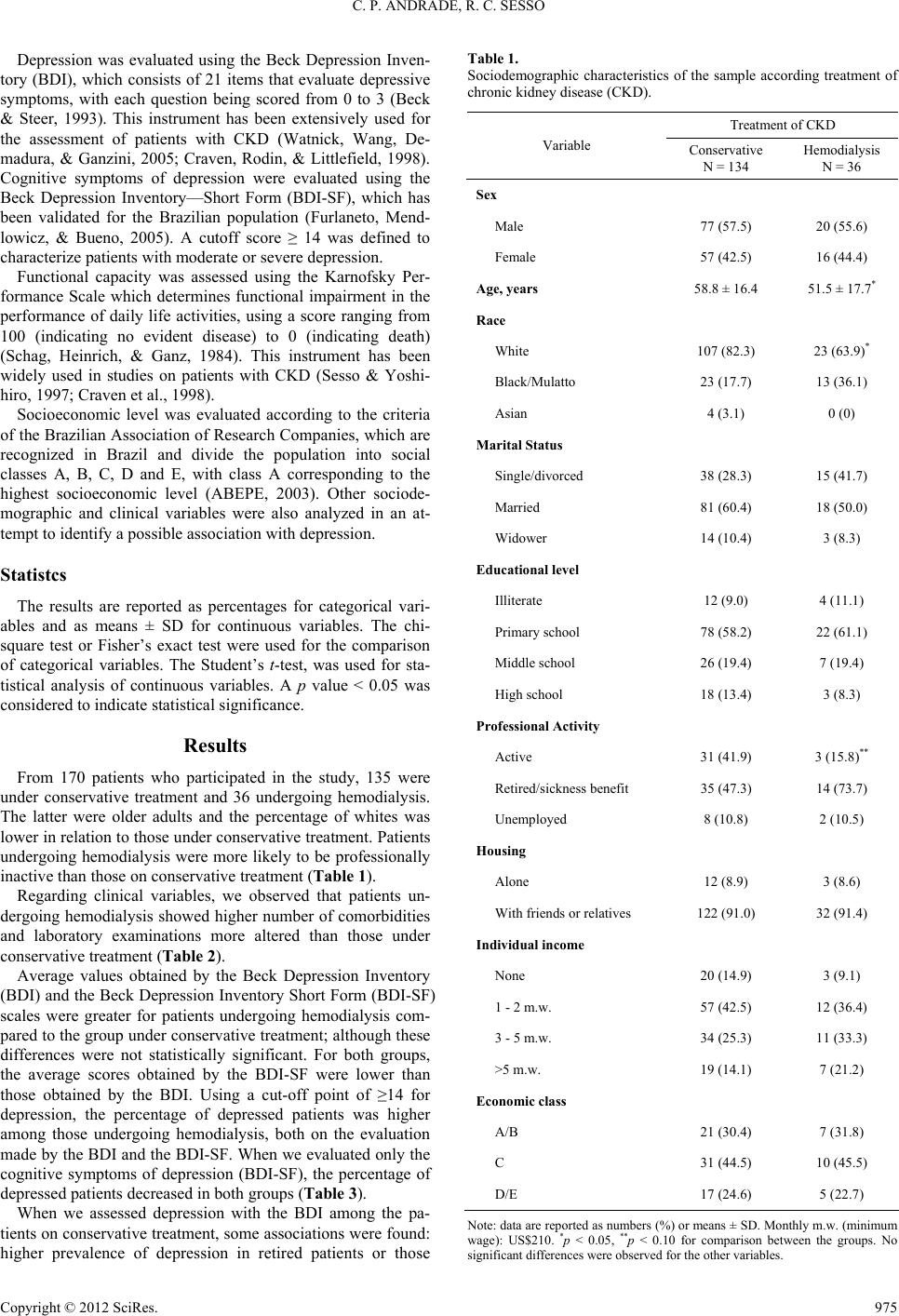 C. P. ANDRADE, R. C. SESSO Depression was evaluated using the Beck Depression Inven- tory (BDI), which consists of 21 items that evaluate depressive symptoms, with each question being scored from 0 to 3 (Beck & Steer, 1993). This instrument has been extensively used for the assessment of patients with CKD (Watnick, Wang, De- madura, & Ganzini, 2005; Craven, Rodin, & Littlefield, 1998). Cognitive symptoms of depression were evaluated using the Beck Depression Inventory—Short Form (BDI-SF), which has been validated for the Brazilian population (Furlaneto, Mend- lowicz, & Bueno, 2005). A cutoff score ≥ 14 was defined to characterize patients with moderate or severe depression. Functional capacity was assessed using the Karnofsky Per- formance Scale which determines functional impairment in the performance of daily life activities, using a score ranging from 100 (indicating no evident disease) to 0 (indicating death) (Schag, Heinrich, & Ganz, 1984). This instrument has been widely used in studies on patients with CKD (Sesso & Yoshi- hiro, 1997; Craven et al., 1998). Socioeconomic level was evaluated according to the criteria of the Brazilian Association of Research Companies, which are recognized in Brazil and divide the population into social classes A, B, C, D and E, with class A corresponding to the highest socioeconomic level (ABEPE, 2003). Other sociode- mographic and clinical variables were also analyzed in an at- tempt to identify a possible association with depression. Statistcs The results are reported as percentages for categorical vari- ables and as means ± SD for continuous variables. The chi- square test or Fisher’s exact test were used for the comparison of categorical variables. The Student’s t-test, was used for sta- tistical analysis of continuous variables. A p value < 0.05 was considered to indicate statistical significance. Results From 170 patients who participated in the study, 135 were under conservative treatment and 36 undergoing hemodialysis. The latter were older adults and the percentage of whites was lower in relation to those under conservative treatment. Patients undergoing hemodialysis were more likely to be professionally inactive than those on conservative treatment (Table 1). Regarding clinical variables, we observed that patients un- dergoing hemodialysis showed higher number of comorbidities and laboratory examinations more altered than those under conservative treatment (Table 2). Average values obtained by the Beck Depression Inventory (BDI) and the Beck Depression Inventory Short Form (BDI-SF) scales were greater for patients undergoing hemodialysis com- pared to the group under conservative treatment; although these differences were not statistically significant. For both groups, the average scores obtained by the BDI-SF were lower than those obtained by the BDI. Using a cut-off point of ≥14 for depression, the percentage of depressed patients was higher among those undergoing hemodialysis, both on the evaluation made by the BDI and the BDI-SF. When we evaluated only the cognitive symptoms of depression (BDI-SF), the percentage of depressed patients decreased in both groups (Table 3). When we assessed depression with the BDI among the pa- tients on conservative treatment, some associations were found: higher prevalence of depression in retired patients or those Table 1. Sociodemographic characteristics of the sample according treatment of chronic kidney disease (CKD). Treatment of CKD Variable Conservative N = 134 Hemodialysis N = 36 Sex Male 77 (57.5) 20 (55.6) Female 57 (42.5) 16 (44.4) Age, years 58.8 ± 16.4 51.5 ± 17.7* Race White 107 (82.3) 23 (63.9)* Black/Mulatto 23 (17.7) 13 (36.1) Asian 4 (3.1) 0 (0) Marital Status Single/divorced 38 (28.3) 15 (41.7) Married 81 (60.4) 18 (50.0) Widower 14 (10.4) 3 (8.3) Educational le vel Illiterate 12 (9.0) 4 (11.1) Primary school 78 (58.2) 22 (61.1) Middle school 26 (19.4) 7 (19.4) High school 18 (13.4) 3 (8.3) Professional Activity Active 31 (41.9) 3 (15.8)** Retired/sickness benefit 35 (47.3) 14 (73.7) Unemployed 8 (10.8) 2 (10.5) Housing Alone 12 (8.9) 3 (8.6) With friends or relatives 122 (91.0) 32 (91.4) Individual income None 20 (14.9) 3 (9.1) 1 - 2 m.w. 57 (42.5) 12 (36.4) 3 - 5 m.w. 34 (25.3) 11 (33.3) >5 m.w. 19 (14.1) 7 (21.2) Economic class A/B 21 (30.4) 7 (31.8) C 31 (44.5) 10 (45.5) D/E 17 (24.6) 5 (22.7) Note: data are reported as numbers (%) or means ± SD. Monthly m.w. (minimum wage): US$210. *p < 0.05, **p < 0.10 for comparison between the groups. No significant differences were observed for the other variables. Copyright © 2012 SciRes. 975 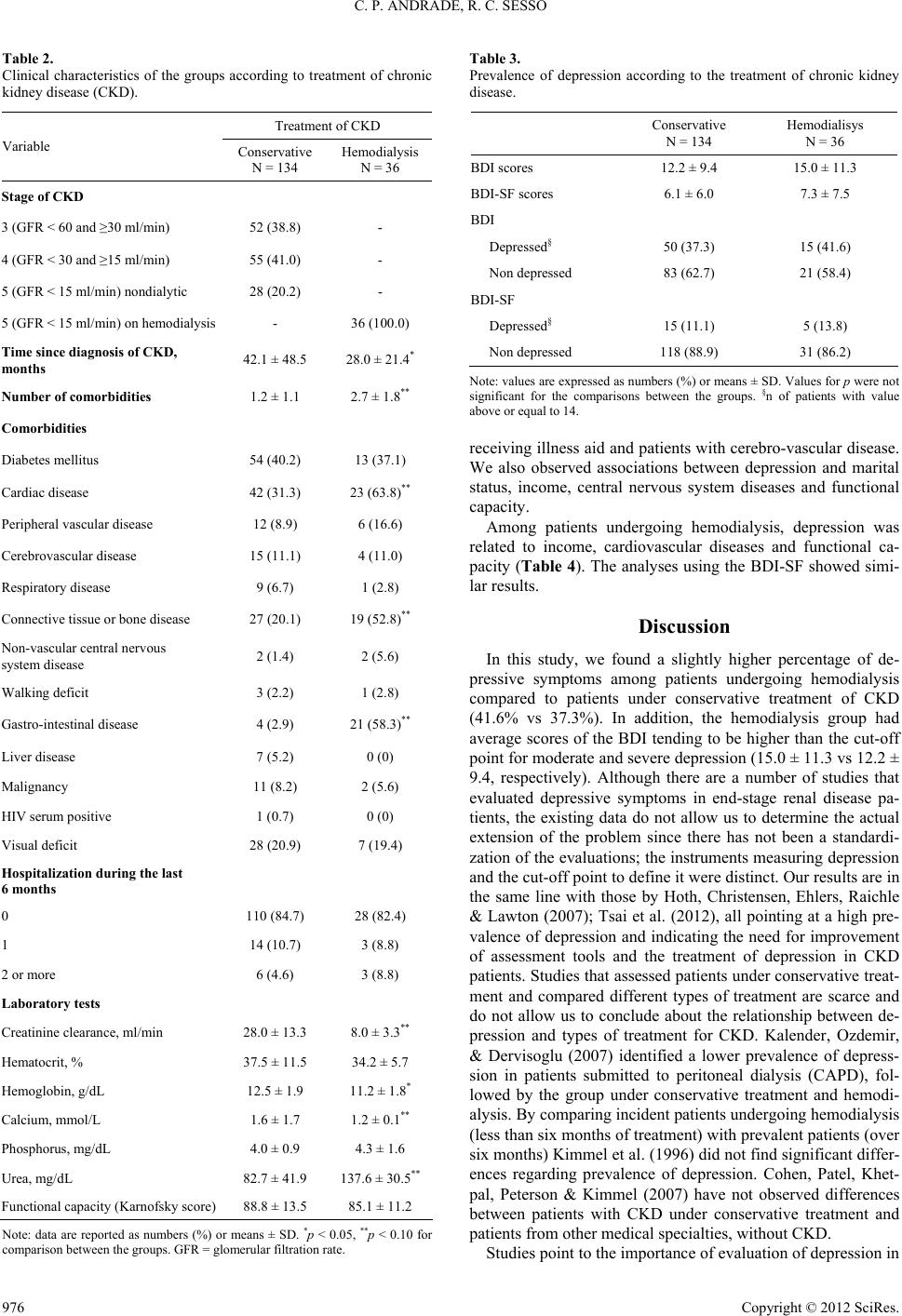 C. P. ANDRADE, R. C. SESSO Table 2. Clinical characteristics of the groups according to treatment of chronic kidney disease (CKD). Treatment of CKD Variable Conservative N = 134 Hemodialysis N = 36 Stage of CKD 3 (GFR < 60 and ≥30 ml/min) 52 (38.8) - 4 (GFR < 30 and ≥15 ml/min) 55 (41.0) - 5 (GFR < 15 ml/min) nondialytic 28 (20.2) - 5 (GFR < 15 ml/min) on hemodialysis - 36 (100.0) Time since di agnosis of CKD, months 42.1 ± 48.5 28.0 ± 21.4* Number of comorbidities 1.2 ± 1.1 2.7 ± 1.8** Comorbidities Diabetes mellitus 54 (40.2) 13 (37.1) Cardiac disease 42 (31.3) 23 (63.8)** Peripheral vascular disease 12 (8.9) 6 (16.6) Cerebrovascular disease 15 (11.1) 4 (11.0) Respiratory disease 9 (6.7) 1 (2.8) Connective tissue or bone disease 27 (20.1) 19 (52.8)** Non-vascular central nervous system disease 2 (1.4) 2 (5.6) Walking deficit 3 (2.2) 1 (2.8) Gastro-intestinal disease 4 (2.9) 21 (58.3)** Liver disease 7 (5.2) 0 (0) Malignancy 11 (8.2) 2 (5.6) HIV serum positive 1 (0.7) 0 (0) Visual deficit 28 (20.9) 7 (19.4) Hospitalization during the last 6 months 0 110 (84.7) 28 (82.4) 1 14 (10.7) 3 (8.8) 2 or more 6 (4.6) 3 (8.8) Laboratory tests Creatinine clearance, ml/min 28.0 ± 13.3 8.0 ± 3.3** Hematocrit, % 37.5 ± 11.5 34.2 ± 5.7 Hemoglobin, g/dL 12.5 ± 1.9 11.2 ± 1.8* Calcium, mmol/L 1.6 ± 1.7 1.2 ± 0.1** Phosphorus, mg/dL 4.0 ± 0.9 4.3 ± 1.6 Urea, mg/dL 82.7 ± 41.9 137.6 ± 30.5** Functional capacity (Karnofsky score) 88.8 ± 13.5 85.1 ± 11.2 Note: data are reported as numbers (%) or means ± SD. *p < 0.05, **p < 0.10 for comparison between the groups. GFR = glomerular filtration rate. Table 3. Prevalence of depression according to the treatment of chronic kidney disease. Conservative N = 134 Hemodialisys N = 36 BDI scores 12.2 ± 9.4 15.0 ± 11.3 BDI-SF scores 6.1 ± 6.0 7.3 ± 7.5 BDI Depressed§ 50 (37.3) 15 (41.6) Non depressed 83 (62.7) 21 (58.4) BDI-SF Depressed§ 15 (11.1) 5 (13.8) Non depressed 118 (88.9) 31 (86.2) Note: values are expressed as numbers (%) or means ± SD. Values for p were not significant for the comparisons between the groups. §n of patients with value above or equal to 14. receiving illness aid and patients with cerebro-vascular disease. We also observed associations between depression and marital status, income, central nervous system diseases and functional capacity. Among patients undergoing hemodialysis, depression was related to income, cardiovascular diseases and functional ca- pacity (Table 4). The analyses using the BDI-SF showed simi- lar results. Discussion In this study, we found a slightly higher percentage of de- pressive symptoms among patients undergoing hemodialysis compared to patients under conservative treatment of CKD (41.6% vs 37.3%). In addition, the hemodialysis group had average scores of the BDI tending to be higher than the cut-off point for moderate and severe depression (15.0 ± 11.3 vs 12.2 ± 9.4, respectively). Although there are a number of studies that evaluated depressive symptoms in end-stage renal disease pa- tients, the existing data do not allow us to determine the actual extension of the problem since there has not been a standardi- zation of the evaluations; the instruments measuring depression and the cut-off point to define it were distinct. Our results are in the same line with those by Hoth, Christensen, Ehlers, Raichle & Lawton (2007); Tsai et al. (2012), all pointing at a high pre- valence of depression and indicating the need for improvement of assessment tools and the treatment of depression in CKD patients. Studies that assessed patients under conservative treat- ment and compared different types of treatment are scarce and do not allow us to conclude about the relationship between de- pression and types of treatment for CKD. Kalender, Ozdemir, & Dervisoglu (2007) identified a lower prevalence of depress- sion in patients submitted to peritoneal dialysis (CAPD), fol- lowed by the group under conservative treatment and hemodi- alysis. By comparing incident patients undergoing hemodialysis (less than six months of treatment) with prevalent patients (over six months) Kimmel et al. (1996) did not find significant differ- ences regarding prevalence of depression. Cohen, Patel, Khet- pal, Peterson & Kimmel (2007) have not observed differences between patients with CKD under conservative treatment and patients from other medical specialties, without CKD. Studies point to the importance of evaluation of depression in Copyright © 2012 SciRes. 976 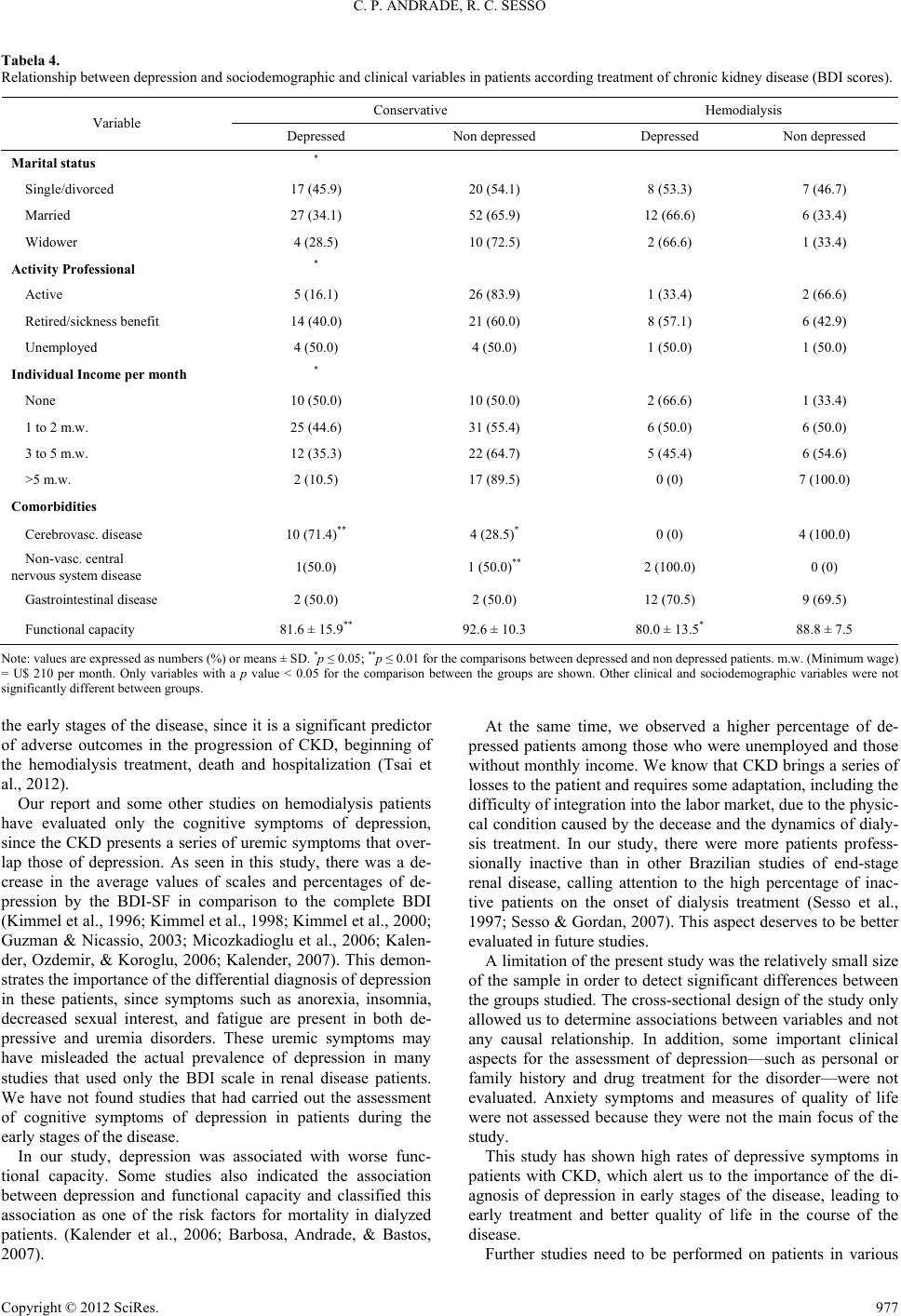 C. P. ANDRADE, R. C. SESSO Copyright © 2012 SciRes. 977 Tabela 4. Relationship between depression and sociodemographic and clinical variables in patients according treatment of chronic kidney disease (BDI scores). Conservative Hemodialysis Variable Depressed Non depressed Depressed Non depressed Marital status * Single/divorced 17 (45.9) 20 (54.1) 8 (53.3) 7 (46.7) Married 27 (34.1) 52 (65.9) 12 (66.6) 6 (33.4) Widower 4 (28.5) 10 (72.5) 2 (66.6) 1 (33.4) Activity Professional * Active 5 (16.1) 26 (83.9) 1 (33.4) 2 (66.6) Retired/sickness benefit 14 (40.0) 21 (60.0) 8 (57.1) 6 (42.9) Unemployed 4 (50.0) 4 (50.0) 1 (50.0) 1 (50.0) Individual Income per month * None 10 (50.0) 10 (50.0) 2 (66.6) 1 (33.4) 1 to 2 m.w. 25 (44.6) 31 (55.4) 6 (50.0) 6 (50.0) 3 to 5 m.w. 12 (35.3) 22 (64.7) 5 (45.4) 6 (54.6) >5 m.w. 2 (10.5) 17 (89.5) 0 (0) 7 (100.0) Comorbidities Cerebrovasc. disease 10 (71.4)** 4 (28.5)* 0 (0) 4 (100.0) Non-vasc. central nervous system disease 1(50.0) 1 (50.0)** 2 (100.0) 0 (0) Gastrointestinal disease 2 (50.0) 2 (50.0) 12 (70.5) 9 (69.5) Functional capacity 81.6 ± 15.9** 92.6 ± 10.3 80.0 ± 13.5* 88.8 ± 7.5 Note: values are expressed as numbers (%) or means ± SD. *p ≤ 0.05; **p ≤ 0.01 for the comparisons between depressed and non depressed patients. m.w. (Minimum wage) = U$ 210 per month. Only variables with a p value < 0.05 for the comparison between the groups are shown. Other clinical and sociodemographic variables were not significantly different between groups. the early stages of the disease, since it is a significant predictor of adverse outcomes in the progression of CKD, beginning of the hemodialysis treatment, death and hospitalization (Tsai et al., 2012). Our report and some other studies on hemodialysis patients have evaluated only the cognitive symptoms of depression, since the CKD presents a series of uremic symptoms that over- lap those of depression. As seen in this study, there was a de- crease in the average values of scales and percentages of de- pression by the BDI-SF in comparison to the complete BDI (Kimmel et al., 1996; Kimmel et al., 1998; Kimmel et al., 2000; Guzman & Nicassio, 2003; Micozkadioglu et al., 2006; Kalen- der, Ozdemir, & Koroglu, 2006; Kalender, 2007). This demon- strates the importance of the differential diagnosis of depression in these patients, since symptoms such as anorexia, insomnia, decreased sexual interest, and fatigue are present in both de- pressive and uremia disorders. These uremic symptoms may have misleaded the actual prevalence of depression in many studies that used only the BDI scale in renal disease patients. We have not found studies that had carried out the assessment of cognitive symptoms of depression in patients during the early stages of the disease. In our study, depression was associated with worse func- tional capacity. Some studies also indicated the association between depression and functional capacity and classified this association as one of the risk factors for mortality in dialyzed patients. (Kalender et al., 2006; Barbosa, Andrade, & Bastos, 2007). At the same time, we observed a higher percentage of de- pressed patients among those who were unemployed and those without monthly income. We know that CKD brings a series of losses to the patient and requires some adaptation, including the difficulty of integration into the labor market, due to the physic- cal condition caused by the decease and the dynamics of dialy- sis treatment. In our study, there were more patients profess- sionally inactive than in other Brazilian studies of end-stage renal disease, calling attention to the high percentage of inac- tive patients on the onset of dialysis treatment (Sesso et al., 1997; Sesso & Gordan, 2007). This aspect deserves to be better evaluated in future studies. A limitation of the present study was the relatively small size of the sample in order to detect significant differences between the groups studied. The cross-sectional design of the study only allowed us to determine associations between variables and not any causal relationship. In addition, some important clinical aspects for the assessment of depression—such as personal or family history and drug treatment for the disorder—were not evaluated. Anxiety symptoms and measures of quality of life were not assessed because they were not the main focus of the study. This study has shown high rates of depressive symptoms in patients with CKD, which alert us to the importance of the di- agnosis of depression in early stages of the disease, leading to early treatment and better quality of life in the course of the disease. Further studies need to be performed on patients in various  C. P. ANDRADE, R. C. SESSO stages of CKD, so that we can better understand this disease and allow the improvement of diagnostic, preventive and the- rapeutic strategies. REFERENCES Almeida, A. M., & Meleiro, M. A. S. (2000). Doença renal crônica: Uma revisão. Jornal Brasileiro de Nefrologia, 22, 192-200. Associação Brasileira de Empresas de Pesquisa (ABEPE) (2003). Critério de classificação econômica Brasil. URL (last checked 18 January 2010). http://www.abep.org Barbosa, L. M. M., Andrade Jr., M. P., & Bastos, K. A. (2007). Pre- ditores de qualidade de vida em pacientes com doença renal crônica em hemodiálise. Jornal Brasileiro de Nefrologia, 29, 222-229. Beck, A. T., & Steer, R. A. (1993). Beck depression inventory manual. San Antonio: Psycholgical Corporation. Cohen, S. D., Patel, S. S., Khetpal, P., Peterson, R. A., & Kimmel, P. L. (2007). Pain, sleep disturbance, and quality of life in patients with chronic kidney disease. Clinical Journal of American Society of Ne- phrology, 2, 919-925. doi:10.2215/CJN.00820207 Craven, J. L., Rodin, G. M., & Littlefield, C. (1998). The Beck Depres- sion Inventory as a screening device for major depression in renal di alysis patients. Internacional Journal of Psychiatry Medicine, 18, 365-374. doi:10.2190/M1TX-V1EJ-E43L-RKLF Furlanetto, L. M., Mendlowicz, M. V., & Bueno, J. R. (2005). The validity of the beck depression inventory-short form as a screening and diagnostic instrument for moderate and severe depression in medical inpatients. Journal of Affective Disorders, 86, 87-91. doi:10.1016/j.jad.2004.12.011 Guzman, S. J., & Nicassio, P. M. (2003). The contribution of negative and positive illness schemas to depression in patients with end-stage renal disease. Journal of Behavior Medicine, 26, 517-534. doi:10.1023/A:1026249702054 Hoth, K. F., Christensen, A. J., Ehlers, S. L., Raichle, K. A., & Lawton, W. J. (2007). A longitudinal examination of social support, agree- ableness and depressive symptoms in chronic kidney disease. Jour- nal of Behavior Medicine, 30, 69-76. doi:10.1007/s10865-006-9083-2 Kalender, B., Ozdemir, A. C., & Koroglu, G. (2006). Association of depression with markers of nutrition and inflammation in Chronic kidney disease and end-stage renal disease. Nephrology Clinical and Practice, 102, c115-c121. Kalender, B., Ozdemir, A. C., Dervisoglu, E., & Ozdemir, O. (2007). Quality of life in chronic kidney disease: Effects of treatment modal- ity, depression, malnutrition and Inflammation. International Journal of Clinical Practice, 61, 569-576. doi:10.1111/j.1742-1241.2006.01251.x Micozkadioglu, H., Micozkadioglu, I., Zumrutdal, A., Erdem, A. et al. (2006). Relationship between depressive affect and malnutrition- inflammation complex syndrome in haemodialysis patients. Nephrol- ogy, 11, 502-505. doi:10.1111/j.1440-1797.2006.00664.x Kimmel, P. L., Peterson, R. A., Weihs, K. L., Simmens, S. J. et al. (1996). Psychologic functioning, quality of life, and behavioral com- pliance in patients beginning hemodialysis. Journal of American So- ciety of Nephrology, 7, 2152-2159. Kimmel, P. L., Peterson, R. A., Weihs, K. L., Simmens, S. J. et al. (1998). Psychossocial factors, bahavior compliance and survival in urban hemodialysis patients. Kidney International, 54, 245-254. doi:10.1046/j.1523-1755.1998.00989.x Kimmel, P. L., Peterson, R. A., Weihs, K. L. et al. (2000). Multiple measurements of depression predict mortality in a longitudinal study of chronic hemodialysis outpatients. Kidney International, 57, 2093- 2098. doi:10.1046/j.1523-1755.2000.00059.x Kimmel, P. L. (2001). Psychossocial factors in dialysis patients. Kidney International, 59, 1599-1613. doi:10.1046/j.1523-1755.2001.0590041599.x Kimmel, P. L. (2002). Depression in patients with chronic renal disease: What we know and what we need to know. Journal of Psychoso- matic Research, 53, 951-956. doi:10.1016/S0022-3999(02)00310-0 Kimmel, P. L., & Peterson, R. A. (2006) Depression in Patients with end-stage renal disease treated with dialysis: Has the time to treat ar- rived? Clinical Journal of American Society Nephrology, 1, 349-352. doi:10.2215/CJN.00890306 National Kidney Foundation (2002). K/DOQI clinical practice guide- lines for chronic kidney disease: Executive summary. New York, 76-82. Schag, C. C., Heinrich, R. L., & Ganz, P. A. (1984). Karnofsky per- formance status revisited: Reliability, validity, and guidelines. Jour nal of Clinical Oncology, 2, 187-193. Sesso, R., & Yoshihiro, M. M. (1997). Time of diagnosis of chronic renal failure and assessment of quality of life in haemodialysis pa- tients. Nephrology, Dialisis and Transplantation, 12, 2111-2116. doi:10.1093/ndt/12.10.2111 Sesso, R., & Gordan, P. (2007). Dados disponíveis sobre a doença renal crônica no Brasil. Jornal Brasileiro de Nefrologia, 19, 9-12. Tsai, Y. C., Chiu, Y. W., Hung, C. C., Hwang, S. J., Tsai, J. C., Wang, S. L., Lin, M. Y., & Chen, H. C. (2012). Association of symptoms of depression with progression of CKD. American Journal of Kidney Disease, 60, 54-61. doi:10.1053/j.ajkd.2012.02.325 Watnick, S., Wang, P.-L., Demadura, T., & Ganzini, L. (2005). Valida- tion of two depression screening tools in dialysis patients. American Journal of Kidney Disease, 46, 919-924. doi:10.1053/j.ajkd.2005.08.006 Zimmermann, P. R., Carvalho, J. O., & Mari, J. J. (2004). Impacto da depressão e outros fatores psicossociais no prognóstico de pacientes renais crônicos. Revista de Psiquiatria do Rio Grande do Sul, 26, 312-318. doi:10.1590/S0101-81082004000300008 Copyright © 2012 SciRes. 978 |