

Paper Menu >>
Journal Menu >>
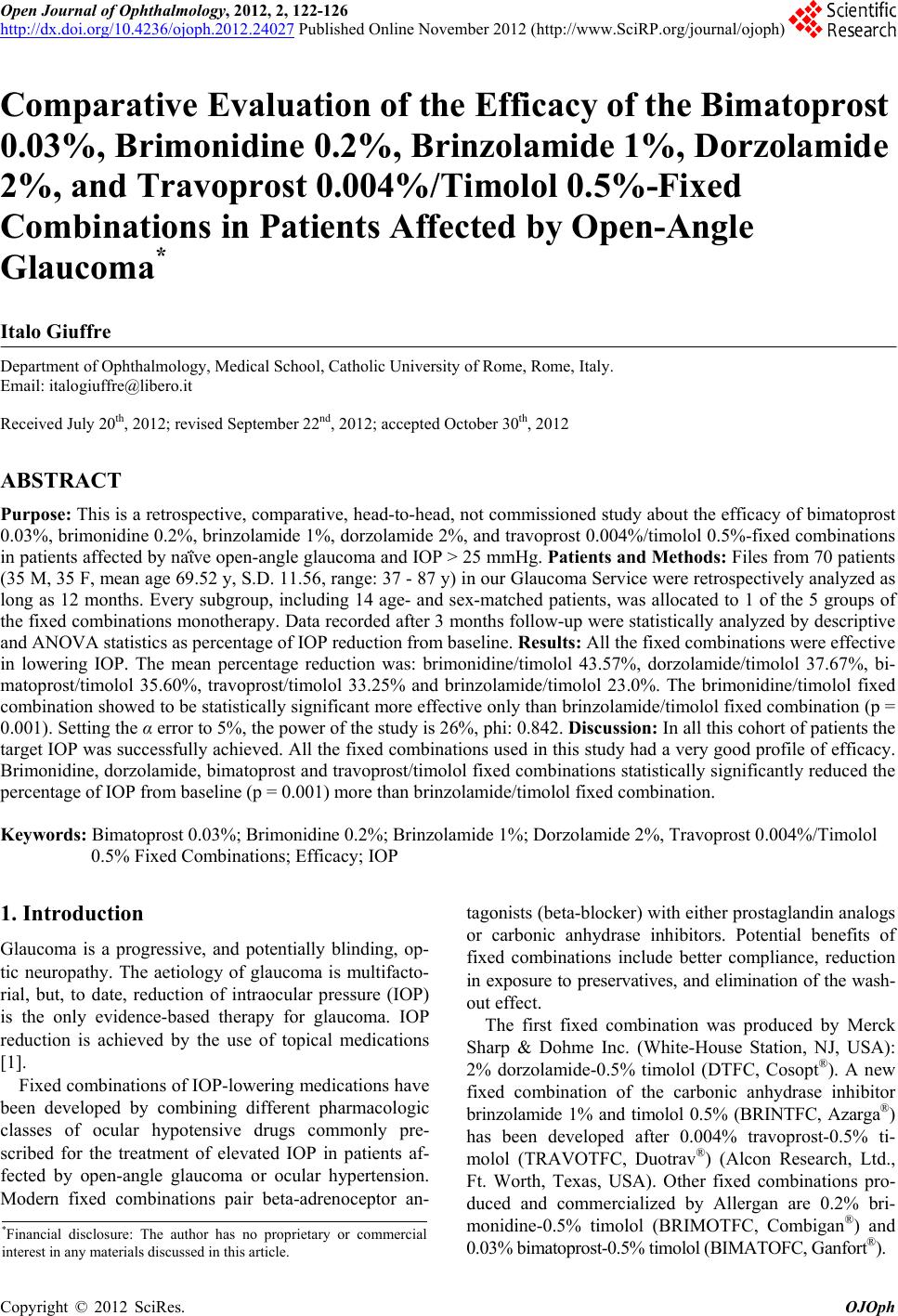 Open Journal of Ophthalmology, 2012, 2, 122-126 http://dx.doi.org/10.4236/ojoph.2012.24027 Published Online November 2012 (http://www.SciRP.org/journal/ojoph) Comparative Evalua tion of the Efficacy of the Bimatoprost 0.03%, Brimonidine 0.2%, Brinzolamide 1%, Dorzolamide 2%, and Travoprost 0.004%/Timolol 0.5%-Fixed Combinations in Patients Affected by Open-Angle Glaucoma* Italo Giuffre Department of Ophthalmology, Medical School, Catholic University of Rome, Rome, Italy. Email: [email protected] Received July 20th, 2012; revised September 22nd, 2012; accepted October 30th, 2012 ABSTRACT Purpose: This is a retrospective, comparative, head-to-head, not commissioned study about the efficacy of bimatoprost 0.03%, brimonidine 0.2%, brinzolamide 1%, dorzolamide 2%, and travoprost 0.004%/timolol 0.5%-fixed combinations in patients affected by naΐve open-angle glaucoma and IOP > 25 mmHg. Patients and Methods: Files from 70 patients (35 M, 35 F, mean age 69.52 y, S.D. 11.56, range: 37 - 87 y) in our Glaucoma Service were retrospectively analyzed as long as 12 months. Every subgroup, including 14 age- and sex-matched patients, was allocated to 1 of the 5 groups of the fixed combinations monotherapy. Data recorded after 3 months follow-up were statistically analyzed by descriptive and ANOVA statistics as percentage of IOP reduction from baseline. Results: All the fixed combinations were effective in lowering IOP. The mean percentage reduction was: brimonidine/timolol 43.57%, dorzolamide/timolol 37.67%, bi- matoprost/timolol 35.60%, travoprost/timolol 33.25% and brinzolamide/timolol 23.0%. The brimonidine/timolol fixed combination showed to be statistically significant more effective only than brinzolamide/timolol fixed combination (p = 0.001). Setting the α error to 5%, the power of the study is 26%, phi: 0.842. Discussion: In all this cohort of patients the target IOP was successfully achieved. All the fixed combinations used in this study had a very good profile of efficacy. Brimonidine, dorzolamide, bimatoprost and travoprost/timolol fixed combinations statistically significantly reduced the percentage of IOP from baseline (p = 0.001) more than brinzolamide/timolol fixed combination. Keywords: Bimatoprost 0.03%; Brimonidine 0.2%; Brinzolamide 1%; Dorzolamide 2%, Travoprost 0.004%/Timolol 0.5% Fixed Combinations; Efficacy; IOP 1. Introduction Glaucoma is a progressive, and potentially blinding, op- tic neuropathy. The aetiology of glaucoma is multifacto- rial, but, to date, reduction of intraocular pressure (IOP) is the only evidence-based therapy for glaucoma. IOP reduction is achieved by the use of topical medications [1]. Fixed combinations of IOP-lowering medications have been developed by combining different pharmacologic classes of ocular hypotensive drugs commonly pre- scribed for the treatment of elevated IOP in patients af- fected by open-angle glaucoma or ocular hypertension. Modern fixed combinations pair beta-adrenoceptor an- tagonists (beta-blocker) with either prostaglandin analogs or carbonic anhydrase inhibitors. Potential benefits of fixed combinations include better compliance, reduction in exposure to preservatives, and elimination of the wash- out effect. The first fixed combination was produced by Merck Sharp & Dohme Inc. (White-House Station, NJ, USA): 2% dorzolamide-0.5% timolol (DTFC, Cosopt®). A new fixed combination of the carbonic anhydrase inhibitor brinzolamide 1% and timolol 0.5% (BRINTFC, Azarga®) has been developed after 0.004% travoprost-0.5% ti- molol (TRAVOTFC, Duotrav®) (Alcon Research, Ltd., Ft. Worth, Texas, USA). Other fixed combinations pro- duced and commercialized by Allergan are 0.2% bri- monidine-0.5% timolol (BRIMOTFC, Combigan®) and 0.03% bimatoprost-0.5% timolol (BIMATOFC, Ganfort®). *Financial disclosure: The author has no proprietary or commercial interest in any materials discussed in this article. Copyright © 2012 SciRes. OJOph 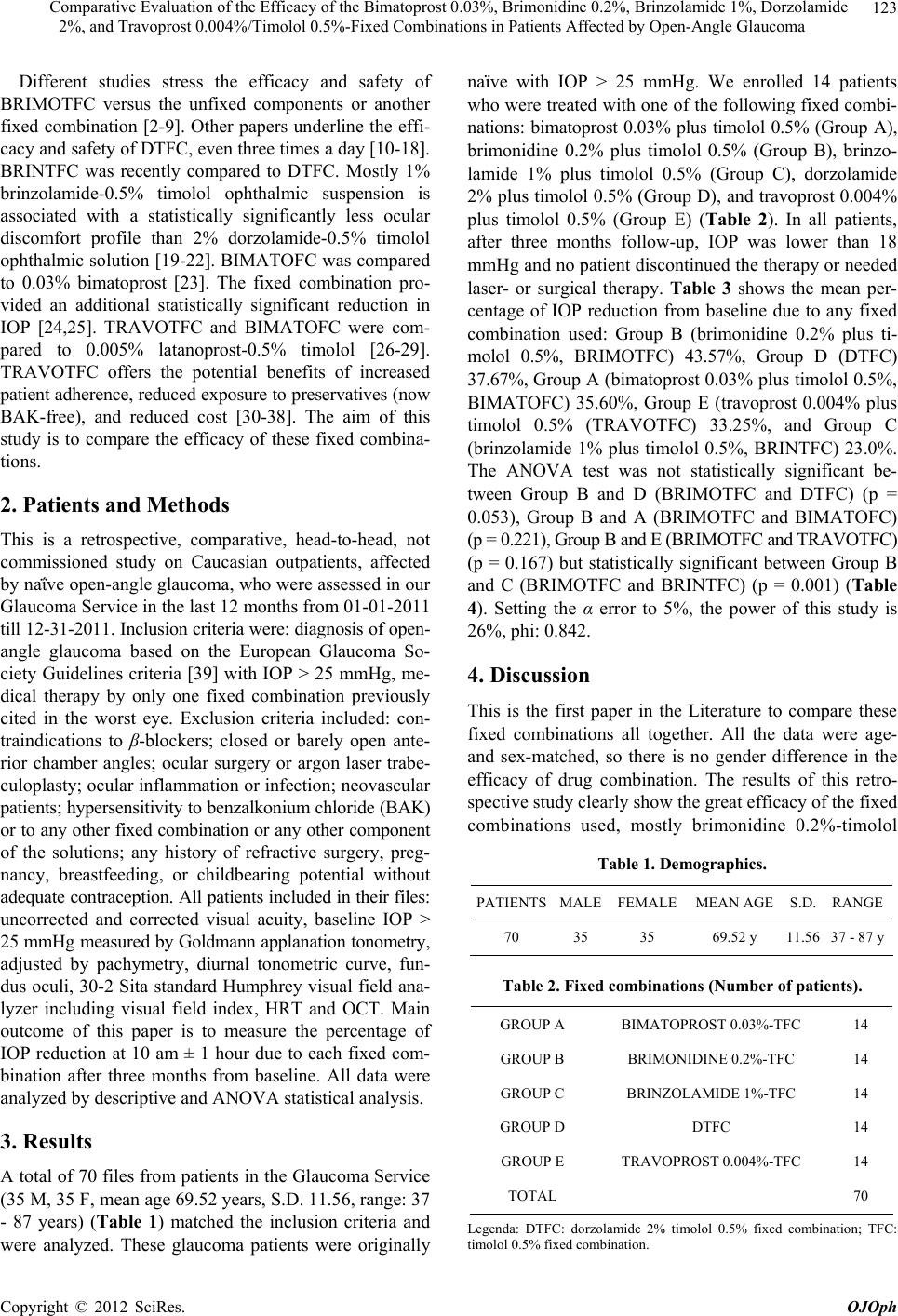 Comparative Evaluation of the Efficacy of the Bimatoprost 0.03%, Brimonidine 0.2%, Brinzolamide 1%, Dorzolamide 2%, and Travoprost 0.004%/Timolol 0.5%-Fixed Combinations in Patients Affected by Open-Angle Glaucoma 123 Different studies stress the efficacy and safety of BRIMOTFC versus the unfixed components or another fixed combination [2-9]. Other papers underline the effi- cacy and safety of DTFC, even three times a day [10-18]. BRINTFC was recently compared to DTFC. Mostly 1% brinzolamide-0.5% timolol ophthalmic suspension is associated with a statistically significantly less ocular discomfort profile than 2% dorzolamide-0.5% timolol ophthalmic solution [19-22]. BIMATOFC was compared to 0.03% bimatoprost [23]. The fixed combination pro- vided an additional statistically significant reduction in IOP [24,25]. TRAVOTFC and BIMATOFC were com- pared to 0.005% latanoprost-0.5% timolol [26-29]. TRAVOTFC offers the potential benefits of increased patient adherence, reduced exposure to preservatives (now BAK-free), and reduced cost [30-38]. The aim of this study is to compare the efficacy of these fixed combina- tions. 2. Patients and Methods This is a retrospective, comparative, head-to-head, not commissioned study on Caucasian outpatients, affected by naΐve open-angle glaucoma, who were assessed in our Glaucoma Service in the last 12 months from 01-01-2011 till 12-31-2011. Inclusion criteria were: diagnosis of open- angle glaucoma based on the European Glaucoma So- ciety Guidelines criteria [39] with IOP > 25 mmHg, me- dical therapy by only one fixed combination previously cited in the worst eye. Exclusion criteria included: con- traindications to β-blockers; closed or barely open ante- rior chamber angles; ocular surgery or argon laser trabe- culoplasty; ocular inflammation or infection; neovascular patients; hypersensitivity to benzalkonium chloride (BAK) or to any other fixed combination or any other component of the solutions; any history of refractive surgery, preg- nancy, breastfeeding, or childbearing potential without adequate contraception. All patients included in their files: uncorrected and corrected visual acuity, baseline IOP > 25 mmHg measured by Goldmann applanation tonometry, adjusted by pachymetry, diurnal tonometric curve, fun- dus oculi, 30-2 Sita standard Humphrey visual field ana- lyzer including visual field index, HRT and OCT. Main outcome of this paper is to measure the percentage of IOP reduction at 10 am ± 1 hour due to each fixed com- bination after three months from baseline. All data were analyzed by descriptive and ANOVA statistical analysis. 3. Results A total of 70 files from patients in the Glaucoma Service (35 M, 35 F, mean age 69.52 years, S.D. 11.56, range: 37 - 87 years) (Table 1) matched the inclusion criteria and were analyzed. These glaucoma patients were originally naïve with IOP > 25 mmHg. We enrolled 14 patients who were treated with one of the following fixed combi- nations: bimatoprost 0.03% plus timolol 0.5% (Group A), brimonidine 0.2% plus timolol 0.5% (Group B), brinzo- lamide 1% plus timolol 0.5% (Group C), dorzolamide 2% plus timolol 0.5% (Group D), and travoprost 0.004% plus timolol 0.5% (Group E) (Table 2). In all patients, after three months follow-up, IOP was lower than 18 mmHg and no patient discontinued the therapy or needed laser- or surgical therapy. Table 3 shows the mean per- centage of IOP reduction from baseline due to any fixed combination used: Group B (brimonidine 0.2% plus ti- molol 0.5%, BRIMOTFC) 43.57%, Group D (DTFC) 37.67%, Group A (bimatoprost 0.03% plus timolol 0.5%, BIMATOFC) 35.60%, Group E (travoprost 0.004% plus timolol 0.5% (TRAVOTFC) 33.25%, and Group C (brinzolamide 1% plus timolol 0.5%, BRINTFC) 23.0%. The ANOVA test was not statistically significant be- tween Group B and D (BRIMOTFC and DTFC) (p = 0.053), Group B and A (BRIMOTFC and BIMATOFC) (p = 0.221), Group B and E (BRIMOTFC and TRAVOTFC) (p = 0.167) but statistically significant between Group B and C (BRIMOTFC and BRINTFC) (p = 0.001) (Table 4). Setting the α error to 5%, the power of this study is 26%, phi: 0.842. 4. Discussion This is the first paper in the Literature to compare these fixed combinations all together. All the data were age- and sex-matched, so there is no gender difference in the efficacy of drug combination. The results of this retro- spective study clearly show the great efficacy of the fixed combinations used, mostly brimonidine 0.2%-timolol Table 1. Demographics. PATIENTSMALEFEMALEMEAN AGE S.D.RANGE 70 35 35 69.52 y 11.5637 - 87 y Table 2. Fixed combinations (Number of patients). GROUP A BIMATOPROST 0.03%-TFC 14 GROUP B BRIMONIDINE 0.2%-TFC 14 GROUP C BRINZOLAMIDE 1%-TFC 14 GROUP D DTFC 14 GROUP E TRAVOPROST 0.004%-TFC 14 TOTAL 70 Legenda: DTFC: dorzolamide 2% timolol 0.5% fixed combination; TFC: timolol 0.5% fixed combination. Copyright © 2012 SciRes. OJOph 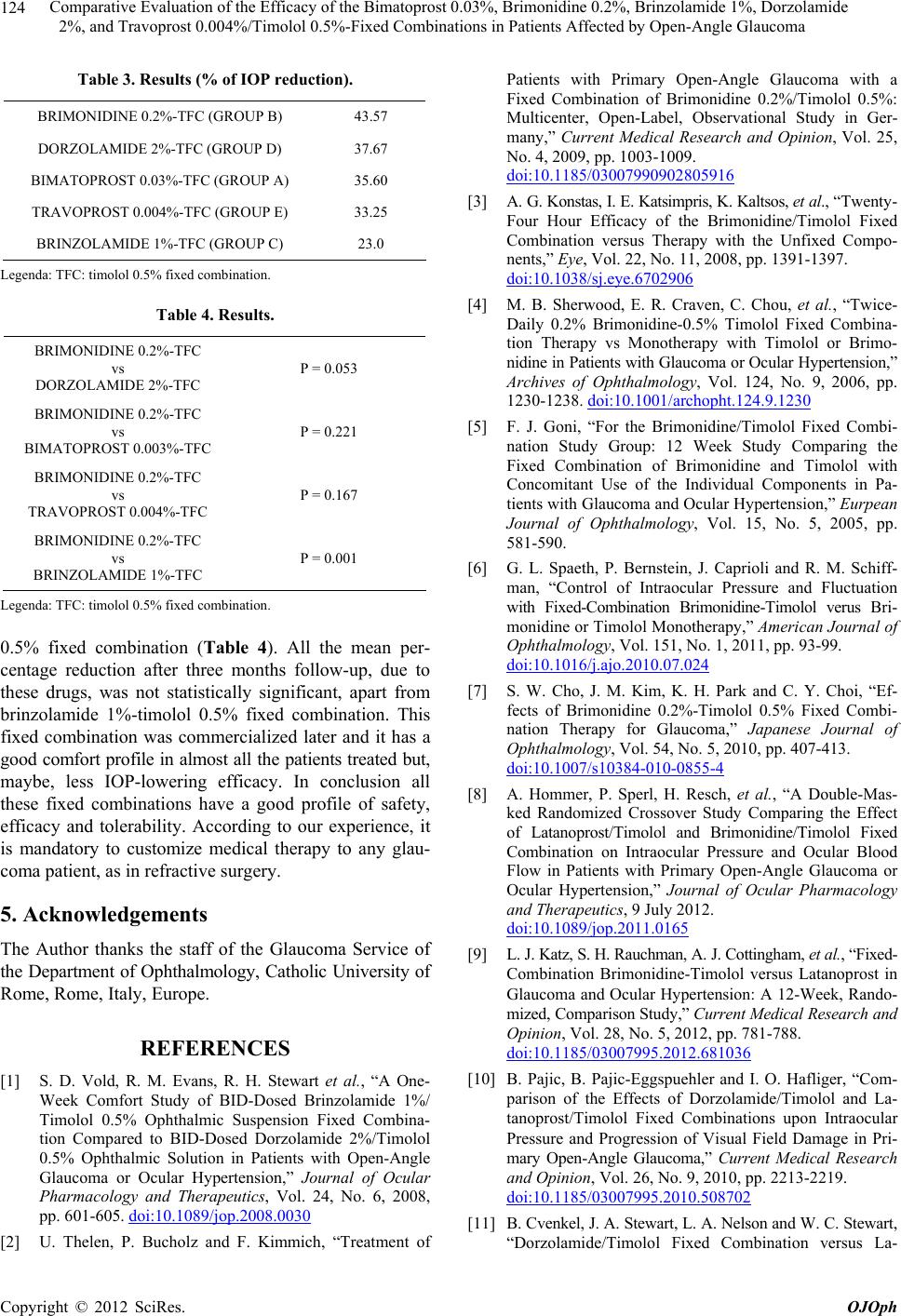 Comparative Evaluation of the Efficacy of the Bimatoprost 0.03%, Brimonidine 0.2%, Brinzolamide 1%, Dorzolamide 2%, and Travoprost 0.004%/Timolol 0.5%-Fixed Combinations in Patients Affected by Open-Angle Glaucoma 124 Table 3. Results (% of IOP reduction). BRIMONIDINE 0.2%-TFC (GROUP B) 43.57 DORZOLAMIDE 2%-TFC (GROUP D) 37.67 BIMATOPROST 0.03%-TFC (GROUP A) 35.60 TRAVOPROST 0.004%-TFC (GROUP E) 33.25 BRINZOLAMIDE 1%-TFC (GROUP C) 23.0 Legenda: TFC: timolol 0.5% fixed combination. Table 4. Results. BRIMONIDINE 0.2%-TFC vs DORZOLAMIDE 2%-TFC P = 0.053 BRIMONIDINE 0.2%-TFC vs BIMATOPROST 0.003%-TFC P = 0.221 BRIMONIDINE 0.2%-TFC vs TRAVOPROST 0.004%-TFC P = 0.167 BRIMONIDINE 0.2%-TFC vs BRINZOLAMIDE 1%-TFC P = 0.001 Legenda: TFC: timolol 0.5% fixed combination. 0.5% fixed combination (Table 4). All the mean per- centage reduction after three months follow-up, due to these drugs, was not statistically significant, apart from brinzolamide 1%-timolol 0.5% fixed combination. This fixed combination was commercialized later and it has a good comfort profile in almost all the patients treated but, maybe, less IOP-lowering efficacy. In conclusion all these fixed combinations have a good profile of safety, efficacy and tolerability. According to our experience, it is mandatory to customize medical therapy to any glau- coma patient, as in refractive surgery. 5. Acknowledgements The Author thanks the staff of the Glaucoma Service of the Department of Ophthalmology, Catholic University of Rome, Rome, Italy, Europe. REFERENCES [1] S. D. Vold, R. M. Evans, R. H. Stewart et al., “A One- Week Comfort Study of BID-Dosed Brinzolamide 1%/ Timolol 0.5% Ophthalmic Suspension Fixed Combina- tion Compared to BID-Dosed Dorzolamide 2%/Timolol 0.5% Ophthalmic Solution in Patients with Open-Angle Glaucoma or Ocular Hypertension,” Journal of Ocular Pharmacology and Therapeutics, Vol. 24, No. 6, 2008, pp. 601-605. doi:10.1089/jop.2008.0030 [2] U. Thelen, P. Bucholz and F. Kimmich, “Treatment of Patients with Primary Open-Angle Glaucoma with a Fixed Combination of Brimonidine 0.2%/Timolol 0.5%: Multicenter, Open-Label, Observational Study in Ger- many,” Current Medical Research and Opinion, Vol. 25, No. 4, 2009, pp. 1003-1009. doi:10.1185/03007990902805916 [3] A. G. Konstas, I. E. Katsimpris, K. Kaltsos, et al., “Twenty- Four Hour Efficacy of the Brimonidine/Timolol Fixed Combination versus Therapy with the Unfixed Compo- nents,” Eye, Vol. 22, No. 11, 2008, pp. 1391-1397. doi:10.1038/sj.eye.6702906 [4] M. B. Sherwood, E. R. Craven, C. Chou, et al., “Twice- Daily 0.2% Brimonidine-0.5% Timolol Fixed Combina- tion Therapy vs Monotherapy with Timolol or Brimo- nidine in Patients with Glaucoma or Ocular Hypertension,” Archives of Ophthalmology, Vol. 124, No. 9, 2006, pp. 1230-1238. doi:10.1001/archopht.124.9.1230 [5] F. J. Goni, “For the Brimonidine/Timolol Fixed Combi- nation Study Group: 12 Week Study Comparing the Fixed Combination of Brimonidine and Timolol with Concomitant Use of the Individual Components in Pa- tients with Glaucoma and Ocular Hypertension,” Eurpean Journal of Ophthalmology, Vol. 15, No. 5, 2005, pp. 581-590. [6] G. L. Spaeth, P. Bernstein, J. Caprioli and R. M. Schiff- man, “Control of Intraocular Pressure and Fluctuation with Fixed-Combination Brimonidine-Timolol verus Bri- monidine or Timolol Monotherapy,” American Journal of Ophthalmology, Vol. 151, No. 1, 2011, pp. 93-99. doi:10.1016/j.ajo.2010.07.024 [7] S. W. Cho, J. M. Kim, K. H. Park and C. Y. Choi, “Ef- fects of Brimonidine 0.2%-Timolol 0.5% Fixed Combi- nation Therapy for Glaucoma,” Japanese Journal of Ophthalmology, Vol. 54, No. 5, 2010, pp. 407-413. doi:10.1007/s10384-010-0855-4 [8] A. Hommer, P. Sperl, H. Resch, et al., “A Double-Mas- ked Randomized Crossover Study Comparing the Effect of Latanoprost/Timolol and Brimonidine/Timolol Fixed Combination on Intraocular Pressure and Ocular Blood Flow in Patients with Primary Open-Angle Glaucoma or Ocular Hypertension,” Journal of Ocular Pharmacology and Therapeutics, 9 July 2012. doi:10.1089/jop.2011.0165 [9] L. J. Katz, S. H. Rauchman, A. J. Cottingham, et al., “Fixed- Combination Brimonidine-Timolol versus Latanoprost in Glaucoma and Ocular Hypertension: A 12-Week, Rando- mized, Comparison Study,” Current Medical Research and Opinion, Vol. 28, No. 5, 2012, pp. 781-788. doi:10.1185/03007995.2012.681036 [10] B. Pajic, B. Pajic-Eggspuehler and I. O. Hafliger, “Com- parison of the Effects of Dorzolamide/Timolol and La- tanoprost/Timolol Fixed Combinations upon Intraocular Pressure and Progression of Visual Field Damage in Pri- mary Open-Angle Glaucoma,” Current Medical Research and Opinion, Vol. 26, No. 9, 2010, pp. 2213-2219. doi:10.1185/03007995.2010.508702 [11] B. Cvenkel, J. A. Stewart, L. A. Nelson and W. C. Stewart, “Dorzolamide/Timolol Fixed Combination versus La- Copyright © 2012 SciRes. OJOph  Comparative Evaluation of the Efficacy of the Bimatoprost 0.03%, Brimonidine 0.2%, Brinzolamide 1%, Dorzolamide 2%, and Travoprost 0.004%/Timolol 0.5%-Fixed Combinations in Patients Affected by Open-Angle Glaucoma 125 tanoprost/Timolol Fixed Combination in Patients with Primary Open-Angle Glaucoma or Ocular Hypertension,” Current Eyes Research, Vol. 33, No. 2, 2008, pp. 163- 168. doi:10.1080/02713680701832480 [12] T. Rolle, F. Tofani, B. Brogliatti and F. M. Grignolo, “The Effects of Dorzolamide 2% and Dorzolamide/Ti- molol Fixed Combination on Retinal and Optic Nerve Head Blood Flow in Primary Open-Angle Glaucoma Pa- tients,” Eye, Vol. 22, No. 9, 2008, pp. 1172-1179. doi:10.1038/sj.eye.6703071 [13] E. D. Sharpe, R. D. Williams, J. A. Stewart, et al., “A Comparison of Dorzolamide/Timolol Fixed Combination versus Bimatoprost in Patients with Open-Angle Glau- coma Who Are Poorly Controlled on Latanoprost,” Jour- nal of Ocular Pharmacology and Therapeutics, Vol. 24, No. 4, 2008, pp. 408-413. doi:10.1089/jop.2008.0003 [14] J. Mulaney, S. Sonty, A. Ahmad, et al., “Comparison of Daytime Efficacy and Safety of Dorzolamide/Timolol Maleate Fixed Combination versus Latanoprost,” Euro- pean Journal of Ophthalmology, Vol. 18, No. 4, 2008, pp. 556-562. [15] L. Quaranta. S. Miglior, I. Floriani, et al., “Effects of the Timolol-Dorzolamide Fixed Combination and Latano- prost on Circadian Diastolic Ocular Perfusion Pressure in Glaucoma,” Investigative Ophthalmology & Visual Sci- ence, Vol. 49, No. 10, 2008, pp. 4226-4231. [16] A. G. Konstas, L. Quaranta, D. B. Yan, et al., “Twenty- Four Hour Efficacy with the Dorzolamide/Timolol-Fixed Combination Compared with the Brimonidine/Timolol- Fixed Combination in Primary Open-Angle Glaucoma,” Eye, Vol. 26, No. 1, 2011, pp. 80-87. doi:10.1038/eye.2011.239 [17] M. H. Eren, H. Gungel, C. Altan, et al., “Comparison of Dorzolamide/Timolol and Latanoprost/Timolol Fixed Combinations on Diurnal Intraocular Pressure Control in Primary Open-Angle Glaucoma,” Journal of Ocular Phar- macology and Therapeutics, Vol. 28, No. 4, 2012, pp. 381- 386. doi:10.1089/jop.2011.0105 [18] G. Shemesh, E. Moisseiev and M. S. Lazar, “Intraocular Pressure Reduction of Fixed Combination Timolol Ma- leate 0.5% and Dorzolamide 2% (Cosopt) Administered Three Times a Day,” Journal of Clinical Ophthalmology, Vol. 6, 2012, pp. 283-287. [19] G. Hollo, B. Bozkurt and M. Irkec, “Brinzolamide/Ti- molol Fixed Combination: A New Ocular Suspension for the Treatment of Open-Angle Glaucoma and Ocular Hy- pertension,” Expert Opinion on Pharmacotherapy, Vol. 10, No. 12, 2009, pp. 2015-2024. doi:10.1517/14656560903124388 [20] G. L. Manni, P. Denis, P. Chew, et al., “The Safety and Efficacy of Brinzolamide 1%/Timolol 0.5% in Patients with Open-Angle Glaucoma or Ocular Hypertension,” Journal of Glaucoma, Vol. 18, No. 4, 2009, pp. 293-300. doi:10.1097/IJG.0b013e31818fb434 [21] M. F. Syed and E. K. Loucks, “Update and Optimal Use of a Brinzolamide-Timolol Fixed Combination in Open- Angle Glaucoma and Ocular Hypertension,” Journal of Clinical Ophthalmology, Vol. 5, 2011, pp. 1291-1296. doi:10.2147/OPTH.S13786 [22] M. Nebbioso, M. Evangelista, A. Librando, D. di Blasio and N. Pescosolido, “Fixed Topical Combinations in Glau- comatous Patients and Ocular Discomfort,” Expert Opin- ion on Pharmacotherapy, Vol. 13, No. 13, 2012, pp. 1289- 1295. doi:10.1517/14656566.2012.705830 [23] A. Katsanos, A. I. Dastiridou, M. Fanariotis, et al., “Bima- toprost and Bimatoprost/Timolol Fixed Combination in Patients with Open-Angle Glaucoma and Ocular Hyper- Tension,” Journal of Ocular Pharmacology and Thera- peutics, Vol. 27, No. 1, 2011, pp. 67-71. doi:10.1089/jop.2010.0090 [24] G. Brief, T. Lammich, E. Nagel, et al., “Fixed Combina- tion of Bimatoprost and Timolol in Patients with Primary Open-Angle Glaucoma or Ocular Hypertension With In- adequate IOP Adjustment,” Journal of Clinical Ophthal- mology, Vol. 5, No. 4, 2010, pp. 1125-1129. [25] R. Jothi, A. M. Ismail, R. Senthamarai and S. Pal, “A Com- parative Study on the Efficacy, Safety, and Cost-Effec- tiveness of Bimatoprost/Timolol and Dorzolamide/Ti- molol Combinations in Glaucoma Patients,” Indian Journal of Pharmacology, Vol. 42, No. 6, 2010, pp. 362-365. doi:10.4103/0253-7613.71917 [26] M. Centofanti, F. Oddone, S. Gandolfi, et al., “Compari- son of Travoprost and Bimatoprost Plus Timolol Fixed Combinations in Open-Angle Glaucoma Patients Previ- ously Treated with Latanoprost Plus Timolol Fixed Com- bination,” American Journal of Ophthalmology, Vol. 150, No. 4, 2010, pp. 575-580. doi:10.1016/j.ajo.2010.05.003 [27] A. G. P. Konstas, S. Tsironi, A. N. Vakalis, et al., “Intra- ocular Pressure Control over 24 Hours Using Travoprost and Timolol Fixed Combination Administered in the Morning or Evening in Primary Open-Angle and Exfo- liative Glaucoma,” Acta Ophthalmologyl, Vol. 87, No. 1, 2009, pp. 71-76. doi:10.1111/j.1755-3768.2007.01145.x [28] A. G. Konstas, D. G. Mikropoulos, T. A. Embeslidis, et al., “24-H Intraocular Pressure Control with Evening Dosed Travoprost/Timolol, Compared with Latanoprost/Timolol, Fixed Combinations in Exfoliative Glaucoma,” Eye, Vol. 24, No. 10, 2010, pp. 1606-1613. doi:10.1038/eye.2010.100 [29] F. Aptel, M. Cucherat and P. Denis, “Efficacy and Toler- ability of Prostaglandin-Timolol Fixed Combinations: A Meta-Analysis of Randomized Clinical Trials,” European Journal of Ophthalmology, Vol. 22, No. 1, 2012, pp. 5- 18. doi:10.5301/ejo.5000009 [30] M. Herceg and R. Noecker, “Travoprost/Timolol Fixed Combination,” Expert Opinion on Pharmacotherapy, Vol. 9, No. 6, 2008, pp. 1059-1065. doi:10.1517/14656566.9.6.1059 [31] P. Fogagnolo and L. Rossetti, “Medical Treatment of Glaucoma: Present and Future,” Expert Opinion on Inves- tigational Drugs, Informa Healthcare, Vol. 20, No. 7, 2011, pp. 947-959. [32] J. P. Rigollet, J. A. Ondategui, A. Pasto and L. Lop, “Ran- domized Trial Comparing Three Fixed Combinations of Prostaglandins/Prostamide with Timolol Maleate,” Jour- nal of Clinical Ophthalmology, Vol. 5, 2011, pp. 187- Copyright © 2012 SciRes. OJOph  Comparative Evaluation of the Efficacy of the Bimatoprost 0.03%, Brimonidine 0.2%, Brinzolamide 1%, Dorzolamide 2%, and Travoprost 0.004%/Timolol 0.5%-Fixed Combinations in Patients Affected by Open-Angle Glaucoma Copyright © 2012 SciRes. OJOph 126 191. [33] A. Hommer, “Role of Fixed Combinations in the Man- agement of Open-Angle Glaucoma,” Expert Reviews of Pharmacoecon Outcomes Research, Vol. 11, No. 1, 2011, pp. 91-99. doi:10.1586/erp.10.83 [34] P. Denis, “Travoprost/Timolol Fixed Combination in the Management of Open-Angle Glaucoma: A Clinical Re- view,” Expert Opinion on Pharmacotherapy, Vol. 12, No. 3, 2011, pp. 463-471. doi:10.1517/14656566.2011.551007 [35] M. L. Scherzer, I. Liehneova, F. J. M. Negrete and D. Schnober, “Combinazione Fissa Travoprost 0.004%/Ti- mololo 0.5% Nei Pazienti in Transizione Terapeutica da Bimatoprost 0.03%/Timololo 0.5% Combinazione Fissao Non Fissa,” Advances in Therapy, Vol. 28, No. 8, 2011, pp. 661-670. doi:10.1007/s12325-011-0043-z [36] A. G. Konstas, L. Quaranta and T. Realini, “Overview of the BAK-Free Travoprost/Timolol BAK-Free Fixed Com- bination,” Expert Opinion on Pharmacotherapy, Vol. 13, No. 5, 2012, pp. 757-766. doi:10.1517/14656566.2012.662485 [37] V. P. Costa, H. Moreira, M. D. Paolera and M. R. de Moraes- Silva, “Efficacy and Safety of Travoprost 0.004%/Ti- molol 0.5% Fixed Combination as Transition Therapy in Patients Previously on Prostaglandin Analog Monothe- rapy,” Journal of Clinical Ophthalmology, Vol. 6, 2012, pp. 699-706. doi:10.2147/OPTH.S30717 [38] K. Kashiwagi, “Efficacy and Safety of Switching to Tra- voprost/Timolol Fixed-Combination Therapy from La- tanoprost Therapy,” Japanese Journal of Ophthalmology, Vol. 56, No. 4, 2012, pp. 339-345. doi:10.1007/s10384-012-0139-2 [39] European Glaucoma Society (EGS), “Terminology and Guidelines for Glaucoma,” Editrice Dogma S.R.L., Sa- vona, 2008. |