

Paper Menu >>
Journal Menu >>
 Open Journal of Psychiatry, 2012, 2, 292-300 OJPsych http://dx.doi.org/10.4236/ojpsych.2012.24041 Published Online October 2012 (http://www.SciRP.org/journal/ojpsych/) Ethnic density and prevalence of psychiatric morbidity among patients with hiv infection in Sokoto, Nigeria—A control study Mufutau A. Yunusa*, Ayodele Obembe Department of Psychiatry, Usmanu Danfodiyo University, Sokoto, Nigeria Email: *[email protected] Received 4 September 2012; revised 2 October 2012; accepted 10 October 2012 ABSTRACT Background: Previous studies among people living with HIV infection suggested that prevalence of psy- chiatric morbidity was high. In addition, among non- HIV infected patients, ethnic density influence the prevalence. The present study was aimed to deter- mine the prevalence and effects of ethnic density on psychiatric morbidity among these patients in Sokoto, Nigeria. Methods: This prospective cross-sectional study was conducted among patients who had been diagnosed with HIV infection in a teaching hospital in Sokoto. Questionnaire relating to sociodemographic variables and psychiatric morbidity were adminis- tered to the patients. Data obtained were analyzed using SPSS version 16.0 while test for significance was set at P < 0.05. Result: The mean age of the pa- tient was 32 ± 9 years (range = 12 - 63), male being older than the female. Of the patients, 71% were married while and about two third were of Islamic religion. Twenty seven percent had no formal educa- tion and were mainly Hausa/Fulani ethnicity. Seven percent of the patients had definite depression while 8% had definite anxiety. When the subjects were di- chotomized to Hausa/Fulani and others, they were similar with regard to age and gender (χ2 = 4.43; P = 0.49 and χ2 = 0.22; P = 0.64 respectively). Across the ethnicity (Hausa/Fulani and others), the subjects dif- fer significantly with regard to religion (χ2 = 0.68; P = 0.00), marital status (χ2 = 15.05; P = 0.00), education (χ2 = 30.56; P = 0.00) and employment status (χ2 = 9.81; P = 0.01). The Hausa/Fulani ethnic group had less psychiatric morbidity. In addition, marital status had significant pathoplastic effect on depression across ethnicity (χ2 = 0.42; P = 0.02). Conclusion: Ethnic density was associated with decrease preva- lence of common mental disorder among patients with HIV infection. Environmental manipulation may play a role in the management of this patient. Keywords: Ethnicity; HIV; Morbidity; Prevalence; Psychiatric 1. INTRODUCTION The prevalence of anxiety and depression among HIV patients is high, however varied [1-3]. In one report, nearly half of the patients with HIV infection were re- ported to have psychiatric morbidity [4]. However in another study a smaller percentage was reported [5]. A prevalence of 22% to 32% [6,7] which was 2 to 3 times higher than the prevalence of psychiatric disorders in general community population has also been reported. However in a longitudinal study of Maj et al. [5], lower prevalence of 9% of major depression and 2% of anxiety disorder were reported after 6-months follow up [8]. In south west Nigeria, prevalence of depression among pa- tients with HIV infection was 59.1% [9]. The effects of psychiatric morbidity on HIV infection underscored the need to study psychiatric morbidity c l osel y among the patients and identify the predisposing factors. Depression and anxiety disorder were reported to speed progression of the disease [10,11]. In addition, depres- sion has negative effect on course and outcome of HIV infection [12] and substantially impact on quality of life of patients while anxiety has negative consequence on social role and mental functioning [13]. Ethnic density is one factor that had been reported to influence distribution of psychiatric morbidity and in particular beneficial pathoplastic effects on psychiatric morbidity. It is defined as the relative size of a given ethnic group in a multi ethnic neighbourhood [14]. In one report Rabkin [14] reported on the hazards of ethnic minority status on psychiatric hospitalization. They showed that the ethnic density had protective association on suicide and self harm as well as on psychosis [15]. In a large community study in England and Wales [16], 5167 ethnic minority and 2867 white were studied. The protective effects of ethnic density on psychiatric *Corresponding a uthor. OPEN ACCESS  M. A. Yunusa, A. Obembe / Open Journal of Psychiatry 2 (2012) 292-300 293 morbidity were also observed. T his st udy wa s aimed at determin ing the influen ce of eth- nic density on prevalence of anxiety and depression among Hausa/Fulani ethnic group with HIV infection in Sokoto. 2. METHODS 2.1. Study Design and Location This was part of a large study. Detail on methodology was reported in earlier report [17]. This cross sectional study was carried out among patients who were dia- gnosed of HIV infection at the VCT [voluntary coun- seling and testing] centre of Usmanu Danfodiyo Univer- sity Teaching Hospital, Sokoto, North Western Nigeria. The study included 167 consecutive adult patients who were attending their routine clinic. Both symptomatic and non symptomatic patients were included. 2.2. Data Collection Variables relating to socio demographic profile and substance use were obtained throu gh the use of questionnaire designed by the authors while psychiatric morbidity was assessed using Hospital Anxiety and Depression Scale (HADS) [18]. 2.3. Sociodemographic Questionnaire Sociodemographic questionnaire was designed by the authors to enquire about basic epidemiological variables including age, sex, occupation and religion. 2.4. Hospital Anxiety and Depression Scale This 14-item questionnaire was developed by Zigmond and Snaith [18] to determine the presence of anxiety and depression among patients with medical conditions. Using Likert scoring scale, score range is 0 - 21 for each of the condition. While patients with score of 0 - 7 are considered as non cases, those that scored 8 - 10 and 11 and above were considered as borderline and definite cases for anxiety or depression respectively. It has been validated and used in previous studies in Nigeria. Abiodun [19] reported from a Nigerian community that the sensitivity for the anxiety subscale ranged from 85.0% in the medical and surgical wards to 92.9% in the ante-natal clinic, while sensitivity for the depression sub-scale ranged from 89.5% in the community sample to 92.1% in the gynaecology clinic. The specificity for the anxiety sub-scale ranged from 86.5% in the gynae- colog y clinic to 90.6% in the community sample, while specificity for the depression sub-scale ranged from 86.6% in the medical and surgical wards to 91.1% in the ante-natal clinic and community sample. Misclassi- fication rates ranged from 9.9% in the community sam- ple to 13.2% in the medical and surgical wards. Rela- tive operating characteristics (ROC) analyses showed the HADS and the GHQ 12 to be quite similar in ability to discriminate between cases and non cases. Fatoye et al. [20] used HADS in the study of prevalence of anxi- ety and depression in patients with epilepsy in a Nige- rian community. A study had shown that depression subscale is useful to determine the presence of clinical depression than beck depression inventory (Jose, et al.) [21]. 2.5. Analysis For the purpose of analysis anxiety and depressive symp- toms was made for any patients that cross the threshold of 7 on HADS in the scoring thereby comprising of bor- derline and definite anxiety and depression, while those with definite anxiety and depression were treated sepa- rately in other analysis. In addition age of onset of illness was calculated hypothetically by subtracting age at time of the study from the period since the illness was diagnosed. Data was analyzed descriptively using SPSS for win- dows version 16.0. Cases with missing data for the HADS were excluded. 3. RESULT A total of one hundred and sixty seven consecutive adult patients were recruited for the study. Of these patients, 8 (4.8%) did not fill HADS questionnaire completely to be incorporated into the analysis giving response rate of 95.2%. Eighty six (55.8%) of them were Hausa/Fulani ethnic group while 68 (44.2%) others included Yoruba, Igbo among others (Figure 1). The mean age of the pa- tients was 34.52 ± 8.93. One hundred and fourteen (71 .7 %) w er e mar r i ed , 25 (15.7%) were widowed, 8 (5%) were divorced and 11 (8.9%) were never married. Also, ninety seven (61%) were Muslims and 60 (37.7%) were Christians. About a quarter of the patients had no formal education while about 30% had post secondary educa- tion. Of the subjects, fifteen (9.5%) were found to have borderline depression while 12 (7.6%) had definite de- pression. In addition, 10 (6.3%) were found to have anxiety while 14 (8.8%) had definite anxiety (Tables 1 and 2). Mean score for the patients on HADS—anxiety, subscale was 3.62 ± 4.03 and HADS (depression) was 4.33 ± 3.81. The mean HADS score for anxiety and de- pression among patients who had definite anxiety and depression were 13.00 ± 2.63 and 13.17 ± 2.76 respec- tively. Table 3 showed the sociodemographic of the Hausa/Fulani ethnic group against the other ethnic group. With regard to age and gender, the two groups were similar (χ2 = 4.43; P = 0.49) and (χ2 = 0.22; P = 0.64). The groups differed significantly across religion (χ2 = 0.68; P = 0.00) and marital status with more of the Hausa/Fulani ethnic group being widow (χ2 = 15.05; P = 0.00). In addition more of the Hausa ethnic group had no Copyright © 2012 SciRes. OPEN ACCESS 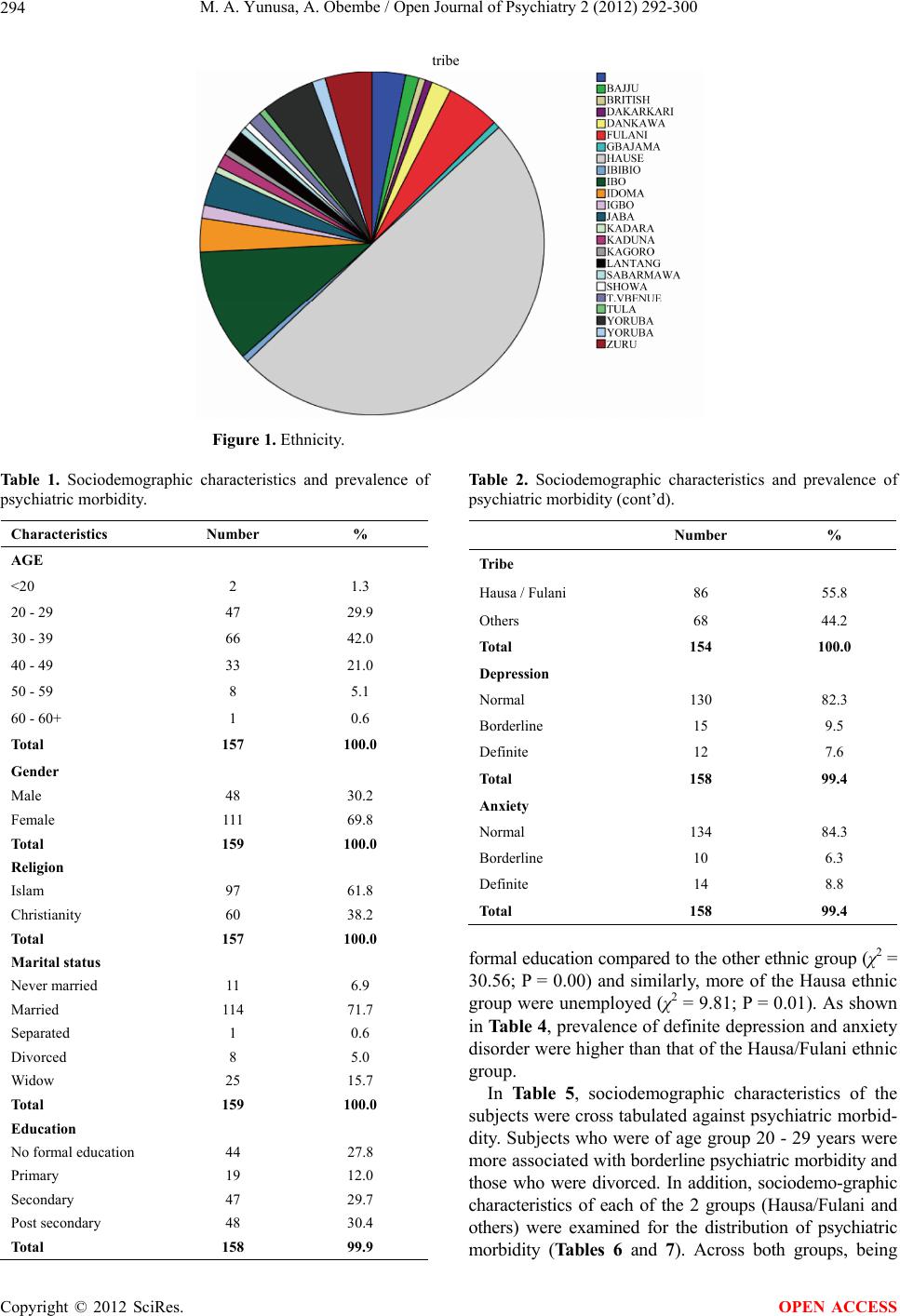 M. A. Yunusa, A. Obembe / Open Journal of Psychiatry 2 (2012) 292-300 Copyright © 2012 SciRes. 294 tribe Figure 1. Ethnicity. Table 1. Sociodemographic characteristics and prevalence of psychiatric morbidity. Table 2. Sociodemographic characteristics and prevalence of psychiatric morbidity (cont’d). Characteristics Number % AGE <20 2 1.3 20 - 29 47 29.9 30 - 39 66 42.0 40 - 49 33 21.0 50 - 59 8 5.1 60 - 60+ 1 0.6 Total 157 100.0 Gender Male 48 30.2 Female 111 69.8 Total 159 100.0 Religion Islam 97 61.8 Christianity 60 38.2 Total 157 100.0 Marital status Never married 11 6.9 Married 114 71.7 Separated 1 0.6 Divorced 8 5.0 Widow 25 15.7 Total 159 100.0 Education No formal education 44 27.8 Primary 19 12.0 Secondary 47 29.7 Post secondary 48 30.4 Total 158 99.9 Number % Tribe Hausa / Fulani 86 55.8 Others 68 44.2 Total 154 100.0 Depression Normal 130 82.3 Borderline 15 9.5 Definite 12 7.6 Total 158 99.4 Anxiety Normal 134 84.3 Borderline 10 6.3 Definite 14 8.8 Total 158 99.4 formal education compared to the other ethnic group (χ2 = 30.56; P = 0.00) and similarly, more of the Hausa ethnic group were unemployed (χ2 = 9.81; P = 0.01). As shown in Table 4, prevalence of definite depression and anxiety disorder were higher than that of the Hausa/Fulani ethnic group. In Table 5, sociodemographic characteristics of the subjects were cross tabulated against psychiatric morbid- dity. Subjects who were of age group 20 - 29 years were mor e as s oci a t ed with borderline psychiatric morbidity and those who were divorced. In addition, sociodemo-graphic characteristics of each of the 2 groups (Hausa/Fulani and others) were examined for the distribution of psychiatric morbidity (Tables 6 and 7). Across both groups, being OPEN ACCESS 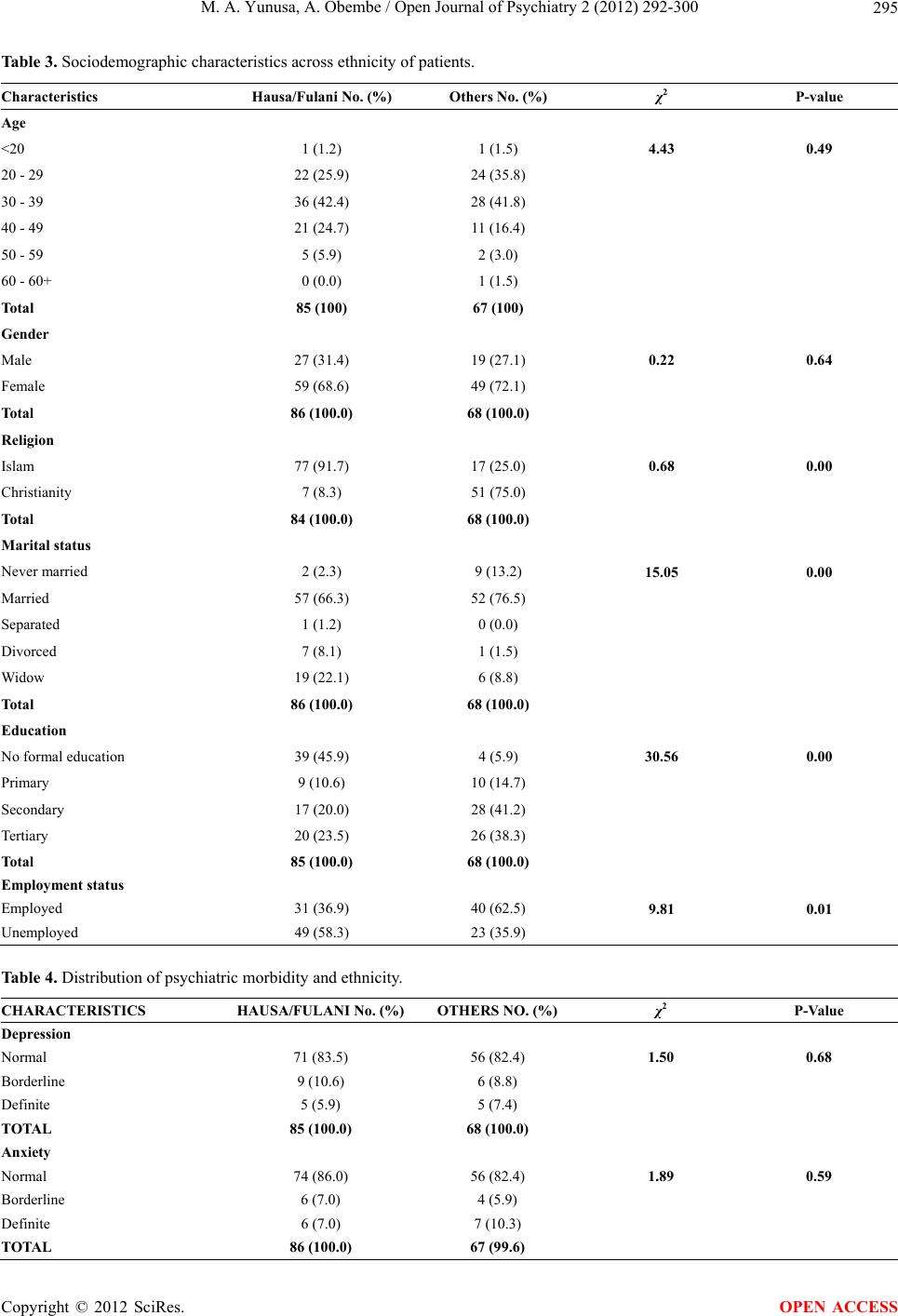 M. A. Yunusa, A. Obembe / Open Journal of Psychiatry 2 (2012) 292-300 295 Table 3. Sociodemographic characteristics across ethnicity of patients. Characteristics Hausa/Fulani No. (%) Others No. (%) χ2 P-value Age <20 1 (1.2) 1 (1.5) 4.43 0.49 20 - 29 22 (25.9) 24 (35.8) 30 - 39 36 (42.4) 28 (41.8) 40 - 49 21 (24.7) 11 ( 1 6.4) 50 - 59 5 (5.9) 2 (3.0) 60 - 60+ 0 (0.0) 1 (1.5) Total 85 (100) 67 (100) Gender Male 27 (31.4) 19 (27.1) 0.22 0.64 Female 59 (68.6) 49 (72.1) Total 86 (100.0) 68 (100.0) Religion Islam 77 (91.7) 17 (25.0) 0.68 0.00 Christianity 7 (8.3) 51 (75.0) Total 84 (100.0) 68 (100.0) Marital status Never married 2 (2.3) 9 (13.2) 15.05 0.00 Married 57 (66.3) 52 (76.5) Separated 1 (1.2) 0 (0.0) Divorced 7 (8.1) 1 (1.5) Widow 19 (22.1) 6 (8.8) Total 86 (100.0) 68 (100.0) Education No formal education 39 (45.9) 4 (5.9) 30.56 0.00 Primary 9 (10.6) 10 (14.7) Secondary 17 (20.0) 28 (41.2) Tertiary 20 (23.5) 26 (38.3) Total 85 (100.0) 68 (100.0) Employment status Employed 31 (36.9) 40 (62.5) 9.81 0.01 Unemploy e d 49 (58.3) 23 (35.9) Table 4. Distribution of psychiatric morbidity and ethnicity. CHARACTERISTICS HAUSA/FULANI No. (%)OTHERS NO. (%) χ2 P-Value Depression Normal 71 (83.5) 56 (82.4) 1.50 0.68 Borderline 9 (10.6) 6 (8.8) Definite 5 (5.9) 5 (7.4) TOTAL 85 (100.0) 68 (100.0) Anxiety Normal 74 (86.0) 56 (82.4) 1.89 0.59 Borderline 6 (7.0) 4 (5.9) Definite 6 (7.0) 7 (10.3) TOTAL 86 (100.0) 67 (99.6) Copyright © 2012 SciRes. OPEN ACCESS 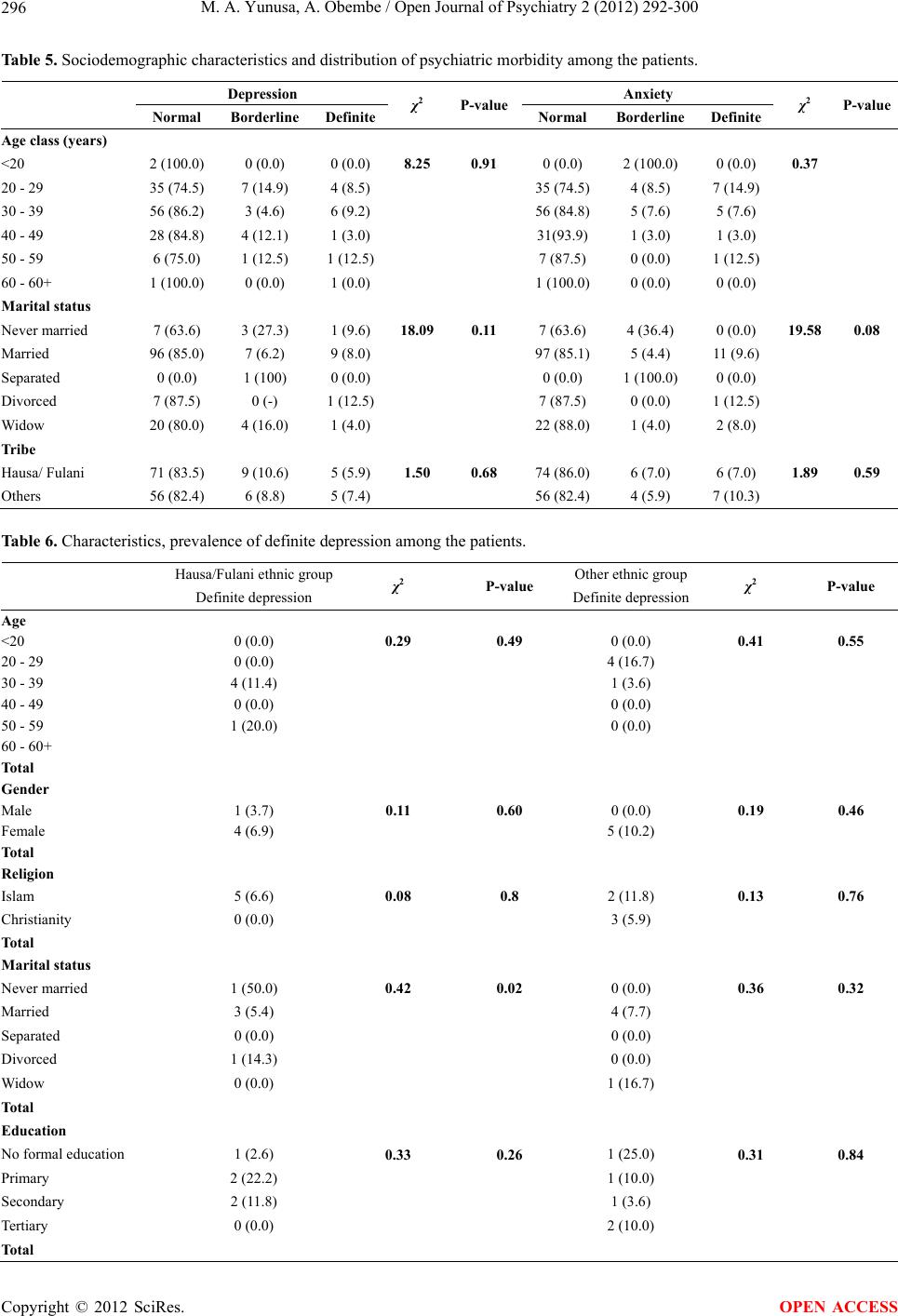 M. A. Yunusa, A. Obembe / Open Journal of Psychiatry 2 (2012) 292-300 296 Table 5. Sociodemographic charac teristics and distribution of psychiatric morbidity among the patients. Depression Anxiety Normal Borderline Definiteχ2 P-valueNormal Borderline Definite χ2 P-value Age class (years) <20 2 (100.0) 0 (0.0) 0 (0.0) 8.25 0.91 0 (0. 0) 2 (100.0) 0 (0.0) 0.37 20 - 29 35 (74.5) 7 (14.9) 4 (8.5) 35 (74.5)4 (8.5) 7 (14.9) 30 - 39 56 (86.2) 3 (4.6) 6 (9.2) 56 (84.8)5 (7.6) 5 (7.6) 40 - 49 28 (84.8) 4 (12.1) 1 (3.0) 31(93.9) 1 (3.0) 1 (3.0) 50 - 59 6 (75.0) 1 (12. 5 ) 1 (12.5) 7 (87.5) 0 (0.0) 1 (12.5) 60 - 60+ 1 (100.0) 0 (0.0) 1 (0.0) 1 (100.0)0 (0.0) 0 (0.0) Marital status Never married 7 (63.6) 3 (27.3) 1 (9.6) 18.090.11 7 (63.6) 4 (36.4) 0 ( 0.0) 19.580.08 Married 96 (85.0) 7 (6.2) 9 (8.0) 97 (85.1)5 (4.4) 11 (9.6) Separated 0 (0.0) 1 (100) 0 (0.0) 0 (0.0) 1 (10 0.0) 0 (0.0) Divorced 7 (87.5) 0 (-) 1 (12.5) 7 (87.5) 0 (0.0) 1 (12.5) Widow 20 (80.0) 4 (16.0) 1 (4.0) 22 (88.0)1 (4.0) 2 (8.0) Tribe Hausa/ Fulani 7 1 (83.5) 9 (10.6) 5 (5.9) 1.50 0.68 74 (86.0)6 (7.0) 6 (7.0) 1.89 0.59 Others 56 (82.4) 6 (8.8) 5 (7.4) 56 (82.4)4 (5.9) 7 (10.3) Table 6. Characteristics, prevalence of definite depression among the patients. Hausa/Fulani ethnic group Other ethnic group Definite depression χ2 P-value Definite depression χ2 P-value Age <20 0 (0.0) 0.29 0.49 0 (0.0) 0.41 0.55 20 - 29 0 (0.0) 4 (16.7) 30 - 39 4 (11.4) 1 (3.6) 40 - 49 0 (0.0) 0 (0.0) 50 - 59 1 (2 0 .0) 0 (0.0) 60 - 60+ Total Gender Male 1 (3.7) 0.11 0.60 0 (0.0) 0.19 0.46 Female 4 (6.9) 5 (10.2) Total Religion Islam 5 (6.6) 0.08 0.8 2 ( 11.8) 0.13 0.76 Christianity 0 (0.0) 3 (5.9) Total Marital status Never married 1 (50.0) 0.42 0.02 0 (0.0) 0.36 0.32 Married 3 (5.4) 4 (7.7) Separated 0 (0.0) 0 (0.0) Divorced 1 (14.3) 0 (0.0) Widow 0 (0.0) 1 (16.7) Total Education No formal education 1 (2.6) 0.33 0.26 1 (25.0) 0.31 0.84 Primary 2 (22.2) 1 (10.0) Secondary 2 (11.8) 1 (3.6) Tertiary 0 (0.0) 2 (10.0) Total Copyright © 2012 SciRes. OPEN ACCESS 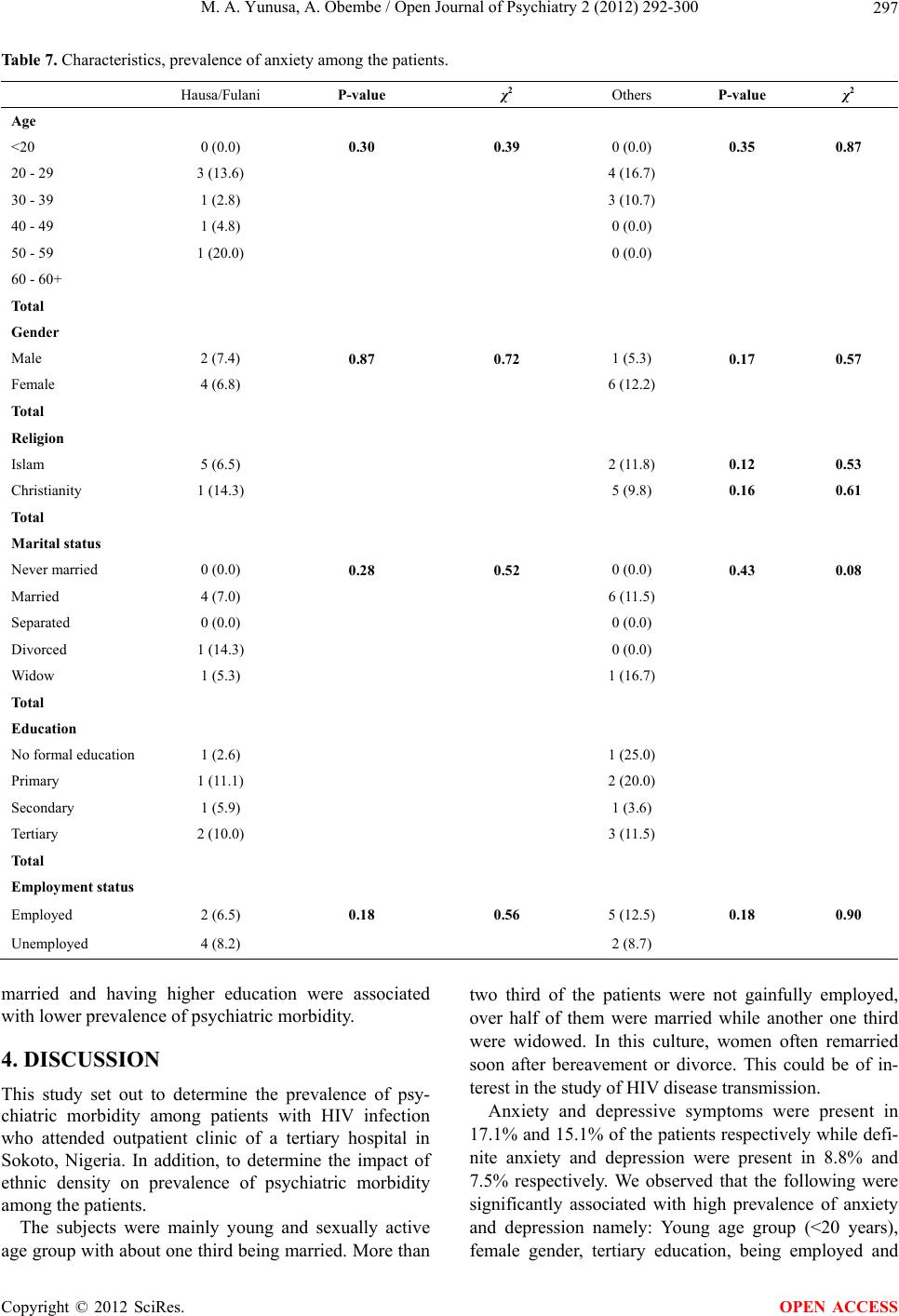 M. A. Yunusa, A. Obembe / Open Journal of Psychiatry 2 (2012) 292-300 Copyright © 2012 SciRes. 297 OPEN ACCESS Table 7. Characteristics, prevalence of anxiety among the patients. Hausa/Fulani P-value χ2 Others P-value χ2 Age <20 0 (0.0) 0.30 0.39 0 (0.0) 0.35 0.87 20 - 29 3 (13.6) 4 (16.7) 30 - 39 1 (2.8) 3 (10.7) 40 - 49 1 (4.8) 0 (0.0) 50 - 59 1 (20.0) 0 (0.0) 60 - 60+ Total Gender Male 2 (7.4) 0.87 0.72 1 (5.3) 0.17 0.57 Female 4 (6.8) 6 (12.2) Total Religion Islam 5 (6.5) 2 (11.8) 0.12 0.53 Christianity 1 (14.3) 5 (9.8) 0.16 0.61 Total Marital status Never married 0 (0.0) 0.28 0.52 0 (0.0) 0.43 0.08 Married 4 (7.0) 6 (11.5) Separated 0 (0.0) 0 (0.0) Divorced 1 (14.3) 0 (0.0) Widow 1 (5.3) 1 (16.7) Total Education No formal education 1 (2.6) 1 (25.0) Primary 1 (11.1) 2 (20.0) Secondary 1 (5.9) 1 (3.6) Tertiary 2 (10.0) 3 (11.5) Total Employment status Employed 2 (6.5) 0.18 0.56 5 (12.5) 0.18 0.90 Unemployed 4 (8.2) 2 (8.7) married and having higher education were associated with lower prevalence of psychiatric morbidity. 4. DISCUSSION This study set out to determine the prevalence of psy- chiatric morbidity among patients with HIV infection who attended outpatient clinic of a tertiary hospital in Sokoto, Nigeria. In addition, to determine the impact of ethnic density on prevalence of psychiatric morbidity among the patients. The subjects were mainly young and sexually active age group with about one third being married. More than two third of the patients were not gainfully employed, over half of them were married while another one third were widowed. In this culture, women often remarried soon after bereavement or divorce. This could be of in- terest in the study of HIV disease transmission. Anxiety and depressive symptoms were present in 17.1% and 15.1% of the patients respectively while defi- nite anxiety and depression were present in 8.8% and 7.5% respectively. We observed that the following were significantly associated with high prevalence of anxiety and depression namely: Young age group (<20 years), female gender, tertiary education, being employed and 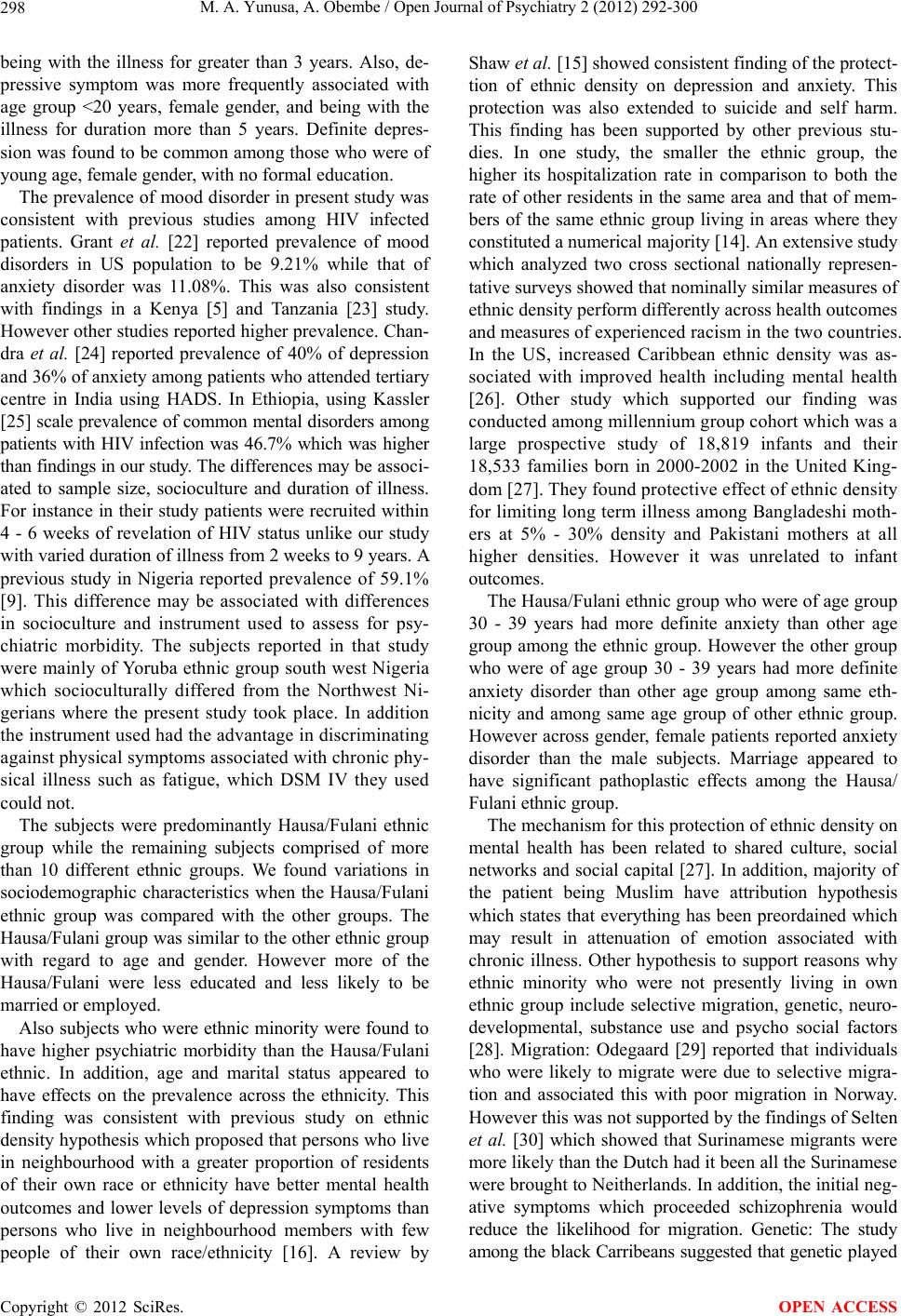 M. A. Yunusa, A. Obembe / Open Journal of Psychiatry 2 (2012) 292-300 298 being with the illness for greater than 3 years. Also, de- pressive symptom was more frequently associated with age group <20 years, female gender, and being with the illness for duration more than 5 years. Definite depres- sion was found to be common among those who were of young age, female gender, with no formal education. The prevalence of mood disorder in present study was consistent with previous studies among HIV infected patients. Grant et al. [22] reported prevalence of mood disorders in US population to be 9.21% while that of anxiety disorder was 11.08%. This was also consistent with findings in a Kenya [5] and Tanzania [23] study. However other studies reported higher prevalence. Chan- dra et al. [24] reported prevalence of 40% of depression and 36% of anxiety among patients who attended tertiary centre in India using HADS. In Ethiopia, using Kassler [25 ] scale prevalence of common mental disorders among patients with HIV infection was 46.7% which was higher than findings in our study. The diff er e n ce s may b e a s so c i- ated to sample size, socioculture and duration of illness. For instance in their study patients were recruited within 4 - 6 weeks of revelation of HIV status unlike our study with varied duration of illness from 2 weeks to 9 years. A previous study in Nigeria reported prevalence of 59.1% [9]. This difference may be associated with differences in socioculture and instrument used to assess for psy- chiatric morbidity. The subjects reported in that study were mainly of Yoruba ethnic group south west Nigeria which socioculturally differed from the Northwest Ni- gerians where the present study took place. In addition the instrument used had the advantage in discriminating against physical symptoms associated with chronic phy- sical illness such as fatigue, which DSM IV they used could not. The subjects were predominantly Hausa/Fulani ethnic group while the remaining subjects comprised of more than 10 different ethnic groups. We found variations in sociodemographic characteristics when the Hausa/Fulani ethnic group was compared with the other groups. The Hausa/Fulani group was similar to the other ethnic group with regard to age and gender. However more of the Hausa/Fulani were less educated and less likely to be married o r employed . Also subjects who were ethnic minor ity were found to have higher psychiatric morbidity than the Hausa/Fulani ethnic. In addition, age and marital status appeared to have effects on the prevalence across the ethnicity. This finding was consistent with previous study on ethnic density hypothesis which proposed that persons who live in neighbourhood with a greater proportion of residents of their own race or ethnicity have better mental health outcomes and lower levels of depression symptoms than persons who live in neighbourhood members with few people of their own race/ethnicity [16]. A review by Shaw et al. [15] showed consistent finding of the protect- tion of ethnic density on depression and anxiety. This protection was also extended to suicide and self harm. This finding has been supported by other previous stu- dies. In one study, the smaller the ethnic group, the higher its hospitalization rate in comparison to both the rate of other residents in the same area and that of mem- bers of the same ethnic group living in areas where they constituted a numerical majority [14]. An extensive study which analyzed two cross sectional nationally represen- tative surveys showed that nominally similar measures of ethnic density perform differently across health outcomes and measures of experienced ra cis m in the two cou ntr ie s. In the US, increased Caribbean ethnic density was as- sociated with improved health including mental health [26]. Other study which supported our finding was conducted among millennium group cohort which was a large prospective study of 18,819 infants and their 18,533 families born in 2000-2002 in the United King- dom [27]. They found protective effect of ethnic density for limiting long term illness among Bangladeshi moth- ers at 5% - 30% density and Pakistani mothers at all higher densities. However it was unrelated to infant outcomes. The Hausa/Fulani ethnic group who w ere of ag e group 30 - 39 years had more definite anxiety than other age group among the ethnic group. However the other group who were of age group 30 - 39 years had more definite anxiety disorder than other age group among same eth- nicity and among same age group of other ethnic group. However across gender, female patients reported anxiety disorder than the male subjects. Marriage appeared to have significant pathoplastic effects among the Hausa/ Fulani ethnic group. The mechanism for this protection of ethnic density on mental health has been related to shared culture, social networks and social capital [27]. In addition, majority of the patient being Muslim have attribution hypothesis which states that everything has been preordained which may result in attenuation of emotion associated with chronic illness. Other hypothesis to support reasons why ethnic minority who were not presently living in own ethnic group include selective migration, genetic, neuro- developmental, substance use and psycho social factors [28]. Migration: Odegaard [29] reported that individuals who were likely to migrate were due to selective migra- tion and associated this with poor migration in Norway. However this was not supported by the findings of Selten et al. [30] which showed that Surinamese migrants were more likely than the Dutch had it been all the Surinamese were brought to Neitherlands. In addition, the in itial neg- ative symptoms which proceeded schizophrenia would reduce the likelihood for migration. Genetic: The study among the black Carribeans suggested that genetic play ed Copyright © 2012 SciRes. OPEN ACCESS  M. A. Yunusa, A. Obembe / Open Journal of Psychiatry 2 (2012) 292-300 299 little role in the prevalence of psychiatric morbidity and associated the differences more to environment. Psycho- social factors such as unfamiliar culture and beliefs, dif- ferent climate and environment, challenging interactions with government institutions and new language. It is imperative to emphasize that the findings in this study should be interpreted with caution because of some limitation. For instance, being hospital based it is diffi- cult to generalize. Also, sample size would appear to be small. In spite of these limitations, this study supported the protection role of ethnic density on psychiatric mor- bidity among patients with HIV infection suggesting that environmental manipulation could be of benefit in the management of the patient. Future study which these au- thors would be eager to carry out, involving larger sam- ple size from the community is encouraged . 5. ACKNOWLEDGEMENTS We acknowledge Drs. Gana, G.J., Ango, J.T., and Abdullahi, Z. of the department community medicine for assisting in the administration of the questionnaire. REFERENCES [1] Bing, E.G., et al. (2001) Psychiatric disorders and drug use among human immunodeficiency virus-infected adults in the United States. Archives of General Psychiatry, 58, 721-728. doi:10.1001/archpsyc.58.8.721 [2] Collins, P.Y., Holman, A.R., Freeman, M. and Patel, V. (2006) What is the relevance of mental health to HIV/ AIDS care and treatment programs in developing coun- tries? A systematic review. AIDS, 20, 1571-1582. doi:10.1097/01.aids.0000238402.70379.d4 [3] Ciesla, J.A. and Roberts, J.E. (2001) Meta analysis of the relationship between HIV infection and risk for depres- sive disorders. American Journal of Psychiatry, 158, 725- 730. doi:10.1176/appi.ajp.158.5.725 [4] Bing, E.G., Burnam, M.A., Longshore, D., Fleishman, J.A., Sherbourne, C.D., London, A.S., Turner, B.J., Eg- gan Ferd, M.A., Beckma n, R., Vitiello, B., Morton Sally, C., Maria, O., Bozzette, S.A., Ortiz-Barron, L. and Sha- piro, M. (2001) Psychiatric disorders and drug use among human immunodeficiency virus-infected adults in the United States. Archives of General Psychiatry, 58, 721- 728. doi:10.1001/archpsyc.58.8.721 [5] Maj, M., et al. (1994) WHO neurop sychiatric AIDS study, cross-sectional phase I. Study design and psychiatric find- ings. Archives of General Psychiatry, 51, 39-49. doi:10.1001/archpsyc.1994.03950010039006 [6] Evans, S., Ferrando, S., Sewell, M., Goggin, K., Fishman, B. and Rabkin, J. (1998) Pain and depression in HIV ill- ness. Psychosomatics, 39, 528-535. doi:10.1016/S0033-3182(98)71285-X [7] Rabkin, J.G., Goetz, R.R., Remien, R.H., Williams, J.B., Todak, G. and Gorman, J.M. (1997) Stability of mood despite HIV illness progression in a group of homosexual men. American Journal of Psychiatry, 154, 1632-1633. [8] Perkins, D.O., Stern, R.A., Golden, R.N., Murphy, C., Naftolowitz, D. and Evans, D.L. (1994) Mood disorders in HIV infection: Prevalence and risk factors in a none- picenter of the AIDS Epidemic. American Journal of Psy- chiatry, 151, 233. [9] Adewuya, A.O., Afola bi, M.O., Ola, B.A., Ogundele, O. A., Ajibare, A.O. and Oladipo, B.F. (2007) Psychiatric dis- orders among the HIV-positive population in Nigeria: A control study. Journal of Psychosomatic Research, 63, 203-206. doi:10.1016/j.jpsychores.2007.03.006 [10] Farinpour, R., et al. (2003) Psychosocial risk factors of HIV morbidity and mortality: Findings from the Multi- center AIDS Cohort Study (MACS). Journal of Clinical and Experimental Neuropsychology, 25, 654-670. doi:10.1076/jcen.25.5.654.14577 [11] Carrico, A.W., et al. (2011) Psychiatric risk factors for hiv disease progression: The role of inconsistent patterns of antiretroviral therapy utilization. Journal of Acquired Immune Deficiency Syndromes, 56, 146-150. doi:10.1097/QAI.0b013e318201df63 [12] Leserman, J., et al. (1995) Progression to AIDS: The ef- fects of stress, depressive symptoms, and social support. Psychosomatic Medicine, 61, 397-406. [13] Ironson, G., et al. (2005) Psychosocial factors predict CD4 and viral load change in men and women with hu- man immunodeficiency virus in the era of highly active antiretroviral treatment. Psychosomatic Medicine, 67, 1013- 1021. doi:10.1097/01.psy.0000188569.58998.c8 [14] Rabkin, J.G. (1979) Ethnic density and psychiatric hospi- talization: Hazards of minority status. American Journal of Geriatric Psychiatry, 136, 1562-1566. [15] Shaw, R., et al. A review of the impact of ethnic density on adult mental disorders. British Journal of Psychiatry, in Press. [16] Halpern, D. and Nazroo, J. (2000) The ethnic density ef- fect: Results from a national community survey of Eng- land and Wales. International Journal of Social Psy- chiatry, 46, 34-46. doi:10.1177/002076400004600105 [17] Yunusa, M.A., Obembe, A., Ibrahim, M.T.O. and Njoku, C.H. (2011) Prevalence and specific psychosocial factors associated with substance use and psychiatric morbidity among patients with HIV infection at Usmanu Danfodiyo University Teaching Hospital, Sokoto State, Nigeria. Af- rican Journals of Drugs and Alcohol Studies, 10, 11-16. [18] Zigmond, A.S. and Snaith, R.P. (1983) The hospital an- xiety and depression scale. Acta Psychiatrica Scandina- vica, 67, 361-370. [19] Abiodun, O.A. (1994) A validity study of the hospital anxiety and depression scale in general hospital units and a community sample in Nigeria. The British Journal of Psychiatry, 165, 669-672. doi:10.1192/bjp.165.5.669 [20] Fatoye, F.A. , Mosaku, K.S., Komolafe, M. and Adewuya, A.O. (2006) Interictal anxiety and depression symptoms in Nigerians with epilepsy: A controlled study. Epilepsy & Behavior, 9, 312-316. [21] Savard, J., Laberge, B., Gauthier, J.G. and Bergeron, M.G. (1999) Screening clinical depression in HIV-seropositive Copyright © 2012 SciRes. OPEN ACCESS  M. A. Yunusa, A. Obembe / Open Journal of Psychiatry 2 (2012) 292-300 Copyright © 2012 SciRes. 300 OPEN ACCESS patients using the hospital anxiety and depression scale. AIDS and Behavior, 3, 167-175. doi:10.1023/A:1025444225120 [22] Grant, B.F., Stinson, F.S., Dawson, D.A., Chou, S.P., Du- four, M.C., Compton, W., Pickering, R.P. and Kaplan, K.B.S. (2004) Prevalence and co-occurrence of substance use disorders and independent mood and anxiety disor- ders: Results from the national epidemiologic survey on alcohol and related conditions. Archives of General Psy- chiatry, 61, 807-816. doi:10.1001/archpsyc.61.8.807 [23] Katherine, F.M.M. and Sylvia, F.K. (2010) Prevalence of depression and anxiety disorders in HIV-positive outpa- tients in rural Tanzania. AIDS Care, 22, 415-419. doi:10.1080/09540120903253981 [24] Chandra, P.S., Ravi, V., Desai, A. and Subbakrishna, D.K. (1998) Anxiety and depression among hiv-infected het- erosexuals—A report from India. Journal of Psychoso- matic Research, 45, 401-409. doi:10.1016/S0022-3999(98)00028-2 [25] Kessler, R.C., Andrews, G., Colpe, L.J., Hiripi, E., Mroc- zek, D.K., Normand, S.L., Walters, E.E. and Zaslavsky, A.M. (2002) Short screening scales to monitor population prevalences and trends in non-specific psychological dis- tress. Psychological Medicine, 32, 959-976. doi:10.1017/S0033291702006074 [26] Bécares, L., Nazroo, J., Jackson, J. and Heuvelman, H., (2012) Ethnic density effects on health and experienced racism among Caribbean people in the US and England: A cross-national comparison. Social Science & Medicine, 30, 1-9. [27] Pickett, K., Shaw, R., Atkin, K., Kiernan, K. and Wilkin- son, R. (2009) Ethnic density effects on maternal and in- fant health in the Millennium Cohort Study. Social Sci- ence & Medicine, 69, 1476-1483. doi:10.1016/j.socscimed.2009.08.031 [28] Morgan, C., Charalambides, M., Hutchinson, G. and Mur- ray, R.M. (2010) Migration, ethnicity, and psychosis: To- ward a sociodevelopmental model. Schizophrenia Bulle- tin, 36, 655-664. doi:10.1093/schbul/sbq051 [29] Ødegaard, Ø. (1932) Emigration and insanity. Acta Psy- chiatrica et Neurologica Scandinavica. Supplementum, 4, 1-206. [30] Selten, J.P., Slaets, J.P. and Kahn, R.S. (1997) Schizo- phrenia in Surinamese and Dutch Antillean immigrants to the Netherlands: Evidence of an increased incidence. Psy- chological Medicine, 27, 807-811. doi:10.1017/S0033291797005199 |