

Paper Menu >>
Journal Menu >>
 Open Journal of Marine Science, 2012, 2, 150-156 http://dx.doi.org/10.4236/ojms.2012.24018 Published Online October 2012 (http://www.SciRP.org/journal/ojms) Changes in Mangrove Epifaunal Assemblages Caused by Forest Logging during Hunting of the Neotropical Cormorant (Phalacrocorax brasilianus) on the Colombian Pacific Coast Carlos Andrés Satizabal R.1, Jaime Ricardo Cantera Kintz1, Paula Cristina Sierra-Correa2 1Universidad del Valle, Ecology of Estuaries and Mangroves Research Group (ECOMANGLARES), Cali, Colombia 2Marine and Coastal Research Institute (INVEMAR), Cerro Punta Betín, Santa Marta, Colombia Email: [email protected] Received May 8, 2012; revised July 6, 2012; accepted July 15, 2012 ABSTRACT Although the importance of mangroves is clearly recognized around the world, these ecosystems are being strongly al- tered by the logging of their forests for multiple purposes. The Colombian Pacific coast is not an exception to this situa- tion, and apart from the traditional logging of wood, the hunting of the Neotropical Cormorant or Pato-cuervo (Pha- lacrocorax brasilianus), an activity largely unknown but widespread in the region, is also causing the logging of great extensions of mangroves. The aim of this research was to determine if the assemblages of mollusks and crustaceans of these mangroves are being affected by the hunting of the cormorant. To answer this question, quantitative samplings were realized in four transects in logged and unlogged mangrove areas on the southwestern coast of the Colombian Pa- cific and diversity, equitability and dominance of macrofaunal assemblages of mangroves were calculated. The data show that although significant differences between diversity indices were not found, there were important differences in equitability (total J’: 0.55 in T1, 0.77 in T2, 0.46 in T3 and 0.65 in T4), specific dominance, and composition of spe- cies (T1: 11 species, T2: 13, T3: 9 and T4: 11) between logged and unlogged areas. Based on these results, although forest structure and interstitial salinity were different among transects, we conclude that the present practice of exploita- tion of the Neotropical Cormorant is affecting the epifaunal populations of mangroves, causing changes in the composi- tion and dominance of species. Keywords: Mangrove; Mollusks; Crustaceans; Neotropical Cormorant; Colombian Pacific 1. Introduction It is well known that mangrove forests are ecosystems of great ecological and economic importance, since by their nature they provide shelter, food, and protection for many species, among which are fish, crustaceans, mol- lusks, and many others [1-3]. The most important role of mangroves is that of “nurseries” for the birth and deve- lopment of early stages of these species, representing a key role not only in the maintenance of mangroves, but also in other ecosystems, both marine and freshwater [3]. Although the importance of mangrove ecosystems is well recognized, these ecosystems are being severely altered throughout the world, because of logging for multiple purposes. On the Colombian Pacific coast, although logging is legally prohibited, large tracts of mangrove forest are being cut, mainly for exploitation of timber resources, but cutting also has been done historically for tannin ex- traction, drying out mangroves for coconut crops, or es- tablishment of ponds for shrimp farming. An apparently new activity on a massive scale in the south of the coun- try, about which there are few references, is the exploita- tion of the Neotropical Cormorant or Duck-Crow (Pha- lacrocorax brasilianus [Gmelin]), family Phalacrocora- cidae, previously known as P. bougainvillii). This species nests in the tops of mangrove trees, and the adults and young (the latter in greater proportion) are consumed locally by the surrounding human communi- ties; this is causing cutting of large areas of forests to obtain the animals. Populations of this species are af- fected by both the loss of individuals by hunting and by habitat destruction, resulting in decreased reproductive success of these birds [4]. Although hunting is unprece- dented anywhere else on the American Pacific coast, some authors have pointed out the effect it could have on *Corresponding author. C opyright © 2012 SciRes. OJMS 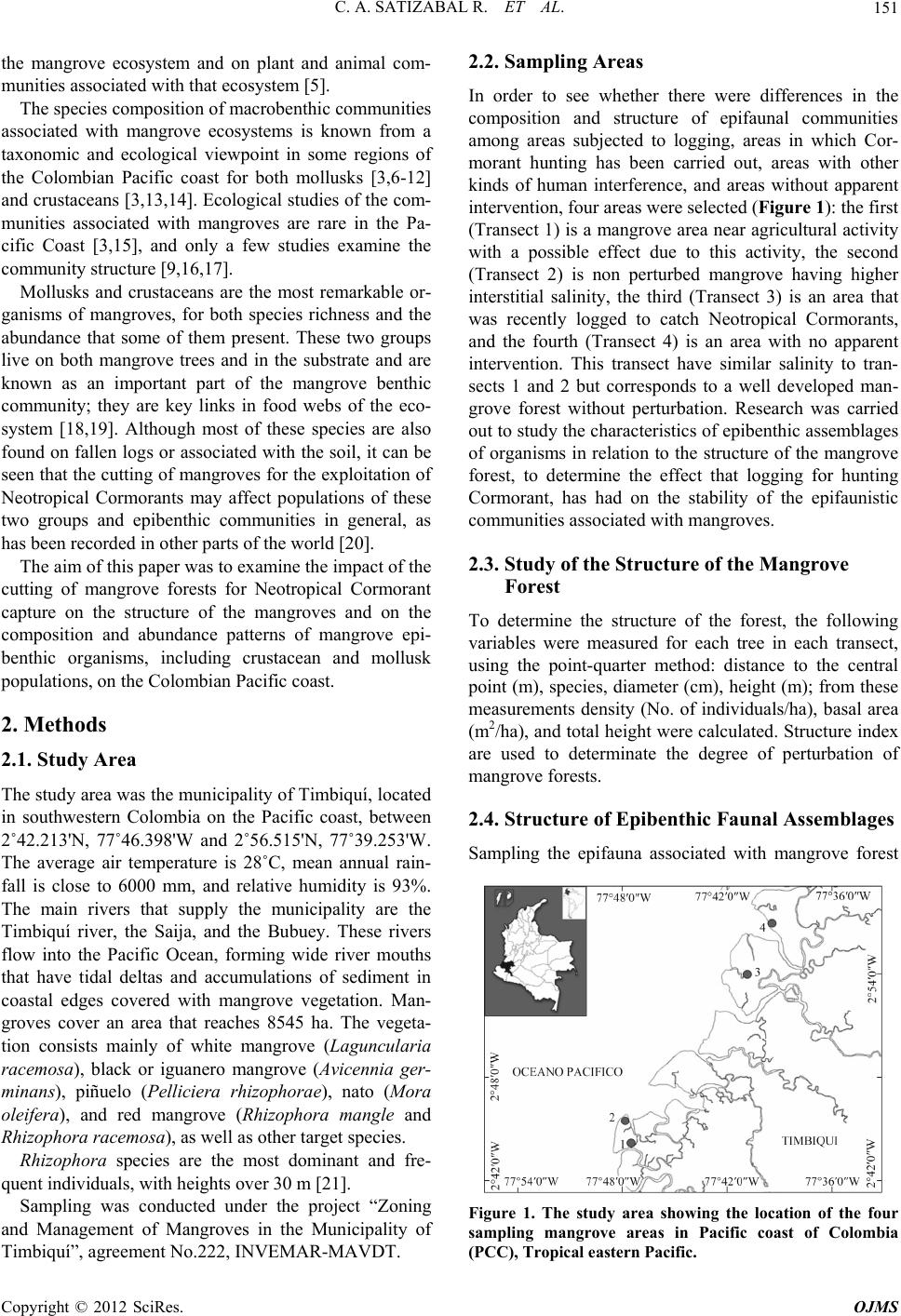 C. A. SATIZABAL R. ET AL. 151 the mangrove ecosystem and on plant and animal com- munities associated with that ecosystem [5]. The species composition of macrobenthic communities associated with mangrove ecosystems is known from a taxonomic and ecological viewpoint in some regions of the Colombian Pacific coast for both mollusks [3,6-12] and crustaceans [3,13,14]. Ecological studies of the com- munities associated with mangroves are rare in the Pa- cific Coast [3,15], and only a few studies examine the community structure [9,16,17]. Mollusks and crustaceans are the most remarkable or- ganisms of mangroves, for both species richness and the abundance that some of them present. These two groups live on both mangrove trees and in the substrate and are known as an important part of the mangrove benthic community; they are key links in food webs of the eco- system [18,19]. Although most of these species are also found on fallen logs or associated with the soil, it can be seen that the cutting of mangroves for the exploitation of Neotropical Cormorants may affect populations of these two groups and epibenthic communities in general, as has been recorded in other parts of the world [20]. The aim of this paper was to examine the impact of the cutting of mangrove forests for Neotropical Cormorant capture on the structure of the mangroves and on the composition and abundance patterns of mangrove epi- benthic organisms, including crustacean and mollusk populations, on the Colombian Pacific coast. 2. Methods 2.1. Study Area The study area was the municipality of Timbiquí, located in southwestern Colombia on the Pacific coast, between 2˚42.213'N, 77˚46.398'W and 2˚56.515'N, 77˚39.253'W. The average air temperature is 28˚C, mean annual rain- fall is close to 6000 mm, and relative humidity is 93%. The main rivers that supply the municipality are the Timbiquí river, the Saija, and the Bubuey. These rivers flow into the Pacific Ocean, forming wide river mouths that have tidal deltas and accumulations of sediment in coastal edges covered with mangrove vegetation. Man- groves cover an area that reaches 8545 ha. The vegeta- tion consists mainly of white mangrove (Laguncularia racemosa), black or iguanero mangrove (Avicennia ger- minans), piñuelo (Pelliciera rhizophorae), nato (Mora oleifera), and red mangrove (Rhizophora mangle and Rhizophora racemosa), as well as other target species. Rhizophora species are the most dominant and fre- quent individuals, with heights over 30 m [21]. Sampling was conducted under the project “Zoning and Management of Mangroves in the Municipality of Timbiquí”, agreement No.222, INVEMAR-MAVDT. 2.2. Sampling Areas In order to see whether there were differences in the composition and structure of epifaunal communities among areas subjected to logging, areas in which Cor- morant hunting has been carried out, areas with other kinds of human interference, and areas without apparent intervention, four areas were selected (Figure 1): the first (Transect 1) is a mangrove area near agricultural activity with a possible effect due to this activity, the second (Transect 2) is non perturbed mangrove having higher interstitial salinity, the third (Transect 3) is an area that was recently logged to catch Neotropical Cormorants, and the fourth (Transect 4) is an area with no apparent intervention. This transect have similar salinity to tran- sects 1 and 2 but corresponds to a well developed man- grove forest without perturbation. Research was carried out to study the characteristics of epibenthic assemblages of organisms in relation to the structure of the mangrove forest, to determine the effect that logging for hunting Cormorant, has had on the stability of the epifaunistic communities associated with mangroves. 2.3. Study of the Structure of the Mangrove Forest To determine the structure of the forest, the following variables were measured for each tree in each transect, using the point-quarter method: distance to the central point (m), species, diameter (cm), height (m); from these measurements density (No. of individuals/ha), basal area (m2/ha), and total height were calculated. Structure index are used to determinate the degree of perturbation of mangrove forests. 2.4. Structure of Epibenthic Faunal Assemblages Sampling the epifauna associated with mangrove forest Figure 1. The study area showing the location of the four sampling mangrove areas in Pacific coast of Colombia (PCC), Tropical eastern Pacific. Copyright © 2012 SciRes. OJMS 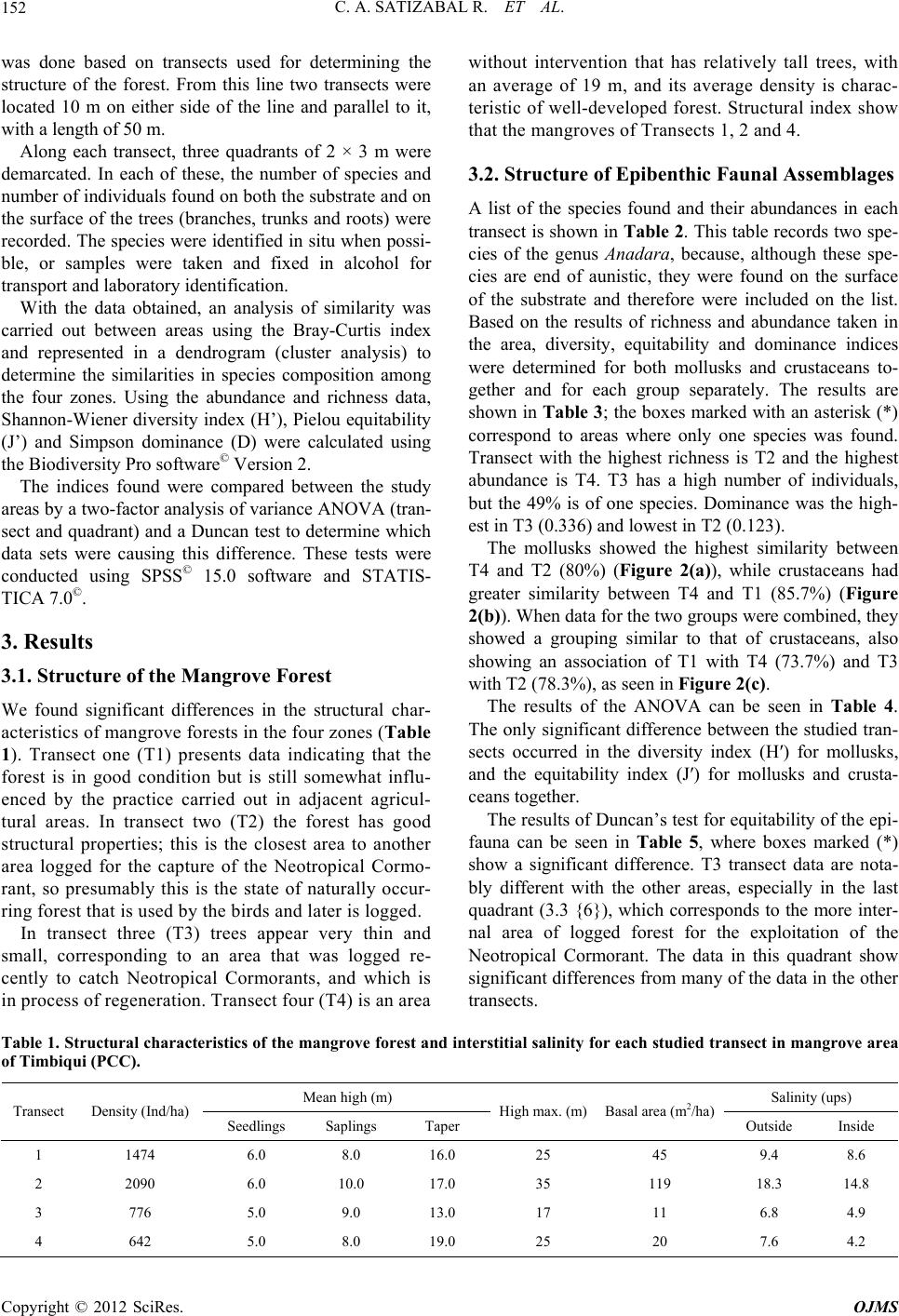 C. A. SATIZABAL R. ET AL. Copyright © 2012 SciRes. OJMS 152 was done based on transects used for determining the structure of the forest. From this line two transects were located 10 m on either side of the line and parallel to it, with a length of 50 m. Along each transect, three quadrants of 2 × 3 m were demarcated. In each of these, the number of species and number of individuals found on both the substrate and on the surface of the trees (branches, trunks and roots) were recorded. The species were identified in situ when possi- ble, or samples were taken and fixed in alcohol for transport and laboratory identification. With the data obtained, an analysis of similarity was carried out between areas using the Bray-Curtis index and represented in a dendrogram (cluster analysis) to determine the similarities in species composition among the four zones. Using the abundance and richness data, Shannon-Wiener diversity index (H’), Pielou equitability (J’) and Simpson dominance (D) were calculated using the Biodiversity Pro software© Version 2. The indices found were compared between the study areas by a two-factor analysis of variance ANOVA (tran- sect and quadrant) and a Duncan test to determine which data sets were causing this difference. These tests were conducted using SPSS© 15.0 software and STATIS- TICA 7.0©. 3. Results 3.1. Structure of the Mangrove Forest We found significant differences in the structural char- acteristics of mangrove forests in the four zones (Table 1). Transect one (T1) presents data indicating that the forest is in good condition but is still somewhat influ- enced by the practice carried out in adjacent agricul- tural areas. In transect two (T2) the forest has good structural properties; this is the closest area to another area logged for the capture of the Neotropical Cormo- rant, so presumably this is the state of naturally occur- ring forest that is used by the birds and later is logged. In transect three (T3) trees appear very thin and small, corresponding to an area that was logged re- cently to catch Neotropical Cormorants, and which is in process of regeneration. Transect four (T4) is an area without intervention that has relatively tall trees, with an average of 19 m, and its average density is charac- teristic of well-developed forest. Structural index show that the mangroves of Transects 1, 2 and 4. 3.2. Structure of Epibenthic Faunal Assemblages A list of the species found and their abundances in each transect is shown in Table 2. This table records two spe- cies of the genus Anadara, because, although these spe- cies are end of aunistic, they were found on the surface of the substrate and therefore were included on the list. Based on the results of richness and abundance taken in the area, diversity, equitability and dominance indices were determined for both mollusks and crustaceans to- gether and for each group separately. The results are shown in Table 3; the boxes marked with an asterisk (*) correspond to areas where only one species was found. Transect with the highest richness is T2 and the highest abundance is T4. T3 has a high number of individuals, but the 49% is of one species. Dominance was the high- est in T3 (0.336) and lowest in T2 (0.123). The mollusks showed the highest similarity between T4 and T2 (80%) (Figure 2(a)), while crustaceans had greater similarity between T4 and T1 (85.7%) (Figure 2(b)). When data for the two groups were combined, they showed a grouping similar to that of crustaceans, also showing an association of T1 with T4 (73.7%) and T3 with T2 (78.3%), as seen in Figure 2(c). The results of the ANOVA can be seen in Table 4. The only significant difference between the studied tran- sects occurred in the diversity index (H′) for mollusks, and the equitability index (J′) for mollusks and crusta- ceans together. The results of Duncan’s test for equitability of the epi- fauna can be seen in Table 5, where boxes marked (*) show a significant difference. T3 transect data are nota- bly different with the other areas, especially in the last quadrant (3.3 {6}), which corresponds to the more inter- nal area of logged forest for the exploitation of the Neotropical Cormorant. The data in this quadrant show significant differences from many of the data in the other transects. Table 1. Structural characteristics of the mangrove forest and interstitial salinity for each studied transect in mangrove area of Timbiqui (PCC). Mean high (m) Salinity (ups) Transect Density (Ind/ha) Seedlings Saplings Taper High max. (m)Basal area (m2/ha) Outside Inside 1 1474 6.0 8.0 16.0 25 45 9.4 8.6 2 2090 6.0 10.0 17.0 35 119 18.3 14.8 3 776 5.0 9.0 13.0 17 11 6.8 4.9 4 642 5.0 8.0 19.0 25 20 7.6 4.2 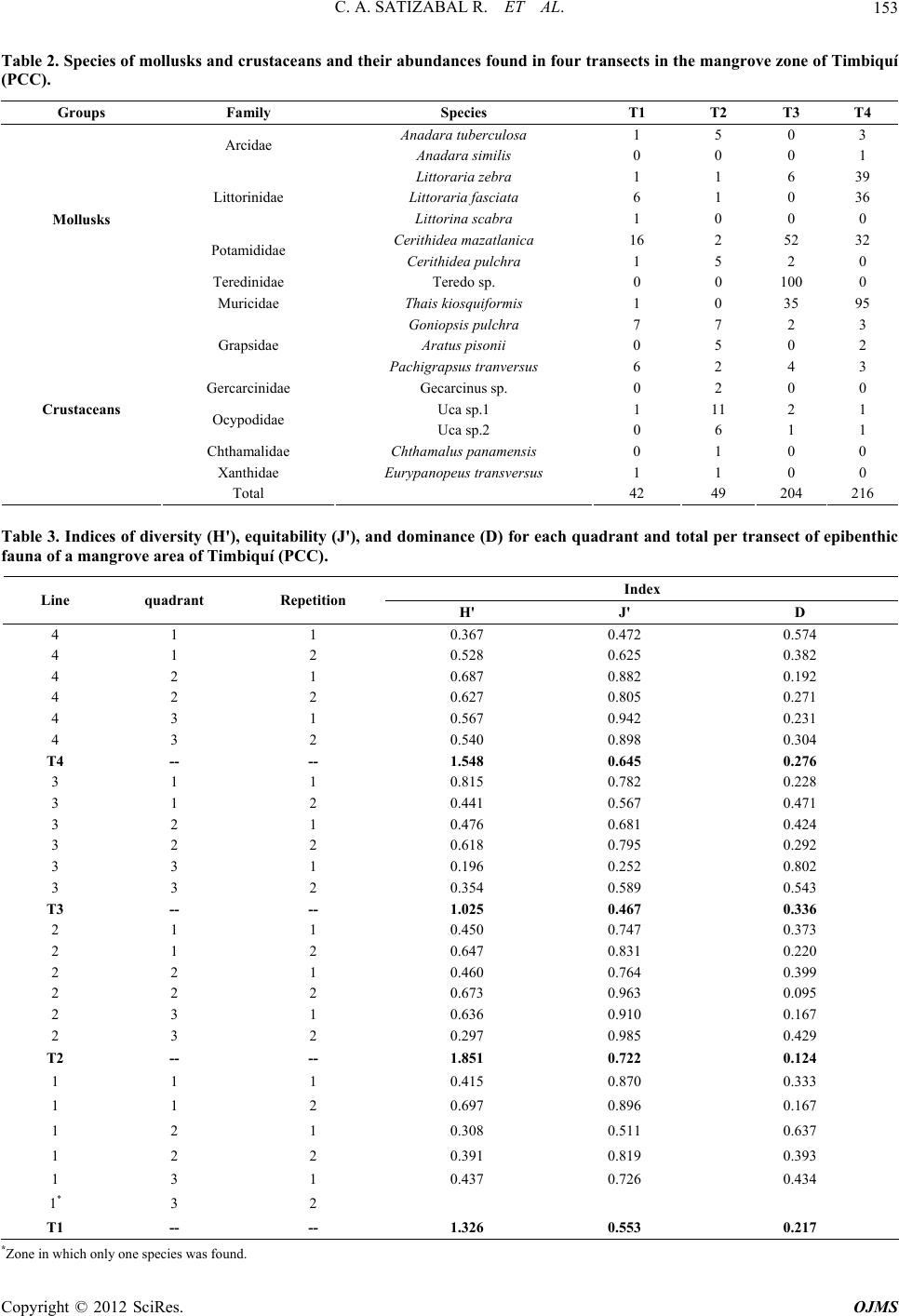 C. A. SATIZABAL R. ET AL. 153 Table 2. Species of mollusks and cr ustaceans and their abundance s found in four transects in the mangrove zone of Timbiquí (PCC). Groups Family Species T1 T2 T3 T4 Anadara tuberculosa 1 5 0 3 Arcidae Anadara similis 0 0 0 1 Littoraria zebra 1 1 6 39 Littoraria fasciata 6 1 0 36 Littorinidae Littorina scabra 1 0 0 0 Cerithidea mazatlanica 16 2 52 32 Potamididae Cerithidea pulchra 1 5 2 0 Teredinidae Teredo sp. 0 0 100 0 Mollusks Muricidae Thais kiosquiformis 1 0 35 95 Goniopsis pulchra 7 7 2 3 Aratus pisonii 0 5 0 2 Grapsidae Pachigrapsus tranversus 6 2 4 3 Gercarcinidae Gecarcinus sp. 0 2 0 0 Uca sp.1 1 11 2 1 Ocypodidae Uca sp.2 0 6 1 1 Chthamalidae Chthamalus panamensis 0 1 0 0 Xanthidae Eurypanopeus transversus 1 1 0 0 Crustaceans Total 42 49 204 216 Table 3. Indices of diversity (H'), equitability (J'), and dominance (D) for each quadrant and total per transect of epibenthic fauna of a mangrove area of Timbiquí (PCC). Index Line quadrant Repetition H' J' D 4 1 1 0.367 0.472 0.574 4 1 2 0.528 0.625 0.382 4 2 1 0.687 0.882 0.192 4 2 2 0.627 0.805 0.271 4 3 1 0.567 0.942 0.231 4 3 2 0.540 0.898 0.304 T4 -- -- 1.548 0.645 0.276 3 1 1 0.815 0.782 0.228 3 1 2 0.441 0.567 0.471 3 2 1 0.476 0.681 0.424 3 2 2 0.618 0.795 0.292 3 3 1 0.196 0.252 0.802 3 3 2 0.354 0.589 0.543 T3 -- -- 1.025 0.467 0.336 2 1 1 0.450 0.747 0.373 2 1 2 0.647 0.831 0.220 2 2 1 0.460 0.764 0.399 2 2 2 0.673 0.963 0.095 2 3 1 0.636 0.910 0.167 2 3 2 0.297 0.985 0.429 T2 -- -- 1.851 0.722 0.124 1 1 1 0.415 0.870 0.333 1 1 2 0.697 0.896 0.167 1 2 1 0.308 0.511 0.637 1 2 2 0.391 0.819 0.393 1 3 1 0.437 0.726 0.434 1* 3 2 T1 -- -- 1.326 0.553 0.217 *Zone in which only one species was found. Copyright © 2012 SciRes. OJMS 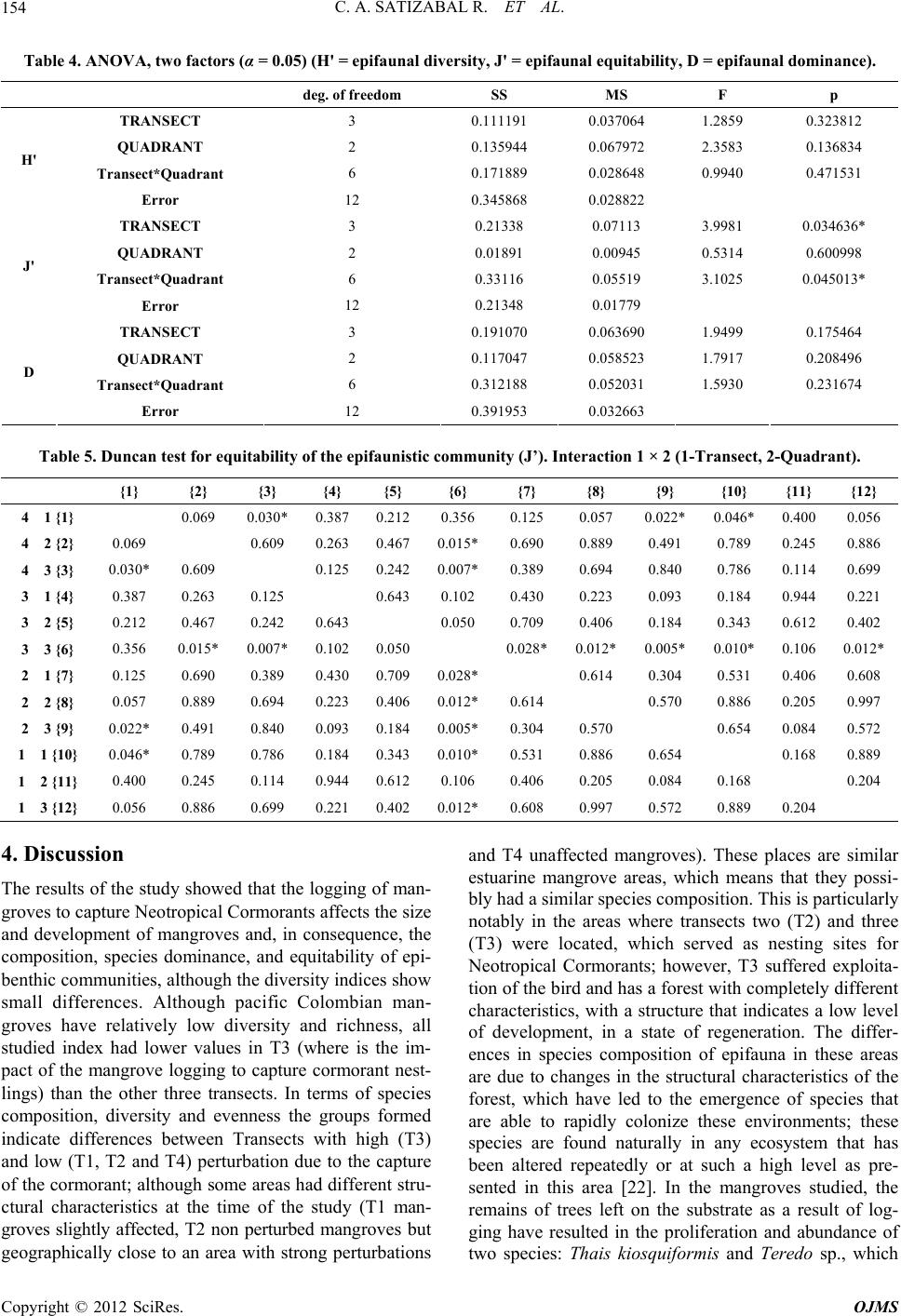 C. A. SATIZABAL R. ET AL. Copyright © 2012 SciRes. OJMS 154 Table 4. ANOVA, two factors (α = 0.05) (H' = epifaunal diversity, J' = epifaunal equitability, D = epifaunal dominance). deg. of freedom SS MS F p TRANSECT 3 0.111191 0.037064 1.2859 0.323812 QUADRANT 2 0.135944 0.067972 2.3583 0.136834 Transect*Quadrant 6 0.171889 0.028648 0.9940 0.471531 H' Error 12 0.345868 0.028822 TRANSECT 3 0.21338 0.07113 3.9981 0.034636* QUADRANT 2 0.01891 0.00945 0.5314 0.600998 Transect*Quadrant 6 0.33116 0.05519 3.1025 0.045013* J' Error 12 0.21348 0.01779 TRANSECT 3 0.191070 0.063690 1.9499 0.175464 QUADRANT 2 0.117047 0.058523 1.7917 0.208496 Transect*Quadrant 6 0.312188 0.052031 1.5930 0.231674 D Error 12 0.391953 0.032663 Table 5. Duncan test for equitability of the epifaunistic community (J’). Interaction 1 × 2 (1-Transect, 2-Quadrant). {1} {2} {3} {4} {5} {6} {7} {8} {9} {10} {11} {12} 4 1 {1} 0.069 0.030* 0.387 0.2120.356 0.125 0.057 0.022* 0.046* 0.4000.056 4 2 {2} 0.069 0.609 0.263 0.4670.015*0.690 0.889 0.491 0.789 0.2450.886 4 3 {3} 0.030* 0.609 0.125 0.2420.007*0.389 0.694 0.840 0.786 0.1140.699 3 1 {4} 0.387 0.263 0.125 0.6430.102 0.430 0.223 0.093 0.184 0.9440.221 3 2 {5} 0.212 0.467 0.242 0.643 0.050 0.709 0.406 0.184 0.343 0.6120.402 3 3 {6} 0.356 0.015* 0.007* 0.102 0.050 0.028*0.012*0.005* 0.010* 0.1060.012* 2 1 {7} 0.125 0.690 0.389 0.430 0.7090.028* 0.614 0.304 0.531 0.4060.608 2 2 {8} 0.057 0.889 0.694 0.223 0.4060.012*0.614 0.570 0.886 0.2050.997 2 3 {9} 0.022* 0.491 0.840 0.093 0.1840.005*0.304 0.570 0.654 0.0840.572 1 1 {10} 0.046* 0.789 0.786 0.184 0.3430.010*0.531 0.886 0.654 0.1680.889 1 2 {11} 0.400 0.245 0.114 0.944 0.6120.106 0.406 0.205 0.084 0.168 0.204 1 3 {12} 0.056 0.886 0.699 0.221 0.4020.012*0.608 0.997 0.572 0.889 0.204 4. Discussion The results of the study showed that the logging of man- groves to capture Neotropical Cormorants affects the size and development of mangroves and, in consequence, the composition, species dominance, and equitability of epi- benthic communities, although the diversity indices show small differences. Although pacific Colombian man- groves have relatively low diversity and richness, all studied index had lower values in T3 (where is the im- pact of the mangrove logging to capture cormorant nest- lings) than the other three transects. In terms of species composition, diversity and evenness the groups formed indicate differences between Transects with high (T3) and low (T1, T2 and T4) perturbation due to the capture of the cormorant; although some areas had different stru- ctural characteristics at the time of the study (T1 man- groves slightly affected, T2 non perturbed mangroves but geographically close to an area with strong perturbations and T4 unaffected mangroves). These places are similar estuarine mangrove areas, which means that they possi- bly had a similar species composition. This is particularly notably in the areas where transects two (T2) and three (T3) were located, which served as nesting sites for Neotropical Cormorants; however, T3 suffered exploita- tion of the bird and has a forest with completely different characteristics, with a structure that indicates a low level of development, in a state of regeneration. The differ- ences in species composition of epifauna in these areas are due to changes in the structural characteristics of the forest, which have led to the emergence of species that are able to rapidly colonize these environments; these species are found naturally in any ecosystem that has been altered repeatedly or at such a high level as pre- sented in this area [22]. In the mangroves studied, the remains of trees left on the substrate as a result of log- ging have resulted in the proliferation and abundance of two species: Thais kiosquiformis and Teredo sp., which 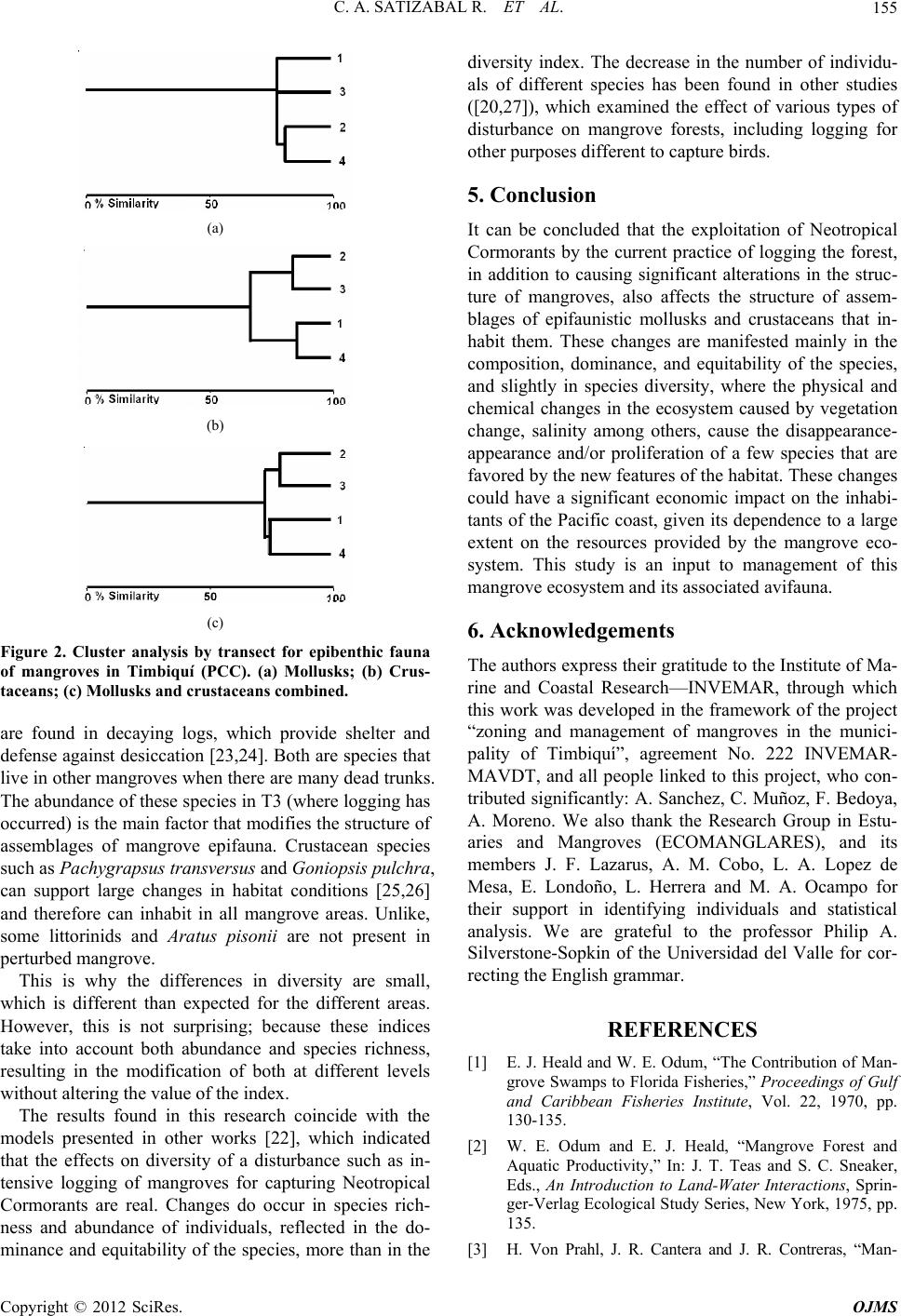 C. A. SATIZABAL R. ET AL. 155 (a) (b) (c) Figure 2. Cluster analysis by transect for epibenthic fauna of mangroves in Timbiquí (PCC). (a) Mollusks; (b) Crus- taceans; (c) Mollusks and crustaceans combined. are found in decaying logs, which provide shelter and defense against desiccation [23,24]. Both are species that live in other mangroves when there are many dead trunks. The abundance of these species in T3 (where logging has occurred) is the main factor that modifies the structure of assemblages of mangrove epifauna. Crustacean species such as Pachygrapsus transversus and Goniopsis pulchra, can support large changes in habitat conditions [25,26] and therefore can inhabit in all mangrove areas. Unlike, some littorinids and Aratus pisonii are not present in perturbed mangrove. This is why the differences in diversity are small, which is different than expected for the different areas. However, this is not surprising; because these indices take into account both abundance and species richness, resulting in the modification of both at different levels without altering the value of the index. The results found in this research coincide with the models presented in other works [22], which indicated that the effects on diversity of a disturbance such as in- tensive logging of mangroves for capturing Neotropical Cormorants are real. Changes do occur in species rich- ness and abundance of individuals, reflected in the do- minance and equitability of the species, more than in the diversity index. The decrease in the number of individu- als of different species has been found in other studies ([20,27]), which examined the effect of various types of disturbance on mangrove forests, including logging for other purposes different to capture birds. 5. Conclusion It can be concluded that the exploitation of Neotropical Cormorants by the current practice of logging the forest, in addition to causing significant alterations in the struc- ture of mangroves, also affects the structure of assem- blages of epifaunistic mollusks and crustaceans that in- habit them. These changes are manifested mainly in the composition, dominance, and equitability of the species, and slightly in species diversity, where the physical and chemical changes in the ecosystem caused by vegetation change, salinity among others, cause the disappearance- appearance and/or proliferation of a few species that are favored by the new features of the habitat. These changes could have a significant economic impact on the inhabi- tants of the Pacific coast, given its dependence to a large extent on the resources provided by the mangrove eco- system. This study is an input to management of this mangrove ecosystem and its associated avifauna. 6. Acknowledgements The authors express their gratitude to the Institute of Ma- rine and Coastal Research—INVEMAR, through which this work was developed in the framework of the project “zoning and management of mangroves in the munici- pality of Timbiquí”, agreement No. 222 INVEMAR- MAVDT, and all people linked to this project, who con- tributed significantly: A. Sanchez, C. Muñoz, F. Bedoya, A. Moreno. We also thank the Research Group in Estu- aries and Mangroves (ECOMANGLARES), and its members J. F. Lazarus, A. M. Cobo, L. A. Lopez de Mesa, E. Londoño, L. Herrera and M. A. Ocampo for their support in identifying individuals and statistical analysis. We are grateful to the professor Philip A. Silverstone-Sopkin of the Universidad del Valle for cor- recting the English grammar. REFERENCES [1] E. J. Heald and W. E. Odum, “The Contribution of Man- grove Swamps to Florida Fisheries,” Proceedings of Gulf and Caribbean Fisheries Institute, Vol. 22, 1970, pp. 130-135. [2] W. E. Odum and E. J. Heald, “Mangrove Forest and Aquatic Productivity,” In: J. T. Teas and S. C. Sneaker, Eds., An Introduction to Land-Water Interactions, Sprin- ger-Verlag Ecological Study Series, New York, 1975, pp. 135. [3] H. Von Prahl, J. R. Cantera and J. R. Contreras, “Man- Copyright © 2012 SciRes. OJMS 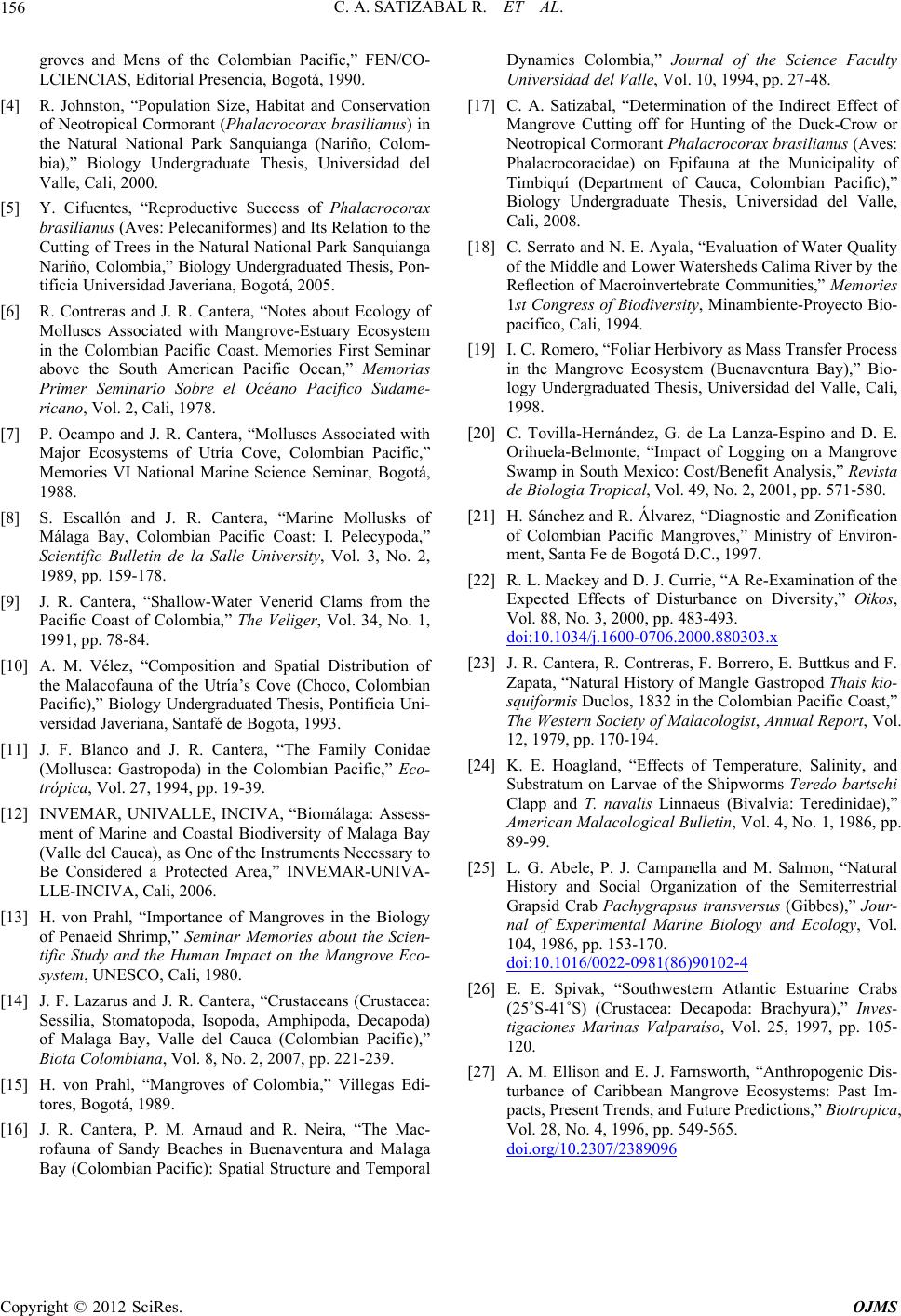 C. A. SATIZABAL R. ET AL. Copyright © 2012 SciRes. OJMS 156 groves and Mens of the Colombian Pacific,” FEN/CO- LCIENCIAS, Editorial Presencia, Bogotá, 1990. [4] R. Johnston, “Population Size, Habitat and Conservation of Neotropical Cormorant (Phalacrocorax brasilianus) in the Natural National Park Sanquianga (Nariño, Colom- bia),” Biology Undergraduate Thesis, Universidad del Valle, Cali, 2000. [5] Y. Cifuentes, “Reproductive Success of Phalacrocorax brasilianus (Aves: Pelecaniformes) and Its Relation to the Cutting of Trees in the Natural National Park Sanquianga Nariño, Colombia,” Biology Undergraduated Thesis, Pon- tificia Universidad Javeriana, Bogotá, 2005. [6] R. Contreras and J. R. Cantera, “Notes about Ecology of Molluscs Associated with Mangrove-Estuary Ecosystem in the Colombian Pacific Coast. Memories First Seminar above the South American Pacific Ocean,” Memorias Primer Seminario Sobre el Océano Pacifico Sudame- ricano, Vol. 2, Cali, 1978. [7] P. Ocampo and J. R. Cantera, “Molluscs Associated with Major Ecosystems of Utría Cove, Colombian Pacific,” Memories VI National Marine Science Seminar, Bogotá, 1988. [8] S. Escallón and J. R. Cantera, “Marine Mollusks of Málaga Bay, Colombian Pacific Coast: I. Pelecypoda,” Scientific Bulletin de la Salle University, Vol. 3, No. 2, 1989, pp. 159-178. [9] J. R. Cantera, “Shallow-Water Venerid Clams from the Pacific Coast of Colombia,” The Veliger, Vol. 34, No. 1, 1991, pp. 78-84. [10] A. M. Vélez, “Composition and Spatial Distribution of the Malacofauna of the Utría’s Cove (Choco, Colombian Pacific),” Biology Undergraduated Thesis, Pontificia Uni- versidad Javeriana, Santafé de Bogota, 1993. [11] J. F. Blanco and J. R. Cantera, “The Family Conidae (Mollusca: Gastropoda) in the Colombian Pacific,” Eco- trópica, Vol. 27, 1994, pp. 19-39. [12] INVEMAR, UNIVALLE, INCIVA, “Biomálaga: Assess- ment of Marine and Coastal Biodiversity of Malaga Bay (Valle del Cauca), as One of the Instruments Necessary to Be Considered a Protected Area,” INVEMAR-UNIVA- LLE-INCIVA, Cali, 2006. [13] H. von Prahl, “Importance of Mangroves in the Biology of Penaeid Shrimp,” Seminar Memories about the Scien- tific Study and the Human Impact on the Mangrove Eco- system, UNESCO, Cali, 1980. [14] J. F. Lazarus and J. R. Cantera, “Crustaceans (Crustacea: Sessilia, Stomatopoda, Isopoda, Amphipoda, Decapoda) of Malaga Bay, Valle del Cauca (Colombian Pacific),” Biota Colombiana, Vol. 8, No. 2, 2007, pp. 221-239. [15] H. von Prahl, “Mangroves of Colombia,” Villegas Edi- tores, Bogotá, 1989. [16] J. R. Cantera, P. M. Arnaud and R. Neira, “The Mac- rofauna of Sandy Beaches in Buenaventura and Malaga Bay (Colombian Pacific): Spatial Structure and Temporal Dynamics Colombia,” Journal of the Science Faculty Universidad del Valle, Vol. 10, 1994, pp. 27-48. [17] C. A. Satizabal, “Determination of the Indirect Effect of Mangrove Cutting off for Hunting of the Duck-Crow or Neotropical Cormorant Phalacrocorax brasilianus (Aves: Phalacrocoracidae) on Epifauna at the Municipality of Timbiquí (Department of Cauca, Colombian Pacific),” Biology Undergraduate Thesis, Universidad del Valle, Cali, 2008. [18] C. Serrato and N. E. Ayala, “Evaluation of Water Quality of the Middle and Lower Watersheds Calima River by the Reflection of Macroinvertebrate Communities,” Memories 1st Congress of Biodiversity, Minambiente-Proyecto Bio- pacífico, Cali, 1994. [19] I. C. Romero, “Foliar Herbivory as Mass Transfer Process in the Mangrove Ecosystem (Buenaventura Bay),” Bio- logy Undergraduated Thesis, Universidad del Valle, Cali, 1998. [20] C. Tovilla-Hernández, G. de La Lanza-Espino and D. E. Orihuela-Belmonte, “Impact of Logging on a Mangrove Swamp in South Mexico: Cost/Benefit Analysis,” Revista de Biologia Tropical, Vol. 49, No. 2, 2001, pp. 571-580. [21] H. Sánchez and R. Álvarez, “Diagnostic and Zonification of Colombian Pacific Mangroves,” Ministry of Environ- ment, Santa Fe de Bogotá D.C., 1997. [22] R. L. Mackey and D. J. Currie, “A Re-Examination of the Expected Effects of Disturbance on Diversity,” Oikos, Vol. 88, No. 3, 2000, pp. 483-493. doi:10.1034/j.1600-0706.2000.880303.x [23] J. R. Cantera, R. Contreras, F. Borrero, E. Buttkus and F. Zapata, “Natural History of Mangle Gastropod Thais kio- squiformis Duclos, 1832 in the Colombian Pacific Coast,” The Western Society of Malacologist, Annual Report, Vol. 12, 1979, pp. 170-194. [24] K. E. Hoagland, “Effects of Temperature, Salinity, and Substratum on Larvae of the Shipworms Teredo bartschi Clapp and T. navalis Linnaeus (Bivalvia: Teredinidae),” American Malacological Bulletin, Vol. 4, No. 1, 1986, pp. 89-99. [25] L. G. Abele, P. J. Campanella and M. Salmon, “Natural History and Social Organization of the Semiterrestrial Grapsid Crab Pachygrapsus transversus (Gibbes),” Jour- nal of Experimental Marine Biology and Ecology, Vol. 104, 1986, pp. 153-170. doi:10.1016/0022-0981(86)90102-4 [26] E. E. Spivak, “Southwestern Atlantic Estuarine Crabs (25˚S-41˚S) (Crustacea: Decapoda: Brachyura),” Inves- tigaciones Marinas Valparaíso, Vol. 25, 1997, pp. 105- 120. [27] A. M. Ellison and E. J. Farnsworth, “Anthropogenic Dis- turbance of Caribbean Mangrove Ecosystems: Past Im- pacts, Present Trends, and Future Predictions,” Biotropica, Vol. 28, No. 4, 1996, pp. 549-565. doi.org/10.2307/2389096 |