

Paper Menu >>
Journal Menu >>
 Open Journal of Forestry 2012. Vol.2, No.4, 225-231 Published Online October 2012 in SciRes (http://www.SciRP.org/journal/ojf) http://dx.doi.org/10.4236/ojf.2012.24028 Copyright © 2012 SciRes. 225 Site Productivity of Clone and Seed Raised Plantations of Eucalyptus urophylla and Eucalyptus grandis in Southeast Mexico Reyna Pérez-Sandoval1, Armando Gómez-Guerrero1, Aurelio Fierros-González1, William R. Horwath2 1Forestry Program, Postgraduate College, Montecillo, Mexico 2Department of Land, Air and Water Resources, University of California-Davis, Davis, USA Email: [email protected] Received June 27th, 2012; revised August 1st, 2012; accepted August 15th, 2012 The relationship between soil variables and forest productivity of Eucalyptus urophylla (Eu) and E. gran- dis (Eg) was studied in commercial forest plantations (CFP) in Huimanguillo, Tabasco, Mexico. The group of Eu included seed and clone raised plantations and the Eg group included only seed raised planta- tions. Tree measurements and soil sampling were carried out at 56,500-m2 plots. Two soil depths (0 - 20 and 20 - 40 cm) were sampled and analyzed for physical and chemical properties. Site Index (SI), calcu- lated at year 14 was used as indicator of forest productivity. Simple correlation, multiple and second order regressions were used to test the effect of soil variables on productivity. Results showed that mean annual increments (MAI) of Eu and Eg were comparable to other regions of the world reaching 49 m3·ha−1·y−1 across a range of low to high soil fertility gradient (15 to 80 m3·ha−1·y−1). For both species, regardless of the production method (seed or clone), soil texture was the most relevant variable to explain variation in productivity. Eu productivity was correlated to exchangeable Mg (0.3) and Al (0.3) in the 0 - 20 cm soil depth and CEC (0.4) and exchangeable Al (0.6) in the 20 - 40 cm soil depth. Compared to clone planta- tions, seed plantations showed higher correlations between soils properties and productivity. Aluminum saturation was negatively related to Eg productivity. The highest correlation between soil and productivity were found for Eg, with soil P-availability and aluminum saturation explaining 82% and 85% of the varia- tion, respectively. This works shows that low fertility soils, previously used as pasturelands can be pro- ductive for forest plantation purposes and contribute to carbon sequestration. Keywords: Forest Plantations; Forest Soils; Site Index; Fast Growing Species Introduction Commercial tropical forest plantations (CFP) can relieve pressure on primary forests and meet timber supply needs, support local economies and stimulate biomass and soil carbon sequestration (Diaz-Balteiro & Rodriguez, 2006; Lima et al., 2006). The increasing demand for wood products and the bene- fits of sequestering carbon dioxide are important aspects of forests plantation, however, more information is needed on soil resource demands and environmental impacts from fast-grow- ing forest species (Laclau, 2009). This information is especially needed to plant trees on marginal lands such as degraded agri- cultural and pasture and to ensure sustainable forest production practices. Eucalyptus is the most important genus planted in CFP worldwide and shows a broad productivity response depending on species, clones and soils factors (Onyekwelu et al., 2011). Eucalyptus sp. have some of the highest net primary productiv- ity rates up to 49 m3·ha–1·y–1 (Hubbard et al., 2010). Mean an- nual increments of clone plantations of Eucalyptus sp. with no fertilization, with fertilization and fertilization combined with irrigation are 33, 46 and 62 m3·ha–1·y–1, respectively (Stape et al., 2010). The high biomass accumulation potential makes Eucalyptus sp. a good prospect for timber, wood products and carbon sequestration projects. Afforestation with fast growing species has been proposed as a strategy for mitigating carbon dioxide emissions but there is a dearth of information on the sustainability of these plantations and more information is needed to broadly implement carbon sequestration projects, especially on low productivity sites. Some tropical areas of the world have the highest potential to support CFP with fast-growing species due to adequate soil moisture and favorable climatic conditions; however, soil nu- trient availability negatively impact net primary productivity and sustainable tree growth (Ryan et al., 2010). These areas also often contain highly weathered soils, which may affect nutrient availability and present other issues such as high ex- changeable Al (Van Wambeke, 1992). Information on the pro- ductivity of forest systems around the world is important to project future trends in carbon cycle and timber products. The Southeast region of Mexico has a high potential for CFP and since the 90’s specific government programs have supported the establishment of CFP with Eucalyptus sp. (Ceccon & Mar- tinez-Ramos, 1999). However, few studies on productivity and soil factors in tropical Southeast Mexico have been done to support implementation of CFP. Results from previous studies of world forest systems show that the principal abiotic factors influencing tree growth are related to water supply and soil physical properties (Gonçalves 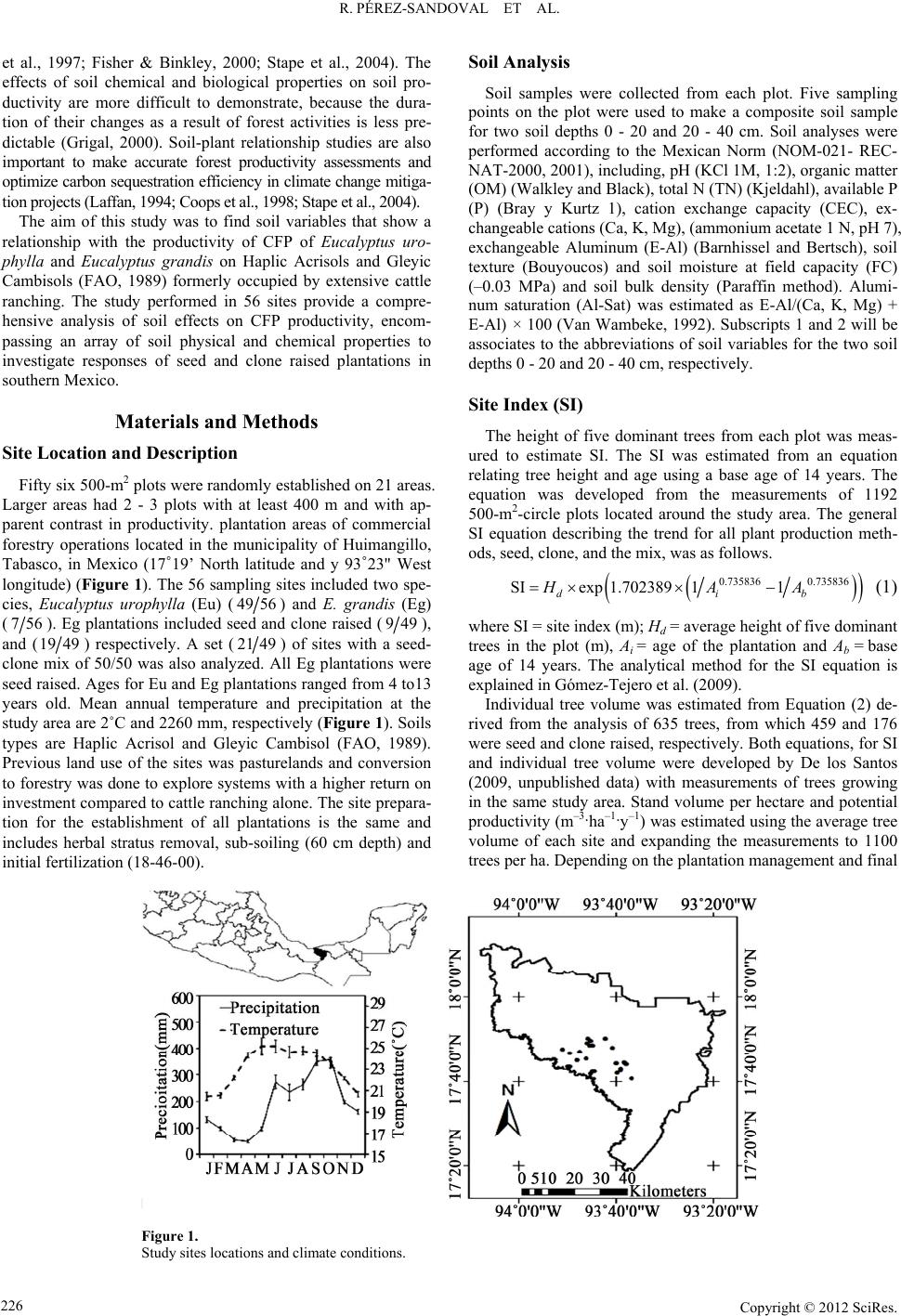 R. PÉREZ-SANDOVAL ET AL. et al., 1997; Fisher & Binkley, 2000; Stape et al., 2004). The effects of soil chemical and biological properties on soil pro- ductivity are more difficult to demonstrate, because the dura- tion of their changes as a result of forest activities is less pre- dictable (Grigal, 2000). Soil-plant relationship studies are also important to make accurate forest productivity assessments and optimize carbon sequestration efficiency in climate change mitiga- tion projects (Laffan, 1994; Coops et al., 1998; Stape et al., 2004). The aim of this study was to find soil variables that show a relationship with the productivity of CFP of Eucalyptus uro- phylla and Eucalyptus grandis on Haplic Acrisols and Gleyic Cambisols (FAO, 1989) formerly occupied by extensive cattle ranching. The study performed in 56 sites provide a compre- hensive analysis of soil effects on CFP productivity, encom- passing an array of soil physical and chemical properties to investigate responses of seed and clone raised plantations in southern Mexico. Materials and Methods Site Location and Description Fifty six 500-m2 plots were randomly established on 21 areas. Larger areas had 2 - 3 plots with at least 400 m and with ap- parent contrast in productivity. plantation areas of commercial forestry operations located in the municipality of Huimangillo, Tabasco, in Mexico (17˚19’ North latitude and y 93˚23" West longitude) (Figure 1). The 56 sampling sites included two spe- cies, Eucalyptus urophylla (Eu) (4956 ) and E. grandis (Eg) (756). Eg plantations included seed and clone raised (949), and (1949 ) respectively. A set (2149) of sites with a seed- clone mix of 50/50 was also analyzed. All Eg plantations were seed raised. Ages for Eu and Eg plantations ranged from 4 to13 years old. Mean annual temperature and precipitation at the study area are 2˚C and 2260 mm, respectively (Figure 1). Soils types are Haplic Acrisol and Gleyic Cambisol (FAO, 1989). Previous land use of the sites was pasturelands and conversion to forestry was done to explore systems with a higher return on investment compared to cattle ranching alone. The site prepara- tion for the establishment of all plantations is the same and includes herbal stratus removal, sub-soiling (60 cm depth) and initial fertilization (18-46-00). Soil Analysis Soil samples were collected from each plot. Five sampling points on the plot were used to make a composite soil sample for two soil depths 0 - 20 and 20 - 40 cm. Soil analyses were performed according to the Mexican Norm (NOM-021- REC- NAT-2000, 2001), including, pH (KCl 1M, 1:2), organic matter (OM) (Walkley and Black), total N (TN) (Kjeldahl), available P (P) (Bray y Kurtz 1), cation exchange capacity (CEC), ex- changeable cations (Ca, K, Mg), (ammonium acetate 1 N, pH 7), exchangeable Aluminum (E-Al) (Barnhissel and Bertsch), soil texture (Bouyoucos) and soil moisture at field capacity (FC) (–0.03 MPa) and soil bulk density (Paraffin method). Alumi- num saturation (Al-Sat) was estimated as E-Al/(Ca, K, Mg) + E-Al) × 100 (Van Wambeke, 1992). Subscripts 1 and 2 will be associates to the abbreviations of soil variables for the two soil depths 0 - 20 and 20 - 40 cm, respectively. Site Index (SI) The height of five dominant trees from each plot was meas- ured to estimate SI. The SI was estimated from an equation relating tree height and age using a base age of 14 years. The equation was developed from the measurements of 1192 500-m2-circle plots located around the study area. The general SI equation describing the trend for all plant production meth- ods, seed, clone, and the mix, was as follows. 0.735836 0.735836 SIexp 1.70238911 di HA b A (1) where SI = site index (m); Hd = average height of five dominant trees in the plot (m), Ai = age of the plantation and Ab = base age of 14 years. The analytical method for the SI equation is explained in Gómez-Tejero et al. (2009). Individual tree volume was estimated from Equation (2) de- rived from the analysis of 635 trees, from which 459 and 176 were seed and clone raised, respectively. Both equations, for SI and individual tree volume were developed by De los Santos (2009, unpublished data) with measurements of trees growing in the same study area. Stand volume per hectare and potential productivity (m–3·ha–1·y–1) was estimated using the average tree volume of each site and expanding the measurements to 1100 trees per ha. Depending on the plantation management and final Figure 1. Study sites locations and climate conditions. Copyright © 2012 SciRes. 226  R. PÉREZ-SANDOVAL ET AL. timber products in the study area, the number of trees per ha varies from 800 to 1100. However, we estimated potential pro- ductivity with 1100 trees per hectare as this was the stock den- sity for pulp production in the study plots used in this study. The stand volume divided by the age of the plantation gave an estimate of the mean annual increment of the plantations. 1.7318580.955688 0.018002 0.000084VDHA (2) where: V = Tree volume in m3; D = diameter in cm; H = height in m; and A= age in years. Statistical Analysis A correlation analysis was used to explore how soil variables explain variations in productivity, as represented by SI across sites. Multiple regressions using the stepwise selection method were used to determine the combination of soil variables that explained the variation of forest productivity. Also, second order equations to explain SI were tested. Second order equa- tions were used to determine if any of the soil variables showed a threshold at which the productivity of the plantations was reduced. Because no all combinations of plant production me- thods and species were established on each area, the analyses were carried out in three ways: 1) Analyzing all Eu sites re- gardless of production method, Seed, Clone or Mix; 2) Ana- lyzing Eu by production method; and 3) Analyzing the group of Eg plantations that were all seed raised. All analyses were done using Statistical Analysis System (SAS) for Windows 9.0. For presentation purposes, the subscripts, global, is used for the analyses of Eu plantations regardless of the origin of the plants (Seed, Clone or Mix). The subscripts seed, clone, and mix are used for the analyses of Eu plantations raised from seed, clone and mix, respectively. In analogous way, the subscript grandis denotes the analysis for Eg plantations which were all seed raised plan- tations Results Soil Variables The mean soil pH among the study sites in the 0 to 20 cm soil was 4.8 and ranged from 3.7 to 5.6. Clay content ranged from 9 to 45% in the 0 to 20 cm soil. The highest coefficient of variation of soil properties were seen for P-availability, ex- changeable cations and base saturation with increased variation with soil depth. Cation exchange capacity decreased from 8.2 Cmolckg-1 in the first soil depth to 5.8 Cmolckg–1 in the second soil depth. Aluminum saturation ranged from 4.2% to 91% in all soil depths. Other soil parameters and basic statistics for the study sites are shown in Table 1. Tree Growth Parameters SI varied from 10 to 35 m. Clone and seed plantations showed variation in potential mean annual increment in the range 7 - 80 m3·ha–1·y–1. The highest productivity for Eg was 50 m3·ha–1·y–1 (Figure 2). The relationship between SI and mean annual increment correlated well (R2 = 0.87). Other stand pa- rameters are shown in Table 2. SIglobal and Soil Variables for Eucalyptus urophylla Regardless of the plant production method, soil surface vari- ables (0 - 20 cm depth) that were significantly correlated with SI were clay (0.6), sand (–0.4), and exchangeable Mg (0.3), Al Table 1. Soil variables at the study sites. Soil Depth (cm) 0 - 20 20 - 40 Variable MeanMinMax CV (%) Mean Min MaxCV (%) pH 4.83.75.6 6 4.8 3.9 66 OM (%) 5.81.611.6 38 3.5 1.4 7.440 P (mg·kg–1) 2.70.113.6 81 2.4 0.1 12.8121 K (CmolcKg–1)0.10 0.4 100 0.1 0 0.4 100 Ca (CmolcKg–1)0.80 3.2 88 0.5 0 2.8100 Mg (CmolcKg–1)0.20 0.6 100 0.2 0 0.6100 CEC (CmolcKg–1)8.22.613.2 29 5.8 2.6 10.531 BS (%) 15.41 47.3 77 13.3 0.6 65.191 E-Al (CmolcKg–1)0.6 0.11.1 33 0.5 0.1 2.180 Al-Sat (%) 40.31287.5 50 45.8 4.2 90.947 BD g/cm3 0.60.41.6 50 0.6 0.4 1.433 TN (%) 0.20.10.3 50 0.1 0 0.4100 FC (%) 23 1034 25 22.2 13 3522 Clay (%) 25.59 45 32 31.3 15 6431 Silt (%) 15.72 60 54 14.5 7 2630 Sand (%) 58.41177 20 54.3 25 7321 n = 56; CV = Coefficient of variation; OM = Organic matter; P = Phospho- rus; K = Potassium; Ca = Calcium; CEC = Cation exchange capacity; BS = Base saturation; Al = Aluminum; E-Al = Exchangeable aluminum; BD = Bulk density; TN = Total nitrogen; FC = Field capacity. Figure 2. Relationship between Site index and potential mean annual incre- ments for seed and clone rised plantations of Eucalyptus urophylla (Eu) and E. grandis (Eg). White diamond = Eu-seed; black diamond = Eu-clone; Circle = Eu-mix; Triangle = eg-seed. (0.3). For the 20 - 40 cm soil depth, the soil variables that significantly correlated to SI were Clay (0.6), Sand (–0.6) ex- changeable Al (0.6), CEC (0.4), and Silt (0.3) (Correlation ma- trix not shown). A seven-variable model explained 62% of the variation of SIglobal (Table 3, Equation (3)). Soil variables of the first depth included in the model were aluminum saturation, exchangeable calcium, and clay content. Second soil depth variables included in the model were sand, exchangeable alu minum, CEC, and field capacity. There were not second order Copyright © 2012 SciRes. 227  R. PÉREZ-SANDOVAL ET AL. Table 2. Stand Parameters and coefficient of variation (in parenthesis) for the plantations studied Specie/Group IS (m) BDH (cm) Basal Area (m2·ha–1) Volume (m3·ha–1) Mean Annual Increment (m3·ha–1·y–1) Age (y) Eu/Global 23.8 (24%) 18.7 (19%) 12.4 (40%) 236 (54%) 33.3 (56%) 7.8 (42%) Eu/Seed 29.2 (16%) 21.8 (18%) 18.1 (30%) 361.7 (43%) 49.3 (42%) 7.6 (30%) Eu/Clone 20.3 (29%) 16.9 (19%) 11.3 (41%) 171.7 (49%) 23.7 (74%) 9.0 (39%) Eu/Mix 23.9 (16%) 17.7 (12%) 12.7 (34%) 188.1 (35%) 34.4 (38%) 5.8 (36%) Eg/Seed 26.3 (14%) 22.9 (13%) 11.4 (36%) 392.9 (34%) 35.7 (34%) 11.0 (0%) Eu = Eucalyptus urophylla; Eg = Eucalyptus grandis; Global = includes all plantations (seed, clone and mix). Table 3. Regression equations to explain the site index in the study sites. Equation Regression model R2 P ≤ 3 ISglobal=22.5 – 7.6 (Sand2) + 7.6 (Al2) – 0.16 (Al-Sat1) + 0.38 (CEC2) – 0.35 (FC2) – 4.36 (Ca1) + 0.30 + (Clay1) 0.62 0.001 4 ISseed = 26.86 – 2.21 (pH1) + 1.2 (CEC2) + 0.11 (Al-Sat2) 0.96 0.001 5 ISclone = 8.39 + 0.45 (Clay2) 0.36 0.007 6 ISmix = –14.99 +0.56 (Clay1)+3.46 (OM2)+ 0.61 (BS2)+0.109 (Al-Sat2) 0.58 0.054 7 ISgrandis =42.41 – 0.31 (Al-Sat1) + 0.32 (Silt2) 0.94 0.003 ISglobal=Site index, regardless the plant production method; Subscripts 1 and 2 are for the 0 - 20 and 20 - 40 cm soil depth, respectively. Soil variables abbreviations and subscripts as explained in Table 1. equations that significantly explained SIglobal (Table 3). SIseed and Soil Variables for Eucalyptus Urophylla For the seed plantations, a three-variable equation with soil chemical variables explained 96% of the variability associated with SIseed (Table 3, Equation (4)). Second order equations showed that 60 to 70% of the variation associated with SIseed could be explained with clay or sand content in the second depth (20 to 40 cm) (Figure 3). The sum of silt plus clay was also significant with quadratic effects (not shown). SIclone and Soil Variables for Eucalyptus urophylla Except for clay content in the 20 to 40 cm at the second soil depth the relationships between SIclone and soil variables were not statistically significant. Clay content explained 36% (P ≤ 0.007) of the variation of SIclone (Table 3, Equation (5)). A sec- ond order equation with clay content significantly improved the relationship for SIclone explaining 47% of the variation (Figure 4). SImix and Soil Variables in Eucalyptus urophylla A four-variable model explained 58% of the variation of SImix (Table 3, Equation (6)). Linear or second order equations did not help to improve the relationship in mixed plantations. None of the simple correlations between SImix and soil variables was significant. SIseed and Soil Variables in Eucaly pt us grandis For Eg a two-variable model explained 94% of the SIseed variation (P ≤ 0.003) (Table 3, Equation (7)). Aluminum satu- ration and P availability in the first and second soil depth re- spectively, explained more than 70% of the variation with sin- gle lineal relationships (Figure 5). Discussion Soil Variables and Tree Growth Parameters Regardless of the production method (seed or clone), soil texture was the most relevant variable to explain variation in productivity for both species. According to the Mexican classi- fication (NOM-021-RECNAT-2000) the soils at the study sites are acidic, with low P availability and low soil fertility inferred from low CEC, TN and OM. Results showed no correlation between TN and BD with tree growth. This finding was similar to that observed in Eu and Eg CFP growing in Alfisols and Ultisols in the states of Oaxaca and Veracruz (Delgado et al., 2009). The soil preparation practices and the humid environ- ment in the study sites may have favored low soil strength. The average soil BD in the study sites was 0.6 g·cm–3 indicating that physical constraints for root growth are minimal, which likely explains the lack of relationship with forest productivity (Go- mez et al., 2002). However, under pastureland use these soils can show soil strength as high as 9 MPa (Geissen et al., 2009). Stand parameters indicate that soils in the study area can po- tentially reach high levels of mean annual increment (MAI) with values from 23 to 49 m3·ha–1·y–1. This productivity falls in the range of that of some eucalyptus hybrids plantations (E. urophylla × E. grandis) in South America with MIA from 15 - 60 m3·ha–1·y–1 (Lugo et al., 1998; ITTO, 2009; Pagano et al., 2009; Almeida et al., 2010). Rodríguez et al. (2009) reported MAI in plantations of Eucalyptus nitens in Chile ranging from Copyright © 2012 SciRes. 228 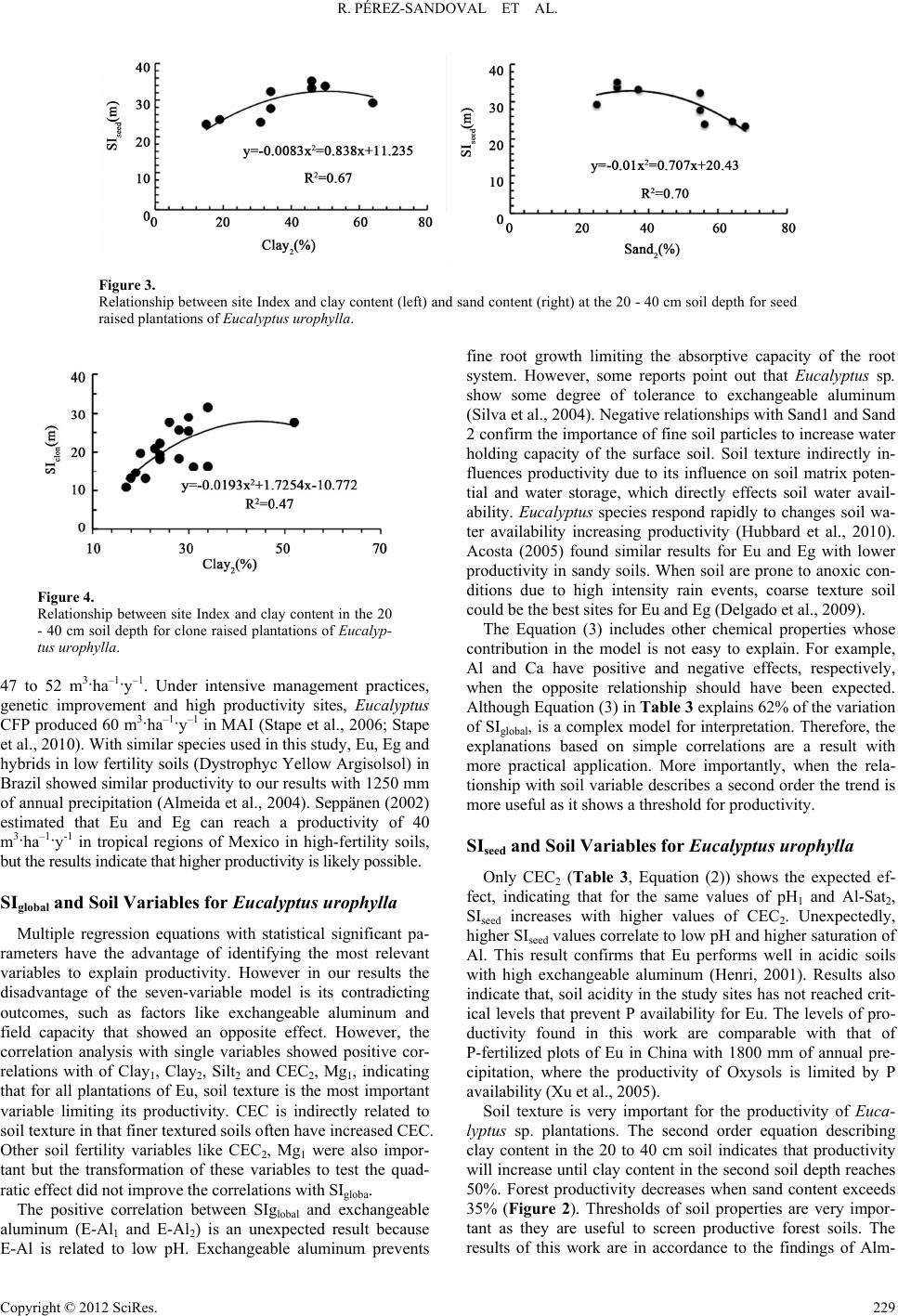 R. PÉREZ-SANDOVAL ET AL. Figure 3. Relationship between site Index and clay content (left) and sand content (right) at the 20 - 40 cm soil depth for seed raised plantations of Eucalyptus urop hylla . Figure 4. Relationship between site Index and clay content in the 20 - 40 cm soil depth for clone raised plantations of Eucalyp- tus urophylla. 47 to 52 m3·ha–1·y–1. Under intensive management practices, genetic improvement and high productivity sites, Eucalyptus CFP produced 60 m3·ha–1·y–1 in MAI (Stape et al., 2006; Stape et al., 2010). With similar species used in this study, Eu, Eg and hybrids in low fertility soils (Dystrophyc Yellow Argisolsol) in Brazil showed similar productivity to our results with 1250 mm of annual precipitation (Almeida et al., 2004). Seppänen (2002) estimated that Eu and Eg can reach a productivity of 40 m3·ha–1·y-1 in tropical regions of Mexico in high-fertility soils, but the results indicate that higher productivity is likely possible. SIglobal and Soil Variables for Eucalyptus urophylla Multiple regression equations with statistical significant pa- rameters have the advantage of identifying the most relevant variables to explain productivity. However in our results the disadvantage of the seven-variable model is its contradicting outcomes, such as factors like exchangeable aluminum and field capacity that showed an opposite effect. However, the correlation analysis with single variables showed positive cor- relations with of Clay1, Clay2, Silt2 and CEC2, Mg1, indicating that for all plantations of Eu, soil texture is the most important variable limiting its productivity. CEC is indirectly related to soil texture in that finer textured soils often have increased CEC. Other soil fertility variables like CEC2, Mg1 were also impor- tant but the transformation of these variables to test the quad- ratic effect did not improve the correlations with SIgloba . The positive correlation between SIglobal and exchangeable aluminum (E-Al1 and E-Al2) is an unexpected result because E-Al is related to low pH. Exchangeable aluminum prevents fine root growth limiting the absorptive capacity of the root system. However, some reports point out that Eucalyptus sp. show some degree of tolerance to exchangeable aluminum (Silva et al., 2004). Negative relationships with Sand1 and Sand 2 confirm the importance of fine soil particles to increase water holding capacity of the surface soil. Soil texture indirectly in- fluences productivity due to its influence on soil matrix poten- tial and water storage, which directly effects soil water avail- ability. Eucalyptus species respond rapidly to changes soil wa- ter availability increasing productivity (Hubbard et al., 2010). Acosta (2005) found similar results for Eu and Eg with lower productivity in sandy soils. When soil are prone to anoxic con- ditions due to high intensity rain events, coarse texture soil could be the best sites for Eu and Eg (Delgado et al., 2009). The Equation (3) includes other chemical properties whose contribution in the model is not easy to explain. For example, Al and Ca have positive and negative effects, respectively, when the opposite relationship should have been expected. Although Equation (3) in Table 3 explains 62% of the variation of SIglobal, is a complex model for interpretation. Therefore, the explanations based on simple correlations are a result with more practical application. More importantly, when the rela- tionship with soil variable describes a second order the trend is more useful as it shows a threshold for productivity. SIseed and Soil Variables for Eucalyptus urophylla Only CEC2 (Table 3, Equation (2)) shows the expected ef- fect, indicating that for the same values of pH1 and Al-Sat2, SIseed increases with higher values of CEC2. Unexpectedly, higher SIseed values correlate to low pH and higher saturation of Al. This result confirms that Eu performs well in acidic soils with high exchangeable aluminum (Henri, 2001). Results also indicate that, soil acidity in the study sites has not reached crit- ical levels that prevent P availability for Eu. The levels of pro- ductivity found in this work are comparable with that of P-fertilized plots of Eu in China with 1800 mm of annual pre- cipitation, where the productivity of Oxysols is limited by P availability (Xu et al., 2005). Soil texture is very important for the productivity of Euca- lyptus sp. plantations. The second order equation describing clay content in the 20 to 40 cm soil indicates that productivity will increase until clay content in the second soil depth reaches 50%. Forest productivity decreases when sand content exceeds 35% (Figure 2). Thresholds of soil properties are very impor- tant as they are useful to screen productive forest soils. The results of this work are in accordance to the findings of Alm- Copyright © 2012 SciRes. 229 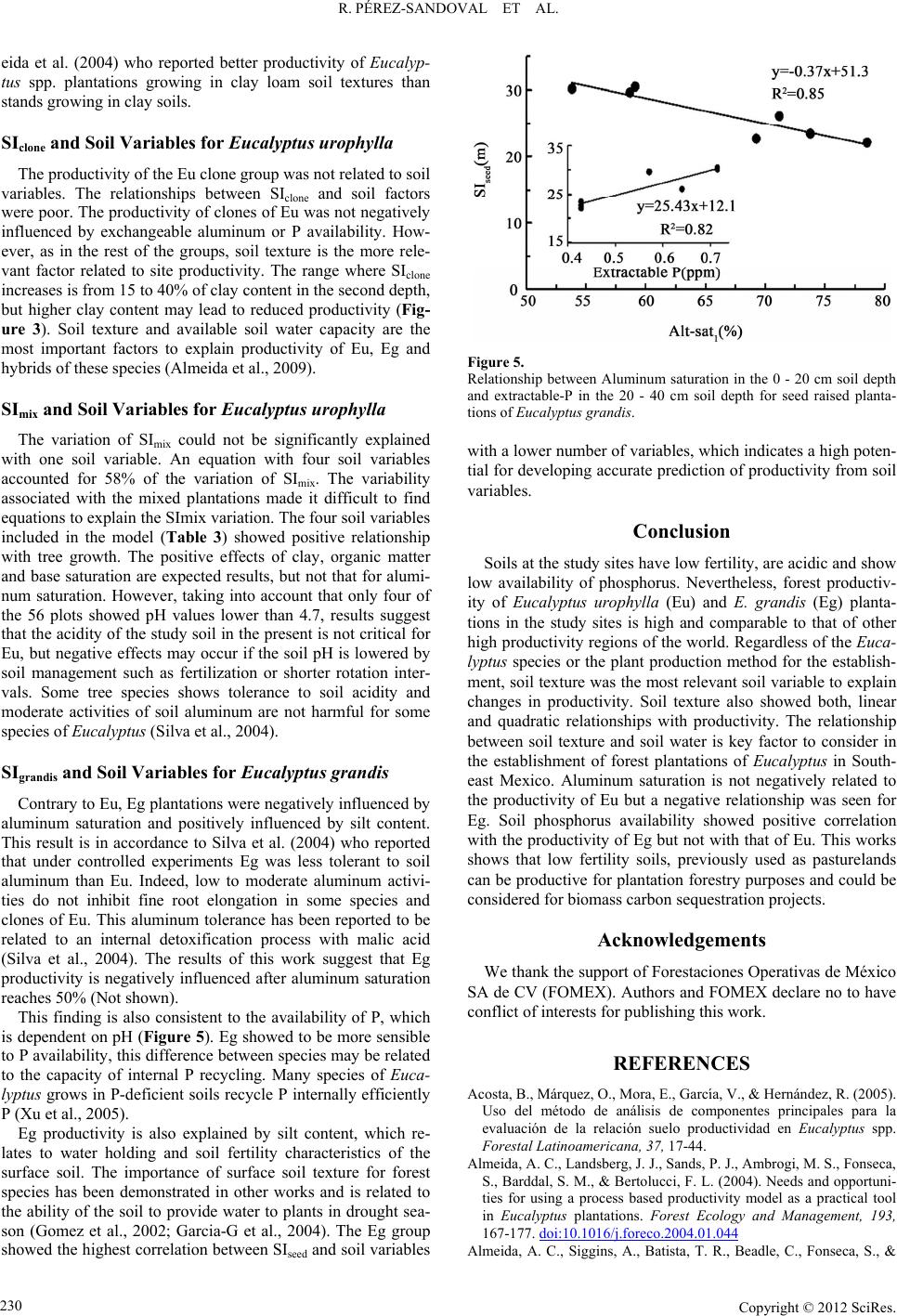 R. PÉREZ-SANDOVAL ET AL. eida et al. (2004) who reported better productivity of Eucalyp- tus spp. plantations growing in clay loam soil textures than stands growing in clay soils. SIclone and Soil Variables for Eucalyptus urophylla The productivity of the Eu clone group was not related to soil variables. The relationships between SIclone and soil factors were poor. The productivity of clones of Eu was not negatively influenced by exchangeable aluminum or P availability. How- ever, as in the rest of the groups, soil texture is the more rele- vant factor related to site productivity. The range where SIclone increases is from 15 to 40% of clay content in the second depth, but higher clay content may lead to reduced productivity (Fig- ure 3). Soil texture and available soil water capacity are the most important factors to explain productivity of Eu, Eg and hybrids of these species (Almeida et al., 2009). SImix and Soil Variables for Eucalyptus urophylla The variation of SImix could not be significantly explained with one soil variable. An equation with four soil variables accounted for 58% of the variation of SImix. The variability associated with the mixed plantations made it difficult to find equations to explain the SImix variation. The four soil variables included in the model (Table 3) showed positive relationship with tree growth. The positive effects of clay, organic matter and base saturation are expected results, but not that for alumi- num saturation. However, taking into account that only four of the 56 plots showed pH values lower than 4.7, results suggest that the acidity of the study soil in the present is not critical for Eu, but negative effects may occur if the soil pH is lowered by soil management such as fertilization or shorter rotation inter- vals. Some tree species shows tolerance to soil acidity and moderate activities of soil aluminum are not harmful for some species of Eucalyptus (Silva et al., 2004). SIgrandis and Soil Variables for Eucalyptus grandis Contrary to Eu, Eg plantations were negatively influenced by aluminum saturation and positively influenced by silt content. This result is in accordance to Silva et al. (2004) who reported that under controlled experiments Eg was less tolerant to soil aluminum than Eu. Indeed, low to moderate aluminum activi- ties do not inhibit fine root elongation in some species and clones of Eu. This aluminum tolerance has been reported to be related to an internal detoxification process with malic acid (Silva et al., 2004). The results of this work suggest that Eg productivity is negatively influenced after aluminum saturation reaches 50% (Not shown). This finding is also consistent to the availability of P, which is dependent on pH (Figure 5). Eg showed to be more sensible to P availability, this difference between species may be related to the capacity of internal P recycling. Many species of Euca- lyptus grows in P-deficient soils recycle P internally efficiently P (Xu et al., 2005). Eg productivity is also explained by silt content, which re- lates to water holding and soil fertility characteristics of the surface soil. The importance of surface soil texture for forest species has been demonstrated in other works and is related to the ability of the soil to provide water to plants in drought sea- son (Gomez et al., 2002; Garcia-G et al., 2004). The Eg group showed the highest correlation between SIseed and soil variables Figure 5. Relationship between Aluminum saturation in the 0 - 20 cm soil depth and extractable-P in the 20 - 40 cm soil depth for seed raised planta- tions of Eucalyptus grandis. with a lower number of variables, which indicates a high poten- tial for developing accurate prediction of productivity from soil variables. Conclusion Soils at the study sites have low fertility, are acidic and show low availability of phosphorus. Nevertheless, forest productiv- ity of Eucalyptus urophylla (Eu) and E. grandis (Eg) planta- tions in the study sites is high and comparable to that of other high productivity regions of the world. Regardless of the Euca- lyptus species or the plant production method for the establish- ment, soil texture was the most relevant soil variable to explain changes in productivity. Soil texture also showed both, linear and quadratic relationships with productivity. The relationship between soil texture and soil water is key factor to consider in the establishment of forest plantations of Eucalyptus in South- east Mexico. Aluminum saturation is not negatively related to the productivity of Eu but a negative relationship was seen for Eg. Soil phosphorus availability showed positive correlation with the productivity of Eg but not with that of Eu. This works shows that low fertility soils, previously used as pasturelands can be productive for plantation forestry purposes and could be considered for biomass carbon sequestration projects. Acknowledgements We thank the support of Forestaciones Operativas de México SA de CV (FOMEX). Authors and FOMEX declare no to have conflict of interests for publishing this work. REFERENCES Acosta, B., Márquez, O., Mora, E., García, V., & Hernández, R. (2005). Uso del método de análisis de componentes principales para la evaluación de la relación suelo productividad en Eucalyptus spp. Forestal Latinoamerican a, 37, 17-44. Almeida, A. C., Landsberg, J. J., Sands, P. J., Ambrogi, M. S., Fonseca, S., Barddal, S. M., & Bertolucci, F. L. (2004). Needs and opportuni- ties for using a process based productivity model as a practical tool in Eucalyptus plantations. Forest Ecology and Management, 193, 167-177. doi:10.1016/j.foreco.2004.01.044 Almeida, A. C., Siggins, A., Batista, T. R., Beadle, C., Fonseca, S., & Copyright © 2012 SciRes. 230  R. PÉREZ-SANDOVAL ET AL. Copyright © 2012 SciRes. 231 Loos, R. (2009). Mapping the effect of spatial and temporal variation in climate and soils on Eucalyptus plantation production with 3-PG, a process-based growth model. Forest Ecology and Management, 259, 1730-1740. doi:10.1016/j.foreco.2009.10.008 Ceccon, E., & Martínez-Ramos, M. (1999). Aspectos ambientales refe- rentes al establecimiento de plantaciones de eucalipto de gran escala en áreas tropicales: Aplicación al caso de México. Interciencia, 24, 352-359. Coops, N. C., Waring, R. H., & Landsberg, J. J. (1998). Assessing forest productivity in Australia and New Zealand using a physio- logical-based model driven with average monthly weather data and satellite-derived estimates of canopy photosynthetic capacity. Forest Ecology and Management, 104, 113-127. doi:10.1016/S0378-1127(97)00248-X Delgado, C. C. E., Gómez, G. A., Valdez, L. J. R., de los Santos, P. H., Fierros, G. A. M., & Horwath, R. W. (2009). Site index and soil pro- perties in young plantations of Eucalyptus grandis and Eucalyptus urophylla in southeastern Mexico. Agrociencia, 43, 61-72. Diaz-Balteiro, L., & Rodríguez, L. C. E. (2006). Optimal rotations on Eucalyptus plantations including carbon sequestration. A comparison of results in Brazil and Spain. Forest Ecology and Management, 229, 247-258. doi:10.1016/j.foreco.2006.04.005 FAO (1989). FAO-UNESCO soil map of the world (revised legend). Reprint of FAO World Soil Resources Report 60. Technical Paper No. 20. Fisher, R. F., & Binkley, D., (2000). Ecology and management of forest soils. New York: Wiley. García-G, R., Gómez, A., López, U. J., Vargas, H. J., & Horwath, W. R. (2004). Tree growth and δ13C among populations of Pinus greggii Engelm at two contrasting sites in central Mexico. Forest Ecology and Management, 198, 237-247. doi:10.1016/j.foreco.2004.04.007 Geissen, V., Sánchez, H. R., Kampichler, C., Ramos, R. R., Sepulveda, L.A., Ochoa, G. S., de Jong, B. H. J., Huerta, L. E., & Hernández, D. S. (2009). Effects of land-use change on some properties of tropical soils- An example from Southeast Mexico. Geoderma, 151, 87-97. doi:10.1016/j.geoderma.2009.03.011 Gomez, A., Powers, R. F., Singer, M. J., & Horwath, W. R. (2002). Soil compaction effects on growth of young ponderosa pine following litter removal in California’s Sierra Nevada. Soil Science Society of America Journal, 66, 1334-1343. doi:10.2136/sssaj2002.1334 Gómez-Tejero, J., De los Santos-Posadas, H., Fierros-González, A., & Valdez-Lazalde, R. (2009). Modelos de crecimiento en altura domi- nante para Eucalyptus grandis Hill ex Maiden y E. urophylla S. T. Blake en Oaxaca, México. Revista Fitotecnia Mexicana, 32, 161- 169. Gonçalves, J. L. M., Barros, N. F., Nambiar, E. K. S., & Novais, R. F. (1997). Soil and stand management for short-rotation plantations. In E. K. S. Nambiar, & A. G. Brown (Eds.), Management of soil, nutri- ents and water in tropical plantations forests (pp. 379-417). Can- berra: ACIAR Monograph 43. Grigal, D. F. (2000). Effects of extensive forest management on soil productivity. Forest E cology and Management, 138, 167-185. doi:10.1016/S0378-1127(00)00395-9 Henri, C. J. (2001). Soil-site productivity of Gmelina arborea, Eu ca - lyptus urophylla and Eucalyptus grandis forest plantations in western Venezuela. Forest Ecology and Management, 144, 255-264. doi:10.1016/S0378-1127(00)00390-X Hubbard, R. M., Stape, J., Ryan, M. G., Almeida, A. C., & Rojas, J. (2010). Effects of irrigation on water use and water use efficiency in two fast growing Eucalyptus plantations. Forest Ecology and Man- agement, 259, 1714-1721. doi:10.1016/j.foreco.2009.10.028 International Tropical Timber Organization (2009). Encouraging indus- trial forest plantations in the tropics. Technical Series, 33, 143. Laclau, J. P., Almeida, J. C. R., Gonçalves, J. L. M., Saint-André, L., Ventura, M., Ranger, J., Moreira, R. M., & Nouvellon, Y. (2009). In- fluence of nitrogen and potassium fertilization on leaf life span and allocation of above-ground growth in Eucalyptus plantations. Tree Physiology, 29, 111-124. doi:10.1093/treephys/tpn010 Laffan, M. D. (1994). A methodology for assessing and classifying site productivity and land suitability for eucalypt plantations in Tasmania. Tasforests, 6, 61-67. Lima, A. M. N., Silva, I. R., Neves, J. C. L., Novais, R. F., Barros, N. F., Mendonca, E. S., Smyth, T. J., Moreira, M. S., & Leite, F. P. (2006). Soil organic carbon dynamics following afforestation of de- graded pastures with Eucalyptus in southeastern Brazil. Forest Ecology and Management, 235, 219-231. doi:10.1016/j.foreco.2006.08.331 Lugo, A. E., Brown, S., & Chapmanan, J. (1988). Analytical review of production rates and stemwood biomass of tropical forest plantations. Forest Ecology and Manageme n t, 23, 179-200. doi:10.1016/0378-1127(88)90081-3 Norma Oficial Mexicana (2001). Que establece las especificaciones de fertilidad, salinidad y clasificación de suelos. Estudios, muestreos y análisis. Diario Oficial de la Federación del 14 de febrero de 2001. URL (last checked 26 June 2012). http://www.profepa.gob.mx/innovaportal/file/3335/1/nom-021-semar nat-2000.pdf Onyekwelu, J. C., Stimm, B., & Evans, J. (2011). Review Plantation Forestry. In Günter et al. (Ed.), Tropical Forestry 8: Silviculture in the Tropics (pp. 399-454). Berlin: Springer-Verlag. Pagano, M. C., Bellote, A. F., & Scotti, M. R. (2009). Aboveground nutrient components of Eucalyptus camaldulensis and E. grandis in semiarid Brazil under the nature and the mycorrhizal inoculation conditions. Journal of Forestry Research, 20, 15-22. doi:10.1007/s11676-009-0003-5 Rodríguez, R., Real, P., Espinosa, M., & Perry, D. A. (2009). A proc- ess-based model to evaluate site quality for Eucalyptus nitens in the bio-bio region of Chile. Forestry, 82, 149-162. doi:10.1093/forestry/cpn045 Ryan, M. G., Stape, J. L., Binkley, D., Fonseca, S., Loos, R. A., Taka- hashi, E. N., Silva, C. R., Silva, S. R., Hakamada, R. E., Ferreira, J. M., Lima, A. M., Gava, J. L., Leite, F. P., Andrade, H. B., Alves, J. M., & Silva, G. G. C. (2010). Factors controlling Eucalyptus produc- tivity: How water availability and stand structure alter production and carbon allocation. Forest Ecology and Management, 259, 1695- 1703. doi:10.1016/j.foreco.2010.01.013 Seppänen, P. (2002). Secuestro de carbono a través de plantaciones de eucalipto en el trópico húmedo. Foresta Veracruzana, 4, 51-58. Silva, I. R., Novais, R. F., Jham, G. N., Barros, N. F., Gebrim, F. O., Nunes, F. N., Neves, J. C. L., & Leite, F. P. (2004). Responses of eucalypt species to aluminum: The possible involvement of low mo- lecular weight organic acids in the Al tolerance mechanism. Tree Physiology, 24, 1267-1277. doi:10.1093/treephys/24.11.1267 Stape, J. L., Binkley, D., Jacob, W. S., & Takahashi, E. N. (2006). A twin-plot approach to determine nutrient limitation and potential in Eucalyptus plantations al landscape scales in Brazil. Forest Ecology and Management, 223, 1358-1362. doi:10.1016/j.foreco.2005.11.015 Stape, J. L., Binkley, D., & Ryan, M. G. (2004). Eucalyptus production and the supply, use and efficiency of use of water, light and nitrogen across a geographic gradient in Brazil. Forest Ecology and Manage- ment, 193, 17-31. doi:10.1016/j.foreco.2004.01.020 Stape, J. L., Binkley, D., Ryan, M. G., Fonseca, S., Loos, R. A., Taka- hashi, E. N., Silva, C. R., Silva, S. R., Hakamada, R. E., de Ferreira, J. M. A., Lima, A. M. N., Gava, J. L., Leite, F. P., Andrade, H. B., Alves, J. M., Silva., G. G. C., & Azevedo, M. R. (2010). The Brazil Eucalyptus potential productivity project: Influence of water, nutri- ents and stand uniformity on wood production. Forest Ecology and Management, 259, 1684-1694. doi:10.1016/j.foreco.2010.01.012 Van Wambeke, A. (1992). Soils of the tropics, properties and appraisal. New York: McGraw-Hill, Inc. Xu, D., Dell, B., Yang, Z., Malajczuk, N., & Gong, M. (2005). Effects of phosphorus application on productivity and nutrient accumulation of a Eucalyptus urophylla Plantation. Journal of Tropical Forest Sciences, 17, 447-461. |