

Paper Menu >>
Journal Menu >>
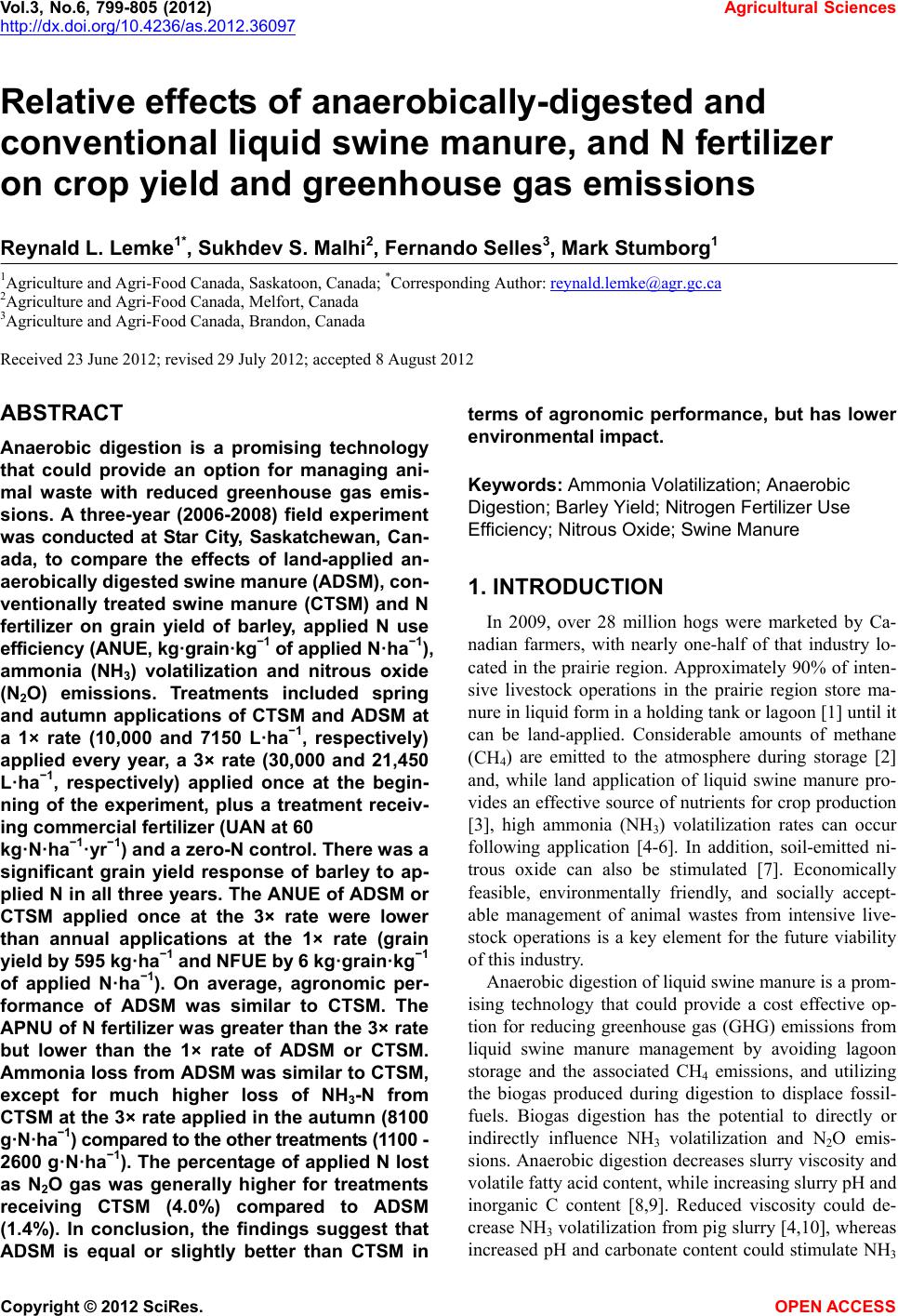 Vol.3, No.6, 799-805 (2012) Agricultural Sciences http://dx.doi.org/10.4236/as.2012.36097 Relative effects of anaerobically-digested and conventional liquid swine manure, and N fertilizer on crop yield and greenhouse gas emissions Reynald L. Lemke1*, Sukhdev S. Malhi2, Fernando Selles3, Mark Stumborg1 1Agriculture and Agri-Food Canada, Saskatoon, Canada; *Corresponding Author: [email protected] 2Agriculture and Agri-Food Canada, Melfort, Canada 3Agriculture and Agri-Food Canada, Brandon, Canada Received 23 June 2012; revised 29 July 2012; accepted 8 August 2012 ABSTRACT Anaerobic digestion is a promising technology that could provide an option for managing ani- mal waste with reduced greenhouse gas emis- sions. A three-year (2006-2008) field experiment was conducted at Star City, Saskatchewan, Can- ada, to compare the effects of land-applied an- aerobically digested swine manure (ADSM), con- ventionally treated swine manure (CTSM) and N fertilizer on grain yield of barley, applied N use efficiency (ANUE, kg·grain·kg−1 of applied N·ha−1), ammonia (NH3) volatilization and nitrous oxide (N2O) emissions. Treatments included spring and autumn applications of CTSM and ADSM at a 1× rate (10,000 and 7150 L·ha−1, respectively) applied every year, a 3× rate (30,000 and 21,450 L·ha−1, respectively) applied once at the begin- ning of the experiment, plus a treatment receiv- ing commercial fertilizer (UAN at 60 kg·N·ha−1·yr−1) and a zero-N control. There was a significant grain yield response of barley to ap- plied N in all three years. The ANUE of ADSM or CTSM applied once at the 3× rate were lower than annual applications at the 1× rate (grain yield by 595 kg·ha−1 and NFUE by 6 kg·grain·kg−1 of applied N·ha−1). On average, agronomic per- formance of ADSM was similar to CTSM. The APNU of N fertilizer was greater than the 3× rate but lower than the 1× rate of ADSM or CTSM. Ammonia loss from ADSM was similar to CTSM, except for much higher loss of NH3-N from CTSM at the 3× rate applied in the autumn (8100 g·N·ha−1) compared to the other treatments (1100 - 2600 g·N·ha−1). The percentage of applied N lost as N2O gas was generally higher for treatments receiving CTSM (4.0%) compared to ADSM (1.4%). In conclusion, the findings suggest that ADSM is equal or slightly better than CTSM in terms of agronomic performance, but has lower environmental impact. Keywords: Ammonia Volatilization; Anaerobic Digestion; Barley Yield; Nitrogen Fertilizer Use Efficiency; Nitrous Oxide; Swine Manure 1. INTRODUCTION In 2009, over 28 million hogs were marketed by Ca- nadian farmers, with nearly one-half of that industry lo- cated in the prairie region. Approximately 90% of inten- sive livestock operations in the prairie region store ma- nure in liquid form in a holding tank or lagoon [1] until it can be land-applied. Considerable amounts of methane (CH4) are emitted to the atmosphere during storage [2] and, while land application of liquid swine manure pro- vides an effective source of nutrients for crop production [3], high ammonia (NH3) volatilization rates can occur following application [4-6]. In addition, soil-emitted ni- trous oxide can also be stimulated [7]. Economically feasible, environmentally friendly, and socially accept- able management of animal wastes from intensive live- stock operations is a key element for the future viability of this industry. Anaerobic digestion of liquid swine manure is a prom- ising technology that could provide a cost effective op- tion for reducing greenhouse gas (GHG) emissions from liquid swine manure management by avoiding lagoon storage and the associated CH4 emissions, and utilizing the biogas produced during digestion to displace fossil- fuels. Biogas digestion has the potential to directly or indirectly influence NH3 volatilization and N2O emis- sions. Anaerobic digestion decreases slurry viscosity and volatile fatty acid content, while increasing slurry pH and inorganic C content [8,9]. Reduced viscosity could de- crease NH3 volatilization from pig slurry [4,10], whereas increased pH and carbonate content could stimulate NH3 Copyright © 2012 SciRes. OPEN ACCESS 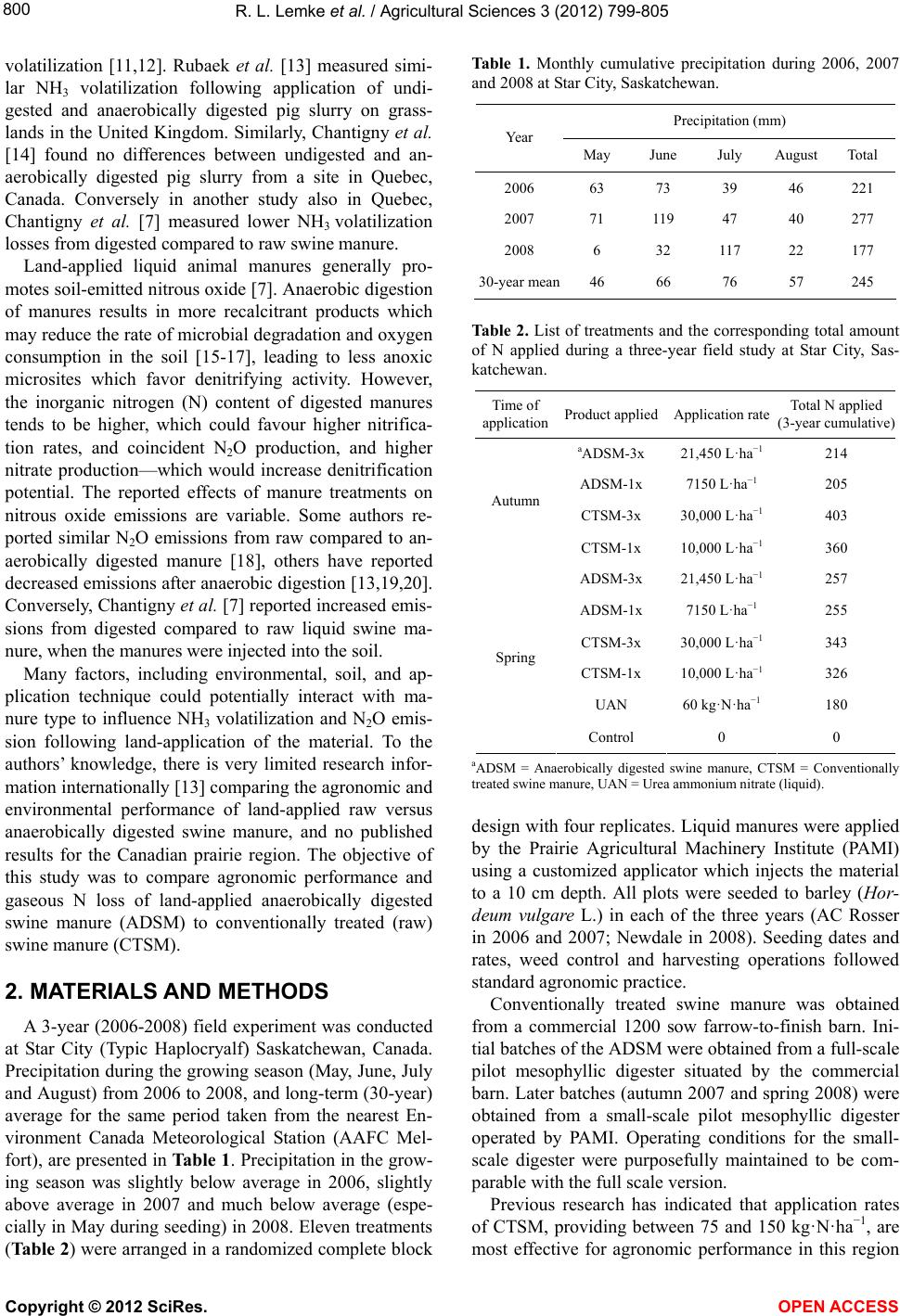 R. L. Lemke et al. / Agricultural Sciences 3 (2012) 799-805 800 volatilization [11,12]. Rubaek et al. [13] measured simi- lar NH3 volatilization following application of undi- gested and anaerobically digested pig slurry on grass- lands in the United Kingdom. Similarly, Chantigny et al. [14] found no differences between undigested and an- aerobically digested pig slurry from a site in Quebec, Canada. Conversely in another study also in Quebec, Chantigny et al. [7] measured lower NH3 volatilization losses from digested compared to raw swine manure. Land-applied liquid animal manures generally pro- motes soil-emitted nitrous oxide [7]. Anaerobic digestion of manures results in more recalcitrant products which may reduce the rate of microbial degradation and oxygen consumption in the soil [15-17], leading to less anoxic microsites which favor denitrifying activity. However, the inorganic nitrogen (N) content of digested manures tends to be higher, which could favour higher nitrifica- tion rates, and coincident N2O production, and higher nitrate production—which would increase denitrification potential. The reported effects of manure treatments on nitrous oxide emissions are variable. Some authors re- ported similar N2O emissions from raw compared to an- aerobically digested manure [18], others have reported decreased emissions after anaerobic digestion [13,19,20]. Conversely, Chantigny et al. [7] reported increased emis- sions from digested compared to raw liquid swine ma- nure, when the manures were injected into the soil. Many factors, including environmental, soil, and ap- plication technique could potentially interact with ma- nure type to influence NH3 volatilization and N2O emis- sion following land-application of the material. To the authors’ knowledge, there is very limited research infor- mation internationally [13] comparing the agronomic and environmental performance of land-applied raw versus anaerobically digested swine manure, and no published results for the Canadian prairie region. The objective of this study was to compare agronomic performance and gaseous N loss of land-applied anaerobically digested swine manure (ADSM) to conventionally treated (raw) swine manure (CTSM). 2. MATERIALS AND METHODS A 3-year (2006-2008) field experiment was conducted at Star City (Typic Haplocryalf) Saskatchewan, Canada. Precipitation during the growing season (May, June, July and August) from 2006 to 2008, and long-term (30-year) average for the same period taken from the nearest En- vironment Canada Meteorological Station (AAFC Mel- fort), are presented in Table 1. Precipitation in the grow- ing season was slightly below average in 2006, slightly above average in 2007 and much below average (espe- cially in May during seeding) in 2008. Eleven treatments (Table 2) were arranged in a randomized complete block Table 1. Monthly cumulative precipitation during 2006, 2007 and 2008 at Star City, Saskatchewan. Precipitation (mm) Year May June July AugustTotal 2006 63 73 39 46 221 2007 71 119 47 40 277 2008 6 32 117 22 177 30-year mean46 66 76 57 245 Table 2. List of treatments and the corresponding total amount of N applied during a three-year field study at Star City, Sas- katchewan. Time of application Product appliedApplication rate Total N applied (3-year cumulative) aADSM-3x 21,450 L·ha−1 214 ADSM-1x 7150 L·ha−1 205 CTSM-3x 30,000 L·ha−1 403 Autumn CTSM-1x 10,000 L·ha−1 360 ADSM-3x 21,450 L·ha−1 257 ADSM-1x 7150 L·ha−1 255 CTSM-3x 30,000 L·ha−1 343 CTSM-1x 10,000 L·ha−1 326 UAN 60 kg·N·ha−1 180 Spring Control 0 0 aADSM = Anaerobically digested swine manure, CTSM = Conventionally treated swine manure, UAN = Urea ammonium nitrate (liquid). design with four replicates. Liquid manures were applied by the Prairie Agricultural Machinery Institute (PAMI) using a customized applicator which injects the material to a 10 cm depth. All plots were seeded to barley (Hor - deum vulgare L.) in each of the three years (AC Rosser in 2006 and 2007; Newdale in 2008). Seeding dates and rates, weed control and harvesting operations followed standard agronomic practice. Conventionally treated swine manure was obtained from a commercial 1200 sow farrow-to-finish barn. Ini- tial batches of the ADSM were obtained from a full-scale pilot mesophyllic digester situated by the commercial barn. Later batches (autumn 2007 and spring 2008) were obtained from a small-scale pilot mesophyllic digester operated by PAMI. Operating conditions for the small- scale digester were purposefully maintained to be com- parable with the full scale version. Previous research has indicated that application rates of CTSM, providing between 75 and 150 kg·N·ha−1, are most effective for agronomic performance in this region Copyright © 2012 SciRes. OPEN ACCESS 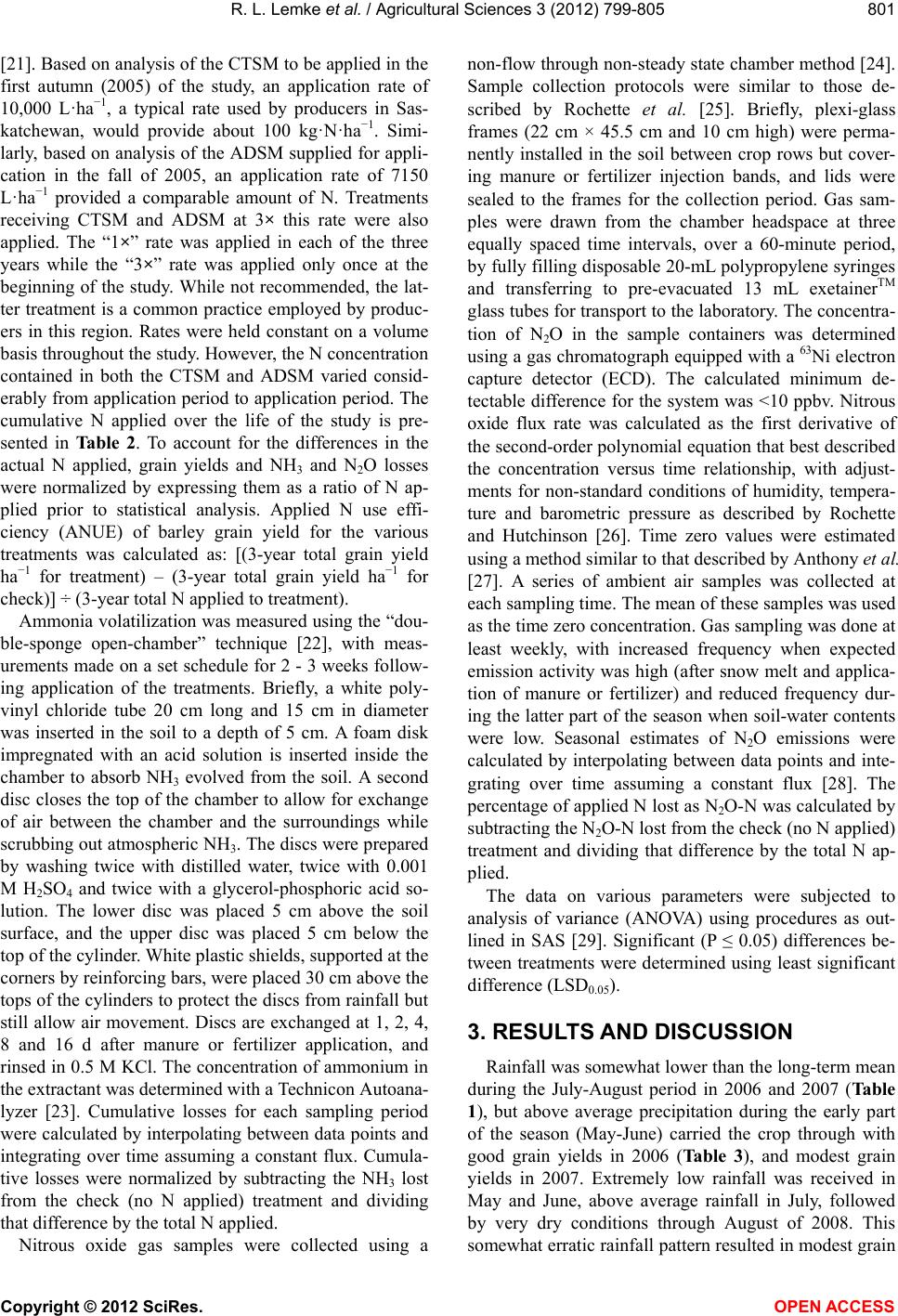 R. L. Lemke et al. / Agricultural Sciences 3 (2012) 799-805 801 [21]. Based on analysis of the CTSM to be applied in the first autumn (2005) of the study, an application rate of 10,000 L·ha−1, a typical rate used by producers in Sas- katchewan, would provide about 100 kg·N·ha−1. Simi- larly, based on analysis of the ADSM supplied for appli- cation in the fall of 2005, an application rate of 7150 L·ha−1 provided a comparable amount of N. Treatments receiving CTSM and ADSM at 3× this rate were also applied. The “1×” rate was applied in each of the three years while the “3×” rate was applied only once at the beginning of the study. While not recommended, the lat- ter treatment is a common practice employed by produc- ers in this region. Rates were held constant on a volume basis throughout the study. However, the N concentration contained in both the CTSM and ADSM varied consid- erably from application period to application period. The cumulative N applied over the life of the study is pre- sented in Tab l e 2 . To account for the differences in the actual N applied, grain yields and NH3 and N2O losses were normalized by expressing them as a ratio of N ap- plied prior to statistical analysis. Applied N use effi- ciency (ANUE) of barley grain yield for the various treatments was calculated as: [(3-year total grain yield ha−1 for treatment) – (3-year total grain yield ha−1 for check)] ÷ (3-year total N applied to treatment). Ammonia volatilization was measured using the “dou- ble-sponge open-chamber” technique [22], with meas- urements made on a set schedule for 2 - 3 weeks follow- ing application of the treatments. Briefly, a white poly- vinyl chloride tube 20 cm long and 15 cm in diameter was inserted in the soil to a depth of 5 cm. A foam disk impregnated with an acid solution is inserted inside the chamber to absorb NH3 evolved from the soil. A second disc closes the top of the chamber to allow for exchange of air between the chamber and the surroundings while scrubbing out atmospheric NH3. The discs were prepared by washing twice with distilled water, twice with 0.001 M H2SO4 and twice with a glycerol-phosphoric acid so- lution. The lower disc was placed 5 cm above the soil surface, and the upper disc was placed 5 cm below the top of the cylinder. White plastic shields, supported at the corners by reinforcing bars, were placed 30 cm above the tops of the cylinders to protect the discs from rainfall but still allow air movement. Discs are exchanged at 1, 2, 4, 8 and 16 d after manure or fertilizer application, and rinsed in 0.5 M KCl. The concentration of ammonium in the extractant was determined with a Technicon Autoana- lyzer [23]. Cumulative losses for each sampling period were calculated by interpolating between data points and integrating over time assuming a constant flux. Cumula- tive losses were normalized by subtracting the NH3 lost from the check (no N applied) treatment and dividing that difference by the total N applied. Nitrous oxide gas samples were collected using a non-flow through non-steady state chamber method [24]. Sample collection protocols were similar to those de- scribed by Rochette et al. [25]. Briefly, plexi-glass frames (22 cm × 45.5 cm and 10 cm high) were perma- nently installed in the soil between crop rows but cover- ing manure or fertilizer injection bands, and lids were sealed to the frames for the collection period. Gas sam- ples were drawn from the chamber headspace at three equally spaced time intervals, over a 60-minute period, by fully filling disposable 20-mL polypropylene syringes and transferring to pre-evacuated 13 mL exetainerTM glass tubes for transport to the laboratory. The concentra- tion of N2O in the sample containers was determined using a gas chromatograph equipped with a 63Ni electron capture detector (ECD). The calculated minimum de- tectable difference for the system was <10 ppbv. Nitrous oxide flux rate was calculated as the first derivative of the second-order polynomial equation that best described the concentration versus time relationship, with adjust- ments for non-standard conditions of humidity, tempera- ture and barometric pressure as described by Rochette and Hutchinson [26]. Time zero values were estimated using a method similar to that described by Anthony et al. [27]. A series of ambient air samples was collected at each sampling time. The mean of these samples was used as the time zero concentration. Gas sampling was done at least weekly, with increased frequency when expected emission activity was high (after snow melt and applica- tion of manure or fertilizer) and reduced frequency dur- ing the latter part of the season when soil-water contents were low. Seasonal estimates of N2O emissions were calculated by interpolating between data points and inte- grating over time assuming a constant flux [28]. The percentage of applied N lost as N2O-N was calculated by subtracting the N2O-N lost from the check (no N applied) treatment and dividing that difference by the total N ap- plied. The data on various parameters were subjected to analysis of variance (ANOVA) using procedures as out- lined in SAS [29]. Significant (P ≤ 0.05) differences be- tween treatments were determined using least significant difference (LSD0.05). 3. RESULTS AND DISCUSSION Rainfall was somewhat lower than the long-term mean during the July-August period in 2006 and 2007 (Table 1), but above average precipitation during the early part of the season (May-June) carried the crop through with good grain yields in 2006 (Table 3), and modest grain yields in 2007. Extremely low rainfall was received in May and June, above average rainfall in July, followed by very dry conditions through August of 2008. This somewhat erratic rainfall pattern resulted in modest grain Copyright © 2012 SciRes. OPEN ACCESS 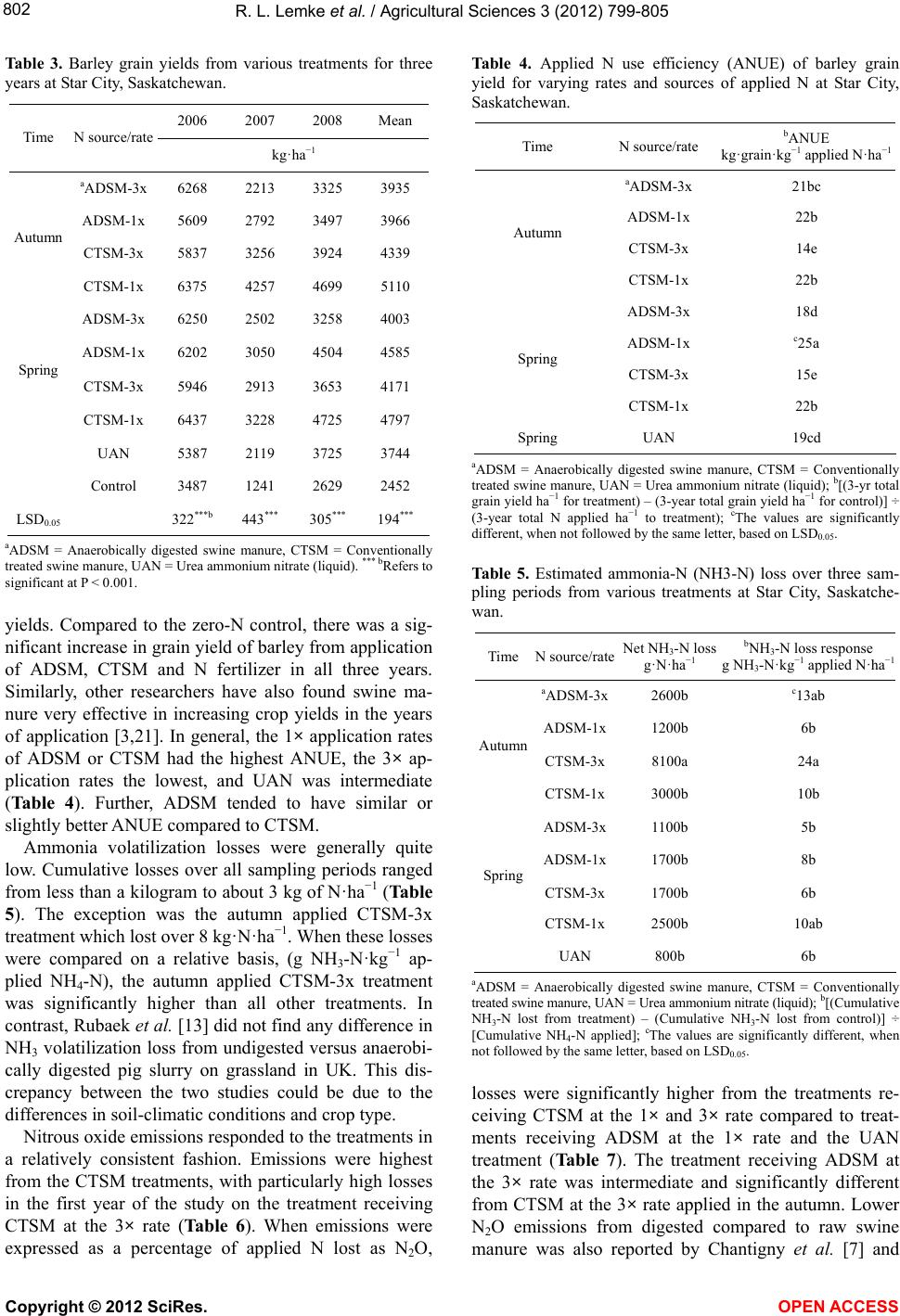 R. L. Lemke et al. / Agricultural Sciences 3 (2012) 799-805 802 Table 3. Barley grain yields from various treatments for three years at Star City, Saskatchewan. 2006 2007 2008 Mean Time N source/rate kg·ha−1 aADSM-3x 6268 2213 3325 3935 ADSM-1x 5609 2792 3497 3966 CTSM-3x 5837 3256 3924 4339 Autumn CTSM-1x 6375 4257 4699 5110 ADSM-3x 6250 2502 3258 4003 ADSM-1x 6202 3050 4504 4585 CTSM-3x 5946 2913 3653 4171 Spring CTSM-1x 6437 3228 4725 4797 UAN 5387 2119 3725 3744 Control 3487 1241 2629 2452 LSD0.05 322***b 443*** 305*** 194*** aADSM = Anaerobically digested swine manure, CTSM = Conventionally treated swine manure, UAN = Urea ammonium nitrate (liquid). *** bRefers to significant at P < 0.001. yields. Compared to the zero-N control, there was a sig- nificant increase in grain yield of barley from application of ADSM, CTSM and N fertilizer in all three years. Similarly, other researchers have also found swine ma- nure very effective in increasing crop yields in the years of application [3,21]. In general, the 1× application rates of ADSM or CTSM had the highest ANUE, the 3× ap- plication rates the lowest, and UAN was intermediate (Table 4). Further, ADSM tended to have similar or slightly better ANUE compared to CTSM. Ammonia volatilization losses were generally quite low. Cumulative losses over all sampling periods ranged from less than a kilogram to about 3 kg of N·ha−1 (Table 5). The exception was the autumn applied CTSM-3x treatment which lost over 8 kg·N·ha−1. When these losses were compared on a relative basis, (g NH3-N·kg−1 ap- plied NH4-N), the autumn applied CTSM-3x treatment was significantly higher than all other treatments. In contrast, Rubaek et al. [13] did not find any difference in NH3 volatilization loss from undigested versus anaerobi- cally digested pig slurry on grassland in UK. This dis- crepancy between the two studies could be due to the differences in soil-climatic conditions and crop type. Nitrous oxide emissions responded to the treatments in a relatively consistent fashion. Emissions were highest from the CTSM treatments, with particularly high losses in the first year of the study on the treatment receiving CTSM at the 3× rate (Table 6). When emissions were expressed as a percentage of applied N lost as N2O, Table 4. Applied N use efficiency (ANUE) of barley grain yield for varying rates and sources of applied N at Star City, Saskatchewan. Time N source/rate bANUE kg·grain·kg−1 applied N·ha−1 aADSM-3x 21bc ADSM-1x 22b CTSM-3x 14e Autumn CTSM-1x 22b ADSM-3x 18d ADSM-1x c25a CTSM-3x 15e Spring CTSM-1x 22b Spring UAN 19cd aADSM = Anaerobically digested swine manure, CTSM = Conventionally treated swine manure, UAN = Urea ammonium nitrate (liquid); b[(3-yr total grain yield ha−1 for treatment) – (3-year total grain yield ha−1 for control)] ÷ (3-year total N applied ha−1 to treatment); cThe values are significantly different, when not followed by the same letter, based on LSD0.05. Ta b le 5 . Estimated ammonia-N (NH3-N) loss over three sam- pling periods from various treatments at Star City, Saskatche- wan. TimeN source/rateNet NH3-N loss g·N·ha−1 bNH3-N loss response g NH3-N·kg−1 applied N·ha−1 aADSM-3x2600b c13ab ADSM-1x1200b 6b CTSM-3x8100a 24a Autumn CTSM-1x3000b 10b ADSM-3x1100b 5b ADSM-1x1700b 8b CTSM-3x1700b 6b Spring CTSM-1x2500b 10ab UAN 800b 6b aADSM = Anaerobically digested swine manure, CTSM = Conventionally treated swine manure, UAN = Urea ammonium nitrate (liquid); b[(Cumulative NH3-N lost from treatment) – (Cumulative NH3-N lost from control)] ÷ [Cumulative NH4-N applied]; cThe values are significantly different, when not followed by the same letter, based on LSD0.05. losses were significantly higher from the treatments re- ceiving CTSM at the 1× and 3× rate compared to treat- ments receiving ADSM at the 1× rate and the UAN treatment (Table 7). The treatment receiving ADSM at the 3× rate was intermediate and significantly different from CTSM at the 3× rate applied in the autumn. Lower N2O emissions from digested compared to raw swine manure was also reported by Chantigny et al. [7] and Copyright © 2012 SciRes. OPEN ACCESS 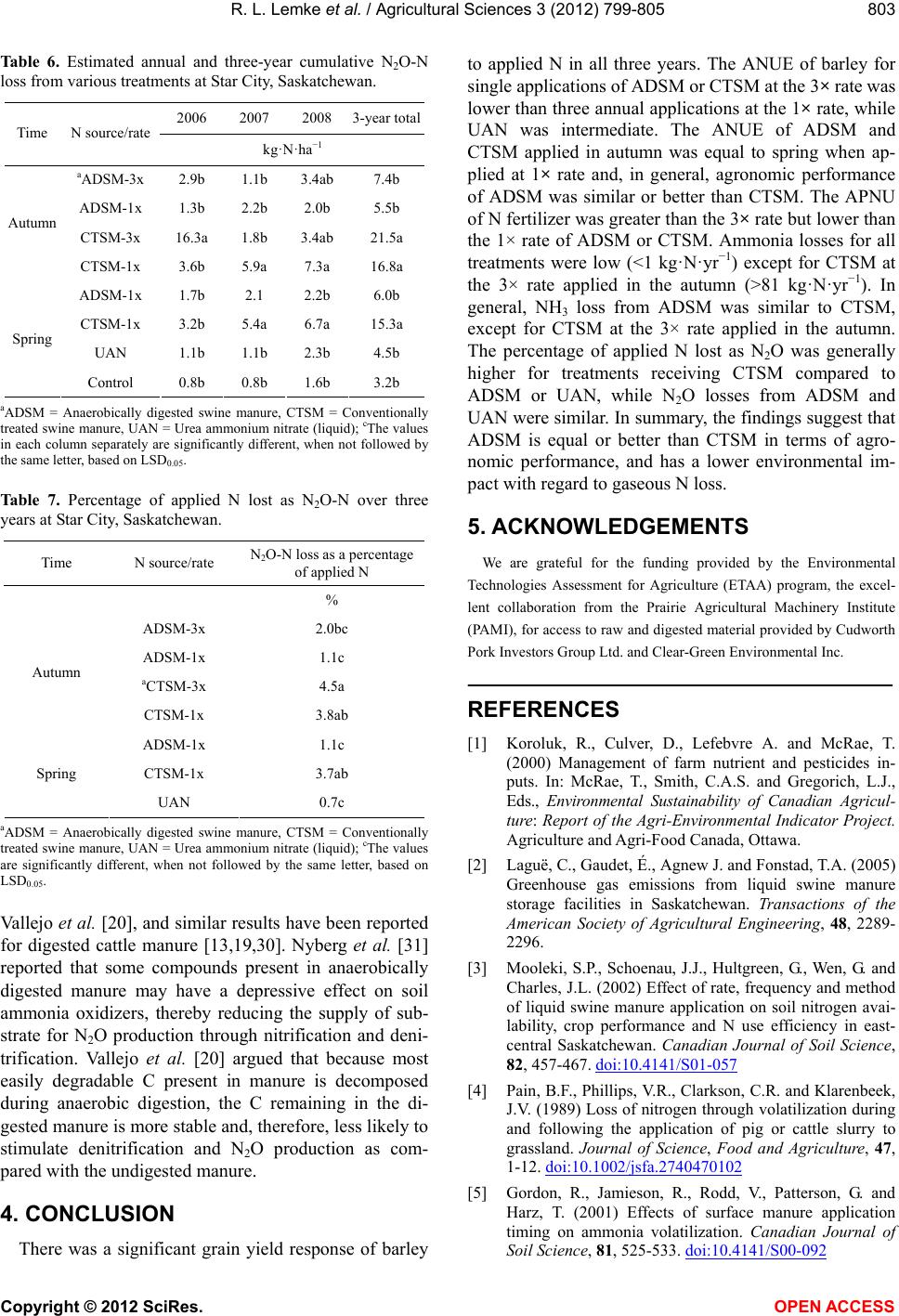 R. L. Lemke et al. / Agricultural Sciences 3 (2012) 799-805 803 Table 6. Estimated annual and three-year cumulative N2O-N loss from various treatments at Star City, Saskatchewan. 2006 2007 2008 3-year total Time N source/rate kg·N·ha−1 aADSM-3x 2.9b 1.1b 3.4ab 7.4b ADSM-1x 1.3b 2.2b 2.0b 5.5b CTSM-3x 16.3a 1.8b 3.4ab 21.5a Autumn CTSM-1x 3.6b 5.9a 7.3a 16.8a ADSM-1x 1.7b 2.1 2.2b 6.0b CTSM-1x 3.2b 5.4a 6.7a 15.3a UAN 1.1b 1.1b 2.3b 4.5b Spring Control 0.8b 0.8b 1.6b 3.2b aADSM = Anaerobically digested swine manure, CTSM = Conventionally treated swine manure, UAN = Urea ammonium nitrate (liquid); cThe values in each column separately are significantly different, when not followed by the same letter, based on LSD0.05. Table 7. Percentage of applied N lost as N2O-N over three years at Star City, Saskatchewan. Time N source/rate N2O-N loss as a percentage of applied N % ADSM-3x 2.0bc ADSM-1x 1.1c aCTSM-3x 4.5a Autumn CTSM-1x 3.8ab ADSM-1x 1.1c CTSM-1x 3.7ab Spring UAN 0.7c aADSM = Anaerobically digested swine manure, CTSM = Conventionally treated swine manure, UAN = Urea ammonium nitrate (liquid); cThe values are significantly different, when not followed by the same letter, based on LSD0.05. Vallejo et al. [20], and similar results have been reported for digested cattle manure [13,19,30]. Nyberg et al. [31] reported that some compounds present in anaerobically digested manure may have a depressive effect on soil ammonia oxidizers, thereby reducing the supply of sub- strate for N2O production through nitrification and deni- trification. Vallejo et al. [20] argued that because most easily degradable C present in manure is decomposed during anaerobic digestion, the C remaining in the di- gested manure is more stable and, therefore, less likely to stimulate denitrification and N2O production as com- pared with the undigested manure. 4. CONCLUSION There was a significant grain yield response of barley to applied N in all three years. The ANUE of barley for single applications of ADSM or CTSM at the 3× rate was lower than three annual applications at the 1× rate, while UAN was intermediate. The ANUE of ADSM and CTSM applied in autumn was equal to spring when ap- plied at 1× rate and, in general, agronomic performance of ADSM was similar or better than CTSM. The APNU of N fertilizer was greater than the 3× rate but lower than the 1× rate of ADSM or CTSM. Ammonia losses for all treatments were low (<1 kg·N·yr−1) except for CTSM at the 3× rate applied in the autumn (>81 kg·N·yr−1). In general, NH3 loss from ADSM was similar to CTSM, except for CTSM at the 3× rate applied in the autumn. The percentage of applied N lost as N2O was generally higher for treatments receiving CTSM compared to ADSM or UAN, while N2O losses from ADSM and UAN were similar. In summary, the findings suggest that ADSM is equal or better than CTSM in terms of agro- nomic performance, and has a lower environmental im- pact with regard to gaseous N loss. 5. ACKNOWLEDGEMENTS We are grateful for the funding provided by the Environmental Technologies Assessment for Agriculture (ETAA) program, the excel- lent collaboration from the Prairie Agricultural Machinery Institute (PAMI), for access to raw and digested material provided by Cudworth Pork Investors Group Ltd. and Clear-Green Environmental Inc. REFERENCES [1] Koroluk, R., Culver, D., Lefebvre A. and McRae, T. (2000) Management of farm nutrient and pesticides in- puts. In: McRae, T., Smith, C.A.S. and Gregorich, L.J., Eds., Environmental Sustainability of Canadian Agricul- ture: Report of the Agri-Environmental Indicator Project. Agriculture and Agri-Food Canada, Ottawa. [2] Laguë, C., Gaudet, É., Agnew J. and Fonstad, T.A. (2005) Greenhouse gas emissions from liquid swine manure storage facilities in Saskatchewan. Transactions of the American Society of Agricultural Engineering, 48, 2289- 2296. [3] Mooleki, S.P., Schoenau, J.J., Hultgreen, G., Wen, G. and Charles, J.L. (2002) Effect of rate, frequency and method of liquid swine manure application on soil nitrogen avai- lability, crop performance and N use efficiency in east- central Saskatchewan. Canadian Journal of Soil Science, 82, 457-467. doi:10.4141/S01-057 [4] Pain, B.F., Phillips, V.R., Clarkson, C.R. and Klarenbeek, J.V. (1989) Loss of nitrogen through volatilization during and following the application of pig or cattle slurry to grassland. Journal of Science, Food and Agriculture, 47, 1-12. doi:10.1002/jsfa.2740470102 [5] Gordon, R., Jamieson, R., Rodd, V., Patterson, G. and Harz, T. (2001) Effects of surface manure application timing on ammonia volatilization. Canadian Journal of Soil Science, 81, 525-533. doi:10.4141/S00-092 Copyright © 2012 SciRes. OPEN ACCESS 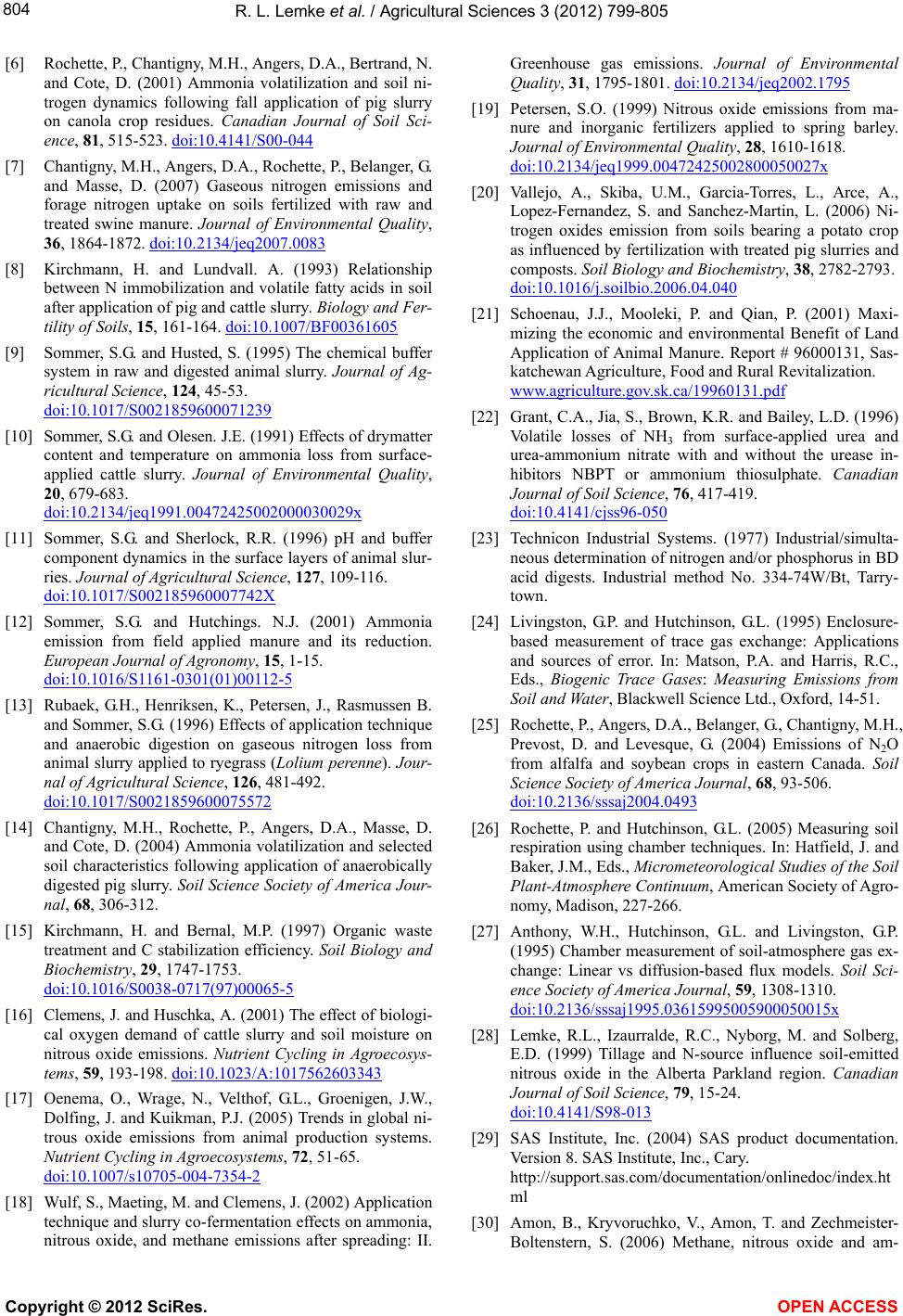 R. L. Lemke et al. / Agricultural Sciences 3 (2012) 799-805 804 [6] Rochette, P., Chantigny, M.H., Angers, D.A., Bertrand, N. and Cote, D. (2001) Ammonia volatilization and soil ni- trogen dynamics following fall application of pig slurry on canola crop residues. Canadian Journal of Soil Sci- ence, 81, 515-523. doi:10.4141/S00-044 [7] Chantigny, M.H., Angers, D.A., Rochette, P., Belanger, G. and Masse, D. (2007) Gaseous nitrogen emissions and forage nitrogen uptake on soils fertilized with raw and treated swine manure. Journal of Environmental Quality, 36, 1864-1872. doi:10.2134/jeq2007.0083 [8] Kirchmann, H. and Lundvall. A. (1993) Relationship between N immobilization and volatile fatty acids in soil after application of pig and cattle slurry. Biology and Fer- tility of Soils, 15, 161-164. doi:10.1007/BF00361605 [9] Sommer, S.G. and Husted, S. (1995) The chemical buffer system in raw and digested animal slurry. Journal of Ag- ricultural Science, 124, 45-53. doi:10.1017/S0021859600071239 [10] Sommer, S.G. and Olesen. J.E. (1991) Effects of drymatter content and temperature on ammonia loss from surface- applied cattle slurry. Journal of Environmental Quality, 20, 679-683. doi:10.2134/jeq1991.00472425002000030029x [11] Sommer, S.G. and Sherlock, R.R. (1996) pH and buffer component dynamics in the surface layers of animal slur- ries. Journal of Agricultural Science, 127, 109-116. doi:10.1017/S002185960007742X [12] Sommer, S.G. and Hutchings. N.J. (2001) Ammonia emission from field applied manure and its reduction. European Journal of Agronomy, 15, 1-15. doi:10.1016/S1161-0301(01)00112-5 [13] Rubaek, G.H., Henriksen, K., Petersen, J., Rasmussen B. and Sommer, S.G. (1996) Effects of application technique and anaerobic digestion on gaseous nitrogen loss from animal slurry applied to ryegrass (Lolium perenne). Jour- nal of Agricultural Science, 126, 481-492. doi:10.1017/S0021859600075572 [14] Chantigny, M.H., Rochette, P., Angers, D.A., Masse, D. and Cote, D. (2004) Ammonia volatilization and selected soil characteristics following application of anaerobically digested pig slurry. Soil Science Society of America Jour- nal, 68, 306-312. [15] Kirchmann, H. and Bernal, M.P. (1997) Organic waste treatment and C stabilization efficiency. Soil Biology and Biochemistry, 29, 1747-1753. doi:10.1016/S0038-0717(97)00065-5 [16] Clemens, J. and Huschka, A. (2001) The effect of biologi- cal oxygen demand of cattle slurry and soil moisture on nitrous oxide emissions. Nutrient Cycling in Agroecosys- tems, 59, 193-198. doi:10.1023/A:1017562603343 [17] Oenema, O., Wrage, N., Velthof, G.L., Groenigen, J.W., Dolfing, J. and Kuikman, P.J. (2005) Trends in global ni- trous oxide emissions from animal production systems. Nutrient Cycling in Agroecosystems, 72, 51-65. doi:10.1007/s10705-004-7354-2 [18] Wulf, S., Maeting, M. and Clemens, J. (2002) Application technique and slurry co-fermentation effects on ammonia, nitrous oxide, and methane emissions after spreading: II. Greenhouse gas emissions. Journal of Environmental Quality, 31, 1795-1801. doi:10.2134/jeq2002.1795 [19] Petersen, S.O. (1999) Nitrous oxide emissions from ma- nure and inorganic fertilizers applied to spring barley. Journal of Environmental Quality, 28, 1610-1618. doi:10.2134/jeq1999.00472425002800050027x [20] Vallejo, A., Skiba, U.M., Garcia-Torres, L., Arce, A., Lopez-Fernandez, S. and Sanchez-Martin, L. (2006) Ni- trogen oxides emission from soils bearing a potato crop as influenced by fertilization with treated pig slurries and composts. Soil Biology and Biochemistry, 38, 2782-2793. doi:10.1016/j.soilbio.2006.04.040 [21] Schoenau, J.J., Mooleki, P. and Qian, P. (2001) Maxi- mizing the economic and environmental Benefit of Land Application of Animal Manure. Report # 96000131, Sas- katchewan Agriculture, Food and Rural Revitalization. www.agriculture.gov.sk.ca/19960131.pdf [22] Grant, C.A., Jia, S., Brown, K.R. and Bailey, L.D. (1996) Volatile losses of NH3 from surface-applied urea and urea-ammonium nitrate with and without the urease in- hibitors NBPT or ammonium thiosulphate. Canadian Journal of Soil Science, 76, 417-419. doi:10.4141/cjss96-050 [23] Technicon Industrial Systems. (1977) Industrial/simulta- neous determination of nitrogen and/or phosphorus in BD acid digests. Industrial method No. 334-74W/Bt, Tarry- town. [24] Livingston, G.P. and Hutchinson, G.L. (1995) Enclosure- based measurement of trace gas exchange: Applications and sources of error. In: Matson, P.A. and Harris, R.C., Eds., Biogenic Trace Gases: Measuring Emissions from Soil and Water, Blackwell Science Ltd., Oxford, 14-51. [25] Rochette, P., Angers, D.A., Belanger, G., Chantigny, M.H., Prevost, D. and Levesque, G. (2004) Emissions of N2O from alfalfa and soybean crops in eastern Canada. Soil Science Society of America Journal, 68, 93-506. doi:10.2136/sssaj2004.0493 [26] Rochette, P. and Hutchinson, G.L. (2005) Measuring soil respiration using chamber techniques. In: Hatfield, J. and Baker, J.M., Eds., Micrometeorological Studies of the Soil Plant-Atmosphere Continuum, American Society of Agro- nomy, Madison, 227-266. [27] Anthony, W.H., Hutchinson, G.L. and Livingston, G.P. (1995) Chamber measurement of soil-atmosphere gas ex- change: Linear vs diffusion-based flux models. Soil Sci- ence Society of America Journal, 59, 1308-1310. doi:10.2136/sssaj1995.03615995005900050015x [28] Lemke, R.L., Izaurralde, R.C., Nyborg, M. and Solberg, E.D. (1999) Tillage and N-source influence soil-emitted nitrous oxide in the Alberta Parkland region. Canadian Journal of Soil Science, 79, 15-24. doi:10.4141/S98-013 [29] SAS Institute, Inc. (2004) SAS product documentation. Version 8. SAS Institute, Inc., Cary. http://support.sas.com/documentation/onlinedoc/index.ht ml [30] Amon, B., Kryvoruchko, V., Amon, T. and Zechmeister- Boltenstern, S. (2006) Methane, nitrous oxide and am- Copyright © 2012 SciRes. OPEN ACCESS  R. L. Lemke et al. / Agricultural Sciences 3 (2012) 799-805 Copyright © 2012 SciRes. OPEN ACCESS 805 monia emissions during storage and after application of dairy cattle slurry and infl uence of slurry treatment. Ag- riculture, Ecosystem and Environment, 112, 153-162. doi:10.1016/j.agee.2005.08.030 [31] Nyberg, K., Sundh, I., Johansson, M. and Schnürer, A. (2004) Presence of potential ammonia oxidation (PAO) inhibiting substances in anaerobic digestion residues. Ap- plied Soil Ecology, 26, 107-112. doi:10.1016/j.apsoil.2003.12.002 |