

Paper Menu >>
Journal Menu >>
 Open Journal of Applied Sciences, 2012, 2, 139-145 doi:10.4236/ojapps.2012.23020 Published Online September 2012 (http://www.SciRP.org/journal/ojapps) Stability Study of O/W Cosmetic Emulsions Using Rosmarinus officinalis and Calendula officinalis Extracts Evi-Maria Varka, Eforia Tsatsaroni*, Nikolet a Xristoforidou, An na - Ma ri a Dard a Department of Chemical Technology and Industrial Chemistry, School of Chemistry, Aristotle University, Thessaloniki, Greece Email: *[email protected] Received May 20, 2012; revised June 21, 2012; accepted July 10, 2012 ABSTRACT Cosmetic emulsions, as all macro emulsions, are inherently unstable systems, from a thermodynamic viewpoint. More specific eco-friendly oil/water (O/W) cosmetic emulsions are usually less stable than conventional ones as milder chemicals or less intense (energy consuming) production processes are involved. In this context, two traditional tech- niques an optical technique and a volumetric one have been used for the assessment of the stability of cosmetic emul- sions and compared to each other. Eco-friendly cosmetic emulsions were produced with different olive oil/water ex- tracts (Rosmarinus officinalis and Calend ula officin alis extracts) and emulsifier (Glycerol monostearate, GMS) concen- trations. Emulsions’ stability was registered simultaneously by 1) Microscopy photos of samples withdrawn at regular intervals from the test vessel; 2) Global volumetric measurements of the different phases (water/oil/emulsion) inside the test vessel made at regular intervals for determining the evolution of the location of the phases separation interface. Analysis of the results of each technique and comparisons among them are presented and discussed in detail. Keywords: Cosmetic Emulsions; Olive Oil; Stability Studies; Rosmarinus officin alis; Calendula officinalis 1. Introduction Since antiquity, emulsions have been used in cosmetics. In contrast to pharmaceutical ointments which must pe- netrate deep into the skin, cosmetic products are meant only for the immediate surface of the skin i.e. the epi- dermis. However, many commercial cosmetic products contain artificial chemicals that inevitably penetrate the skin. In the last few years physical products have started to gain the interest of consumers. Because of the incon- siderate use of chemical components and the harmful consequences of them in peoples’ health, scientists started to look out for alternative findings to surpass these problems. For this reason herbs’ study has gained attention [1-4]. Eco-friendly cosmetics—also known as organic cos- metics-appeared in the early 1900s. The biggest advan- tage of organic cosmetics is that they are safe for humans and the environment as they do not contain toxic chemi- cals, they need no animal testing and their results can be as pleasing as those achieved by commercial products. Rosmarinus officinalis L. (Lamiaceae), commonly known as rosemary, is a household plant used worldwide as a food-flavouring agent, widely distributed in the Mediter- ranean region. A preclinical survey confirmed that rose- mary has powerful anti-inflammatory, antibacterial, anti- diabetic, antitumor, cytoprotective and hepatoprotective properties [5-10]. Rosemary has one of the highest anti- oxidant activities of all the herbs and spices that have been investigated [11]. The antioxidant activity of rose- mary justifies its use in a broad range of applications, including food preservatives [12], cosmetics [13], phy- tomedicines etc. These properties attributes can be re- lated to rosemary’s high content of polyphenolic com- pounds, especially rosmarinic acid [14], which is con- sidered a chemical marker of this species. Calendula officinalis L. (Asteraceae), also known as marigold, is an annual herb native to the Mediterranean region. It is cultivated for ornamental and medicinal purposes in Europe and America. More than 35 proper- ties have been attributed to the decoctions and tinctures from the flowers, e.g. anti-inflammatory, analgesic, bac- tericide, tonic and the healing of wounds and skin erup- tions [15]. Previous phytopharmacological studies on the extracts of Calendula officinalis flowers have confirmed the presence of bioactive secondary metabolites, flavonol glycosides [16,17] and triterpenoids [18]. From the above we can see that traditional herbs pro- vide an interesting, largely, unexplored source for de- velopment of potential new cosmetics. In the present study we tried to combine all this beneficial components of the herbs in order to make O/W emulsions. The oil being used was olive oil. Olive oil is natural oil *Corresponding author. Copyright © 2012 SciRes. OJAppS 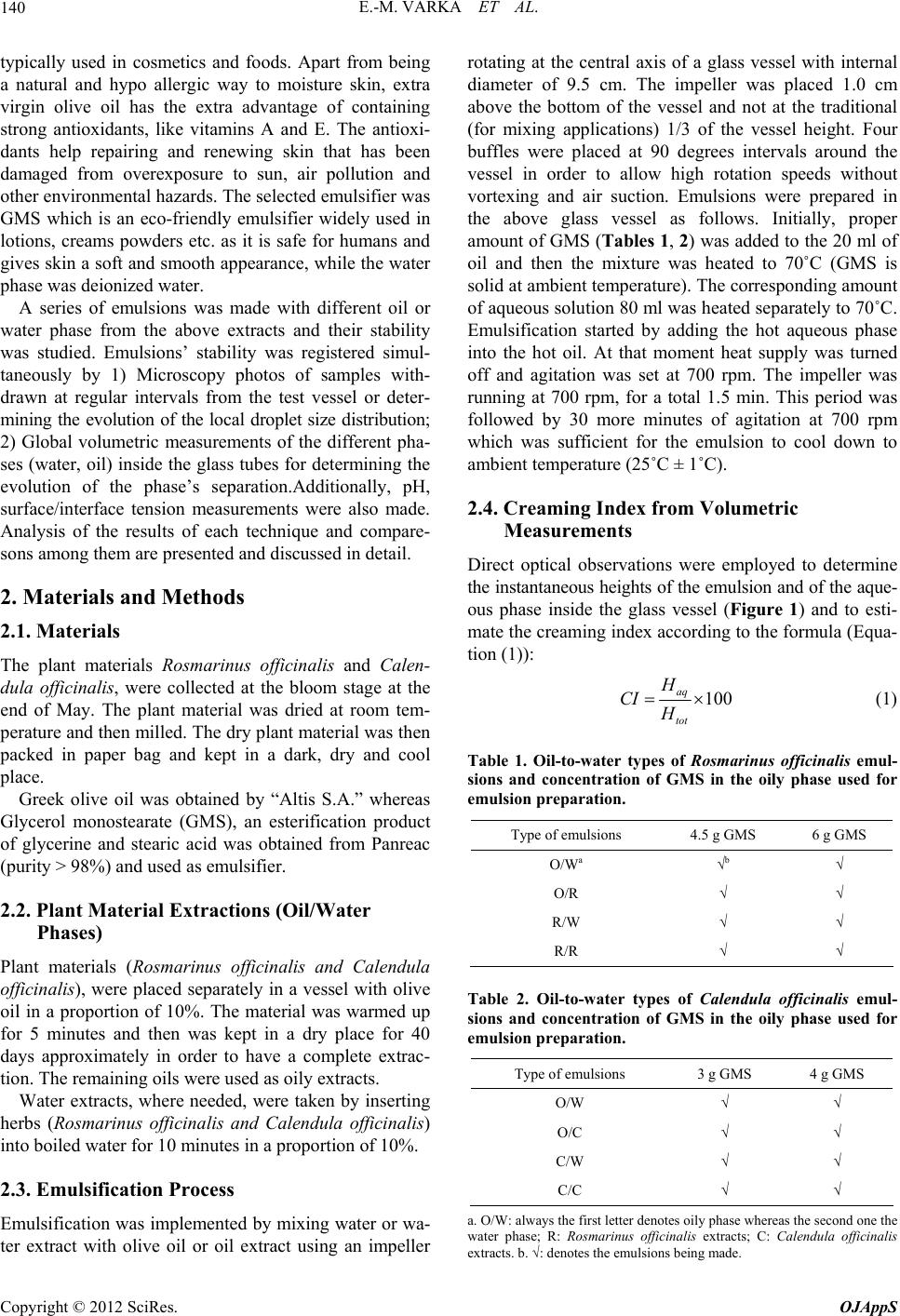 E.-M. VARKA ET AL. 140 typically used in cosmetics and foods. Apart from being a natural and hypo allergic way to moisture skin, extra virgin olive oil has the extra advantage of containing strong antioxidants, like vitamins A and E. The antioxi- dants help repairing and renewing skin that has been damaged from overexposure to sun, air pollution and other environmental hazards. The selected emulsifier was GMS which is an eco-friendly emulsifier widely used in lotions, creams powders etc. as it is safe for humans and gives skin a soft and smooth appearance, while the water phase was deionized water. A series of emulsions was made with different oil or water phase from the above extracts and their stability was studied. Emulsions’ stability was registered simul- taneously by 1) Microscopy photos of samples with- drawn at regular intervals from the test vessel or deter- mining the evolution of the local droplet size distribution; 2) Global volumetric measurements of the different pha- ses (water, oil) inside the glass tubes for determining the evolution of the phase’s separation.Additionally, pH, surface/interface tension measurements were also made. Analysis of the results of each technique and compare- sons among them are presented and discussed in detail. 2. Materials and Methods 2.1. Materials The plant materials Rosmarinus officinalis and Calen- dula officinalis, were collected at the bloom stage at the end of May. The plant material was dried at room tem- perature and then milled. The dry plant material was then packed in paper bag and kept in a dark, dry and cool place. Greek olive oil was obtained by “Altis S.A.” whereas Glycerol monostearate (GMS), an esterification product of glycerine and stearic acid was obtained from Panreac (purity > 98%) and used as emulsifier. 2.2. Plant Material Extractions (Oil/Water Phases) Plant materials (Rosmarinus officinalis and Calendula officinalis), were placed separately in a vessel with olive oil in a proportion of 10%. The material was warmed up for 5 minutes and then was kept in a dry place for 40 days approximately in order to have a complete extrac- tion. The remaining oils were used as oily extracts. Water extracts, where needed, were taken by inserting herbs (Rosmarinus officinalis and Calendula officinalis) into boiled water for 10 minutes in a proportion of 10%. 2.3. Emulsification Process Emulsification was implemented by mixing water or wa- ter extract with olive oil or oil extract using an impeller rotating at the central axis of a glass vessel with internal diameter of 9.5 cm. The impeller was placed 1.0 cm above the bottom of the vessel and not at the traditional (for mixing applications) 1/3 of the vessel height. Four buffles were placed at 90 degrees intervals around the vessel in order to allow high rotation speeds without vortexing and air suction. Emulsions were prepared in the above glass vessel as follows. Initially, proper amount of GMS (Tables 1, 2) was added to the 20 ml of oil and then the mixture was heated to 70˚C (GMS is solid at ambient temperature). The corresponding amount of aqueous solution 80 ml was heated separately to 70˚C. Emulsification started by adding the hot aqueous phase into the hot oil. At that moment heat supply was turned off and agitation was set at 700 rpm. The impeller was running at 700 rpm, for a total 1.5 min. This period was followed by 30 more minutes of agitation at 700 rpm which was sufficient for the emulsion to cool down to ambient temperature (25˚C ± 1˚C). 2.4. Creaming Index from Volumetric Measurements Direct optical observations were employed to determine the instantaneous heights of the emulsion and of the aque- ous phase inside the glass vessel (Figure 1) and to esti- mate the creaming index according to the formula (Equa- tion (1)): 100 aq tot H CI H (1) Table 1. Oil-to-water types of Rosmarinus officinalis emul- sions and concentration of GMS in the oily phase used for emulsion preparation. Type of emulsions 4.5 g GMS 6 g GMS O/Wa √b √ O/R √ √ R/W √ √ R/R √ √ Table 2. Oil-to-water types of Calendula officinalis emul- sions and concentration of GMS in the oily phase used for emulsion preparation. Type of emulsions 3 g GMS 4 g GMS O/W √ √ O/C √ √ C/W √ √ C/C √ √ a. O/W: always the first letter denotes oily phase whereas the second one the water phase; R: Rosmarinus officinalis extracts; C: Calendula officinalis extracts. b. √: denotes the emulsions being made. Copyright © 2012 SciRes. OJAppS 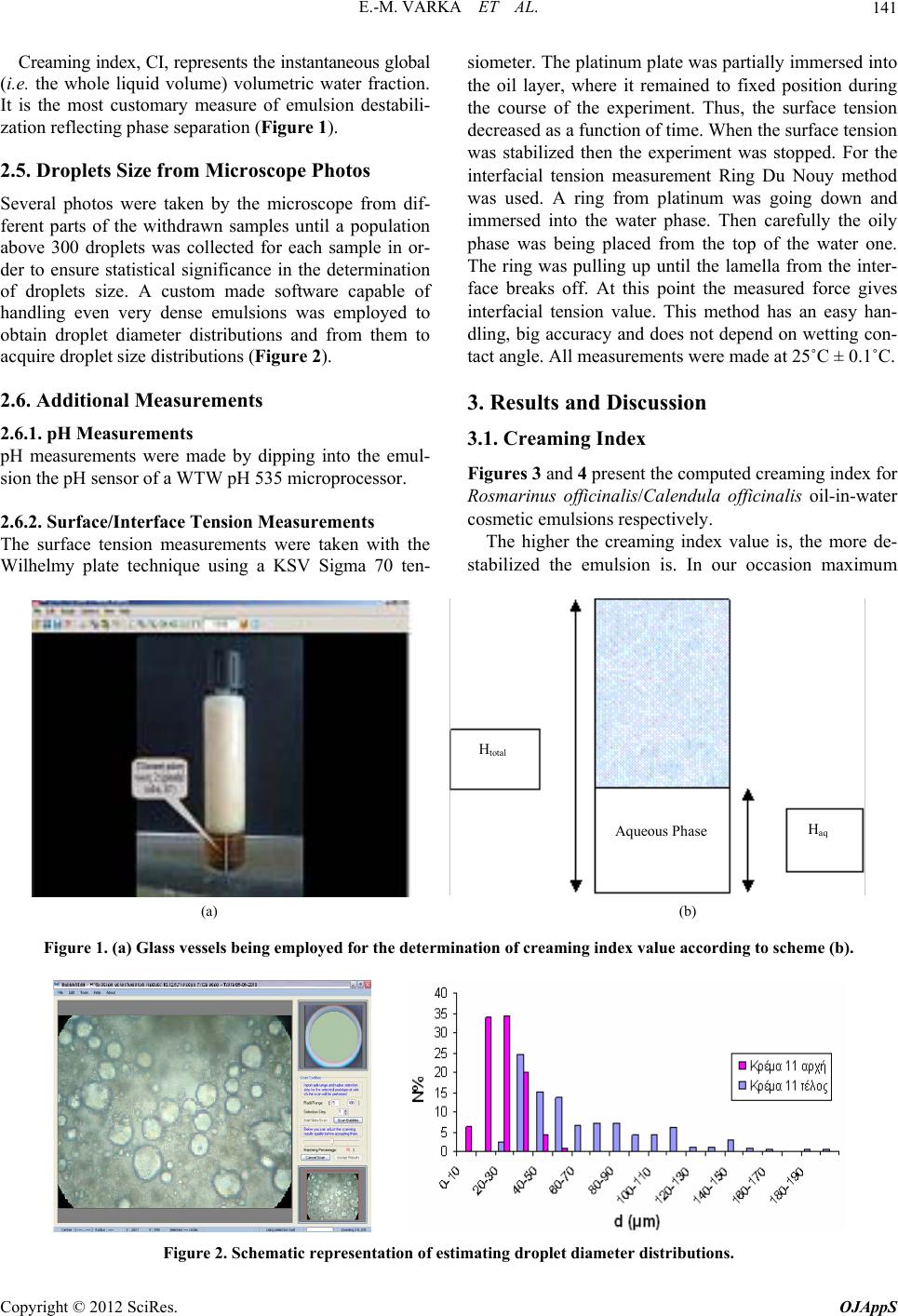 E.-M. VARKA ET AL. Copyright © 2012 SciRes. OJAppS 141 Creaming index, CI, represents the instantaneous global (i.e. the whole liquid volume) volumetric water fraction. It is the most customary measure of emulsion destabili- zation reflecting phase separation (Figure 1). siometer. The platinum plate was partially immersed into the oil layer, where it remained to fixed position during the course of the experiment. Thus, the surface tension decreased as a function of time. When the surface tension was stabilized then the experiment was stopped. For the interfacial tension measurement Ring Du Nouy method was used. A ring from platinum was going down and immersed into the water phase. Then carefully the oily phase was being placed from the top of the water one. The ring was pulling up until the lamella from the inter- face breaks off. At this point the measured force gives interfacial tension value. This method has an easy han- dling, big accuracy and does not depend on wetting con- tact angle. All measurements were made at 25˚C ± 0.1˚C. 2.5. Droplets Size from Microscope Photos Several photos were taken by the microscope from dif- ferent parts of the withdrawn samples until a population above 300 droplets was collected for each sample in or- der to ensure statistical significance in the determination of droplets size. A custom made software capable of handling even very dense emulsions was employed to obtain droplet diameter distributions and from them to acquire droplet size distributions (Figure 2). 2.6. Additional Measurements 3. Results and Discussion 2.6.1. pH Measurements 3.1. Creaming Index pH measurements were made by dipping into the emul- sion the pH sensor of a WTW pH 535 microprocessor. Figures 3 and 4 present the computed creaming index for Rosmarinus officinalis/Calendula officinalis oil-in-water cosmetic emulsions respectively. 2.6.2. Su rface/I n te rface Tension Me a s u rements The higher the creaming index value is, the more de- stabilized the emulsion is. In our occasion maximum The surface tension measurements were taken with the Wilhelmy plate technique using a KSV Sigma 70 ten- Aqueous Phase H aq H total (a) (b) Figure 1. (a) Glass vessels being employed for the determination of creaming index value according to scheme (b). Figure 2. Schematic representation of estimating droplet diameter distributions. 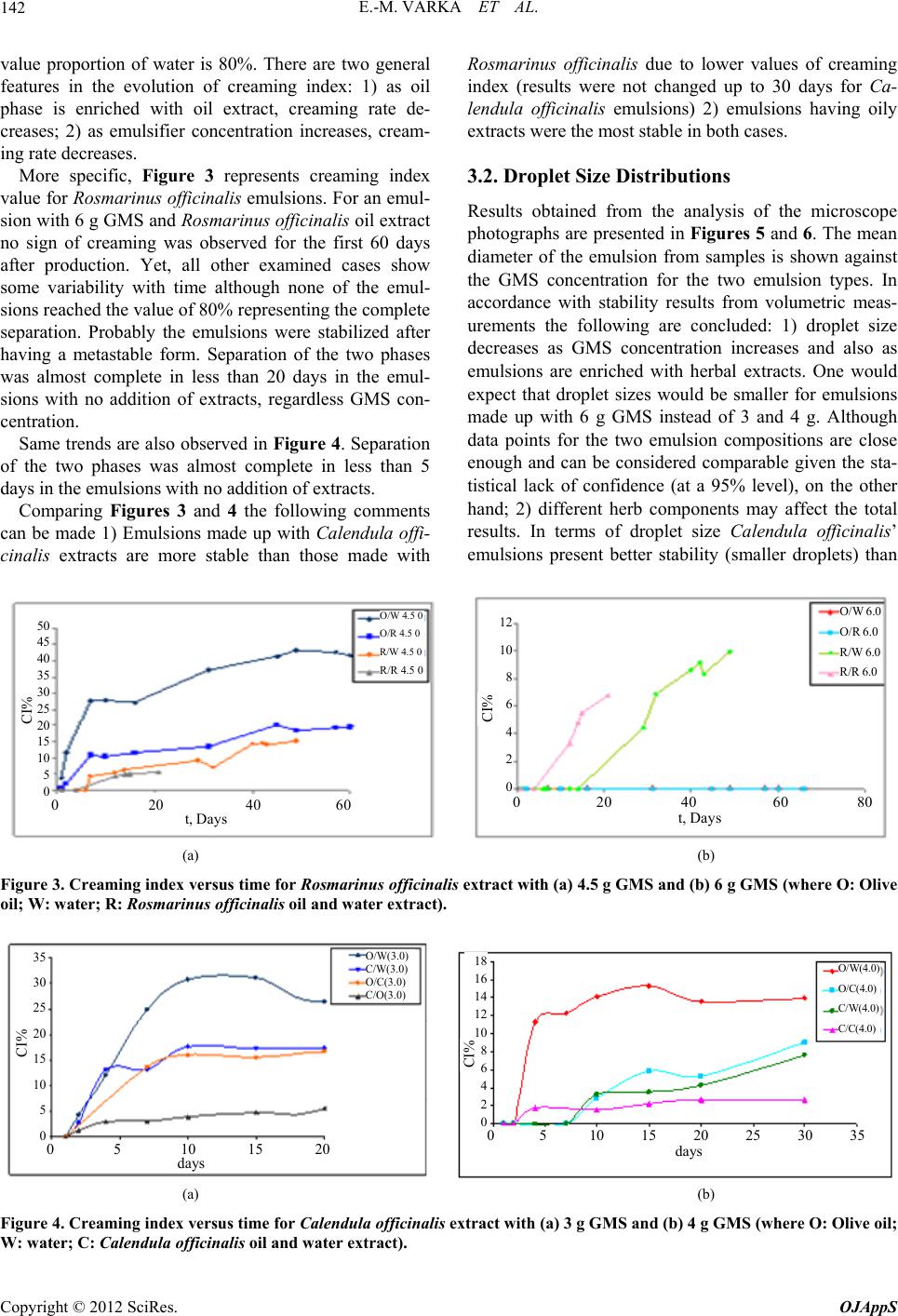 E.-M. VARKA ET AL. 142 value proportion of water is 80%. There are two general features in the evolution of creaming index: 1) as oil phase is enriched with oil extract, creaming rate de- creases; 2) as emulsifier concentration increases, cream- ing rate decreases. More specific, Figure 3 represents creaming index value for Rosmarinus o fficinalis emulsions. For an emul- sion with 6 g GMS and Rosmarinus officinalis oil extract no sign of creaming was observed for the first 60 days after production. Yet, all other examined cases show some variability with time although none of the emul- sions reached the value of 80% representing the complete separation. Probably the emulsions were stabilized after having a metastable form. Separation of the two phases was almost complete in less than 20 days in the emul- sions with no addition of extracts, regardless GMS con- centration. Same trends are also observed in Figure 4. Separation of the two phases was almost complete in less than 5 days in the emulsions with no addition of extracts. Comparing Figures 3 and 4 the following comments can be made 1) Emulsions made up with Calendula offi- cinalis extracts are more stable than those made with Rosmarinus officinalis due to lower values of creaming index (results were not changed up to 30 days for Ca- lendula officinalis emulsions) 2) emulsions having oily extracts were the most stable in both cases. 3.2. Droplet Size Distributions Results obtained from the analysis of the microscope photographs are presented in Figures 5 and 6. The mean diameter of the emulsion from samples is shown against the GMS concentration for the two emulsion types. In accordance with stability results from volumetric meas- urements the following are concluded: 1) droplet size decreases as GMS concentration increases and also as emulsions are enriched with herbal extracts. One would expect that droplet sizes would be smaller for emulsions made up with 6 g GMS instead of 3 and 4 g. Although data points for the two emulsion compositions are close enough and can be considered comparable given the sta- tistical lack of confidence (at a 95% level), on the other hand; 2) different herb components may affect the total results. In terms of droplet size Calendula officinalis’ emulsions present better stability (smaller droplets) than CI% 0 20 40 60 t, Days 50 45 40 35 30 25 20 15 10 5 0 O / W 4.5 0 O/R 4.5 0 R/W 4.5 0 R/R 4.5 0 CI% 0 20 40 60 80 t, Days 12 10 8 6 4 2 0 O/W 6.0 O/R 6.0 R/W 6.0 R/R 6.0 (a) (b) Figure 3. Creaming index versus time for Rosmarinus officinalis extract with (a) 4.5 g GMS and (b) 6 g GMS (where O: Olive oil; W: water; R: Rosmarinus officinalis oil and water extract). 0 5 10 15 20 days 35 30 25 20 15 10 5 0 O/W(3.0) C/W(3.0) O/C(3.0) C/O(3.0) CI% 0 5 10 15 20 25 30 35 days 18 16 14 12 10 8 6 4 2 0 O/W(4.0) O/C(4.0) C/W(4.0) C/C(4.0) CI% (a) (b) Figure 4. Creaming index versus time for Calendula officinalis extract with (a) 3 g GMS and (b) 4 g GMS (where O: Olive oil; W: water; C: Calendula officinalis oil and water extract). Copyright © 2012 SciRes. OJAppS 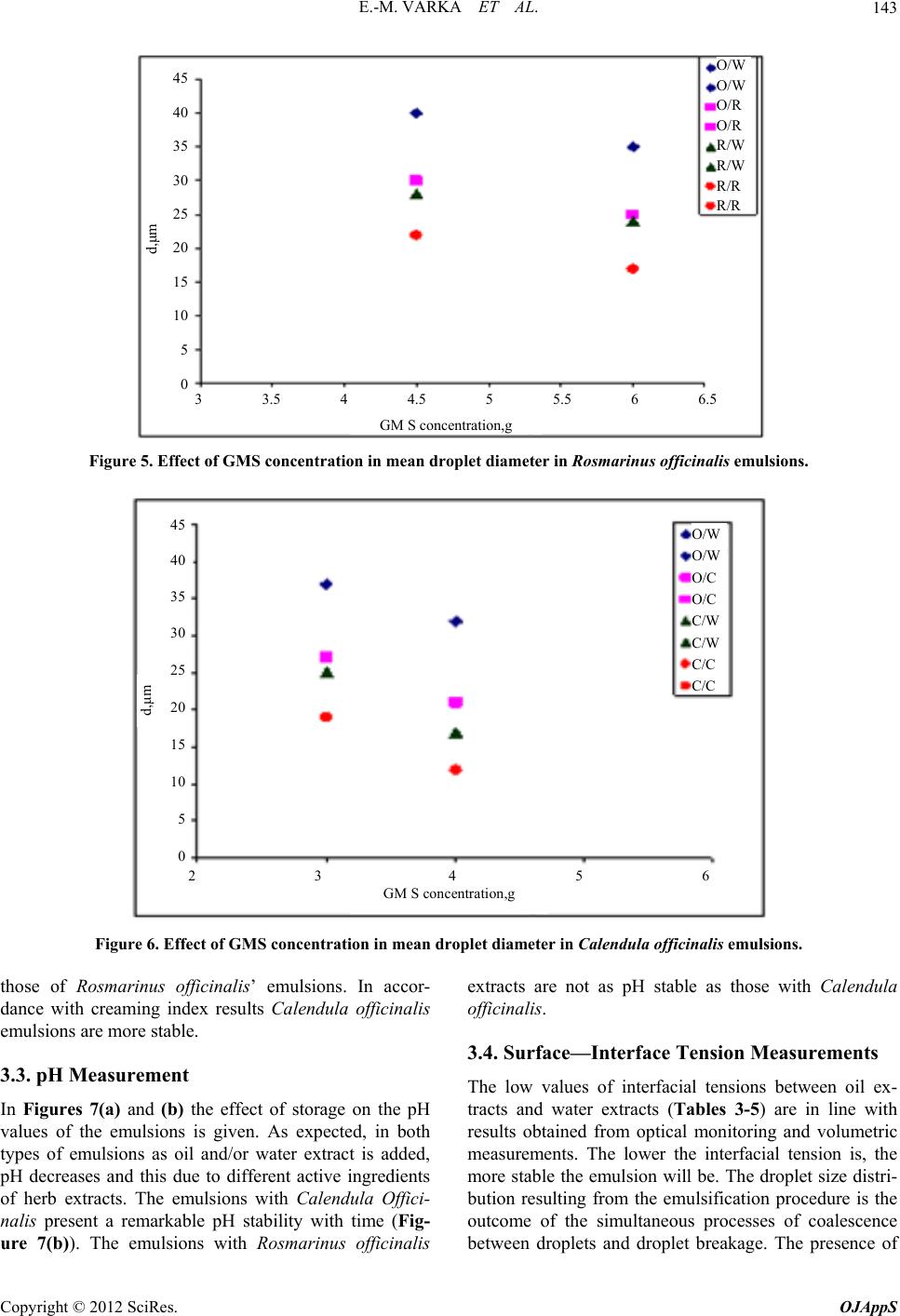 E.-M. VARKA ET AL. 143 3 3.5 4 4.5 5 5.5 6 6.5 GM S concentration,g 45 40 35 30 25 20 15 10 5 0 O/W O/W O/R O/R R/W R/W R/R R / R d, μ m Figure 5. Effect of GMS concentration in mean droplet diameter in Rosmarinus officinalis emulsions. 2 3 4 5 6 GM S concentration,g 45 40 35 30 25 20 15 10 5 0 O/W O/W O/C O/C C/W C/W C/C C / C d,μm Figure 6. Effect of GMS concentration in mean droplet diameter in Calendula officinalis emulsions. those of Rosmarinus officinalis’ emulsions. In accor- dance with creaming index results Calendula officinalis emulsions are more stable. 3.3. pH Measurement In Figures 7(a) and (b) the effect of storage on the pH values of the emulsions is given. As expected, in both types of emulsions as oil and/or water extract is added, pH decreases and this due to different active ingredients of herb extracts. The emulsions with Calendula Offici- nalis present a remarkable pH stability with time (Fig- ure 7(b)). The emulsions with Rosmarinus officinalis extracts are not as pH stable as those with Calendula officinalis. 3.4. Surface—Interface Tension Measurements The low values of interfacial tensions between oil ex- tracts and water extracts (Tables 3-5) are in line with results obtained from optical monitoring and volumetric measurements. The lower the interfacial tension is, the more stable the emulsion will be. The droplet size distri- bution resulting from the emulsification procedure is the outcome of the simultaneous processes of coalescence between droplets and droplet breakage. The presence of Copyright © 2012 SciRes. OJAppS 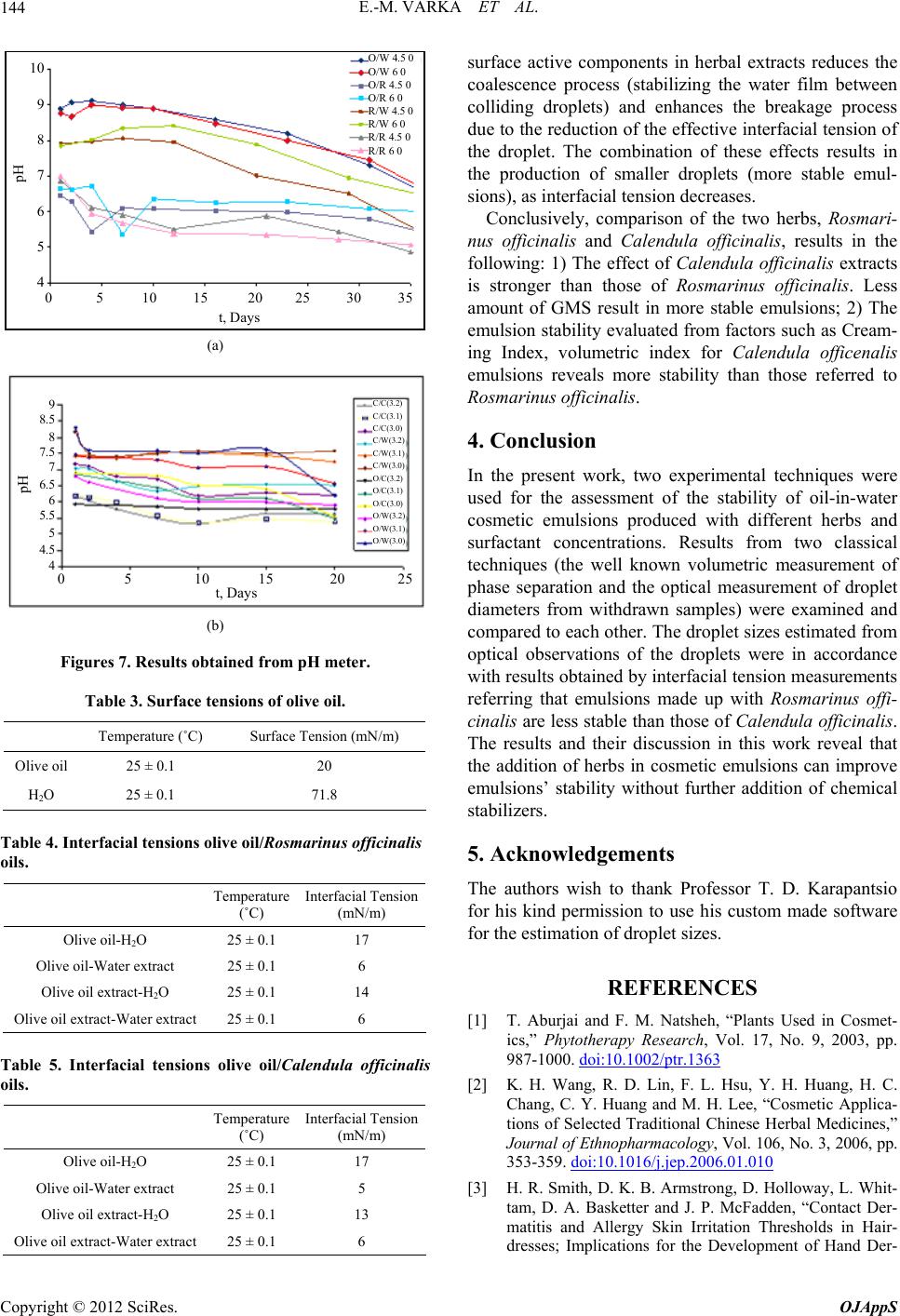 E.-M. VARKA ET AL. 144 0 5 10 15 20 25 30 35 t, Days 10 9 8 7 6 5 4 O/W 4.5 0 O/W 6 0 O/R 4.5 0 O/R 6 0 R/W 4.5 0 R/W 6 0 R/R 4.5 0 R/R 6 0 pH (a) 0 5 10 15 20 25 t, Days 9 8.5 8 7.5 7 6.5 6 5.5 5 4.5 4 C/C(3.2) C/C(3.1) C/C(3.0) C/W(3.2) C/W(3.1) C/W(3.0) O/C(3.2) O/C(3.1) O/C(3.0) O/W(3.2) O/W(3.1) O/W(3.0) p H (b) Figures 7. Results obtained from pH meter. Table 3. Surface tensions of olive oil. Temperature (˚C) Surface Tension (mN/m) Olive oil 25 ± 0.1 20 H2O 25 ± 0.1 71.8 Table 4. Interfacial tensions olive oil/Rosmarinus officinalis oils. Temperature (˚C) Interfacial Tension (mN/m) Olive oil-H2O 25 ± 0.1 17 Olive oil-Water extract 25 ± 0.1 6 Olive oil extract-H2O 25 ± 0.1 14 Olive oil extract-Water extract 25 ± 0.1 6 Table 5. Interfacial tensions olive oil/Calendula officinalis oils. Temperature (˚C) Interfacial Tension (mN/m) Olive oil-H2O 25 ± 0.1 17 Olive oil-Water extract 25 ± 0.1 5 Olive oil extract-H2O 25 ± 0.1 13 Olive oil extract-Water extract 25 ± 0.1 6 surface active components in herbal extracts reduces the coalescence process (stabilizing the water film between colliding droplets) and enhances the breakage process due to the reduction of the effective interfacial tension of the droplet. The combination of these effects results in the production of smaller droplets (more stable emul- sions), as interfacial tension decreases. Conclusively, comparison of the two herbs, Rosmari- nus officinalis and Calendula officinalis, results in the following: 1) The effect of Calendula officinalis extracts is stronger than those of Rosmarinus officinalis. Less amount of GMS result in more stable emulsions; 2) The emulsion stability evaluated from factors such as Cream- ing Index, volumetric index for Calendula officenalis emulsions reveals more stability than those referred to Rosmarinus officinalis. 4. Conclusion In the present work, two experimental techniques were used for the assessment of the stability of oil-in-water cosmetic emulsions produced with different herbs and surfactant concentrations. Results from two classical techniques (the well known volumetric measurement of phase separation and the optical measurement of droplet diameters from withdrawn samples) were examined and compared to each other. The droplet sizes estimated from optical observations of the droplets were in accordance with results obtained by interfacial tension measurements referring that emulsions made up with Rosmarinus offi- cinalis are less stable than those of Calendula o fficinalis. The results and their discussion in this work reveal that the addition of herbs in cosmetic emulsions can improve emulsions’ stability without further addition of chemical stabilizers. 5. Acknowledgements The authors wish to thank Professor T. D. Karapantsio for his kind permission to use his custom made software for the estimation of droplet sizes. REFERENCES [1] T. Aburjai and F. M. Natsheh, “Plants Used in Cosmet- ics,” Phytotherapy Research, Vol. 17, No. 9, 2003, pp. 987-1000. doi:10.1002/ptr.1363 [2] K. H. Wang, R. D. Lin, F. L. Hsu, Y. H. Huang, H. C. Chang, C. Y. Huang and M. H. Lee, “Cosmetic Applica- tions of Selected Traditional Chinese Herbal Medicines,” Journal of Ethnopharmacology, Vol. 106, No. 3, 2006, pp. 353-359. doi:10.1016/j.jep.2006.01.010 [3] H. R. Smith, D. K. B. Armstrong, D. Holloway, L. Whit- tam, D. A. Basketter and J. P. McFadden, “Contact Der- matitis and Allergy Skin Irritation Thresholds in Hair- dresses; Implications for the Development of Hand Der- Copyright © 2012 SciRes. OJAppS 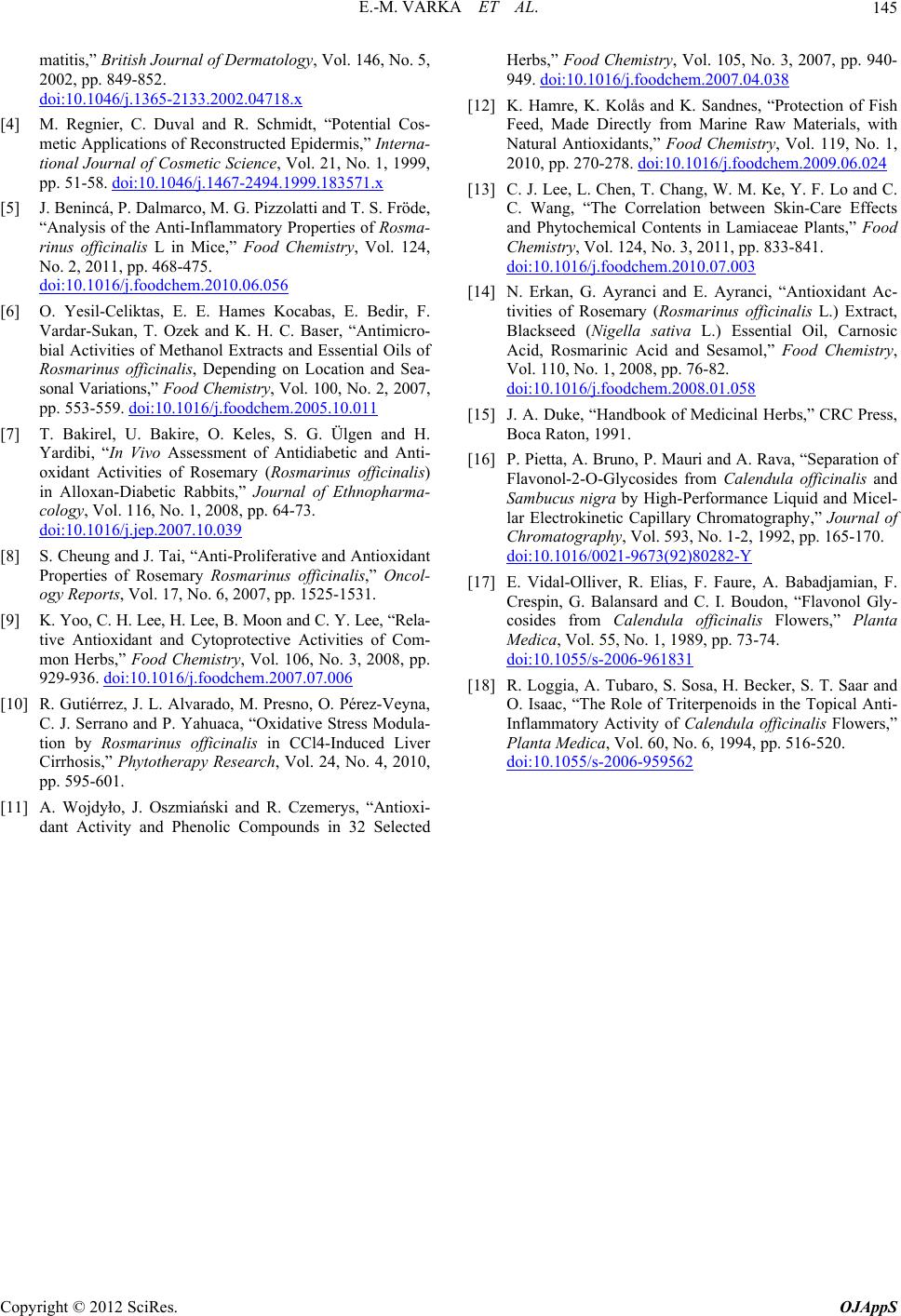 E.-M. VARKA ET AL. Copyright © 2012 SciRes. OJAppS 145 matitis,” British Journal of Dermatology, Vol. 146, No. 5, 2002, pp. 849-852. doi:10.1046/j.1365-2133.2002.04718.x [4] M. Regnier, C. Duval and R. Schmidt, “Potential Cos- metic Applications of Reconstructed Epidermis,” Interna- tional Journal of Cosmetic Science, Vol. 21, No. 1, 1999, pp. 51-58. doi:10.1046/j.1467-2494.1999.183571.x [5] J. Benincá, P. Dalmarco, M. G. Pizzolatti and T. S. Fröde, “Analysis of the Anti-Inflammatory Properties of Rosma- rinus officinalis L in Mice,” Food Chemistry, Vol. 124, No. 2, 2011, pp. 468-475. doi:10.1016/j.foodchem.2010.06.056 [6] O. Yesil-Celiktas, E. E. Hames Kocabas, E. Bedir, F. Vardar-Sukan, T. Ozek and K. H. C. Baser, “Antimicro- bial Activities of Methanol Extracts and Essential Oils of Rosmarinus officinalis, Depending on Location and Sea- sonal Variations,” Food Chemistry, Vol. 100, No. 2, 2007, pp. 553-559. doi:10.1016/j.foodchem.2005.10.011 [7] T. Bakirel, U. Bakire, O. Keles, S. G. Ülgen and H. Yardibi, “In Vivo Assessment of Antidiabetic and Anti- oxidant Activities of Rosemary (Rosmarinus officinalis) in Alloxan-Diabetic Rabbits,” Journal of Ethnopharma- cology, Vol. 116, No. 1, 2008, pp. 64-73. doi:10.1016/j.jep.2007.10.039 [8] S. Cheung and J. Tai, “Anti-Proliferative and Antioxidant Properties of Rosemary Rosmarinus officinalis,” Oncol- ogy Reports, Vol. 17, No. 6, 2007, pp. 1525-1531. [9] K. Yoo, C. H. Lee, H. Lee, B. Moon and C. Y. Lee, “Rela- tive Antioxidant and Cytoprotective Activities of Com- mon Herbs,” Food Chemistry, Vol. 106, No. 3, 2008, pp. 929-936. doi:10.1016/j.foodchem.2007.07.006 [10] R. Gutiérrez, J. L. Alvarado, M. Presno, O. Pérez-Veyna, C. J. Serrano and P. Yahuaca, “Oxidative Stress Modula- tion by Rosmarinus officinalis in CCl4-Induced Liver Cirrhosis,” Phytotherapy Research, Vol. 24, No. 4, 2010, pp. 595-601. [11] A. Wojdyło, J. Oszmiański and R. Czemerys, “Antioxi- dant Activity and Phenolic Compounds in 32 Selected Herbs,” Food Chemistry, Vol. 105, No. 3, 2007, pp. 940- 949. doi:10.1016/j.foodchem.2007.04.038 [12] K. Hamre, K. Kolås and K. Sandnes, “Protection of Fish Feed, Made Directly from Marine Raw Materials, with Natural Antioxidants,” Food Chemistry, Vol. 119, No. 1, 2010, pp. 270-278. doi:10.1016/j.foodchem.2009.06.024 [13] C. J. Lee, L. Chen, T. Chang, W. M. Ke, Y. F. Lo and C. C. Wang, “The Correlation between Skin-Care Effects and Phytochemical Contents in Lamiaceae Plants,” Food Chemistry, Vol. 124, No. 3, 2011, pp. 833-841. doi:10.1016/j.foodchem.2010.07.003 [14] N. Erkan, G. Ayranci and E. Ayranci, “Antioxidant Ac- tivities of Rosemary (Rosmarinus officinalis L.) Extract, Blackseed (Nigella sativa L.) Essential Oil, Carnosic Acid, Rosmarinic Acid and Sesamol,” Food Chemistry, Vol. 110, No. 1, 2008, pp. 76-82. doi:10.1016/j.foodchem.2008.01.058 [15] J. A. Duke, “Handbook of Medicinal Herbs,” CRC Press, Boca Raton, 1991. [16] P. Pietta, A. Bruno, P. Mauri and A. Rava, “Separation of Flavonol-2-O-Glycosides from Calendula officinalis and Sambucus nigra by High-Performance Liquid and Micel- lar Electrokinetic Capillary Chromatography,” Journal of Chromatography, Vol. 593, No. 1-2, 1992, pp. 165-170. doi:10.1016/0021-9673(92)80282-Y [17] E. Vidal-Olliver, R. Elias, F. Faure, A. Babadjamian, F. Crespin, G. Balansard and C. I. Boudon, “Flavonol Gly- cosides from Calendula officinalis Flowers,” Planta Medica, Vol. 55, No. 1, 1989, pp. 73-74. doi:10.1055/s-2006-961831 [18] R. Loggia, A. Tubaro, S. Sosa, H. Becker, S. T. Saar and O. Isaac, “The Role of Triterpenoids in the Topical Anti- Inflammatory Activity of Calendula officinalis Flowers,” Planta Medica, Vol. 60, No. 6, 1994, pp. 516-520. doi:10.1055/s-2006-959562 |