

Paper Menu >>
Journal Menu >>
 American Journal of Plant Sciences, 2012, 3, 1260-1265 http://dx.doi.org/10.4236/ajps.2012.39152 Published Online September 2012 (http://www.SciRP.org/journal/ajps) Identification of Angelica acutiloba and Related Species by Analysis of Inter- and Intra-Specific Sequence Variations in Chloroplast and Nuclear DNA Sequences Kiyoshi Matsubara*, Satoshi Shindo, Hitoshi Watanabe, Fumio Ikegami Center for Environment, Health and Field Sciences, Chiba University, Kashiwa, Japan. Email: *[email protected] Received July 31st, 2012; revised August 26th, 2012; accepted September 5th, 2012 ABSTRACT Japanese Angelica Root prepared from Angelica acutiloba var. acutiloba and A. acutiloba var. sugiyamae, known in Japan as “Toki” and “Hokkai Toki”, is an important crude drug used in Kampo medicine (traditional Japanese medi- cine). However, since these Angelica varieties have recently outcrossed with each other, it is unclear whether Japanese Angelica Root sold for use in Kampo medicine is a pure variety. Here, we describe DNA sequence polymorphisms that can be used to distinguish between A. acutiloba var. acutiloba and A. acutiloba var. sugiyamae. In our analyses, differ- ences in the trnK region of chloroplast DNA distinguished among some A. acutiloba varieties and related species, but not between A. acutiloba var. acutiloba and A. acutiloba var. iwatensis. One geographical strain of A. acutiloba var. acutiloba and A. acutiloba var. sugiyamae showed identical sequences in three regions of chloroplast DNA, but differ- ences in the internal transcribed spacer region of nuclear ribosomal DNA. One strain of A. acutiloba var. iwatensis and A. acutiloba var. sugiyamae had identical sequences in all of the chloroplast and nuclear ribosomal DNA regions ex- amined. These findings show that A. acutiloba var. acutiloba has hybridized with A. acutiloba var. sugiyamae and that the “Hokkai Toki” variety resulted from outcrossing with A. acutiloba var. iwatensis. Molecular authentication based on analyses of chloroplast and nuclear ribosomal DNA sequences of A. acutiloba and related species is an efficient method to authenticate Japanese Angelica Root at the variety level. Therefore, these analyses can determine whether a product is derived from A. acutiloba var. acutiloba or A. acutiloba var. sug iyam a e. Keywords: Angeli c a acut i l o b a; Chloroplast DNA; ITS; Japanese Angelica Root; Kampo Medicine; Sequence Variation 1. Introduction The Japanese indigenous species of Angelica acutiloba Kitagawa var. acutiloba Kitagawa (Toki) or A. acutiloba Kitagawa var. sugiyamae Hikino (Hokkai Toki) are listed in the Japanese Pharmacopoeia, 16th Edition [1], and are precious crude drugs in Kampo medicine (traditional Japanese medicine). The A. acutiloba cultivar (also called “Yamato Toki” or “Ohbuka Toki”), is of higher quality than the “Hokkai Toki” cultivar, and was origin- nally grown in Nara prefecture, Japan. The high quality of this cultivar is described in historical Japanese litera- ture [2,3]. To this day, its quality is still regarded as be- ing higher than that of other cultivars, and this is re- flected in the market price of the root. Since the 1950s, the “Hokkai Toki” variety of A. acutiloba var. sugiyam ae has been cultivated in various region s of Japan, including Nara prefecture [4]. Angelica species are thought to be outcrossed [5]. There are wild-growing species that that are closely related to A. acutiloba, includ ing A. acutiloba Kitagawa var. iwatensis Hikino (Miyama Toki), which is genetically very close to “Yamato Toki”, and A. steno- loba (“Hosoba Toki” or “Tokachi Toki”) [6]. These spe- cies readily outcross with A. acutiloba var. acutiloba and A. acutiloba var. sugiyamae [7]. Previous molecular studies on A. acutiloba did not show any nucleotide polymorphisms in the intergenic spacer region of 5S rDNA [8], while A. acutiloba var. iwatensis collected from different geographical locations showed genetic polymorphisms in a random amplified polymorphism (RAPD) analysis [9]. There were small differences in RAPD patterns between A. acutiloba var. acutiloba and A. acutiloba var. sugiyamae [10], and there were differences among individual plants of these varie- ties, indicating genetic diversity among A. acutiloba va- rieties. The three varieties of A. acutiloba var. acutiloba, A. acutiloba var. sugiyamae, and A. acutiloba var. iwat- *Corresponding a uthor. Copyright © 2012 SciRes. AJPS 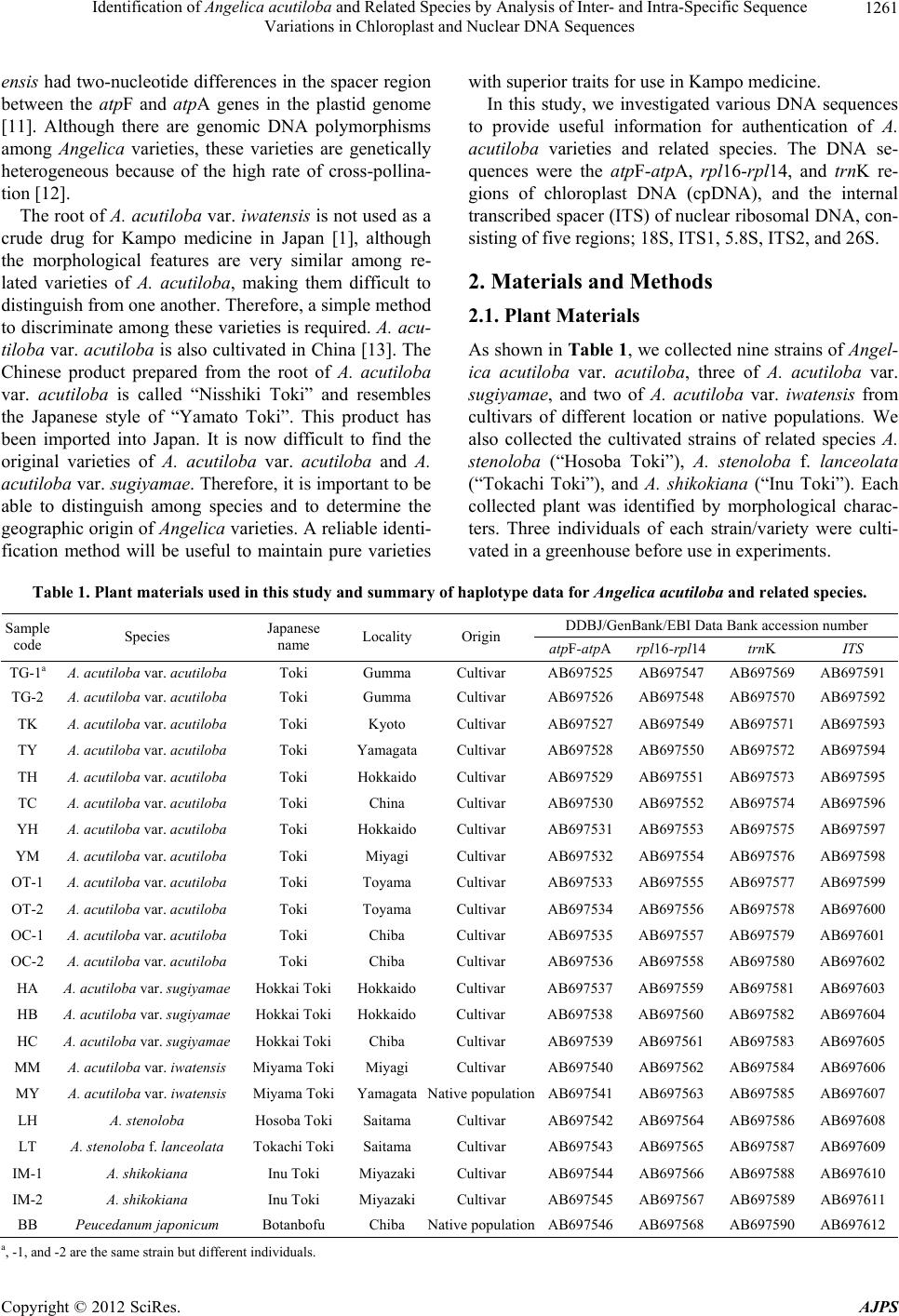 Identification of Angelica acutiloba and Related Species by Analysis of Inter- and Intra-Specific Sequence Variations in Chloroplast and Nuclear DNA Sequences 1261 ensis had two-nucleotide differences in the spacer region between the atpF and atpA genes in the plastid genome [11]. Although there are genomic DNA polymorphisms among Angelica varieties, these varieties are genetically heterogeneous because of the high rate of cross-pollina- tion [12] . The root of A. acutiloba var. iwatensis is not used as a crude drug for Kampo medicine in Japan [1], although the morphological features are very similar among re- lated varieties of A. acutiloba, making them difficult to distinguish from one another. Therefore, a simple method to discriminate among these varieties is required. A. acu- tiloba var. acutiloba is also cultivated in China [13]. The Chinese product prepared from the root of A. acutiloba var. acutiloba is called “Nisshiki Toki” and resembles the Japanese style of “Yamato Toki”. This product has been imported into Japan. It is now difficult to find the original varieties of A. acutiloba var. acutiloba and A. acutiloba var. sugiyamae. Therefore, it is important to be able to distinguish among species and to determine the geographic origin of Angelica varieties. A reliable identi- fication method will be useful to maintain pure varieties with superior traits for use in Kampo medicine. In this study, we investigated various DNA sequences to provide useful information for authentication of A. acutiloba varieties and related species. The DNA se- quences were the atpF-atpA, rpl16-rpl14, and trnK re- gions of chloroplast DNA (cpDNA), and the internal transcribed spacer (ITS) of nuclear ribosomal DNA, con- sisting of five regions; 18S, ITS1, 5.8S , ITS2, and 26 S. 2. Materials and Methods 2.1. Plant Materials As shown in Table 1 , we collected nine strains of Angel- ica acutiloba var. acutiloba, three of A. acutiloba var. sugiyamae, and two of A. acutiloba var. iwatensis from cultivars of different location or native populations. We also collected the cultivated strains of related species A. stenoloba (“Hosoba Toki”), A. stenoloba f. lanceolata (“Tokachi Toki”), and A. shikokiana (“Inu Toki”). Each collected plant was identified by morphological charac- ters. Three individuals of each strain/variety were culti- vated in a greenhouse before use in experiments. Table 1. Plant materials used in this study and summary of haplotype data for Angelica acutiloba and related species. DDBJ/GenBank/EBI Data Bank accession number Sample code Species Japanese name LocalityOrigin atpF-atpArpl16-rpl14 trnK ITS TG-1a A. acutiloba var. acutilobaToki Gumma Cultivar AB697525AB697547 AB697569 AB697591 TG-2 A. acutiloba var. acutiloba Toki Gumma Cultivar AB697526AB697548 AB697570 AB697592 TK A. acutiloba var. acutilobaToki Kyoto Cultivar AB697527AB697549 AB697571 AB697593 TY A. acutiloba var. acutilobaToki YamagataCultivar AB697528AB697550 AB697572 AB697594 TH A. acutiloba var. acutilobaToki HokkaidoCultivar AB697529AB697551 AB697573 AB697595 TC A. acutiloba var. acutilobaToki China Cultivar AB697530AB697552 AB697574 AB697596 YH A. acutiloba var. acutiloba Toki HokkaidoCultivar AB697531AB697553 AB697575 AB697597 YM A. acutiloba var. acutilobaToki Miyagi Cultivar AB697532AB697554 AB697576 AB697598 OT-1 A. acutiloba var. acutilobaToki Toyama Cultivar AB697533AB697555 AB697577 AB697599 OT-2 A. acutiloba var. acutilobaToki Toyama Cultivar AB697534AB697556 AB697578 AB697600 OC-1 A. acutiloba var. acutilobaToki Chiba Cultivar AB697535AB697557 AB697579 AB697601 OC-2 A. acutiloba var. acutilobaToki Chiba Cultivar AB697536AB697558 AB697580 AB697602 HA A. acutiloba var. sugiyamae Hokkai Toki HokkaidoCultivar AB697537AB697559 AB697581 AB697603 HB A. acutiloba var. sugiyamae Hokkai Toki HokkaidoCultivar AB697538AB697560 AB697582 AB697604 HC A. acutiloba var. sugiyamae Hokkai Toki Chiba Cultivar AB697539AB697561 AB697583 AB697605 MM A. acutiloba var. iwatensis Miyama Toki Miyagi Cultivar AB697540AB697562 AB697584 AB697606 MY A. acutiloba var. iwatensis Miyama Toki YamagataNative populationAB697541AB697563 AB697585 AB697607 LH A. stenoloba Hosoba Toki Saitama Cultivar AB697542AB697564 AB697586 AB697608 LT A. stenoloba f. lanceolata Tokachi Toki Saitama Cultivar AB697543AB697565 AB697587 AB697609 IM-1 A. shikokiana Inu Toki MiyazakiCultivar AB697544AB697566 AB697588 AB697610 IM-2 A. shikokiana Inu Toki MiyazakiCultivar AB697545AB697567 AB697589 AB697611 BB Peucedanum japonicum Botanbofu Chiba Native populationAB697546AB697568 AB697590 AB697612 a, -1, and -2 are the same strain but different individuals. Copyright © 2012 SciRes. AJPS 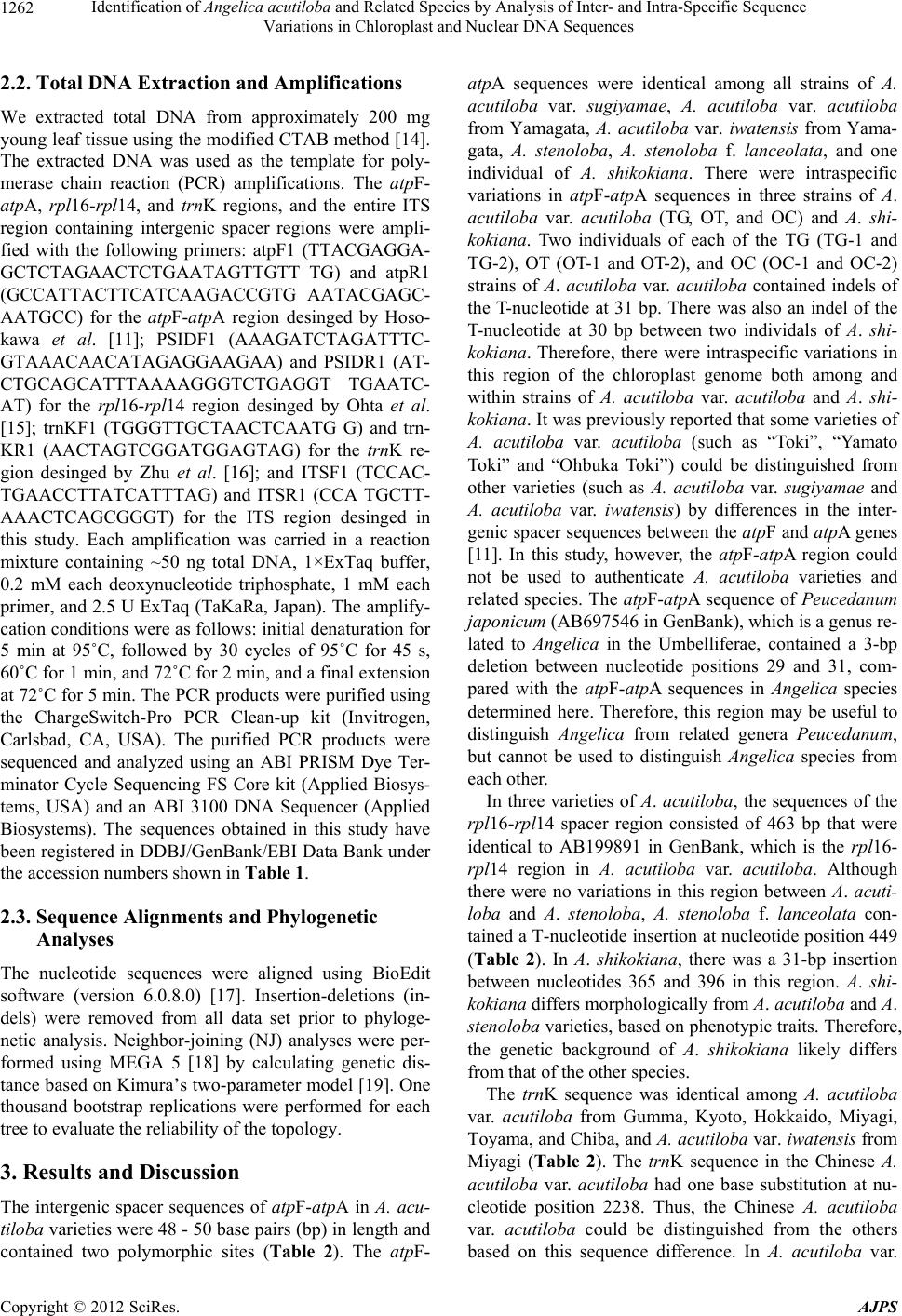 Identification of Angelica acutiloba and Related Species by Analysis of Inter- and Intra-Specific Sequence Variations in Chloroplast and Nuclear DNA Sequences 1262 2.2. Total DNA Extraction and Amplifications We extracted total DNA from approximately 200 mg young leaf tissue using the modified CTAB method [14]. The extracted DNA was used as the template for poly- merase chain reaction (PCR) amplifications. The atpF- atpA, rpl16-rpl14, and trnK regions, and the entire ITS region containing intergenic spacer regions were ampli- fied with the following primers: atpF1 (TTACGAGGA- GCTCTAGAACTCTGAATAGTTGTT TG) and atpR1 (GCCATTACTTCATCAAGACCGTG AATACGAGC- AATGCC) for the atpF-atpA region desinged by Hoso- kawa et al. [11]; PSIDF1 (AAAGATCTAGATTTC- GTAAACAACATAGAGGAAGAA) and PSIDR1 (AT- CTGCAGCATTTAAAAGGGTCTGAGGT TGAATC- AT) for the rpl16-rpl14 region desinged by Ohta et al. [15]; trnKF1 (TGGGTTGCTAACTCAATG G) and trn- KR1 (AACTAGTCGGATGGAGTAG) for the trnK re- gion desinged by Zhu et al. [16]; and ITSF1 (TCCAC- TGAACCTTATCATTTAG) and ITSR1 (CCA TGCTT- AAACTCAGCGGGT) for the ITS region desinged in this study. Each amplification was carried in a reaction mixture containing ~50 ng total DNA, 1×ExTaq buffer, 0.2 mM each deoxynucleotide triphosphate, 1 mM each primer, and 2.5 U ExTaq (TaKaRa, Japan). The amplify- cation conditions were as follows: initial denaturatio n for 5 min at 95˚C, followed by 30 cycles of 95˚C for 45 s, 60˚C for 1 min, and 72˚C for 2 min, and a final extension at 72˚C for 5 min. The PCR products were purified using the ChargeSwitch-Pro PCR Clean-up kit (Invitrogen, Carlsbad, CA, USA). The purified PCR products were sequenced and analyzed using an ABI PRISM Dye Ter- minator Cycle Sequencing FS Core kit (Applied Biosys- tems, USA) and an ABI 3100 DNA Sequencer (Applied Biosystems). The sequences obtained in this study have been registered in DDBJ/GenBank/EBI Data Bank under the accession numbers shown in Table 1. 2.3. Sequence Alignments and Phylogenetic Analyses The nucleotide sequences were aligned using BioEdit software (version 6.0.8.0) [17]. Insertion-deletions (in- dels) were removed from all data set prior to phyloge- netic analysis. Neighbor-joining (NJ) analyses were per- formed using MEGA 5 [18] by calculating genetic dis- tance based on Kimura’s two-parameter model [19]. One thousand bootstrap replications were performed for each tree to evaluate the reliability of the topology. 3. Results and Discussion The intergenic spacer sequences of atpF-atpA in A. acu- tiloba varieties were 48 - 50 base pairs (b p) in length and contained two polymorphic sites (Table 2). The atpF- atpA sequences were identical among all strains of A. acutiloba var. sugiyamae, A. acutiloba var. acutiloba from Yamagata, A. acutiloba var. iwatensis from Yama- gata, A. stenoloba, A. stenoloba f. lanceolata, and one individual of A. shikokiana. There were intraspecific variations in atpF-atpA sequences in three strains of A. acutiloba var. acutiloba (TG, OT, and OC) and A. shi- kokiana. Two individuals of each of the TG (TG-1 and TG-2), OT (OT-1 and OT-2), and OC (OC-1 and OC-2) strains of A. acutiloba var. acutiloba contained indels of the T-nucleotide at 31 bp. There was also an indel of the T-nucleotide at 30 bp between two individals of A. shi- kokiana. Therefore, there were intraspecific variations in this region of the chloroplast genome both among and within strains of A. acutiloba var. acutiloba and A. shi- kokiana. It was previously reported that some varieties of A. acutiloba var. acutiloba (such as “Toki”, “Yamato Toki” and “Ohbuka Toki”) could be distinguished from other varieties (such as A. acutiloba var. sugiyamae and A. acutiloba var. iwatensis) by differences in the inter- genic spacer sequences between the atpF and atpA genes [11]. In this study, however, the atpF-atpA region could not be used to authenticate A. acutiloba varieties and related species. The atpF-atpA sequence of Peucedanum japonicum (AB697546 in GenBank), which is a g enus re- lated to Angelica in the Umbelliferae, contained a 3-bp deletion between nucleotide positions 29 and 31, com- pared with the atpF-atpA sequences in Angelica species determined here. Therefore, this region may be useful to distinguish Angelica from related genera Peucedanum, but cannot be used to distinguish Angelica species from each other. In three varieties of A. acutiloba, the sequences of the rpl16-rpl14 spacer region consisted of 463 bp that were identical to AB199891 in GenBank, which is the rpl16- rpl14 region in A. acutiloba var. acutiloba. Although there were no variations in this region between A. acuti- loba and A. stenoloba, A. stenoloba f. lanceolata con- tained a T-nucleotide insertion at nucleotid e position 449 (Table 2). In A. shikokiana, there was a 31-bp insertion between nucleotides 365 and 396 in this region. A. shi- kokiana differs morphologically from A. acutiloba and A. stenoloba varieties, based on phenotypic traits. Therefore, the genetic background of A. shikokiana likely differs from that of the other species. The trnK sequence was identical among A. acutiloba var. acutiloba from Gumma, Kyoto, Hokkaido, Miyagi, Toyama, and Chiba, and A. acutiloba var. iwaten sis fro m Miyagi (Table 2). The trnK sequence in the Chinese A. acutiloba var. acutiloba had one base substitution at nu- cleotide position 2238. Thus, the Chinese A. acutiloba var. acutiloba could be distinguished from the others based on this sequence difference. In A. acutiloba var. Copyright © 2012 SciRes. AJPS 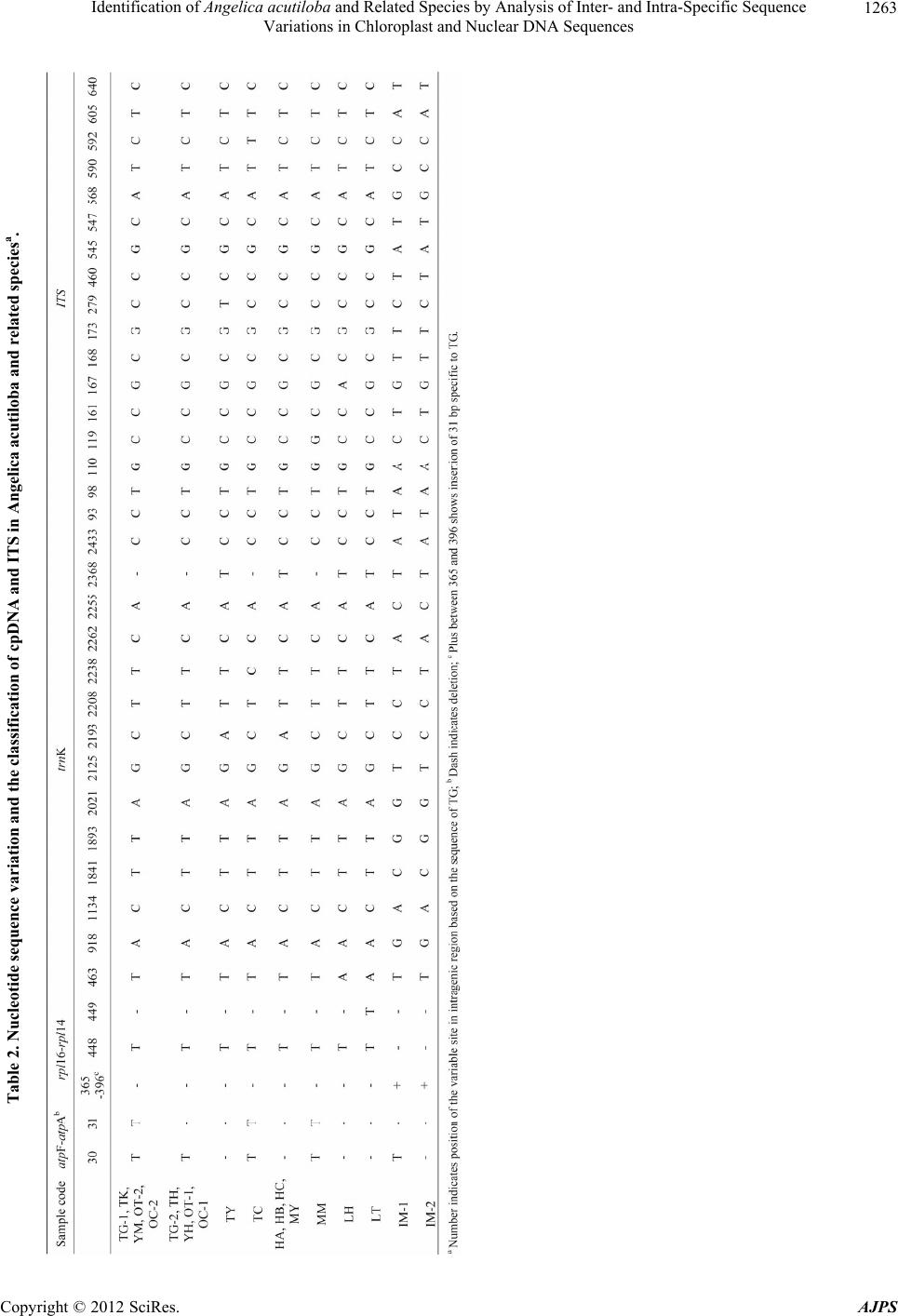 Identification of Angelica acutiloba and Related Species by Analysis of Inter- and Intra-Specific Sequence Variations in Chloroplast and Nuclear DNA Sequences 1263 Table 2. Nucleotide sequence variation and the classification of cpDNA and ITS in Angelica acutiloba and related speciesa. Copyright © 2012 SciRes. AJPS  Identification of Angelica acutiloba and Related Species by Analysis of Inter- and Intra-Specific Sequence Variations in Chloroplast and Nuclear DNA Sequences 1264 Figure 1. Neighbor-joining tree based on combined analysis of cpDNA (atpF-atpA, rpl16-rpl14, trnK) and ITS sequences. Tree was outgroup-rooted using sequence data from Peucedanum japonicum. Numbers beside internal branches indicate Boot- strap values (>50%) calculated from 1000 replicates. acutiloba from Yamagata, three strains of A. acutiloba var. sugiyamae, and A. acutiloba var. iwatensis from Ya- magata, the trnK sequences had an A instead of a C at nucleotide position 2193, and often contained a T-nu- cleotide insertion at nucleotide position 2368 . Two varie- ties of A. stenoloba and the “Hokkai Toki” variety also had the T-nucleotide insertion at nucleotide position 2368, and the latter had a T-to-A substitution at nucleo- tide position 463. The trnK sequence in A. shikokiana had 10 base substitutio ns compared with that in A. acuti- loba. To obtain more information on genetic diversity among varieties and individuals of Angelica, especially among A. acutiloba varieties, we determined the se- quences of the ITS region, including the 18S, ITS1, 5.8S, ITS2, and 26S regions. There were no variations in this region among individuals of A. acutiloba var. acutiloba (except for the strains from Yamagata and China), and all A. acutiloba var. sugiyamae. There was one unique sub- stitution at position 279 in th e 5.8S region of A. acutiloba var. acutiloba from Yamagata, and a C-to-T substitution at position 592 in the ITS2 reg ion of Chinese strain . Also, there was a one-nucleotide subs titution at position 119 in the ITS1 region in A. acutiloba var. iwatensis from Mi- yagi and at position 167 in the ITS1 region in A. ste- noloba. There were 13 nucleotide substitutions in th e ITS sequence of A. shikokiana, compared with this region in the other varieties. The ITS region and the cpDNA se- quence were identical between one strain of A. acutiloba var. iwatensis and all strains of A. acutiloba var. sugiya- mae. These results imply that the ‘Hokkai Toki’ is de- rived from A. acutiloba var. iwatensis. In a previous study, A. acutiloba var. iwatensis from different geo- graphical locations showed genetic polymorphisms in a RAPD analysis [9]. Because of that result and the diffe- rences in sequences of both the trnK and ITS regions, further analysis should be conducted using other A. acu- tiloba var. iwatensis varieties. We constructed a neighbor-joining tree based on Ki- mura’s two-parameter model [19] for the 10 haplotypes (Table 2) based on the combined analysis of cpDNA (atpF-atpA, rpl16-rp l14 and trnK) and ITS sequences (Figure 1). The monophyly of A. shikokiana and other species was supported by a bootstrap value of 100. This result indicates that A. acutiloba is more closely related to two varieties of A. stenoloba than to A. shikokiana. The traditional methods for authenticating crude drugs and adulterants are based on the morphological charac- ters of the plants. In general, differences among morpho- logical characters and compounds are subtle and ambi- guous [20]. Based on sequence analyses of the trnK and ITS regions in A. acutiloba, we have proposed a method to authenticate the orig in of Japanese Angelica Roo t; that is, whether it is derived from A. acutiloba var. acutiloba or A. acutilob a var. sugiyamae. The molecular authentic- cation of these regions is a highly sensitive and stable method. The authentication results are reliable and are not affected by the physical form or physiological condi- tions of the plant samples. Therefore, the method based on the combined cpDNA and ITS sequences by the addi- tion of conventional methods is useful for practical and accurate authentication of A. acutiloba var. acutiloba and A. acutiloba var. sugiyama e. This method will be useful in raw material production processes and for quality con - trol of “Toki” produced for use in Kampo medicine in Japan. 4. Acknowledgements We are grateful to Prof. K. Koike, Faculty of Pharmaceu- tical Sciences, Toho University, and Mr. H. Hayasaka, Graduate School of Pharmaceutical Science, Tohoku Copyright © 2012 SciRes. AJPS 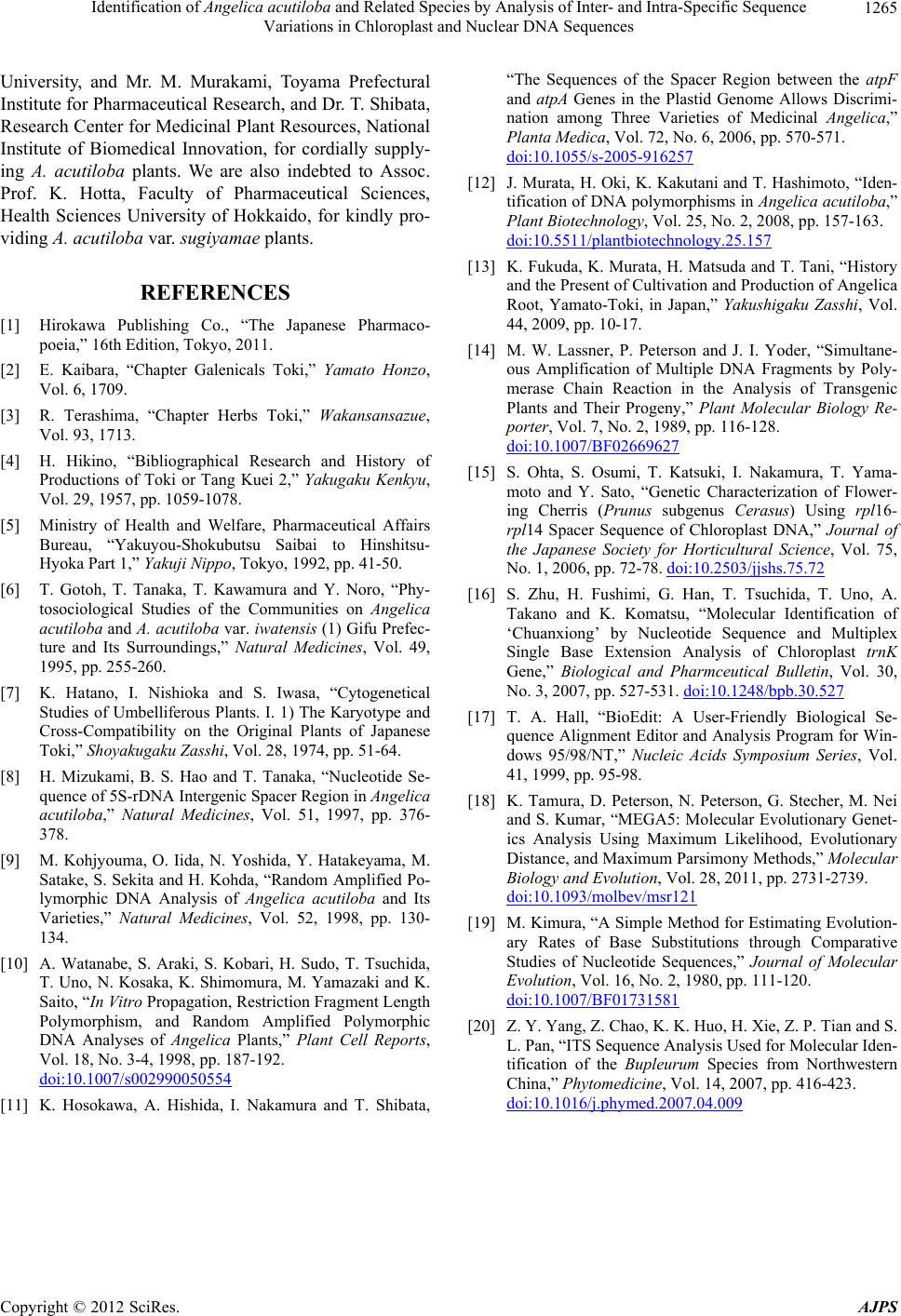 Identification of Angelica acutiloba and Related Species by Analysis of Inter- and Intra-Specific Sequence Variations in Chloroplast and Nuclear DNA Sequences 1265 University, and Mr. M. Murakami, Toyama Prefectural Institute for Pharmaceutical Research, and Dr. T. Shibata, Research Center for Medicinal Plant Resources, National Institute of Biomedical Innovation, for cordially supply- ing A. acutiloba plants. We are also indebted to Assoc. Prof. K. Hotta, Faculty of Pharmaceutical Sciences, Health Sciences University of Hokkaido, for kindly pro- viding A. acutiloba var. sugiyamae plants. REFERENCES [1] Hirokawa Publishing Co., “The Japanese Pharmaco- poeia,” 16th Edition, Tokyo, 2011. [2] E. Kaibara, “Chapter Galenicals Toki,” Yamato Honzo, Vol. 6, 1709. [3] R. Terashima, “Chapter Herbs Toki,” Wakansansazue, Vol. 93, 1713. [4] H. Hikino, “Bibliographical Research and History of Productions of Toki or Tang Kuei 2,” Yakugaku Kenkyu, Vol. 29, 1957, pp. 1059-1078. [5] Ministry of Health and Welfare, Pharmaceutical Affairs Bureau, “Yakuyou-Shokubutsu Saibai to Hinshitsu- Hyoka Part 1,” Yakuji Nippo, Tokyo, 1992, pp. 41-50. [6] T. Gotoh, T. Tanaka, T. Kawamura and Y. Noro, “Phy- tosociological Studies of the Communities on Angelica acutiloba and A. acutiloba var. iwatensis (1) Gifu Prefec- ture and Its Surroundings,” Natural Medicines, Vol. 49, 1995, pp. 255-260. [7] K. Hatano, I. Nishioka and S. Iwasa, “Cytogenetical Studies of Umbelliferous Plants. I. 1) The Karyotype and Cross-Compatibility on the Original Plants of Japanese Toki,” Shoyakugaku Zasshi, Vol. 28, 1974, pp. 51-64. [8] H. Mizukami, B. S. Hao and T. Tanaka, “Nucleotide Se- quence of 5S-rDNA Intergenic Spacer Region in Angelica acutiloba,” Natural Medicines, Vol. 51, 1997, pp. 376- 378. [9] M. Kohjyouma, O. Iida, N. Yoshida, Y. Hatakeyama, M. Satake, S. Sekita and H. Kohda, “Random Amplified Po- lymorphic DNA Analysis of Angelica acutiloba and Its Varieties,” Natural Medicines, Vol. 52, 1998, pp. 130- 134. [10] A. Watanabe, S. Araki, S. Kobari, H. Sudo, T. Tsuchida, T. Uno, N. Kosaka, K. Shimomura, M. Yamazaki and K. Saito, “In Vitro Propagation, Restriction Fragment Length Polymorphism, and Random Amplified Polymorphic DNA Analyses of Angelica Plants,” Plant Cell Reports, Vol. 18, No. 3-4, 1998, pp. 187-192. doi:10.1007/s002990050554 [11] K. Hosokawa, A. Hishida, I. Nakamura and T. Shibata, “The Sequences of the Spacer Region between the atpF and atpA Genes in the Plastid Genome Allows Discrimi- nation among Three Varieties of Medicinal Angelica,” Planta Medica, Vol. 72, No. 6, 2006, pp. 570-571. doi:10.1055/s-2005-916257 [12] J. Murata, H. Oki, K. Kakutani and T. Hashimoto, “Iden- tification of DNA polymorphisms in Angelica acutiloba,” Plant Biotechnology, Vol. 25, No. 2, 2008, pp. 157-163. doi:10.5511/plantbiotechnology.25.157 [13] K. Fukuda, K. Murata, H. Matsuda and T. Tani, “History and the Present of Cultivation and Production of Angelica Root, Yamato-Toki, in Japan,” Yakushigaku Zasshi, Vol. 44, 2009, pp. 10-17. [14] M. W. Lassner, P. Peterson and J. I. Yoder, “Simultane- ous Amplification of Multiple DNA Fragments by Poly- merase Chain Reaction in the Analysis of Transgenic Plants and Their Progeny,” Plant Molecular Biology Re- porter, Vol. 7, No. 2, 1989, pp. 116-128. doi:10.1007/BF02669627 [15] S. Ohta, S. Osumi, T. Katsuki, I. Nakamura, T. Yama- moto and Y. Sato, “Genetic Characterization of Flower- ing Cherris (Prunus subgenus Cerasus) Using rpl16- rpl14 Spacer Sequence of Chloroplast DNA,” Journal of the Japanese Society for Horticultural Science, Vol. 75, No. 1, 2006, pp. 72-78. doi:10.2503/jjshs.75.72 [16] S. Zhu, H. Fushimi, G. Han, T. Tsuchida, T. Uno, A. Takano and K. Komatsu, “Molecular Identification of ‘Chuanxiong’ by Nucleotide Sequence and Multiplex Single Base Extension Analysis of Chloroplast trnK Gene,” Biological and Pharmceutical Bulletin, Vol. 30, No. 3, 2007, pp. 527-531. doi:10.1248/bpb.30.527 [17] T. A. Hall, “BioEdit: A User-Friendly Biological Se- quence Alignment Editor and Analysis Program for Win- dows 95/98/NT,” Nucleic Acids Symposium Series, Vol. 41, 1999, pp. 95-98. [18] K. Tamura, D. Peterson, N. Peterson, G. Stecher, M. Nei and S. Kumar, “MEGA5: Molecular Evolutionary Genet- ics Analysis Using Maximum Likelihood, Evolutionary Distance, and Maximum Parsimony Methods,” Molecular Biology and Evolution, Vol. 28, 2011, pp. 2731-2739. doi:10.1093/molbev/msr121 [19] M. Kimura, “A Simple Method for Estimating Evolution- ary Rates of Base Substitutions through Comparative Studies of Nucleotide Sequences,” Journal of Molecular Evolution, Vol. 16, No. 2, 1980, pp. 111-120. doi:10.1007/BF01731581 [20] Z. Y. Yang, Z. Chao, K. K. Huo, H. Xie, Z. P. Tian and S. L. Pan, “ITS Sequence Analysis Used for Molecular Iden- tification of the Bupleurum Species from Northwestern China,” Phytomedicine, Vol. 14, 2007, pp. 416-423. doi:10.1016/j.phymed.2007.04.009 Copyright © 2012 SciRes. AJPS |