

Paper Menu >>
Journal Menu >>
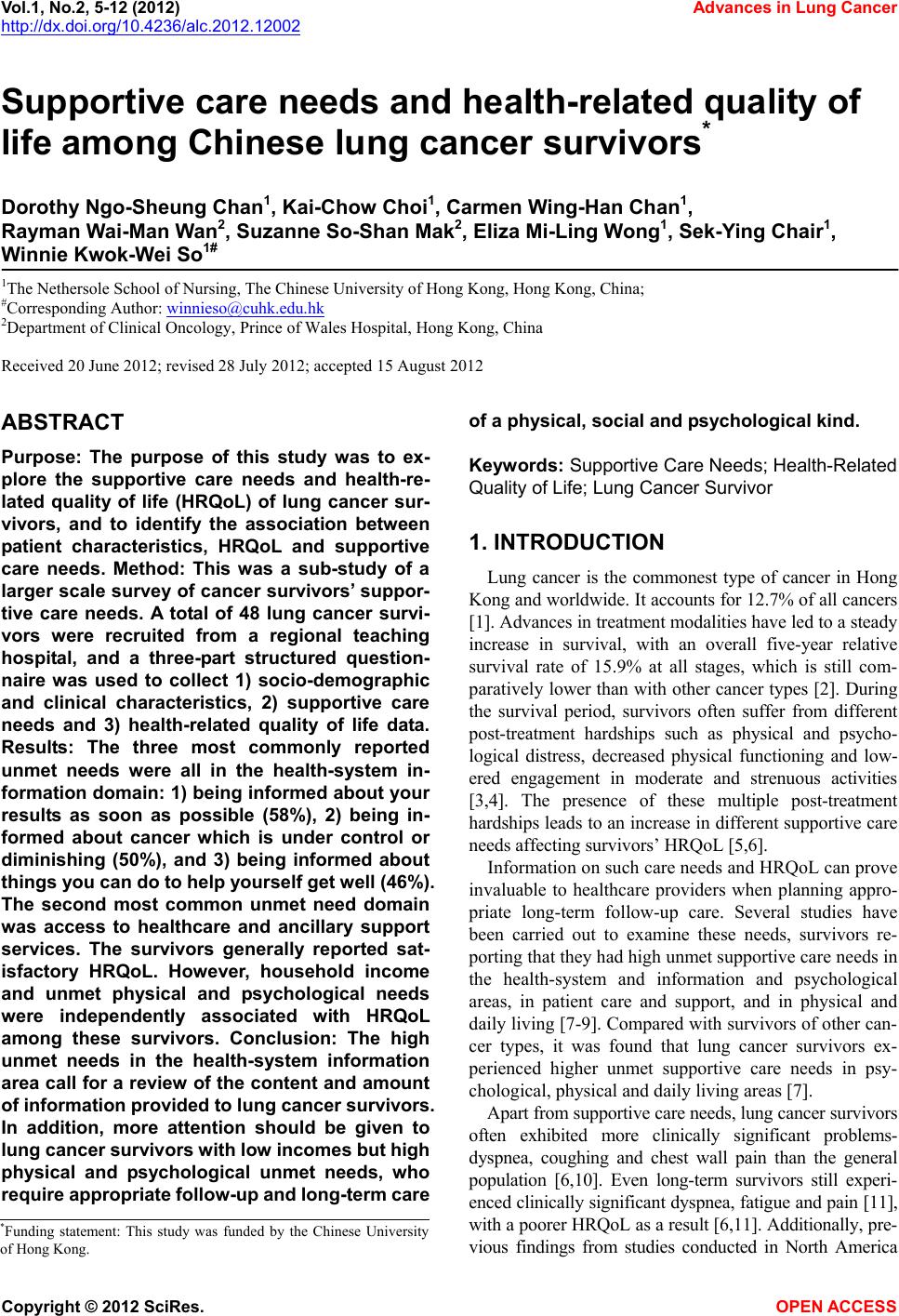 Vol.1, No.2, 5-12 (2012) Advances in Lung Cancer http://dx.doi.org/10.4236/alc.2012.12002 Supportive care needs and health-related quality of life among Chinese lung cancer survivors* Dorothy Ngo-Sheung Chan1, Kai-Chow Choi1, Carmen Wing-Han Chan1, Rayman Wai-Man Wan2, Suzanne So-Shan Mak2, Eliza Mi-Ling Wong1, Sek-Ying Chair1, Winnie Kwok-Wei So1# 1The Nethersole School of Nursing, The Chinese University of Hong Kong, Hong Kong, China; #Corresponding Author: [email protected] 2Department of Clinical Oncology, Prince of Wales Hospital, Hong Kong, China Received 20 June 2012; revised 28 July 2012; accepted 15 August 2012 ABSTRACT Purpose: The purpose of this study was to ex- plore the supportive care needs and health-re- lated quality of life (HRQoL) of lung cancer sur- vivors, and to identify the association between patient characteristics, HRQoL and supportive care needs. Method: This was a sub-study of a larger scale survey of cancer survivors’ suppor- tive care needs. A total of 48 lung cancer survi- vors were recruited from a regional teaching hospital, and a three-part structured question- naire was used to collect 1) socio-demographic and clinical characteristics, 2) supportive care needs and 3) health-related quality of life data. Results: The three most commonly reported unmet needs were all in the health-system in- formation domain: 1) being informed about your results as soon as possible (58%), 2) being in- formed about cancer which is under control or diminishing (50%), and 3) being informed about things you can do to help y ourself get well (46%). The second most common unmet need domain was access to healthcare and ancillary support services. The survivors generally reported sat- isfactory HRQoL. However, household income and unmet physical and psychological needs were independently associated with HRQoL among these survivors. Conclusion: The high unmet needs in the health-system information area call for a review of the content and amount of information provided to l ung cancer surv iv ors. In addition, more attention should be given to lung cancer surviv ors with lo w incomes but high physical and psychological unmet needs, who require appropriate follow-up and lon g-term care of a physical, social and psychological kind. Keywords: Suppo rt ive Care Needs; Health-Related Quality of Life; Lung Cancer Survivor 1. INTRODUCTION Lung cancer is the commonest type of cancer in Hong Kong and wor ldwide. It accoun ts for 12.7% of all cancers [1]. Advances in treatment modalities have led to a steady increase in survival, with an overall five-year relative survival rate of 15.9% at all stages, which is still com- paratively lower than with other cancer types [2]. During the survival period, survivors often suffer from different post-treatment hardships such as physical and psycho- logical distress, decreased physical functioning and low- ered engagement in moderate and strenuous activities [3,4]. The presence of these multiple post-treatment hardships leads to an increase in different supportive care needs affecting survivors’ HRQoL [5,6]. Information on such care needs and HRQoL can prove invaluable to healthcare providers when planning appro- priate long-term follow-up care. Several studies have been carried out to examine these needs, survivors re- porting that they had high unmet supportive care needs in the health-system and information and psychological areas, in patient care and support, and in physical and daily living [7-9 ]. Compared with survivors of other can- cer types, it was found that lung cancer survivors ex- perienced higher unmet supportive care needs in psy- chological, physical and daily living areas [7]. Apart from supportive care needs, lung cancer survivors often exhibited more clinically significant problems- dyspnea, coughing and chest wall pain than the general population [6,10]. Even long-term survivors still experi- enced clinically significant dyspnea, fatigue and pain [11], with a poorer HRQoL as a result [6,11]. Additionally, pre- vious findings from studies conducted in North America *Funding statement: This study was funded by the Chinese University of Hong Kong. Copyright © 2012 SciRes. OPEN A CCESS 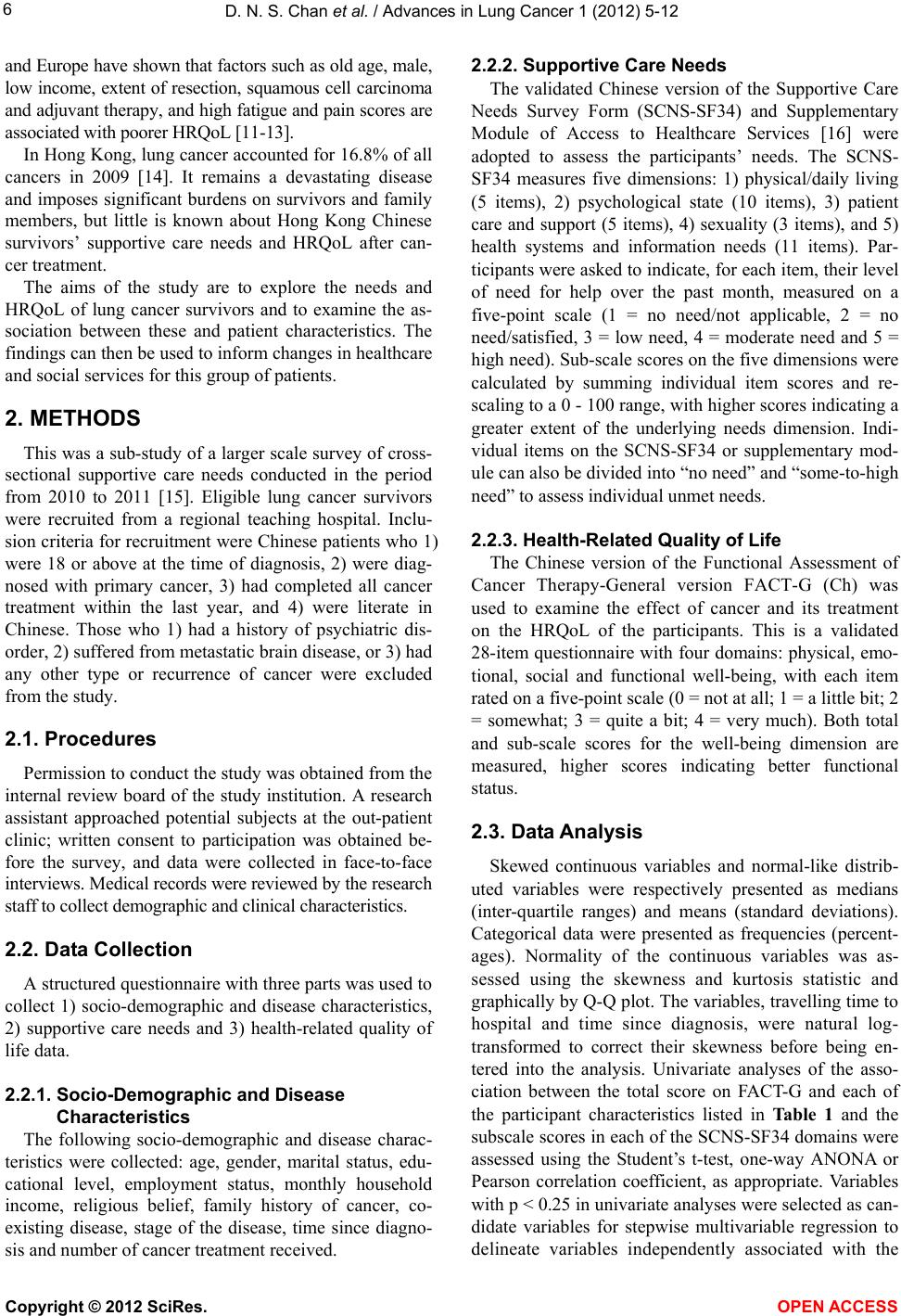 D. N. S. Chan et al. / Advances in Lung Cancer 1 (2012) 5-12 6 and Europe have shown that factors such as old age, male, low income, extent of resection, squamous cell carcinoma and adjuvant therapy, and high fatigue and pain scores are associated with poorer HRQoL [11-13]. In Hong Kong, lung can cer accounted for 16 .8% of all cancers in 2009 [14]. It remains a devastating disease and imposes significant burdens on survivors and family members, but little is known about Hong Kong Chinese survivors’ supportive care needs and HRQoL after can- cer treatment. The aims of the study are to explore the needs and HRQoL of lung cancer survivors and to examine the as- sociation between these and patient characteristics. The findings can then be used to inform changes in healthcare and social services for this group of patients. 2. METHODS This was a sub-study of a larger scale survey of cross- sectional supportive care needs conducted in the period from 2010 to 2011 [15]. Eligible lung cancer survivors were recruited from a regional teaching hospital. Inclu- sion criteria for recruitment were Chinese patients who 1) were 18 or above at the time of diagnosis, 2) were diag- nosed with primary cancer, 3) had completed all cancer treatment within the last year, and 4) were literate in Chinese. Those who 1) had a history of psychiatric dis- order, 2) suffered from metastatic brain disease, or 3) had any other type or recurrence of cancer were excluded from the study. 2.1. Procedures Permission to conduct the study was obtained fro m the internal review board of the study institution. A research assistant approached potential subjects at the out-patient clinic; written consent to participation was obtained be- fore the survey, and data were collected in face-to-face interviews. Medical records were reviewed by the research staff to collect demographic and clinical characteristics. 2.2. Data Collection A structured questionn aire with th ree p arts was used to collect 1) socio-demographic and disease characteristics, 2) supportive care needs and 3) health-related quality of life data. 2.2.1. Socio-Demographic and Disease Characteristics The following socio-demographic and disease charac- teristics were collected: age, gender, marital status, edu- cational level, employment status, monthly household income, religious belief, family history of cancer, co- existing disease, stage of the disease, time since diagno- sis and number of cancer treatment received. 2.2.2. Supportive Care Needs The validated Chinese version of the Supportive Care Needs Survey Form (SCNS-SF34) and Supplementary Module of Access to Healthcare Services [16] were adopted to assess the participants’ needs. The SCNS- SF34 measures five dimensions: 1) physical/daily living (5 items), 2) psychological state (10 items), 3) patient care and support (5 items), 4) sexuality (3 items), and 5) health systems and information needs (11 items). Par- ticipants were asked to indicate, for each item, their level of need for help over the past month, measured on a five-point scale (1 = no need/not applicable, 2 = no need/satisfied, 3 = low need, 4 = moderate need and 5 = high need). Sub-scale scores on the five dimensions were calculated by summing individual item scores and re- scaling to a 0 - 100 range, with higher scores indicating a greater extent of the underlying needs dimension. Indi- vidual items on the SCNS-SF34 or supplementary mod- ule can also be divided into “no need” and “some-to-high need” to assess individual unmet needs. 2.2.3. Health-Related Quality of Life The Chinese version of the Functional Assessment of Cancer Therapy-General version FACT-G (Ch) was used to examine the effect of cancer and its treatment on the HRQoL of the participants. This is a validated 28-item questionnaire with four domains: physical, emo- tional, social and functional well-being, with each item rated on a five-point scale (0 = not at all; 1 = a little bit; 2 = somewhat; 3 = quite a bit; 4 = very much). Both total and sub-scale scores for the well-being dimension are measured, higher scores indicating better functional status. 2.3. Data Analysis Skewed continuous variables and normal-like distrib- uted variables were respectively presented as medians (inter-quartile ranges) and means (standard deviations). Categorical data were presented as frequencies (percent- ages). Normality of the continuous variables was as- sessed using the skewness and kurtosis statistic and graphically by Q-Q plot. The variables, travelling time to hospital and time since diagnosis, were natural log- transformed to correct their skewness before being en- tered into the analysis. Univariate analyses of the asso- ciation between the total score on FACT-G and each of the participant characteristics listed in Table 1 and the subscale scores in each of the SCNS-SF34 domains were assessed using the Student’s t-test, one-way ANONA or Pearson correlation coefficient, as appropriate. Variables with p < 0.25 in univariate analyses were selected as can- didate variables for stepwise multivariable regression to delineate variables independently associated with the Copyright © 2012 SciRes. OPEN A CCESS 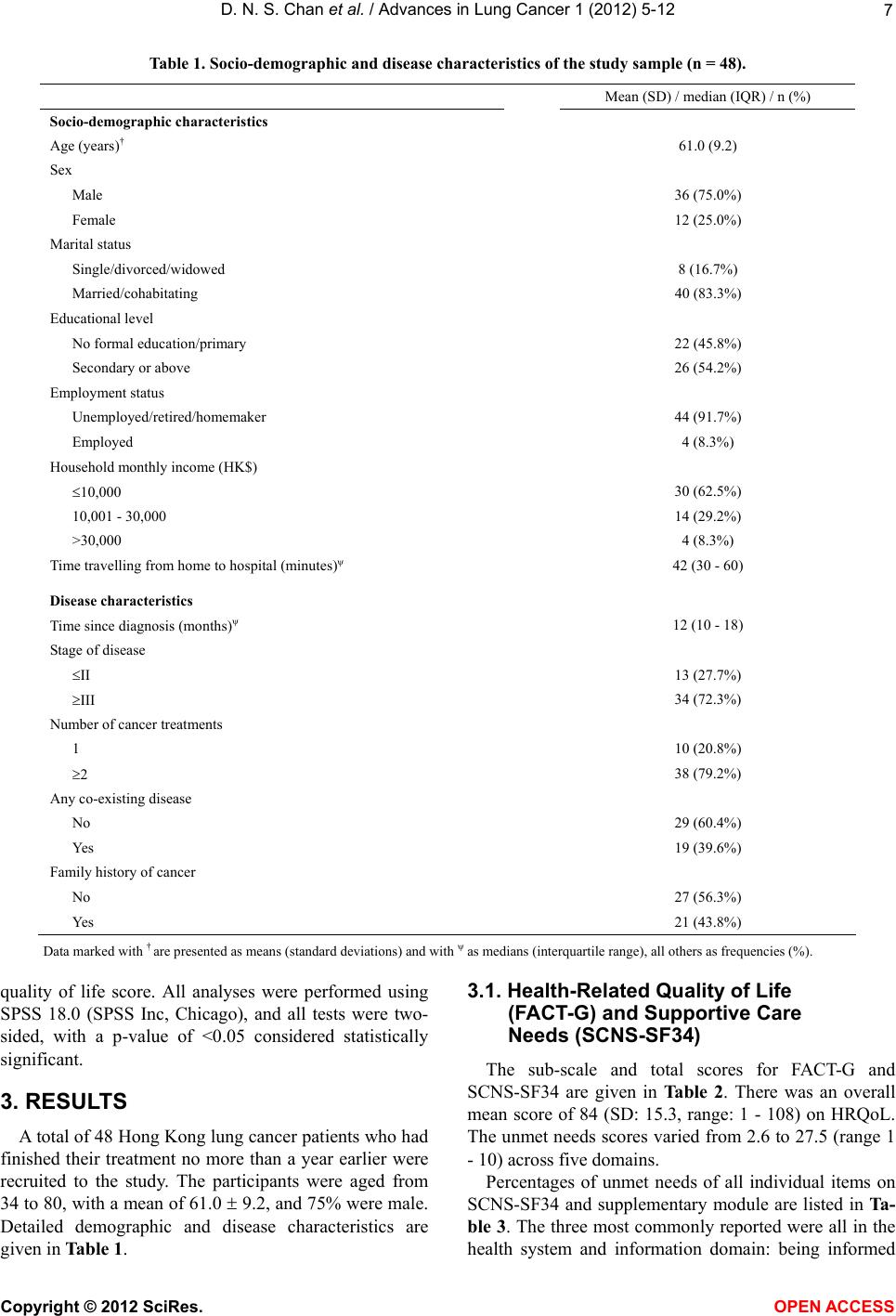 D. N. S. Chan et al. / Advances in Lung Cancer 1 (2012) 5-12 Copyright © 2012 SciRes. OPEN A CCESS 7 Table 1. Socio-demographic and disease characteristics of the study sample (n = 48). Mean (SD) / median (IQR) / n (%) Socio-demog raphic characteristics Age (years)† 61.0 (9.2) Sex Male 36 (75.0%) Female 12 (25.0%) Marital status Single/divorced/widowed 8 (16.7%) Married/cohabitating 40 (83.3%) Educational level No formal education/primary 22 (45.8%) Secondary or above 26 (54.2%) Employment status Unemployed/retired/homemaker 44 (91.7%) Employed 4 (8.3%) Household monthly i nc ome (HK$) 10,000 30 (62.5%) 10,001 - 30,000 14 (29.2%) >30,000 4 (8.3%) Time travelling from home to hospital (minutes) 42 (30 - 60) Disease characteristics Time since diagnosis (months) 12 (10 - 18) Stage of disease II 13 (27.7%) III 34 (72.3%) Number of cancer treatments 1 10 (20.8%) 2 38 (79.2%) Any co-existing di sease No 29 (60.4%) Yes 19 (39.6%) Family history of cancer No 27 (56.3%) Yes 21 (43.8%) Data marked with † are presented as means (standard deviations) and with as medians (interquartile range), all others as frequencies (%). quality of life score. All analyses were performed using SPSS 18.0 (SPSS Inc, Chicago), and all tests were two- sided, with a p-value of <0.05 considered statistically significant. 3. RESULTS A total of 48 Hong Kong lung can cer patients who had finished their treatment no more than a year earlier were recruited to the study. The participants were aged from 34 to 80, with a mean of 61.0 9.2, and 75% were male. Detailed demographic and disease characteristics are given in Table 1. 3.1. Health-Related Quality of Life (FACT-G) and Supportive Care Needs (SCNS-SF34) The sub-scale and total scores for FACT-G and SCNS-SF34 are given in Ta b l e 2 . There was an overall mean score of 84 (SD: 15.3, range: 1 - 108) on HRQoL. The unmet needs scores varied from 2.6 to 27.5 (range 1 - 10) across five domains. Percentages of unmet needs of all individual items on SCNS-SF34 and supplementary module are listed in Ta- ble 3. The three most commonly reported were all in the health system and information domain: being informed 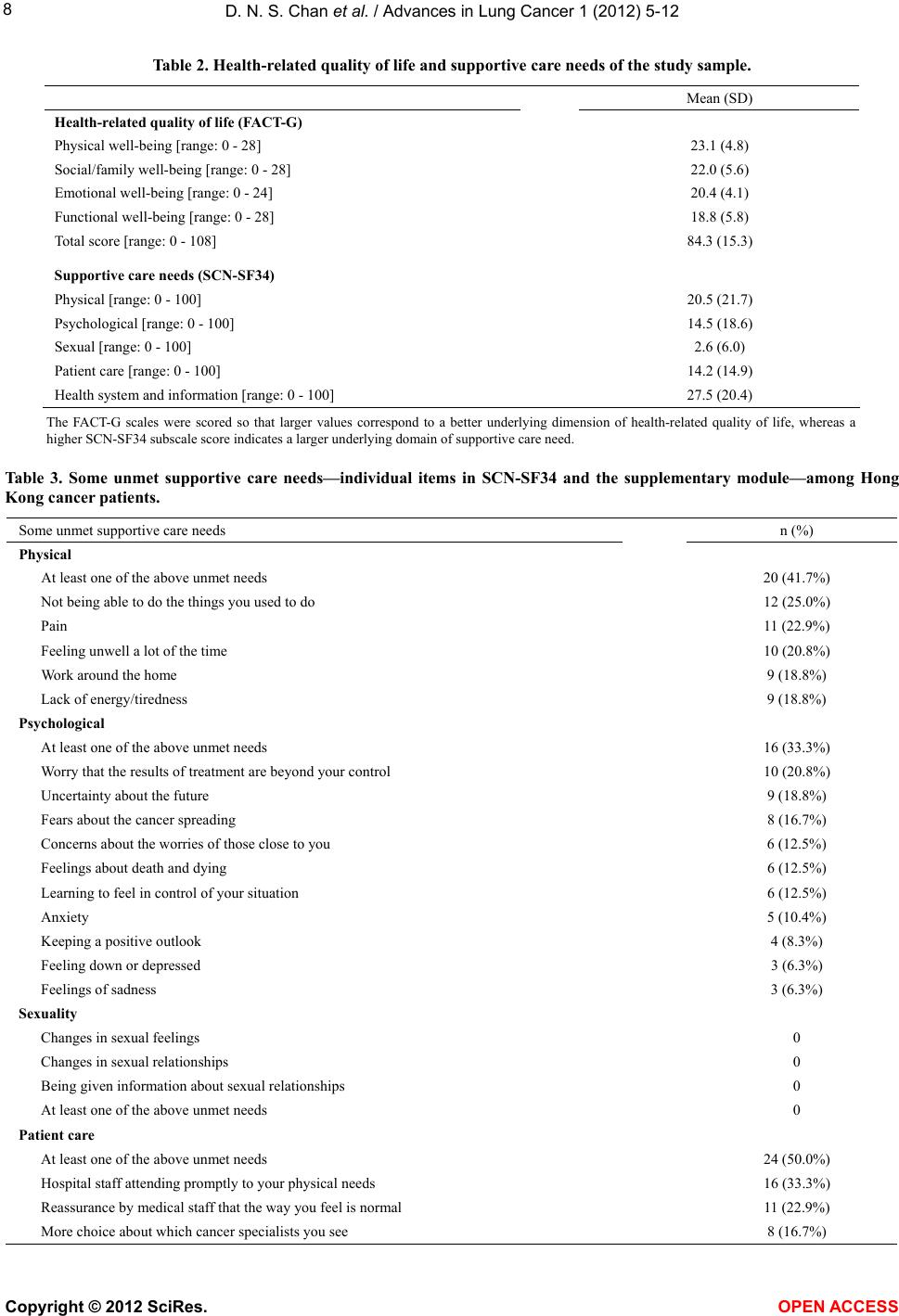 D. N. S. Chan et al. / Advances in Lung Cancer 1 (2012) 5-12 8 Table 2. Health-related quality of life and supportive care needs of the study sample. Mean (SD) Health-related quality of life (FACT-G) Physical well-being [range: 0 - 28] 2 3.1 (4.8) Social/family well-being [range: 0 - 28] 2 2.0 (5.6) Emotional well-being [range: 0 - 2 4] 2 0.4 (4.1) Functional well-being [range: 0 - 2 8] 18.8 (5.8) Total score [range: 0 - 108] 84.3 (15.3) Supportive care needs (SCN-SF34) Physical [range: 0 - 100] 20.5 (21.7) Psychological [range: 0 - 100] 14.5 (18.6) Sexual [range: 0 - 100] 2.6 (6.0) Patient care [range: 0 - 100] 14.2 (14.9) Health system and inform at ion [range: 0 - 100] 27.5 (20.4) The FACT-G scales were scored so that larger values correspond to a better underlying dimension of health-related quality of life, whereas a higher SCN-SF34 subscale score indicates a larger underlying domain of supportive care need. Table 3. Some unmet supportive care needs—individual items in SCN-SF34 and the supplementary module—among Hong Kong cancer patients. Some unmet suppor ti ve ca re ne ed s n (%) Physical At least one of the above unmet needs 20 (41.7%) Not being able to do the things you used to do 12 (25.0%) Pain 11 (22.9%) Feeling unwell a lot of the tim e 10 (20.8%) Work around the home 9 (18.8%) Lack of energy/tiredness 9 (18.8%) Psychological At least one of the above unmet ne e ds 16 (33.3%) Worry that the results of treatm e nt are beyond your control 10 (20.8%) Uncertainty about the future 9 (18.8%) Fears about the cancer spreadi n g 8 (16.7%) Concerns about the worries of those close to you 6 (12.5%) Feelings about death and dying 6 (12.5%) Learning to feel in control of your situ atio n 6 (12.5%) Anxiety 5 (10.4%) Keeping a positive outlook 4 (8.3%) Feeling down or depressed 3 (6.3%) Feelings of sadness 3 (6.3%) Sexuality Changes in sexual feelings 0 Changes in sexual relat io n sh i ps 0 Being given information about sexual relationships 0 At least one of the above unm et needs 0 Patient care At least one of the above unmet ne e ds 24 (50.0%) Hospital staff attending promptly to your physical needs 16 (33.3%) Reassurance by medical staff that the way you feel is normal 11 (22.9%) More choice about which cancer speci a l i s ts you see 8 (16.7%) Copyright © 2012 SciRes. OPEN A CCESS 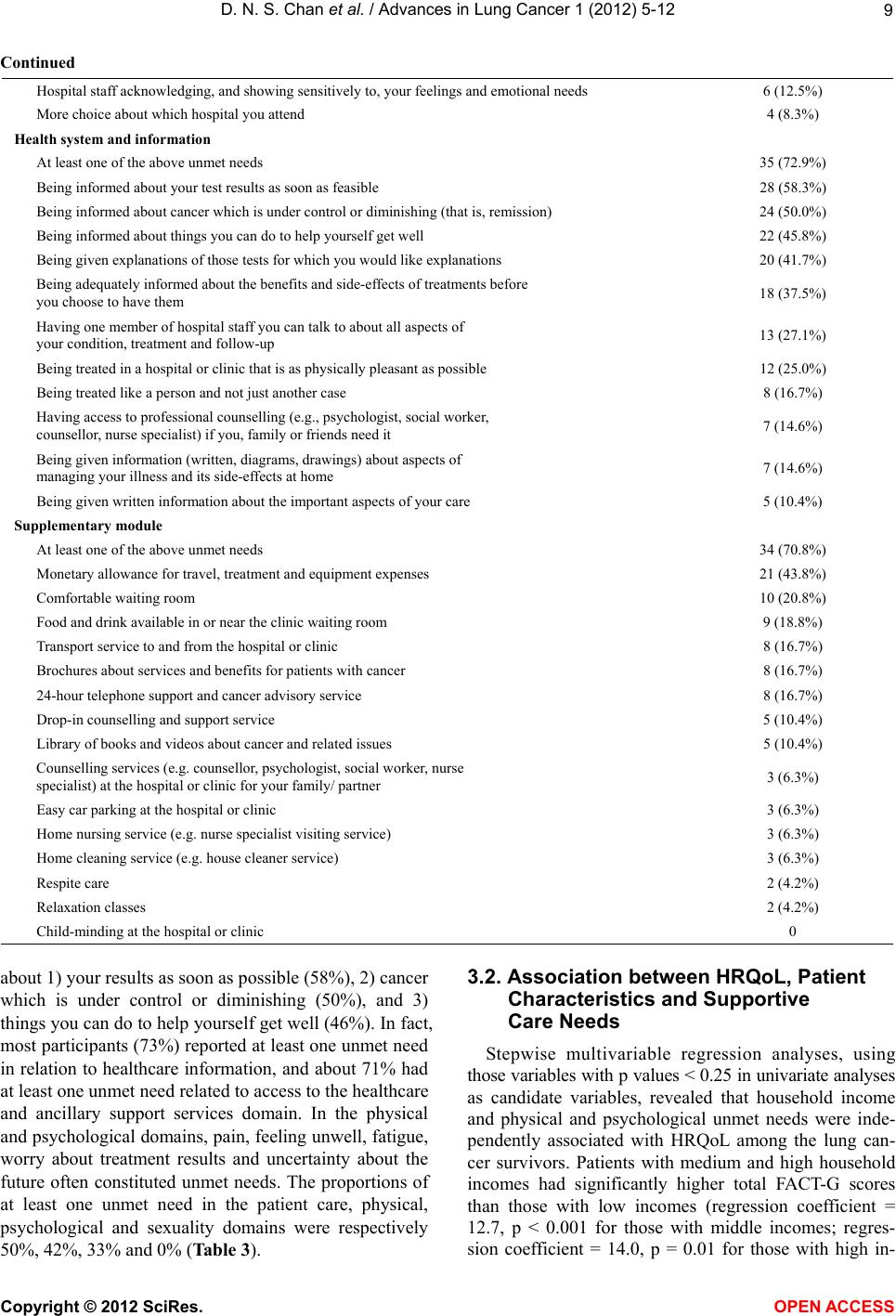 D. N. S. Chan et al. / Advances in Lung Cancer 1 (2012) 5-12 9 Continued Hospital staff acknowledging, and showing sensitively to, your feelings and emotional needs 6 (12.5%) More choice about which hospital you attend 4 (8.3%) Health system and information At least one of the above unmet ne e ds 35 (72.9%) Being informed about your test results as soon as feasible 28 (58.3%) Being informed a bout cancer which is under control or diminishing (that is, remission) 24 (50.0%) Being informed about things y ou can do to hel p yourself get well 22 (45.8%) Being given explanations of those tests for which you would like explanations 20 (41.7%) Being adequately informed about the benefits and side-ef fects o f treatments before you choose to have them 18 (37.5%) Having one member of hospi ta l s t aff you can talk to about all aspects of your condition, treatment and follow-up 13 (27.1%) Being treated in a hospital or clinic that is as physically pleasant as possible 12 (25.0%) Being treated like a person a n d not just another case 8 (16.7%) Having access to professional counselling (e.g., psychologist, social worker, counsellor, nurse specialist) if you, family or friends need it 7 (14.6%) Being given information (written, diagrams, drawings) about aspects of managing your illness and its side-effects at home 7 (14.6%) Being given written information about the important aspects of your care 5 (10.4%) Supplementary module At least one of the above unmet ne e ds 34 (70.8%) Monetary allowance for travel, treatment and equipment expenses 21 (43.8%) Comfortable waiting room 10 (20.8%) Food and drink available in or near the clinic waiting room 9 (18.8%) Transport service to and from the hospital or clinic 8 (16.7%) Brochures about services a nd b e n ef i t s for patients with cancer 8 (16.7%) 24-hour telephone support and cancer advisory service 8 (16.7%) Drop-in counselling and sup port service 5 (10.4%) Library of books and videos about cancer and related issues 5 ( 1 0.4%) Counselling services (e.g. counsellor, psychologist, social worker, nurse specialist) at the hospital or clinic for your family/ partner 3 (6.3%) Easy car parking at the hospita l o r clinic 3 (6.3%) Home nursing service (e.g. nurse specialist visiting service) 3 (6.3%) Home cleaning service (e.g. house cleaner service) 3 (6.3%) Respite care 2 (4.2%) Relaxation classes 2 (4.2%) Child-mindi n g at the hospital or clinic 0 about 1) your results as soon as possible (58%) , 2) cancer which is under control or diminishing (50%), and 3) things you can do to help yourself get well (46%). In fact, most participants (73%) reported at least one unmet need in relation to healthcare information, and about 71% had at least one unmet need related to access to the healthcare and ancillary support services domain. In the physical and psychological domains, pain, feeling unwell, fatigue, worry about treatment results and uncertainty about the future often constituted unmet needs. The proportions of at least one unmet need in the patient care, physical, psychological and sexuality domains were respectively 50%, 42%, 33% and 0% (Table 3). 3.2. Association between HRQoL, Patient Characteristics and Supportive Care Needs Stepwise multivariable regression analyses, using those variable s with p values < 0.25 in un ivariate analyses as candidate variables, revealed that household income and physical and psychological unmet needs were inde- pendently associated with HRQoL among the lung can- cer survivors. Patients with medium and high household incomes had significantly higher total FACT-G scores than those with low incomes (regression coefficient = 12.7, p < 0.001 for those with middle incomes; regres- sion coefficient = 14.0, p = 0.01 for those with high in- Copyright © 2012 SciRes. OPEN A CCESS 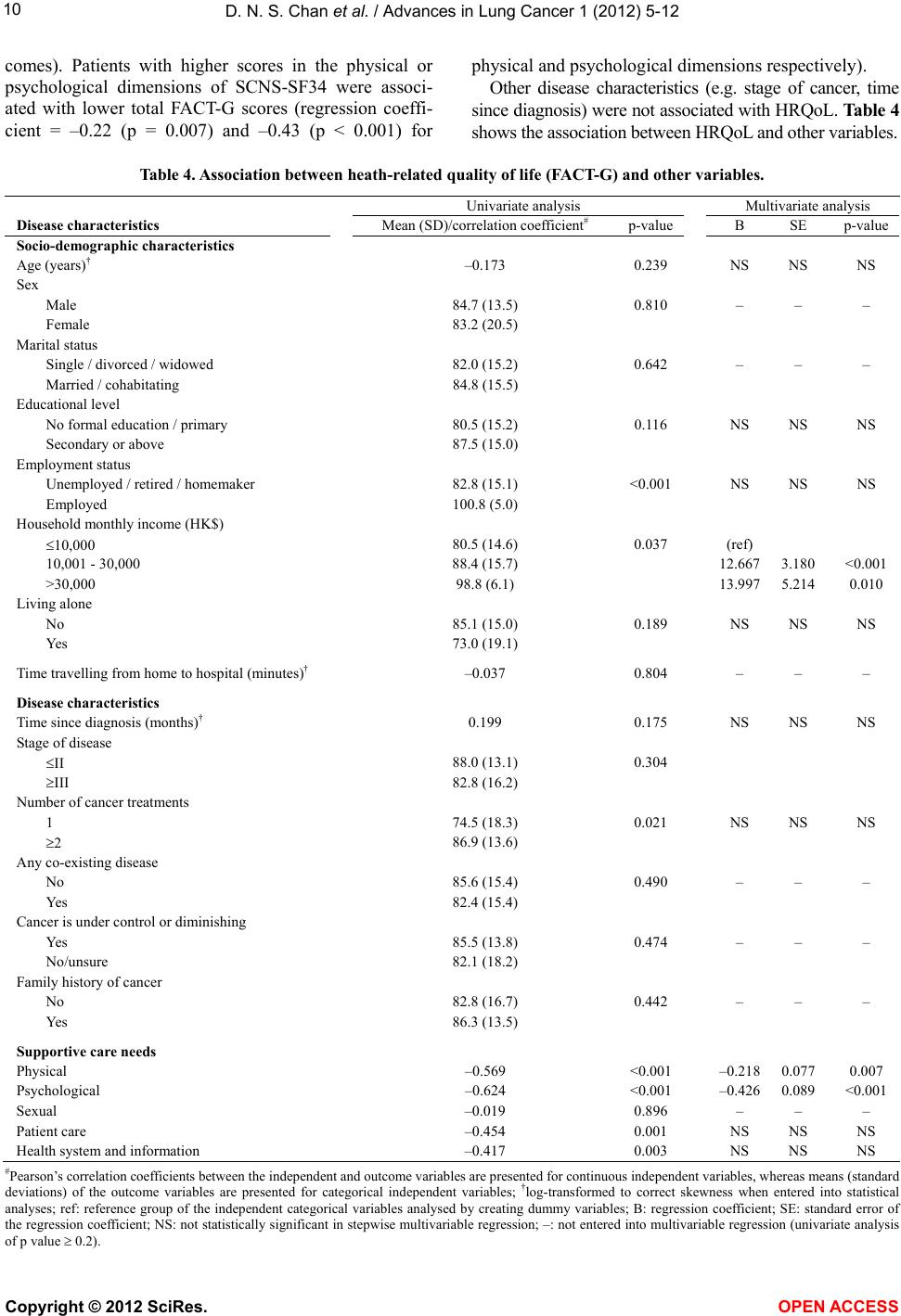 D. N. S. Chan et al. / Advances in Lung Cancer 1 (2012) 5-12 10 comes). Patients with higher scores in the physical or psychological dimensions of SCNS-SF34 were associ- ated with lower total FACT-G scores (regression coeffi- cient = –0.22 (p = 0.007) and –0.43 (p < 0.001) for physical and psychological dimensions respectively). Other disease characteristics (e.g. stage of cancer, time since diagnosis) were not associated with HRQoL. Table 4 hows the association between HRQoL and other variables. s Table 4. Association betwe e n heath-related quality of life (FACT-G) and other variables. Univariate analysis Multivariate analysis Disease characteristics Mean (SD)/correlation coefficient# p-value B SE p-value Socio-demog raphic characteristics Age (years)† –0.173 0.239 NS NS NS Sex Male 84.7 (13.5) 0.810 – – – Female 83.2 (20.5) Marital status Single / d i vorced / widowed 82.0 (15.2) 0.642 – – – Married / cohabitating 84.8 (15.5) Educational level No formal education / primary 80.5 (15.2) 0.116 NS NS NS Secondary or above 87.5 (15.0) Employment status Unemployed / ret ired / homemaker 82.8 (15.1) <0.001 NS NS NS Employed 100.8 (5.0) Household monthly i nc ome (HK$) 10,000 80.5 (14.6) 0.037 (ref) 10,001 - 30,000 88.4 (15.7) 12.667 3.180<0.001 >30,000 98.8 (6.1) 13.997 5.2140.010 Living alone No 85.1 (15.0) 0.189 NS NS NS Yes 73.0 (19.1) Time travelling from home to hospital (minutes)† –0.037 0.804 – – – Disease characteristics Time since diagnosis (months)† 0.199 0.175 NS NS NS Stage of disease II 88.0 (13.1) 0.304 III 82.8 (16.2) Number of cancer treatments 1 74.5 (18.3) 0.021 NS NS NS 2 86.9 (13.6) Any co-existing di sease No 85.6 (15.4) 0.490 – – – Yes 82.4 (15.4) Cancer is under control or diminishing Yes 85.5 (13.8) 0.474 – – – No/unsure 82.1 (18.2) Family history of cancer No 82.8 (16.7) 0.442 – – – Yes 86.3 (13.5) Supportive care needs Physical –0.569 <0.001 –0.218 0.0770.007 Psychological –0.624 <0.001 –0.426 0.089<0.001 Sexual –0.019 0.896 – – – Patient care –0.454 0.001 NS NS NS Health system and inform ation –0.417 0.003 NS NS NS #Pearson’s correlation coefficients between the independent and outcome variables are presented for continuous independent variables, whereas means (standard deviations) of the outcome variables are presented for categorical independent variables; †log-transformed to correct skewness when entered into statistical analyses; ref: reference group of the independent categorical variables analysed by creating dummy variables; B: regression coefficient; SE: standard error of the regression coefficient; NS: not statistically significant in stepwise multivariable regression; –: not entered into multivariable regression (univariate analysis of p value 0.2). Copyright © 2012 SciRes. OPEN A CCESS 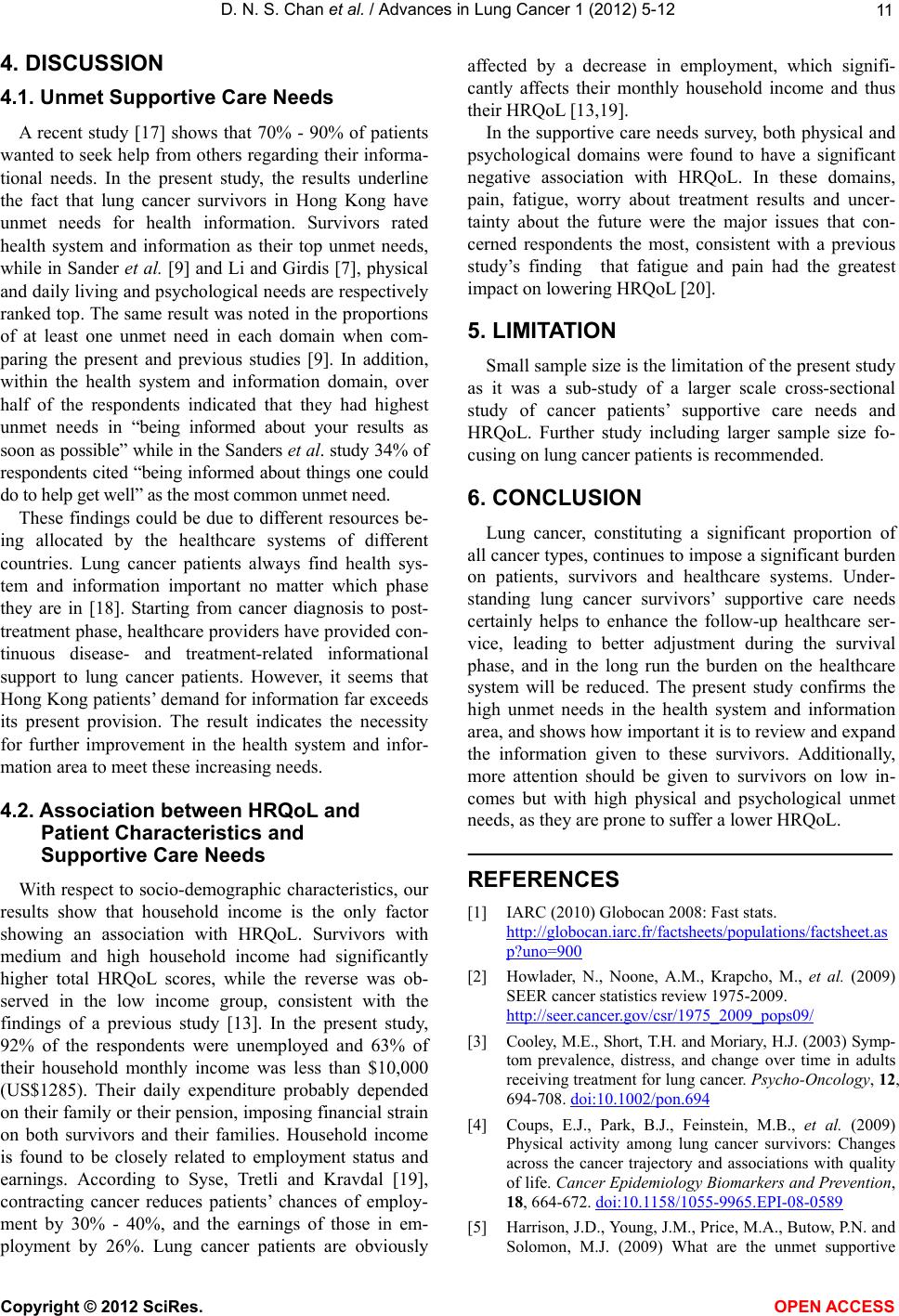 D. N. S. Chan et al. / Advances in Lung Cancer 1 (2012) 5-12 11 4. DISCUSSION 4.1. Unmet Supportive Care Needs A recent study [17] shows that 70% - 90% of patients wanted to seek help from others regarding their informa- tional needs. In the present study, the results underline the fact that lung cancer survivors in Hong Kong have unmet needs for health information. Survivors rated health system and information as their top unmet needs, while in Sander et al. [9] and Li and Girdis [7], physical and daily living and p sychological needs are respectiv ely ranked top. The same result was noted in the proportio ns of at least one unmet need in each domain when com- paring the present and previous studies [9]. In addition, within the health system and information domain, over half of the respondents indicated that they had highest unmet needs in “being informed about your results as soon as possible” while in the Sanders et al. study 34% of respondents cited “being informed about things one could do to help get well” as the most common unm et need. These findings could be due to different resources be- ing allocated by the healthcare systems of different countries. Lung cancer patients always find health sys- tem and information important no matter which phase they are in [18]. Starting from cancer diagnosis to post- treatment phase, healthcare providers have provided con- tinuous disease- and treatment-related informational support to lung cancer patients. However, it seems that Hong Kong patients’ demand for information far exceeds its present provision. The result indicates the necessity for further improvement in the health system and infor- mation area to meet these increasing needs. 4.2. Association between HRQoL and Patient Characteristics and Supportive Care Needs With respect to socio-demographic characteristics, our results show that household income is the only factor showing an association with HRQoL. Survivors with medium and high household income had significantly higher total HRQoL scores, while the reverse was ob- served in the low income group, consistent with the findings of a previous study [13]. In the present study, 92% of the respondents were unemployed and 63% of their household monthly income was less than $10,000 (US$1285). Their daily expenditure probably depended on their family or their pension, imposing financial strain on both survivors and their families. Household income is found to be closely related to employment status and earnings. According to Syse, Tretli and Kravdal [19], contracting cancer reduces patients’ chances of employ- ment by 30% - 40%, and the earnings of those in em- ployment by 26%. Lung cancer patients are obviously affected by a decrease in employment, which signifi- cantly affects their monthly household income and thus their HRQoL [13,19]. In the supportive care needs survey, both physical and psychological domains were found to have a significant negative association with HRQoL. In these domains, pain, fatigue, worry about treatment results and uncer- tainty about the future were the major issues that con- cerned respondents the most, consistent with a previous study’s finding that fatigue and pain had the greatest impact on lowering HRQoL [20]. 5. LIMITATION Small sample size is the limitation of the present study as it was a sub-study of a larger scale cross-sectional study of cancer patients’ supportive care needs and HRQoL. Further study including larger sample size fo- cusing on lung cancer patients is recommended. 6. CONCLUSION Lung cancer, constituting a significant proportion of all cancer types, continues to impose a significant burden on patients, survivors and healthcare systems. Under- standing lung cancer survivors’ supportive care needs certainly helps to enhance the follow-up healthcare ser- vice, leading to better adjustment during the survival phase, and in the long run the burden on the healthcare system will be reduced. The present study confirms the high unmet needs in the health system and information area, and shows how important it is to review and expand the information given to these survivors. Additionally, more attention should be given to survivors on low in- comes but with high physical and psychological unmet needs, as they are prone to suffer a lower HRQoL. REFERENCES [1] IARC (2010) Globocan 2008: Fast stats. http://globocan.iarc.fr/factsheets/populations/factsheet.as p?uno=900 [2] Howlader, N., Noone, A.M., Krapcho, M., et al. (2009) SEER cancer statistics review 1975-2009. http://seer.cancer.gov/csr/1975_2009_pops09/ [3] Cooley, M.E., Short, T.H. and Moriary, H.J. (200 3) Symp- tom prevalence, distress, and change over time in adults receiving treatment for lung cancer. Psycho-Oncology, 12, 694-708. doi:10.1002/pon.694 [4] Coups, E.J., Park, B.J., Feinstein, M.B., et al. (2009) Physical activity among lung cancer survivors: Changes across the cancer trajectory and associations with quality of life. Cancer Epidemiology Biomarkers and Prevention, 18, 664-672. doi:10.1158/1055-9965.EPI-08-0589 [5] Harrison, J.D., Young, J.M., Price, M.A., Butow, P.N. and Solomon, M.J. (2009) What are the unmet supportive Copyright © 2012 SciRes. OPEN A CCESS  D. N. S. Chan et al. / Advances in Lung Cancer 1 (2012) 5-12 12 care needs of people with cancer? A systematic review. Supportive Care in Cancer, 17, 1117-1128. doi:10.1007/s00520-009-0615-5 [6] Yun, Y.H., Kim, Y.A., Min, Y.H., et al. (2012) Health- related quality of life in disease-free survivors of surgi- cally treated lung cancer compared with the general po- pulation. Annals of Surgery, 255, 1000-1007. doi:10.1097/SLA.0b013e31824f1e9e [7] Li, J. and Girdis, A. (2006) Supportive care needs: Are patients with lung cancer a neglected population? Psy- cho-Oncology, 15, 509-516. doi:10.1002/pon.983 [8] Liao, Y.-C., Liao, W.-Y., Shun, S.-C., et al. (2011) Symp- toms, psychological distress, and supportive care needs in lung cancer patients. Supportive Care in Cancer, 19, 1743-1751. doi:10.1007/s00520-010-1014-7 [9] Sanders, S.L., Bantum, E.O., Owen, J.E., et al. (2010) Supportive care needs in patients with lung cancer. Psy- cho-Oncology, 19, 480-489. doi:10.1002/pon.1577 [10] Sarna, L., Cooley, M.E., Brown, J.K., et al. (2010) Women with lung cancer: Quality of life after thoracotomy: A 6-month prospective study. Cancer Nursing, 33, 85-92. doi:10.1097/NCC.0b013e3181be5e51 [11] Yang, P., Cheville, A.L., Wampfler, J .A., et al. (2012 ) Qualit y of life and symptom burden among long-term lung cancer survivors. Journal of Thoracic Oncology, 7, 64-70. doi:10.1097/JTO.0b013e3182397b3e [12] Moller, A. and Sartipy, U. (2012) Predictors of postopera- tive quality of life after surgery for lung cancer. Journal of Thoracic Oncology, 7, 406-411. doi:10.1097/JTO.0b013e3182398e82 [13] Le Corroller-Soriano, A.G., Bouhnk, A.-D., Preau, M., et al. (2011) Does cancer survivors’ health-related quality of life depend on cancer type? Findings from a large French national sample 2 years after cancer diagnosis. European Journal of Cancer Care, 20, 132-140. doi:10. 1111/j.1365-2354.2009.01160.x [14] Hospital Authority: Hong Kong Cancer Registry (2012) Top ten cancers in 2009. http://www3.ha.org.hk/cancereg/e_stat.asp [15] So, W.K.W., Chan, C.W.H., Choi, K.C., Wan, R.W.M., Mak, S.S.S. and Chair, S.Y. (2012) Perceived un met needs and health-related quality of life of Chinese cancer sur- vivors at one year after treatment. Cancer Nursing, In Press. [16] So, W.K.W., Choi, K.C., Mak, S.S.S., et al. (2011) Vali- dation of the Chinese version of supportive care needs survey and supplementary module of access to health care services. Supportive Care in Cancer, 19, S198. [17] Fitch, M.I. and Steele, R. (2010) Supportive care needs of individuals with lung cancer. Canadian Oncology Nurs- ing Journal, 20, 15-22. [18] Wiljer, D., Walton, T., Gilbert, J., et al. (2012) Under- standing the needs of lung cancer patients during the pre- diagnosis phase. Journal of Cancer Education, 27, 494- 500. doi:10.1007/s13187-012-0345-0 [19] Syse, A., Tretli, S. and Kravdal, O. (2008) Cancer’s im- pact on employment and earnings—A population-based study from Norway. Journal of Cancer Survivorship, 2, 149-158. doi:10.1007/s11764-008-0053-2 [20] Shi, Q., Smith, T.G., Michonski, J.D., et al. (2011) Symp- tom burden in cancer survivors 1 year after diagnosis. Cancer Survivorship, 11 7, 2779-2790. Copyright © 2012 SciRes. OPEN A CCESS |