

Paper Menu >>
Journal Menu >>
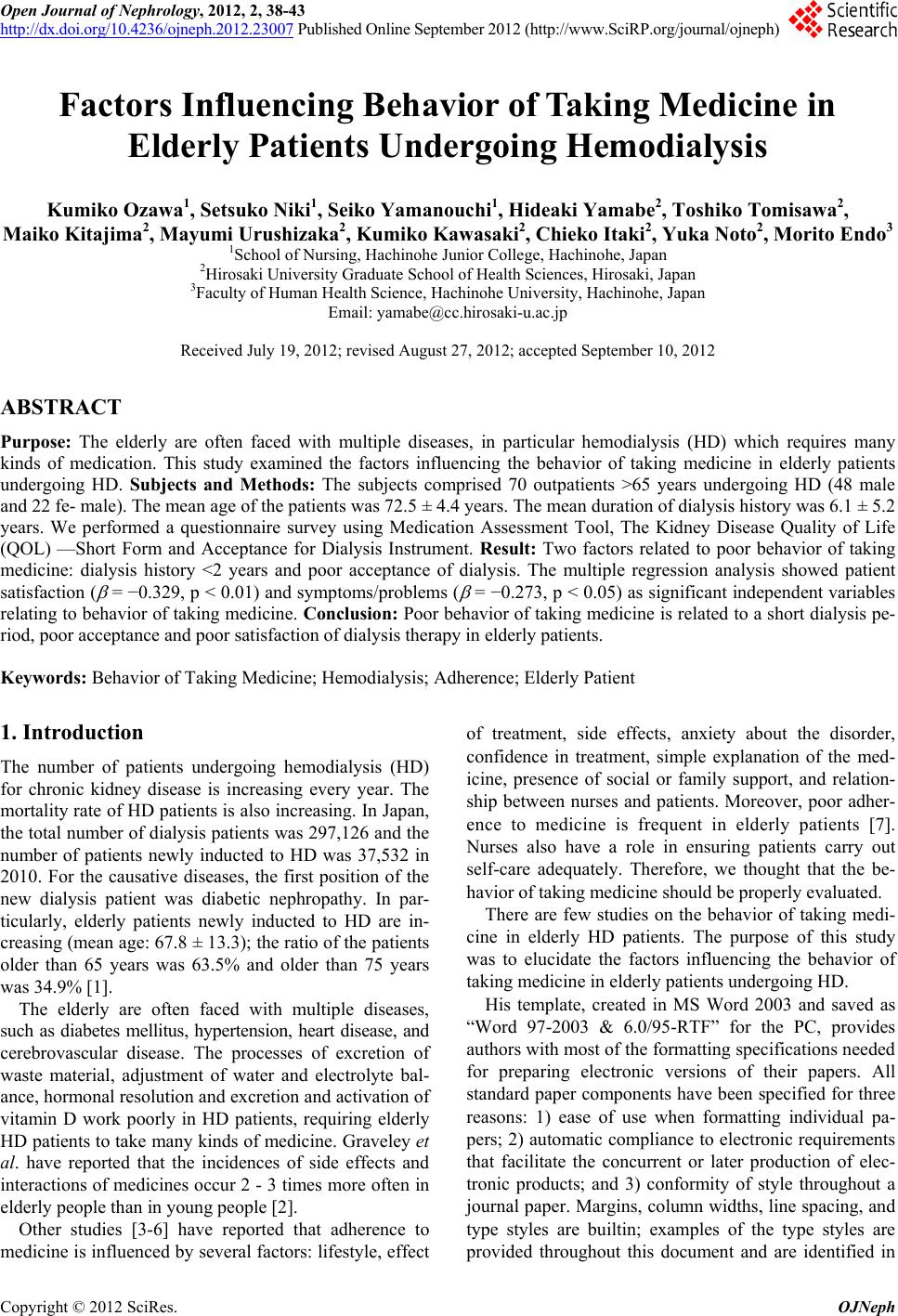 Open Journal of Nephrology, 2012, 2, 38-43 http://dx.doi.org/10.4236/ojneph.2012.23007 Published Online September 2012 (http://www.SciRP.org/journal/ojneph) Factors Influencing Behavior of Taking Medicine in Elderly Patients Undergoing Hemodialysis Kumiko Ozawa1, Setsuko Niki1, Seiko Yamanouchi1, Hideaki Yamabe2, Toshiko Tomisawa2, Maiko Kitajima2, Mayumi Urushizaka2, Kumiko Kawasaki2, Chieko Itaki2, Yuka Noto2, Morito Endo3 1School of Nursing, Hachinohe Junior College, Hachinohe, Japan 2Hirosaki University Graduate School of Health Sciences, Hirosaki, Japan 3Faculty of Human Health Science, Hachinohe University, Hachinohe, Japan Email: [email protected] Received July 19, 2012; revised August 27, 2012; accepted September 10, 2012 ABSTRACT Purpose: The elderly are often faced with multiple diseases, in particular hemodialysis (HD) which requires many kinds of medication. This study examined the factors influencing the behavior of taking medicine in elderly patients undergoing HD. Subjects and Methods: The subjects comprised 70 outpatients >65 years undergoing HD (48 male and 22 fe- male). The mean age of the patients was 72.5 ± 4.4 years. The mean duration of dialysis history was 6.1 ± 5.2 years. We performed a questionnaire survey using Medication Assessment Tool, The Kidney Disease Quality of Life (QOL) —Short Form and Acceptance for Dialysis Instrument. Result: Two factors related to poor behavior of taking medicine: dialysis history <2 years and poor acceptance of dialysis. The multiple regression analysis showed patient satisfaction ( = −0.329, p < 0.01) and symptoms/problems ( = −0.273, p < 0.05) as significant independent variables relating to behavior of taking medicine. Conclusion: Poor behavior of taking medicine is related to a short dialysis pe- riod, poor acceptance and poor satisfaction of dialysis therapy in elderly patients. Keywords: Behavior of Taking Medicine; Hemodialysis; Adherence; Elderly Patient 1. Introduction The number of patients undergoing hemodialysis (HD) for chronic kidney disease is increasing every year. The mortality rate of HD patients is also increasing. In Japan, the total number of dialysis patients was 297,126 and the number of patients newly inducted to HD was 37,532 in 2010. For the causative diseases, the first position of the new dialysis patient was diabetic nephropathy. In par- ticularly, elderly patients newly inducted to HD are in- creasing (mean age: 67.8 ± 13.3); the ratio of the patients older than 65 years was 63.5% and older than 75 years was 34.9% [1]. The elderly are often faced with multiple diseases, such as diabetes mellitus, hypertension, heart disease, and cerebrovascular disease. The processes of excretion of waste material, adjustment of water and electrolyte bal- ance, hormonal resolution and excretion and activation of vitamin D work poorly in HD patients, requiring elderly HD patients to take many kinds of medicine. Graveley et al. have reported that the incidences of side effects and interactions of medicines occur 2 - 3 times more often in elderly people than in young people [2]. Other studies [3-6] have reported that adherence to medicine is influenced by several factors: lifestyle, effect of treatment, side effects, anxiety about the disorder, confidence in treatment, simple explanation of the med- icine, presence of social or family support, and relation- ship between nurses and patients. Moreover, poor adher- ence to medicine is frequent in elderly patients [7]. Nurses also have a role in ensuring patients carry out self-care adequately. Therefore, we thought that the be- havior of taking medicine should be properly evaluated. There are few studies on the behavior of taking medi- cine in elderly HD patients. The purpose of this study was to elucidate the factors influencing the behavior of taking medicine in elderly patients undergoing HD. His template, created in MS Word 2003 and saved as “Word 97-2003 & 6.0/95-RTF” for the PC, provides authors with most of the formatting specifications needed for preparing electronic versions of their papers. All standard paper components have been specified for three reasons: 1) ease of use when formatting individual pa- pers; 2) automatic compliance to electronic requirements that facilitate the concurrent or later production of elec- tronic products; and 3) conformity of style throughout a journal paper. Margins, column widths, line spacing, and type styles are builtin; examples of the type styles are provided throughout this document and are identified in C opyright © 2012 SciRes. OJNeph 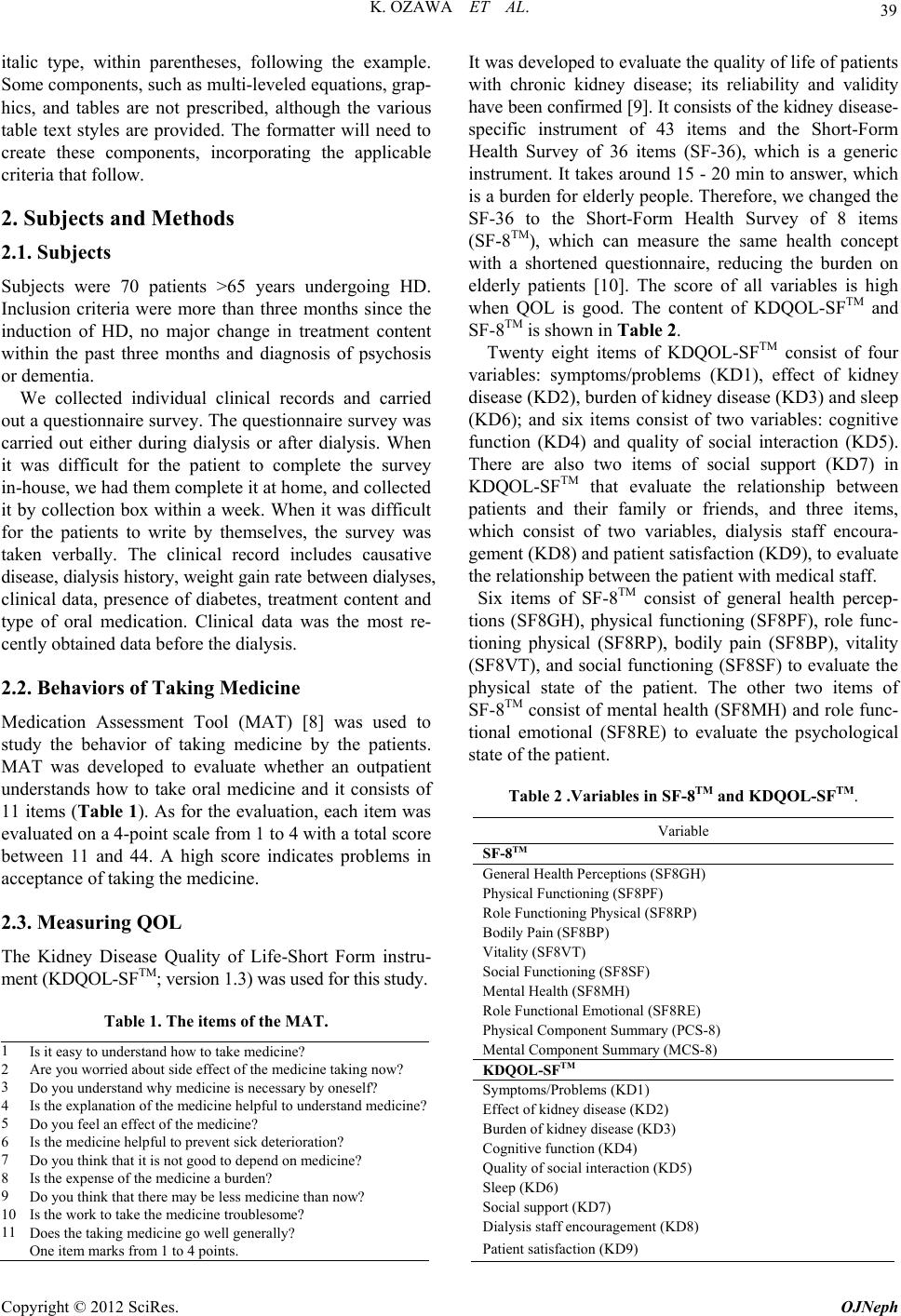 K. OZAWA ET AL. 39 italic type, within parentheses, following the example. Some components, such as multi-leveled equations, grap- hics, and tables are not prescribed, although the various table text styles are provided. The formatter will need to create these components, incorporating the applicable criteria that follow. 2. Subjects and Methods 2.1. Subjects Subjects were 70 patients >65 years undergoing HD. Inclusion criteria were more than three months since the induction of HD, no major change in treatment content within the past three months and diagnosis of psychosis or dementia. We collected individual clinical records and carried out a questionnaire survey. The questionnaire survey was carried out either during dialysis or after dialysis. When it was difficult for the patient to complete the survey in-house, we had them complete it at home, and collected it by collection box within a week. When it was difficult for the patients to write by themselves, the survey was taken verbally. The clinical record includes causative disease, dialysis history, weight gain rate between dialyses, clinical data, presence of diabetes, treatment content and type of oral medication. Clinical data was the most re- cently obtained data before the dialysis. 2.2. Behaviors of Taking Medicine Medication Assessment Tool (MAT) [8] was used to study the behavior of taking medicine by the patients. MAT was developed to evaluate whether an outpatient understands how to take oral medicine and it consists of 11 items (Table 1). As for the evaluation, each item was evaluated on a 4-point scale from 1 to 4 with a total score between 11 and 44. A high score indicates problems in acceptance of taking the medicine. 2.3. Measuring QOL The Kidney Disease Quality of Life-Short Form instru- ment (KDQOL-SFTM; version 1.3) was used for this study. Table 1. The items of the MAT. 1 Is it easy to understand how to take medicine? 2 Are you worried about side effect of the medicine taking now? 3 Do you understand why medicine is necessary by oneself? 4 Is the explanation of the medicine helpful to understand medicine? 5 Do you feel an effect of the medicine? 6 Is the medicine helpful to prevent sick deterioration? 7 Do you think that it is not good to depend on medicine? 8 Is the expense of the medicine a burden? 9 Do you think that there may be less medicine than now? 10 Is the work to take the medicine troublesome? 11 Does the taking medicine go well generally? One item marks from 1 to 4 points. It was developed to evaluate the quality of life of patients with chronic kidney disease; its reliability and validity have been confirmed [9]. It consists of the kidney disease- specific instrument of 43 items and the Short-Form Health Survey of 36 items (SF-36), which is a generic instrument. It takes around 15 - 20 min to answer, which is a burden for elderly people. Therefore, we changed the SF-36 to the Short-Form Health Survey of 8 items (SF-8TM), which can measure the same health concept with a shortened questionnaire, reducing the burden on elderly patients [10]. The score of all variables is high when QOL is good. The content of KDQOL-SFTM and SF-8TM is shown in Table 2. Twenty eight items of KDQOL-SFTM consist of four variables: symptoms/problems (KD1), effect of kidney disease (KD2), burden of kidney disease (KD3) and sleep (KD6); and six items consist of two variables: cognitive function (KD4) and quality of social interaction (KD5). There are also two items of social support (KD7) in KDQOL-SFTM that evaluate the relationship between patients and their family or friends, and three items, which consist of two variables, dialysis staff encoura- gement (KD8) and patient satisfaction (KD9), to evaluate the relationship between the patient with medical staff. Six items of SF-8TM consist of general health percep- tions (SF8GH), physical functioning (SF8PF), role func- tioning physical (SF8RP), bodily pain (SF8BP), vitality (SF8VT), and social functioning (SF8SF) to evaluate the physical state of the patient. The other two items of SF-8TM consist of mental health (SF8MH) and role func- tional emotional (SF8RE) to evaluate the psychological state of the patient. Table 2 .Variables in SF-8TM and KDQOL-SFTM. Variable SF-8TM General Health Perceptions (SF8GH) Physical Functioning (SF8PF) Role Functioning Physical (SF8RP) Bodily Pain (SF8BP) Vitality (SF8VT) Social Functioning (SF8SF) Mental Health (SF8MH) Role Functional Emotional (SF8RE) Physical Component Summary (PCS-8) Mental Component Summary (MCS-8) KDQOL-SFTM Symptoms/Problems (KD1) Effect of kidney disease (KD2) Burden of kidney disease (KD3) Cognitive function (KD4) Quality of social interaction (KD5) Sleep (KD6) Social support (KD7) Dialysis staff encouragement (KD8) Patient satisfaction (KD9) Copyright © 2012 SciRes. OJNe ph 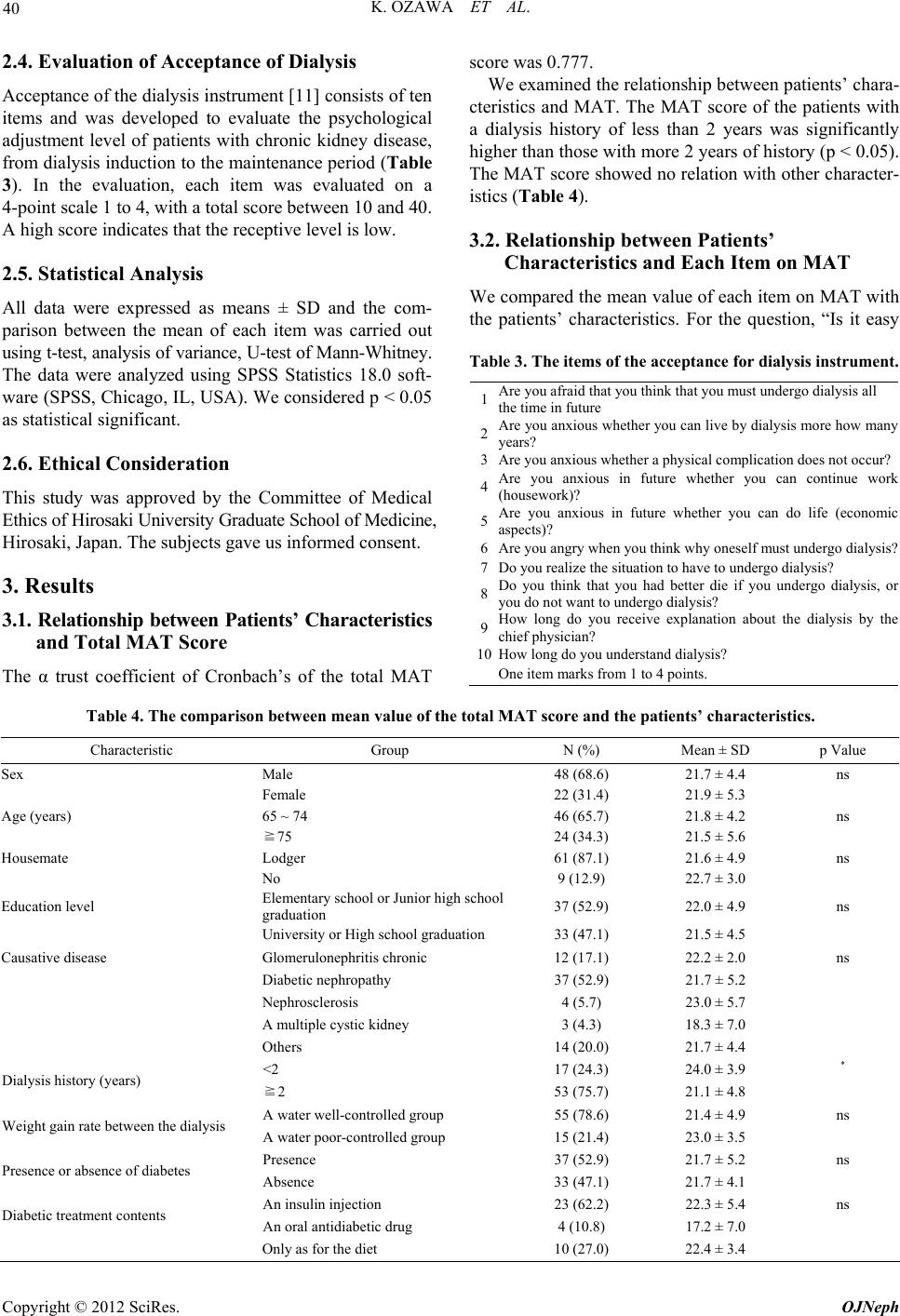 K. OZAWA ET AL. Copyright © 2012 SciRes. OJNe ph 40 2.4. Evaluation of Acceptance of Dialysis Acceptance of the dialysis instrument [11] consists of ten items and was developed to evaluate the psychological adjustment level of patients with chronic kidney disease, from dialysis induction to the maintenance period (Table 3). In the evaluation, each item was evaluated on a 4-point scale 1 to 4, with a total score between 10 and 40. A high score indicates that the receptive level is low. 2.5. Statistical Analysis All data were expressed as means ± SD and the com- parison between the mean of each item was carried out using t-test, analysis of variance, U-test of Mann-Whitney. The data were analyzed using SPSS Statistics 18.0 soft- ware (SPSS, Chicago, IL, USA). We considered p < 0.05 as statistical significant. 2.6. Ethical Consideration This study was approved by the Committee of Medical Ethics of Hirosaki University Graduate School of Medicine, Hirosaki, Japan. The subjects gave us informed consent. 3. Results 3.1. Relationship between Patients’ Characteristics and Total MAT Score The α trust coefficient of Cronbach’s of the total MAT score was 0.777. We examined the relationship between patients’ chara- cteristics and MAT. The MAT score of the patients with a dialysis history of less than 2 years was significantly higher than those with more 2 years of history (p < 0.05). The MAT score showed no relation with other character- istics (Table 4). 3.2. Relationship between Patients’ Characteristics and Each Item on MAT We compared the mean value of each item on MAT with the patients’ characteristics. For the question, “Is it easy Table 3. The items of the acceptance for dialysis instrument. 1Are you afraid that you think that you must undergo dialysis all the time in future 2Are you anxious whether you can live by dialysis more how many years? 3Are you anxious whether a physical complication does not occur? 4Are you anxious in future whether you can continue wor k (housework)? 5Are you anxious in future whether you can do life (economic aspects)? 6Are you angry when you think why oneself must undergo dialysis? 7Do you realize the situation to have to undergo dialysis? 8Do you think that you had better die if you undergo dialysis, o r you do not want to undergo dialysis? 9How long do you receive explanation about the dialysis by the chief physician? 10How long do you understand dialysis? One item marks from 1 to 4 points. Table 4. The comparison between mean value of the total MAT score and the patients’ characteristics. Characteristic Group N (%) Mean ± SD p Value Sex Male 48 (68.6) 21.7 ± 4.4 ns Female 22 (31.4) 21.9 ± 5.3 Age (years) 65 ~ 74 46 (65.7) 21.8 ± 4.2 ns ≧75 24 (34.3) 21.5 ± 5.6 Housemate Lodger 61 (87.1) 21.6 ± 4.9 ns No 9 (12.9) 22.7 ± 3.0 Education level Elementary school or Junior high school graduation 37 (52.9) 22.0 ± 4.9 ns University or High school graduation 33 (47.1) 21.5 ± 4.5 Causative disease Glomerulonephritis chronic 12 (17.1) 22.2 ± 2.0 ns Diabetic nephropathy 37 (52.9) 21.7 ± 5.2 Nephrosclerosis 4 (5.7) 23.0 ± 5.7 A multiple cystic kidney 3 (4.3) 18.3 ± 7.0 Others 14 (20.0) 21.7 ± 4.4 <2 17 (24.3) 24.0 ± 3.9 * Dialysis history (years) ≧2 53 (75.7) 21.1 ± 4.8 A water well-controlled group 55 (78.6) 21.4 ± 4.9 ns Weight gain rate between the dialysis A water poor-controlled group 15 (21.4) 23.0 ± 3.5 Presence 37 (52.9) 21.7 ± 5.2 ns Presence or absence of diabetes Absence 33 (47.1) 21.7 ± 4.1 An insulin injection 23 (62.2) 22.3 ± 5.4 ns Diabetic treatment contents An oral antidiabetic drug 4 (10.8) 17.2 ± 7.0 Only as for the diet 10 (27.0) 22.4 ± 3.4 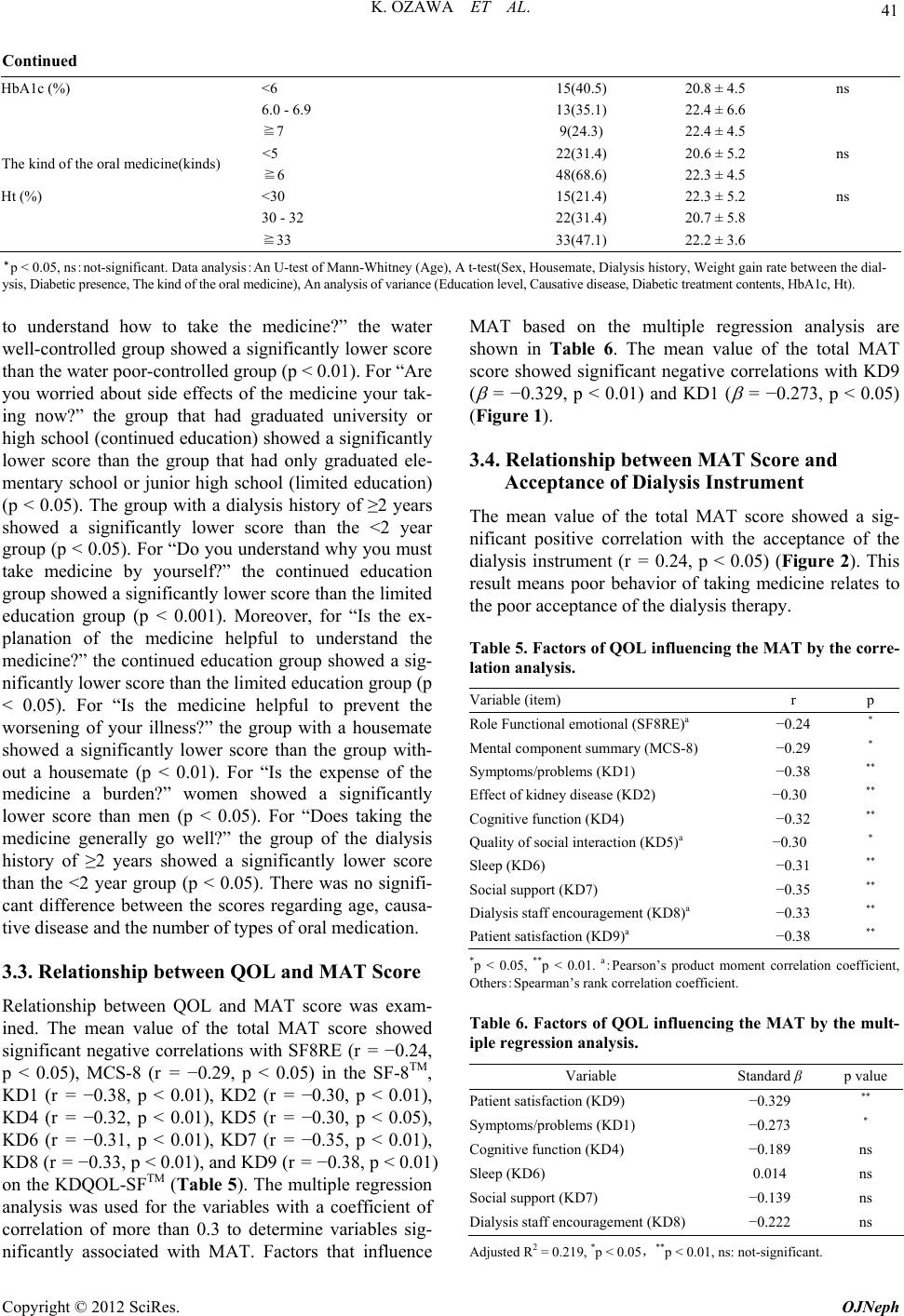 K. OZAWA ET AL. 41 Continued HbA1c (%) <6 15(40.5) 20.8 ± 4.5 ns 6.0 - 6.9 13(35.1) 22.4 ± 6.6 ≧7 9(24.3) 22.4 ± 4.5 <5 22(31.4) 20.6 ± 5.2 ns The kind of the oral medicine(kinds) ≧6 48(68.6) 22.3 ± 4.5 Ht (%) <30 15(21.4) 22.3 ± 5.2 ns 30 - 32 22(31.4) 20.7 ± 5.8 ≧33 33(47.1) 22.2 ± 3.6 *p < 0.05, ns:not-significant. Data analysis:An U-test of Mann-Whitney (Age), A t-test(Sex, Housemate, Dialysis history, Weight gain rate between the dial- ysis, Diabetic presence, The kind of the oral medicine), An analysis of variance (Education level, Causative disease, Diabetic treatment contents, HbA1c, Ht). to understand how to take the medicine?” the water well-controlled group showed a significantly lower score than the water poor-controlled group (p < 0.01). For “Are you worried about side effects of the medicine your tak- ing now?” the group that had graduated university or high school (continued education) showed a significantly lower score than the group that had only graduated ele- mentary school or junior high school (limited education) (p < 0.05). The group with a dialysis history of ≥2 years showed a significantly lower score than the <2 year group (p < 0.05). For “Do you understand why you must take medicine by yourself?” the continued education group showed a significantly lower score than the limited education group (p < 0.001). Moreover, for “Is the ex- planation of the medicine helpful to understand the medicine?” the continued education group showed a sig- nificantly lower score than the limited education group (p < 0.05). For “Is the medicine helpful to prevent the worsening of your illness?” the group with a housemate showed a significantly lower score than the group with- out a housemate (p < 0.01). For “Is the expense of the medicine a burden?” women showed a significantly lower score than men (p < 0.05). For “Does taking the medicine generally go well?” the group of the dialysis history of ≥2 years showed a significantly lower score than the <2 year group (p < 0.05). There was no signifi- cant difference between the scores regarding age, causa- tive disease and the number of types of oral medication. 3.3. Relationship between QOL and MAT Score Relationship between QOL and MAT score was exam- ined. The mean value of the total MAT score showed significant negative correlations with SF8RE (r = −0.24, p < 0.05), MCS-8 (r = −0.29, p < 0.05) in the SF-8TM, KD1 (r = −0.38, p < 0.01), KD2 (r = −0.30, p < 0.01), KD4 (r = −0.32, p < 0.01), KD5 (r = −0.30, p < 0.05), KD6 (r = −0.31, p < 0.01), KD7 (r = −0.35, p < 0.01), KD8 (r = −0.33, p < 0.01), and KD9 (r = −0.38, p < 0.01) on the KDQOL-SFTM (Table 5). The multiple regression analysis was used for the variables with a coefficient of correlation of more than 0.3 to determine variables sig- nificantly associated with MAT. Factors that influence MAT based on the multiple regression analysis are shown in Table 6. The mean value of the total MAT score showed significant negative correlations with KD9 ( = −0.329, p < 0.01) and KD1 ( = −0.273, p < 0.05) (Figure 1). 3.4. Relationship between MAT Score and Acceptance of Dialysis Instrument The mean value of the total MAT score showed a sig- nificant positive correlation with the acceptance of the dialysis instrument (r = 0.24, p < 0.05) (Figure 2). This result means poor behavior of taking medicine relates to the poor acceptance of the dialysis therapy. Table 5. Factors of QOL influencing the MAT by the corre- lation analysis. Variable (item) r p Role Functional emotional (SF8RE)a−0.24 * Mental component summary (MCS-8)−0.29 * Symptoms/problems (KD1)−0.38 ** Effect of kidney disease (KD2)−0.30 ** Cognitive function (KD4)−0.32 ** Quality of social interaction (KD5)a−0.30 * Sleep (KD6)−0.31 ** Social support (KD7)−0.35 ** Dialysis staff encouragement (KD8)a−0.33 ** Patient satisfaction (KD9)a−0.38 ** *p < 0.05, **p < 0.01. a:Pearson’s product moment correlation coefficient, Others:Spearman’s rank correlation coefficient. Table 6. Factors of QOL influencing the MAT by the mult- iple regression analysis. Variable Standard β p value Patient satisfaction (KD9) −0.329 ** Symptoms/problems (KD1) −0.273 * Cognitive function (KD4) −0.189 ns Sleep (KD6) 0.014 ns Social support (KD7) −0.139 ns Dialysis staff encouragement (KD8) −0.222 ns Adjusted R2 = 0.219, *p < 0.05,**p < 0.01, ns: not-significant. Copyright © 2012 SciRes. OJNe ph 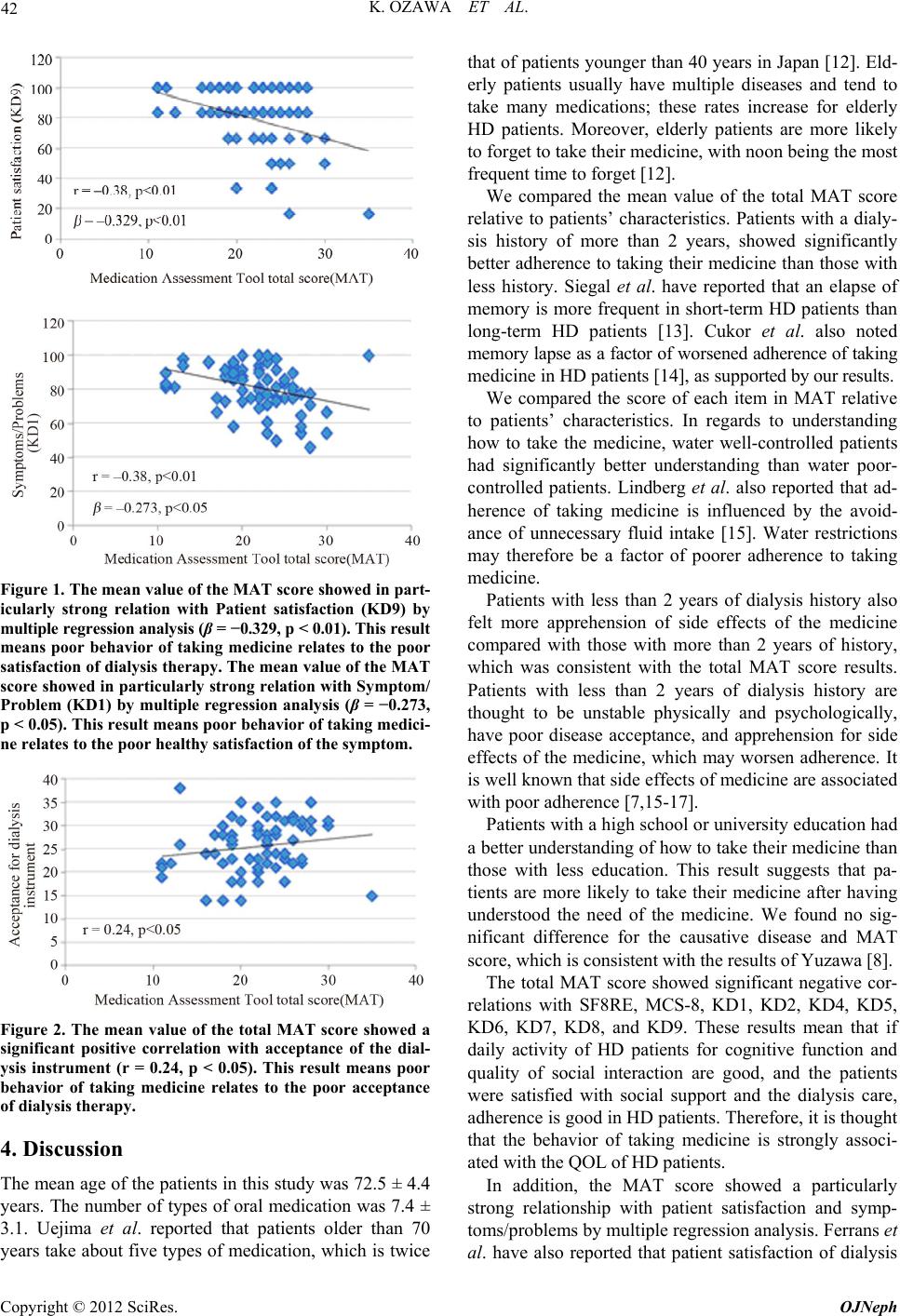 K. OZAWA ET AL. 42 Figure 1. The mean value of the MAT score showed in part- icularly strong relation with Patient satisfaction (KD9) by multiple regression analysis (β = −0.329, p < 0.01). This result means poor behavior of taking medicine relates to the poor satisfaction of dialysis therapy. The mean value of the MAT score showed in particularly strong relation with Symptom/ Problem (KD1) by multiple regression analysis (β = −0.273, p < 0.05). This result means poor behavior of taking medici- ne relates to the poor healthy satisfaction of the symptom. Figure 2. The mean value of the total MAT score showed a significant positive correlation with acceptance of the dial- ysis instrument (r = 0.24, p < 0.05). This result means poor behavior of taking medicine relates to the poor acceptance of dialysis therapy. 4. Discussion The mean age of the patients in this study was 72.5 ± 4.4 years. The number of types of oral medication was 7.4 ± 3.1. Uejima et al. reported that patients older than 70 years take about five types of medication, which is twice that of patients younger than 40 years in Japan [12]. Eld- erly patients usually have multiple diseases and tend to take many medications; these rates increase for elderly HD patients. Moreover, elderly patients are more likely to forget to take their medicine, with noon being the most frequent time to forget [12]. We compared the mean value of the total MAT score relative to patients’ characteristics. Patients with a dialy- sis history of more than 2 years, showed significantly better adherence to taking their medicine than those with less history. Siegal et al. have reported that an elapse of memory is more frequent in short-term HD patients than long-term HD patients [13]. Cukor et al. also noted memory lapse as a factor of worsened adherence of taking medicine in HD patients [14], as supported by our results. We compared the score of each item in MAT relative to patients’ characteristics. In regards to understanding how to take the medicine, water well-controlled patients had significantly better understanding than water poor- controlled patients. Lindberg et al. also reported that ad- herence of taking medicine is influenced by the avoid- ance of unnecessary fluid intake [15]. Water restrictions may therefore be a factor of poorer adherence to taking medicine. Patients with less than 2 years of dialysis history also felt more apprehension of side effects of the medicine compared with those with more than 2 years of history, which was consistent with the total MAT score results. Patients with less than 2 years of dialysis history are thought to be unstable physically and psychologically, have poor disease acceptance, and apprehension for side effects of the medicine, which may worsen adherence. It is well known that side effects of medicine are associated with poor adherence [7,15-17]. Patients with a high school or university education had a better understanding of how to take their medicine than those with less education. This result suggests that pa- tients are more likely to take their medicine after having understood the need of the medicine. We found no sig- nificant difference for the causative disease and MAT score, which is consistent with the results of Yuzawa [8]. The total MAT score showed significant negative cor- relations with SF8RE, MCS-8, KD1, KD2, KD4, KD5, KD6, KD7, KD8, and KD9. These results mean that if daily activity of HD patients for cognitive function and quality of social interaction are good, and the patients were satisfied with social support and the dialysis care, adherence is good in HD patients. Therefore, it is thought that the behavior of taking medicine is strongly associ- ated with the QOL of HD patients. In addition, the MAT score showed a particularly strong relationship with patient satisfaction and symp- toms/problems by multiple regression analysis. Ferrans et al. have also reported that patient satisfaction of dialysis Copyright © 2012 SciRes. OJNe ph 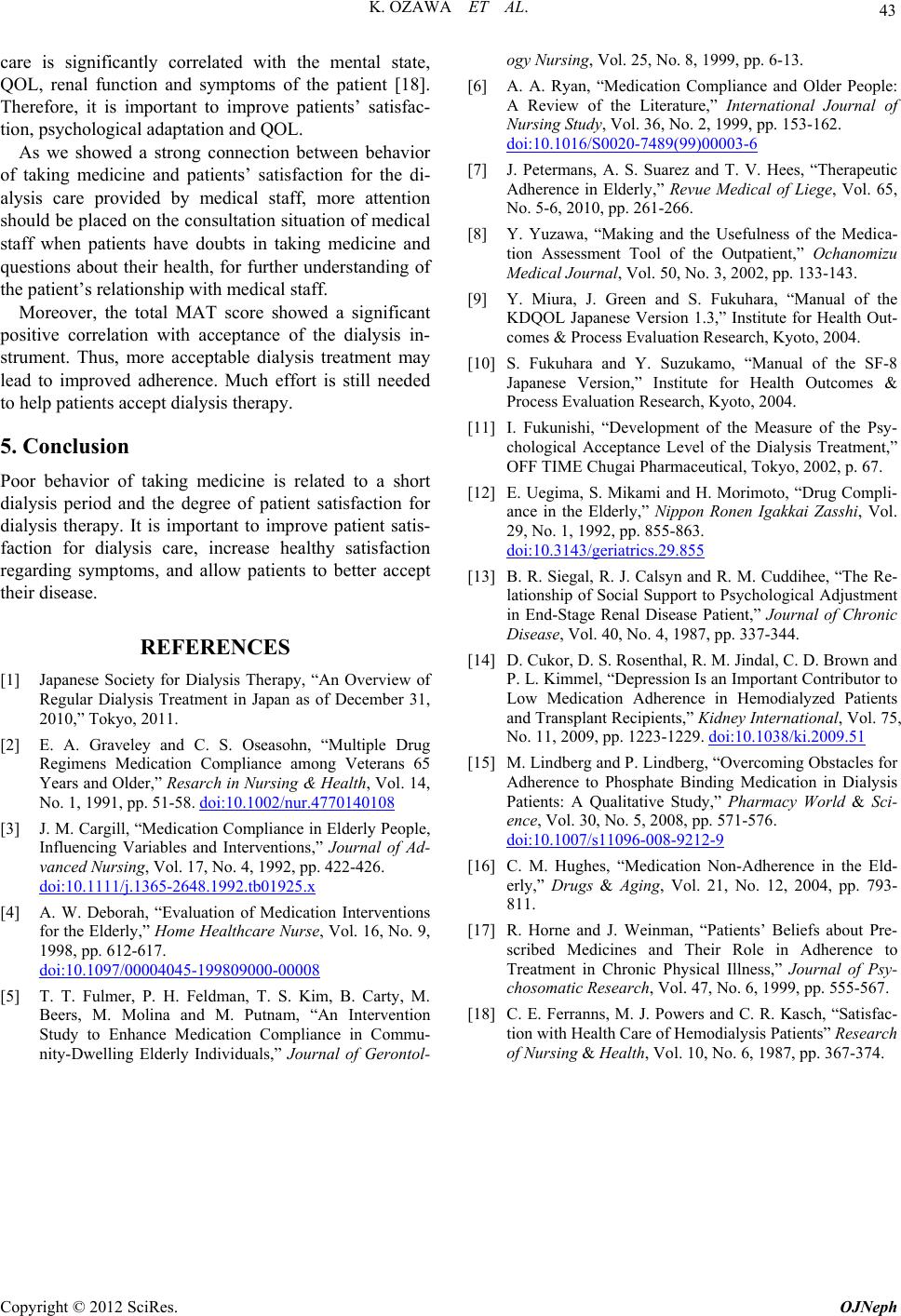 K. OZAWA ET AL. Copyright © 2012 SciRes. OJNe ph 43 care is significantly correlated with the mental state, QOL, renal function and symptoms of the patient [18]. Therefore, it is important to improve patients’ satisfac- tion, psychological adaptation and QOL. As we showed a strong connection between behavior of taking medicine and patients’ satisfaction for the di- alysis care provided by medical staff, more attention should be placed on the consultation situation of medical staff when patients have doubts in taking medicine and questions about their health, for further understanding of the patient’s relationship with medical staff. Moreover, the total MAT score showed a significant positive correlation with acceptance of the dialysis in- strument. Thus, more acceptable dialysis treatment may lead to improved adherence. Much effort is still needed to help patients accept dialysis therapy. 5. Conclusion Poor behavior of taking medicine is related to a short dialysis period and the degree of patient satisfaction for dialysis therapy. It is important to improve patient satis- faction for dialysis care, increase healthy satisfaction regarding symptoms, and allow patients to better accept their disease. REFERENCES [1] Japanese Society for Dialysis Therapy, “An Overview of Regular Dialysis Treatment in Japan as of December 31, 2010,” Tokyo, 2011. [2] E. A. Graveley and C. S. Oseasohn, “Multiple Drug Regimens Medication Compliance among Veterans 65 Years and Older,” Resarch in Nursing & Health, Vol. 14, No. 1, 1991, pp. 51-58. doi:10.1002/nur.4770140108 [3] J. M. Cargill, “Medication Compliance in Elderly People, Influencing Variables and Interventions,” Journal of Ad- vanced Nursing, Vol. 17, No. 4, 1992, pp. 422-426. doi:10.1111/j.1365-2648.1992.tb01925.x [4] A. W. Deborah, “Evaluation of Medication Interventions for the Elderly,” Home Healthcare Nurse, Vol. 16, No. 9, 1998, pp. 612-617. doi:10.1097/00004045-199809000-00008 [5] T. T. Fulmer, P. H. Feldman, T. S. Kim, B. Carty, M. Beers, M. Molina and M. Putnam, “An Intervention Study to Enhance Medication Compliance in Commu- nity-Dwelling Elderly Individuals,” Journal of Gerontol- ogy Nursing, Vol. 25, No. 8, 1999, pp. 6-13. [6] A. A. Ryan, “Medication Compliance and Older People: A Review of the Literature,” International Journal of Nursing Study, Vol. 36, No. 2, 1999, pp. 153-162. doi:10.1016/S0020-7489(99)00003-6 [7] J. Petermans, A. S. Suarez and T. V. Hees, “Therapeutic Adherence in Elderly,” Revue Medical of Liege, Vol. 65, No. 5-6, 2010, pp. 261-266. [8] Y. Yuzawa, “Making and the Usefulness of the Medica- tion Assessment Tool of the Outpatient,” Ochanomizu Medical Journal, Vol. 50, No. 3, 2002, pp. 133-143. [9] Y. Miura, J. Green and S. Fukuhara, “Manual of the KDQOL Japanese Version 1.3,” Institute for Health Out- comes & Process Evaluation Research, Kyoto, 2004. [10] S. Fukuhara and Y. Suzukamo, “Manual of the SF-8 Japanese Version,” Institute for Health Outcomes & Process Evaluation Research, Kyoto, 2004. [11] I. Fukunishi, “Development of the Measure of the Psy- chological Acceptance Level of the Dialysis Treatment,” OFF TIME Chugai Pharmaceutical, Tokyo, 2002, p. 67. [12] E. Uegima, S. Mikami and H. Morimoto, “Drug Compli- ance in the Elderly,” Nippon Ronen Igakkai Zasshi, Vol. 29, No. 1, 1992, pp. 855-863. doi:10.3143/geriatrics.29.855 [13] B. R. Siegal, R. J. Calsyn and R. M. Cuddihee, “The Re- lationship of Social Support to Psychological Adjustment in End-Stage Renal Disease Patient,” Journal of Chronic Disease, Vol. 40, No. 4, 1987, pp. 337-344. [14] D. Cukor, D. S. Rosenthal, R. M. Jindal, C. D. Brown and P. L. Kimmel, “Depression Is an Important Contributor to Low Medication Adherence in Hemodialyzed Patients and Transplant Recipients,” Kidney International, Vol. 75, No. 11, 2009, pp. 1223-1229. doi:10.1038/ki.2009.51 [15] M. Lindberg and P. Lindberg, “Overcoming Obstacles for Adherence to Phosphate Binding Medication in Dialysis Patients: A Qualitative Study,” Pharmacy World & Sci- ence, Vol. 30, No. 5, 2008, pp. 571-576. doi:10.1007/s11096-008-9212-9 [16] C. M. Hughes, “Medication Non-Adherence in the Eld- erly,” Drugs & Aging, Vol. 21, No. 12, 2004, pp. 793- 811. [17] R. Horne and J. Weinman, “Patients’ Beliefs about Pre- scribed Medicines and Their Role in Adherence to Treatment in Chronic Physical Illness,” Journal of Psy- chosomatic Research, Vol. 47, No. 6, 1999, pp. 555-567. [18] C. E. Ferranns, M. J. Powers and C. R. Kasch, “Satisfac- tion with Health Care of Hemodialysis Patients” Research of Nursing & Health, Vol. 10, No. 6, 1987, pp. 367-374. |