

Paper Menu >>
Journal Menu >>
 Journal of Sustainable Bioenergy Systems, 2012, 2, 37-42 http://dx.doi.org/10.4236/jsbs.2012.23006 Published Online September 2012 (http://www.SciRP.org/journal/jsbs) Assessing the Availability of Land and Water Resources for Production of Energy Crops in Southern Africa Kelebogile B. Mfundisi Land Management Department, Polytechnic of Namibia, Windhoek, Namibia Email: [email protected], [email protected] Received July 7, 2012; revised August 7, 2012; accepted August 20, 2012 ABSTRACT Production of energy crops is perceived as a potential source of alternative energy for petroleum oil. However, it is cru- cial to ensure that there is adequate land and water available for production of energy crops before indulging into the business of producing such crops. This p aper assesses the availability of land and water resources for production of en- ergy crops in the SADC region using landuse/landcover data, hydrological and meteorological data, as well as socio- economic data. It is found that Botswana and Mozambique have large amounts of bushland that can be used for expan- sion of agricultural land including production of energy crops. Zimbabwe has the highest amount of land under cultiva- tion, which makes it difficult for the country to expand its agricultural land. However, land reform processes taking place in Zimbabwe provides a good opportunity to diversify agricultural production including reallocation of farms for production of energy crops. Mozambique has favorable rainfall for production of maize and sugarcane, whereas Zim- babwe can explore growing Jatropha on degraded land and use irrigation for cultivation of sugarcane. High frequency of crop failure in Botswana makes it difficult to grow maize or sugarcane as energy crop. The country can promote production of sweet sorghum, which is traditionally grown by small scale farmers, and explore production of Jatropha in degraded and desert land. A regional approach to address land and water requirements for production of energy crops is considered important as compared to planning for production in each country as the constraints and potential of each country can be fully recognized. More detailed country specific research is needed on the production of the specified energy crops to ensure sustainab ility of the production systems. Keywords: Energy Crops; Fossil Fuels; Landuse/Landcover; Regional Approach; Water Resources 1. Introduction Affordable energy services are among the essential in- gredients of economic development [1]. This could help in eradication of extreme poverty and ensuring environ- mental sustainability in developing countries as called for by the United Nations Millennium Development Goals. Meeting these essential energy needs economically and sustainably requires a balanced energy portfolio that is suited to the economic, social, and resource conditio ns of individual countries and regions [2]. Currently, the major source of energy for world economies is petroleum oil, which has become expensive over the last three decades [3]. Although oil importing African countries recorded positive overall GDP growth in the past few years, there are mounting internal and external imbalances. Mount- ing budget deficits and inflationary pressure in oil im- porting African countries disproportionately affect the poor because of lower employment prospects and lack of safety nets [4]. Additionally, petroleum oil is a major source of carbond ioxide, a greenhouse g as of global con - cern in climate change debates [5]. Therefore, an a lterna- tive source of energy such as bioenergy produced from energy crops provides an affordable option for develop- ing countries, especially those in Africa where its poten- tial has not been fully explored. Energy crops are a source of renewable energy with reduced green house gas emis- sions as compared to fossil fuels. Countries in southern Africa are buying into the idea of producing energy crops due to both international pressures and the increased en- ergy dem a n ds within them. Bioenergy is energy produced from organic matter or biomass [3,5]. This can be in the form of bioethanol or biodiesel. Bioethanol is fuel from distilled fermented sugars and starches, and biodiesel is methyl or ethyl ester of fatty acids made from virgin or used vegetable oils [5,6]. For example, Jatropha curcus is a large fast- growing, drought resistant perennial shrub that grows in tropical countries mainly in hedgerows. The seeds yield for Jatropha ranges from 0.5 - 12 tones/ha/year depend- ing on soils, nutrient and rainfall conditions [7]. It can yield up to 2700 kilograms of raw oil per hectare. Pro- jects to demonstrate the possibilities of producing bio- C opyright © 2012 SciRes. JSBS 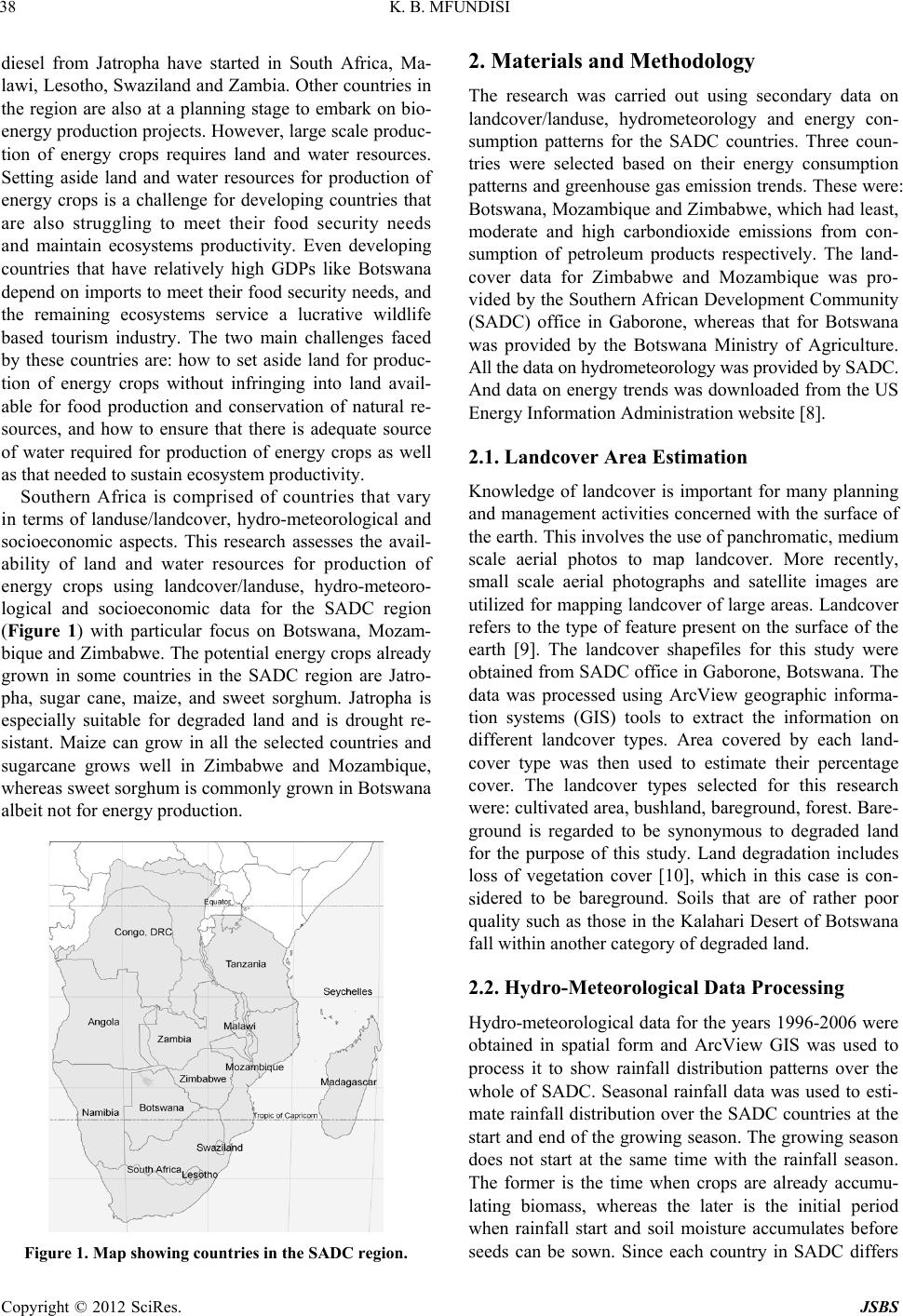 K. B. MFUNDISI 38 diesel from Jatropha have started in South Africa, Ma- lawi, Lesotho, Swaziland and Zambia. Other countries in the region are also at a planning stage to embark on bio- energy production projects. However, large scale produc- tion of energy crops requires land and water resources. Setting aside land and water resources for production of energy crops is a challenge for developing countries that are also struggling to meet their food security needs and maintain ecosystems productivity. Even developing countries that have relatively high GDPs like Botswana depend on imports to meet their food security needs, and the remaining ecosystems service a lucrative wildlife based tourism industry. The two main challenges faced by these countries are: how to set aside land for produc- tion of energy crops without infringing into land avail- able for food production and conservation of natural re- sources, and how to ensure that there is adequate source of water required for production of energy crops as well as that needed to sustain ecosystem productivity. Southern Africa is comprised of countries that vary in terms of landuse/landcover, hydro-meteorological and socioeconomic aspects. This research assesses the avail- ability of land and water resources for production of energy crops using landcover/landuse, hydro-meteoro- logical and socioeconomic data for the SADC region (Figure 1) with particular focus on Botswana, Mozam- bique and Zimbabwe. The potential energy crops already grown in some countries in the SADC region are Jatro- pha, sugar cane, maize, and sweet sorghum. Jatropha is especially suitable for degraded land and is drought re- sistant. Maize can grow in all the selected countries and sugarcane grows well in Zimbabwe and Mozambique, whereas sweet sorghum is commonly grown in Botswana albeit not for energy production. Figure 1. Map showing countries in the SADC region. 2. Materials and Methodology The research was carried out using secondary data on landcover/landuse, hydrometeorology and energy con- sumption patterns for the SADC countries. Three coun- tries were selected based on their energy consumption patterns and greenhouse gas emission trends. These were: Botswana, Mozambique and Zimbabwe, which had least, moderate and high carbondioxide emissions from con- sumption of petroleum products respectively. The land- cover data for Zimbabwe and Mozambique was pro- vid ed by the Southern African Development Community (SADC) office in Gaborone, whereas that for Botswana was provided by the Botswana Ministry of Agriculture. All the data on hydrometeorol ogy was provided by SADC. And data on energy trends was downloaded from the US Energy Inform at i on Administrat i on websi t e [8]. 2.1. Landcover Area Estimation Knowledge of landcover is important for many planning and management activities concerned with the surface of the earth. This involves the use of panchromatic, medium scale aerial photos to map landcover. More recently, small scale aerial photographs and satellite images are utilized for mapping land cover of large areas. Landcover refers to the type of feature present on the surface of the earth [9]. The landcover shapefiles for this study were obtained from SADC office in Gaborone, Botswana. The data was processed using ArcView geographic informa- tion systems (GIS) tools to extract the information on different landcover types. Area covered by each land- cover type was then used to estimate their percentage cover. The landcover types selected for this research were: cultivated area, bush land, b areground, forest. Bare- ground is regarded to be synonymous to degraded land for the purpose of this study. Land degradation includes loss of vegetation cover [10], which in this case is con- sidered to be bareground. Soils that are of rather poor quality such as those in the Kalahari Desert of Botswana fall within another category of degraded land. 2.2. Hydro-Meteorological Data Processing Hydro-meteoro logical data for the years 199 6-2006 were obtained in spatial form and ArcView GIS was used to process it to show rainfall distribution patterns over the whole of SADC. Seasonal rainfall data was used to esti- mate rainfall distribution over the SADC countries at the start and end of th e growing season. The growing season does not start at the same time with the rainfall season. The former is the time when crops are already accumu- lating biomass, whereas the later is the initial period when rainfall start and soil moisture accumulates before seeds can be sown. Since each country in SADC differs Copyright © 2012 SciRes. JSBS 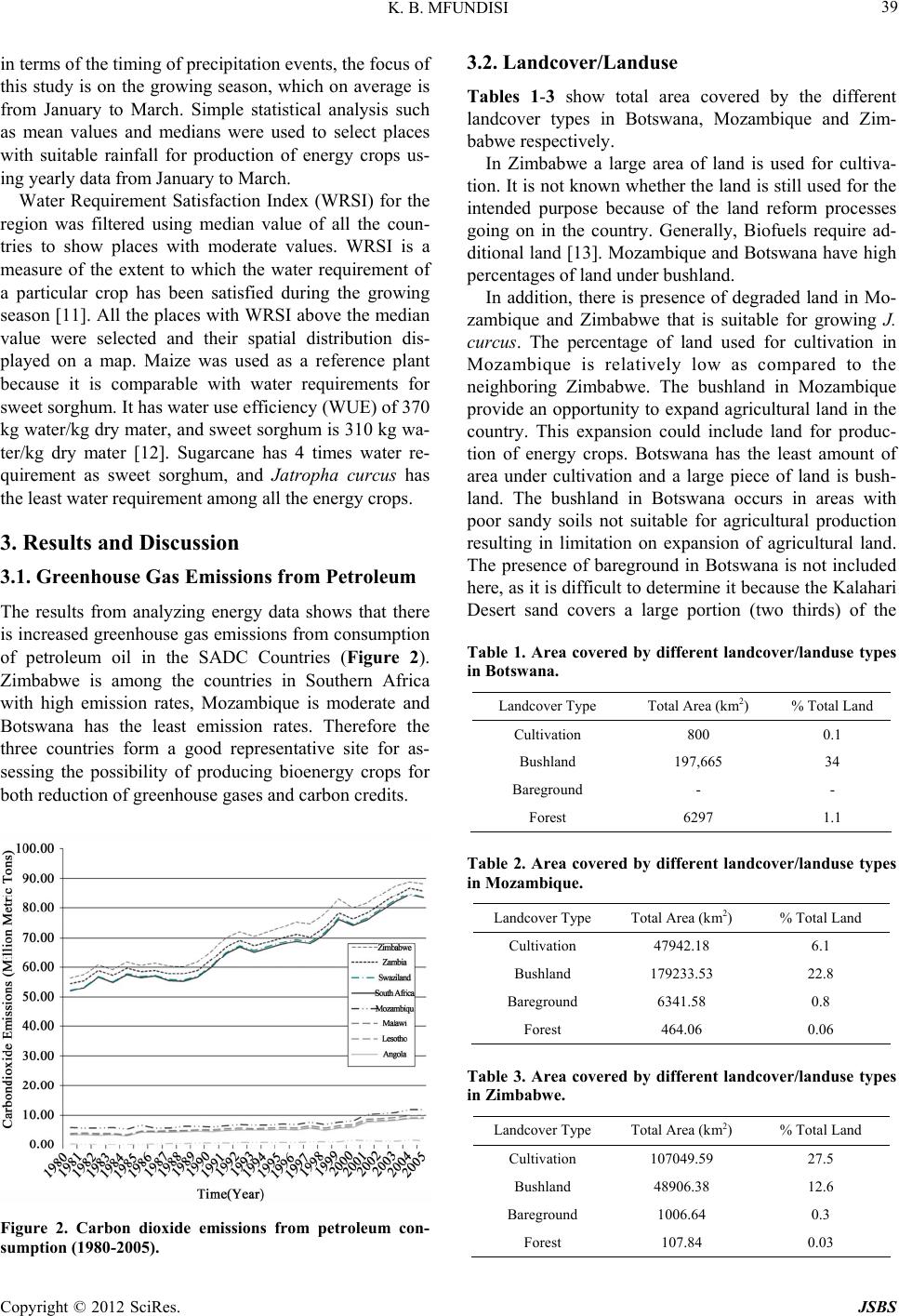 K. B. MFUNDISI 39 in terms of the timing of pr ecipitation events, the focus of this study is on the growing season, which on average is from January to March. Simple statistical analysis such as mean values and medians were used to select places with suitable rainfall for production of energy crops us- ing yearly data from January to March. Water Requirement Satisfaction Index (WRSI) for the region was filtered using median value of all the coun- tries to show places with moderate values. WRSI is a measure of the extent to which the water requirement of a particular crop has been satisfied during the growing season [11]. All the places with WRSI above the median value were selected and their spatial distribution dis- played on a map. Maize was used as a reference plant because it is comparable with water requirements for sweet sorghum. It has water use efficiency (WUE) of 370 kg water/kg dry mater, and sweet sorghum is 310 kg wa- ter/kg dry mater [12]. Sugarcane has 4 times water re- quirement as sweet sorghum, and Jatropha curcus has the least water requirement among all the energy crops. 3. Results and Discussion 3.1. Greenhouse Gas Emissions from Petroleum The results from analyzing energy data shows that there is increased greenhouse gas emissions from consumption of petroleum oil in the SADC Countries (Figure 2). Zimbabwe is among the countries in Southern Africa with high emission rates, Mozambique is moderate and Botswana has the least emission rates. Therefore the three countries form a good representative site for as- sessing the possibility of producing bioenergy crops for both reduction of greenhouse gases and carbon credits. Figure 2. Carbon dioxide emissions from petroleum con- sumption (1980-2005). 3.2. Landcover/Landuse Tables 1-3 show total area covered by the different landcover types in Botswana, Mozambique and Zim- babwe respectively. In Zimbabwe a large area of land is used for cultiva- tion. It is not known wh ether the land is still used for the intended purpose because of the land reform processes going on in the country. Generally, Biofuels require ad- ditional land [13]. Mozambique and Botswana have high percentages of l and under bus hla n d. In addition, there is presence of degraded land in Mo- zambique and Zimbabwe that is suitable for growing J. curcus. The percentage of land used for cultivation in Mozambique is relatively low as compared to the neighboring Zimbabwe. The bushland in Mozambique provide an opportunity to expand agricultural land in the country. This expansion could include land for produc- tion of energy crops. Botswana has the least amount of area under cultivation and a large piece of land is bush- land. The bushland in Botswana occurs in areas with poor sandy soils not suitable for agricultural production resulting in limitation on expansion of agricultural land. The presence of bareground in Botswana is not included here, as it is difficult to determine it because the Kalahari Desert sand covers a large portion (two thirds) of the Table 1. Area covered by different landcover/landuse types in Botswana. Landcover Type Total Area (km2) % Total Land Cultivation 800 0.1 Bushland 197,665 34 Bareground - - Forest 6297 1.1 Table 2. Area covered by different landcover/landuse types in Mozambique. Landcover Type Total Area (km2) % Total Land Cultivation 47942.18 6.1 Bushland 179233.53 22.8 Bareground 6341.58 0.8 Forest 464.06 0.06 Table 3. Area covered by different landcover/landuse types in Zimbabwe. Landcover Type Total Area (km2) % Total Land Cultivation 107049.59 27.5 Bushland 48906.38 12.6 Bareground 1006.64 0.3 Forest 107.84 0.03 Copyright © 2012 SciRes. JSBS 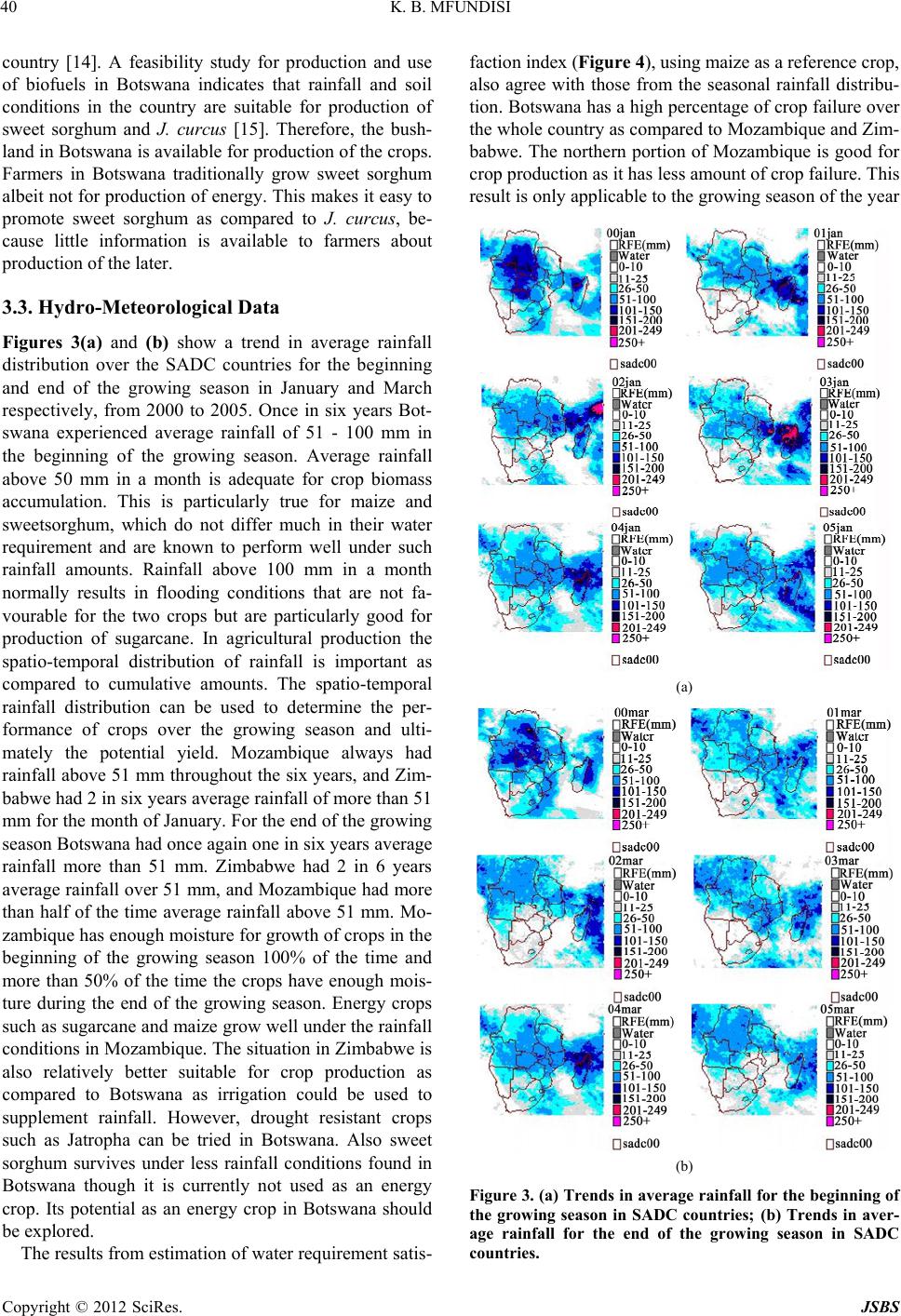 K. B. MFUNDISI 40 country [14]. A feasibility study for production and use of biofuels in Botswana indicates that rainfall and soil conditions in the country are suitable for production of sweet sorghum and J. curcus [15]. Therefore, the bush- land in Botswana is available for production of the crops. Farmers in Botswana traditionally grow sweet sorghum albeit not for production of en ergy. This makes it easy to promote sweet sorghum as compared to J. curcus, be- cause little information is available to farmers about production of the later. 3.3. Hydro-Meteorological Data Figures 3(a) and (b) show a trend in average rainfall distribution over the SADC countries for the beginning and end of the growing season in January and March respectively, from 2000 to 2005. Once in six years Bot- swana experienced average rainfall of 51 - 100 mm in the beginning of the growing season. Average rainfall above 50 mm in a month is adequate for crop biomass accumulation. This is particularly true for maize and sweetsorghum, which do not differ much in their water requirement and are known to perform well under such rainfall amounts. Rainfall above 100 mm in a month normally results in flooding conditions that are not fa- vourable for the two crops but are particularly good for production of sugarcane. In agricultural production the spatio-temporal distribution of rainfall is important as compared to cumulative amounts. The spatio-temporal rainfall distribution can be used to determine the per- formance of crops over the growing season and ulti- mately the potential yield. Mozambique always had rainfall ab ove 51 mm throughou t the six years, and Zim- babwe had 2 in six years average rainfall of more than 51 mm for the month of January. For the end of the growing season Botswana had once again one in six years average rainfall more than 51 mm. Zimbabwe had 2 in 6 years average rainfall over 51 mm, and Mozambique had more than half of the time average rainfall above 51 mm. Mo- zambique has enough moisture for growth of crops in the beginning of the growing season 100% of the time and more than 50% of the time the crops have enough mois- ture during the end of the growing season. Energy crops such as sugarcane and maize grow well under the rainfall conditions in Mozambique. The situation in Zimbabwe is also relatively better suitable for crop production as compared to Botswana as irrigation could be used to supplement rainfall. However, drought resistant crops such as Jatropha can be tried in Botswana. Also sweet sorghum survives under less rainfall conditions found in Botswana though it is currently not used as an energy crop. Its potential as an energy crop in Botswana should be explored. The results from estimation of water requirement satis- faction index (Figure 4), using maize as a reference crop, also agree with those from the seasonal rainfall distribu- tion. Botswana has a high percentage of crop failure over the whole country as compared to Mozambique and Zim- babwe. The northern portion of Mozambique is good for crop production as it has less amount of crop failure. This result is only applicab le to the growing seaso n of the year (a) (b) Figure 3. (a) Trends in average rainfall for the beginning of the growing season in SADC countries; (b) Trends in aver- age rainfall for the end of the growing season in SADC countries. Copyright © 2012 SciRes. JSBS 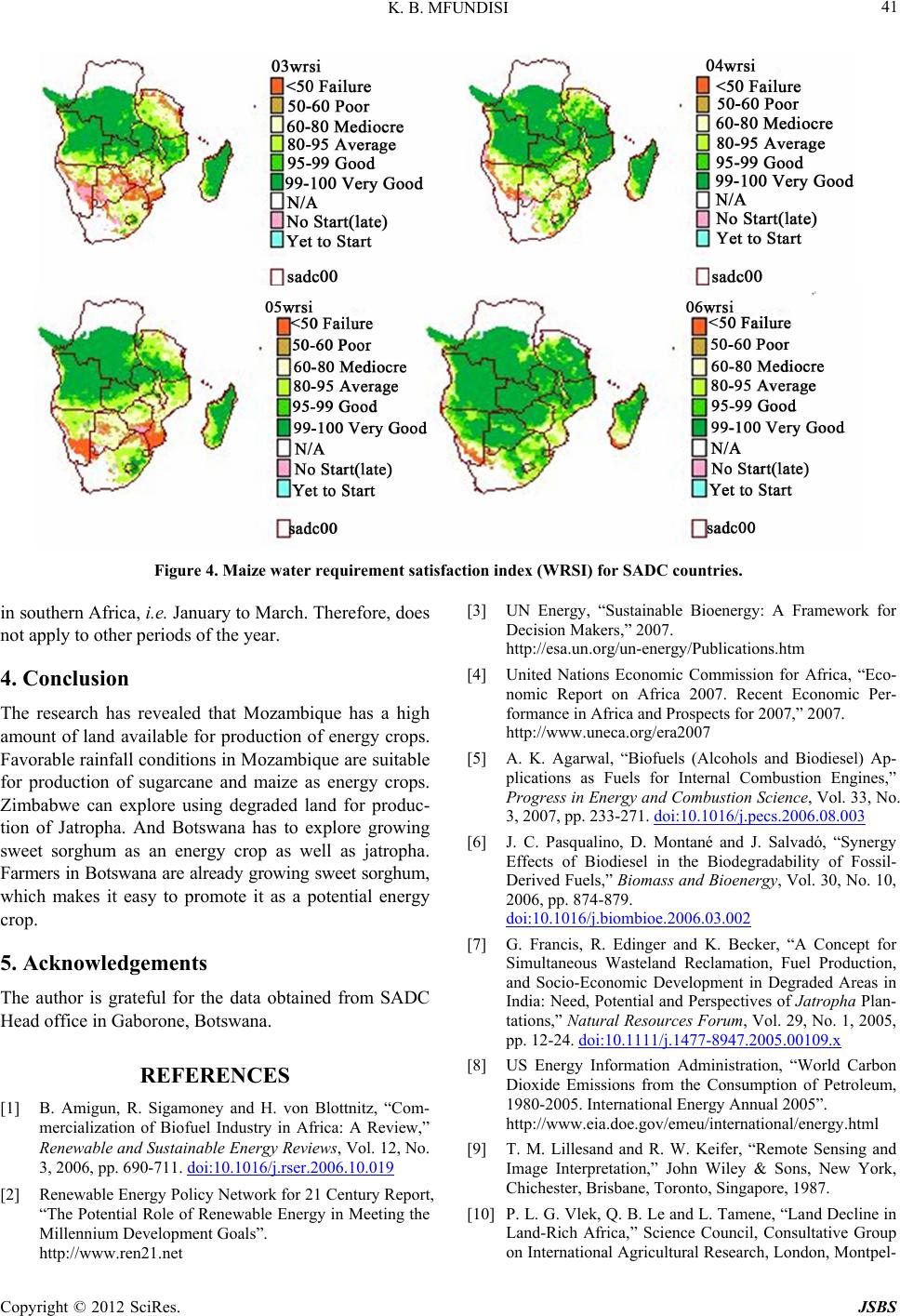 K. B. MFUNDISI Copyright © 2012 SciRes. JSBS 41 Figure 4. Maize water requirement satisfaction index (WRSI) for SADC countries. [3] UN Energy, “Sustainable Bioenergy: A Framework for Decision Makers,” 2007. http://esa.un.org/un-energy/Publications.htm in southern Africa, i.e. January to March. Therefore, does not apply to other periods of the year. 4. Conclusion [4] United Nations Economic Commission for Africa, “Eco- nomic Report on Africa 2007. Recent Economic Per- formance in Africa and Prospects for 2007,” 2007. http://www.uneca.org/era2007 The research has revealed that Mozambique has a high amount of land available for production of energy crops. Favorable rainfall conditions in Mozambique are suitable for production of sugarcane and maize as energy crops. Zimbabwe can explore using degraded land for produc- tion of Jatropha. And Botswana has to explore growing sweet sorghum as an energy crop as well as jatropha. Farmers in Botswana are already growing sweet sorghum, which makes it easy to promote it as a potential energy crop. [5] A. K. Agarwal, “Biofuels (Alcohols and Biodiesel) Ap- plications as Fuels for Internal Combustion Engines,” Progress in Energy and Combustion Science, Vol. 33, No. 3, 2007, pp. 233-271. doi:10.1016/j.pecs.2006.08.003 [6] J. C. Pasqualino, D. Montané and J. Salvadó, “Synergy Effects of Biodiesel in the Biodegradability of Fossil- Derived Fuels,” Biomass and Bioenergy, Vol. 30, No. 10, 2006, pp. 874-879. doi:10.1016/j.biombioe.2006.03.002 [7] G. Francis, R. Edinger and K. Becker, “A Concept for Simultaneous Wasteland Reclamation, Fuel Production, and Socio-Economic Development in Degraded Areas in India: Need, Potential and Perspectives of Jatropha Plan- tations,” Natural Resources Forum, Vol. 29, No. 1, 2005, pp. 12-24. doi:10.1111/j.1477-8947.2005.00109.x 5. Acknowledgements The author is grateful for the data obtained from SADC Head office in Gaborone, Botswana. [8] US Energy Information Administration, “World Carbon Dioxide Emissions from the Consumption of Petroleum, 1980-2005. International Energy Annual 2005”. http://www.eia.doe.gov/emeu/international/energy.html REFERENCES [1] B. Amigun, R. Sigamoney and H. von Blottnitz, “Com- mercialization of Biofuel Industry in Africa: A Review,” Renewable and Sustainable Energy Reviews, Vol. 12, No. 3, 2006, pp. 690-711. doi:10.1016/j.rser.2006.10.019 [9] T. M. Lillesand and R. W. Keifer, “Remote Sensing and Image Interpretation,” John Wiley & Sons, New York, Chichester, Brisbane, Toronto, Singapore, 1987. [2] Renewable Energy Policy Network for 21 Century Report, “The Potential Role of Renewable Energy in Meeting the Millennium Development Goals”. http://www.ren21.net [10] P. L. G. Vlek, Q. B. Le and L. Tamene, “Land Decline in Land-Rich Africa,” Science Council, Consultative Group on International Agricultural Research, London, Montpel-  K. B. MFUNDISI 42 lier, 2008. [11] Southern African Development Community, “Food Secu- rity Early Warning System. Agromet-Update 5,” 2007. [12] B. V. S. Reddy, A. A. Kumar and S. Ramesh, “Sweet Sorghum: A Water Saving Bio-Energy Crop,” Interna- tional Conference on Linkages between Energy and Wa- ter Management for Agriculture in Developing Countries, International Water Management Institute, The Interna- tional Crops Research Institute for the Semi-Arid Tropics Campus, Hyderabad, 29-30 January 2007, pp. 1-12. [13] C. De Fraiture, M. Giordano and Y. Liao, “Biofuels and Implications for Agricultural Water Use: Blue Impacts of Green Energy,” Water Policy, Vol. 10, No. 1, 2008, pp. 67-81. doi:10.2166/wp.2008.054 [14] Government of Botswana, “Botswana National Atlas,” Department of Surveys and Mapping, Gaborone, 2001. [15] Government of Botswana, “Report on the Feasibility Study for the Production and Use of Biofuels in Bot- swana,” Department of Energy, Gaborone, 2007. Copyright © 2012 SciRes. JSBS |