

Paper Menu >>
Journal Menu >>
 Advances in Microbiology, 2012, 2, 332-339 http://dx.doi.org/10.4236/aim.2012.23040 Published Online September 2012 (http://www.SciRP.org/journal/aim) Conversion of Carbon Dioxide to Metabolites by Clostridium acetobutylicum KCTC1037 Cultivated with Electrochemical Reducing Power Bo Young Jeon1, Il Lae Jung2, Doo Hyun Park1* 1Department of Biological Engineering, Seokyeong University, Seoul, South Korea 2Department of Radiation Biology, Environmental Radiation Research Group, Korea Atomic Energy Research Institute, Daejeon, South Korea Email: *[email protected] Received June 21, 2012; revised July 29, 2012; accepted August 6, 2012 ABSTRACT In this research, metabolic fixation of CO2 by growing cells of C. acetobutylicum cultivated with electrochemical re- ducing power was tested on the basis of the metabolites production and genes expression. In cyclic voltammetry, elec- trochemical oxidation and reduction reaction of neutral red (NR) immobilized in intact cells of C. acetobutylicum was stationarily repeated like the soluble one in the condition without CO2 but the electrochemical reduction reaction was selectively increased by addition of CO2. In electrochemical bioreactor, the modified graphite felt cathode with NR (NR-cathode) induced C. acetobutylicum to generate acetate, propionate, and butyrate from CO2 in defined medium. When H2 and CO2 were used as an electron donor and an electron acceptor, respectively, C. acetobutylicum also pro- duced the same metabolites in a defined medium. C. acetobutylicum was not grown in the defined medium without sub- stituted electron donors (H2 or electrochemical reducing power). C. acetobutylicum cultivated with electrochemical re- ducing power produced more butyrate than acetate in complex medium but produced more acetate than butyrate in de- fined medium. The genes of encoding the enzymes catalyzing acetyl-CoA in C. acetobuylicum electrochemically culti- vated in defined medium than conventionally cultivated in complex medium. These results are a clue that C. acetobu- tylicum may metabolically convert CO2 to metabolites and produce free energy from the electrochemical reducing power. Keywords: C. acetobutylicu m ; CO2-Assimilation; Electrochemical Reducing Power; Coupling Redox Reaction 1. Introduction Chemoautotrophs that regenerate reducing power and produce free energy in coupling with oxidation of H2 can more effectively fix CO2 than ammonium, nitrite, and ferrous-oxidizing bacteria because redox potential of H2/2H+ (–0.42 V vs. NHE) is lower than NAD+/NADH (–0.32 V vs. NHE) [1]. The reducing power generated in coupling with oxidation of ammonium, nitrite, and fer- rous ion can’t induce regeneration of NAD(P)H without a reverse electron transport system coupled to consump- tion of external energy [2-5]. Experimentally measured redox potential of NR is –0.325 V (vs. NHE), which is theoretically enough to mediate generation of electron- driving force from electrode to NADH [6]. Practically, electrochemically reduced NR catalyzes NADH regen- eration by non-enzymatic catalysis [7]. Theoretically, electrochemically reduced NR may be more effective in reducing power than H2 on the basis of non-enzymatic catalysis of NADH regeneration. C. acetobutylicum is a typical fermentation bacterium that produces acetate, propionate, and butyrate by the coupling redox reaction of reducing power and ace- tyl-CoA generated from metabolic oxidation of glucose, and also autotrophically produces acetyl-CoA from the coupling redox reaction of H2 and CO2 in defined me- dium with organic nitrogen nutrient [8,9]. The acetyl- CoA is metabolically oxidized to acetate coupled to re- generation of NADH or reduced to butyrate coupled to oxidation of NADH [10]. Biological production of or- ganic polymers, fatty acids and alcohols from H2 and CO2 has been studied in order to decrease global warm- ing and produce renewable energy and useful biomass [11,12]. H2 is the most effective electron donor to bacte- riologically fix CO2 on the basis of its redox potential but is less practical to apply to biological system owing to very low solubility in water and possible explosiveness in the process of use, transport and storage. The cost for production of H2 is not economical in comparison of glucose price. In order to solve the problem caused by the H2 production cost, an alternative technology has *Corresponding author. C opyright © 2012 SciRes. AiM 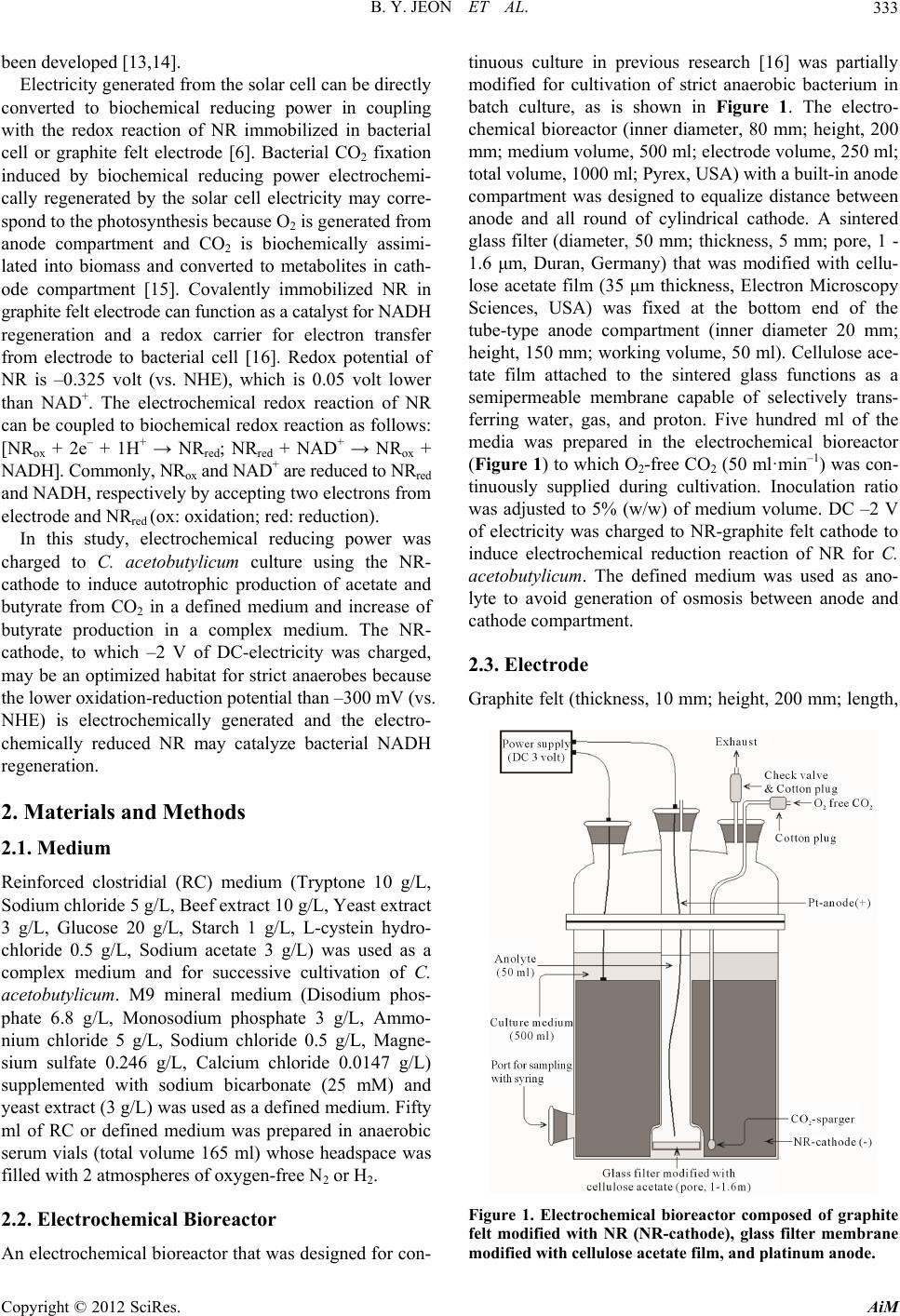 B. Y. JEON ET AL. 333 been developed [13,14]. Electricity generated from the solar cell can be directly converted to biochemical reducing power in coupling with the redox reaction of NR immobilized in bacterial cell or graphite felt electrode [6]. Bacterial CO2 fixation induced by biochemical reducing power electrochemi- cally regenerated by the solar cell electricity may corre- spond to the photosynthesis because O2 is generated from anode compartment and CO2 is biochemically assimi- lated into biomass and converted to metabolites in cath- ode compartment [15]. Covalently immobilized NR in graphite felt electrode can function as a catalyst for NADH regeneration and a redox carrier for electron transfer from electrode to bacterial cell [16]. Redox potential of NR is –0.325 volt (vs. NHE), which is 0.05 volt lower than NAD+. The electrochemical redox reaction of NR can be coupled to biochemical redox reaction as follows: [NRox + 2e– + 1H+ → NRred; NRred + NAD+ → NRox + NADH]. Commonly, NRox and NAD+ are reduced to NRred and NADH, respectively by accepting two electrons from electrode and NRred (ox: oxidation; red: reduction). In this study, electrochemical reducing power was charged to C. acetobutylicum culture using the NR- cathode to induce autotrophic production of acetate and butyrate from CO2 in a defined medium and increase of butyrate production in a complex medium. The NR- cathode, to which –2 V of DC-electricity was charged, may be an optimized habitat for strict anaerobes because the lower oxidation-reduction potential than –300 mV (vs. NHE) is electrochemically generated and the electro- chemically reduced NR may catalyze bacterial NADH regeneration. 2. Materials and Methods 2.1. Medium Reinforced clostridial (RC) medium (Tryptone 10 g/L, Sodium chloride 5 g/L, Beef extract 10 g/L, Yeast extract 3 g/L, Glucose 20 g/L, Starch 1 g/L, L-cystein hydro- chloride 0.5 g/L, Sodium acetate 3 g/L) was used as a complex medium and for successive cultivation of C. acetobutylicum. M9 mineral medium (Disodium phos- phate 6.8 g/L, Monosodium phosphate 3 g/L, Ammo- nium chloride 5 g/L, Sodium chloride 0.5 g/L, Magne- sium sulfate 0.246 g/L, Calcium chloride 0.0147 g/L) supplemented with sodium bicarbonate (25 mM) and yeast extract (3 g/L) was used as a defined medium. Fifty ml of RC or defined medium was prepared in anaerobic serum vials (total volume 165 ml) whose headspace was filled with 2 atmospheres of oxygen-free N2 or H2. 2.2. Electrochemical Bioreactor An electrochemical bioreactor that was designed for con- tinuous culture in previous research [16] was partially modified for cultivation of strict anaerobic bacterium in batch culture, as is shown in Figure 1. The electro- chemical bioreactor (inner diameter, 80 mm; height, 200 mm; medium volume, 500 ml; electrode volume, 250 ml; total volume, 1000 ml; Pyrex, USA) with a built-in anode compartment was designed to equalize distance between anode and all round of cylindrical cathode. A sintered glass filter (diameter, 50 mm; thickness, 5 mm; pore, 1 - 1.6 μm, Duran, Germany) that was modified with cellu- lose acetate film (35 μm thickness, Electron Microscopy Sciences, USA) was fixed at the bottom end of the tube-type anode compartment (inner diameter 20 mm; height, 150 mm; working volume, 50 ml). Cellulose ace- tate film attached to the sintered glass functions as a semipermeable membrane capable of selectively trans- ferring water, gas, and proton. Five hundred ml of the media was prepared in the electrochemical bioreactor (Figure 1) to which O2-free CO2 (50 ml·min–1) was con- tinuously supplied during cultivation. Inoculation ratio was adjusted to 5% (w/w) of medium volume. DC –2 V of electricity was charged to NR-graphite felt cathode to induce electrochemical reduction reaction of NR for C. acetobutylicum. The defined medium was used as ano- lyte to avoid generation of osmosis between anode and cathode compartment. 2.3. Electrode Graphite felt (thickness, 10 mm; height, 200 mm; length, Figure 1. Electrochemical bioreactor composed of graphite felt modified with NR (NR-cathode), glass filter membrane modified with cellulose acetate film, and platinum anode. Copyright © 2012 SciRes. AiM 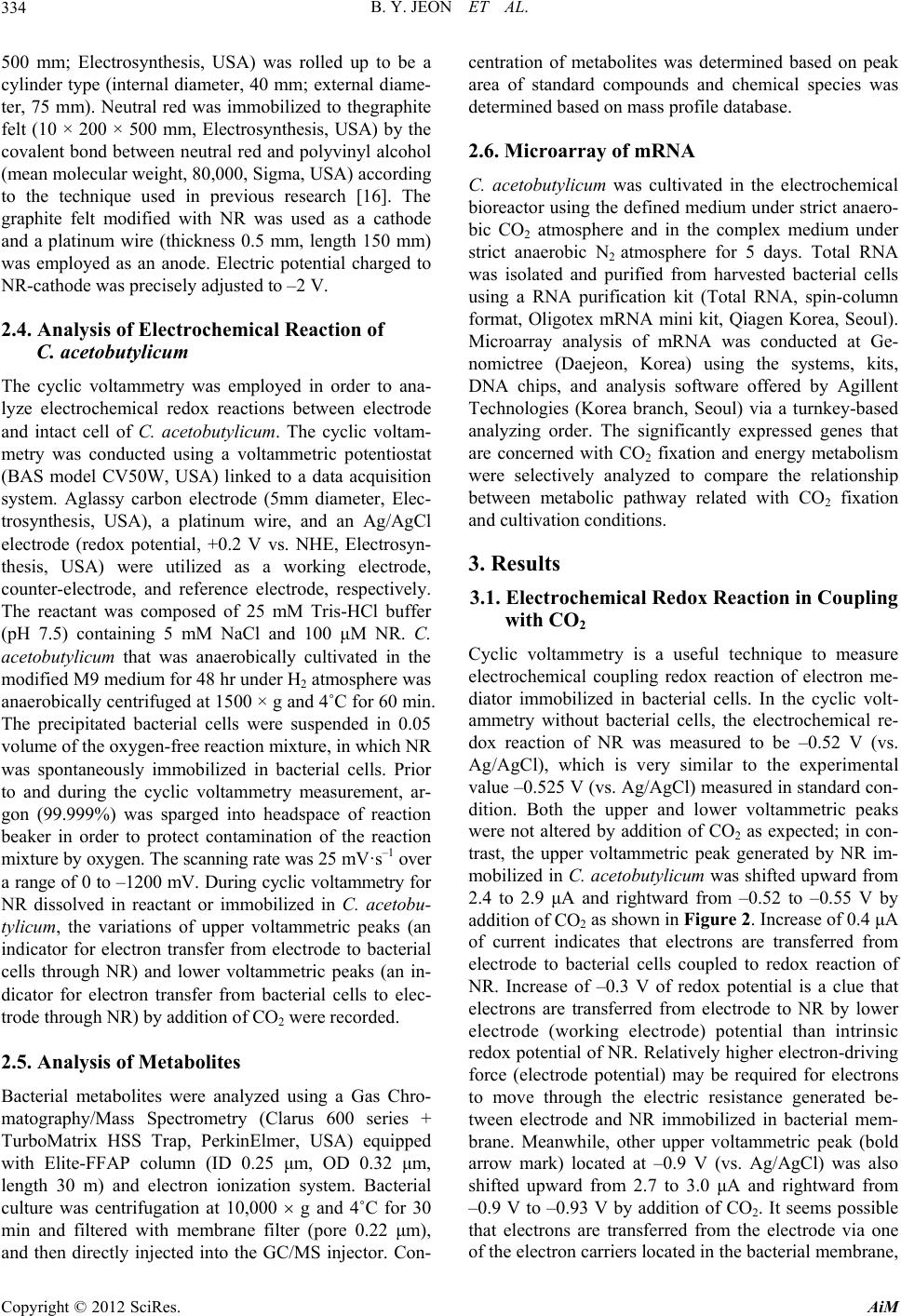 B. Y. JEON ET AL. 334 500 mm; Electrosynthesis, USA) was rolled up to be a cylinder type (internal diameter, 40 mm; external diame- ter, 75 mm). Neutral red was immobilized to thegraphite felt (10 × 200 × 500 mm, Electrosynthesis, USA) by the covalent bond between neutral red and polyvinyl alcohol (mean molecular weight, 80,000, Sigma, USA) according to the technique used in previous research [16]. The graphite felt modified with NR was used as a cathode and a platinum wire (thickness 0.5 mm, length 150 mm) was employed as an anode. Electric potential charged to NR-cathode was precisely adjusted to –2 V. 2.4. Analysis of Electrochemical Reaction of C. acetobutylicum The cyclic voltammetry was employed in order to ana- lyze electrochemical redox reactions between electrode and intact cell of C. acetobutylicum. The cyclic voltam- metry was conducted using a voltammetric potentiostat (BAS model CV50W, USA) linked to a data acquisition system. Aglassy carbon electrode (5mm diameter, Elec- trosynthesis, USA), a platinum wire, and an Ag/AgCl electrode (redox potential, +0.2 V vs. NHE, Electrosyn- thesis, USA) were utilized as a working electrode, counter-electrode, and reference electrode, respectively. The reactant was composed of 25 mM Tris-HCl buffer (pH 7.5) containing 5 mM NaCl and 100 μM NR. C. acetobutylicum that was anaerobically cultivated in the modified M9 medium for 48 hr under H2 atmosphere was anaerobically centrifuged at 1500 × g and 4˚C for 60 min. The precipitated bacterial cells were suspended in 0.05 volume of the oxygen-free reaction mixture, in which NR was spontaneously immobilized in bacterial cells. Prior to and during the cyclic voltammetry measurement, ar- gon (99.999%) was sparged into headspace of reaction beaker in order to protect contamination of the reaction mixture by oxygen. The scanning rate was 25 mV·s–1 over a range of 0 to –1200 mV. During cyclic voltammetry for NR dissolved in reactant or immobilized in C. acetobu- tylicum, the variations of upper voltammetric peaks (an indicator for electron transfer from electrode to bacterial cells through NR) and lower voltammetric peaks (an in- dicator for electron transfer from bacterial cells to elec- trode through NR) by addition of CO2 were recorded. 2.5. Analysis of Metabolites Bacterial metabolites were analyzed using a Gas Chro- matography/Mass Spectrometry (Clarus 600 series + TurboMatrix HSS Trap, PerkinElmer, USA) equipped with Elite-FFAP column (ID 0.25 μm, OD 0.32 μm, length 30 m) and electron ionization system. Bacterial culture was centrifugation at 10,000 g and 4˚C for 30 min and filtered with membrane filter (pore 0.22 μm), and then directly injected into the GC/MS injector. Con- centration of metabolites was determined based on peak area of standard compounds and chemical species was determined based on mass profile database. 2.6. Microarray of mRNA C. acetobutylicum was cultivated in the electrochemical bioreactor using the defined medium under strict anaero- bic CO2 atmosphere and in the complex medium under strict anaerobic N2 atmosphere for 5 days. Total RNA was isolated and purified from harvested bacterial cells using a RNA purification kit (Total RNA, spin-column format, Oligotex mRNA mini kit, Qiagen Korea, Seoul). Microarray analysis of mRNA was conducted at Ge- nomictree (Daejeon, Korea) using the systems, kits, DNA chips, and analysis software offered by Agillent Technologies (Korea branch, Seoul) via a turnkey-based analyzing order. The significantly expressed genes that are concerned with CO2 fixation and energy metabolism were selectively analyzed to compare the relationship between metabolic pathway related with CO2 fixation and cultivation conditions. 3. Results 3.1. Electrochemical Redox Reaction in Coupling with CO2 Cyclic voltammetry is a useful technique to measure electrochemical coupling redox reaction of electron me- diator immobilized in bacterial cells. In the cyclic volt- ammetry without bacterial cells, the electrochemical re- dox reaction of NR was measured to be –0.52 V (vs. Ag/AgCl), which is very similar to the experimental value –0.525 V (vs. Ag/AgCl) measured in standard con- dition. Both the upper and lower voltammetric peaks were not altered by addition of CO2 as expected; in con- trast, the upper voltammetric peak generated by NR im- mobilized in C. acetobutylicum was shifted upward from 2.4 to 2.9 μA and rightward from –0.52 to –0.55 V by addition of CO2 as shown in Figure 2. Increase of 0.4 μA of current indicates that electrons are transferred from electrode to bacterial cells coupled to redox reaction of NR. Increase of –0.3 V of redox potential is a clue that electrons are transferred from electrode to NR by lower electrode (working electrode) potential than intrinsic redox potential of NR. Relatively higher electron-driving force (electrode potential) may be required for electrons to move through the electric resistance generated be- tween electrode and NR immobilized in bacterial mem- brane. Meanwhile, other upper voltammetric peak (bold arrow mark) located at –0.9 V (vs. Ag/AgCl) was also shifted upward from 2.7 to 3.0 μA and rightward from –0.9 V to –0.93 V by addition of CO2. It seems possible that electrons are transferred from the electrode via one of the electron carriers located in the bacterial membrane, Copyright © 2012 SciRes. AiM 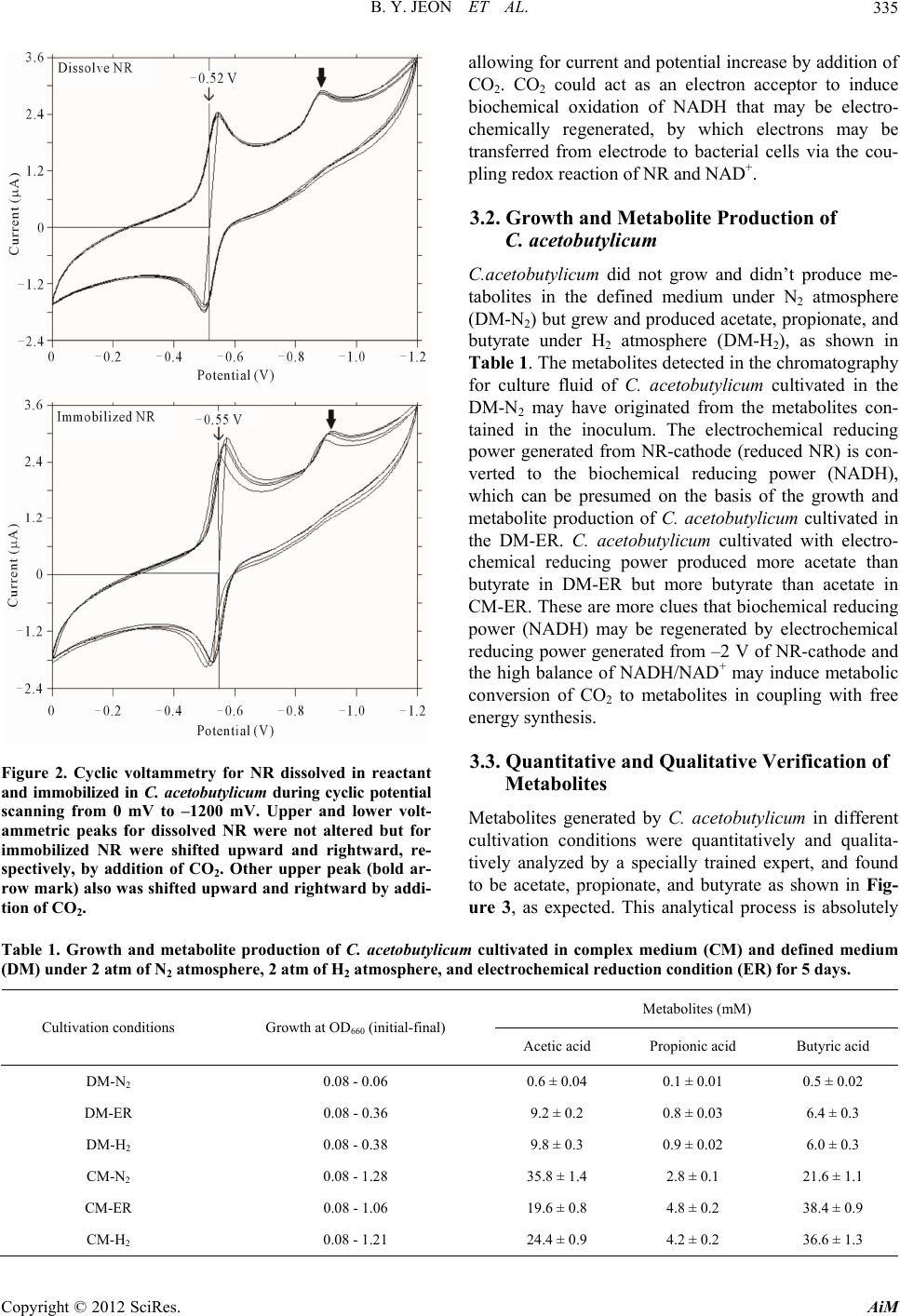 B. Y. JEON ET AL. Copyright © 2012 SciRes. AiM 335 allowing for current and potential increase by addition of CO2. CO2 could act as an electron acceptor to induce biochemical oxidation of NADH that may be electro- chemically regenerated, by which electrons may be transferred from electrode to bacterial cells via the cou- pling redox reaction of NR and NAD+. 3.2. Growth and Metabolite Production of C. acetobutylicum C.acetobutylicum did not grow and didn’t produce me- tabolites in the defined medium under N2 atmosphere (DM-N2) but grew and produced acetate, propionate, and butyrate under H2 atmosphere (DM-H2), as shown in Table 1. The metabolites detected in the chromatography for culture fluid of C. acetobutylicum cultivated in the DM-N2 may have originated from the metabolites con- tained in the inoculum. The electrochemical reducing power generated from NR-cathode (reduced NR) is con- verted to the biochemical reducing power (NADH), which can be presumed on the basis of the growth and metabolite production of C. acetobutylicum cultivated in the DM-ER. C. acetobutylicum cultivated with electro- chemical reducing power produced more acetate than butyrate in DM-ER but more butyrate than acetate in CM-ER. These are more clues that biochemical reducing power (NADH) may be regenerated by electrochemical reducing power generated from –2 V of NR-cathode and the high balance of NADH/NAD+ may induce metabolic conversion of CO2 to metabolites in coupling with free energy synthesis. 3.3. Quantitative and Qualitative Verification of Metabolites Figure 2. Cyclic voltammetry for NR dissolved in reactant and immobilized in C. acetobutylicum during cyclic potential scanning from 0 mV to –1200 mV. Upper and lower volt- ammetric peaks for dissolved NR were not altered but for immobilized NR were shifted upward and rightward, re- spectively, by addition of CO2. Other upper peak (bold ar- row mark) also was shifted upward and rightwar d by addi- tion of CO2. Metabolites generated by C. acetobutylicum in different cultivation conditions were quantitatively and qualita- tively analyzed by a specially trained expert, and found to be acetate, propionate, and butyrate as shown in Fig- ure 3, as expected. This analytical process is absolutely Table 1. Growth and metabolite production of C. acetobutylicum cultivated in complex medium (CM) and defined medium (DM) under 2 atm of N2 atmosphere, 2 atm of H2 atmosphere, and electrochemical reduction condition (ER) for 5 days. Metabolites (mM) Cultivation conditions Growth at OD660 (initial-final) Acetic acid Propionic acid Butyric acid DM-N2 0.08 - 0.06 0.6 ± 0.04 0.1 ± 0.01 0.5 ± 0.02 DM-ER 0.08 - 0.36 9.2 ± 0.2 0.8 ± 0.03 6.4 ± 0.3 DM-H2 0.08 - 0.38 9.8 ± 0.3 0.9 ± 0.02 6.0 ± 0.3 CM-N2 0.08 - 1.28 35.8 ± 1.4 2.8 ± 0.1 21.6 ± 1.1 CM-ER 0.08 - 1.06 19.6 ± 0.8 4.8 ± 0.2 38.4 ± 0.9 CM-H2 0.08 - 1.21 24.4 ± 0.9 4.2 ± 0.2 36.6 ± 1.3 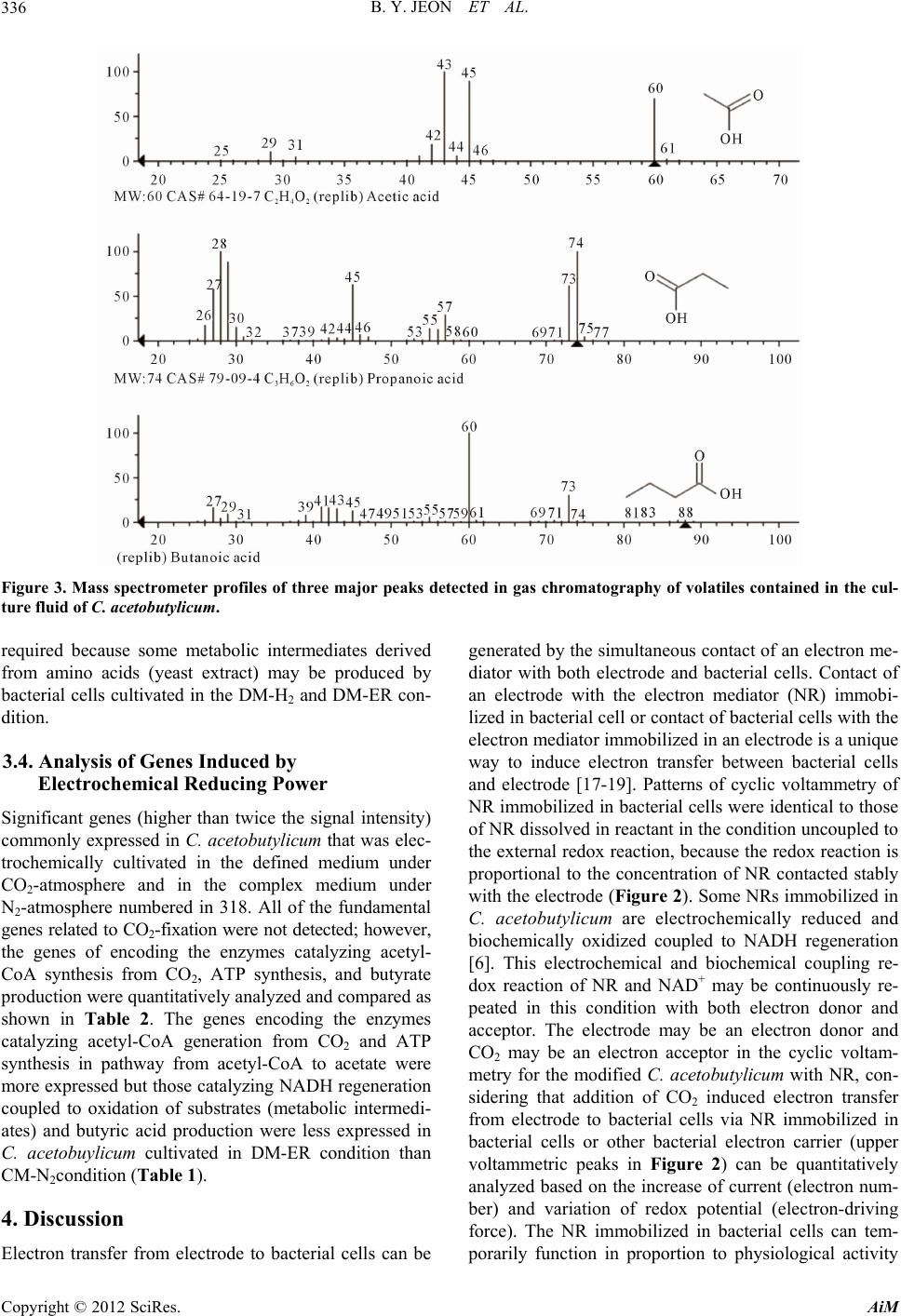 B. Y. JEON ET AL. 336 Figure 3. Mass spectrometer profiles of three major peaks detected in gas chromatography of volatiles contained in the cul- ture fluid of C. acetobutylicum. required because some metabolic intermediates derived from amino acids (yeast extract) may be produced by bacterial cells cultivated in the DM-H2 and DM-ER con- dition. 3.4. Analysis of Genes Induced by Electrochemical Reducing Power Significant genes (higher than twice the signal intensity) commonly expressed in C. acetobutylicum that was elec- trochemically cultivated in the defined medium under CO2-atmosphere and in the complex medium under N2-atmosphere numbered in 318. All of the fundamental genes related to CO2-fixation were not detected; however, the genes of encoding the enzymes catalyzing acetyl- CoA synthesis from CO2, ATP synthesis, and butyrate production were quantitatively analyzed and compared as shown in Table 2. The genes encoding the enzymes catalyzing acetyl-CoA generation from CO2 and ATP synthesis in pathway from acetyl-CoA to acetate were more expressed but those catalyzing NADH regeneration coupled to oxidation of substrates (metabolic intermedi- ates) and butyric acid production were less expressed in C. acetobuylicum cultivated in DM-ER condition than CM-N2condition (Table 1). 4. Discussion Electron transfer from electrode to bacterial cells can be porarily function in proportion to physiological activity generated by the simultaneous contact of an electron me- diator with both electrode and bacterial cells. Contact of an electrode with the electron mediator (NR) immobi- lized in bacterial cell or contact of bacterial cells with the electron mediator immobilized in an electrode is a unique way to induce electron transfer between bacterial cells and electrode [17-19]. Patterns of cyclic voltammetry of NR immobilized in bacterial cells were identical to those of NR dissolved in reactant in the condition uncoupled to the external redox reaction, because the redox reaction is proportional to the concentration of NR contacted stably with the electrode (Figure 2). Some NRs immobilized in C. acetobutylicum are electrochemically reduced and biochemically oxidized coupled to NADH regeneration [6]. This electrochemical and biochemical coupling re- dox reaction of NR and NAD+ may be continuously re- peated in this condition with both electron donor and acceptor. The electrode may be an electron donor and CO2 may be an electron acceptor in the cyclic voltam- metry for the modified C. acetobutylicum with NR, con- sidering that addition of CO2 induced electron transfer from electrode to bacterial cells via NR immobilized in bacterial cells or other bacterial electron carrier (upper voltammetric peaks in Figure 2) can be quantitatively analyzed based on the increase of current (electron num- ber) and variation of redox potential (electron-driving force). The NR immobilized in bacterial cells can tem- Copyright © 2012 SciRes. AiM 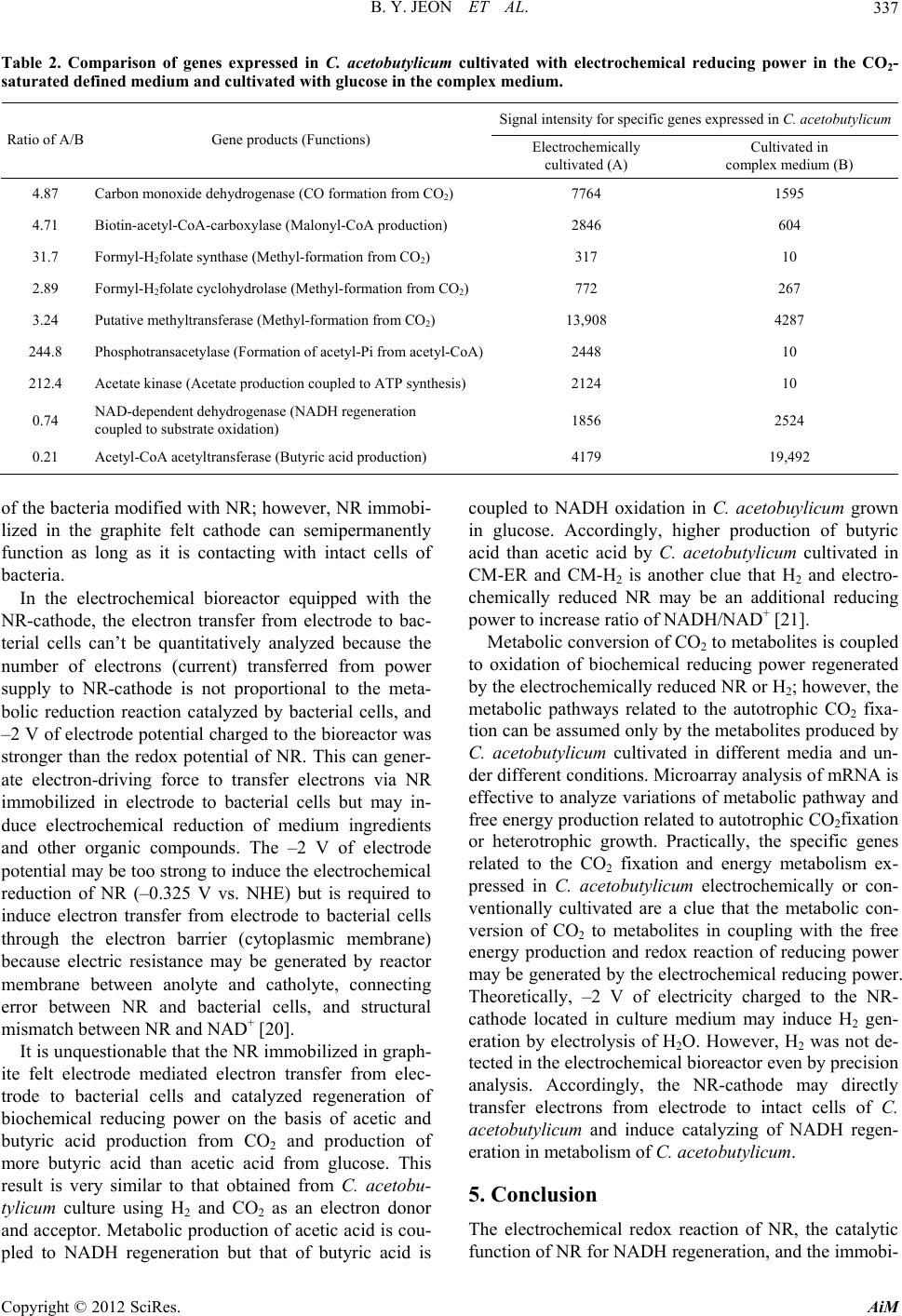 B. Y. JEON ET AL. 337 Table 2. Comparison of genes expressed in C. acetobutylicu saturated defined medium and cultivated with glucose in the c m cultivated with electrochemical reducing power in the CO2- omplex medium. Signal intensity for specific genes expressed in C. acetobutylicum Ratio of A/B Gene products (Functions) Electrochemically cultivated (A) Cultivated in complex medium (B) 4.87 Carbon monoxide n from CO2) 7764 dehydrogenase (CO formatio1595 4.71 Biotin-acetyl-CoA-carboxylase (Malonyl-CoA production) 2846 604 31.7 Formyl-H2folate synthase (Methyl-formation from CO2) 317 10 2.89 Formyl-H2folate cyclohydrolase (Methyl-formation from CO2) 772 267 4287 244.8 Phosphl-CoA) 2 3.24 Putative methyltransferase (Methyl-formation from CO2) 13,908 otransacetylase (Formation of acetyl-Pi from acety2448 10 212.4 Acetate kinase (Acetate production coupled to ATP synthesis) 2124 10 0.74 NAD-dependent dehydrogenase (NADH regeneration coupled to substrate oxidation) 1856 524 0.21 Acetyl-CoA acetyltransferase (Butyric acid production) 4179 19,492 of tcte zed in the graphite felt cathode can semipermanently de, the electron transfer from electrode to bac- te fer from elec- tro coupled to Ndation in C. acetum grown in glucose. Accordingly, higher production of butyric O fixa- tio he immobi- he baria modified with NR; however, NR immobi- li function as long as it is contacting with intact cells of bacteria. In the electrochemical bioreactor equipped with the NR-catho rial cells can’t be quantitatively analyzed because the number of electrons (current) transferred from power supply to NR-cathode is not proportional to the meta- bolic reduction reaction catalyzed by bacterial cells, and –2 V of electrode potential charged to the bioreactor was stronger than the redox potential of NR. This can gener- ate electron-driving force to transfer electrons via NR immobilized in electrode to bacterial cells but may in- duce electrochemical reduction of medium ingredients and other organic compounds. The –2 V of electrode potential may be too strong to induce the electrochemical reduction of NR (–0.325 V vs. NHE) but is required to induce electron transfer from electrode to bacterial cells through the electron barrier (cytoplasmic membrane) because electric resistance may be generated by reactor membrane between anolyte and catholyte, connecting error between NR and bacterial cells, and structural mismatch between NR and NAD+ [20]. It is unquestionable that the NR immobilized in graph- ite felt electrode mediated electron trans de to bacterial cells and catalyzed regeneration of biochemical reducing power on the basis of acetic and butyric acid production from CO2 and production of more butyric acid than acetic acid from glucose. This result is very similar to that obtained from C. acetobu- tylicum culture using H2 and CO2 as an electron donor and acceptor. Metabolic production of acetic acid is cou- pled to NADH regeneration but that of butyric acid is acid than acetic acid by C. acetobutylicum cultivated in CM-ER and CM-H2 is another clue that H2 and electro- chemically reduced NR may be an additional reducing power to increase ratio of NADH/NAD+ [21]. Metabolic conversion of CO2 to metabolites is coupled to oxidation of biochemical reducing power regenerated by the electrochemically reduced NR or H2; however, the metabolic pathways related to the autotrophic C ADH oxiobuylic 2 n can be assumed only by the metabolites produced by C. acetobutylicum cultivated in different media and un- der different conditions. Microarray analysis of mRNA is effective to analyze variations of metabolic pathway and free energy production related to autotrophic CO2fixation or heterotrophic growth. Practically, the specific genes related to the CO2 fixation and energy metabolism ex- pressed in C. acetobutylicum electrochemically or con- ventionally cultivated are a clue that the metabolic con- version of CO2 to metabolites in coupling with the free energy production and redox reaction of reducing power may be generated by the electrochemical reducing power. Theoretically, –2 V of electricity charged to the NR- cathode located in culture medium may induce H2 gen- eration by electrolysis of H2O. However, H2 was not de- tected in the electrochemical bioreactor even by precision analysis. Accordingly, the NR-cathode may directly transfer electrons from electrode to intact cells of C. acetobutylicum and induce catalyzing of NADH regen- eration in metabolism of C. acetobutylicum. 5. Conclusion The electrochemical redox reaction of NR, the catalytic function of NR for NADH regeneration, and t Copyright © 2012 SciRes. AiM 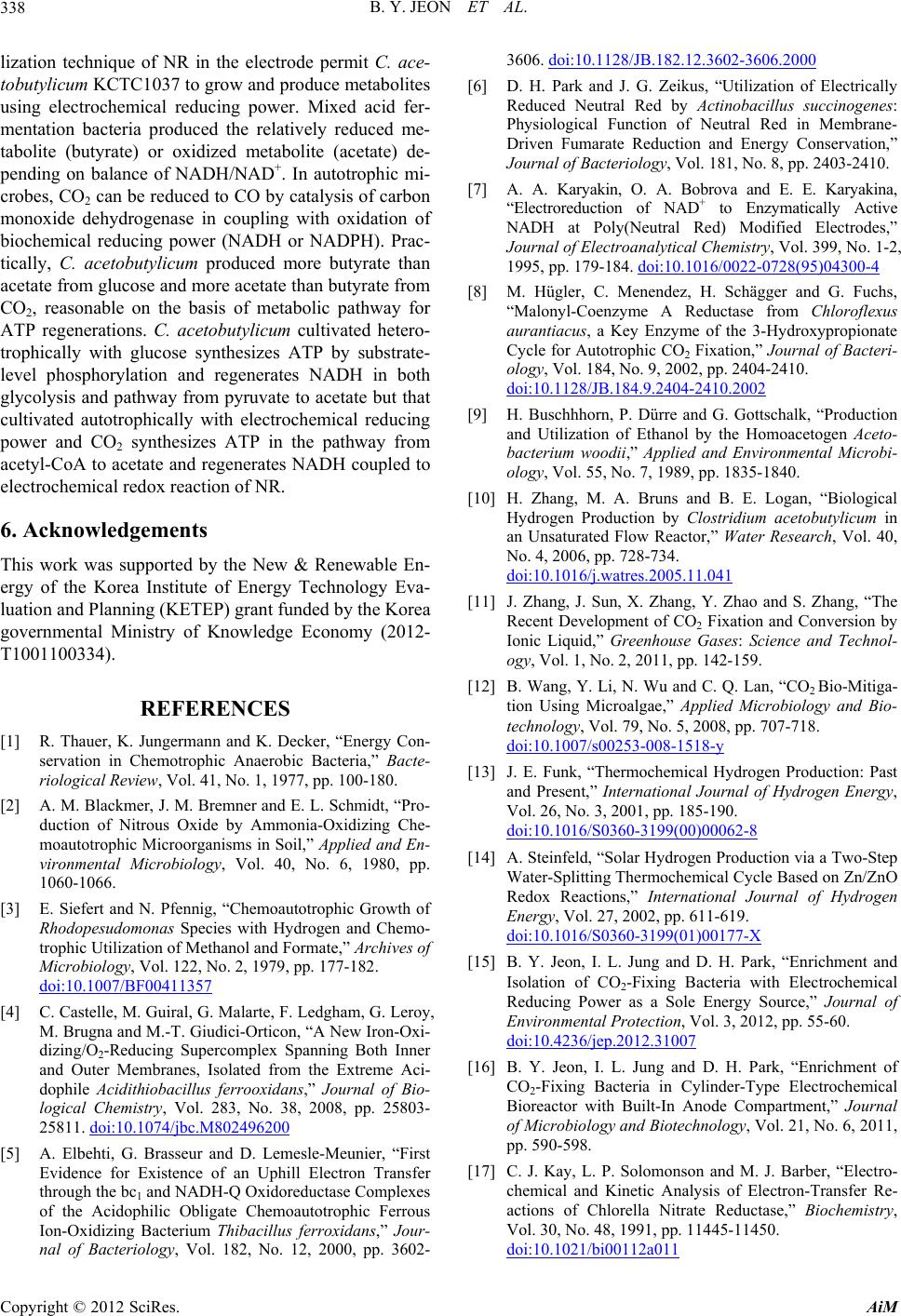 B. Y. JEON ET AL. 338 lization technique of NR in the electrode permit C. ace- & Renewabl ergy of the Korea Institute of Energy Technology ) grant funded by the Korea . Jungermann and K. Decker, “Energy Con- servation in Chemotrophic Anaerobic Bacteria,” riological Rev, pp. 100-180. , No. 2, 1979, pp. 177-182. tobutylicum KCTC1037 to grow and produce metabolites using electrochemical reducing power. Mixed acid fer- mentation bacteria produced the relatively reduced me- tabolite (butyrate) or oxidized metabolite (acetate) de- pending on balance of NADH/NAD+. In autotrophic mi- crobes, CO2 can be reduced to CO by catalysis of carbon monoxide dehydrogenase in coupling with oxidation of biochemical reducing power (NADH or NADPH). Prac- tically, C. acetobutylicum produced more butyrate than acetate from glucose and more acetate than butyrate from CO2, reasonable on the basis of metabolic pathway for ATP regenerations. C. acetobutylicum cultivated hetero- trophically with glucose synthesizes ATP by substrate- level phosphorylation and regenerates NADH in both glycolysis and pathway from pyruvate to acetate but that cultivated autotrophically with electrochemical reducing power and CO2 synthesizes ATP in the pathway from acetyl-CoA to acetate and regenerates NADH coupled to electrochemical redox reaction of NR. 6. Acknowledgements This work was supported by the New e En- Eva- luation and Planning (KETEP governmental Ministry of Knowledge Economy (2012- T1001100334). REFERENCES [1] R. Thauer, KBacte- iew, Vol. 41, No. 1, 1977 [2] A. M. Blackmer, J. M. Bremner and E. L. Schmidt, “Pro- duction of Nitrous Oxide by Ammonia-Oxidizing Che- moautotrophic Microorganisms in Soil,” Applied and En- vironmental Microbiology, Vol. 40, No. 6, 1980, pp. 1060-1066. [3] E. Siefert and N. Pfennig, “Chemoautotrophic Growth of Rhodopesudomonas Species with Hydrogen and Chemo- trophic Utilization of Methanol and Formate,” Archives of Microbiology, Vol. 122 doi:10.1007/BF00411357 [4] C. Castelle, M. Guiral, G. Malarte, F. Ledgham, G. Leroy, M. Brugna and M.-T. Giudici-Orticon, “A New Iron-Oxi- dizing/O2-Reducing Supercomplex Spanning Both and Outer Membranes, Is Inner olated from the Extreme Aci- dophile Acidithiobacillus ferrooxidans,” Journal of Bio- logical Chemistry, Vol. 283, No. 38, 2008, pp. 25803- 25811. doi:10.1074/jbc.M802496200 [5] A. Elbehti, G. Brasseur and D. Lemesle-Meunier, “First Evidence for Existence of an Uphill Electron Transfer through the bc1 and NADH-Q Oxidoreductase Complexes of the Acidophilic Obligate Chemoautotrophic Ferrous Ion-Oxidizing Bacterium Thibacillus ferroxidans,” Jour- nal of Bacteriology, Vol. 182, No. 12, 2000, pp. 3602- 3606. doi:10.1128/JB.182.12.3602-3606.2000 [6] D. H. Park and J. G. Zeikus, “Utilization of Electrically Reduced Neutral Red by Actinobacillus succinogenes: Physiological Function of Neutral Red in Membrane- Driven Fumarate Reduction and Energy Conservation,” Journal of Bacteriology, Vol. 181, No. 8, pp. 2403-2410. [7] A. A. Karyakin, O. A. Bobrova and E. E. Karyakina, “Electroreduction of NAD+ to Enzymatically Active NADH at Poly(Neutral Red) Modified Electrodes,” Journal of Electroanalytical Chemistry, Vol. 399, No. 1-2, 1995, pp. 179-184. doi:10.1016/0022-0728(95)04300-4 [8] M. Hügler, C. Menendez, H. Schägger and G. Fuchs, “Malonyl-Coenzyme A Reductase from Chloroflexus aurantiacus, a Key Enzyme of the 3-Hydroxypropionate Cycle for Autotrophic CO2 Fixation,” Journal of Bacteri- ology, Vol. 184, No. 9, 2002, pp. 2404-2410. doi:10.1128/JB.184.9.2404-2410.2002 [9] H. Buschhhorn, P. Dürre and G. Gottschalk, “Production and Utilization of Ethanol by the Homoacetogen Aceto- bacterium woodii,” Applied and Environment ology, Vol. 55, No. 7, 1989, pp. 1835-18 al Microbi- 40. [10] H. Zhang, M. A. Bruns and B. E. Logan, “Biological Hydrogen Production by Clostridium acetobutylicum in an Unsaturated Flow Reactor,” Water Research, Vol. 40, No. 4, 2006, pp. 728-734. doi:10.1016/j.watres.2005.11.041 [11] J. Zhang, J. Sun, X. Zhang, Y. Zhao and S. Zhang, “The Recent Development of CO2 Fixation and Conversion by Ionic Liquid,” Greenhouse Gases ogy, Vol. 1, No. 2, 2011, pp. 142-1 : Science and Technol- 59. [12] B. Wang, Y. Li, N. Wu and C. Q. Lan, “CO2 Bio-Mitiga- tion Using Microalgae,” Applied Microbiology and Bio- technology, Vol. 79, No. 5, 2008, pp. 707-718. doi:10.1007/s00253-008-1518-y [13] J. E. Funk, “Thermochemical Hydrogen Production: Past and Present,” International Journal of Hydrogen Energy, Vol. 26, No. 3, 2001, pp. 185-190. doi:10.1016/S0360-3199(00)00062-8 rnal of Hydrogen [14] A. Steinfeld, “Solar Hydrogen Production via a Two-Step Water-Splitting Thermochemical Cycle Based on Zn/ZnO Redox Reactions,” International Jou Energy, Vol. 27, 2002, pp. 611-619. doi:10.1016/S0360-3199(01)00177-X [15] B. Y. Jeon, I. L. Jung and D. H. Park, “Enrichment and Isolation of CO2-Fixing Bacteria with Electrochemical Reducing Power as a Sole Energy S Environmental Protection, Vol. 3, 2012 ource,” Journal of , pp. 55-60. doi:10.4236/jep.2012.31007 [16] B. Y. Jeon, I. L. Jung and D. H. Park, “Enrichment of CO2-Fixing Bacteria in Cylinder-Type Electrochemical Bioreactor with Built-In Anode Compartment,” Jo of Microbiology and Biotechnurnal ology, Vol. 21, No. 6, 2011, 8, 1991, pp. 11445-11450. pp. 590-598. [17] C. J. Kay, L. P. Solomonson and M. J. Barber, “Electro- chemical and Kinetic Analysis of Electron-Transfer Re- actions of Chlorella Nitrate Reductase,” Biochemistry, Vol. 30, No. 4 doi:10.1021/bi00112a011 Copyright © 2012 SciRes. AiM  B. Y. JEON ET AL. Copyright © 2012 SciRes. AiM 339 Methanol Elec- Solid State Electrochemistry [18] X. Zhong, J. Chen, B. Liu, Y. Xu and Y. Kuang, “Neutral Red as Electron Transfer Mediator Enhanced Electro- catalytic Activity of Platinum Catalyst for tro-Oxidation,” Journal of, Vol. 11, No. 4, 2007, pp. 463-468. doi:10.1007/s10008-006-0174-3 [19] L. Huang, J. M. Regan and X. Quan, “Electron Transfer Mechanisms, New Applications, and performance of Bio- cathode Microbial Fuel Cells,” Bio Vol. 102, 2011, pp. 316-323. resource Technology, doi:10.1016/j.biortech.2010.06.096 [20] G. Reguera, K. D. McCarthy, T. Meh Tuominen and D. R. Lovley, “E ta, J. S. Nicoll, M. T. xtracellular Electron Transfer via Microbial Nanowires,” Nature, Vol. 435, 2005, pp. 1098-1101. doi:10.1038/nature03661 [21] J. Song, Y. Kim, M. Lim, H. Lee, J. I. Lee and W. Shin, “Microbes as Electrochemical CO Conversi 2 lysts,” ChemSusChem, Vol. 4, No. 5, 2011, pp. 587-590. on Cata- doi:10.1002/cssc.201100107 |