

Paper Menu >>
Journal Menu >>
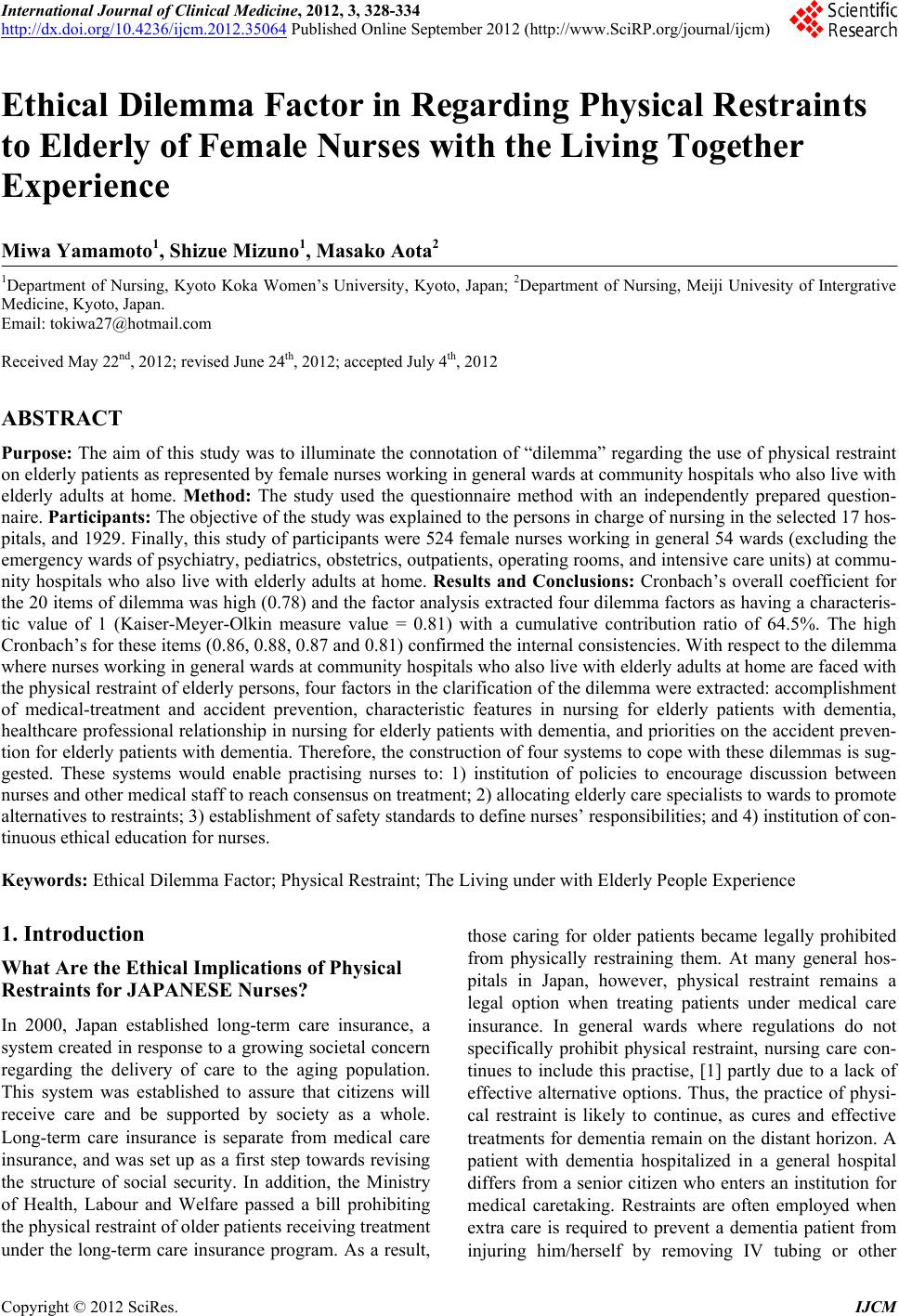 International Journal of Clinical Medicine, 2012, 3, 328-334 http://dx.doi.org/10.4236/ijcm.2012.35064 Published Online September 2012 (http://www.SciRP.org/journal/ijcm) 1 Ethical Dilemma Factor in Regarding Physical Restraints to Elderly of Female Nurses with the Living Together Experience Miwa Yamamoto1, Shizue Mizuno1, Masako Aot a2 1Department of Nursing, Kyoto Koka Women’s University, Kyoto, Japan; 2Department of Nursing, Meiji Univesity of Intergrative Medic ine, Kyot o, Japan. Email: [email protected] Received May 22nd, 2012; revised June 24th, 2012; accepted July 4th, 2012 ABSTRACT Purpose: The aim of this study was to illuminate the connotation of “dilemma” regarding the use of physical restraint on elderly patients as represented by female nurses working in general wards at community hospitals who also live with elderly adults at home. Method: The study used the questionnaire method with an independently prepared question- naire. Participants: The objective of the stud y was exp lained to th e persons in ch arge of nu rsing in th e selected 17 hos- pitals, and 1929. Finally, this stud y of participants were 524 female nurses working in general 54 ward s (excluding the emergency wards of psychiatry, pediatrics, obstetrics, outpatients, operating rooms, and intensive care units) at commu- nity hospitals who also live with elderly adults at home. Results and Conclusions: Cronbach’s overall coefficient for the 20 items of dilemma was high (0.78) and the factor analysis extracted four dilemma factors as having a characteris- tic value of 1 (Kaiser-Meyer-Olkin measure value = 0.81) with a cumulative contribution ratio of 64.5%. The high Cronbach’s for these items (0 .86, 0.88, 0.87 and 0.81) conf irmed the internal consisten cies. W ith respect to the dilemma where nurses working in general wards at community hospitals who also live with elderly adults at home are faced with the physical restraint of elderly persons, four factors in the clarification of the dilemma were extracted: accomplishment of medical-treatment and accident prevention, characteristic features in nursing for elderly patients with dementia, healthcare professional relations hip in nursing for elderly patients with dementia, and priorities on the accident prev en- tion for elderly patients with dementia. Therefore, the constr uction of four systems to cope with these dilemmas is sug- gested. These systems would enable practising nurses to: 1) institution of policies to encourage discussion between nurses and other medical staff to reach consensus on treatment; 2) allocating elderly care specialists to ward s to promote alternatives to restraints; 3) establishment of safety standards to define nurses’ responsibilities; and 4) institution of con- tinuous ethical ed u ca tion for nurses. Keywords: Ethical Dilemma Factor; Physical Restraint; The Living under with Elderly People Experience 1. Introduction What Are the Ethical Implications of Physical Restraints for JAPANESE Nurses? In 2000, Japan established long-term care insurance, a system created in response to a growing societal concern regarding the delivery of care to the aging population. This system was established to assure that citizens will receive care and be supported by society as a whole. Long-term care insurance is separate from medical care insurance, and was set up as a first step towards revising the structure of social security. In addition, the Ministry of Health, Labour and Welfare passed a bill prohibiting the physical restraint of older patients receiving treatment under the long-term care insurance program. As a result, those caring for older patients became legally prohibited from physically restraining them. At many general hos- pitals in Japan, however, physical restraint remains a legal option when treating patients under medical care insurance. In general wards where regulations do not specifically prohibit physical restraint, nursing care con- tinues to include this practise, [1] partly due to a lack of effective alternative options. Thus, the practice of physi- cal restraint is likely to continue, as cures and effective treatments for dementia remain on the distant horizon . A patient with dementia hospitalized in a general hospital differs from a senior citizen who enters an institution for medical caretaking. Restraints are often employed when extra care is required to prevent a dementia patient from injuring him/herself by removing IV tubing or other Copyright © 2012 SciRes. IJCM 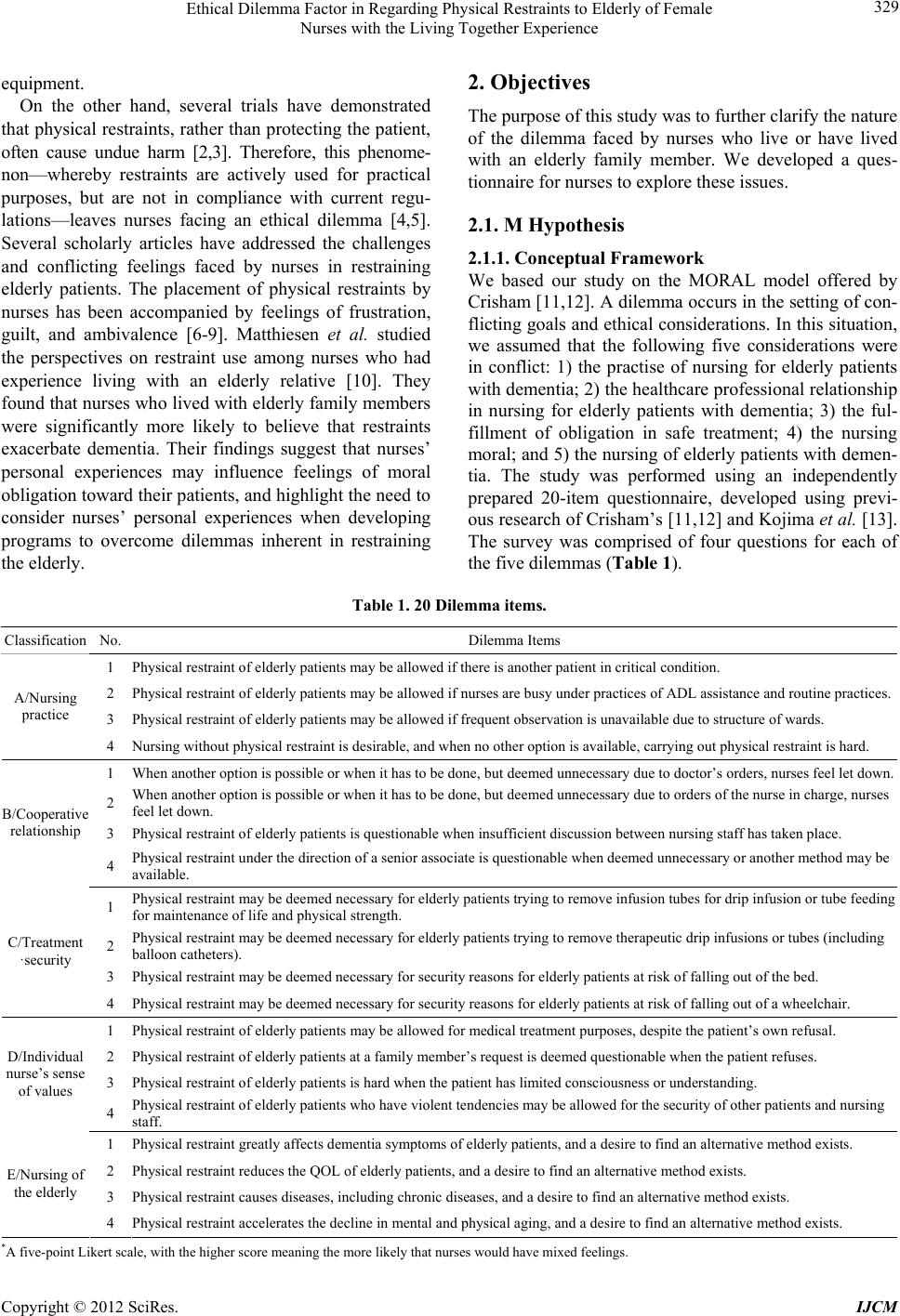 Ethical Dilemma Factor in Regarding Physical Restraints to Elderly of Female Nurses with the Living Together Experience 329 equipment. On the other hand, several trials have demonstrated that physical restraints, rather than pro tecting the patient, often cause undue harm [2,3]. Therefore, this phenome- non—whereby restraints are actively used for practical purposes, but are not in compliance with current regu- lations—leaves nurses facing an ethical dilemma [4,5]. Several scholarly articles have addressed the challenges and conflicting feelings faced by nurses in restraining elderly patients. The placement of physical restraints by nurses has been accompanied by feelings of frustration, guilt, and ambivalence [6-9]. Matthiesen et al. studied the perspectives on restraint use among nurses who had experience living with an elderly relative [10]. They found that nurses who liv ed with elderly family members were significantly more likely to believe that restraints exacerbate dementia. Their findings suggest that nurses’ personal experiences may influence feelings of moral obligation toward their pa tients, and highlight th e need to consider nurses’ personal experiences when developing programs to overcome dilemmas inherent in restraining the elderly. 2. Objectives The purpose of this study was to further clar ify the n atur e of the dilemma faced by nurses who live or have lived with an elderly family member. We developed a ques- tionnaire for nurses to explore these issues. 2.1. M Hypothesis 2.1.1. Conceptua l Framework We based our study on the MORAL model offered by Crisham [11,12]. A dilemma occurs in the setting of con- flicting goals and ethical considerations . In this situation, we assumed that the following five considerations were in conflict: 1) the practise of nursing for elderly patients with dementia; 2) the h ealthcare p rofessional relation ship in nursing for elderly patients with dementia; 3) the ful- fillment of obligation in safe treatment; 4) the nursing moral; and 5) the nursing of elderly patients with demen- tia. The study was performed using an independently prepared 20-item questionnaire, developed using previ- ous research of Crisham’s [11,12] and Kojima et al. [13]. The survey was comprised of four questions for each of the five dilemmas (Table 1). Table 1. 20 Dilemma items. Classification No. Dilemma Items 1 Physical restraint of elderly patients may be allowed if there is another patient in critical condition. 2 Physical restraint of elderly patients may be allowed if nurses are busy under practices of ADL assistance and routine practices. 3 Physical restraint of elderly patients may be allowed if frequent observation is unavailable due to structure of wards. A/Nursing practice 4 Nursing without physical restraint is desirable, and when no other option is available, carrying out physical restraint is hard. 1 When another option is possible or when it has to be done, but deemed unnecessary due to doctor’s orders, nurses feel let down. 2 When another option is possible or when it has to be done, but deemed unnecessary due to orders of the nurse in charge, nurses feel let down. 3 Physical restraint of elderly patients is questionable when insufficient discussion between nursing staff has taken place. B/Cooperative relationship 4 Physical restraint under the direction of a senior associate is questionable when deemed unnecessary or anot her method may be available. 1 Physical restraint may be deemed necessary for elderly patients trying to remove infusion tub e s f o r drip infusion or tube feeding for maintenance of life and physical strength. 2 Physical restraint may be deemed necessary for elderly patients trying to remove therapeutic drip infusions or tubes (including balloon catheters). 3 Physical restraint may be deemed necessary for security reasons for elderly patients at risk of falling out of the bed. C/Treatment ·security 4 Physical restraint may be deemed necessary for security reasons for elderly patients at risk of falling out of a wheelchair. 1 Physical restraint of elderly patients may be allowed for medical treatment purposes, despite the patient’s own refusal. 2 Physical restraint of elderly patients at a family member’s request is deemed questionable when the patient refuses. 3 Physical restraint of elderly patients is hard when the patient has limited consciousness or understanding. D/Individual nurse’s sense of values 4 Physical restraint of elderly patients who have violent tendencies may be allowed for the security of other pa tients and nursing staff. 1 Physical restraint greatly affects dementia symptoms of elderly patients, and a desire to find an alternative method exists. 2 Physical restraint reduces the QOL of elderly patients, and a desire to find an alternative method exists. 3 Physical restraint causes diseases, including chronic diseases, and a desire to find an alternative method exists. E/Nursing of the elderly 4 Physical restraint accelerates the decline in mental and physical aging, and a desire to find an alternative method exists. *A five-poin t Likert scale, with the higher score meaning the more likely that nurses would have mixed feelings. Copyright © 2012 SciRes. IJCM 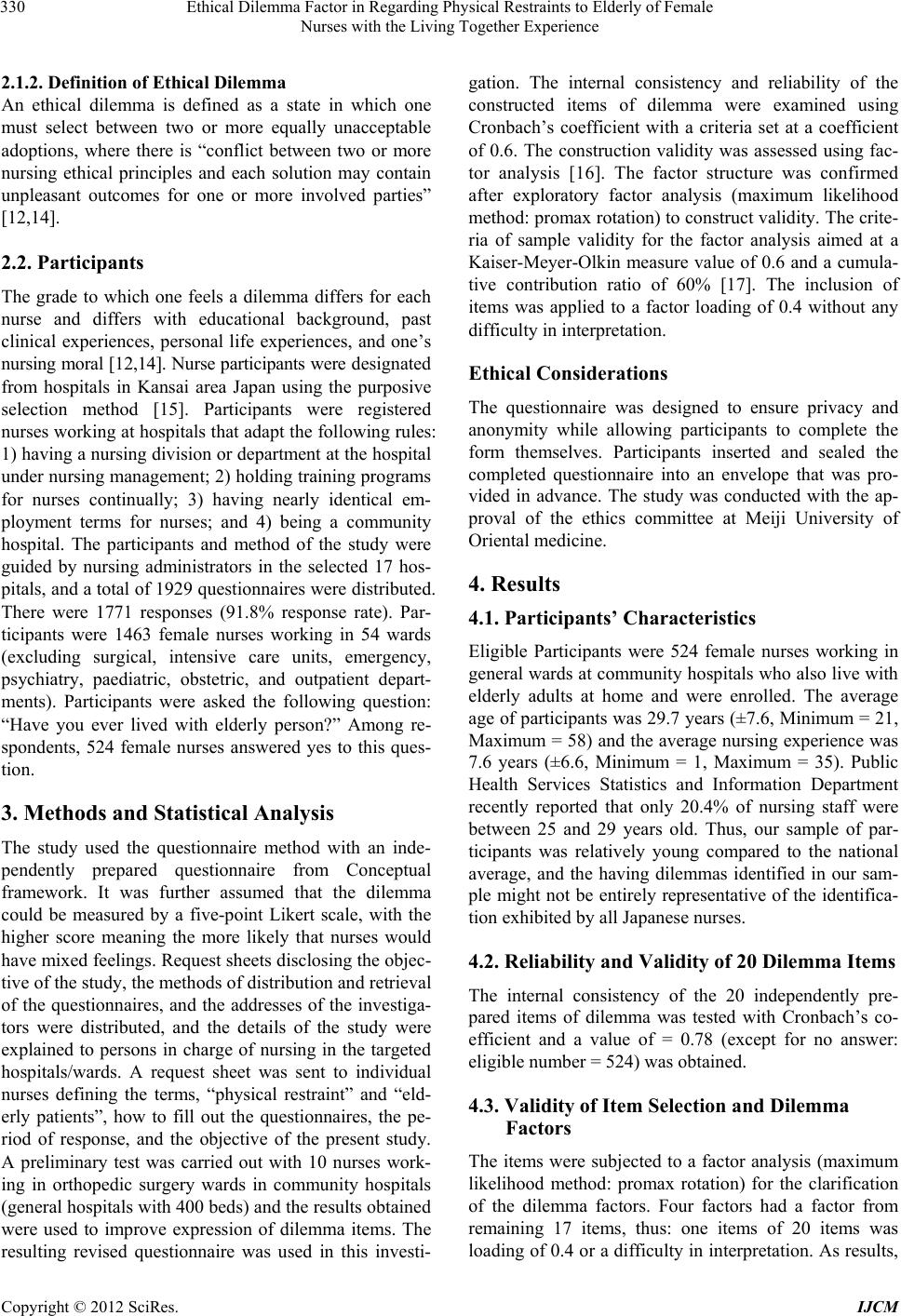 Ethical Dilemma Factor in Regarding Physical Restraints to Elderly of Female Nurses with the Living Together Experience 330 2.1.2. Definition of Ethical Dilemma An ethical dilemma is defined as a state in which one must select between two or more equally unacceptable adoptions, where there is “conflict between two or more nursing ethical principles and each solution may contain unpleasant outcomes for one or more involved parties” [12,14]. 2.2. Participants The grade to which one feels a dilemma differs for each nurse and differs with educational background, past clinical experiences, personal life experiences, and one’s nursing moral [12,14]. Nurse participants were des igna ted from hospitals in Kansai area Japan using the purposive selection method [15]. Participants were registered nurses working at hospitals that ad apt the following rules: 1) having a nursing division or department at the hospital under nursing management; 2) holding training programs for nurses continually; 3) having nearly identical em- ployment terms for nurses; and 4) being a community hospital. The participants and method of the study were guided by nursing administrators in the selected 17 hos- pitals, and a total of 1929 questionnaires were distributed . There were 1771 responses (91.8% response rate). Par- ticipants were 1463 female nurses working in 54 wards (excluding surgical, intensive care units, emergency, psychiatry, paediatric, obstetric, and outpatient depart- ments). Participants were asked the following question: “Have you ever lived with elderly person?” Among re- spondents, 524 female nurses answered yes to this ques- tion. 3. Methods and Statistical Analysis The study used the questionnaire method with an inde- pendently prepared questionnaire from Conceptual framework. It was further assumed that the dilemma could be measured by a five-point Likert scale, with the higher score meaning the more likely that nurses would have mixed feelings. Request sheets disclosing the objec- tive of the study, the methods of distribution and retriev al of the questionnaires, and the addresses of the investiga- tors were distributed, and the details of the study were explained to persons in charge of nursing in the targeted hospitals/wards. A request sheet was sent to individual nurses defining the terms, “physical restraint” and “eld- erly patients”, how to fill out the questionnaires, the pe- riod of response, and the objective of the present study. A preliminary test was carried out with 10 nurses work- ing in orthopedic surgery wards in community hospitals (general hospitals with 400 beds) and the results obtain ed were used to improve expression of dilemma items. The resulting revised questionnaire was used in this investi- gation. The internal consistency and reliability of the constructed items of dilemma were examined using Cronbach’s coefficient with a criteria set at a coefficient of 0.6. The construction validity was assessed using fac- tor analysis [16]. The factor structure was confirmed after exploratory factor analysis (maximum likelihood method: promax rotation) to construct validity. The crite- ria of sample validity for the factor analysis aimed at a Kaiser-Meyer-Olkin measure value of 0.6 and a cumula- tive contribution ratio of 60% [17]. The inclusion of items was applied to a factor loading of 0.4 without any difficulty in interpretation. Ethical Considerations The questionnaire was designed to ensure privacy and anonymity while allowing participants to complete the form themselves. Participants inserted and sealed the completed questionnaire into an envelope that was pro- vided in advance. The study was conducted with the ap- proval of the ethics committee at Meiji University of Oriental medicine. 4. Results 4.1. Participants’ Characteristics Eligible Participants were 524 female nurses working in general wards at community hospitals who also live with elderly adults at home and were enrolled. The average age of participants was 29.7 years (±7.6, Minimum = 21, Maximum = 58) and the average nursing experience was 7.6 years (±6.6, Minimum = 1, Maximum = 35). Public Health Services Statistics and Information Department recently reported that only 20.4% of nursing staff were between 25 and 29 years old. Thus, our sample of par- ticipants was relatively young compared to the national average, and the having dilemmas identified in our sam- ple might not be entirely representative of the identifica- tion exhibited by all Japanese nurses. 4.2. Reliability and Validity of 20 Dilemma Items The internal consistency of the 20 independently pre- pared items of dilemma was tested with Cronbach’s co- efficient and a value of = 0.78 (except for no answer: eligible number = 524) was obtained. 4.3. Validity of Item Selection and Dilemma Factors The items were subjected to a factor analysis (maximum likelihood method: promax rotation) for the clarification of the dilemma factors. Four factors had a factor from remaining 17 items, thus: one items of 20 items was loading of 0.4 o r a difficulty in interp retation. As results, Copyright © 2012 SciRes. IJCM 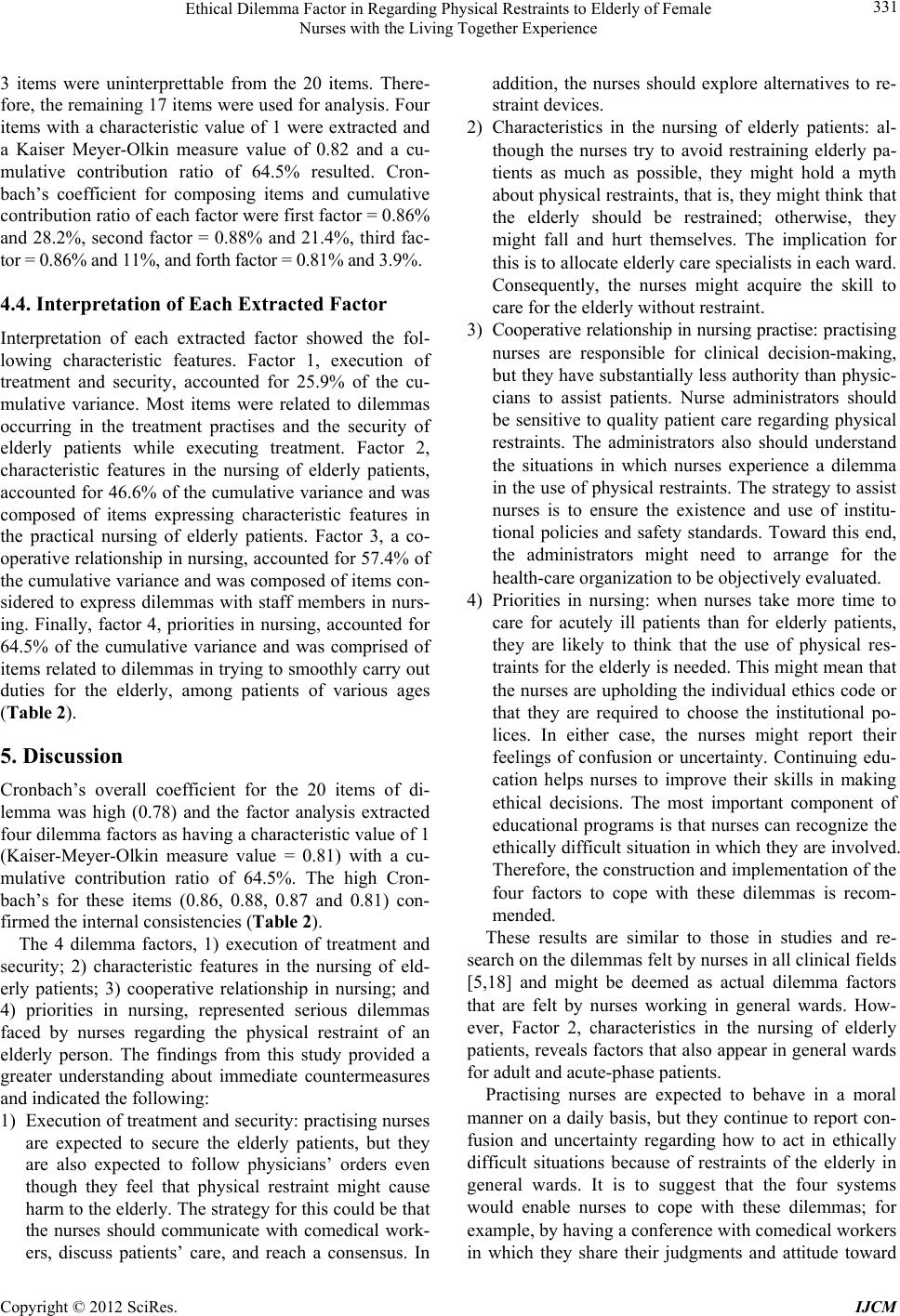 Ethical Dilemma Factor in Regarding Physical Restraints to Elderly of Female Nurses with the Living Together Experience 331 3 items were uninterprettable from the 20 items. There- fore, the remaining 17 items were used for analysis. Four items with a characteristic value of 1 were extracted and a Kaiser Meyer-Olkin measure value of 0.82 and a cu- mulative contribution ratio of 64.5% resulted. Cron- bach’s coefficient for composing items and cumulative contribution ratio of each factor were first factor = 0.86% and 28.2%, second factor = 0.88% and 21.4%, third fac- tor = 0.86% and 11%, and forth factor = 0.81% and 3.9%. 4.4. Interpretation of Each Extracted Factor Interpretation of each extracted factor showed the fol- lowing characteristic features. Factor 1, execution of treatment and security, accounted for 25.9% of the cu- mulative variance. Most items were related to dilemmas occurring in the treatment practises and the security of elderly patients while executing treatment. Factor 2, characteristic features in the nursing of elderly patients, accounted for 46.6% of the cumulative variance and was composed of items expressing characteristic features in the practical nursing of elderly patients. Factor 3, a co- operative relationship in nursing, accounted for 57.4% of the cumulative variance and was composed of items con- sidered to express dilemmas with staff members in nurs- ing. Finally, factor 4, priorities in nursing, accounted for 64.5% of the cumulative variance and was comprised of items related to dilemmas in tryin g to smoothly carry out duties for the elderly, among patients of various ages (Table 2). 5. Discussion Cronbach’s overall coefficient for the 20 items of di- lemma was high (0.78) and the factor analysis extracted four dilemma factors as having a characteristic value of 1 (Kaiser-Meyer-Olkin measure value = 0.81) with a cu- mulative contribution ratio of 64.5%. The high Cron- bach’s for these items (0.86, 0.88, 0.87 and 0.81) con- firmed the internal consistencies (Table 2). The 4 dilemma factors, 1) execution of treatment and security; 2) characteristic features in the nursing of eld- erly patients; 3) cooperative relationship in nursing; and 4) priorities in nursing, represented serious dilemmas faced by nurses regarding the physical restraint of an elderly person. The findings from this study provided a greater understanding about immediate countermeasures and indicated the following: 1) Execution of treatment and security: practising nurses are expected to secure the elderly patients, but they are also expected to follow physicians’ orders even though they feel that physical restraint might cause harm to the elderly. The strategy for this could be that the nurses should communicate with comedical work- ers, discuss patients’ care, and reach a consensus. In addition, the nurses should explore alternatives to re- straint devices. 2) Characteristics in the nursing of elderly patients: al- though the nurses try to avoid restraining elderly pa- tients as much as possible, they might hold a myth about physical restraints, that is, they might think th at the elderly should be restrained; otherwise, they might fall and hurt themselves. The implication for this is to allocate elderly care specialists in each ward. Consequently, the nurses might acquire the skill to care for the elderly without restraint. 3) Cooperative relationship in nursing practise: pr actis ing nurses are responsible for clinical decision-making, but they hav e substantially less autho rity than physic- cians to assist patients. Nurse administrators should be sensitive to quality patient care regarding physical restraints. The administrators also should understand the situations in which nurses experience a dilemma in the use of physical restraints. The strategy to assist nurses is to ensure the existence and use of institu- tional policies and safety standards. Toward this end, the administrators might need to arrange for the health-care organization to be objectively evaluated. 4) Priorities in nursing: when nurses take more time to care for acutely ill patients than for elderly patients, they are likely to think that the use of physical res- traints for the elderly is needed. This might mean that the nurses are upholding the individual ethics code or that they are required to choose the institutional po- lices. In either case, the nurses might report their feelings of confusion or uncertainty. Continuing edu- cation helps nurses to improve their skills in making ethical decisions. The most important component of educational programs is that nurses can recognize the ethically difficult situatio n in which they are involved . Therefore, the constru ction and implementa tion of th e four factors to cope with these dilemmas is recom- mended. These results are similar to those in studies and re- search on the dilemmas felt by nurses in all clinical fields [5,18] and might be deemed as actual dilemma factors that are felt by nurses working in general wards. How- ever, Factor 2, characteristics in the nursing of elderly patients, reveals factors that also appear in gen eral wards for adult and acute-phase patients. Practising nurses are expected to behave in a moral manner on a daily basis, but they continue to report con- fusion and uncertainty regarding how to act in ethically difficult situations because of restraints of the elderly in general wards. It is to suggest that the four systems would enable nurses to cope with these dilemmas; for example, by having a conference with comedical workers in which they share their judgments and attitude toward Copyright © 2012 SciRes. IJCM  Ethical Dilemma Factor in Regarding Physical Restraints to Elderly of Female Nurses with the Living Together Experience Copyright © 2012 SciRes. IJCM 332 Table 2. Factore analysis of nurses’s dilemma for pyhsical restrainted elderly patientes with dementia. Factor 1 2 3 4 Dilemma items Execution of treatment and security Characteristic features in the nursing of elderly patients A cooperative relationship in nursing Priorities in nursing C-2 Physical restraint may be deemed necessary for elderly patients trying to remove the rapeutic drip infusions or tubes (including balloon catheters). 0.90 –0.02 –0.02 –0.10 C-1 Physical restraint may be deemed necessary for elderly patients trying t o remove infusion tubes for drip infus ion or tube feeding for maintenance of life and physical strength. 0.80 0.00 –0.06 –0.06 C-3 Physical restraint may be deemed necessary for security reasons for elderly patients at risk of falling out of the bed. 0.78 0.05 0.01 0.01 C-4 Physical restraint may be deemed necessary for security reasons for elderly patients at risk of falling out of a wheelchair. 0.74 0.03 0.06 0.07 D-1 Physical restraint of elderly patients may be allowed for medical tre atment purposes, despite the patient’s own refusal. 0.52 –0.05 –0.02 0.15 D-4 Physical restraint of elderly patients who have violent tendencies may be allowed for the security of other patients and nursing staff. 0.45 0.04 0.07 0.13 B-2 When another option is possible or when it has to be done, but deemed unnecessary due to orders of the nurse in charge, nurses feel let down. –0.07 0.92 –0.04 0.06 B-1 When another option is possible or when it has to be done, but deemed unnecessary due to doctor’s orders, nurses feel let down. –0.02 0.81 –0.05 0.04 B-4 Physical restraint under the direction of a senior associate is questionable when deemed unnecessary or another method may be available . 0.03 0.78 0.04 –0.05 B-3 Physical restraint of elderly patients is questionable when insufficient discussion between nursing staff has taken place.0.10 0.71 0.05 –0.10 E-4 Physical restraint accelerates the decline in mental and physical aging, and a desire to find an alternative method exists. 0.05 –0.05 0.87 –0.07 E-2 Physical restraint reduces the QOL of elderly patients, and a desire to find an alternative method exists. 0.03 0.09 0.83 –0.01 E-3 Physical restraint causes diseases, including chronic diseases, and a desire to find an alternative method exists. 0.05 –0.12 0.80 0.01 E-1 Physical restraint greatly affects dementia symptoms of elderly patients, and a desire to find an alternative method exists. –0.16 0.10 0.69 0.10 A-2 Physical restraint of elderly patients may be allowed if nurses are busy under practices of ADL assistance and routine practices. –0.04 –0.02 0.01 0.89 A-1 Physical restraint of elderly patients may be allowed if there is another patient in critical condition. 0.08 0.01 0.04 0.67 A-3 Physical restraint of elderly patients may be allowed if frequent observation is unavailable due to structure of wards.0.20 –0.02 –0.05 0.63 Cumulated contribution ratio ( %) factor 1 - 4 28.2 49.6 60.6 64.5 Reliability Coefficients α 0.86 0.88 0.87 0.81 KMO value = 0.82, Bartlett’s sphericity test; ***(P < 0.001).  Ethical Dilemma Factor in Regarding Physical Restraints to Elderly of Female Nurses with the Living Together Experience 333 physical restraints for elderly people. Having a confer- ence is not costly and cou ld easily “start tomorrow”. The results from this study need further consideration in the future as being faced with dilemmas on a daily basis is not a favorable working environment for nurses. When faced with these dilemmas, every nurse should carefully reconsider the customary use of physical restraints on the elderly, not just to overcome the situation, but to view it as a chance to reflect on the active improvement of the quality of care and quality of life of the elderly. Few studies have been carried out in Japan to examine the conscience of nurses regarding the physical restraint of elderly patients and a comparative investigation and study has not yet occurred. The dilemmas that occur in the conscience of a person are likely to be influenced by many factors, including differences over time. The pre- sent study examined no factors that influence an individ- ual nurse’s sense of value or individual experiences and attributes, such as educational background, religious standpoint, nursing experience, and the distinction of gender [14]. In addition, the questionnaires were com- pleted only once during the study period. A detailed analysis of changes in conscience over time remains one of the problems to be investigated in the future. In addi- tion, the questionnaires were analysed without regard to gender in this stu dy. As a result of the very small n u mber of male participants, it was difficult to assess gender dif- ferences. Even so, the results of this research are useful in coping with dilemmas regarding the use of restraints. 6. Conclusions With respect to the dilemma where nurses are faced with the physical restraint of elderly persons, four factors in the clarification of the dilemma were extracted: execu- tion of treatment and security, characteristic features in nursing, cooperative relationship in nursing, and priori- ties in nursing. Therefore, the construction of four sys- tems to cope with these dilemmas is suggested. These systems would enable practising nurses to: 1) communi- cate with comedical workers in order to reach a consen- sus about the elderly’s care; 2) avoid restraining the eld- erly by allocating elderly care specialists to them; 3) es- tablish institutional policies and safety standards that establish the nurses’ responsibilities for patients’ deci- sion-making; and 4) receive continuous and timely edu- cation about ethics. The limitation of the study is the re- sults from this study need further consideration in the future, as being faced with dilemmas on a daily basis is not a favorable working environment for nurses. When faced with these dilemmas, every nurse should carefully reconsider the customary use of physical restraints on the elderly, not just to overcome the situation, but to view it as a chance to reflect on the active improvement of the quality of care and quality of life elderly. 7. Acknowledgements The authors are very grateful to all the respondents from the hospitals, as well as to the administrators, who greatly contributed to this study. REFERENCES [1] A. Y. S. Ujiie, “Physical Restraints,” 6th Edition, Igaku Syoin, Tokyo, 2005. [2] C. Y. T. Abe, “Kan go no ba ni okeru no jyou shiki,” 2001. [3] L. K. Evans and N. E. Strumpf, “Myths about Elder Re- straint,” Image. Journal of Nursing Scholarship, Vol. 22, No. 2, 1990, pp. 124-128. doi:10.1111/j.1547-5069.1990.tb00189.x [4] Y. K. Scherer, et al., “The Nursing Dilemma of Re- straints,” Journal of Gerontological Nursing, Vol. 17, No. 2, 1991, pp. 14-17. [5] I. K. M. Yamamoto and K. Usui, “Dilemmas Facing Japanese Nurses Regarding the Physical Restraint of Eld- erly Patients,” Japan Journal of Nursing Science, Vol. 3, No. 1, 2006, pp. 43-50. doi:10.1111/j.1742-7924.2006.00056.x [6] S. DiFabio, “Nurses’ Reactions to Restraining Patients,” American Journal of Nursing, Vol. 81, No. 5, 1981, pp. 973-975. [7] E. McHutchion and J. M. Morse, “Releasing Restrain ts— A Nursing Dilemma,” Journal of Gerontological Nursing, Vol. 15, No. 2, 1989, pp. 16-21. [8] E. Stilwell, “Editorial: Nursing or Nursing Home Ad- ministration—A Nurse’s Dilemma,” Journal of Geron- tological Nursing, Vol. 1, No. 3, 1975, pp. 3-4. [9] N. E. Strumpf and L. K. Evans, “Physical Restraint of the Hospitalized Elderly: Perceptions of Patients and Nurses,” Nursing Research, Vol. 37, No. 3, 1988, pp. 132-137. [10] M. Yamamoto and Y. Aso, “The Effects of Ethical Di- lemmas Regarding the Use of Physical Restraints in Eldercare on Female Nurses Who Care for Their Rela- tives,” 8th International Family Nursing Conference, Bangkok, 4-8 June 2007, p. 165. [11] P. Crisham, “Measuring Moral Judgment in Nursing Di- lemmas,” Nursing Research, Vol. 30, No. 2, 1981, pp. 104-110. doi:10.1097/00006199-198103000-00012 [12] P. Crisham, “Moral: How Can I Do What’s Right?” Nursing Management, Vol. 16, No. 3, 1985, pp. 42A- 42N. [13] M. Kojima, “Mapping for Management of Dilemmas of Nurses—Communication with Doctors for Nursing Fo- cused on Patients,” Igaku Syoin, Tokyo, 1997. [14] K. Ham, “Principled Thinking: A Comparison of Nursing Students and Experienced Nurses,” Journal of Continuing Education in Nursing, Vol. 35, No. 2, 2004, pp. 66-73. [15] H. Takagi, “Statistics for Nurses—A Method for Data Copyright © 2012 SciRes. IJCM  Ethical Dilemma Factor in Regarding Physical Restraints to Elderly of Female Nurses with the Living Together Experience 334 Collection and Effective Use of Statistical Data for Nurses,” Igaku-Shoin, Tokyo, 1984. [16] T. Kan, “Analysis of Questionnaire,” Gendai-Sugaku, Kyoto, 199. [17] A. D. S. Ishimura, “Dictionary of Statistics,” Vol. 8, Tkyou Tosyo, Tokyo, 2001. [18] S. T. Fry, “Defining Nurses’ Ethical Practices in the 21st Century,” International Nursing Review, Vol. 49, No. 1, 2002, pp. 1-3. Copyright © 2012 SciRes. IJCM |