

Paper Menu >>
Journal Menu >>
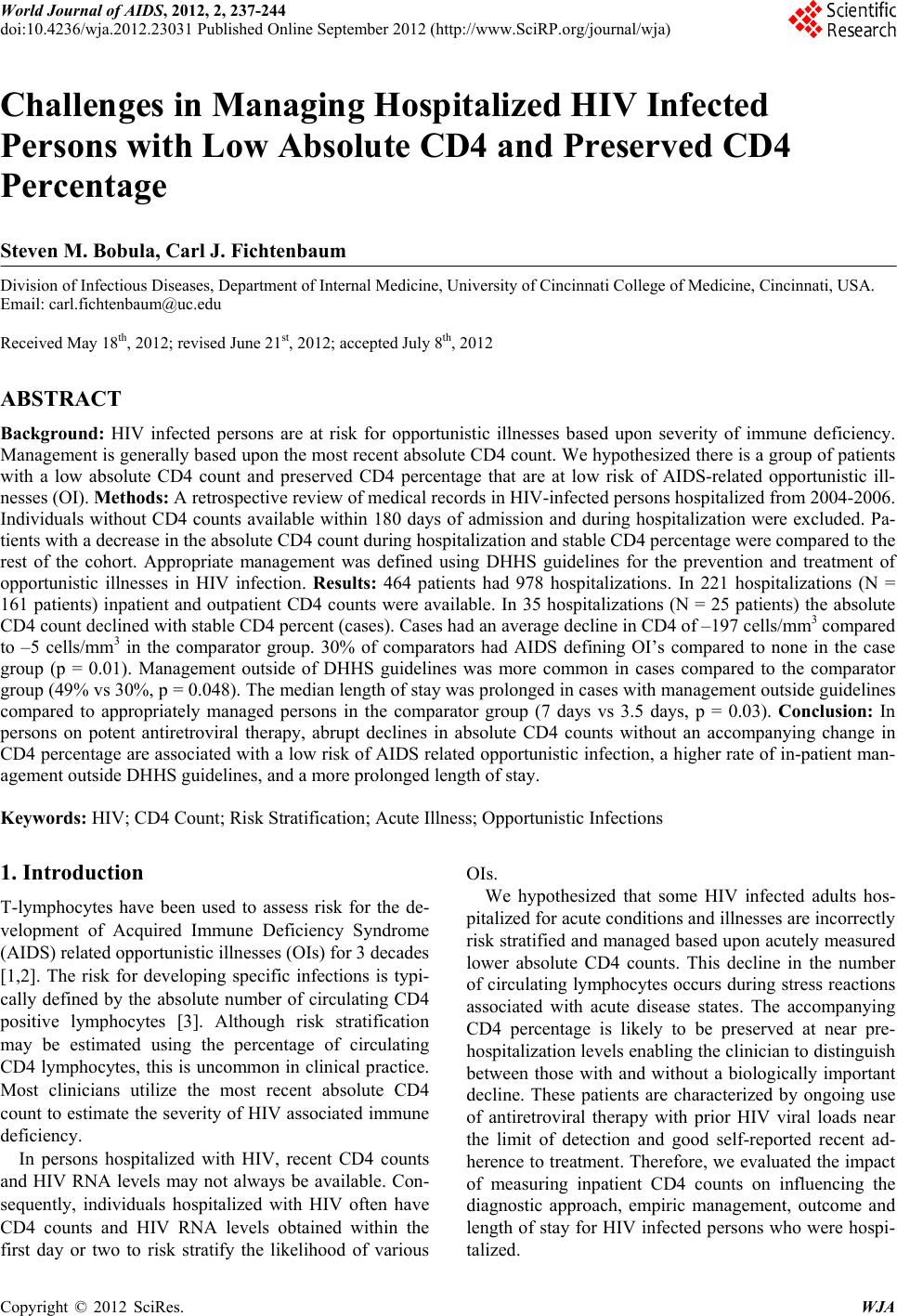 World Journal of AIDS, 2012, 2, 237-244 doi:10.4236/wja.2012.23031 Published Online September 2012 (http://www.SciRP.org/journal/wja) 237 Challenges in Managing Hospitalized HIV Infected Persons with Low Absolute CD4 and Preserved CD4 Percentage Steven M. Bobula, Carl J. Fichtenbaum Division of Infectious Diseases, Department of Internal Medicine, University of Cincinnati College of Medicine, Cincinnati, USA. Email: [email protected] Received May 18th, 2012; revised June 21st, 2012; accepted July 8th, 2012 ABSTRACT Background: HIV infected persons are at risk for opportunistic illnesses based upon severity of immune deficiency. Management is generally based upon the most recent absolute CD4 count. We hypothesized there is a group of patients with a low absolute CD4 count and preserved CD4 percentage that are at low risk of AIDS-related opportunistic ill- nesses (OI). Methods: A retrospective review of medical records in HIV-infected persons hospitalized from 2004-2006. Individuals without CD4 counts available within 180 days of admission and during hospitalization were excluded. Pa- tients with a decrease in the absolute CD4 count during hospitalization and stable CD4 percentage were compared to the rest of the cohort. Appropriate management was defined using DHHS guidelines for the prevention and treatment of opportunistic illnesses in HIV infection. Results: 464 patients had 978 hospitalizations. In 221 hospitalizations (N = 161 patients) inpatient and outpatient CD4 counts were available. In 35 hospitalizations (N = 25 patients) the absolute CD4 count declined with stable CD4 percent (cases). Cases had an average decline in CD4 of –197 cells/mm3 compared to –5 cells/mm3 in the comparator group. 30% of comparators had AIDS defining OI’s compared to none in the case group (p = 0.01). Management outside of DHHS guidelines was more common in cases compared to the comparator group (49% vs 30%, p = 0.048). The median length of stay was prolonged in cases with management outside guidelines compared to appropriately managed persons in the comparator group (7 days vs 3.5 days, p = 0.03). Conclusion: In persons on potent antiretroviral therapy, abrupt declines in absolute CD4 counts without an accompanying change in CD4 percentage are associated with a low risk of AIDS related opportunistic infection, a higher rate of in-patient man- agement outside DHHS guidelines, and a more prolonged length of stay. Keywords: HIV; CD4 Count; Risk Stratification; Acute Illness; Opportunistic Infections 1. Introduction T-lymphocytes have been used to assess risk for the de- velopment of Acquired Immune Deficiency Syndrome (AIDS) related opportunistic illnesses (OIs) for 3 decades [1,2]. The risk for developing specific infections is typi- cally defined by the absolute number of circulating CD4 positive lymphocytes [3]. Although risk stratification may be estimated using the percentage of circulating CD4 lymphocytes, this is uncommon in clinical practice. Most clinicians utilize the most recent absolute CD4 count to estimate the severity of HIV associated immune deficiency. In persons hospitalized with HIV, recent CD4 counts and HIV RNA levels may not always be available. Con- sequently, individuals hospitalized with HIV often have CD4 counts and HIV RNA levels obtained within the first day or two to risk stratify the likelihood of various OIs. We hypothesized that some HIV infected adults hos- pitalized for acute conditions and illnesses are incorrectly risk stratified and managed based upon acutely measured lower absolute CD4 counts. This decline in the number of circulating lymphocytes occurs during stress reactions associated with acute disease states. The accompanying CD4 percentage is likely to be preserved at near pre- hospitalization levels enabling the clinician to distinguish between those with and without a biologically important decline. These patients are characterized by ongoing use of antiretroviral therapy with prior HIV viral loads near the limit of detection and good self-reported recent ad- herence to treatment. Therefore, we evaluated the impact of measuring inpatient CD4 counts on influencing the diagnostic approach, empiric management, outcome and length of stay for HIV infected persons who were hospi- talized. Copyright © 2012 SciRes. WJA 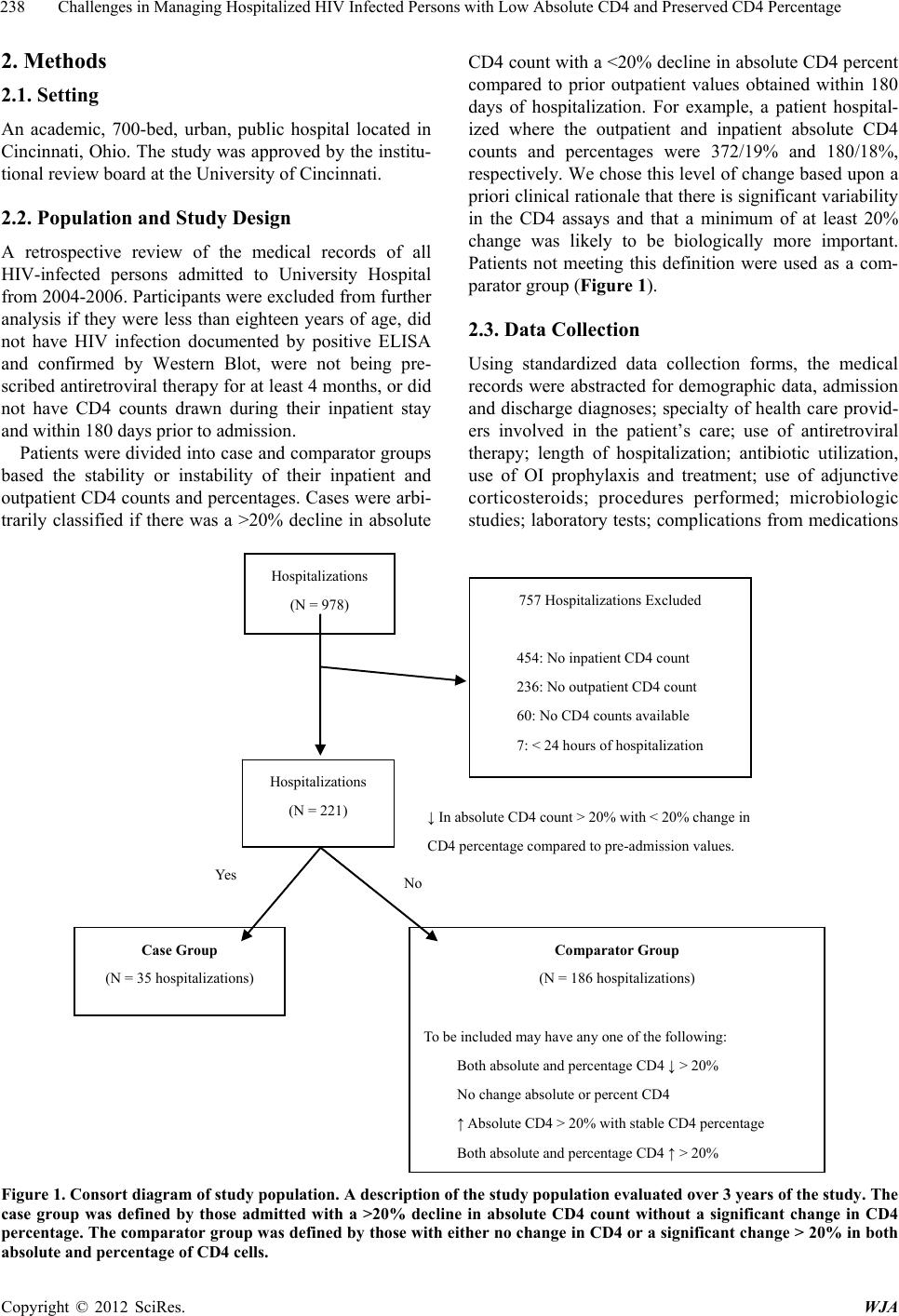 Challenges in Managing Hospitalized HIV Infected Persons with Low Absolute CD4 and Preserved CD4 Percentage 238 2. Methods 2.1. Setting An academic, 700-bed, urban, public hospital located in Cincinnati, Ohio. The study was approved by the institu- tional review board at the University of Cincinnati. 2.2. Population and Study Design A retrospective review of the medical records of all HIV-infected persons admitted to University Hospital from 2004-2006. Participants were excluded from further analysis if they were less than eighteen years of age, did not have HIV infection documented by positive ELISA and confirmed by Western Blot, were not being pre- scribed antiretroviral therapy for at least 4 months, or did not have CD4 counts drawn during their inpatient stay and within 180 days prior to admission. Patients were divided into case and comparator groups based the stability or instability of their inpatient and outpatient CD4 counts and percentages. Cases were arbi- trarily classified if there was a >20% decline in absolute CD4 count with a <20% decline in absolute CD4 percent compared to prior outpatient values obtained within 180 days of hospitalization. For example, a patient hospital- ized where the outpatient and inpatient absolute CD4 counts and percentages were 372/19% and 180/18%, respectively. We chose this level of change based upon a priori clinical rationale that there is significant variability in the CD4 assays and that a minimum of at least 20% change was likely to be biologically more important. Patients not meeting this definition were used as a com- parator group (Figure 1). 2.3. Data Collection Using standardized data collection forms, the medical records were abstracted for demographic data, admission and discharge diagnoses; specialty of health care provid- ers involved in the patient’s care; use of antiretroviral therapy; length of hospitalization; antibiotic utilization, use of OI prophylaxis and treatment; use of adjunctive corticosteroids; procedures performed; microbiologic studies; laboratory tests; complications from medications Hospitalizations (N = 978) Hospitalizations (N = 221) 757 Hospitalizations Excluded 454: No inpatient CD4 count 236: No outpatient CD4 count 60: No CD4 counts available 7: < 24 hours of hospitalization Comparator Group (N = 186 hospitalizations) To be included may have any one of the following: Both absolute and percentage CD4 ↓ > 20% No change absolute or percent CD4 ↑ Absolute CD4 > 20% with stable CD4 percentage Both absolute and percentage CD4 ↑ > 20% Case Group (N = 35 hospitalizations) ↓ In absolute CD4 count > 20% with < 20% change in CD4 percentage compared to pre-admission values. Yes Yes Yes Yes No Figure 1. Consort diagr am of study population. A descr iption of the study population evaluated over 3 year s of the study. The case group was defined by those admitted with a >20% decline in absolute CD4 count without a significant change in CD4 percentage. The comparator group was defined by those with either no change in CD4 or a significant change > 20% in both absolute and percentage of CD4 cells. Copyright © 2012 SciRes. WJA 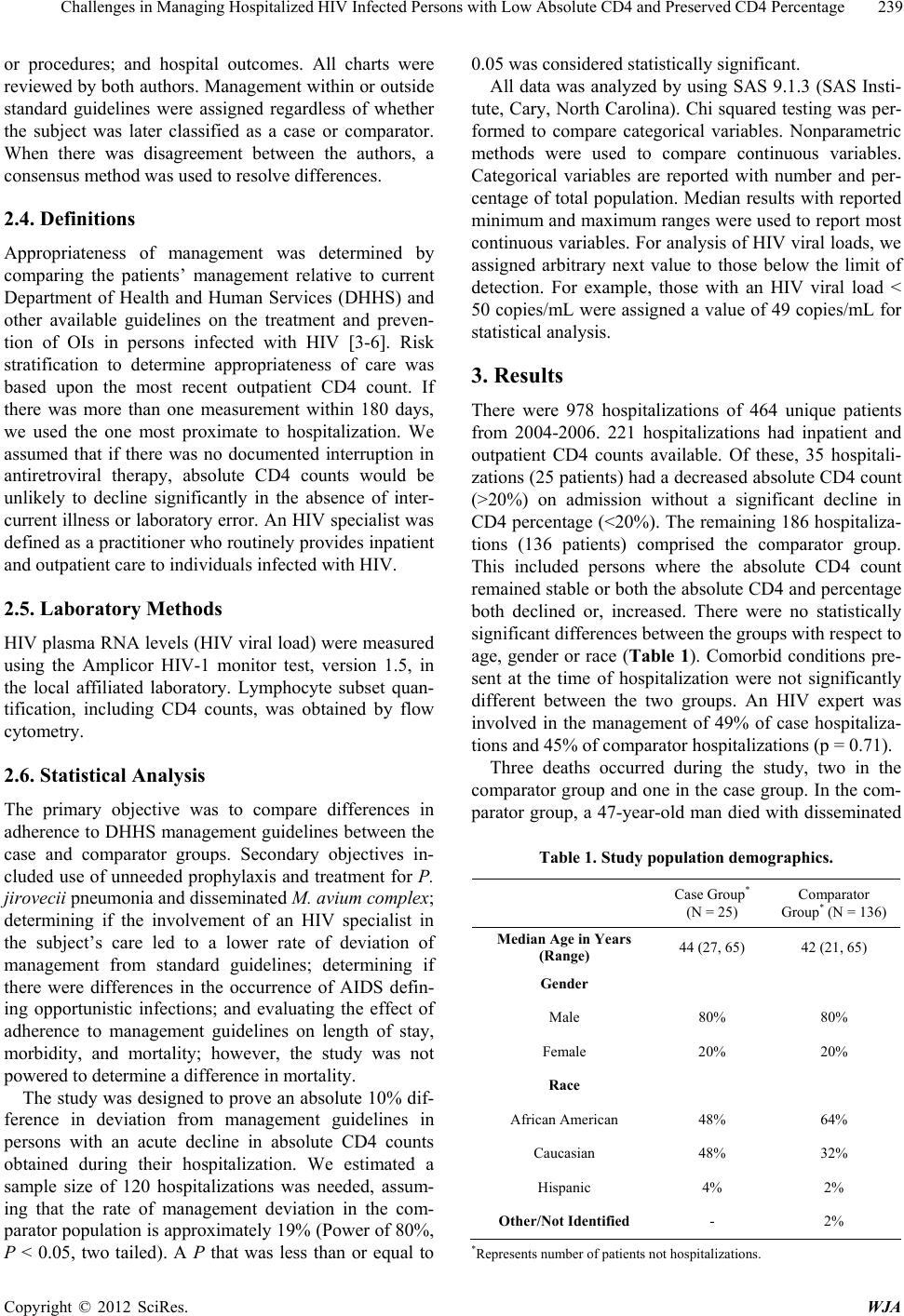 Challenges in Managing Hospitalized HIV Infected Persons with Low Absolute CD4 and Preserved CD4 Percentage 239 or procedures; and hospital outcomes. All charts were reviewed by both authors. Management within or outside standard guidelines were assigned regardless of whether the subject was later classified as a case or comparator. When there was disagreement between the authors, a consensus method was used to resolve differences. 2.4. Definitions Appropriateness of management was determined by comparing the patients’ management relative to current Department of Health and Human Services (DHHS) and other available guidelines on the treatment and preven- tion of OIs in persons infected with HIV [3-6]. Risk stratification to determine appropriateness of care was based upon the most recent outpatient CD4 count. If there was more than one measurement within 180 days, we used the one most proximate to hospitalization. We assumed that if there was no documented interruption in antiretroviral therapy, absolute CD4 counts would be unlikely to decline significantly in the absence of inter- current illness or laboratory error. An HIV specialist was defined as a practitioner who routinely provides inpatient and outpatient care to individuals infected with HIV. 2.5. Laboratory Methods HIV plasma RNA levels (HIV viral load) were measured using the Amplicor HIV-1 monitor test, version 1.5, in the local affiliated laboratory. Lymphocyte subset quan- tification, including CD4 counts, was obtained by flow cytometry. 2.6. Statistical Analysis The primary objective was to compare differences in adherence to DHHS management guidelines between the case and comparator groups. Secondary objectives in- cluded use of unneeded prophylaxis and treatment for P. jirovecii pneumonia and disseminated M. avium complex; determining if the involvement of an HIV specialist in the subject’s care led to a lower rate of deviation of management from standard guidelines; determining if there were differences in the occurrence of AIDS defin- ing opportunistic infections; and evaluating the effect of adherence to management guidelines on length of stay, morbidity, and mortality; however, the study was not powered to determine a difference in mortality. The study was designed to prove an absolute 10% dif- ference in deviation from management guidelines in persons with an acute decline in absolute CD4 counts obtained during their hospitalization. We estimated a sample size of 120 hospitalizations was needed, assum- ing that the rate of management deviation in the com- parator population is approximately 19% (Power of 80%, P < 0.05, two tailed). A P that was less than or equal to 0.05 was considered statistically significant. All data was analyzed by using SAS 9.1.3 (SAS Insti- tute, Cary, North Carolina). Chi squared testing was per- formed to compare categorical variables. Nonparametric methods were used to compare continuous variables. Categorical variables are reported with number and per- centage of total population. Median results with reported minimum and maximum ranges were used to report most continuous variables. For analysis of HIV viral loads, we assigned arbitrary next value to those below the limit of detection. For example, those with an HIV viral load < 50 copies/mL were assigned a value of 49 copies/mL for statistical analysis. 3. Results There were 978 hospitalizations of 464 unique patients from 2004-2006. 221 hospitalizations had inpatient and outpatient CD4 counts available. Of these, 35 hospitali- zations (25 patients) had a decreased absolute CD4 count (>20%) on admission without a significant decline in CD4 percentage (<20%). The remaining 186 hospitaliza- tions (136 patients) comprised the comparator group. This included persons where the absolute CD4 count remained stable or both the absolute CD4 and percentage both declined or, increased. There were no statistically significant differences between the groups with respect to age, gender or race (Table 1). Comorbid conditions pre- sent at the time of hospitalization were not significantly different between the two groups. An HIV expert was involved in the management of 49% of case hospitaliza- tions and 45% of comparator hospitalizations (p = 0.71). Three deaths occurred during the study, two in the comparator group and one in the case group. In the com- parator group, a 47-year-old man died with disseminated Table 1. Study population demographics. Case Group* (N = 25) Comparator Group* (N = 136) Median Age in Years (Range) 44 (27, 65) 42 (21, 65) Gender Male 80% 80% Female 20% 20% Race African American 48% 64% Caucasian 48% 32% Hispanic 4% 2% Other/Not Identified - 2% *Represents number of patients not hospitalizations. Copyright © 2012 SciRes. WJA 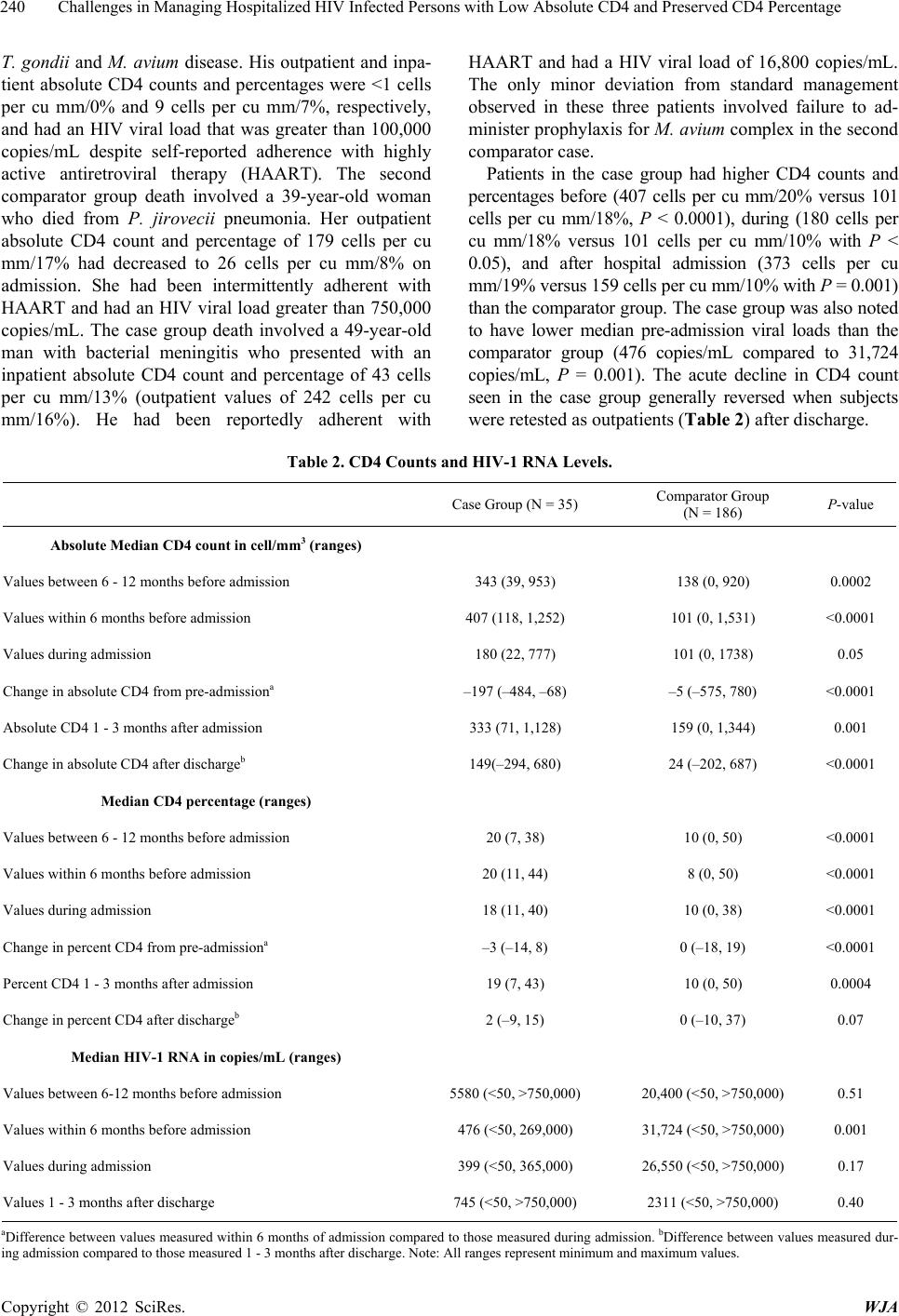 Challenges in Managing Hospitalized HIV Infected Persons with Low Absolute CD4 and Preserved CD4 Percentage 240 T. gondii and M. avium disease. His outpatient and inpa- tient absolute CD4 counts and percentages were <1 cells per cu mm/0% and 9 cells per cu mm/7%, respectively, and had an HIV viral load that was greater than 100,000 copies/mL despite self-reported adherence with highly active antiretroviral therapy (HAART). The second comparator group death involved a 39-year-old woman who died from P. jirovecii pneumonia. Her outpatient absolute CD4 count and percentage of 179 cells per cu mm/17% had decreased to 26 cells per cu mm/8% on admission. She had been intermittently adherent with HAART and had an HIV viral load greater than 750,000 copies/mL. The case group death involved a 49-year-old man with bacterial meningitis who presented with an inpatient absolute CD4 count and percentage of 43 cells per cu mm/13% (outpatient values of 242 cells per cu mm/16%). He had been reportedly adherent with HAART and had a HIV viral load of 16,800 copies/mL. The only minor deviation from standard management observed in these three patients involved failure to ad- minister prophylaxis for M. avium complex in the second comparator case. Patients in the case group had higher CD4 counts and percentages before (407 cells per cu mm/20% versus 101 cells per cu mm/18%, P < 0.0001), during (180 cells per cu mm/18% versus 101 cells per cu mm/10% with P < 0.05), and after hospital admission (373 cells per cu mm/19% versus 159 cells per cu mm/10% with P = 0.001) than the comparator group. The case group was also noted to have lower median pre-admission viral loads than the comparator group (476 copies/mL compared to 31,724 copies/mL, P = 0.001). The acute decline in CD4 count seen in the case group generally reversed when subjects were retested as outpatients (Table 2) after discharge. Table 2. CD4 Counts and HIV-1 RNA Levels. Case Group (N = 35) Comparator Group (N = 186) P-value Absolute Median CD4 count in cell/mm3 (ranges) Values between 6 - 12 months before admission 343 (39, 953) 138 (0, 920) 0.0002 Values within 6 months before admission 407 (118, 1,252) 101 (0, 1,531) <0.0001 Values during admission 180 (22, 777) 101 (0, 1738) 0.05 Change in absolute CD4 from pre-admissiona –197 (–484, –68) –5 (–575, 780) <0.0001 Absolute CD4 1 - 3 months after admission 333 (71, 1,128) 159 (0, 1,344) 0.001 Change in absolute CD4 after dischargeb 149(–294, 680) 24 (–202, 687) <0.0001 Median CD4 percentage (ranges) Values between 6 - 12 months before admission 20 (7, 38) 10 (0, 50) <0.0001 Values within 6 months before admission 20 (11, 44) 8 (0, 50) <0.0001 Values during admission 18 (11, 40) 10 (0, 38) <0.0001 Change in percent CD4 from pre-admissiona –3 (–14, 8) 0 (–18, 19) <0.0001 Percent CD4 1 - 3 months after admission 19 (7, 43) 10 (0, 50) 0.0004 Change in percent CD4 after dischargeb 2 (–9, 15) 0 (–10, 37) 0.07 Median HIV-1 RNA in copies/mL (ranges) Values between 6-12 months before admission 5580 (<50, >750,000) 20,400 (<50, >750,000) 0.51 Values within 6 months before admission 476 (<50, 269,000) 31,724 (<50, >750,000) 0.001 Values during admission 399 (<50, 365,000) 26,550 (<50, >750,000) 0.17 Values 1 - 3 months after discharge 745 (<50, >750,000) 2311 (<50, >750,000) 0.40 aDifference between values measured within 6 months of admission compared to those measured during admission. bDifference between values measured dur- ing admission compared to those measured 1 - 3 months after discharge. Note: All ranges represent minimum and maximum values. Copyright © 2012 SciRes. WJA 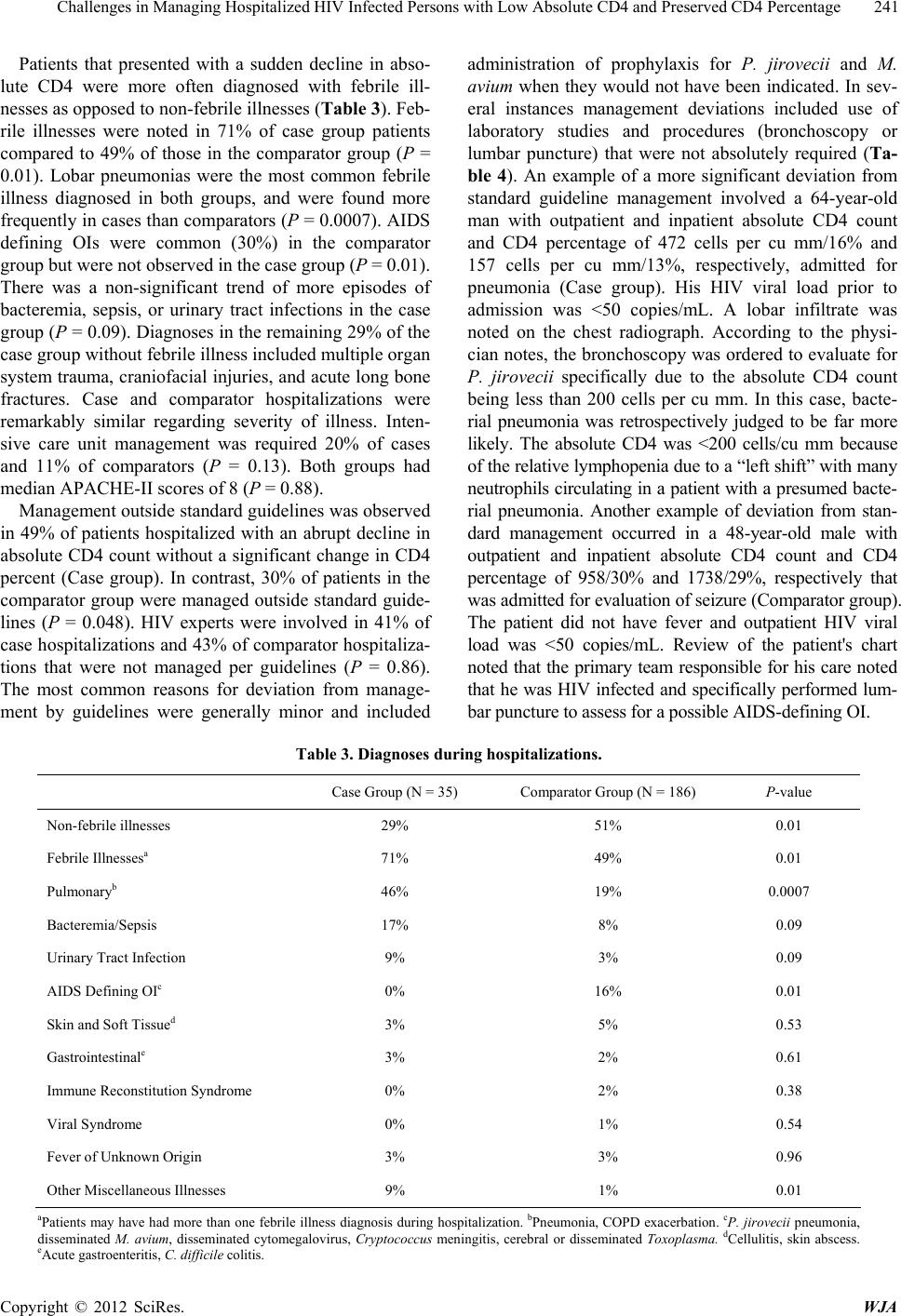 Challenges in Managing Hospitalized HIV Infected Persons with Low Absolute CD4 and Preserved CD4 Percentage 241 Patients that presented with a sudden decline in abso- lute CD4 were more often diagnosed with febrile ill- nesses as opposed to non-febrile illnesses (Ta b l e 3). Feb- rile illnesses were noted in 71% of case group patients compared to 49% of those in the comparator group (P = 0.01). Lobar pneumonias were the most common febrile illness diagnosed in both groups, and were found more frequently in cases than comparators (P = 0.0007). AIDS defining OIs were common (30%) in the comparator group but were not observed in the case group (P = 0.01). There was a non-significant trend of more episodes of bacteremia, sepsis, or urinary tract infections in the case group (P = 0.09). Diagnoses in the remaining 29% of the case group without febrile illness included multiple organ system trauma, craniofacial injuries, and acute long bone fractures. Case and comparator hospitalizations were remarkably similar regarding severity of illness. Inten- sive care unit management was required 20% of cases and 11% of comparators (P = 0.13). Both groups had median APACHE-II scores of 8 (P = 0.88). Management outside standard guidelines was observed in 49% of patients hospitalized with an abrupt decline in absolute CD4 count without a significant change in CD4 percent (Case group). In contrast, 30% of patients in the comparator group were managed outside standard guide- lines (P = 0.048). HIV experts were involved in 41% of case hospitalizations and 43% of comparator hospitaliza- tions that were not managed per guidelines (P = 0.86). The most common reasons for deviation from manage- ment by guidelines were generally minor and included administration of prophylaxis for P. jirovecii and M. avium when they would not have been indicated. In sev- eral instances management deviations included use of laboratory studies and procedures (bronchoscopy or lumbar puncture) that were not absolutely required (Ta- ble 4). An example of a more significant deviation from standard guideline management involved a 64-year-old man with outpatient and inpatient absolute CD4 count and CD4 percentage of 472 cells per cu mm/16% and 157 cells per cu mm/13%, respectively, admitted for pneumonia (Case group). His HIV viral load prior to admission was <50 copies/mL. A lobar infiltrate was noted on the chest radiograph. According to the physi- cian notes, the bronchoscopy was ordered to evaluate for P. jirovecii specifically due to the absolute CD4 count being less than 200 cells per cu mm. In this case, bacte- rial pneumonia was retrospectively judged to be far more likely. The absolute CD4 was <200 cells/cu mm because of the relative lymphopenia due to a “left shift” with many neutrophils circulating in a patient with a presumed bacte- rial pneumonia. Another example of deviation from stan- dard management occurred in a 48-year-old male with outpatient and inpatient absolute CD4 count and CD4 percentage of 958/30% and 1738/29%, respectively that was admitted for evaluation of seizure (Comparator group). The patient did not have fever and outpatient HIV viral load was <50 copies/mL. Review of the patient's chart noted that the primary team responsible for his care noted that he was HIV infected and specifically performed lum- bar puncture to assess for a possible AIDS-defining OI. Table 3. Diagnoses during hospitalizations. Case Group (N = 35) Comparator Group (N = 186) P-value Non-febrile illnesses 29% 51% 0.01 Febrile Illnessesa71% 49% 0.01 Pulmonaryb 46% 19% 0.0007 Bacteremia/Sepsis 17% 8% 0.09 Urinary Tract Infection 9% 3% 0.09 AIDS Defining OIc 0% 16% 0.01 Skin and Soft Tissued 3% 5% 0.53 Gastrointestinale 3% 2% 0.61 Immune Reconstitution Syndrome 0% 2% 0.38 Viral Syndrome 0% 1% 0.54 Fever of Unknown Origin 3% 3% 0.96 Other Miscellaneous Illnesses 9% 1% 0.01 aPatients may have had more than one febrile illness diagnosis during hospitalization. bPneumonia, COPD exacerbation. cP. jir ovecii pneumonia, disseminated M. avium, disseminated cytomegalovirus, Cryptococcus meningitis, cerebral or disseminated Toxoplasma. dCellulitis, skin abscess. eAcute gastroenteritis, C. difficile colitis. Copyright © 2012 SciRes. WJA 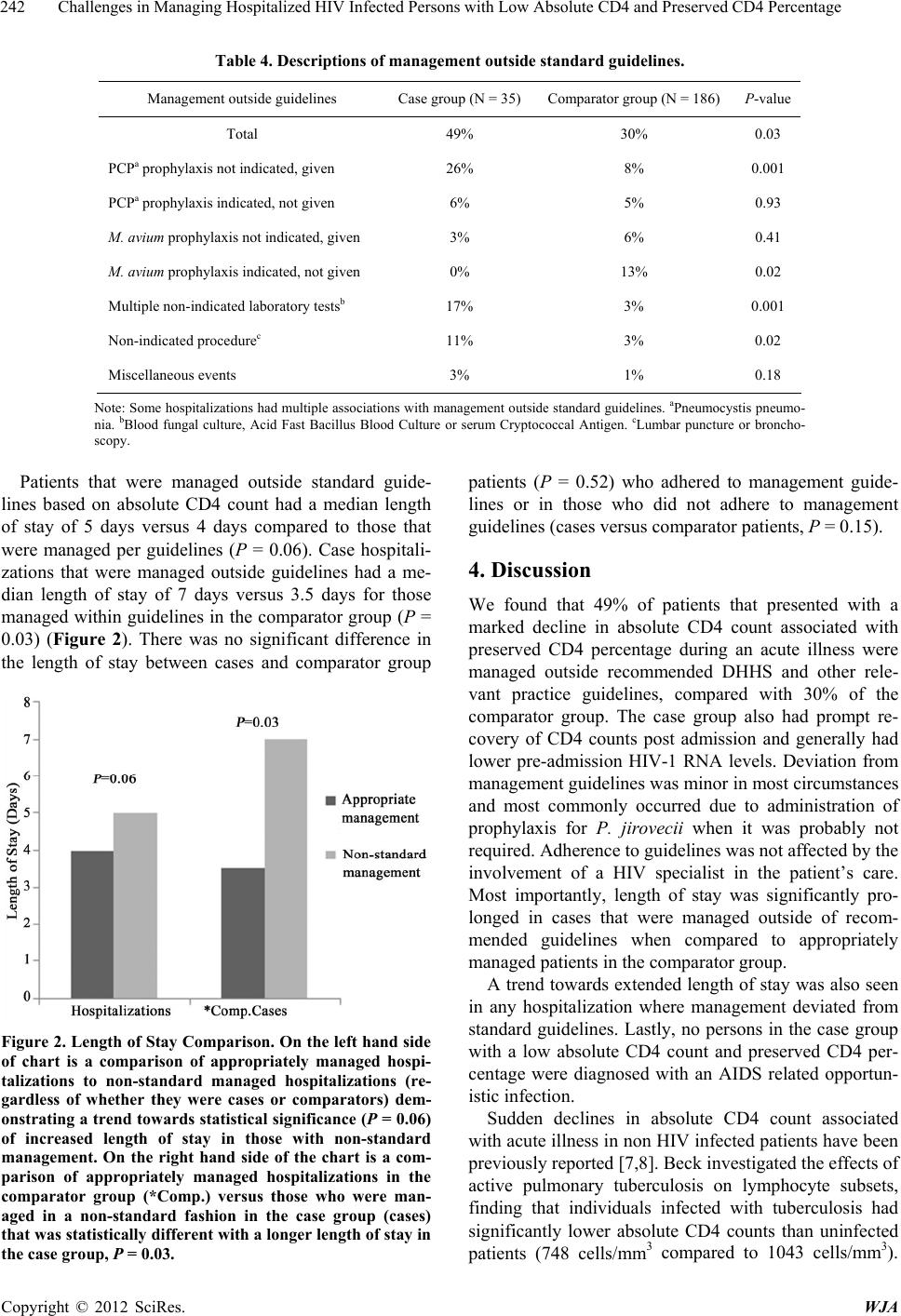 Challenges in Managing Hospitalized HIV Infected Persons with Low Absolute CD4 and Preserved CD4 Percentage 242 Table 4. Descriptions of management outside standard guidelines. Management outside guidelines Case group (N = 35)Comparator group (N = 186) P-value Total 49% 30% 0.03 PCPa prophylaxis not indicated, given 26% 8% 0.001 PCPa prophylaxis indicated, not given 6% 5% 0.93 M. avium prophylaxis not indicated, given 3% 6% 0.41 M. avium prophylaxis indicated, not given 0% 13% 0.02 Multiple non-indicated laboratory testsb 17% 3% 0.001 Non-indicated procedurec 11% 3% 0.02 Miscellaneous events 3% 1% 0.18 Note: Some hospitalizations had multiple associations with management outside standard guidelines. aPneumocystis pneumo- nia. bBlood fungal culture, Acid Fast Bacillus Blood Culture or serum Cryptococcal Antigen. cLumbar puncture or broncho- scopy. Patients that were managed outside standard guide- lines based on absolute CD4 count had a median length of stay of 5 days versus 4 days compared to those that were managed per guidelines (P = 0.06). Case hospitali- zations that were managed outside guidelines had a me- dian length of stay of 7 days versus 3.5 days for those managed within guidelines in the comparator group (P = 0.03) (Figure 2). There was no significant difference in the length of stay between cases and comparator group Figure 2. Length of Stay Comparison. On the left hand side of chart is a comparison of appropriately managed hospi- talizations to non-standard managed hospitalizations (re- gardless of whether they were cases or comparators) dem- onstrating a trend towards statistical significance (P = 0.06) of increased length of stay in those with non-standard management. On the right hand side of the chart is a com- parison of appropriately managed hospitalizations in the comparator group (*Comp.) versus those who were man- aged in a non-standard fashion in the case group (cases) that was statistically different with a longer length of stay in the case group, P = 0.03. patients (P = 0.52) who adhered to management guide- lines or in those who did not adhere to management guidelines (cases versus comparator patients, P = 0.15). 4. Discussion We found that 49% of patients that presented with a marked decline in absolute CD4 count associated with preserved CD4 percentage during an acute illness were managed outside recommended DHHS and other rele- vant practice guidelines, compared with 30% of the comparator group. The case group also had prompt re- covery of CD4 counts post admission and generally had lower pre-admission HIV-1 RNA levels. Deviation from management guidelines was minor in most circumstances and most commonly occurred due to administration of prophylaxis for P. jirovecii when it was probably not required. Adherence to guidelines was not affected by the involvement of a HIV specialist in the patient’s care. Most importantly, length of stay was significantly pro- longed in cases that were managed outside of recom- mended guidelines when compared to appropriately managed patients in the comparator group. A trend towards extended length of stay was also seen in any hospitalization where management deviated from standard guidelines. Lastly, no persons in the case group with a low absolute CD4 count and preserved CD4 per- centage were diagnosed with an AIDS related opportun- istic infection. Sudden declines in absolute CD4 count associated with acute illness in non HIV infected patients have been previously reported [7,8]. Beck investigated the effects of active pulmonary tuberculosis on lymphocyte subsets, finding that individuals infected with tuberculosis had significantly lower absolute CD4 counts than uninfected patients (748 cells/mm3 compared to 1043 cells/mm3). Copyright © 2012 SciRes. WJA 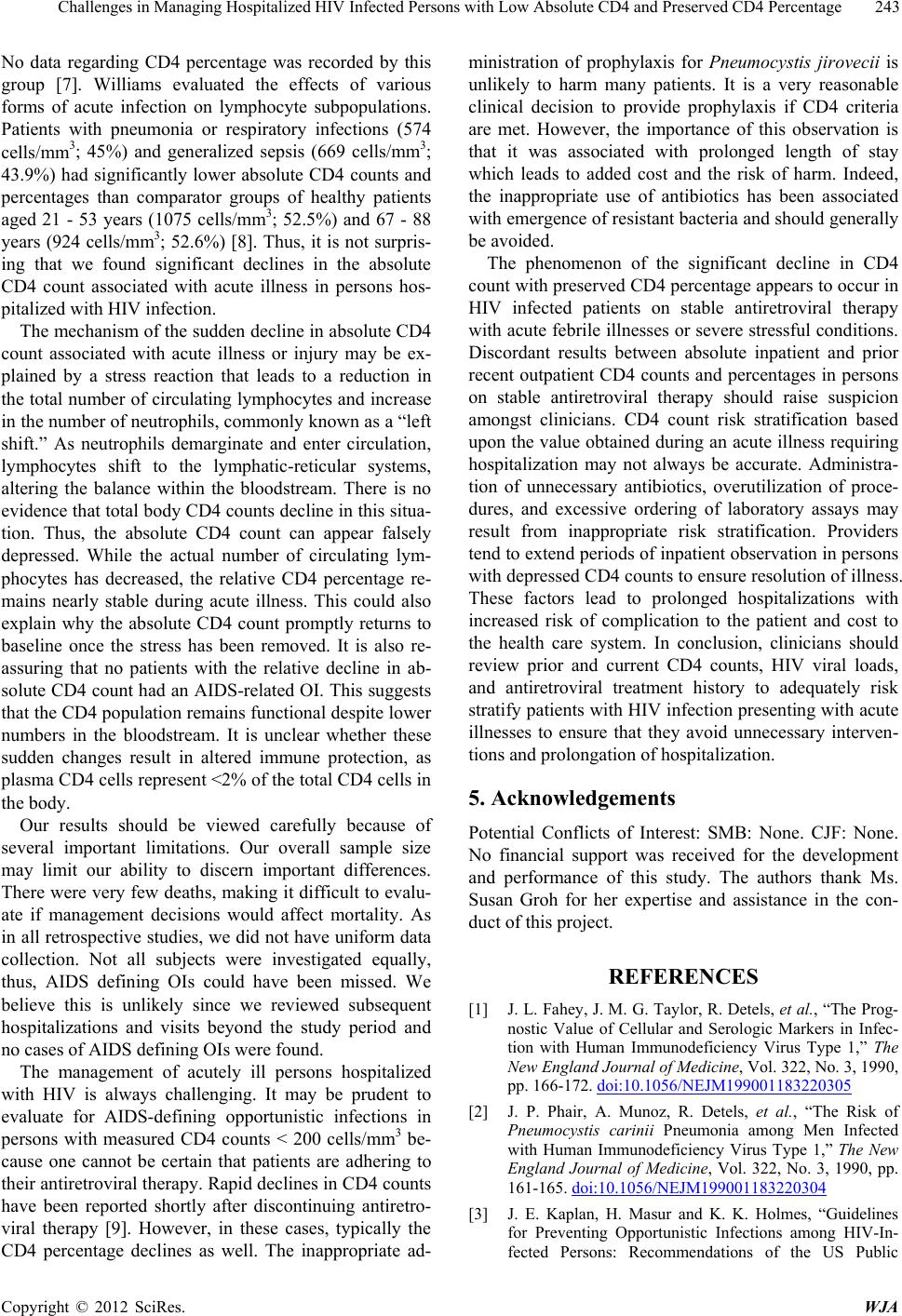 Challenges in Managing Hospitalized HIV Infected Persons with Low Absolute CD4 and Preserved CD4 Percentage 243 No data regarding CD4 percentage was recorded by this group [7]. Williams evaluated the effects of various forms of acute infection on lymphocyte subpopulations. Patients with pneumonia or respiratory infections (574 cells/mm3; 45%) and generalized sepsis (669 cells/mm3; 43.9%) had significantly lower absolute CD4 counts and percentages than comparator groups of healthy patients aged 21 - 53 years (1075 cells/mm3; 52.5%) and 67 - 88 years (924 cells/mm3; 52.6%) [8]. Thus, it is not surpris- ing that we found significant declines in the absolute CD4 count associated with acute illness in persons hos- pitalized with HIV infection. The mechanism of the sudden decline in absolute CD4 count associated with acute illness or injury may be ex- plained by a stress reaction that leads to a reduction in the total number of circulating lymphocytes and increase in the number of neutrophils, commonly known as a “left shift.” As neutrophils demarginate and enter circulation, lymphocytes shift to the lymphatic-reticular systems, altering the balance within the bloodstream. There is no evidence that total body CD4 counts decline in this situa- tion. Thus, the absolute CD4 count can appear falsely depressed. While the actual number of circulating lym- phocytes has decreased, the relative CD4 percentage re- mains nearly stable during acute illness. This could also explain why the absolute CD4 count promptly returns to baseline once the stress has been removed. It is also re- assuring that no patients with the relative decline in ab- solute CD4 count had an AIDS-related OI. This suggests that the CD4 population remains functional despite lower numbers in the bloodstream. It is unclear whether these sudden changes result in altered immune protection, as plasma CD4 cells represent <2% of the total CD4 cells in the body. Our results should be viewed carefully because of several important limitations. Our overall sample size may limit our ability to discern important differences. There were very few deaths, making it difficult to evalu- ate if management decisions would affect mortality. As in all retrospective studies, we did not have uniform data collection. Not all subjects were investigated equally, thus, AIDS defining OIs could have been missed. We believe this is unlikely since we reviewed subsequent hospitalizations and visits beyond the study period and no cases of AIDS defining OIs were found. The management of acutely ill persons hospitalized with HIV is always challenging. It may be prudent to evaluate for AIDS-defining opportunistic infections in persons with measured CD4 counts < 200 cells/mm3 be- cause one cannot be certain that patients are adhering to their antiretroviral therapy. Rapid declines in CD4 counts have been reported shortly after discontinuing antiretro- viral therapy [9]. However, in these cases, typically the CD4 percentage declines as well. The inappropriate ad- ministration of prophylaxis for Pneumocystis jirovecii is unlikely to harm many patients. It is a very reasonable clinical decision to provide prophylaxis if CD4 criteria are met. However, the importance of this observation is that it was associated with prolonged length of stay which leads to added cost and the risk of harm. Indeed, the inappropriate use of antibiotics has been associated with emergence of resistant bacteria and should generally be avoided. The phenomenon of the significant decline in CD4 count with preserved CD4 percentage appears to occur in HIV infected patients on stable antiretroviral therapy with acute febrile illnesses or severe stressful conditions. Discordant results between absolute inpatient and prior recent outpatient CD4 counts and percentages in persons on stable antiretroviral therapy should raise suspicion amongst clinicians. CD4 count risk stratification based upon the value obtained during an acute illness requiring hospitalization may not always be accurate. Administra- tion of unnecessary antibiotics, overutilization of proce- dures, and excessive ordering of laboratory assays may result from inappropriate risk stratification. Providers tend to extend periods of inpatient observation in persons with depressed CD4 counts to ensure resolution of illness. These factors lead to prolonged hospitalizations with increased risk of complication to the patient and cost to the health care system. In conclusion, clinicians should review prior and current CD4 counts, HIV viral loads, and antiretroviral treatment history to adequately risk stratify patients with HIV infection presenting with acute illnesses to ensure that they avoid unnecessary interven- tions and prolongation of hospitalization. 5. Acknowledgements Potential Conflicts of Interest: SMB: None. CJF: None. No financial support was received for the development and performance of this study. The authors thank Ms. Susan Groh for her expertise and assistance in the con- duct of this project. REFERENCES [1] J. L. Fahey, J. M. G. Taylor, R. Detels, et al., “The Prog- nostic Value of Cellular and Serologic Markers in Infec- tion with Human Immunodeficiency Virus Type 1,” The New England Journal of Medicine, Vol. 322, No. 3, 1990, pp. 166-172. doi:10.1056/NEJM199001183220305 [2] J. P. Phair, A. Munoz, R. Detels, et al., “The Risk of Pneumocystis carinii Pneumonia among Men Infected with Human Immunodeficiency Virus Type 1,” The New England Journal of Medicine, Vol. 322, No. 3, 1990, pp. 161-165. doi:10.1056/NEJM199001183220304 [3] J. E. Kaplan, H. Masur and K. K. Holmes, “Guidelines for Preventing Opportunistic Infections among HIV-In- fected Persons: Recommendations of the US Public Copyright © 2012 SciRes. WJA  Challenges in Managing Hospitalized HIV Infected Persons with Low Absolute CD4 and Preserved CD4 Percentage Copyright © 2012 SciRes. WJA 244 Health Service and the Infectious Diseases Society of America,” MMWR—Recommendations and Reports, 51 (RR08), 14 June 2002, pp. 1-46. [4] C. A. Benson, J. E. Kaplan, H. Masur, A. Pau and K. K. Holmes, “Treating Opportunistic Infections among HIV- Infected Adults and Adolescents: Recommendations from CDC, the National Institutes of Health, and the HIV Medicine Association/Infectious Diseases Society of America,” MMWR—Recommendations and Reports, 53 (RR15), 17 December 2004, pp. 1-112. [5] J. A. Aberg, J. E. Gallant, J. Anderson, et al., “Primary Care Guidelines for the Management of Persons Infected with Human Immunodeficiency Virus: Recommendations of the HIV Medicine Association of the Infectious Diseases Society of America,” Clinical Infectious Diseases, Vol. 39, No. 5, 2004, pp. 609-629. doi:10.1086/423390 [6] L. A. Mandell, R. G. Wunderink, A. Anzueto, et al., “In- fectious Diseases Society of America/American Thoracic Society Consensus Guidelines on the Management of Community-Acquired Pneumonia in Adults,” Clinical In- fectious Diseases, Vol. 44, Suppl. 2, 2007, pp. S27-S72. doi:10.1086/511159 [7] J. S. Beck, R. C. Potts, T. Kardjito and J. M. Grange, “T4 Lymphopenia in Patients with Active Pulmonary Tuber- culosis,” Clinical & Experimental Immunology, Vol. 60, No. 1, 1985, pp. 49-54. [8] R. C. Williams Jr., F. T. Koster and K. A. Kilpatrick, “Alterations in Lymphocyte Cell Surface Markers during Various Human Infections,” The American Journal of Medicine, Vol. 75, No. 5, 1983, pp. 807-816. doi:10.1016/0002-9343(83)90412-6 [9] R. Seng, C. Goujard, L. Desquilbet, M. Sinet, C. Rouz- ioux, C. Deveau, F. Boufassa, J. F. Delfraissy, L. Meyer, A. Venet and The ANRS PRIMO and SEROCO Study Groups, “Rapid CD4+ Cell Decrease after Transient cART Initiated during Primary HIV Infection (ANRS PRIMO and SEROCO Cohorts),” Journal of Acquired Immune Deficiency Syndromes, Vol. 49, No. 3, 2008, pp. 251-258. doi:10.1097/QAI.0b013e318189a739 |