

Paper Menu >>
Journal Menu >>
 Vol.3, No.5, 732-737 (2012) Agricultural Sciences http://dx.doi.org/10.4236/as.2012.35088 Evaluation of phytophthora root rot-resistant Capsicum annuum accessions for resistance to phytophthora foliar blight and phytophthora stem blight Byron L. Candole1, Patrick J. Conner1*, Pingsheng Ji2 1Horticulture Department, University of Georgia-Tifton Campus, Tifton, USA; *Corresponding Author: [email protected] 2Plant Pathology Department, University of Georgia, Athens, USA Received 17 June 2012; revised 27 July 2012; accepted 3 August 2012 ABSTRACT A mixture of six Georgia isolates of Phyto- phthora capsici (Leon.), the causal agent of phy- tophthora blight, were used for greenhouse mass screening of over 700 accessions of Cap- sicum annuum for both stem blight and foliar blight. From this screening, it was determined that resistance to both fo rms of the d isease were relatively common in the germplasm, but resis- tance to one form of the disease was not strong- ly correlated to resistance to the other form. Ten accessions previously shown to possess root rot resistance were tested for resistance to stem rot and leaf blight, and were found to also be highly resistant to these forms of the disease. It appears that single accessions have resistance to foliar, stem and root rot caused by P. capsici, which may simplify breeding for resistance to all three forms of the dis ease. Keywords: Pepper; Phytophthora Blight; Root Rot; Stem Blight; Foliar Blight 1. INTRODUCTION Bell pepper (Capsicum annuum) is one of the eco- nomically important crops in the state of Georgia where the total farm-gate value of bell pepper was $100 million in the year 2007 [1]. Phytophthora blight, caused by the oomycete Phytophthora capsici, is a serious threat to production of peppers worldwide [2]. Phytophthora blight is becoming a major disease constraint to bell pepper production in Georgia, affecting the plants at all growth stages (from seedling to adult plant) and multiple plant parts such as the roots, leaves, stems and fruit [3]. P. capsici attacks the roots at all developmental stages, causing a sudden wilt and collapse of the infected plant [4]. Foliar blight starts with small circular or irregular- shaped lesions which later enlarge, dry, and bleach to a light tan [5]. Phytophthora foliar blight can lead to seri- ous crop losses when soil containing P. capsici contacts leaves by rain splash or working in wet fields [6]. Stem lesions lead to an aerial blight where a black girdling lesion develops most commonly in the leaf and branch axils and extends upward and downward. The development of phytophthora-resistant cultivars is key to an integrative approach to phytophthora-disease management [7]. Ideally, resistant cultivars will be resis- tant to infection in all plant organs, but resistance to in- fection in one organ is not necessarily related to resis- tance in other organs. The commonly used resistant line Criollo de Morelos-334 (CM-334) is resistant to Phyto- phthora capsici in roots, stems, and leaves [5,6,8]. However, Walker and Bosland [6] found that in proge- nies derived from CM-334 foliar blight resistance and root rot resistance were controlled by independently seg- regating genes. Further work by Sy et al. [9] demon- strated that stem blight resistance from CM-334 was controlled by a single gene, Psr, when “Early Jalapeno” was the susceptible parent, and that this gene was inher- ited independently from those controlling foliar blight and root rot resistance. Thus it appears that foliar blight, stem blight, and root rot are separate disease syndromes that need to be analyzed independently. Multiple races of P. capsici have been demonstrated to exist in commercial production regions [7,10,11]. The presence of both mating types of P. capsici in some pro- duction regions [10] requires that new sources of resis- tance should be found and incorporated into adapted germplasm as insurance against the development of new pathogenic strains of P. capsici. Additionally, resistance sources should be tested against multiple isolates from the growing region for which the resistant cultivar is tar- Copyright © 2012 SciRes. OPEN ACC ESS  B. L. Candole et al. / Agricultural Sciences 3 (2012) 732-737 733 geted. Previously Candole et al. [12] screened 2301 acces- sions from the USDA, ARS Plant Genetic Resources Conservation Unit for resistance to Phytophthora capsici root rot. High levels of resistance were found in several accessions using greenhouse and field screening proto- cols. The objective of this study was to evaluate root rot resistant accessions for resistance to the stem and foliar phases of phytophthora blight caused by P. capsici. The results of these experiments will provide information useful to breeders searching for germplasm to breed for resistance to P. capsici. 2. MATERIALS AND METHODS 2.1. Plant Material Capsicum annuum accessions were obtained from the USDA, ARS Plant Genetic Resources Conservation Unit in Griffin, Ga. A total of 1392 accessions were randomly selected for foliar and stem inoculations. This number represented 45% of the total (3118) C. annuum acces- sions available from this location. Seeds from each ac- cession were sown in plastic cells of a multipot bedding plant container (Com-Pack D806, Hummert International, St. Louis, Mo.). Each cell measured 6 cm × 4 cm × 5.5 cm and contained Redi Earth plug and seedling mix (Sun Gro, Bellevue, Wash). A total of 6 - 12 seeds were planted for each accession at the rate of two seeds per cell. The cells containing the seeds were then placed in 52.3 cm × 25.9 cm × 6.1 cm plastic trays with drainage holes (F1020 flats, Hummert International, St. Louis, Mo.). The test plants were watered twice daily and fertil- ized twice a week with water-soluble fertilizer (24N-6P- 16K) diluted to provide 315 ppm nitrogen. Separate sets of the same accessions were prepared for foliar and stem tests and were maintained in the greenhouse. The air temperature in the greenhouse before and during the in- cubation process had a diurnal range of 13˚C - 30˚C. Cultivars Camelot and CM-334 were used as the suscep- tible and resistant controls, respectively, in all tests. CM-334 was kindly provided by P. Bosland (New Mex. St. Univ.) and “Camelot” was obtained from Rupp Seeds (Wauseon, Ohio). 2.2. P. capsici Isolates and Inoculum Preparation Three virulent isolates from each of the A1 and A2 mating types of P. capsici were used in the mass screen- ing and subsequent inoculation tests (Table 1). A mixture of zoospores from these isolates was used in inoculating the test plants. The zoospores were produced aseptically by transferring 10 agar plugs from the advancing portion of 5-day-old cultures (25˚C, under dark condition) of P. capsici in 5% (v/v) clarified V8 juice agar (Kuhajek et al., Table 1. Isolates of P. capsici used for the mass screening of Capsicum annuum accessions. Isolate Mating type Source PC-F6S1 A1 Bell pepper (Tift County, Ga.) PC-F6S3 A1 Bell pepper (Tift County, Ga.) PC-1A1 A1 Squash (Tift County, Ga.) PC-F1R3 A2 Bell pepper (Tift County, Ga.) PC-F1R6 A2 Bell pepper (Tift County, Ga.) PC-F1S12 A2 Bell pepper (Tift County, Ga.) 2003) to 100 × 15 mm Petri dishes (ca. 12 plates/isolate) and 10 ml of clarified V8 juice were added thereafter. After 24 h of incubation at 25˚C under dark condition, the V8 juice in each plate was replaced with 10 ml sterile mineral salt solution (MSS) [13] and incubated at 20˚C, 30 cm under two fluorescent lights (cool white, 20 W, 25˚C, 35 µmol·m−2·s−1 for 24 h). The MSS from each plate were then replaced with the same volume of fresh MSS and allowed to incubate for three more days. Zoospores from each isolate were harvested separately. To harvest the zoospores, the MSS was removed from each plate and then washed twice with 10 ml of sterile distilled water. After the second washing, 10 ml of sterile distilled water was added to each plate and placed in the refrigerator (1.3˚C) for 45 min. The plates were then placed on top of a laboratory bench and monitored for zoospore release. The zoospore suspension from each Petri dish were then transferred very slowly to a 250 ml graduated cylinder and left undisturbed for five min. The upper 50 ml of the zoospore suspension was pipetted out and transferred to a 50 ml conical centrifuge tube. The tube was then inverted gently 2 - 3 times to distribute the zoospores in the suspension. One ml of the suspension was transferred to a 2 ml microcentrifuge tube with flat cap and vortexed for 90 s to encyst the zoospores. The zoospore concentration was determined by using a hem- acytometer and standardized at 5000 zoospores per ml for foliar [5] and 40,000 zoospores for stem inoculation. Equal volumes of zoospore suspensions were then com- bined for inoculation. 2.3. Screening for Foliar Resistance A total volume of 100 µl zoospore suspension was placed on the upper surface of a partially expanded leaf of a six-week-old seedling [5]. The inoculated seedlings (4 - 6 seedlings per accession) were placed inside a hu- midity chamber made of 0.1 mm plastic sheets that was also used to cover the bottom of the greenhouse benches. A home-use humidifier provided a relative humidity of 100% at night. Foliar blight assessment was performed Copyright © 2012 SciRes. OPEN ACC ESS 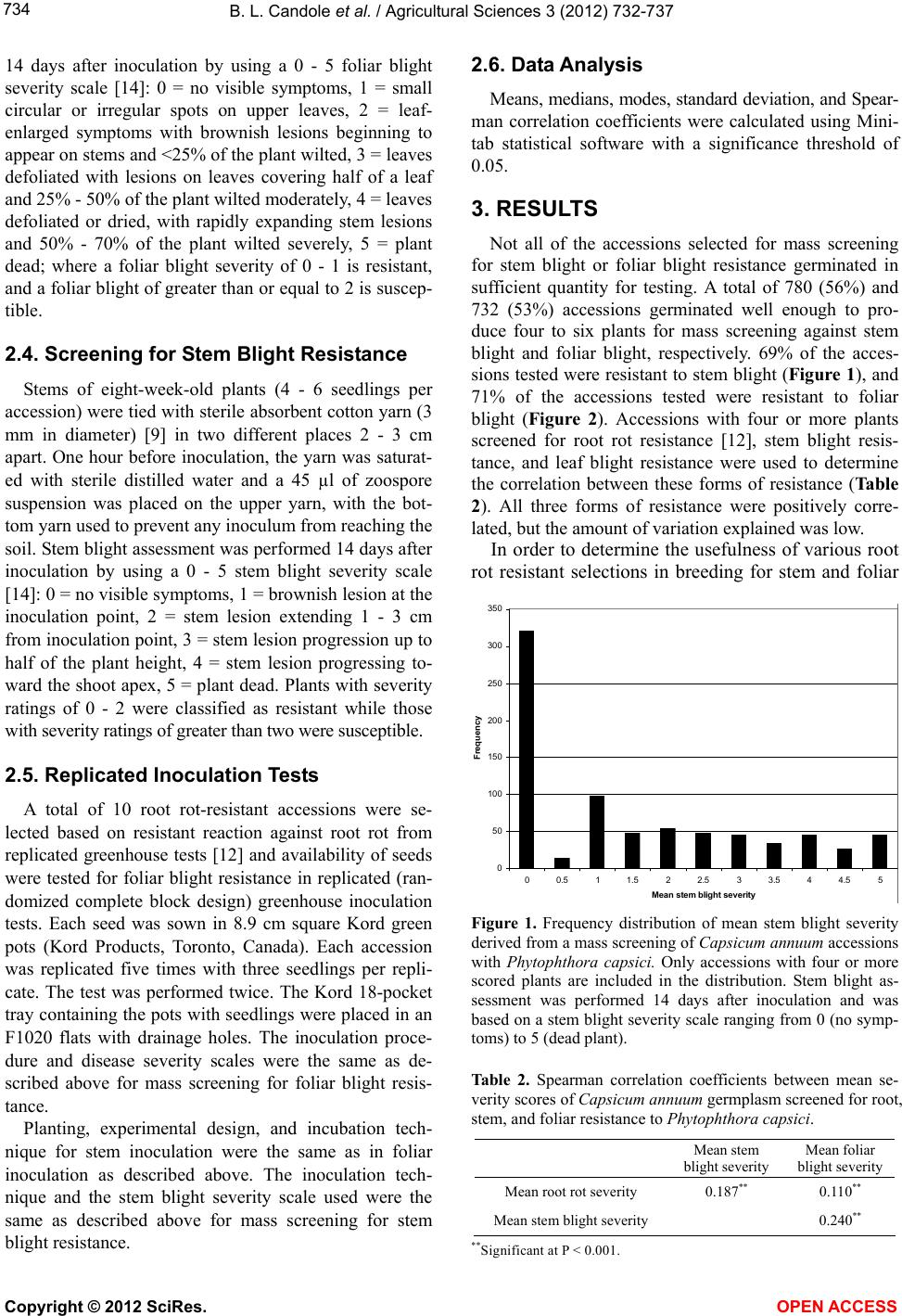 B. L. Candole et al. / Agricultural Sciences 3 (2012) 732-737 734 14 days after inoculation by using a 0 - 5 foliar blight severity scale [14]: 0 = no visible symptoms, 1 = small circular or irregular spots on upper leaves, 2 = leaf- enlarged symptoms with brownish lesions beginning to appear on stems and <25% of the plant wilted, 3 = leaves defoliated with lesions on leaves covering half of a leaf and 25% - 50% of the plant wilted moderately, 4 = leaves defoliated or dried, with rapidly expanding stem lesions and 50% - 70% of the plant wilted severely, 5 = plant dead; where a foliar blight severity of 0 - 1 is resistant, and a foliar blight of greater than or equal to 2 is suscep- tible. 2.4. Screening for Stem Blight Resistance Stems of eight-week-old plants (4 - 6 seedlings per accession) were tied with sterile absorbent cotton yarn (3 mm in diameter) [9] in two different places 2 - 3 cm apart. One hour before inoculation, the yarn was saturat- ed with sterile distilled water and a 45 µl of zoospore suspension was placed on the upper yarn, with the bot- tom yarn used to prevent any inoculum from reaching the soil. Stem blight assessment was performed 14 days after inoculation by using a 0 - 5 stem blight severity scale [14]: 0 = no visible symptoms, 1 = brownish lesion at the inoculation point, 2 = stem lesion extending 1 - 3 cm from inoculation point, 3 = stem lesion progression up to half of the plant height, 4 = stem lesion progressing to- ward the shoot apex, 5 = plant dead. Plants with severity ratings of 0 - 2 were classified as resistant while those with severity ratings of greater than two were susceptible. 2.5. Replicated Inoculation Tests A total of 10 root rot-resistant accessions were se- lected based on resistant reaction against root rot from replicated greenhouse tests [12] and availability of seeds were tested for foliar blight resistance in replicated (ran- domized complete block design) greenhouse inoculation tests. Each seed was sown in 8.9 cm square Kord green pots (Kord Products, Toronto, Canada). Each accession was replicated five times with three seedlings per repli- cate. The test was performed twice. The Kord 18-pocket tray containing the pots with seedlings were placed in an F1020 flats with drainage holes. The inoculation proce- dure and disease severity scales were the same as de- scribed above for mass screening for foliar blight resis- tance. Planting, experimental design, and incubation tech- nique for stem inoculation were the same as in foliar inoculation as described above. The inoculation tech- nique and the stem blight severity scale used were the same as described above for mass screening for stem blight resistance. 2.6. Data Analysis Means, medians, modes, standard deviation, and Spear- man correlation coefficients were calculated using Mini- tab statistical software with a significance threshold of 0.05. 3. RESULTS Not all of the accessions selected for mass screening for stem blight or foliar blight resistance germinated in sufficient quantity for testing. A total of 780 (56%) and 732 (53%) accessions germinated well enough to pro- duce four to six plants for mass screening against stem blight and foliar blight, respectively. 69% of the acces- sions tested were resistant to stem blight (Figure 1), and 71% of the accessions tested were resistant to foliar blight (Figure 2). Accessions with four or more plants screened for root rot resistance [12], stem blight resis- tance, and leaf blight resistance were used to determine the correlation between these forms of resistance (Table 2). All three forms of resistance were positively corre- lated, but the amount of variation explained was low. In order to determine the usefulness of various root rot resistant selections in breeding for stem and foliar 0 50 100 150 200 250 300 350 0 0.511.52 2.53 3.5 4 4.55 Mean stem blight severit y Frequency Figure 1. Frequency distribution of mean stem blight severity derived from a mass screening of Capsicum annuum accessions with Phytophthora capsici. Only accessions with four or more scored plants are included in the distribution. Stem blight as- sessment was performed 14 days after inoculation and was based on a stem blight severity scale ranging from 0 (no symp- toms) to 5 (dead plant). Table 2. Spearman correlation coefficients between mean se- verity scores of Capsicum annuum germplasm screened for root, stem, and foliar resistance to Phytophthora capsici. Mean stem blight severity Mean foliar blight severity Mean root rot severity 0.187** 0.110** Mean stem blight severity 0.240** **Significant at P < 0.001. Copyright © 2012 SciRes. OPEN ACC ESS 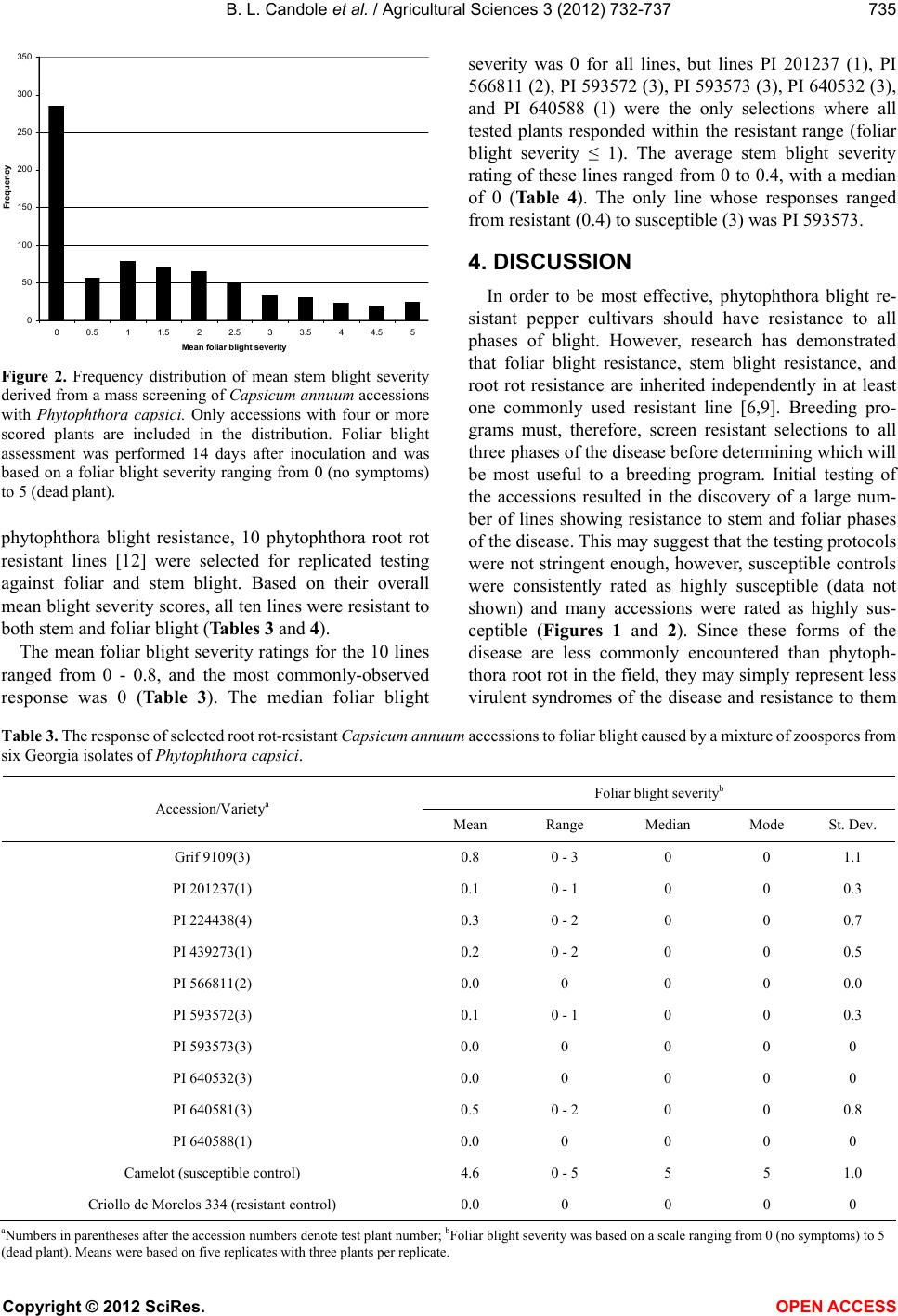 B. L. Candole et al. / Agricultural Sciences 3 (2012) 732-737 Copyright © 2012 SciRes. 735 0 50 100 150 200 250 300 350 00.511.522.533.544.55 Mean f oli ar bl ight sever i t y Frequency severity was 0 for all lines, but lines PI 201237 (1), PI 566811 (2), PI 593572 (3), PI 593573 (3), PI 640532 (3), and PI 640588 (1) were the only selections where all tested plants responded within the resistant range (foliar blight severity ≤ 1). The average stem blight severity rating of these lines ranged from 0 to 0.4, with a median of 0 (Table 4). The only line whose responses ranged from resistant (0.4) to susceptible (3) was PI 593573. 4. DISCUSSION In order to be most effective, phytophthora blight re- sistant pepper cultivars should have resistance to all phases of blight. However, research has demonstrated that foliar blight resistance, stem blight resistance, and root rot resistance are inherited independently in at least one commonly used resistant line [6,9]. Breeding pro- grams must, therefore, screen resistant selections to all three phases of the disease before determining which will be most useful to a breeding program. Initial testing of the accessions resulted in the discovery of a large num- ber of lines showing resistance to stem and foliar phases of the disease. This may suggest that the testing protocols were not stringent enough, however, susceptible controls were consistently rated as highly susceptible (data not shown) and many accessions were rated as highly sus- ceptible (Figures 1 and 2). Since these forms of the disease are less commonly encountered than phytoph- thora root rot in the field, they may simply represent less virulent syndromes of the disease and resistance to them Figure 2. Frequency distribution of mean stem blight severity derived from a mass screening of Capsicum annuum accessions with Phytophthora capsici. Only accessions with four or more scored plants are included in the distribution. Foliar blight assessment was performed 14 days after inoculation and was based on a foliar blight severity ranging from 0 (no symptoms) to 5 (dead plant). phytophthora blight resistance, 10 phytophthora root rot resistant lines [12] were selected for replicated testing against foliar and stem blight. Based on their overall mean blight severity scores, all ten lines were resistant to both stem and foliar blight (Tables 3 and 4). The mean foliar blight severity ratings for the 10 lines ranged from 0 - 0.8, and the most commonly-observed response was 0 (Table 3). The median foliar blight Table 3. The response of selected root rot-resistant Capsicum annuum accessions to foliar blight caused by a mixture of zoospores from six Georgia isolates of Phytophthora capsici. Foliar blight severityb Accession/Varietya Mean Range Median Mode St. Dev. Grif 9109(3) 0.8 0 - 3 0 0 1.1 PI 201237(1) 0.1 0 - 1 0 0 0.3 PI 224438(4) 0.3 0 - 2 0 0 0.7 PI 439273(1) 0.2 0 - 2 0 0 0.5 PI 566811(2) 0.0 0 0 0 0.0 PI 593572(3) 0.1 0 - 1 0 0 0.3 PI 593573(3) 0.0 0 0 0 0 PI 640532(3) 0.0 0 0 0 0 PI 640581(3) 0.5 0 - 2 0 0 0.8 PI 640588(1) 0.0 0 0 0 0 Camelot (susceptible control) 4.6 0 - 5 5 5 1.0 Criollo de Morelos 334 (resistant control) 0.0 0 0 0 0 aNumbers in parentheses after the accession numbers denote test plant number; bFoliar blight severity was based on a scale ranging from 0 (no symptoms) to 5 (dead plant). Means were based on five replicates with three plants per replicate. OPEN A CCESS 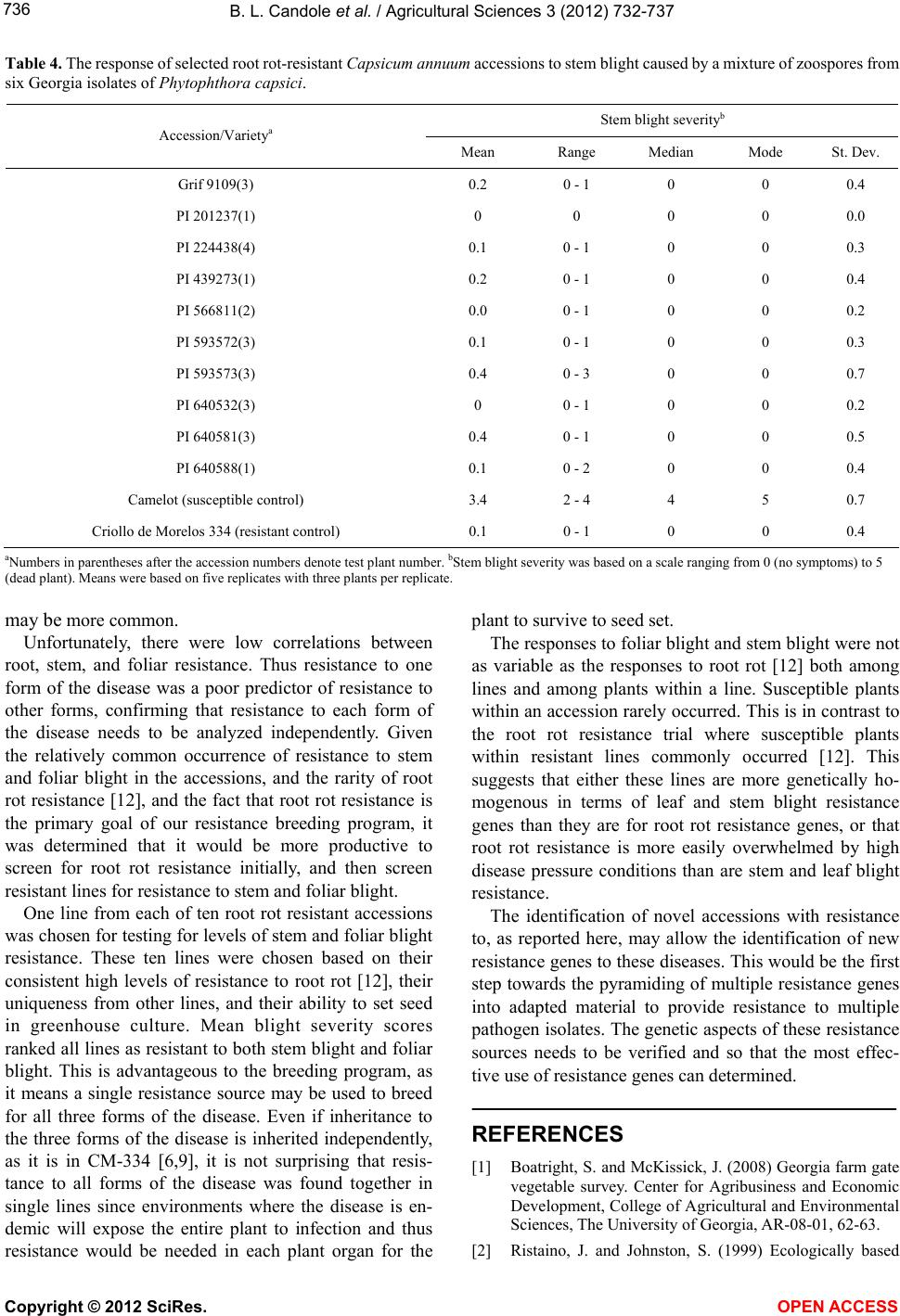 B. L. Candole et al. / Agricultural Sciences 3 (2012) 732-737 736 Table 4. The response of selected root rot-resistant Capsicum annuum accessions to stem blight caused by a mixture of zoospores from six Georgia isolates of Phytophthora capsici. Stem blight severityb Accession/Varietya Mean Range Median Mode St. Dev. Grif 9109(3) 0.2 0 - 1 0 0 0.4 PI 201237(1) 0 0 0 0 0.0 PI 224438(4) 0.1 0 - 1 0 0 0.3 PI 439273(1) 0.2 0 - 1 0 0 0.4 PI 566811(2) 0.0 0 - 1 0 0 0.2 PI 593572(3) 0.1 0 - 1 0 0 0.3 PI 593573(3) 0.4 0 - 3 0 0 0.7 PI 640532(3) 0 0 - 1 0 0 0.2 PI 640581(3) 0.4 0 - 1 0 0 0.5 PI 640588(1) 0.1 0 - 2 0 0 0.4 Camelot (susceptible control) 3.4 2 - 4 4 5 0.7 Criollo de Morelos 334 (resistant control) 0.1 0 - 1 0 0 0.4 aNumbers in parentheses after the accession numbers denote test plant number. bStem blight severity was based on a scale ranging from 0 (no symptoms) to 5 (dead plant). Means were based on five replicates with three plants per replicate. may be more common. Unfortunately, there were low correlations between root, stem, and foliar resistance. Thus resistance to one form of the disease was a poor predictor of resistance to other forms, confirming that resistance to each form of the disease needs to be analyzed independently. Given the relatively common occurrence of resistance to stem and foliar blight in the accessions, and the rarity of root rot resistance [12], and the fact that root rot resistance is the primary goal of our resistance breeding program, it was determined that it would be more productive to screen for root rot resistance initially, and then screen resistant lines for resistance to stem and foliar blight. One line from each of ten root rot resistant accessions was chosen for testing for levels of stem and foliar blight resistance. These ten lines were chosen based on their consistent high levels of resistance to root rot [12], their uniqueness from other lines, and their ability to set seed in greenhouse culture. Mean blight severity scores ranked all lines as resistant to both stem blight and foliar blight. This is advantageous to the breeding program, as it means a single resistance source may be used to breed for all three forms of the disease. Even if inheritance to the three forms of the disease is inherited independently, as it is in CM-334 [6,9], it is not surprising that resis- tance to all forms of the disease was found together in single lines since environments where the disease is en- demic will expose the entire plant to infection and thus resistance would be needed in each plant organ for the plant to survive to seed set. The responses to foliar blight and stem blight were not as variable as the responses to root rot [12] both among lines and among plants within a line. Susceptible plants within an accession rarely occurred. This is in contrast to the root rot resistance trial where susceptible plants within resistant lines commonly occurred [12]. This suggests that either these lines are more genetically ho- mogenous in terms of leaf and stem blight resistance genes than they are for root rot resistance genes, or that root rot resistance is more easily overwhelmed by high disease pressure conditions than are stem and leaf blight resistance. The identification of novel accessions with resistance to, as reported here, may allow the identification of new resistance genes to these diseases. This would be the first step towards the pyramiding of multiple resistance genes into adapted material to provide resistance to multiple pathogen isolates. The genetic aspects of these resistance sources needs to be verified and so that the most effec- tive use of resistance genes can determined. REFERENCES [1] Boatright, S. and McKissick, J. (2008) Georgia farm gate vegetable survey. Center for Agribusiness and Economic Development, College of Agricultural and Environmental Sciences, The University of Georgia, AR-08-01, 62-63. [2] Ristaino, J. and Johnston, S. (1999) Ecologically based Copyright © 2012 SciRes. OPEN ACC ESS 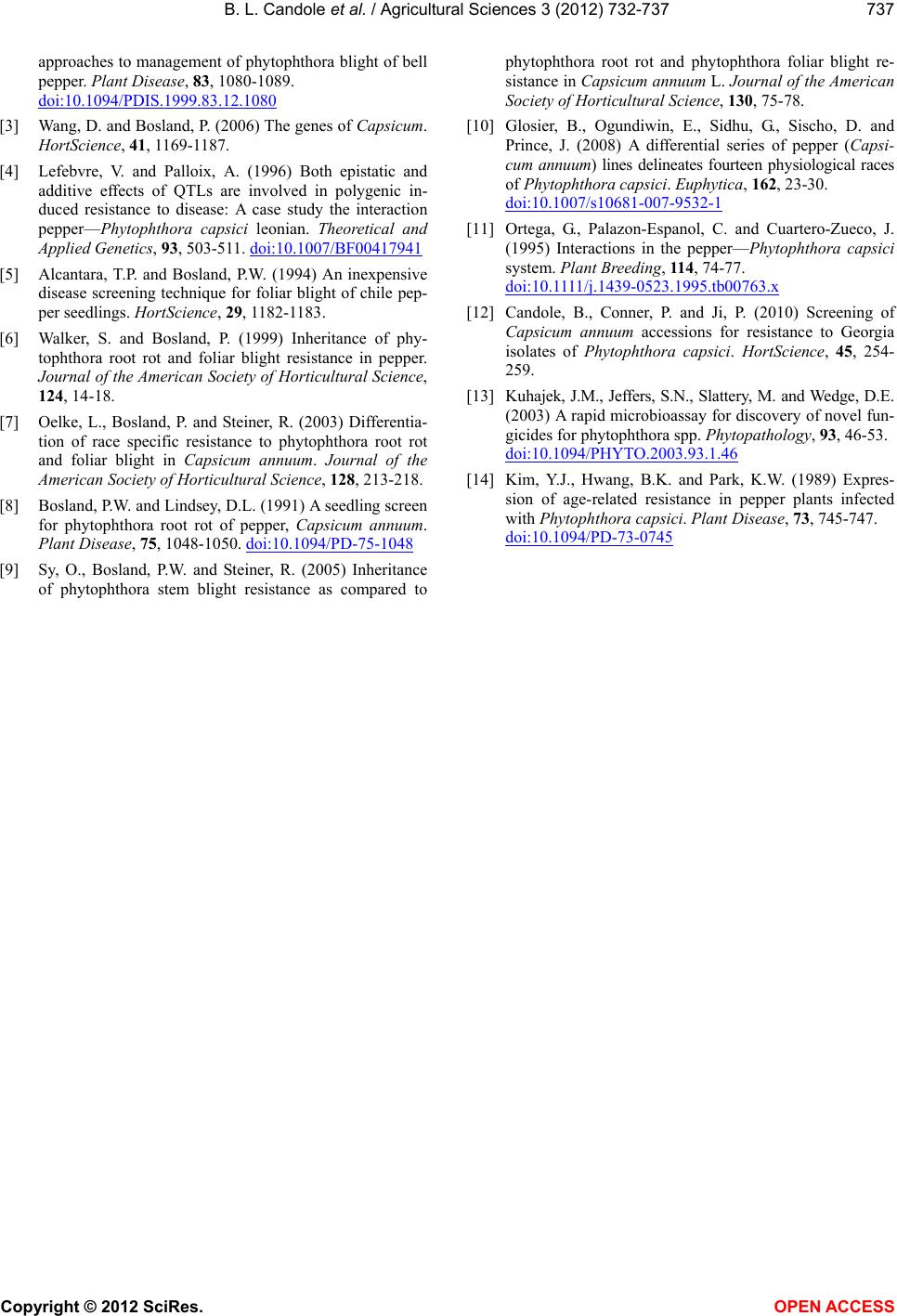 B. L. Candole et al. / Agricultural Sciences 3 (2012) 732-737 737 approaches to management of phytophthora blight of bell pepper. Plant Disease, 83, 1080-1089. doi:10.1094/PDIS.1999.83.12.1080 [3] Wang, D. and Bosland, P. (2006) The genes of Capsicum. HortScience, 41, 1169-1187. [4] Lefebvre, V. and Palloix, A. (1996) Both epistatic and additive effects of QTLs are involved in polygenic in- duced resistance to disease: A case study the interaction pepper—Phytophthora capsici leonian. Theoretical and Applied Genetics, 93, 503-511. doi:10.1007/BF00417941 [5] Alcantara, T.P. and Bosland, P.W. (1994) An inexpensive disease screening technique for foliar blight of chile pep- per seedlings. HortScience, 29, 1182-1183. [6] Walker, S. and Bosland, P. (1999) Inheritance of phy- tophthora root rot and foliar blight resistance in pepper. Journal of the American Society of Horticultural Science, 124, 14-18. [7] Oelke, L., Bosland, P. and Steiner, R. (2003) Differentia- tion of race specific resistance to phytophthora root rot and foliar blight in Capsicum annuum. Journal of the American Society of Horticultural Science, 128, 213-218. [8] Bosland, P.W. and Lindsey, D.L. (1991) A seedling screen for phytophthora root rot of pepper, Capsicum annuum. Plant Disease, 75, 1048-1050. doi:10.1094/PD-75-1048 [9] Sy, O., Bosland, P.W. and Steiner, R. (2005) Inheritance of phytophthora stem blight resistance as compared to phytophthora root rot and phytophthora foliar blight re- sistance in Capsicum annuum L. Journal of the American Society of Horticultural Science, 130, 75-78. [10] Glosier, B., Ogundiwin, E., Sidhu, G., Sischo, D. and Prince, J. (2008) A differential series of pepper (Capsi- cum annuum) lines delineates fourteen physiological races of Phytophthora capsici. Euphytica, 162, 23-30. doi:10.1007/s10681-007-9532-1 [11] Ortega, G., Palazon-Espanol, C. and Cuartero-Zueco, J. (1995) Interactions in the pepper—Phytophthora capsici system. Plant Breeding, 114, 74-77. doi:10.1111/j.1439-0523.1995.tb00763.x [12] Candole, B., Conner, P. and Ji, P. (2010) Screening of Capsicum annuum accessions for resistance to Georgia isolates of Phytophthora capsici. HortScience, 45, 254- 259. [13] Kuhajek, J.M., Jeffers, S.N., Slattery, M. and Wedge, D.E. (2003) A rapid microbioassay for discovery of novel fun- gicides for phytophthora spp. Phytopathology, 93, 46-53. doi:10.1094/PHYTO.2003.93.1.46 [14] Kim, Y.J., Hwang, B.K. and Park, K.W. (1989) Expres- sion of age-related resistance in pepper plants infected with Phytophthora capsici. Plant Disease, 73, 745-747. doi:10.1094/PD-73-0745 Copyright © 2012 SciRes. OPEN ACC ESS |