

Paper Menu >>
Journal Menu >>
 Vol.3, No.5, 631-639 (2012) Agricultural Sciences http://dx.doi.org/10.4236/as.2012.35076 W eed cover, frequency and diversity in field plots and edges in the soybean central region of Argentina Eduardo Puricelli1*, Delma Faccini2, Luisa Nisensohn2, Daniel Tuesca2 1Crop Production Department, Crop Protection, Rosario National University, Zavalla, Argentina; *Corresponding Author: [email protected] 2Crop Production Department, Weeds, Agronomy, Rosario National University, Zavalla, Argentina Received 17 April 2012; revised 23 May 2012; accepted 5 July 2012 ABSTRACT A comparative survey of the weed species pre- sent in field plots and edges was performed in fields at Zavalla (Santa Fe) Argentina in the soybean central region of the country in order to determine changes in cover, frequency and diversity of the weed communities. Five to twelve soybean fields were surveyed in 2006, 2007, and 2009. Weed surveys were carried out in the soybean fallow in winter and after soy- bean planting in spring. In edges, species rich- ness was higher than in field plots in spring- summer but diversity showed an erratic response. The weed community cover showed a shift in weed vegetation composition relativ e to the field plot. Our results indicate that the community in crop edges relative to field plots differs in structure and abundance and that many weed species are only present either in crop edges or in field plot s. Keywords: Weed Community; Richness; Glyphosate 1. INTRODUCTION Agricultural practices have caused major changes in the composition and species richness of weed communi- ties in the field [1,2]. Arable weed species play an im- portant role in supporting biological diversity in agro- ecosystems [3,4]. Weed species that thrive in the field edges and may colonize cropped plots include Avena sterilis and Galium aparine [5], Conyza canadensis [6] and Senecio vulgaris [7]. In other studies, plant populations in field edges have not resulted in weed infestations in the adjacent crop in many studies [8]. There is evidence that herbicide efficacy, increased crop competition and changes in cropping patterns have resulted in a gradual decline in weed abundance and di- versity over recent decades [9-11]. Herbicide use is a widespread practice detrimental to weeds [12] and con- tinued use of a single herbicide often results in weed composition shifts from highly susceptible species to those having greater tolerance to the herbicide [13]. The most used herbicide in arable crops in Argentina is gly- phosate which provides application flexibility, lacks of rotational restrictions and controls a broad spectrum of weeds [14]. However, as a result of repeated use, species difficult to control with glyphosate have become more common in many countries [15-17] and in Argentina as well [18]. Weed diversity may be concentrated in the crop edges, especially in the weed communities of conventional ce- real fields [19,20]. In Argentina, crop edges are narrow areas that are taken out from agriculture. In crop edges, insecticides, fungicides are not used and occasionaly, herbicides are applied. In the field plot, the most used herbicide is glyphosate-alone or in combination with residual herbicides [21]. The objective of this study was to analyze weed abundance and diversity as well as the frequency of weeds tolerant or resistant to glyphosate in field plots and edges in the soybean central region of Argentina. 2. MATERIALS AND METHODS A weed survey set up in Zavalla (Santa Fe, Argentina) (Lat. 33˚01'S) was designed to measure the weed com- munity in field plots and edges. The survey was carried out across 5 to 12 fields chosen to represent the diversity of cultural practices and environmental conditions pre- sent in arable fields in the region. The survey was done each year approximately 30 days after soybean planting in late spring (December 2006 and 2007) and in winter in fallows between summer crops (June 2007 and 2009). These two sampling dates made it possible to account for seasonal variations in weed populations (i.e. weeds asso- ciated with both autumn-winter and spring-summer Copyright © 2012 SciRes. OPEN ACCES S 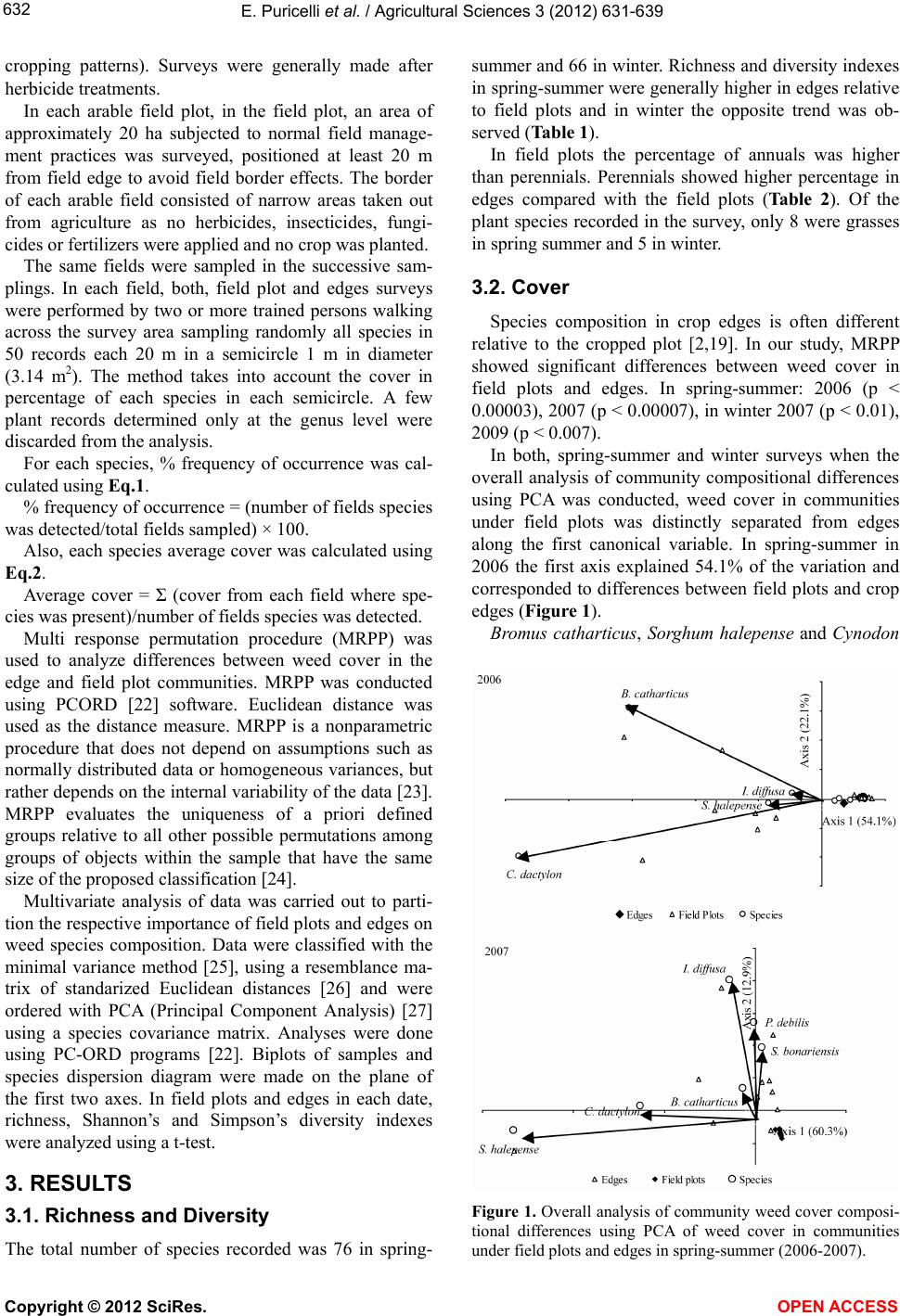 E. Puricelli et al. / Agricultural Sciences 3 (2012) 631-6 39 632 cropping patterns). Surveys were generally made after herbicide treatments. In each arable field plot, in the field plot, an area of approximately 20 ha subjected to normal field manage- ment practices was surveyed, positioned at least 20 m from field edge to avoid field border effects. The border of each arable field consisted of narrow areas taken out from agriculture as no herbicides, insecticides, fungi- cides or fertilizers were applied and no crop was planted. The same fields were sampled in the successive sam- plings. In each field, both, field plot and edges surveys were performed by two or more trained persons walking across the survey area sampling randomly all species in 50 records each 20 m in a semicircle 1 m in diameter (3.14 m2). The method takes into account the cover in percentage of each species in each semicircle. A few plant records determined only at the genus level were discarded from the analysis. For each species, % frequency of occurrence was cal- culated using Eq.1. % frequency of occurrence = (number of fields species was detected/total fields sampled) × 100. Also, each species average cover was calculated using Eq.2. Average cover = Σ (cover from each field where spe- cies was present)/number of fields species was detected. Multi response permutation procedure (MRPP) was used to analyze differences between weed cover in the edge and field plot communities. MRPP was conducted using PCORD [22] software. Euclidean distance was used as the distance measure. MRPP is a nonparametric procedure that does not depend on assumptions such as normally distributed data or homogeneous variances, but rather depends on the internal variability of the data [23]. MRPP evaluates the uniqueness of a priori defined groups relative to all other possible permutations among groups of objects within the sample that have the same size of the proposed classification [24]. Multivariate analysis of data was carried out to parti- tion the respective importance of field plots and edges on weed species composition. Data were classified with the minimal variance method [25], using a resemblance ma- trix of standarized Euclidean distances [26] and were ordered with PCA (Principal Component Analysis) [27] using a species covariance matrix. Analyses were done using PC-ORD programs [22]. Biplots of samples and species dispersion diagram were made on the plane of the first two axes. In field plots and edges in each date, richness, Shannon’s and Simpson’s diversity indexes were analyzed using a t-test. 3. RESULTS 3.1. Richness and Diversity The total number of species recorded was 76 in spring- summer and 66 in winter. Richness and diversity indexes in spring-summer were generally higher in edges relative to field plots and in winter the opposite trend was ob- served (Table 1). In field plots the percentage of annuals was higher than perennials. Perennials showed higher percentage in edges compared with the field plots (Table 2). Of the plant species recorded in the survey, only 8 were grasses in spring summer and 5 in winter. 3.2. Cover Species composition in crop edges is often different relative to the cropped plot [2,19]. In our study, MRPP showed significant differences between weed cover in field plots and edges. In spring-summer: 2006 (p < 0.00003), 2007 (p < 0.00007), in winter 2007 (p < 0.01), 2009 (p < 0.007). In both, spring-summer and winter surveys when the overall analysis of community compositional differences using PCA was conducted, weed cover in communities under field plots was distinctly separated from edges along the first canonical variable. In spring-summer in 2006 the first axis explained 54.1% of the variation and corresponded to differences between field plots and crop edges (Figure 1). Bromus catharticus, Sorghum halepense and Cynodon Figure 1. Overall analysis of community weed cover composi- tional differences using PCA of weed cover in communities nder field plots and edges in spring-summer (2006-2007). u Copyright © 2012 SciRes. OPEN ACCES S 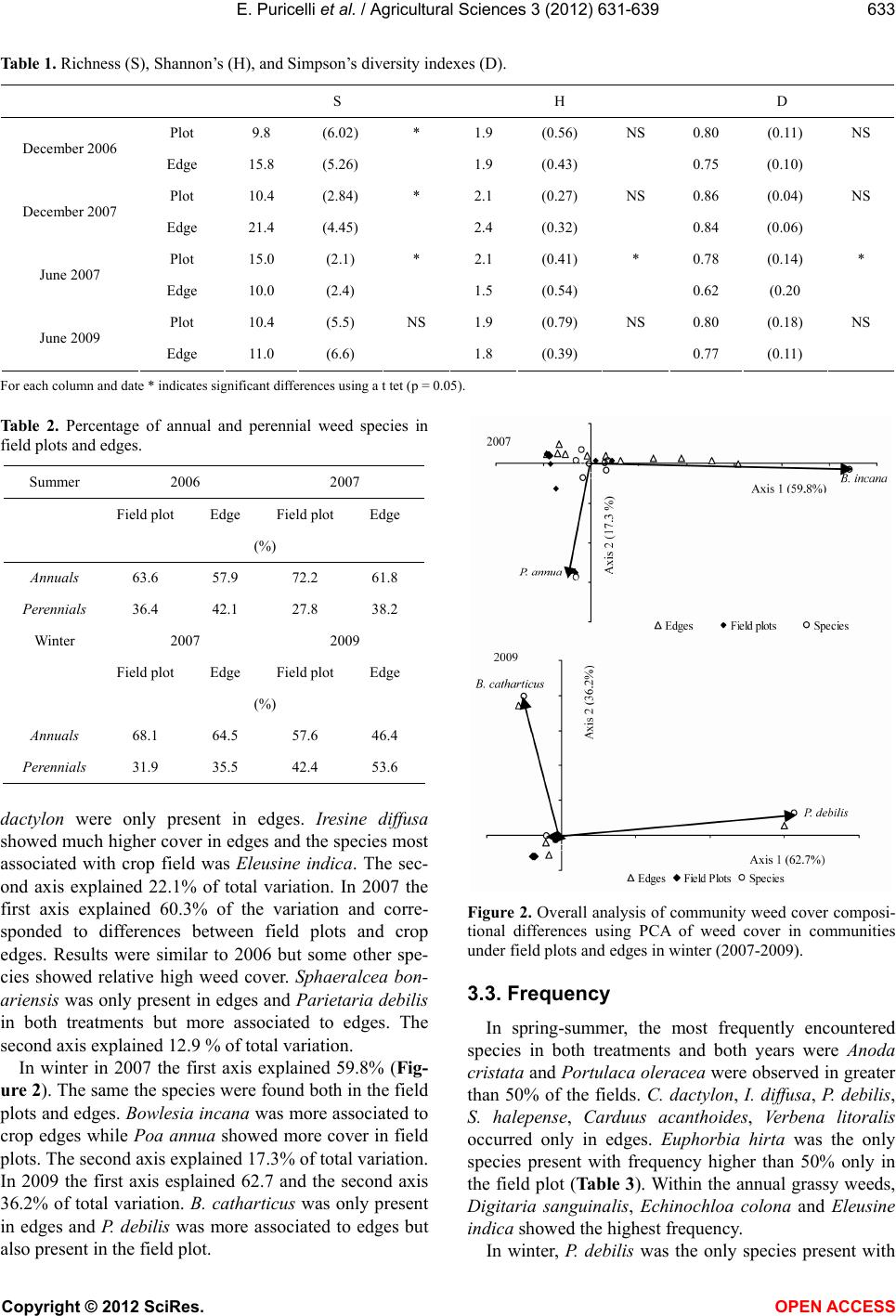 E. Puricelli et al. / Agricultural Sciences 3 (2012) 631-6 39 Copyright © 2012 SciRes. 633 Table 1. Richness (S), Shannon’s (H), and Simpson’s diversity indexes (D). S H D Plot 9.8 (6.02) * 1.9 (0.56) NS 0.80 (0.11) NS December 2006 Edge 15.8 (5.26) 1.9 (0.43) 0.75 (0.10) Plot 10.4 (2.84) * 2.1 (0.27) NS 0.86 (0.04) NS December 2007 Edge 21.4 (4.45) 2.4 (0.32) 0.84 (0.06) Plot 15.0 (2.1) * 2.1 (0.41) * 0.78 (0.14) * June 2007 Edge 10.0 (2.4) 1.5 (0.54) 0.62 (0.20 Plot 10.4 (5.5) NS 1.9 (0.79) NS 0.80 (0.18) NS June 2009 Edge 11.0 (6.6) 1.8 (0.39) 0.77 (0.11) For each column and date * indicates significant differences using a t tet (p = 0.05). Table 2. Percentage of annual and perennial weed species in field plots and edges. Summer 2006 2007 Field plot Edge Field plot Edge (%) Annuals 63.6 57.9 72.2 61.8 Perennials 36.4 42.1 27.8 38.2 Winter 2007 2009 Field plot Edge Field plot Edge (%) Annuals 68.1 64.5 57.6 46.4 Perennials 31.9 35.5 42.4 53.6 dactylon were only present in edges. Iresine diffusa showed much higher cover in edges and the species most associated with crop field was Eleusine indica. The sec- ond axis explained 22.1% of total variation. In 2007 the first axis explained 60.3% of the variation and corre- sponded to differences between field plots and crop edges. Results were similar to 2006 but some other spe- cies showed relative high weed cover. Sphaeralcea bon- ariensis was only present in edges and Parietaria d ebilis in both treatments but more associated to edges. The second axis explained 12.9 % of total variation. Figure 2. Overall analysis of community weed cover composi- tional differences using PCA of weed cover in communities under field plots and edges in winter (2007-2009). 3.3. Frequency In spring-summer, the most frequently encountered species in both treatments and both years were Anoda cristata and Portulaca oleracea were observed in greater than 50% of the fields. C. dactylon, I. diffusa, P. debilis, S. halepense, Carduus acanthoides, Verbena litoralis occurred only in edges. Euphorbia hirta was the only species present with frequency higher than 50% only in the field plot (Tab le 3). Within the annual grassy weeds, Digitaria sanguinalis, Echinochloa colona and Eleusine indica showed the highest frequency. In winter in 2007 the first axis explained 59.8% (Fig- ure 2). The same the species were found both in the field plots and edges. Bowlesia incana was more associated to crop edges while Poa annua showed more cover in field plots. The second axis explained 17.3% of total variation. In 2009 the first axis esplained 62.7 and the second axis 36.2% of total variation. B. catharticus was only present in edges and P. debilis was more associated to edges but also present in the field plot. In winter, P. debilis was th only species present with e OPEN A CCESS 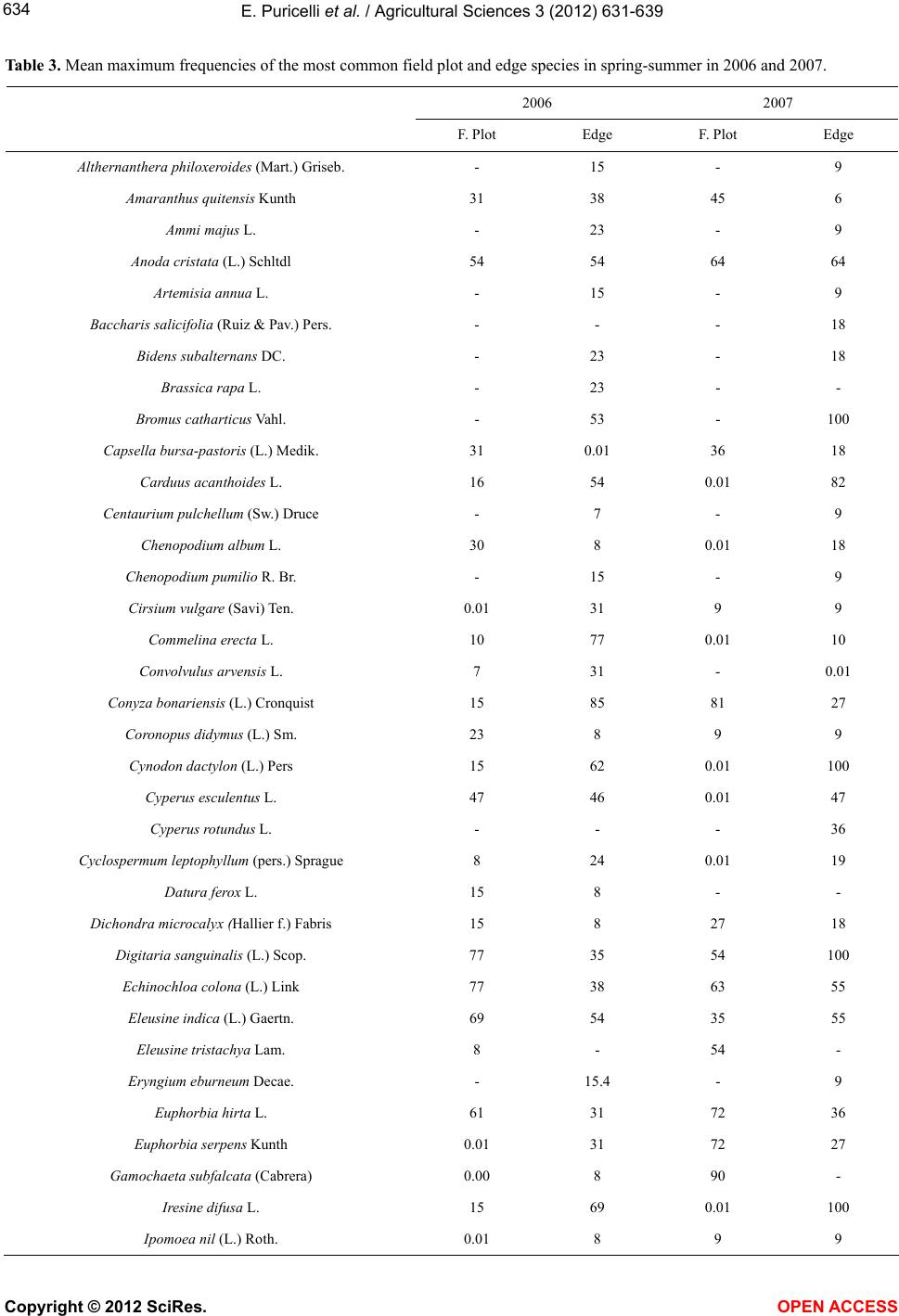 E. Puricelli et al. / Agricultural Sciences 3 (2012) 631-6 39 634 Table 3. Mean maximum frequencies of the most common field plot and edge species in spring-summer in 2006 and 2007. 2006 2007 F. Plot Edge F. Plot Edge Althernanthera philoxeroides (Mart.) Griseb. - 15 - 9 Amaranthus quitensis Kunth 31 38 45 6 Ammi majus L. - 23 - 9 Anoda cristata (L.) Schltdl 54 54 64 64 Artemisia annua L. - 15 - 9 Baccharis salicifolia (Ruiz & Pav.) Pers. - - - 18 Bidens subalternans DC. - 23 - 18 Brassica rapa L. - 23 - - Bromus catharticus Vahl. - 53 - 100 Capsella bursa-pastoris (L.) Medik. 31 0.01 36 18 Carduus acanthoides L. 16 54 0.01 82 Centaurium pulchellum (Sw.) Druce - 7 - 9 Chenopodium album L. 30 8 0.01 18 Chenopodium pumilio R. Br. - 15 - 9 Cirsium vulgare (Savi) Ten. 0.01 31 9 9 Commelina erecta L. 10 77 0.01 10 Convolvulus arvensis L. 7 31 - 0.01 Conyza bonariensis (L.) Cronquist 15 85 81 27 Coronopus didymus (L.) Sm. 23 8 9 9 Cynodon dactylon (L.) Pers 15 62 0.01 100 Cyperus esculentus L. 47 46 0.01 47 Cyperus rotundus L. - - - 36 Cyclospermum leptophyllum (pers.) Sprague 8 24 0.01 19 Datura ferox L. 15 8 - - Dichondra microcalyx (Hallier f.) Fabris 15 8 27 18 Digitaria sanguinalis (L.) Scop. 77 35 54 100 Echinochloa colona (L.) Link 77 38 63 55 Eleusine indica (L.) Gaertn. 69 54 35 55 Eleusine tristachya Lam. 8 - 54 - Eryngium eburneum Decae. - 15.4 - 9 Euphorbia hirta L. 61 31 72 36 Euphorbia serpens Kunth 0.01 31 72 27 Gamochaeta subfalcata (Cabrera) 0.00 8 90 - Iresine difusa L. 15 69 0.01 100 Ipomoea nil (L.) Roth. 0.01 8 9 9 Copyright © 2012 SciRes. OPEN ACCES S 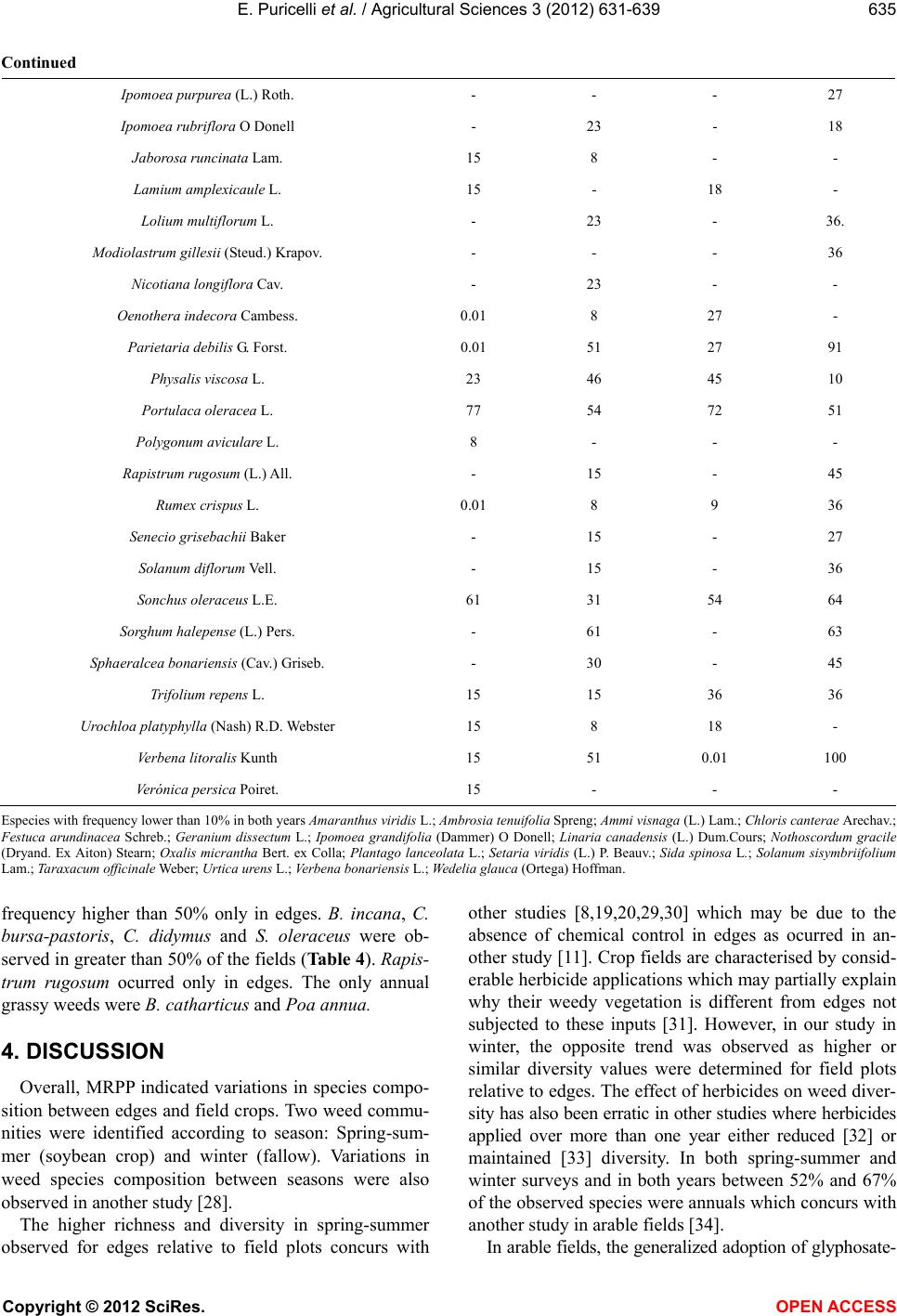 E. Puricelli et al. / Agricultural Sciences 3 (2012) 631-6 39 635 Continued Ipomoea purpurea (L.) Roth. - - - 27 Ipomoea rubriflora O Donell - 23 - 18 Jaborosa runcinata Lam. 15 8 - - Lamium amplexicaule L. 15 - 18 - Lolium multiflorum L. - 23 - 36. Modiolastrum gillesii (Steud.) Krapov. - - - 36 Nicotiana longiflora Cav. - 23 - - Oenothera indecora Cambess. 0.01 8 27 - Parietaria debilis G. Forst. 0.01 51 27 91 Physalis viscosa L. 23 46 45 10 Portulaca oleracea L. 77 54 72 51 Polygonum aviculare L. 8 - - - Rapistrum rugosum (L.) All. - 15 - 45 Rumex crispus L. 0.01 8 9 36 Senecio grisebachii Baker - 15 - 27 Solanum diflorum Vell. - 15 - 36 Sonchus oleraceus L.E. 61 31 54 64 Sorghum halepense (L.) Pers. - 61 - 63 Sphaeralcea bonariensis (Cav.) Griseb. - 30 - 45 Trifolium repens L. 15 15 36 36 Urochloa platyphylla (Nash) R.D. Webster 15 8 18 - Verbena litoralis Kunth 15 51 0.01 100 Verónica persica Poiret. 15 - - - Especies with frequency lower than 10% in both years Amaranthus viridis L.; Ambrosia tenuifolia Spreng; Ammi visnaga (L.) Lam.; Chloris canterae Arechav.; Festuca arundinacea Schreb.; Geranium dissectum L.; Ipomoea grandifolia (Dammer) O Donell; Linaria canadensis (L.) Dum.Cours; Nothoscordum gracile (Dryand. Ex Aiton) Stearn; Oxalis micrantha Bert. ex Colla; Plantago lanceolata L.; Setaria viridis (L.) P. Beauv.; Sida spinosa L.; Solanum sisymbriifolium Lam.; Taraxacum officinale Weber; Urtica urens L.; Verbena bonariensis L.; Wedelia glauca (Ortega) Hoffman. frequency higher than 50% only in edges. B. incana, C. bursa-pastoris, C. didymus and S. oleraceus were ob- served in greater than 50% of the fields (Table 4). Rap i s- trum rugosum ocurred only in edges. The only annual grassy weeds were B. catharticus and Poa annua. 4. DISCUSSION Overall, MRPP indicated variations in species compo- sition between edges and field crops. Two weed commu- nities were identified according to season: Spring-sum- mer (soybean crop) and winter (fallow). Variations in weed species composition between seasons were also observed in another study [28]. The higher richness and diversity in spring-summer observed for edges relative to field plots concurs with other studies [8,19,20,29,30] which may be due to the absence of chemical control in edges as ocurred in an- other study [11]. Crop fields are characterised by consid- erable herbicide applications which may partially explain why their weedy vegetation is different from edges not subjected to these inputs [31]. However, in our study in winter, the opposite trend was observed as higher or similar diversity values were determined for field plots relative to edges. The effect of herbicides on weed diver- sity has also been erratic in other studies where herbicides applied over more than one year either reduced [32] or maintained [33] diversity. In both spring-summer and winter surveys and in both years between 52% and 67% of the observed species were annuals which concurs with another study in arable fields [34]. I n arable fields, the generalized adoption of glyphosate- Copyright © 2012 SciRes. OPEN ACCES S 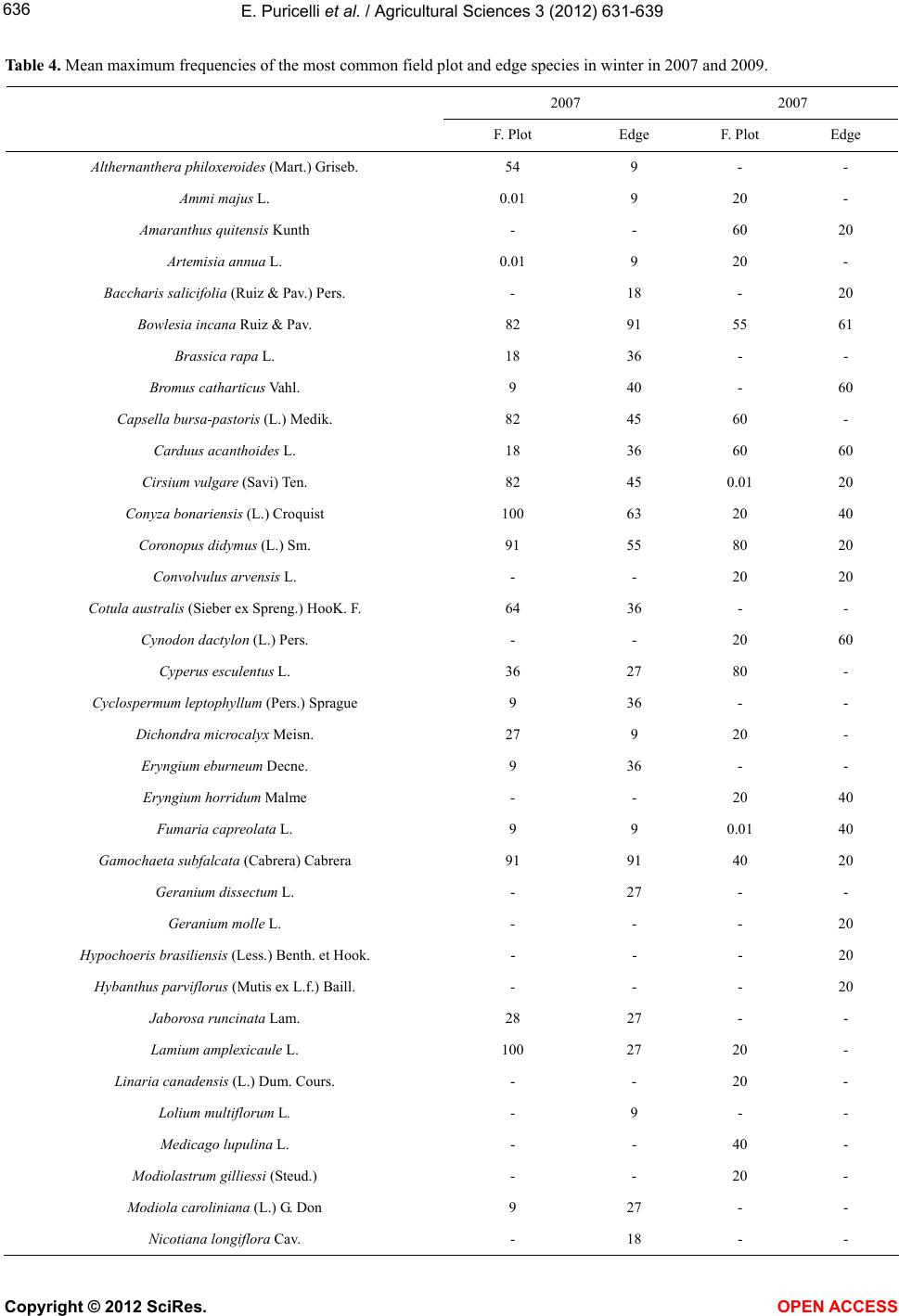 E. Puricelli et al. / Agricultural Sciences 3 (2012) 631-6 39 636 Table 4. Mean maximum frequencies of the most common field plot and edge species in winter in 2007 and 2009. 2007 2007 F. Plot Edge F. Plot Edge Althernanthera philoxeroides (Mart.) Griseb. 54 9 - - Ammi majus L. 0.01 9 20 - Amaranthus quitensis Kunth - - 60 20 Artemisia annua L. 0.01 9 20 - Baccharis salicifolia (Ruiz & Pav.) Pers. - 18 - 20 Bowlesia incana Ruiz & Pav. 82 91 55 61 Brassica rapa L. 18 36 - - Bromus catharticus Vahl. 9 40 - 60 Capsella bursa-pastoris (L.) Medik. 82 45 60 - Carduus acanthoides L. 18 36 60 60 Cirsium vulgare (Savi) Ten. 82 45 0.01 20 Conyza bonariensis (L.) Croquist 100 63 20 40 Coronopus didymus (L.) Sm. 91 55 80 20 Convolvulus arvensis L. - - 20 20 Cotula australis (Sieber ex Spreng.) HooK. F. 64 36 - - Cynodon dactylon (L.) Pers. - - 20 60 Cyperus esculentus L. 36 27 80 - Cyclospermum leptophyllum (Pers.) Sprague 9 36 - - Dichondra microcalyx Meisn. 27 9 20 - Eryngium eburneum Decne. 9 36 - - Eryngium horridum Malme - - 20 40 Fumaria capreolata L. 9 9 0.01 40 Gamochaeta subfalcata (Cabrera) Cabrera 91 91 40 20 Geranium dissectum L. - 27 - - Geranium molle L. - - - 20 Hypochoeris brasiliensis (Less.) Benth. et Hook. - - - 20 Hybanthus parviflorus (Mutis ex L.f.) Baill. - - - 20 Jaborosa runcinata Lam. 28 27 - - Lamium amplexicaule L. 100 27 20 - Linaria canadensis (L.) Dum. Cours. - - 20 - Lolium multiflorum L. - 9 - - Medicago lupulina L. - - 40 - Modiolastrum gilliessi (Steud.) - - 20 - Modiola caroliniana (L.) G. Don 9 27 - - Nicotiana longiflora Cav. - 18 - - Copyright © 2012 SciRes. OPEN ACCES S 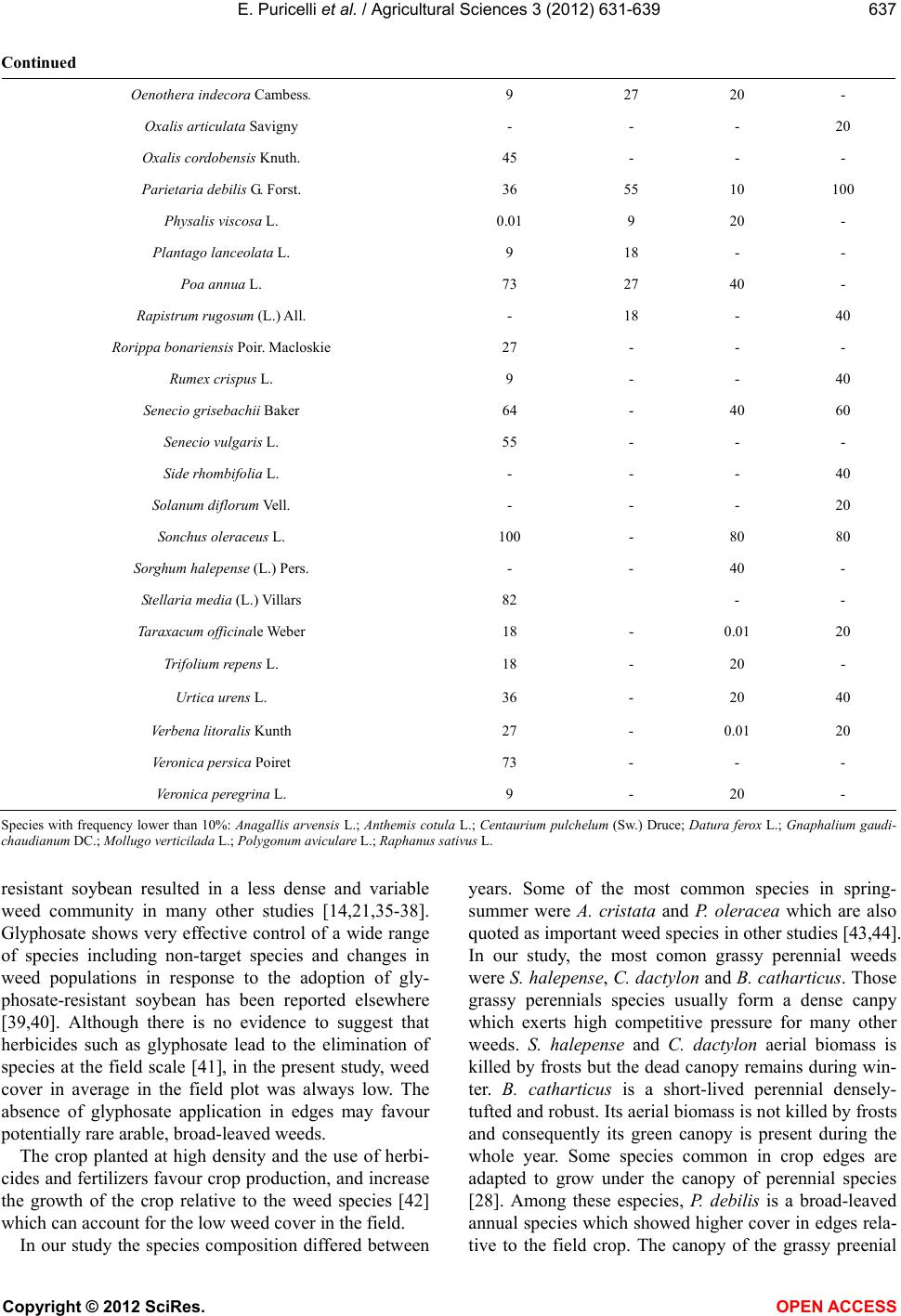 E. Puricelli et al. / Agricultural Sciences 3 (2012) 631-6 39 637 Continued Oenothera indecora Cambess. 9 27 20 - Oxalis articulata Savigny - - - 20 Oxalis cordobensis Knuth. 45 - - - Parietaria debilis G. Forst. 36 55 10 100 Physalis viscosa L. 0.01 9 20 - Plantago lanceolata L. 9 18 - - Poa annua L. 73 27 40 - Rapistrum rugosum (L.) All. - 18 - 40 Rorippa bonariensis Poir. Macloskie 27 - - - Rumex crispus L. 9 - - 40 Senecio grisebachii Baker 64 - 40 60 Senecio vulgaris L. 55 - - - Side rhombifolia L. - - - 40 Solanum diflorum Vell. - - - 20 Sonchus oleraceus L. 100 - 80 80 Sorghum halepense (L.) Pers. - - 40 - Stellaria media (L.) Villars 82 - - Taraxacum officinale Weber 18 - 0.01 20 Trifolium repens L. 18 - 20 - Urtica urens L. 36 - 20 40 Verbena litoralis Kunth 27 - 0.01 20 Veronica persica Poiret 73 - - - Veronica peregrina L. 9 - 20 - Species with frequency lower than 10%: Anagallis arvensis L.; Anthemis cotula L.; Centaurium pulchelum (Sw.) Druce; Datura ferox L.; Gnaphalium gaudi- chaudianum DC.; Mollugo verticilada L.; Polygonum aviculare L.; R a p hanus s a ti vus L. resistant soybean resulted in a less dense and variable weed community in many other studies [14,21,35-38]. Glyphosate shows very effective control of a wide range of species including non-target species and changes in weed populations in response to the adoption of gly- phosate-resistant soybean has been reported elsewhere [39,40]. Although there is no evidence to suggest that herbicides such as glyphosate lead to the elimination of species at the field scale [41], in the present study, weed cover in average in the field plot was always low. The absence of glyphosate application in edges may favour potentially rare arable, broad-leaved weeds. The crop planted at high density and the use of herbi- cides and fertilizers favour crop production, and increase the growth of the crop relative to the weed species [42] which can account for the low weed cover in the field. In our study the species composition differed between years. Some of the most common species in spring- summer were A. cristata and P. oleracea which are also quoted as important weed species in other studies [43,44]. In our study, the most comon grassy perennial weeds were S. halepense, C. dactylon and B. catharticu s. Those grassy perennials species usually form a dense canpy which exerts high competitive pressure for many other weeds. S. halepense and C. dactylon aerial biomass is killed by frosts but the dead canopy remains during win- ter. B. catharticus is a short-lived perennial densely- tufted and robust. Its aerial biomass is not killed by frosts and consequently its green canopy is present during the whole year. Some species common in crop edges are adapted to grow under the canopy of perennial species [28]. Among these especies, P. debilis is a broad-leaved annual species which showed higher cover in edges rela- tive to the field crop. The canopy of the grassy preenial Copyright © 2012 SciRes. OPEN ACCES S 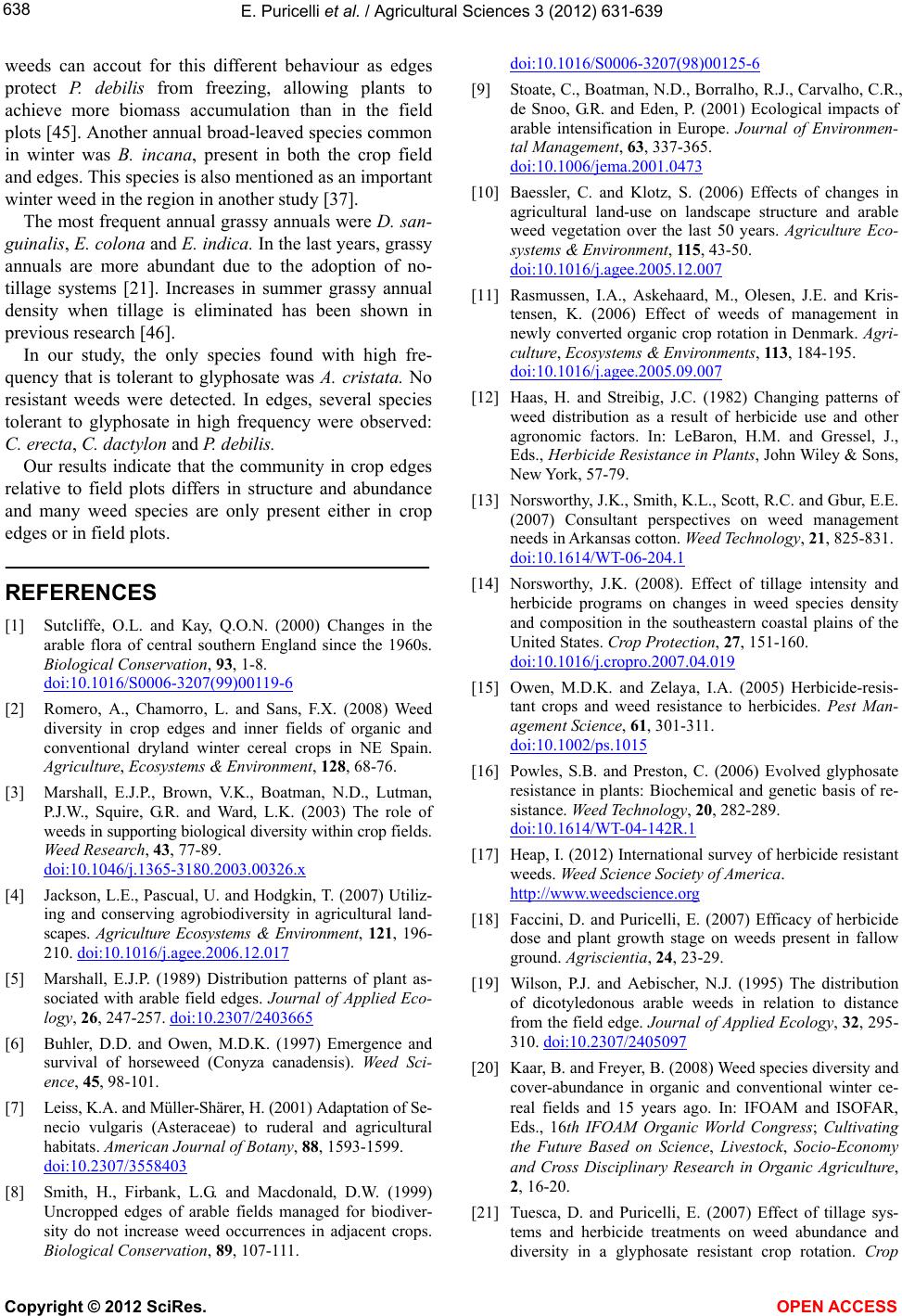 E. Puricelli et al. / Agricultural Sciences 3 (2012) 631-6 39 638 weeds can accout for this different behaviour as edges protect P. debilis from freezing, allowing plants to achieve more biomass accumulation than in the field plots [45]. Another annual broad-leaved species common in winter was B. incana, present in both the crop field and edges. This species is also mentioned as an important winter weed in the region in another study [37]. The most frequent annual grassy annuals were D. san- guinalis, E. colo na and E. indica. In the last years, grassy annuals are more abundant due to the adoption of no- tillage systems [21]. Increases in summer grassy annual density when tillage is eliminated has been shown in previous research [46]. In our study, the only species found with high fre- quency that is tolerant to glyphosate was A. cristata. No resistant weeds were detected. In edges, several species tolerant to glyphosate in high frequency were observed: C. erecta, C. dactylon and P. debilis. Our results indicate that the community in crop edges relative to field plots differs in structure and abundance and many weed species are only present either in crop edges or in field plots. REFERENCES [1] Sutcliffe, O.L. and Kay, Q.O.N. (2000) Changes in the arable flora of central southern England since the 1960s. Biological Conservation, 93, 1-8. doi:10.1016/S0006-3207(99)00119-6 [2] Romero, A., Chamorro, L. and Sans, F.X. (2008) Weed diversity in crop edges and inner fields of organic and conventional dryland winter cereal crops in NE Spain. Agriculture, Ecosystems & Environment, 128, 68-76. [3] Marshall, E.J.P., Brown, V.K., Boatman, N.D., Lutman, P.J.W., Squire, G.R. and Ward, L.K. (2003) The role of weeds in supporting biological diversity within crop fields. Weed Research, 43, 77-89. doi:10.1046/j.1365-3180.2003.00326.x [4] Jackson, L.E., Pascual, U. and Hodgkin, T. (2007) Utiliz- ing and conserving agrobiodiversity in agricultural land- scapes. Agriculture Ecosystems & Environment, 121, 196- 210. doi:10.1016/j.agee.2006.12.017 [5] Marshall, E.J.P. (1989) Distribution patterns of plant as- sociated with arable field edges. Journal of Applied Eco- logy, 26, 247-257. doi:10.2307/2403665 [6] Buhler, D.D. and Owen, M.D.K. (1997) Emergence and survival of horseweed (Conyza canadensis). Weed Sci- ence, 45, 98-101. [7] Leiss, K.A. and Müller-Shärer, H. (2001) Adaptation of Se- necio vulgaris (Asteraceae) to ruderal and agricultural habitats. American Journal of Botany, 88, 1593-1599. doi:10.2307/3558403 [8] Smith, H., Firbank, L.G. and Macdonald, D.W. (1999) Uncropped edges of arable fields managed for biodiver- sity do not increase weed occurrences in adjacent crops. Biological Conservation, 89, 107-111. doi:10.1016/S0006-3207(98)00125-6 [9] Stoate, C., Boatman, N.D., Borralho, R.J., Carvalho, C.R., de Snoo, G.R. and Eden, P. (2001) Ecological impacts of arable intensification in Europe. Journal of Environmen- tal Management, 63, 337-365. doi:10.1006/jema.2001.0473 [10] Baessler, C. and Klotz, S. (2006) Effects of changes in agricultural land-use on landscape structure and arable weed vegetation over the last 50 years. Agriculture Eco- systems & Environment, 11 5, 43-50. doi:10.1016/j.agee.2005.12.007 [11] Rasmussen, I.A., Askehaard, M., Olesen, J.E. and Kris- tensen, K. (2006) Effect of weeds of management in newly converted organic crop rotation in Denmark. Agri- culture, Ecosystems & Environments, 113, 184-195. doi:10.1016/j.agee.2005.09.007 [12] Haas, H. and Streibig, J.C. (1982) Changing patterns of weed distribution as a result of herbicide use and other agronomic factors. In: LeBaron, H.M. and Gressel, J., Eds., Herbicide Resistance in Plants, John Wiley & Sons, New York, 57-79. [13] Norsworthy, J.K., Smith, K.L., Scott, R.C. and Gbur, E.E. (2007) Consultant perspectives on weed management needs in Arkansas cotton. Weed Technology, 21, 825-831. doi:10.1614/WT-06-204.1 [14] Norsworthy, J.K. (2008). Effect of tillage intensity and herbicide programs on changes in weed species density and composition in the southeastern coastal plains of the United States. Crop Protection, 27, 151-160. doi:10.1016/j.cropro.2007.04.019 [15] Owen, M.D.K. and Zelaya, I.A. (2005) Herbicide-resis- tant crops and weed resistance to herbicides. Pest Man- agement Science, 61, 301-311. doi:10.1002/ps.1015 [16] Powles, S.B. and Preston, C. (2006) Evolved glyphosate resistance in plants: Biochemical and genetic basis of re- sistance. Weed Technology, 20, 282-289. doi:10.1614/WT-04-142R.1 [17] Heap, I. (2012) International survey of herbicide resistant weeds. Weed Science Society of America. http://www.weedscience.org [18] Faccini, D. and Puricelli, E. (2007) Efficacy of herbicide dose and plant growth stage on weeds present in fallow ground. Agriscientia, 24, 23-29. [19] Wilson, P.J. and Aebischer, N.J. (1995) The distribution of dicotyledonous arable weeds in relation to distance from the field edge. Journal of Applied Ecology, 32, 295- 310. doi:10.2307/2405097 [20] Kaar, B. and Freyer, B. (2008) Weed species diversity and cover-abundance in organic and conventional winter ce- real fields and 15 years ago. In: IFOAM and ISOFAR, Eds., 16th IFOAM Organic World Congress; Cultivating the Future Based on Science, Livestock, Socio-Economy and Cross Disciplinary Research in Organic Agriculture, 2, 16-20. [21] Tuesca, D. and Puricelli, E. (2007) Effect of tillage sys- tems and herbicide treatments on weed abundance and diversity in a glyphosate resistant crop rotation. Crop Copyright © 2012 SciRes. OPEN ACCES S  E. Puricelli et al. / Agricultural Sciences 3 (2012) 631-6 39 Copyright © 2012 SciRes. OPEN ACCES S 639 Protection, 26, 1765-1770. doi:10.1016/j.cropro.2007.03.008 [22] McCune, B. and Mefford, M.J. (1999) PC-ORD multi- variate analysis of ecological data. Version 4. MjM Soft- ware Design, Gleneden Beach. [23] McCune, B. and Grace, J.B. (2002) Analysis of ecologi- cal communities. MJM Software Design, Gleneden Beach. [24] Orlowski, L.A., Schumm, S.A. and Mielke, P.W. (1995) Reach classifications of the lower Mississippi River. Geo- morphology, 14, 221-234. doi:10.1016/0169-555X(95)00107-G [25] Orlóci, L. (1967) An agglomerative method for classifica- tion of plant communities. Journal of Ecology, 55, 193- 206. doi:10.2307/2257725 [26] Pielou, E.C. (1984) The interpretation of ecological data: A primer on classification and ordination. John Wiley & Sons, New York. [27] Hotelling, H. (1933) Analysis of a complex of statistical variables into principal components. Journal of Educa- tional Psychology, 24, 417-441. doi:10.1037/h0071325 [28] Fried, G., Norton, L.R. and Reboud, X. (2008) Environ- mental and management factors determining weed spe- cies composition and diversity in France. Agriculture, Ecosystems & Environment, 128, 68-76. doi:10.1016/j.agee.2008.05.003 [29] Boutin, C., Jobin, B., Bélanger, L. and Choinère, L. (2001) Comparing weed composition in natural and planted hedgerows and in herbaceous field margins adjacent to crop fields. Canadian Journal of Plant Sciences, 81, 313- 324. doi:10.4141/P00-048 [30] Le Coeur, D., Baudry, J., Burel, F. and Thenail, C. (2002) Why and how we should study field boundary biodiver- sity in an agrarian landscape context. Agriculture, Eco- systems & Environme nts, 89, 23-40. doi:10.1016/S0167-8809(01)00316-4 [31] Odum, E.P., Park, T.Y. and Hutchenson, K. (1994) Com- parison of the weedy vegetation in old-fields and crop fields on the same site reveals that fallowing crop fields does not result in seedbank buildup of agricultural weeds. Agriculture, Ecosystems and Environment, 49, 247-252. doi:10.1016/0167-8809(94)90054-X [32] Mahn, E.G. (1984) Structural changes of weed communi- ties and populations. Vegetatio, 58, 79-85. doi:10.1007/BF00044931 [33] Derksen, D.A., Thomas, A.G., Lafond, G.P., Loeppky, H.A. and Swanton, C.J. (1995) Impact of post-emergence herbicides on weed community diversity within conser- vation-tillage systems. Weed Research, 35, 311-320. doi:10.1111/j.1365-3180.1995.tb01794.x [34] Sosnokie, L.M., Luschei, E.C. and Fanning, M.A. (2007) Field margin weed-species diversity in relation to land- scape attributes and adyacent land use. Weed Science, 55, 129-136. doi:10.1614/WS-06-125 [35] Grichar, W.J., Bessler, B.A. and Brewer, K.D. (2004) Effect of row spacing and herbicide dose on weed control and grain sorghum yield. Crop Protection, 23, 263-267. doi:10.1016/j.cropro.2003.08.004 [36] Johnson, W.G., Davis, V.M., Kruger, G.R. and Weller, S.C. (2009) Influence of glyphosate-resistant cropping systems on weed species shifts and glyphosate-resistant weed po- pulations. European Journal of Agronomy, 31, 162-172. doi:10.1016/j.eja.2009.03.008 [37] Puricelli, E. and Tuesca, D. (2005) Weed richness and diversity in wheat and fallows in sequences with gly- phosate resistant crops. Agriscientia, 22, 69-78. [38] Harker, K.N., Clayton, G.W., Blackshaw, R.E., O’Dono- van, J.T., Johnson, E.N., Gan, I., Holm, F.A., Sapsford, K.L., Irvine, R.B. and Van Acker, R.C. (2005) Glypho- sate-resistant wheat persistence in western Canadian crop- ping systems. Weed Science, 53, 846-859. doi:10.1614/WS-05-068R1.1 [39] Flint, S.G., Shaw, D.R., Kelley, F.S. and Holloway, J.C. (2005) Effect of herbicide systems on weed shifts in soy- bean and cotton. Weed Te chnolog y, 19, 266-273. doi:10.1614/WT-03-171R [40] Culpepper, A.S., Grey, T.L., Vencill, W.K., Kichler, J.M., Webster, T.M. and Brown, S.M. (2006) Glyphosate-resis- tant palmer amaranth (Amaranthus palmeri) confirmed in Georgia. Weed Sci ence, 54, 620-626. doi:10.1614/WS-06-001R.1 [41] Cousens, R. and Mortimer, M. (1995) Dynamics of weed populations. Cambridge University Press, Cambridge. doi:10.1017/CBO9780511608629 [42] Bischoff, A. and Mahn, E.G. (2000) The effects of nitro- gen and diaspore availability on the regeneration of weed communities following extensification. Agriculture Eco- systems & Environment, 77, 237-246. doi:10.1016/S0167-8809(99)00104-8 [43] Puricelli, E., Faccini, D., Sabattini, M.R. and Orioli, G. (2003) Spurred Anoda (Anoda cristata) competition in narrow and wide-row soybean (Glycine max). Weed Tech- nology, 17, 446-451. doi:10.1614/0890-037X(2003)017[0446:SAACCI]2.0.C O;2 [44] Tuesca, D., Puricelli, E. and Papa, J.C. (2001) A long- term study of weed flora shifts in different tillage systems. Weed Research, 41, 369-382. doi:10.1046/j.1365-3180.2001.00245.x [45] Puricelli, E. and Papa, J.C. (2006) Parieta ria debilis growth in fallow and undisturbed environments. Weed Research, 46, 1-9. doi:10.1111/j.1365-3180.2006.00492.x [46] Zanin, G., Otto, S., Riello, L. and Borin, M. (1997) Ecolo- gical interpretation of weed flora dynamics under differ- ent tillage systems. Agriculture Ecosystems & Environ- ment, 66, 177-188. doi:10.1016/S0167-8809(97)00081-9 |