

Paper Menu >>
Journal Menu >>
 Surgical Science, 2012, 3, 430-435 http://dx.doi.org/10.4236/ss.2012.39086 Published Online September 2012 (http://www.SciRP.org/journal/ss) Chronic Pain Review Following Lichtenstein Hernia Repair: A Personal Series Maurice Brygel1*, Luke J. Bonato2, Sam S. Farah3,4 1The Melbourne Hernia Clinic, Masada Hospital, Melbourne, Australia 2Surgical Assistant, Master of Surgery Student, Monash University, Melbourne, Australia 3Surgical Resident, Southern Health, Melbourne Australia 4Master of Medicine (Clinical Epidemiology) Student, University of Sydney, Sydney, Australia Email: *[email protected] Received July 16, 2012; revised August 17, 2012; accepted August 31, 2012 ABSTRACT Introduction: Chronic groin pain is both a topical subject and important outcome measurement following inguinal hernia repair. It has b een suggested its in cidence is related to the management of the nerves of the inguinal canal as well as the type of mesh used and methods of fixation for both open and laparoscopic surgery. The level of pre-operative and post operative pain, its duration as well as complications may all be factors in predicting whether chronic pain could develop. The method of measu rement of chronic pain is itself a contentio us issue. It is now apparent that the qualitative measurement of activity and functional status as well as quantitative is important. As a result several uniform methods of assessing chronic post-operative pain have been designed, validated and implemented. One of these is used here. Methods : A study reviewing a consecutive series of Lichtenstein repairs performed by a single experienced hernia surgeon was carried out. 248 inguinal hernia patients operated on in 2005 were reviewed. Patients were contacted via telephone at a median of 50 months. Franneby’s recently validated inguinal pain questionnaire was used to assess the incidence of chronic pain. Results: 185 (75%) patients were able to be contacted for follow-up, making a total of 213 inguinal hernia repairs (including bilateral and recurrent hernias). At the time of review 3% of patients reported having pain. No patients reported that pain or discomfort was limiting their work, exercise or activities of daily living. No patients had disabling pain. Conclusion: Chronic pain did not appear to be a major problem within this cohort of patients. The Lichtenstein technique can produce favourable results in terms of chronic pain for unilateral, bilateral and recurrent inguinal hernias in an unselected group of patients with the usual mix of risk factors and complications. Keywords: Inguinal Hernia; Lichtenstein; Local Anaesthesia; Chronic Pain; Bilateral Inguinal Hernia; Recurrent Inguinal Hernia 1. Introduction Inguinal hernia repairs are one of the most common sur- gical procedures [1]. The pre-eminent status of the origi- nal Lichtenstein technique has been challenged with the introduction of other open and laparoscopic techniques, lightweight meshes and new methods of fixation with absorbable tackers and tissue glues. While there has been significant improvement in recurrence rates with most types of mesh repair [2], a variable and worrying inci- dence of chronic pain following open and laparoscopic repair of inguinal hernias has been documented [3]. There is still controversy regarding the true incidence of chronic pain. The lack of uniform definitions and in- terpretation as well as different methods of assessment has lead to this [4-6 ]. Mild, moderate and severe pain has been reported to have a prevalence of 0.7% to 43.3% [3], with some treating the presence of pain as a dichotomous (yes/no) entity [7]. An overall prevalence of 0.5% - 6% of severe debilitating pain affecting normal daily activi- ties and work has been reported [3]. It has also been sug- gested that the rates of severe chronic pain are lower with laparoscopic repair, compared with Lichtenstein rep air or other open techniques, as well as being associated with earlier return to work and normal activities [8,9]. This however is associated with more adverse events during surgery [10] as well as higher rates of visceral injury [8]. Other factors such as patient profile, the level of pre- operative pain, type of hernia, post-operative pain and c om- plications are also being assessed as to their significance in assessing the risk of the development of chronic pain [9]. Many methods including numerical and behavioural rating scales have been used to assess the levels of chro nic pain [11], attesting to the difficulty in assessment and interpretation. Standardization of methods of measuring *Corresponding a uthor. C opyright © 2012 SciRes. SS 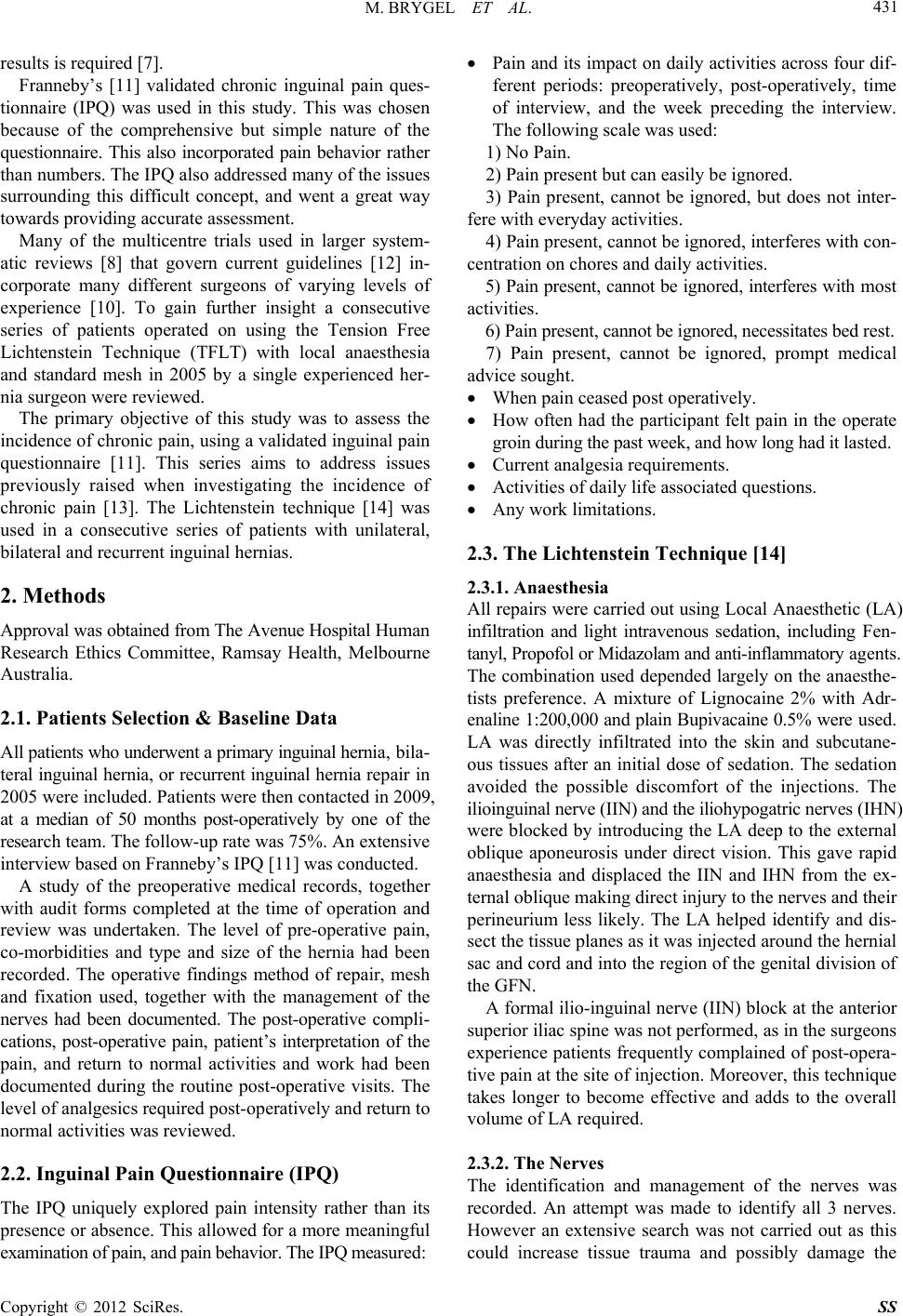 M. BRYGEL ET AL. 431 results is required [7]. Franneby’s [11] validated chronic inguinal pain ques- tionnaire (IPQ) was used in this study. This was chosen because of the comprehensive but simple nature of the questionnaire. This also incorporated pain behavior rather than numbers. The IPQ also addressed many of the issues surrounding this difficult concept, and went a great way towards providing accurate assessment. Many of the multicentre trials used in larger system- atic reviews [8] that govern current guidelines [12] in- corporate many different surgeons of varying levels of experience [10]. To gain further insight a consecutive series of patients operated on using the Tension Free Lichtenstein Technique (TFLT) with local anaesthesia and standard mesh in 2005 by a single experienced her- nia surgeon were reviewed. The primary objective of this study was to assess the incidence of chronic pain, using a validated inguinal pain questionnaire [11]. This series aims to address issues previously raised when investigating the incidence of chronic pain [13]. The Lichtenstein technique [14] was used in a consecutive series of patients with unilateral, bilateral and recurrent inguinal hern ias. 2. Methods Approval was obtained from The Avenue Hospital Human Research Ethics Committee, Ramsay Health, Melbourne Australia. 2.1. Patients Selection & Baseline Data Al l patients who underw ent a primary inguinal hernia , b il a - teral inguinal hernia, or recurrent inguinal hernia repair in 2005 were included. Patients were then contacted in 2009, at a median of 50 months post-operatively by one of the research team. The follow-up rate was 75%. An extensive interview based on Franne b y ’s IPQ [11 ] was cond u cted. A study of the preoperative medical records, together with audit forms completed at the time of operation and review was undertaken. The level of pre-operative pain, co-morbidities and type and size of the hernia had been recorded. The operative findings method of repair, mesh and fixation used, together with the management of the nerves had been documented. The post-operative compli- cations, post-operative pain, patient’s interpretation of the pain, and return to normal activities and work had been documented during the routine post-operative visits. The level of analg esics required post-operatively and return to normal activities was reviewed. 2.2. Inguinal Pain Questionnaire (IPQ) The IPQ uniquely explored pain intensity rather than its presence or absence. This allowed for a more meaningful examination of pain, and pain behavior. The IPQ measured: Pain and its impact on daily activities acro ss four dif- ferent periods: preoperatively, post-operatively, time of interview, and the week preceding the interview. The following scale was used: 1) No Pain. 2) Pain present but can easily be ignored. 3) Pain present, cannot be ignored, but does not inter- fere with everyday activities. 4) Pain present, cannot be ignored, interferes with con- centration on chores and daily activities. 5) Pain present, cannot be ignored, interferes with mos t activities. 6) Pain present, cannot be ignored, necessitates bed rest. 7) Pain present, cannot be ignored, prompt medical advice sought. When pain ceased post operatively. How often had the participant felt pain in the operate groin during the past week, and how long had it lasted. Current analgesia requirements. Activities of daily life associated questions. Any work limitations. 2.3. The Lichtenstein Technique [14] 2.3.1. Anaesthe sia All repairs were carried out using Local Anaesthetic (LA) infiltration and light intravenous sedation, including Fen- tanyl, Propofol or Midazolam and anti-inflammatory a gent s. The combination used depended largely on the anaesthe- tists preference. A mixture of Lignocaine 2% with Adr- enaline 1:200,000 and plain Bupivacaine 0.5% were us ed. LA was directly infiltrated into the skin and subcutane- ous tissues after an initial dose of sedation. The sedation avoided the possible discomfort of the injections. The ilioinguinal nerve (IIN) and the il iohypogat ric nerves (IHN) were blocked by introducing the LA deep to the external oblique aponeurosis under direct vision. This gave rapid anaesthesia and displaced the IIN and IHN from the ex- ternal oblique making direct injury to the nerves and their perineurium less likely. The LA helped identify and dis- sect the tissue planes as it was injected around the hernial sac and cord and into the region of the genital d ivision of the GFN. A formal ilio-inguinal nerve (IIN) block at the anterior superior iliac spine was not performed, as in th e surgeon s experience patients frequently complained of post-opera- tive pain at the site o f injection. Moreo ver, this technique takes longer to become effective and adds to the overall volume of LA required. 2.3.2. The Nerves The identification and management of the nerves was recorded. An attempt was made to identify all 3 nerves. However an extensive search was not carried out as this could increase tissue trauma and possibly damage the Copyright © 2012 SciRes. SS 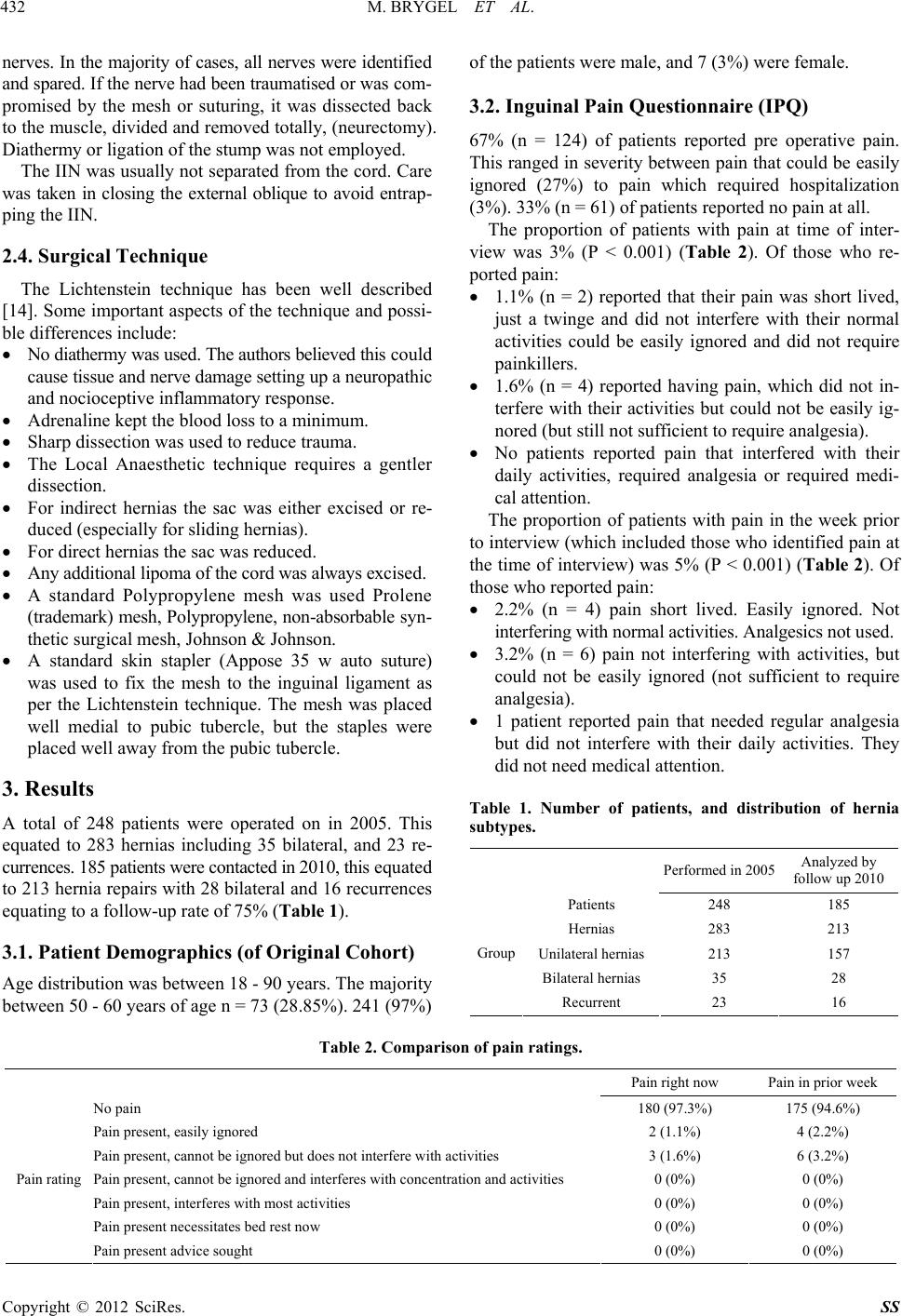 M. BRYGEL ET AL. Copyright © 2012 SciRes. SS 432 nerves. In the majority of cases, all nerves were identifie d and spared. If the nerve had been traumatised or was com- promised by the mesh or suturing, it was dissected back to the muscle, divided and removed totally, (neurectomy). Diathermy or ligation of the stump was not employed. The IIN was usually not separated from the cord. Care was taken in closing the external oblique to avoid entrap- ping the IIN. 2.4. Surgical Technique The Lichtenstein technique has been well described [14]. Some important aspects of the technique and possi- ble differences include: No diathermy was used . Th e au thors believed th is c ould cause tissue and nerve damage setting up a neuropat hic and nocioceptive inf lammatory response. Adrenaline kept the blood loss to a minimum. Sharp dissection was used to reduce trauma. The Local Anaesthetic technique requires a gentler dissection. For indirect hernias the sac was either excised or re- duced (especially for sliding hernias). For direct hernias the sac was reduced. Any additional lipoma of the cord was always excised. A standard Polypropylene mesh was used Prolene (trademark) mesh, Polypropylene, non-absorbable syn - thetic surgical mesh, Johnson & Johnson. A standard skin stapler (Appose 35 w auto suture) was used to fix the mesh to the inguinal ligament as per the Lichtenstein technique. The mesh was placed well medial to pubic tubercle, but the staples were placed well away from the pubic tubercle. 3. Results A total of 248 patients were operated on in 2005. This equated to 283 hernias including 35 bilateral, and 23 re- currences. 185 patients were contacted in 2010, this equated to 213 hernia rep airs with 28 bilatera l and 16 re currences equating to a follow-up rate of 75% (Table 1). 3.1. Patient Demographics (of Original Cohort) Age distribution was between 18 - 90 years. The majority between 50 - 60 years of age n = 73 (28.85%). 241 (97%) of the patients were male, and 7 (3%) were female. 3.2. Inguinal Pain Questionnaire (IPQ) 67% (n = 124) of patients reported pre operative pain. This ranged in severity between pain that could be easily ignored (27%) to pain which required hospitalization (3%). 33% (n = 61) of patients reported no pain at all. The proportion of patients with pain at time of inter- view was 3% (P < 0.001) (Table 2). Of those who re- ported pain: 1.1% (n = 2) reported that their pain was short lived, just a twinge and did not interfere with their normal activities could be easily ignored and did not require painkillers. 1.6% (n = 4) reported having pain, which did not in- terfere with their activities but could not be easily ig- nored (but still not sufficient to require analgesia). No patients reported pain that interfered with their daily activities, required analgesia or required medi- cal attention. The proportion of patients with pain in the week prior to interview (which included those who identified pain at the time of interview) was 5% (P < 0.001) (Table 2). Of those who reported pain: 2.2% (n = 4) pain short lived. Easily ignored. Not interfering with norm al acti vities. Anal gesics not used. 3.2% (n = 6) pain not interfering with activities, but could not be easily ignored (not sufficient to require analgesia). 1 patient reported pain that needed regular analgesia but did not interfere with their daily activities. They did not need medical attention. Table 1. Number of patients, and distribution of hernia subtypes. Performed in 2005 Analyzed by follow up 2010 Patients 248 185 Hernias 283 213 Unilateral hernias 213 157 Bilateral hernias 35 28 Group Recurrent 23 16 Table 2. Comparison of pain ratings. Pain right now Pain in prior week No pain 180 (97.3%) 175 (94.6%) Pain present, easily ignored 2 (1.1%) 4 (2.2%) Pain present, cannot be ignored but does not interfere with activities 3 (1.6%) 6 (3.2%) Pain present, cannot be ignored and interferes with concentration and activities 0 (0%) 0 (0%) Pain present, interferes with most activities 0 (0%) 0 (0%) Pain present necessitates bed rest now 0 (0%) 0 (0%) Pain rating Pain present advice sought 0 (0%) 0 (0%) 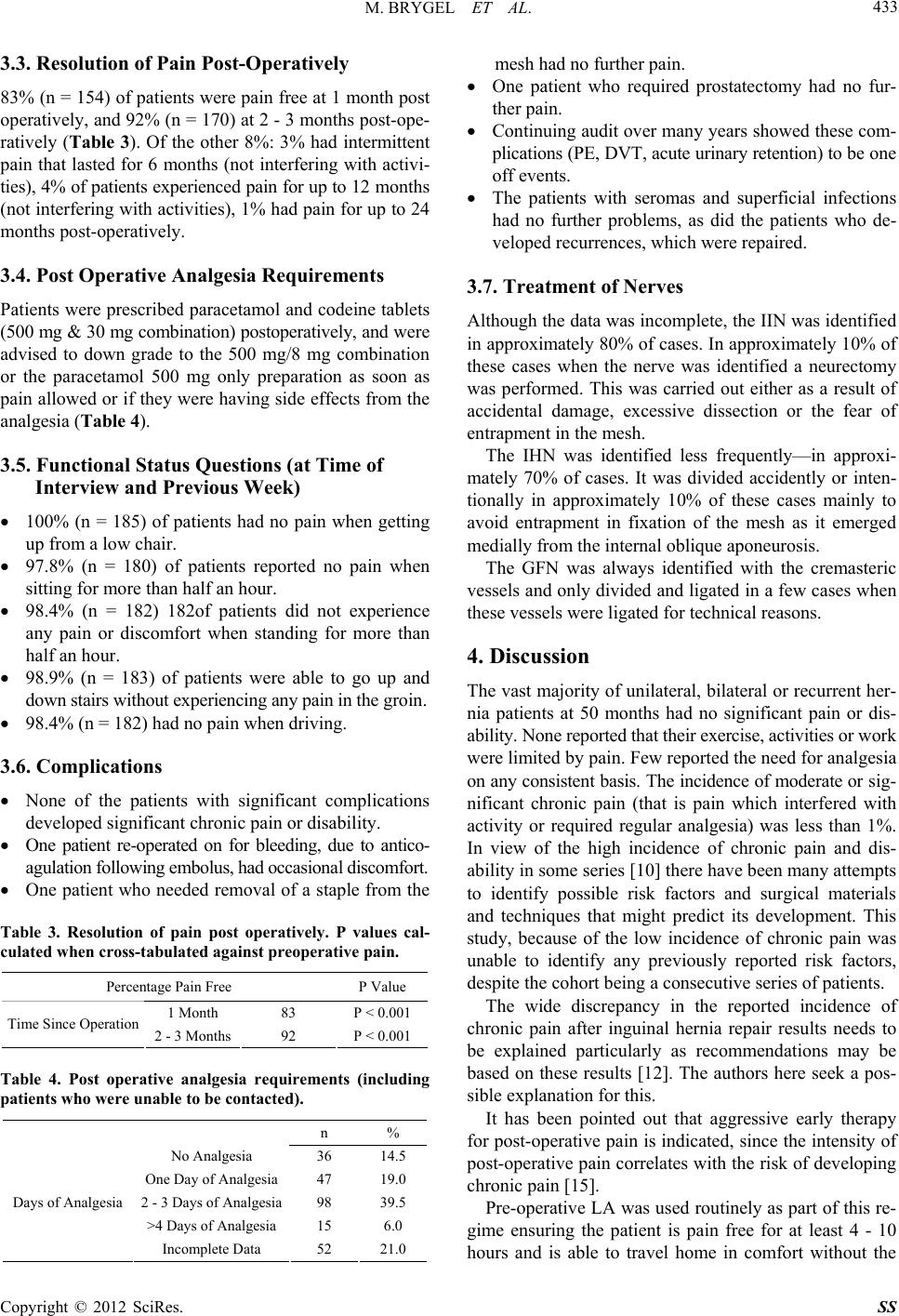 M. BRYGEL ET AL. 433 3.3. Resolution of Pain Post-Operatively 83% (n = 154) of patients were pain free at 1 month post operatively, and 92% (n = 170) at 2 - 3 months post-ope- ratively (Table 3). Of the other 8%: 3% had intermittent pain that lasted for 6 months (not interfering with activi- ties), 4% of patients experienced pain for up to 12 mon ths (not interfering with activities), 1% had pain for up to 24 months post-operatively. 3.4. Post Operative Analgesia Requirements Patients were prescribed paracetamol and codeine tablets (500 mg & 30 mg combination) postoperatively, and wer e advised to down grade to the 500 mg/8 mg combination or the paracetamol 500 mg only preparation as soon as pain allowed or if they were having side effects from the analgesia (Table 4). 3.5. Functional Status Questions (at Time of Interview and Previous Week) 100% (n = 185) of patients had no pain when getting up from a low chair. 97.8% (n = 180) of patients reported no pain when sitting for more than half an hour. 98.4% (n = 182) 182of patients did not experience any pain or discomfort when standing for more than half an hour. 98.9% (n = 183) of patients were able to go up and down stairs without experiencing any pain in the groin. 98.4% (n = 182) had no pain when driving. 3.6. Complications None of the patients with significant complications developed significant chronic pain or disability. One patient re-operated on for bleeding, due to antico- agulati on foll owing embolus , had oc casi onal di scomfo rt. One patient who needed removal of a staple from the Table 3. Resolution of pain post operatively. P values cal- culated when cross-tabulated against preoperative pain. Percentage Pain Free P Value 1 Month 83 P < 0.001 Time Since Operation 2 - 3 Months92 P < 0.001 Table 4. Post operative analgesia requirements (including patients who were unable to be contacted). n % No Analgesia 36 14.5 One Day of Analgesia 47 19.0 2 - 3 Days of Anal gesia 98 39.5 >4 Days of Analgesia 15 6.0 Days of Analgesia Incomplete Data 52 21.0 mesh had no further pain. One patient who required prostatectomy had no fur- ther pain. Continuing audit over many years showed these com- plications (PE, DVT, acute urinary retention) to be one off events. The patients with seromas and superficial infections had no further problems, as did the patients who de- veloped recurrences, which were repaired. 3.7. Treatment of Nerves Although the data was inco mplete, the IIN was identified in approximately 80% of cases. In approximately 10% of these cases when the nerve was identified a neurectomy was performed. This was carried out either as a result of accidental damage, excessive dissection or the fear of entrapment in the mesh. The IHN was identified less frequently—in approxi- mately 70% of cases. It was divided accidently or inten- tionally in approximately 10% of these cases mainly to avoid entrapment in fixation of the mesh as it emerged medially from the internal oblique aponeurosis. The GFN was always identified with the cremasteric vessels and only divided and ligated in a few cases when these vessels were ligated for technical reasons. 4. Discussion The vast majority of unilateral, bilateral o r recurrent her- nia patients at 50 months had no significant pain or dis- ability. None reporte d that thei r exercise, activities or work were limited by pain. Few reported the need for analgesia on any consistent basis. The incidence of moderate or sig - nificant chronic pain (that is pain which interfered with activity or required regular analgesia) was less than 1%. In view of the high incidence of chronic pain and dis- ability in some series [10] there have been many attempts to identify possible risk factors and surgical materials and techniques that might predict its development. This study, because of the low incidence of chronic pain was unable to identify any previously reported risk factors, despite the coho rt being a consecutive series of patients. The wide discrepancy in the reported incidence of chronic pain after inguinal hernia repair results needs to be explained particularly as recommendations may be based on these results [12]. The authors here seek a pos- sible explanation for this. It has been pointed out that aggressive early therapy for post-operative pain is indicated, since the intensity of post-operative pain correlates with th e risk of developing chronic pain [15]. Pre-operative LA was used routinely as part of this re- gime ensuring the patient is pain free for at least 4 - 10 hours and is able to travel home in comfort without the Copyright © 2012 SciRes. SS  M. BRYGEL ET AL. 434 need for analgesics. It was noted in this series that the vast majority of the patients did not consider early post- operative pain to be a major factor. The use of post-oper- ative analgesics was: 14% needed no painkillers, 18% u s ed pain killers for 1day, and th e majority for just a few days to a week. Even those who felt post-operative pain to be an issue did not develop significant chronic pain. Those patients who did complain of post-operative pain at one week were kept under review until the pain resolved. The low incidence of significant early post-operative pain or perceived pain and the minimal need for analge- sia in many patients, may be of significance. The LA may contribute to this early low level of pain and may be a significant factor, particularly as pre-emptive, peri-opera- tive and post-operative analgesia considered under the title “multimodal analg esia” are being assessed as factors in preventing chronic pain [16]. Furthermore with LA many of the early side effects of general anaesthesia such as nausea, vomiting, and acute retention of urine are reduced. Less intensive post-opera- tive nursing, including airway care is required. The major- ity of patients go home within 3 hours of surgery. The lo n g acting LA lasts from 4 - 10 hours and many patients do not need further analgesia. Many patients preferred the LA because of previous problems with general anaesthesia. Many of the studies of the Lichtenstein method have not used local anaesthesia as described by Lichtenstein. This may diminish the benefits of the original repair, and account for a higher incidence of chronic pain found in some studies [8]. Similarly the role of surgeon experience has been dis- cussed previously, but not yet explored [17]. 4.1. The Nerves The management of the 3 major nerves of the inguinal canal has been considered to be a factor in chronic pain [18]. This study showed a low incidence of chronic pain despite the IIN and IHN not being formally identified or damaged and removed in more than 20% of cases. Extensive studies concluded that identification and of all 3 nerves of the inguinal canal could influence the in- cidence of chronic groi n pai n [19,2 0] . 4.2. Mesh, Staples Mesh and staples have also been widely implicated as signi ficant fac tors in the d evelopmen t of chronic p ain l e ad - ing to a variety of new lighter weight meshes, staples and glues [16]. This series with its low incidence of significant chronic pain using a standard Polypropylene mesh and non-absorbable staples raises the question as to their role. 4.3. Positive Results The positive results identified in this series may be due to the following factors. LA infiltration allowing simpler dissection of the tis- sues with less trauma. Diathermy is not used, possibly reducing the inflammatory response around the nerve end- ings, a possible cause of nocioceptive pain. Iden tification and management of the nerves [12]. The use of the open skin stapler to fix the mesh (appose ulc 35 w auto suture). The early supervised management of post-operative pain, including contact by telephone con tact by the surg eon for all patients, the day following surgery to adjust analgesia and give support as necessary. If the results vary so much, is it possible to attribute chronic pain to the mesh/fixation alone? The results in this study, suggest that mesh and staples may not be the main factors in determining the incidence of chronic pain, and could it just be the way the materials are used? Does it depend on the technique and the surgeon? 5. Conclusions There is strong evidence from this series, using a vali- dated inguinal pain questionnaire, that a Lichtenstein re- pair with local anaesthesia can result in a low incidence of moderate or severe significant chronic post-operative pain. Those few patients who did report pain requiring analgesia, did not have any associated significant mor- bidity or impairment of activities of daily living. Thus there appeared to be no reason to alter the type of mesh used or its method of fixation. As well the approach t aken to the identification and management of the nerves ap- peared to achieve satisfactory results. The validated IPQ provides a more detailed apprecia- tion of the pain. This will be useful in the future to help in assessing the role of surgical risk factors, surgical ma- terials, management of the nerves and even the skill of the surgeon as a cause of chronic pain. 6. Acknowledgements Prof. Avni Sali, Prof. Steven Chan, Prof. Julian Smith, Mrs. Di Bloore. REFERENCES [1] A. Kingsnorth and K. LeBlanc, “Hernias: Inguinal and Incisional,” Lancet, Vol. 362, No. 9395, 2003, pp. 1561-1571. doi:10.1016/S0140-6736(03)14746-0 [2] T. Bisgaard, et al., “Risk of Recurrence 5 Years or More after Primary Lichtenstein Mesh and Sutured Inguinal Hernia Repair,” British Journal of Surgery, Vol. 94, No. 8, 2007, pp. 1038-1040. doi:10.1002/bjs.5756 [3] H. Kehlet, “Chronic Pain after Groin Hernia Repair,” British Journal of Surgery, Vol. 95, No. 2, 2008, pp. 135-136. doi:10.1002/bjs.6111 [4] A. S. Poobalan, et al., “Chronic Pain and Quality of Life Following Open Inguinal Hernia Repair,” British Journal Copyright © 2012 SciRes. SS  M. BRYGEL ET AL. Copyright © 2012 SciRes. SS 435 of Surgery, Vol. 88, No. 8, 2001, pp. 1122-1126. doi:10.1046/j.0007-1323.2001.01828.x [5] M. Bay-Nielsen, et al., “Swedish Hernia Data Base the Danish Hernia Data B. Chronic Pain after Open Mesh and Sutured Repair of Indirect Inguinal Hernia in Young Males,” British Journal of Surgery, Vol. 91, No. 10, 2004, pp. 1372-1376. doi:10.1002/bjs.4502 [6] R. E. Condon, “Groin Pain after Hernia Repair,” Annals of Surgery, Vol. 233, No. 1, 2001, p. 8. doi:10.1097/00000658-200101000-00002 [7] H. Kehlet, et al., “Chronic Postherniorrhaphy Pain—A Call for Uniform Assessment,” Hernia, Vol. 6, No. 4, 2002, pp. 178-181. doi:10.1007/s10029-002-0082-0 [8] K. McCormack, et al., “Laparoscopic Techniques versus Open Techniques for Inguinal Hernia Repair,” Cochrane Database of Systematic Reviews, Vol. 2003, No. 1, 2003, Article ID: CD001785. [9] K. J. Dickinson, et al., “Predicting Chronic Post-Opera- tive Pain Following Laparoscopic Inguinal Hernia Re- pair,” Hernia, Vol. 12, No. 6, 2008, pp. 597-601. doi:10.1007/s10029-008-0408-7 [10] H. R. Langeveld, et al., “Total Extraperitoneal Inguinal Hernia Repair Compared with Lichtenstein (the LEVEL- Trial): A Randomized Controlled Trial,” Annals of Sur- gery, Vol. 251, No. 5, 2010, pp. 819-824. doi:10.1097/SLA.0b013e3181d96c32 [11] U. Franneby, et al., “Validation of an Inguinal Pain Ques- tionnaire for Assessment of Chronic Pain after Groin Her- nia Repair,” British Journal of Surgery, Vol. 95, No. 4, 2008, pp. 488-493. doi:10.1002/bjs.6014 [12] M. P. Simons, et al., “European Hernia Society Guide- lines on the Treatment of Inguinal Hernia in Adult Pa- tients,” Hernia, Vol. 13, No. 4, 2009, pp. 343-403. doi:10.1007/s10029-009-0529-7 [13] U. Franneby, et al., “Risk Factors for Long-Term Pain after Hernia Surgery,” Annals of Surgery, Vol. 244, No. 2, 2006, pp. 212-219. doi:10.1097/01.sla.0000218081.53940.01 [14] S. Lichtenstein, et al., “The Tension Free Hernioplasty,” American Journal of Surgery, Vol. 157, 1989, pp. 188- 193. doi:10.1016/0002-9610(89)90526-6 [15] H. Kehlet, et al., “Persistent Postsurgical Pain: Risk Fac- tors and Prevention,” Lancet, Vol. 367, No. 9522, 2006, pp. 1618-1625. doi:10.1016/S0140-6736(06)68700-X [16] E. K. Aasvang, et al., “Predictive Risk Factors for Persis- tent Postherniotomy Pain,” Anesthesiology, Vol. 112, No. 4, 2010, pp. 957-969. doi:10.1097/ALN.0b013e3181d31ff8 [17] C. G. Schmedt, et al., “Comparison of Endoscopic Pro- cedures vs. Lichtenstein and Other Open Mesh Tech- niques for Inguinal Hernia Repair: A Meta-Analysis of Randomized Controlled Trials,” Surgical Endoscopy, Vol. 19, No. 2, 2005, pp. 188-199. doi:10.1007/s00464-004-9126-0 [18] K. Caliskan, et al., “A Method for the Reduction of Chronic Pain after Tension-Free Repair of Inguinal Her- nia: Iliohypogastric Neurectomy and Subcutaneous Trans- position of the Spermatic Cord,” Hernia, Vol. 14 No. 1, 2010, pp. 51-55. doi:10.1007/s10029-009-0571-5 [19] J. F. M. Lange, et al., “Prophylactic Ilioinguinal Neurec- tomy in Open Inguinal Hernia Repair: A Double-Blind Randomized Controlled Trial,” Annals of Surgery, Vol. 246, No. 6, 2007, p. 1116. doi:10.1097/SLA.0b013e31815c2979 [20] S. Alfieri, et al., “Influence of Preservation versus Divi- sion of Ilioinguinal, Iliohypogastric, and Genital Nerves during Open Mesh Herniorrhaphy: Prospective Multicen- tric Study of Chronic Pain,” Annals of Surgery, Vol. 243, No. 4, 2006, pp. 553-558. doi:10.1097/01.sla.0000208435.40970.00 |