

Paper Menu >>
Journal Menu >>
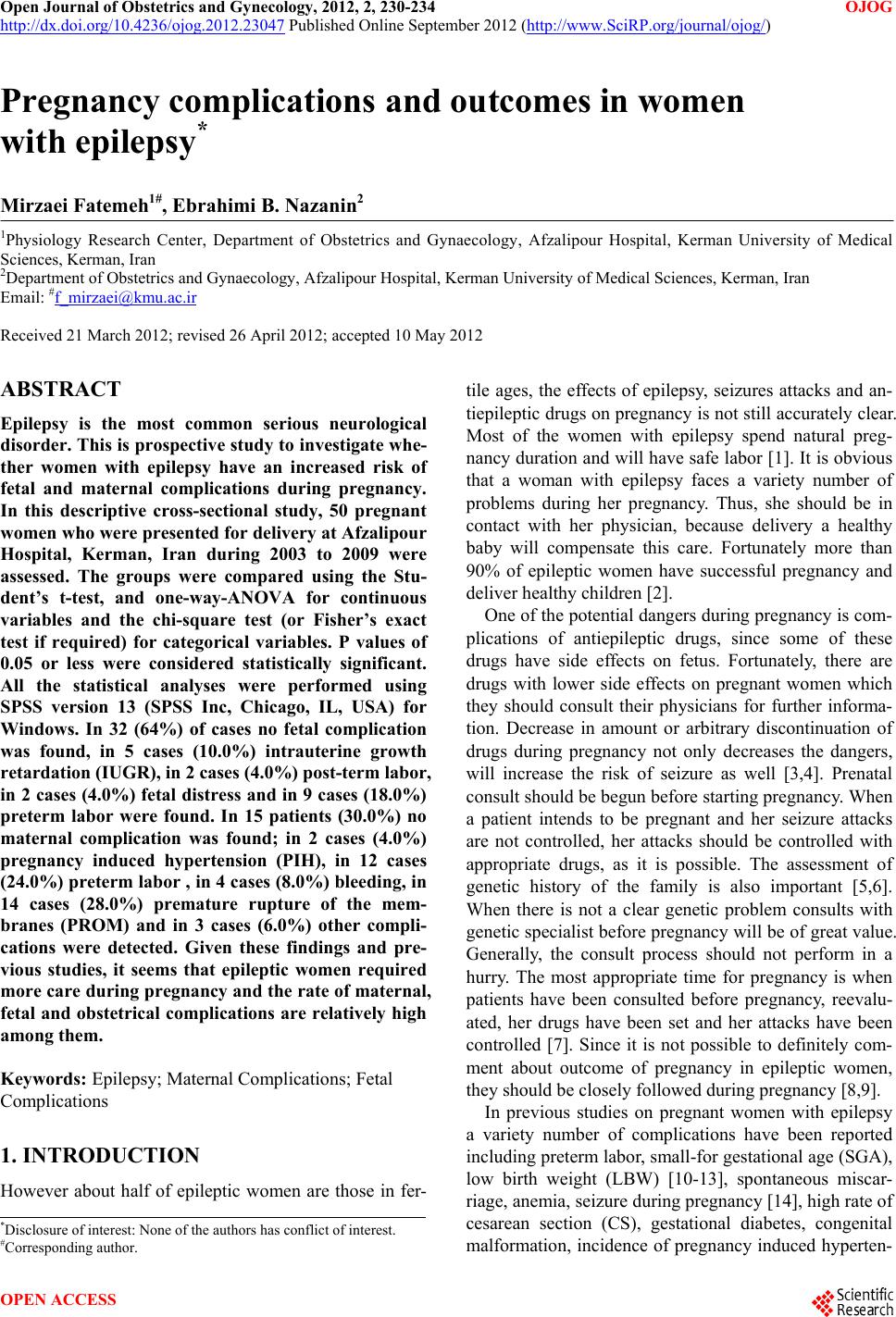 Open Journal of Obstetrics and Gynecology, 2012, 2, 230-234 OJOG http://dx.doi.org/10.4236/ojog.2012.23047 Published Online September 2012 (http://www.SciRP.org/journal/ojog/) Pregnancy complications and outcomes in women with epilepsy* Mirzaei Fatemeh1#, Ebrahimi B. Nazanin2 1Physiology Research Center, Department of Obstetrics and Gynaecology, Afzalipour Hospital, Kerman University of Medical Sciences, Kerman, Iran 2Department of Obstetrics and Gynaecology, Afzalipour Hospital, Kerman University of Medical Sciences, Kerman, Iran Email: #[email protected] Received 21 March 2012; revised 26 April 2012; accepted 10 May 2012 ABSTRACT Epilepsy is the most common serious neurological disorder. This is prospective study to investigate whe- ther women with epilepsy have an increased risk of fetal and maternal complications during pregnancy. In this descriptive cross-sectional study, 50 pregnant women who were presented for delivery at Afzalipour Hospital, Kerman, Iran during 2003 to 2009 were assessed. The groups were compared using the Stu- dent’s t-test, and one-way-ANOVA for continuous variables and the chi-square test (or Fisher’s exact test if required) for categorical variables. P values of 0.05 or less were considered statistically significant. All the statistical analyses were performed using SPSS version 13 (SPSS Inc, Chicago, IL, USA) for Windows. In 32 (64%) of cases no fetal complication was found, in 5 cases (10.0%) intrauterine growth retardation (IUGR), in 2 cases (4.0%) post-term labor, in 2 cases (4.0%) fetal distress and in 9 cases (18.0%) preterm labor were found. In 15 patients (30.0%) no maternal complication was found; in 2 cases (4.0%) pregnancy induced hypertension (PIH), in 12 cases (24.0%) preterm labor , in 4 cases (8.0%) bleeding, in 14 cases (28.0%) premature rupture of the mem- branes (PROM) and in 3 cases (6.0%) other compli- cations were detected. Given these findings and pre- vious studies, it seems that epileptic women required more care during pregnancy and the rate of maternal, fetal and obstetrical complications are relatively high among them. Keywords: Epilepsy; Maternal Complications; Fetal Complications 1. INTRODUCTION However about half of epileptic women are those in fer- tile ages, the effects of epilepsy, seizures attacks and an- tiepileptic drugs on pregnancy is not still accurately clear. Most of the women with epilepsy spend natural preg- nancy duration and will have safe labor [1]. It is obvious that a woman with epilepsy faces a variety number of problems during her pregnancy. Thus, she should be in contact with her physician, because delivery a healthy baby will compensate this care. Fortunately more than 90% of epileptic women have successful pregnancy and deliver healthy children [2]. One of the potential dangers during pregnancy is com- plications of antiepileptic drugs, since some of these drugs have side effects on fetus. Fortunately, there are drugs with lower side effects on pregnant women which they should consult their physicians for further informa- tion. Decrease in amount or arbitrary discontinuation of drugs during pregnancy not only decreases the dangers, will increase the risk of seizure as well [3,4]. Prenatal consult should be begun before starting pregnancy. When a patient intends to be pregnant and her seizure attacks are not controlled, her attacks should be controlled with appropriate drugs, as it is possible. The assessment of genetic history of the family is also important [5,6]. When there is not a clear genetic problem consults with genetic specialist before pregnancy will be of great value. Generally, the consult process should not perform in a hurry. The most appropriate time for pregnancy is when patients have been consulted before pregnancy, reevalu- ated, her drugs have been set and her attacks have been controlled [7]. Since it is not possible to definitely com- ment about outcome of pregnancy in epileptic women, they should be closely followed during pregnancy [8,9]. In previous studies on pregnant women with epilepsy a variety number of complications have been reported including preterm labor, small-for gestational age (SGA), low birth weight (LBW) [10-13], spontaneous miscar- riage, anemia, seizure during pregnancy [14], high rate of cesarean section (CS), gestational diabetes, congenital malformation, incidence of pregnancy induced hyperten- *Disclosure of interest: None of the authors has conflict of interest. #Corresponding author. OPEN ACCESS 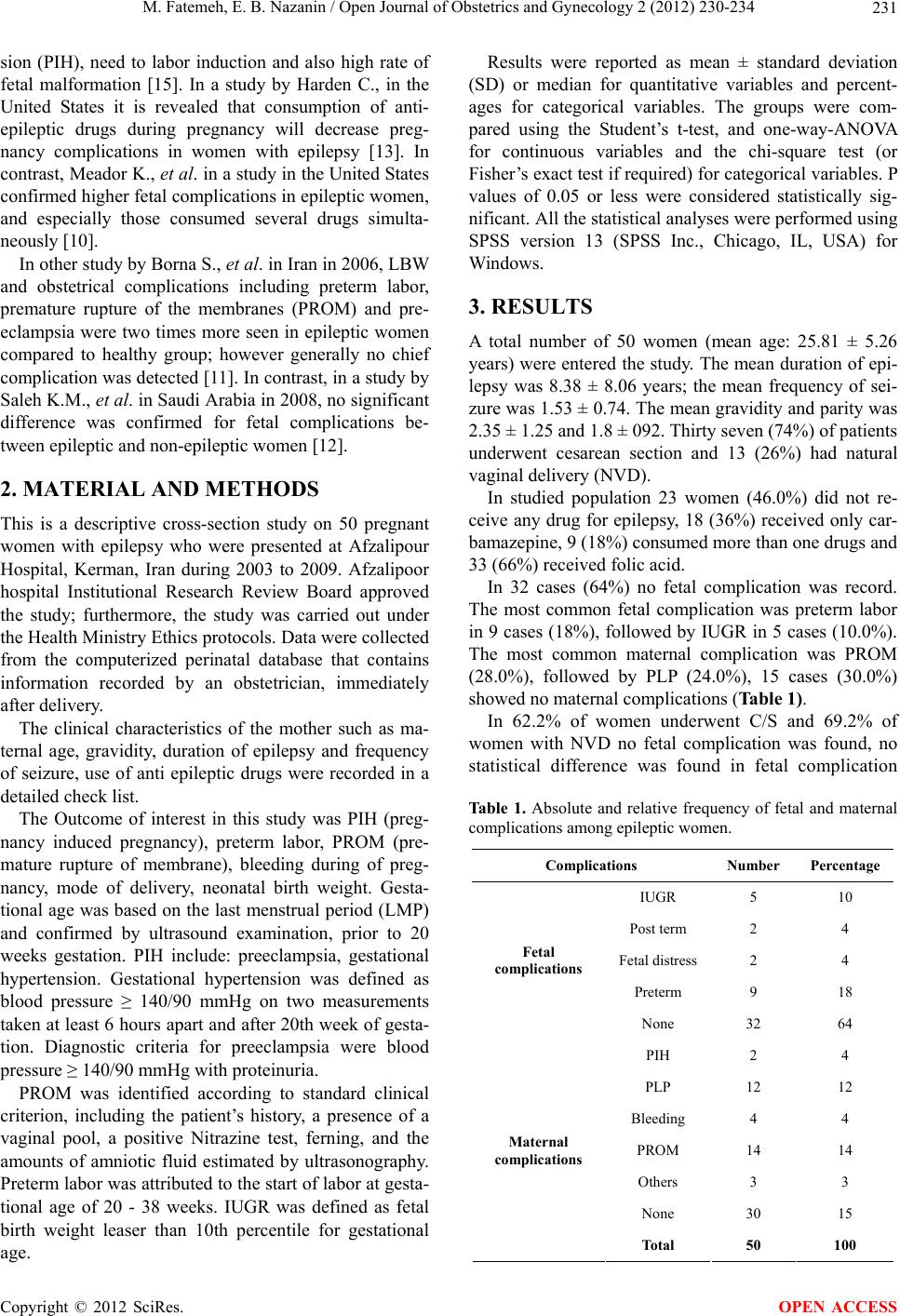 M. Fatemeh, E. B. Nazanin / Open Journal of Obstetrics and Gynecology 2 (2012) 230-234 231 sion (PIH), need to labor induction and also high rate of fetal malformation [15]. In a study by Harden C., in the United States it is revealed that consumption of anti- epileptic drugs during pregnancy will decrease preg- nancy complications in women with epilepsy [13]. In contrast, Meador K., et al. in a study in the United States confirmed higher fetal complications in epileptic women, and especially those consumed several drugs simulta- neously [10]. In other study by Borna S., et al. in Iran in 2006, LBW and obstetrical complications including preterm labor, premature rupture of the membranes (PROM) and pre- eclampsia were two times more seen in epileptic women compared to healthy group; however generally no chief complication was detected [11]. In contrast, in a study by Saleh K.M., et al. in Saudi Arabia in 2008, no significant difference was confirmed for fetal complications be- tween epileptic and non-epileptic women [12]. 2. MATERIAL AND METHODS This is a descriptive cross-section study on 50 pregnant women with epilepsy who were presented at Afzalipour Hospital, Kerman, Iran during 2003 to 2009. Afzalipoor hospital Institutional Research Review Board approved the study; furthermore, the study was carried out under the Health Ministry Ethics protocols. Data were collected from the computerized perinatal database that contains information recorded by an obstetrician, immediately after delivery. The clinical characteristics of the mother such as ma- ternal age, gravidity, duration of epilepsy and frequency of seizure, use of anti epileptic drugs were recorded in a detailed check list. The Outcome of interest in this study was PIH (preg- nancy induced pregnancy), preterm labor, PROM (pre- mature rupture of membrane), bleeding during of preg- nancy, mode of delivery, neonatal birth weight. Gesta- tional age was based on the last menstrual period (LMP) and confirmed by ultrasound examination, prior to 20 weeks gestation. PIH include: preeclampsia, gestational hypertension. Gestational hypertension was defined as blood pressure ≥ 140/90 mmHg on two measurements taken at least 6 hours apart and after 20th week of gesta- tion. Diagnostic criteria for preeclampsia were blood pressure ≥ 140/90 mmHg with proteinuria. PROM was identified according to standard clinical criterion, including the patient’s history, a presence of a vaginal pool, a positive Nitrazine test, ferning, and the amounts of amniotic fluid estimated by ultrasonography. Preterm labor was attributed to the start of labor at gesta- tional age of 20 - 38 weeks. IUGR was defined as fetal birth weight leaser than 10th percentile for gestational age. Results were reported as mean ± standard deviation (SD) or median for quantitative variables and percent- ages for categorical variables. The groups were com- pared using the Student’s t-test, and one-way-ANOVA for continuous variables and the chi-square test (or Fisher’s exact test if required) for categorical variables. P values of 0.05 or less were considered statistically sig- nificant. All the statistical analyses were performed using SPSS version 13 (SPSS Inc., Chicago, IL, USA) for Windows. 3. RESULTS A total number of 50 women (mean age: 25.81 ± 5.26 years) were entered the study. The mean duration of epi- lepsy was 8.38 ± 8.06 years; the mean frequency of sei- zure was 1.53 ± 0.74. The mean gravidity and parity was 2.35 ± 1.25 and 1.8 ± 092. Thirty seven (74%) of patients underwent cesarean section and 13 (26%) had natural vaginal delivery (NVD). In studied population 23 women (46.0%) did not re- ceive any drug for epilepsy, 18 (36%) received only car- bamazepine, 9 (18%) consumed more than one drugs and 33 (66%) received folic acid. In 32 cases (64%) no fetal complication was record. The most common fetal complication was preterm labor in 9 cases (18%), followed by IUGR in 5 cases (10.0%). The most common maternal complication was PROM (28.0%), followed by PLP (24.0%), 15 cases (30.0%) showed no maternal complications (Table 1). In 62.2% of women underwent C/S and 69.2% of women with NVD no fetal complication was found, no statistical difference was found in fetal complication Table 1. Absolute and relative frequency of fetal and maternal complications among epileptic women. Complications Number Percentage IUGR 5 10 Post term 2 4 Fetal distress 2 4 Preterm 9 18 Fetal complications None 32 64 PIH 2 4 PLP 12 12 Bleeding 4 4 PROM 14 14 Others 3 3 None 30 15 Maternal complications Total 50 100 Copyright © 2012 SciRes. OPEN ACCESS 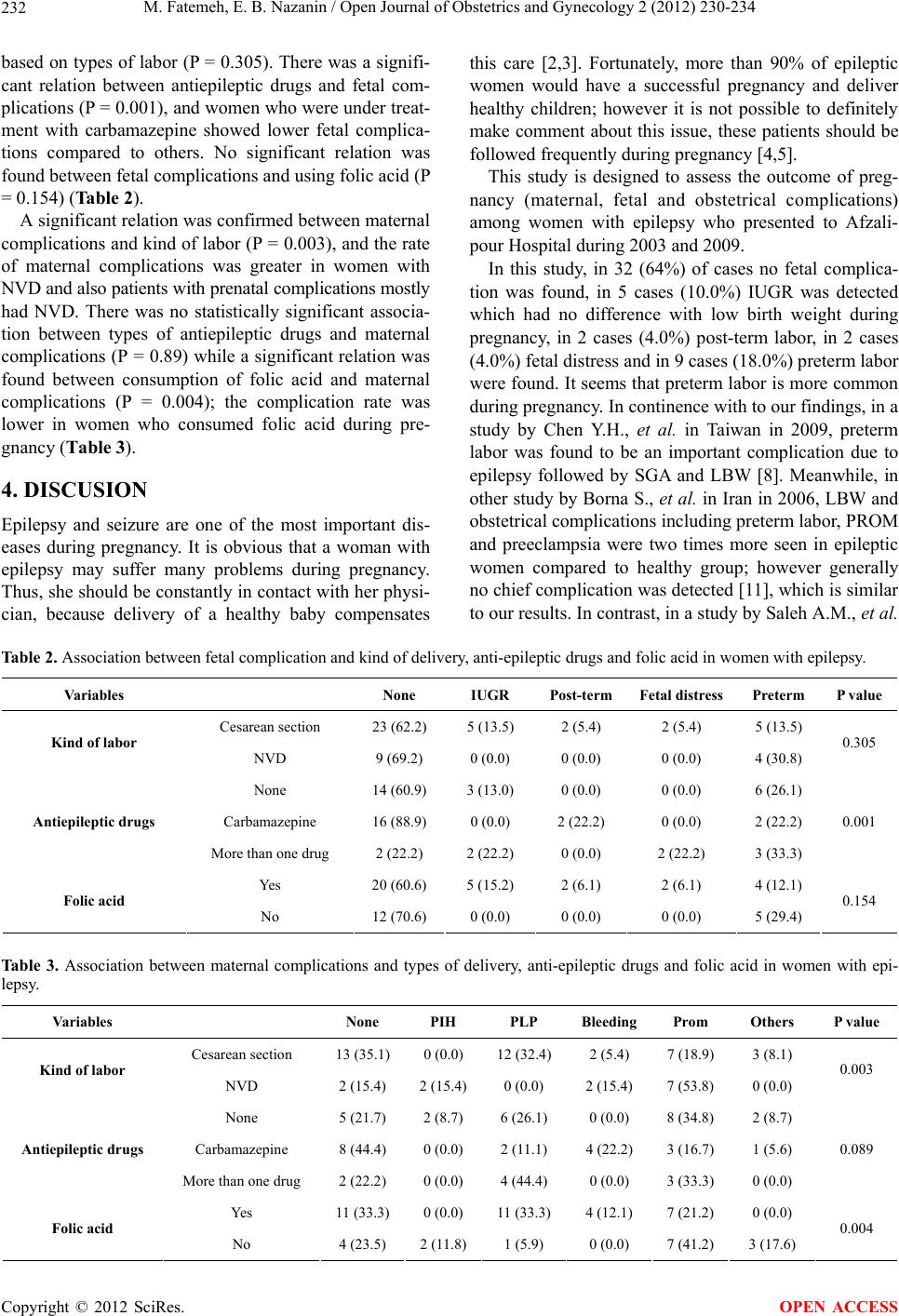 M. Fatemeh, E. B. Nazanin / Open Journal of Obstetrics and Gynecology 2 (2012) 230-234 Copyright © 2012 SciRes. 232 OPEN ACCESS based on types of labor (P = 0.305). There was a signifi- cant relation between antiepileptic drugs and fetal com- plications (P = 0.001), and women who were under treat- ment with carbamazepine showed lower fetal complica- tions compared to others. No significant relation was found between fetal complications and using folic acid (P = 0.154) (Table 2). A significant relation was confirmed between maternal complications and kind of labor (P = 0.003), and the rate of maternal complications was greater in women with NVD and also patients with prenatal complications mostly had NVD. There was no statistically significant associa- tion between types of antiepileptic drugs and maternal complications (P = 0.89) while a significant relation was found between consumption of folic acid and maternal complications (P = 0.004); the complication rate was lower in women who consumed folic acid during pre- gnancy (Table 3). 4. DISCUSION Epilepsy and seizure are one of the most important dis- eases during pregnancy. It is obvious that a woman with epilepsy may suffer many problems during pregnancy. Thus, she should be constantly in contact with her physi- cian, because delivery of a healthy baby compensates this care [2,3]. Fortunately, more than 90% of epileptic women would have a successful pregnancy and deliver healthy children; however it is not possible to definitely make comment about this issue, these patients should be followed frequently during pregnancy [4,5]. This study is designed to assess the outcome of preg- nancy (maternal, fetal and obstetrical complications) among women with epilepsy who presented to Afzali- pour Hospital during 2003 and 2009. In this study, in 32 (64%) of cases no fetal complica- tion was found, in 5 cases (10.0%) IUGR was detected which had no difference with low birth weight during pregnancy, in 2 cases (4.0%) post-term labor, in 2 cases (4.0%) fetal distress and in 9 cases (18.0%) preterm labor were found. It seems that preterm labor is more common during pregnancy. In continence with to our findings, in a study by Chen Y.H., et al. in Taiwan in 2009, preterm labor was found to be an important complication due to epilepsy followed by SGA and LBW [8]. Meanwhile, in other study by Borna S., et al. in Iran in 2006, LBW and obstetrical complications including preterm labor, PROM and preeclampsia were two times more seen in epileptic women compared to healthy group; however generally no chief complication was detected [11], which is similar to our results. In contrast, in a study by Saleh A.M., et al. Table 2. Association between fetal complication and kind of delivery, anti-epileptic drugs and folic acid in women with epilepsy. Variables None IUGR Post-termFetal distress Preterm P value Cesarean section 23 (62.2) 5 (13.5) 2 (5.4) 2 (5.4) 5 (13.5) Kind of labor NVD 9 (69.2) 0 (0.0) 0 (0.0) 0 (0.0) 4 (30.8) 0.305 None 14 (60.9) 3 (13.0) 0 (0.0) 0 (0.0) 6 (26.1) Carbamazepine 16 (88.9) 0 (0.0) 2 (22.2) 0 (0.0) 2 (22.2) Antiepileptic drugs More than one drug 2 (22.2) 2 (22.2) 0 (0.0) 2 (22.2) 3 (33.3) 0.001 Yes 20 (60.6) 5 (15.2) 2 (6.1) 2 (6.1) 4 (12.1) Folic acid No 12 (70.6) 0 (0.0) 0 (0.0) 0 (0.0) 5 (29.4) 0.154 Table 3. Association between maternal complications and types of delivery, anti-epileptic drugs and folic acid in women with epi- lepsy. Variables None PIH PLP Bleeding Prom Others P value Cesarean section 13 (35.1)0 (0.0) 12 (32.4)2 (5.4) 7 (18.9) 3 (8.1) Kind of labor NVD 2 (15.4) 2 (15.4)0 (0.0) 2 (15.4) 7 (53.8) 0 (0.0) 0.003 None 5 (21.7) 2 (8.7) 6 (26.1) 0 (0.0) 8 (34.8) 2 (8.7) Carbamazepine 8 (44.4) 0 (0.0) 2 (11.1) 4 (22.2) 3 (16.7) 1 (5.6) Antiepileptic drugs More than one drug 2 (22.2) 0 (0.0) 4 (44.4) 0 (0.0) 3 (33.3) 0 (0.0) 0.089 Yes 11 (33.3) 0 (0.0) 11 (33.3) 4 (12.1) 7 (21.2) 0 (0.0) Folic acid No 4 (23.5) 2 (11.8)1 (5.9) 0 (0.0) 7 (41.2) 3 (17.6) 0.004  M. Fatemeh, E. B. Nazanin / Open Journal of Obstetrics and Gynecology 2 (2012) 230-234 233 in Saudi Arabia in 2008 no significant difference was confirmed for fetal complications between epileptic and non-epileptic women [12]. Regarding maternal complications, in 15 patients (30.0%) no complication was found, in 2 cases (4.0%) PIH, in 12 cases (24.0%) PLP, in 4 cases (8.0%) bleeding, in 14 cases (28.0%) PROM and in 3 cases (6.0%) other complications were detected. In a study by Thomas SV, et al in India in 2008, it was illustrated that spontaneous miscarriage, anemia and seizure are the most important complications in pregnant women [13]. In other study by Kats O., et al. in Israel in 2006, high rate of gestational diabetes and congenital malformation was reported in epileptic pregnant women [14]. In our study we also found a considerable rate (74.0%) of cesarean section. In a study by Richmond J.R., et al. in Canada in 2004, it was revealed that the rate of PIH which required induc- tion and fetal malformation is high in epileptic women; we also found some cases of PIH in our study. In contrast to our findings, in a study by Saleh A.M., et al. in Saudi Arabia in 2008 no significant difference was detected for maternal complications in epileptic and non-epileptic women, they had totally 4 cases of seizure and 2 cases of fetal disorders [12]. There was a significant association between maternal complications and types of labor (P = 0.003); patients with prenatal complications had more NVD, but a same association was not found for fetal complications and types of labor (P = 0.305). Fetal complications and types of antiepileptic drugs showed a significant relation (P = 0.001) and the fetal complication rate was lower in those who consumed carbamazepine. In a study by Meador K., et al. in the United States in 2008, it was illustrated that fetal com- plication are more in epileptic women especially those consume several anti-epileptic drugs [10], which is simi- lar to our findings. No statistical association was confirmed between an- tiepileptic drugs and maternal complications (P = 0.898), in a study by Harden C., et al. in the United States in 2010, it was found that consumption of anti-epileptic drugs during pregnancy can reduce complications [9], our results also revealed lower complications in women under treatment with carbamazepine. There was no significant association between fetal complications and consumption of folic acid (P = 0.154) while a significant relation was found between maternal complications and consumption of folic acid (P = 0.004), and the complications was lower in those consumed folic acid during pregnancy. 5. CONCLUSION Given these findings and previous studies, it seems that epileptic women required more care during pregnancy and the rate of maternal, fetal and obstetrical complica- tions are relatively high among them which implies the necessity of targeted plans to reduce such complications. Inability to follow some cases, low sample size and inexistence of a control group are some limitations of this study which are recommended to be considered in further studies beside investigation about effects of other factors on such complications. REFERENCES [1] Battino, D. and Tomson, T. (2007) Management of epi- lepsy during pregnancy. Drugs, 67, 2727-2746. doi:10.2165/00003495-200767180-00007 [2] Brodtkorb, E. and Reimers, A. (2008) Seizure control and pharmacokinetics of antiepileptic drugs in pregnant wo- men with epilepsy. Seizure, 17, 160-165. doi:10.1016/j.seizure.2007.11.015 [3] Devinsky, O. and Yerby, M.S. (1994) Women with epi- lepsy. Reproduction and effects of pregnancy on epilepsy. Neurologic Clinics, 12, 479-495. [4] Dravet, C., Julian, C., Legras, C., Magaudda, A., Guerrini, R., Genton, P., et al. (1992) Epilepsy, antiepileptic drugs, and malformations in children of women with epilepsy: A French prospective cohort study. Neurology, 42, 75-82. [5] EURAP Study Group (2006) Seizure control and treat- ment in pregnancy: Observations from the EURAP epi- lepsy pregnancy registry. Neurology, 66, 354-360. doi:10.1212/01.wnl.0000195888.51845.80 [6] Liporace, J.D. (1997) Women’s issues in epilepsy. Men- ses, childbearing, and more. Postgraduate Medicine, 102, 123-129. doi:10.3810/pgm.1997.07.253 [7] Yerby, M.S. (1993) Epilepsy and pregnancy. New issues for an old disorder. Neurologic Clinics, 11, 777-786. [8] Chen, Y.H., Chiou, H.Y., Lin, H.C. and Lin, H.L. (2009) Affect of seizures during gestation on pregnancy out- comes in women with epilepsy. Archives of Neurology, 66, 979-984. doi:10.1001/archneurol.2009.142. [9] Harden, C. (2010) Affect of seizures during gestation on pregnancy outcomes in women with epilepsy. Epilepsy Currents, 10, 40-41. [10] Meador, K., Reynolds, M.W., Crean, S., Fahrbach, K. and Probst, C. (2008) Pregnancy outcomes in women with epilepsy: A systematic review and meta-analysis of pub- lished pregnancy registries and cohorts. Epilepsy Re- search, 81, 1-13. doi:10.1016/j.eplepsyres.2008.04.022 [11] Borna, S., Khazardoost, S., Hantoushzadeh, S. and Borna, H. (2006) The course and outcome of pregnancy in wo- men with epilepsy in Valie-Asr Hospital. Iranian Red Crescent Medical Journal, 8, 36-40. [12] Saleh, A.M., Abotalib, Z.M., Al-Ibrahim, A.A. and Al- Sultan, S.M. (2008) Comparison of maternal and fetal outcomes, in epileptic and non-epileptic women. Saudi Medical Journal, 29, 261-266. [13] Thomas, S.V., Sindhu, K., Ajaykumar, B., Sulekha Devi, Copyright © 2012 SciRes. OPEN ACCESS  M. Fatemeh, E. B. Nazanin / Open Journal of Obstetrics and Gynecology 2 (2012) 230-234 234 P .B. and Sujamol, J. (2009) Maternal and obstetric out- come of women with epilepsy. Seizure, 18, 163-166. doi:10.1016/j.seizure.2008.08.010 [14] Katz, O., Levy, A., Wiznitzer, A. and Sheiner, E. (2006) Pregnancy and perinatal outcome in epileptic women: A population-based study. Journal of Maternal-Fetal and Neonatal Medicine, 19, 21-25. doi:10.1080/14767050500434096 [15] Richmond, J.R., Krishnamoorthy, P., Andermann, E. and Benjamin, A. (2004) Epilepsy and pregnancy: An obste- tric perspective. American Journal of Obstetrics & Gyne- cology, 190, 371-379. doi:10.1016/j.ajog.2003.09.020 Copyright © 2012 SciRes. OPEN ACCESS |