

Paper Menu >>
Journal Menu >>
 Journal of Sustainable Bioenergy Systems, 2012, 2, 1-9 http://dx.doi.org/10.4236/jsbs.2012.21001 Published Online March 2012 (http://www.SciRP.org/journal/jsbs) 1 Effect of Time of Planting on Cane Yield and Quality Characters in Sweet Sorghum Chamarthy Venkata Ratnavathi*, Sivanuri Ravi Kumar, Bathula Swaroop Vijay Kumar, Dasari Gopala Krishna, Jagannath Vishnu Patil Directorate of Sorghum Research (Formerly National Research Centre for Sorghum), Hyderabad, India Email: *[email protected]n, [email protected] Received January 24, 2012; revised February 20, 2012; accepted March 6, 2012 ABSTRACT Sweet sorghum unlike grain sorghum has potential to accumulate sugars in stalks similar to sugarcane. Short duration and lower water requirements of sweet sorghum are other advantages over sugarcane. Sorghum is usually grown in kharif and rabi seasons. As an energy crop, industry demands supply of green cane as raw material through out the year. Hence this agrono mic study was conducted to determine suitable time of planting of sweet sorghum under the ag ro cli- matic conditions pr evailing in India, so th at continuous supply of raw material is assured for factory operations throu gh out the year, especially during the lean period of sugarcane crushing. Various physical and chemical characters of plant and stem juice were studied by taking up bimonthly plantings at four locations using 12 genotypes of sweet sorghum in the first year and quarterly plantings at four locations using 10 genotypes (8 genotypes common in both years) in the second year. Of the six plantings, planting during August and April were found to be not suitable for good sweet sor- ghum yields, therefore, in the second year, four plantings were taken up i.e., June, October, December and February at six locations. The various attributes selected for observations include cane yield, percent brix of stem juice, percent juice extractability, percent total soluble sugars and reducing sugars in the stem juice. Highest green cane yield and percent juice extractability was ob served in June planting in all genotypes fo llowed by February, and December in both bimonthly and quarterly plantings. Juice extraction percentage was also highest in June plantings followed by October, April and December plantings. June plantings recorded highest percent brix followed by December and February plant- ings in bimonthly plantings, while in quarterly planting, highest percent brix and total sugars in juice was observed in February planting followed by planting in June. Keywords: Genotypes; Date of Planting; Biomass; Juice Extractability; Brix; Total Soluble Sugars; Red ucing Sugars 1. Introduction Sorghum tolerates drought relatively well, and it re- sponds to adequate fertility and soil moisture with faster growth [1]. Many types of sorghum are suitable for grain and forage production [2], as well as alternative uses, such as energy, pulp for paper, food products and sugar or ethanol products [3,4]. According to World Energy Outlook (2008) [5], current energy supplies are unsus- tainable from environmental, economic, and societal standpoints. In addition, it is projected that world energy demands will continue to expand by 45% from 2008 to 2030, with an average rate of increase in 1.6% year–1. In 2007, the inter governmental panel on climate change [6] released its fourth assessment report confirming that cli- mate change is accelerating and if current trends continue, energy-related emissions of carbon dioxide (CO2) and other greenhouse gases will rise inexorably, pushing up average global temperature by as much as 6˚C in the lo n g term. The alarming increase in pollution rates has drawn the attention of several countries toward s bio-energy and the potential sources. The blending of 5% ethanol with petrol, demands the ethanol requirements in India by 400 million litres annually. This will automatically increase the requirement of molasses for ethanol production. Sweet sorghum can be the best supplementary crop to sugar- cane which requires minimum inputs and water. Thus to obtain self sufficiency it is essential to diversify the cropping pattern and introdu ce crops like sweet sorghum. Sweet sorghum like any other grain sorghum produces grain, in addition to the stalks which are rich in sucrose. The stalk yield and grain yield of sweet sorghum are in the range of 40 - 50 t/ha and 0.8 - 2 t/ha respectively. The sugar content in juice varies from 16% - 23% brix. Sweet sorghum juice mostly contains sucrose, glucose, and fructose sugars and such type of high sugar crop can be used to produce fuel alcohol [7]. *Corresponding a uthor. C opyright © 2012 SciRes. JSBS 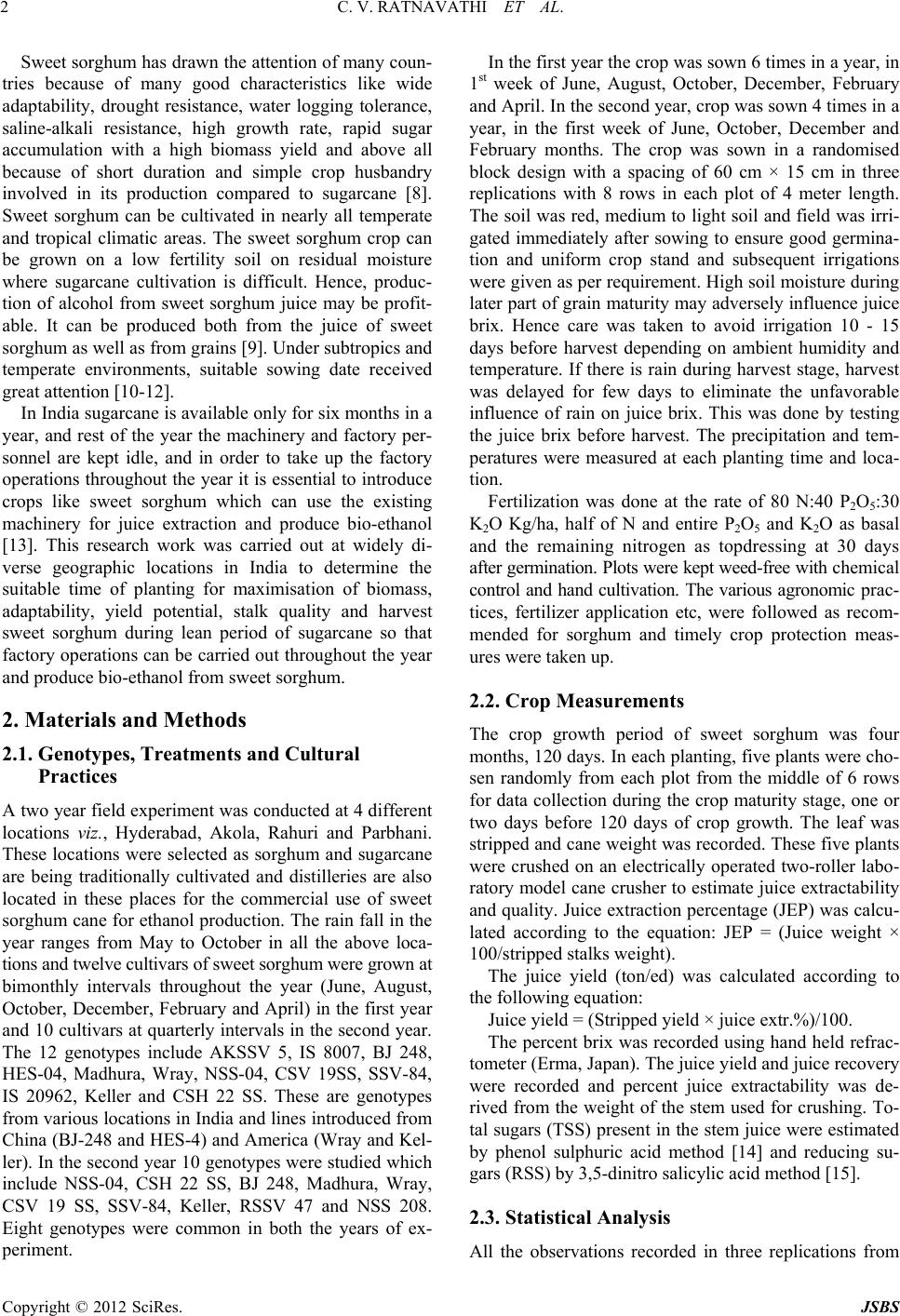 C. V. RATNAVATHI ET AL. 2 Sweet sorghum has draw n the attention of many coun - tries because of many good characteristics like wide adaptability, drought resistance, water logging tolerance, saline-alkali resistance, high growth rate, rapid sugar accumulation with a high biomass yield and above all because of short duration and simple crop husbandry involved in its production compared to sugarcane [8]. Sweet sorghum can be cultivated in nearly all temperate and tropical climatic areas. The sweet sorghum crop can be grown on a low fertility soil on residual moisture where sugarcane cultivation is difficult. Hence, produc- tion of alcohol from sweet sorghum juice may be profit- able. It can be produced both from the juice of sweet sorghum as well as from grains [9]. Under subtropics and temperate environments, suitable sowing date received great attention [10-12]. In India sugarcane is available only for six months in a year, and rest of the year the machinery and factory per- sonnel are kept idle, and in order to take up the factory operations throughou t the year it is essential to introduce crops like sweet sorghum which can use the existing machinery for juice extraction and produce bio-ethanol [13]. This research work was carried out at widely di- verse geographic locations in India to determine the suitable time of planting for maximisation of biomass, adaptability, yield potential, stalk quality and harvest sweet sorghum during lean period of sugarcane so that factory operation s can be carried out through out the year and produce bio-ethanol fro m sweet sorghum. 2. Materials and Methods 2.1. Genotypes, Treatments and Cultural Practices A two year field experiment was conducted at 4 different locations viz., Hyderabad, Akola, Rahuri and Parbhani. These locations were selected as sorghum and sugarcane are being traditionally cultivated and distilleries are also located in these places for the commercial use of sweet sorghum cane for ethanol production . The rain fall in the year ranges from May to October in all the above loca- tions and twelve cult i vars of sweet sorghum were grown at bimonthly intervals throughout the year (June, August, October, December, February and April) in the first year and 10 cultivars at qu arterly intervals in the second year. The 12 genotypes include AKSSV 5, IS 8007, BJ 248, HES-04, Madhura, Wray, NSS-04, CSV 19SS, SSV-84, IS 20962, Keller and CSH 22 SS. These are genotypes from various locations in India and lines introduced from China (BJ-248 and HES-4) and America (Wray and Kel- ler). In the second year 10 genotypes were studied which include NSS-04, CSH 22 SS, BJ 248, Madhura, Wray, CSV 19 SS, SSV-84, Keller, RSSV 47 and NSS 208. Eight genotypes were common in both the years of ex- periment. In the first year the crop was sown 6 times in a year, in 1st week of June, August, October, December, February and April. In the second year, crop was sown 4 times in a year, in the first week of June, October, December and February months. The crop was sown in a randomised block design with a spacing of 60 cm × 15 cm in three replications with 8 rows in each plot of 4 meter length. The soil was red, medium to light soil and field was irri- gated immediately after sowing to ensure good germina- tion and uniform crop stand and subsequent irrigations were given as per requirement. High soil moisture during later part of grain maturity may adversely influence juice brix. Hence care was taken to avoid irrigation 10 - 15 days before harvest depending on ambient humidity and temperature. If there is rain during harvest stage, harvest was delayed for few days to eliminate the unfavorable influence of rain on juice brix. This was done by testing the juice brix before harvest. The precipitation and tem- peratures were measured at each planting time and loca- tion. Fertilization was done at the rate of 80 N:40 P2O5:30 K2O Kg/ha, half of N and entire P2O5 and K2O as basal and the remaining nitrogen as topdressing at 30 days after germination. Plots were kept weed-free with ch emi ca l control and hand cultivation. The various agronomic pr ac- tices, fertilizer application etc, were followed as recom- mended for sorghum and timely crop protection meas- ures were taken up. 2.2. Crop Measurements The crop growth period of sweet sorghum was four months, 120 days. In each planting, five plants were cho- sen randomly from each plot from the middle of 6 rows for data collection du ring the crop maturity stage, one or two days before 120 days of crop growth. The leaf was stripped and cane weight was recorded. These five plants were crushed on an electrically operated two-roller labo- ratory model cane crusher to estimate juice extractability and quality. Juice extraction percentag e (JEP) was calcu- lated according to the equation: JEP = (Juice weight × 100/stripped stalks weight). The juice yield (ton/ed) was calculated according to the following equ ation: Juice yield = (Stripped yield × juice extr.%)/100. The percent brix was recorded using hand held refrac- tometer (Erma, Japan). The juice yield and juice recovery were recorded and percent juice extractability was de- rived from the weight of the stem used for crushing. To- tal sugars (TSS) present in the stem juice were estimated by phenol sulphuric acid method [14] and reducing su- gars (RSS) by 3,5-dinitro salicylic acid method [15]. 2.3. Statistical Analysis All the observations recorded in three replications from Copyright © 2012 SciRes. JSBS 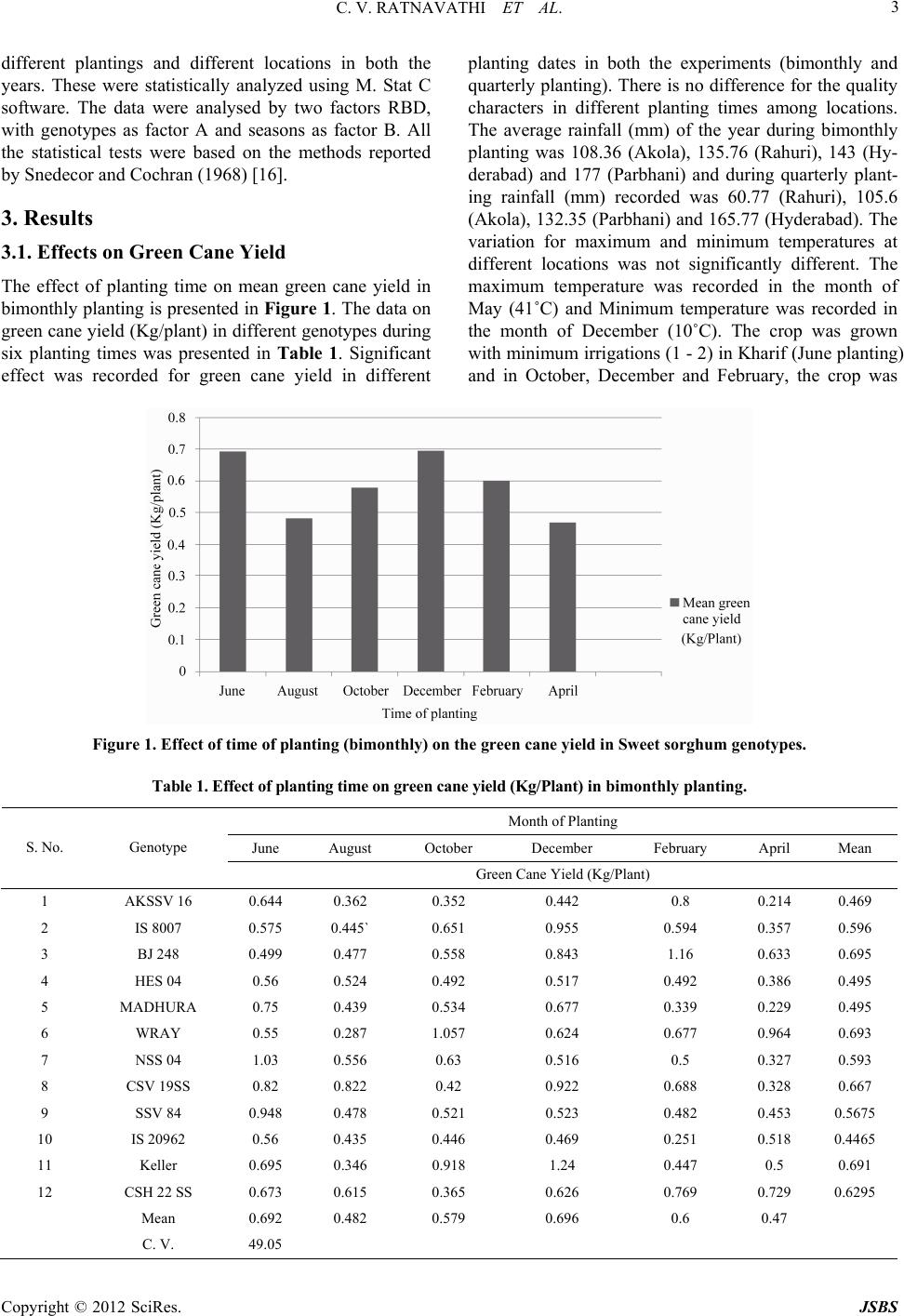 C. V. RATNAVATHI ET AL. Copyright © 2012 SciRes. JSBS 3 different plantings and different locations in both the years. These were statistically analyzed using M. Stat C software. The data were analysed by two factors RBD, with genotypes as factor A and seasons as factor B. All the statistical tests were based on the methods reported by Snedecor and Cochran (1968) [16]. 3. Results 3.1. Effects on Green Cane Yield The effect of planting time on mean green cane yield in bimonthly planting is presented in Figure 1. The data on green cane yield (Kg/plant) in different genotypes during six planting times was presented in Table 1. Significant effect was recorded for green cane yield in different planting dates in both the experiments (bimonthly and quarterly planting). There is no difference for the quality characters in different planting times among locations. The average rainfall (mm) of the year during bimonthly planting was 108.36 (Akola), 135.76 (Rahuri), 143 (Hy- derabad) and 177 (Parbhani) and during quarterly plant- ing rainfall (mm) recorded was 60.77 (Rahuri), 105.6 (Akola) , 132.35 (Parbhani) and 165 .77 (Hyderabad ). The variation for maximum and minimum temperatures at different locations was not significantly different. The maximum temperature was recorded in the month of May (41˚C) and Minimum temperature was recorded in the month of December (10˚C). The crop was grown with minimum irrigations (1 - 2) in Kharif (June planting) and in October, December and February, the crop was Figure 1. Effect of time of planting (bimonthly) on the green cane yield in Sweet sorghum genotypes. Table 1. Effect of planting time on green cane yield (Kg/Plan t) in bimonthly planting. Month of Planting June August October December February April Mean S. No. Genotype Green Cane Yield (Kg/Plant) 1 AKSSV 16 0.644 0.362 0.352 0.442 0.8 0.214 0.469 2 IS 8007 0.575 0.445` 0.651 0.955 0.594 0.357 0.596 3 BJ 248 0.499 0.477 0.558 0.843 1.16 0.633 0.695 4 HES 04 0.56 0.524 0.492 0.517 0.492 0.386 0.495 5 MADHURA 0.75 0.439 0.534 0.677 0.339 0.229 0.495 6 WRAY 0.55 0.287 1.057 0.624 0.677 0.964 0.693 7 NSS 04 1.03 0.556 0.63 0.516 0.5 0.327 0.593 8 CSV 19SS 0.82 0.822 0.42 0.922 0.688 0.328 0.667 9 SSV 84 0.948 0.478 0.521 0.523 0.482 0.453 0.5675 10 IS 20962 0.56 0.435 0.446 0.469 0.251 0.518 0.4465 11 Keller 0.695 0.346 0.918 1.24 0.447 0.5 0.691 12 CSH 22 SS 0.673 0.615 0.365 0.626 0.769 0.729 0.6295 Mean 0.692 0.482 0.579 0.696 0.6 0.47 C. V. 49.05 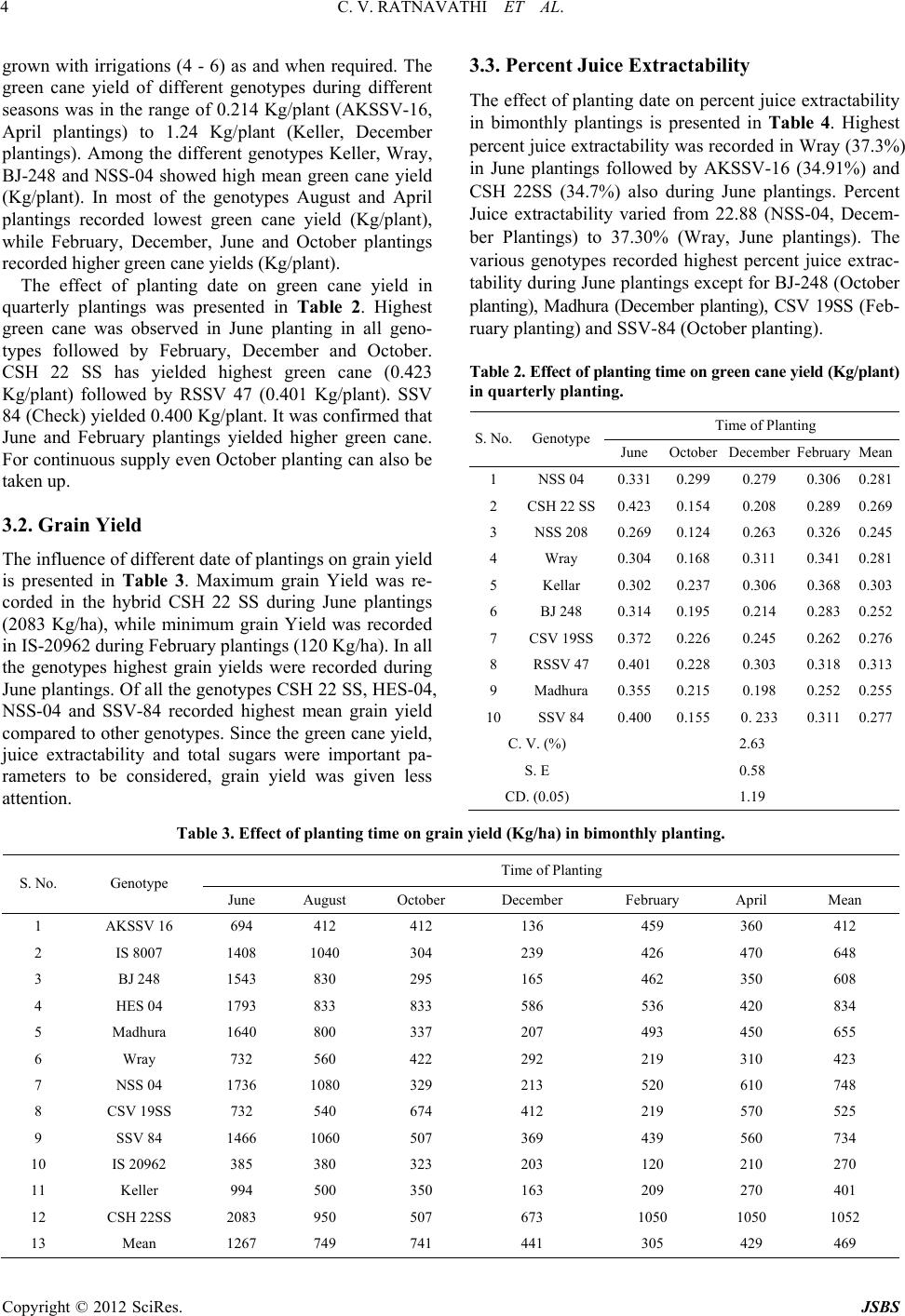 C. V. RATNAVATHI ET AL. 4 grown with irrigations (4 - 6) as and when required. The green cane yield of different genotypes during different seasons was in the range of 0.214 Kg/plant (AKSSV-16, April plantings) to 1.24 Kg/plant (Keller, December plantings). Among the different genotypes Keller, Wray, BJ-248 and NSS-04 showed high mean green cane yield (Kg/plant). In most of the genotypes August and April plantings recorded lowest green cane yield (Kg/plant), while February, December, June and October plantings recorded higher green cane yields (Kg/plant). The effect of planting date on green cane yield in quarterly plantings was presented in Table 2. Highest green cane was observed in June planting in all geno- types followed by February, December and October. CSH 22 SS has yielded highest green cane (0.423 Kg/plant) followed by RSSV 47 (0.401 Kg/plant). SSV 84 (Check) yielded 0.400 Kg/plant. It was confirmed that June and February plantings yielded higher green cane. For continuous supply even October planting can also be taken up. 3.2. Grain Yield The influence of different date of plantings on grain yield is presented in Table 3. Maximum grain Yield was re- corded in the hybrid CSH 22 SS during June plantings (2083 Kg/ha), while minimum grain Yield was recorded in IS-20962 during February plantings (120 Kg/ha). In all the genotypes highest grain yields were recorded during June plantings. Of all th e genotypes CSH 22 SS, HES-04, NSS-04 and SSV-84 recorded highest mean grain yield compared to other genotypes. Since the green cane yield, juice extractability and total sugars were important pa- rameters to be considered, grain yield was given less attention. 3.3. Percent Juice Extractability The effect of planting date on percent juice extractability in bimonthly plantings is presented in Table 4. Highest percent juice extractab ility was recorded in Wray (37.3%) in June plantings followed by AKSSV-16 (34.91%) and CSH 22SS (34.7%) also during June plantings. Percent Juice extractability varied from 22.88 (NSS-04, Decem- ber Plantings) to 37.30% (Wray, June plantings). The various genotypes recorded highest percent juice extrac- tability dur ing June p lantings ex cept for BJ-248 (October planting), Madhura (December planting), CSV 19SS (Feb- ruary planting) and SSV-84 (October planting). Table 2. E ffec t o f plan ting t ime on gr ee n c ane y ield (K g/ pl ant) in quarterly planting. Time of Planting S. No.Genotype June October December FebruaryMean 1 NSS 04 0.3310.299 0.279 0.3060.281 2 CSH 22 SS0.4230.154 0.208 0.2890.269 3 NSS 208 0.2690.124 0.263 0.3260.245 4 Wray 0.3040.168 0.311 0.3410.281 5 Kellar 0.3020.237 0.306 0.3680.303 6 BJ 248 0.3140.195 0.214 0.2830.252 7 CSV 19SS0.3720.226 0.245 0.2620.276 8 RSSV 47 0.4010.228 0.303 0.3180.313 9 Madhura 0.3550.215 0.198 0.2520.255 10 SSV 84 0.4000.155 0. 233 0.3110.277 C. V. (%) 2.63 S. E 0.58 CD. (0.05) 1.19 Table 3. Effect of planting time on grain yield (Kg/ha) in bimonthly planting. Time of Planting S. No. Genotype June August October December February April Mean 1 AKSSV 16 694 412 412 136 459 360 412 2 IS 8007 1408 1040 304 239 426 470 648 3 BJ 248 1543 830 295 165 462 350 608 4 HES 04 1793 833 833 586 536 420 834 5 Madhura 1640 800 337 207 493 450 655 6 Wray 732 560 422 292 219 310 423 7 NSS 04 1736 1080 329 213 520 610 748 8 CSV 19SS 732 540 674 412 219 570 525 9 SSV 84 1466 1060 507 369 439 560 734 10 IS 20962 385 380 323 203 120 210 270 11 Keller 994 500 350 163 209 270 401 12 CSH 22SS 2083 950 507 673 1050 1050 1052 13 Mean 1267 749 741 441 305 429 469 Copyright © 2012 SciRes. JSBS 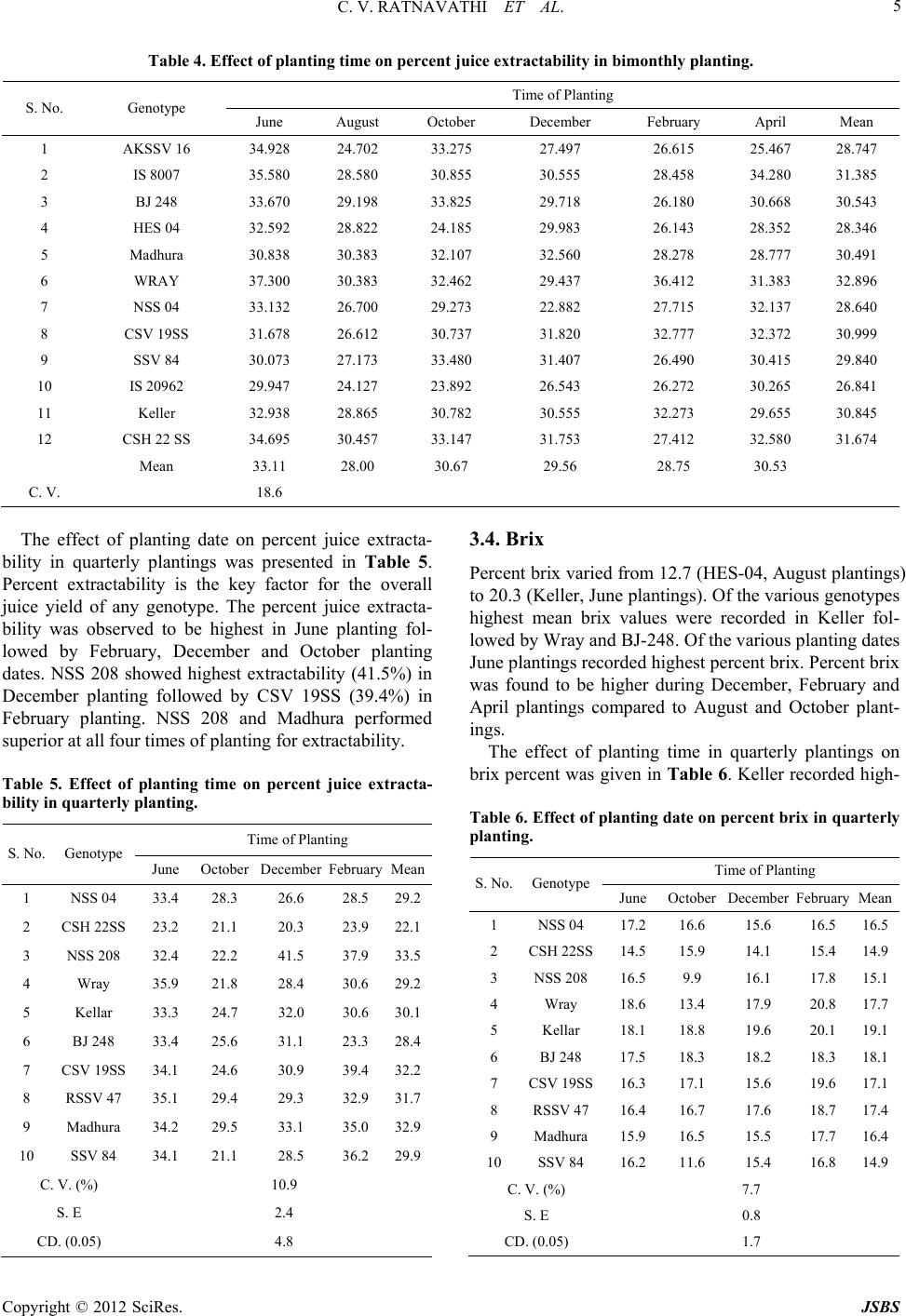 C. V. RATNAVATHI ET AL. 5 Table 4. Effect of planting time on percent juice extractability in bimonthly planting. Time of Planting S. No. Genotype June August October December February April Mean 1 AKSSV 16 34.928 24.702 33.275 27.497 26.615 25.467 28.747 2 IS 8007 35.580 28.580 30.855 30.555 28.458 34.280 31.385 3 BJ 248 33.670 29.198 33.825 29.718 26.180 30.668 30.543 4 HES 04 32.592 28.822 24.185 29.983 26.143 28.352 28.346 5 Madhura 30.838 30.383 32.107 32.560 28.278 28.777 30.491 6 WRAY 37.300 30.383 32.462 29.437 36.412 31.383 32.896 7 NSS 04 33.132 26.700 29.273 22.882 27.715 32.137 28.640 8 CSV 19SS 31.678 26.612 30.737 31.820 32.777 32.372 30.999 9 SSV 84 30.073 27.173 33.480 31.407 26.490 30.415 29.840 10 IS 20962 29.947 24.127 23.892 26.543 26.272 30.265 26.841 11 Keller 32.938 28.865 30.782 30.555 32.273 29.655 30.845 12 CSH 22 SS 34.695 30.457 33.147 31.753 27.412 32.580 31.674 Mean 33.11 28.00 30.67 29.56 28.75 30.53 C. V. 18.6 The effect of planting date on percent juice extracta- bility in quarterly plantings was presented in Table 5. Percent extractability is the key factor for the overall juice yield of any genotype. The percent juice extracta- bility was observed to be highest in June planting fol- lowed by February, December and October planting dates. NSS 208 showed highest extractability (41.5%) in December planting followed by CSV 19SS (39.4%) in February planting. NSS 208 and Madhura performed superior at all four times of planting for extractability. Table 5. Effect of planting time on percent juice extracta- bility in quarterly planting. Time of Planting S. No. Genotype June October December FebruaryMean 1 NSS 04 33.4 28.3 26.6 28.5 29.2 2 CSH 22SS 23.2 21.1 20.3 23.9 22.1 3 NSS 208 32.4 22.2 41.5 37.9 33.5 4 Wray 35.9 21.8 28.4 30.6 29.2 5 Kellar 33.3 24.7 32.0 30.6 30.1 6 BJ 248 33.4 25.6 31.1 23.3 28.4 7 CSV 19SS 34.1 24.6 30.9 39.4 32.2 8 RSSV 47 35.1 29.4 29.3 32.9 31.7 9 Madhura 34.2 29.5 33.1 35.0 32.9 10 SSV 84 34.1 21.1 28.5 36.2 29.9 C. V. (%) 10.9 S. E 2.4 CD. (0.05) 4.8 3.4. Brix Percent brix varied from 12.7 (HES-04, August plantings) to 20.3 (Keller, June plantings). Of the various genotypes highest mean brix values were recorded in Keller fol- lowed by Wray and BJ-248. Of the various planting dates June plantings recorded highest p ercen t brix. Percen t brix was found to be higher during December, February and April plantings compared to August and October plant- ings. The effect of planting time in quarterly plantings on brix percent was given in Table 6. Keller recorded h igh- Table 6. Effect of planting date on percent brix in quarterly planting. Time of Planting S. No.Genotype June October December FebruaryMean 1 NSS 04 17.2 16.6 15.6 16.5 16.5 2 CSH 22SS14.5 15.9 14.1 15.4 14.9 3 NSS 208 16.5 9.9 16.1 17.8 15.1 4 Wray 18.6 13.4 17.9 20.8 17.7 5 Kellar 18.1 18.8 19.6 20.1 19.1 6 BJ 248 17.5 18.3 18.2 18.3 18.1 7 CSV 19SS16.3 17.1 15.6 19.6 17.1 8 RSSV 47 16.4 16.7 17.6 18.7 17.4 9 Madhura 15.9 16.5 15.5 17.7 16.4 10 SSV 84 16.2 11.6 15.4 16.8 14.9 C. V. (%) 7.7 S. E 0.8 CD. (0.05) 1.7 Copyright © 2012 SciRes. JSBS 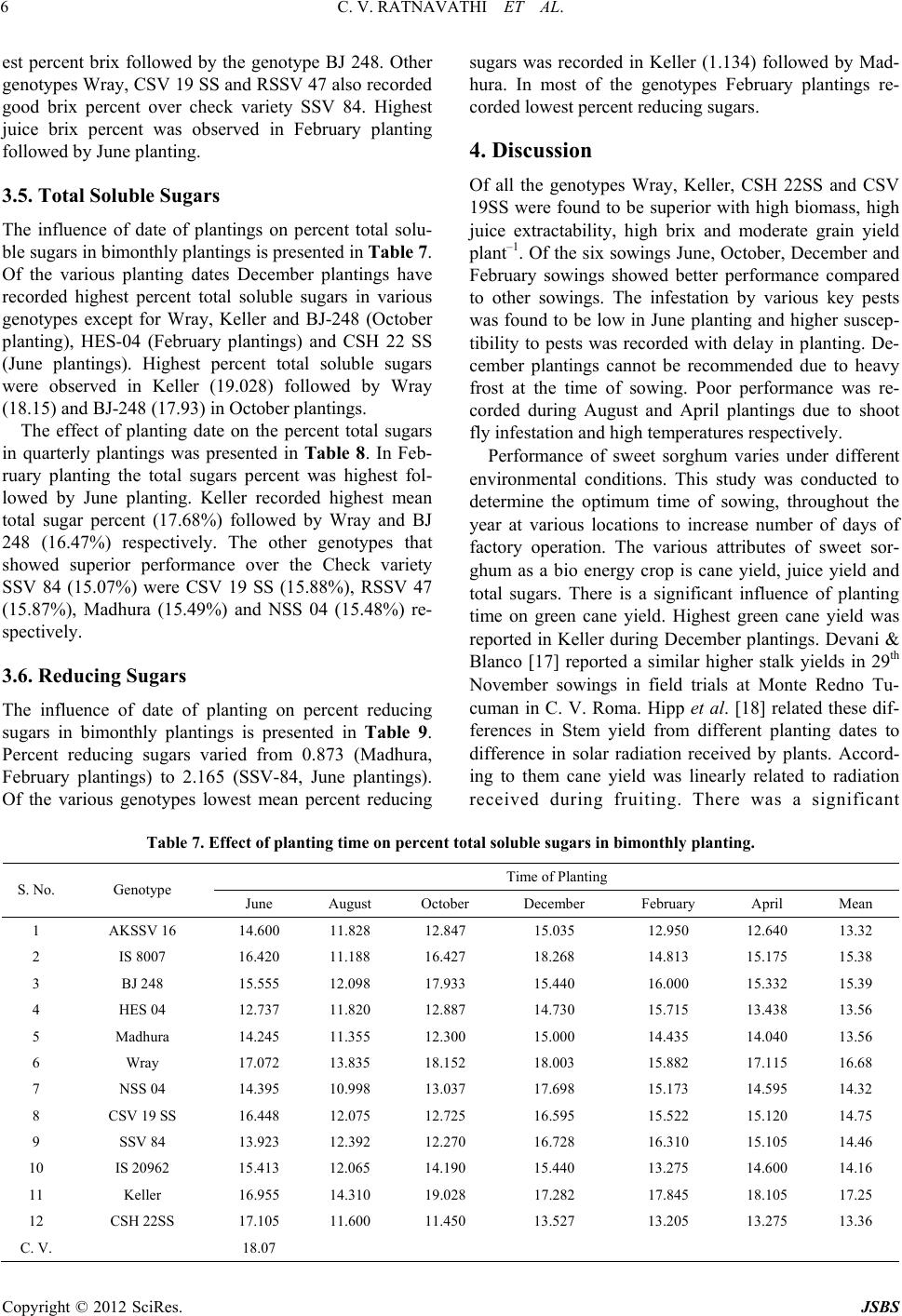 C. V. RATNAVATHI ET AL. 6 est percent brix followed by the genotype BJ 248. Other genotypes Wr ay, CSV 19 SS an d RSSV 47 also record ed good brix percent over check variety SSV 84. Highest juice brix percent was observed in February planting followed by June plan t i ng. 3.5. Total Soluble Sugars The influence of date of plantings on percent total solu- ble sugars in bimonthly plantings is presented in Table 7. Of the various planting dates December plantings have recorded highest percent total soluble sugars in various genotypes except for Wray, Keller and BJ-248 (October planting), HES-04 (February plantings) and CSH 22 SS (June plantings). Highest percent total soluble sugars were observed in Keller (19.028) followed by Wray (18.15) and BJ-248 (17.93) in October plantings. The effect of planting date on the percent total sugars in quarterly plantings was presented in Table 8. In Feb- ruary planting the total sugars percent was highest fol- lowed by June planting. Keller recorded highest mean total sugar percent (17.68%) followed by Wray and BJ 248 (16.47%) respectively. The other genotypes that showed superior performance over the Check variety SSV 84 (15.07%) were CSV 19 SS (15.88%), RSSV 47 (15.87%), Madhura (15.49%) and NSS 04 (15.48%) re- spectively. 3.6. Reducing Sugars The influence of date of planting on percent reducing sugars in bimonthly plantings is presented in Table 9. Percent reducing sugars varied from 0.873 (Madhura, February plantings) to 2.165 (SSV-84, June plantings). Of the various genotypes lowest mean percent reducing sugars was recorded in Keller (1.134) followed by Mad- hura. In most of the genotypes February plantings re- corded lowest percent reducing sugars. 4. Discussion Of all the genotypes Wray, Keller, CSH 22SS and CSV 19SS were found to be superior with high biomass, high juice extractability, high brix and moderate grain yield plant–1. Of the six sowings June, October, December and February sowings showed better performance compared to other sowings. The infestation by various key pests was found to be low in June planting and higher suscep- tibility to pests was recorded with delay in planting. De- cember plantings cannot be recommended due to heavy frost at the time of sowing. Poor performance was re- corded during August and April plantings due to shoot fly infestation and high temperatures respectively. Performance of sweet sorghum varies under different environmental conditions. This study was conducted to determine the optimum time of sowing, throughout the year at various locations to increase number of days of factory operation. The various attributes of sweet sor- ghum as a bio energy crop is cane yield, juice yield and total sugars. There is a significant influence of planting time on green cane yield. Highest green cane yield was reported in Keller during December plantings. Devani & Blanco [17] reported a similar higher stalk yields in 29th November sowings in field trials at Monte Redno Tu- cuman in C. V. Roma. Hipp et al. [18] related these dif- ferences in Stem yield from different planting dates to difference in solar radiation received by plants. Accord- ing to them cane yield was linearly related to radiation received during fruiting. There was a significant Table 7. Effect of planting time on percent total soluble sugars in bimonthly planting. Time of Planting S. No. Genotype June August October December February April Mean 1 AKSSV 16 14.600 11.828 12.847 15.035 12.950 12.640 13.32 2 IS 8007 16.420 11.188 16.427 18.268 14.813 15.175 15.38 3 BJ 248 15.555 12.098 17.933 15.440 16.000 15.332 15.39 4 HES 04 12.737 11.820 12.887 14.730 15.715 13.438 13.56 5 Madhura 14.245 11.355 12.300 15.000 14.435 14.040 13.56 6 Wray 17.072 13.835 18.152 18.003 15.882 17.115 16.68 7 NSS 04 14.395 10.998 13.037 17.698 15.173 14.595 14.32 8 CSV 19 SS 16.448 12.075 12.725 16.595 15.522 15.120 14.75 9 SSV 84 13.923 12.392 12.270 16.728 16.310 15.105 14.46 10 IS 20962 15.413 12.065 14.190 15.440 13.275 14.600 14.16 11 Keller 16.955 14.310 19.028 17.282 17.845 18.105 17.25 12 CSH 22SS 17.105 11.600 11.450 13.527 13.205 13.275 13.36 C. V. 18.07 Copyright © 2012 SciRes. JSBS 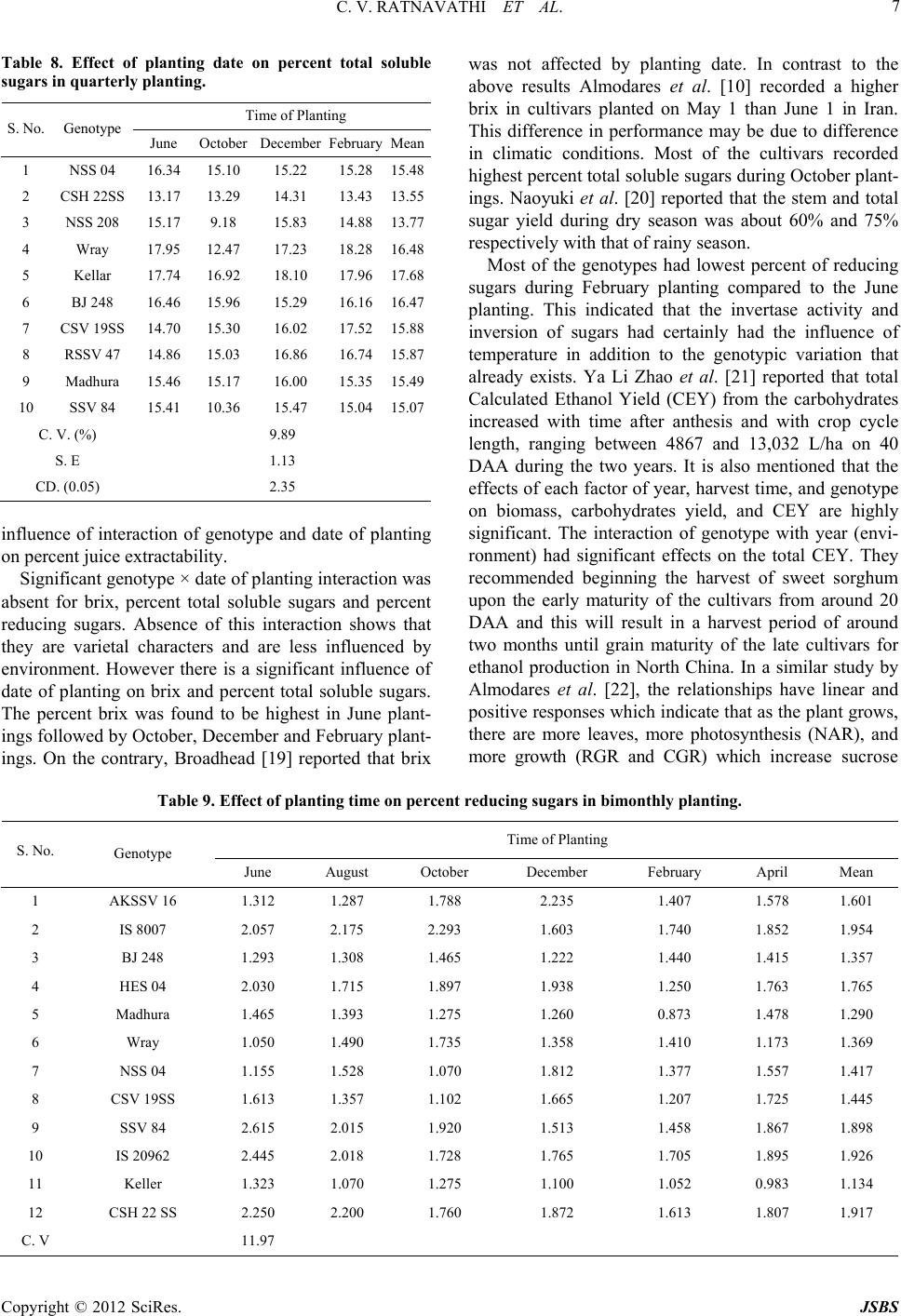 C. V. RATNAVATHI ET AL. 7 Table 8. Effect of planting date on percent total soluble sugars in quarterly planting. Time of Planting S. No. Genotype June October December FebruaryMean 1 NSS 04 16.34 15.10 15.22 15.2815.48 2 CSH 22SS 13.17 13.29 14.31 13.4313.55 3 NSS 208 15.17 9.18 15.83 14.8813.77 4 Wray 17.95 12.47 17.23 18.2816.48 5 Kellar 17.74 16.92 18.10 17.9617.68 6 BJ 248 16.46 15.96 15.29 16.1616.47 7 CSV 19SS 14.70 15.30 16.02 17.5215.88 8 RSSV 47 14.86 15.03 16.86 16.7415.87 9 Madhura 15.46 15.17 16.00 15.3515.49 10 SSV 84 15.41 10.36 15.47 15.0415.07 C. V. (%) 9.89 S. E 1.13 CD. (0.05) 2.35 influence of interaction of genotype and date of planting on percent juice extractability. Significant genotype × d ate of plantin g interaction was absent for brix, percent total soluble sugars and percent reducing sugars. Absence of this interaction shows that they are varietal characters and are less influenced by environment. However there is a significant influence of date of planting on brix and percent total soluble sugars. The percent brix was found to be highest in June plant- ings followed by October, December and February plant- ings. On the contrary, Broadhead [19] reported that brix was not affected by planting date. In contrast to the above results Almodares et al. [10] recorded a higher brix in cultivars planted on May 1 than June 1 in Iran. This difference in performance may be due to difference in climatic conditions. Most of the cultivars recorded highest percent total soluble sugars during October plant- ings. Naoyuki et al. [20] reported that the stem and total sugar yield during dry season was about 60% and 75% respectively with that of rainy season. Most of the genotypes had lowest percent of reducing sugars during February planting compared to the June planting. This indicated that the invertase activity and inversion of sugars had certainly had the influence of temperature in addition to the genotypic variation that already exists. Ya Li Zhao et al. [21] reported that total Calculated Ethanol Yield (CEY) from the carbohydrates increased with time after anthesis and with crop cycle length, ranging between 4867 and 13,032 L/ha on 40 DAA during the two years. It is also mentioned that the effects of each factor of year, harvest time, and genotype on biomass, carbohydrates yield, and CEY are highly significant. The interaction of genotype with year (envi- ronment) had significant effects on the total CEY. They recommended beginning the harvest of sweet sorghum upon the early maturity of the cultivars from around 20 DAA and this will result in a harvest period of around two months until grain maturity of the late cultivars for ethanol production in North China. In a similar study by Almodares et al. [22], the relationships have linear and positive respo nses which indicate that as th e plant grows, there are more leaves, more photosynthesis (NAR), and more growth (RGR and CGR) which increase sucrose Table 9. Effect of planting time on percent reducing sugars in bimonthly planting. Time of Planting S. No. Genotype June August October December February April Mean 1 AKSSV 16 1.312 1.287 1.788 2.235 1.407 1.578 1.601 2 IS 8007 2.057 2.175 2.293 1.603 1.740 1.852 1.954 3 BJ 248 1.293 1.308 1.465 1.222 1.440 1.415 1.357 4 HES 04 2.030 1.715 1.897 1.938 1.250 1.763 1.765 5 Madhura 1.465 1.393 1.275 1.260 0.873 1.478 1.290 6 Wray 1.050 1.490 1.735 1.358 1.410 1.173 1.369 7 NSS 04 1.155 1.528 1.070 1.812 1.377 1.557 1.417 8 CSV 19SS 1.613 1.357 1.102 1.665 1.207 1.725 1.445 9 SSV 84 2.615 2.015 1.920 1.513 1.458 1.867 1.898 10 IS 20962 2.445 2.018 1.728 1.765 1.705 1.895 1.926 11 Keller 1.323 1.070 1.275 1.100 1.052 0.983 1.134 12 CSH 22 SS 2. 2 50 2.200 1.760 1.872 1.613 1.807 1.917 C. V 11.97 Copyright © 2012 SciRes. JSBS 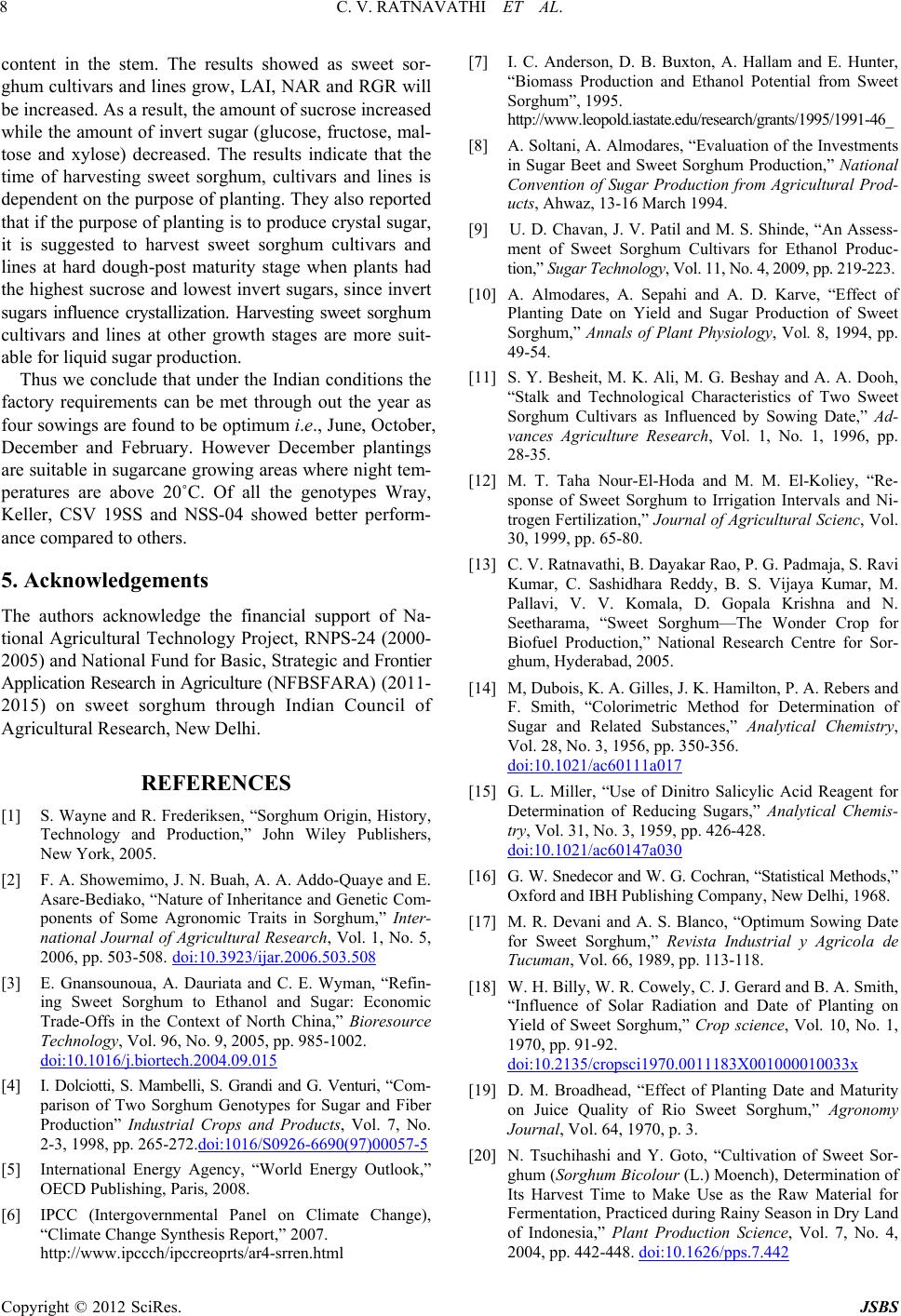 C. V. RATNAVATHI ET AL. 8 content in the stem. The results showed as sweet sor- ghum cultivars and lines grow, LAI, NAR and RGR will be increased. As a result, the amount of sucrose increased while the amount of invert sugar (glucose, fructose, mal- tose and xylose) decreased. The results indicate that the time of harvesting sweet sorghum, cultivars and lines is dependent on the purpose of planting. They also reported that if the purpose of plan ting is to p roduce crystal sug ar, it is suggested to harvest sweet sorghum cultivars and lines at hard dough-post maturity stage when plants had the highest sucrose and lowest invert sugars, since invert sugars influence crystallization. Harvesting sweet sorghum cultivars and lines at other growth stages are more suit- able for liquid sugar production. Thus we conclude that under the Indian conditions the factory requirements can be met through out the year as four sowing s are found to be o ptimum i.e., June, October, December and February. However December plantings are suitable in sugarcane growing areas where night tem- peratures are above 20˚C. Of all the genotypes Wray, Keller, CSV 19SS and NSS-04 showed better perform- ance compared to others. 5. Acknowledgements The authors acknowledge the financial support of Na- tional Agricultural Technology Project, RNPS-24 (2000- 2005) and National Fund for Basic, Strategic and Frontier Application Resear ch in Agriculture (N FB SF AR A) ( 20 11 - 2015) on sweet sorghum through Indian Council of Agricultural Research, New Delhi. REFERENCES [1] S. Wayne and R. Frederiksen, “Sorghum Origin, History, Technology and Production,” John Wiley Publishers, New York, 2005. [2] F. A. Showemimo, J. N. Buah, A. A. Addo-Quaye and E. Asare-Bediako, “Nature of Inheritance and Genetic Com- ponents of Some Agronomic Traits in Sorghum,” Inter- national Journal of Agricultural Research, Vol. 1, No. 5, 2006, pp. 503-508. doi:10.3923/ijar.2006.503.508 [3] E. Gnansounoua, A. Dauriata and C. E. Wyman, “Refin- ing Sweet Sorghum to Ethanol and Sugar: Economic Trade-Offs in the Context of North China,” Bioresource Technology, Vol. 96, No. 9, 2005, pp. 985-1002. doi:10.1016/j.biortech.2004.09.015 [4] I. Dolciotti, S. Mambelli, S. Grandi and G. Venturi, “Com- parison of Two Sorghum Genotypes for Sugar and Fiber Production” Industrial Crops and Products, Vol. 7, No. 2-3, 1998, pp. 265-272.doi:1016/S0926-6690(97)00057-5 [5] International Energy Agency, “World Energy Outlook,” OECD Publishing, Paris, 2008. [6] IPCC (Intergovernmental Panel on Climate Change), “Climate Change Synthesis Report,” 2007. http://www.ipccch/ipccreoprts/ar4-srren.html [7] I. C. Anderson, D. B. Buxton, A. Hallam and E. Hunter, “Biomass Production and Ethanol Potential from Sweet Sorghum”, 1995. http://www.leopold.iastate.edu/research/grants/1995/1991-46_ [8] A. Soltani, A. Almodares, “Evaluation of the Investments in Sugar Beet and Sweet Sorghum Production,” National Convention of Sugar Production from Agricultural Prod- ucts, Ahwaz, 13-16 March 1994. [9] U. D. Chavan, J. V. Patil and M. S. Shinde, “An Assess- ment of Sweet Sorghum Cultivars for Ethanol Produc- tion,” Sugar Technology, Vol. 11, No. 4, 2009, pp. 219-223. [10] A. Almodares, A. Sepahi and A. D. Karve, “Effect of Planting Date on Yield and Sugar Production of Sweet Sorghum,” Annals of Plant Physiology, Vol. 8, 1994, pp. 49-54. [11] S. Y. Besheit, M. K. Ali, M. G. Beshay and A. A. Dooh, “Stalk and Technological Characteristics of Two Sweet Sorghum Cultivars as Influenced by Sowing Date,” Ad- vances Agriculture Research, Vol. 1, No. 1, 1996, pp. 28-35. [12] M. T. Taha Nour-El-Hoda and M. M. El-Koliey, “Re- sponse of Sweet Sorghum to Irrigation Intervals and Ni- trogen Fertilization,” Journal of Agricultural Scienc, Vol. 30, 1999, pp. 65-80. [13] C. V. Ratnavathi, B. Dayakar Rao, P. G. Padmaja, S. Ravi Kumar, C. Sashidhara Reddy, B. S. Vijaya Kumar, M. Pallavi, V. V. Komala, D. Gopala Krishna and N. Seetharama, “Sweet Sorghum—The Wonder Crop for Biofuel Production,” National Research Centre for Sor- ghum, Hyderabad, 2005. [14] M, Dubois, K. A. Gilles, J. K. Hamilton, P. A. Rebers and F. Smith, “Colorimetric Method for Determination of Sugar and Related Substances,” Analytical Chemistry, Vol. 28, No. 3, 1956, pp. 350-356. doi:10.1021/ac60111a017 [15] G. L. Miller, “Use of Dinitro Salicylic Acid Reagent for Determination of Reducing Sugars,” Analytical Chemis- try, Vol. 31, No. 3, 1959, pp. 426-428. doi:10.1021/ac60147a030 [16] G. W. Snedecor and W. G. Cochran, “Stati stical Methods ,” Oxford and IBH Publishing Company, New Delhi, 1968. [17] M. R. Devani and A. S. Blanco, “Optimum Sowing Date for Sweet Sorghum,” Revista Industrial y Agricola de Tucuman, Vol. 66, 1989, pp. 113-118. [18] W. H. Billy, W. R. Cowely, C. J. Gerard and B. A. Smith, “Influence of Solar Radiation and Date of Planting on Yield of Sweet Sorghum,” Crop science, Vol. 10, No. 1, 1970, pp. 91-92. doi:10.2135/cropsci1970.0011183X001000010033x [19] D. M. Broadhead, “Effect of Planting Date and Maturity on Juice Quality of Rio Sweet Sorghum,” Agronomy Journal, Vol. 64, 1970, p. 3. [20] N. Tsuchihashi and Y. Goto, “Cultivation of Sweet Sor- ghum (Sorghum Bicolour (L.) Moench), Determination of Its Harvest Time to Make Use as the Raw Material for Fermentation, Practiced during Rainy Season in Dry Land of Indonesia,” Plant Production Science, Vol. 7, No. 4, 2004, pp. 442-448. doi:10.1626/pps.7.442 Copyright © 2012 SciRes. JSBS  C. V. RATNAVATHI ET AL. 9 [21] Y. L. Zhao, A. Dolat, Y. Steinberger, X. Wang, A. O sman and G. H. Xie, “Biomass Yield and Changes in Chemical Composition of Sweet Sorghum Cultivars Grown for Bio- fuel,” Field Crops Research, Vol. 111, No. 1-2, 2009, pp. 55-64. doi:10.1016/j.fcr.2008.10.006 [22] A. Almodares, A. Sepahi and M. Shirvani, “Sweet Sorghum Cultural Practices in Iran,” Proceedings of the 1st Interna- tional Sweet Sorghum Conference, Chinese Academy of Sciences, Beijing, 14-19 September 1997, pp. 175-183. Copyright © 2012 SciRes. JSBS |