

Paper Menu >>
Journal Menu >>
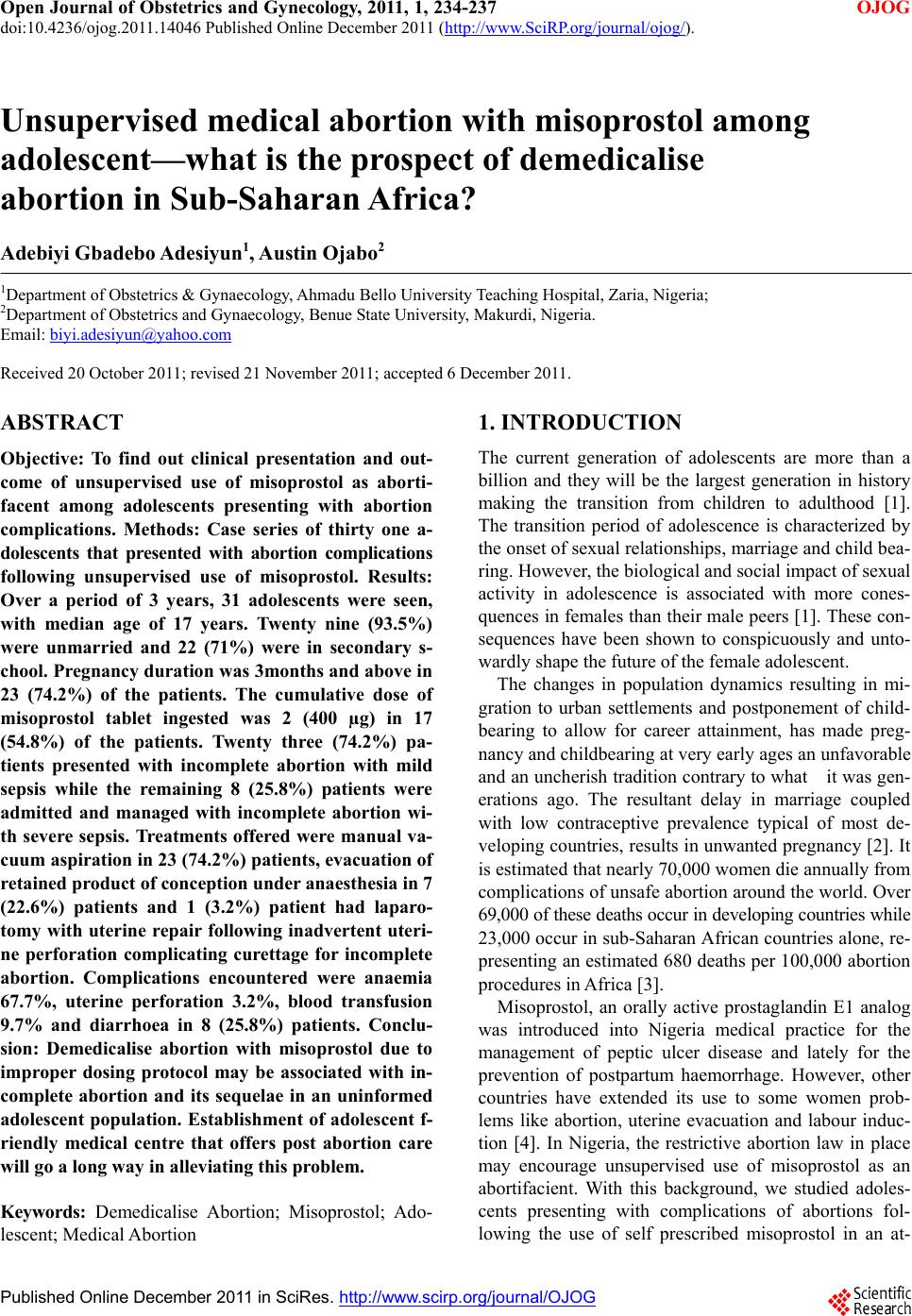 Open Journal of Obstetrics and Gynecology, 2011, 1, 234-237 doi:10.4236/ojog.2011.14046 Published Online December 2011 (http://www.SciRP.org/journal/ojog/ OJOG ). Published Online December 2011 in SciRes. http://www.scirp.org/journal/OJOG Unsupervised medical abortion with misoprostol among adolescent—what is the prospect of demedicalise abortion in Sub-Saharan Africa? Adebiyi Gbadebo Adesiyun1, Austin Ojabo2 1Department of Obstetrics & Gynaecology, Ahmadu Bello University Teaching Hospital, Zaria, Nigeria; 2Department of Obstetrics and Gynaecology, Benue State University, Makurdi, Nigeria. Email: [email protected] Received 20 October 2011; revised 21 November 2011; accepted 6 December 2011. ABSTRACT Objective: To find out clinical presentation and out- come of unsupervised use of misoprostol as aborti- facent among adolescents presenting with abortion complications. Methods: Case series of thirty one a- dolescents that presented with abortion complications following unsupervised use of misoprostol. Results: Over a period of 3 years, 31 adolescents were seen, with median age of 17 years. Twenty nine (93.5%) were unmarried and 22 (71%) were in secondary s- chool. Pregnancy duration was 3months and above in 23 (74.2%) of the patients. The cumulative dose of misoprostol tablet ingested was 2 (400 µg) in 17 (54.8%) of the patients. Twenty three (74.2%) pa- tients presented with incomplete abortion with mild sepsis while the remaining 8 (25.8%) patients were admitted and managed with incomplete abortion wi- th severe sepsis. Treatments offered were manual va- cuum aspiration in 23 (74.2%) patients, evacuation of retained product of conception under anaesthesia in 7 (22.6%) patients and 1 (3.2%) patient had laparo- tomy with uterine repair following inadvertent uteri- ne perforation complicating curettage for incomplete abortion. Complications encountered were anaemia 67.7%, uterine perforation 3.2%, blood transfusion 9.7% and diarrhoea in 8 (25.8%) patients. Conclu- sion: Demedicalise abortion with misoprostol due to improper dosing protocol may be associated with in- complete abortion and its sequelae in an uninformed adolescent population. Establishment of adolescent f- riendly medical centre that offers post abortion care will go a long way in alleviating this problem. Keywords: Demedicalise Abortion; Misoprostol; Ado- lescent; Medical Abortion 1. INTRODUCTION The current generation of adolescents are more than a billion and they will be the largest generation in history making the transition from children to adulthood [1]. The transition period of adolescence is characterized by the onset of sexual relationships, marriage and child bea- ring. However, the biological and social impact of sexual activity in adolescence is associated with more cones- quences in females than their male peers [1]. These con- sequences have been shown to conspicuously and unto- wardly shape the future of the female adolescent. The changes in population dynamics resulting in mi- gration to urban settlements and postponement of child- bearing to allow for career attainment, has made preg- nancy and childbearing at very early ages an unfavorable and an uncherish tradition contrary to what it was gen- erations ago. The resultant delay in marriage coupled with low contraceptive prevalence typical of most de- veloping countries, results in unwanted pregnancy [2]. It is estimated that nearly 70,000 women die annually from complications of unsafe abortion around the world. Over 69,000 of these deaths occur in developing countries while 23,000 occur in sub-Saharan African countries alone, re- presenting an estimated 680 deaths per 100,000 abortion procedures in Africa [3]. Misoprostol, an orally active prostaglandin E1 analog was introduced into Nigeria medical practice for the management of peptic ulcer disease and lately for the prevention of postpartum haemorrhage. However, other countries have extended its use to some women prob- lems like abortion, uterine evacuation and labour induc- tion [4]. In Nigeria, the restrictive abortion law in place may encourage unsupervised use of misoprostol as an abortifacient. With this background, we studied adoles- cents presenting with complications of abortions fol- lowing the use of self prescribed misoprostol in an at- 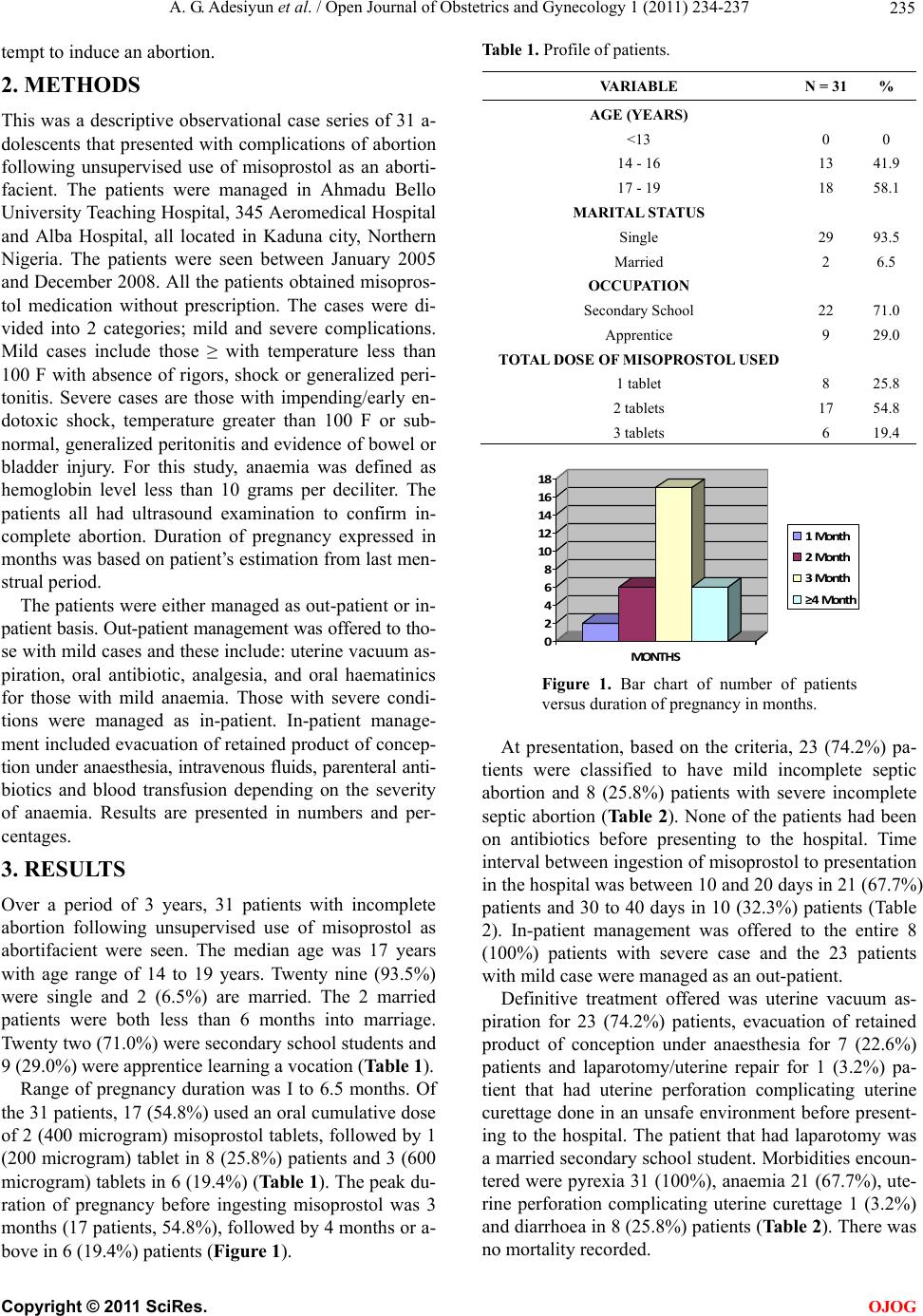 A. G. Adesiyun et al. / Open Journal of Obstetrics and Gynecology 1 (2011) 234-237 235 tempt to induce an abortion. 2. METHODS This was a descriptive observational case series of 31 a- dolescents that presented with complications of abortion following unsupervised use of misoprostol as an aborti- facient. The patients were managed in Ahmadu Bello University Teaching Hospital, 345 Aeromedical Hospital and Alba Hospital, all located in Kaduna city, Northern Nigeria. The patients were seen between January 2005 and December 2008. All the patients obtained misopros- tol medication without prescription. The cases were di- vided into 2 categories; mild and severe complications. Mild cases include those ≥ with temperature less than 100 F with absence of rigors, shock or generalized peri- tonitis. Severe cases are those with impending/early en- dotoxic shock, temperature greater than 100 F or sub- normal, generalized peritonitis and evidence of bowel or bladder injury. For this study, anaemia was defined as hemoglobin level less than 10 grams per deciliter. The patients all had ultrasound examination to confirm in- complete abortion. Duration of pregnancy expressed in months was based on patient’s estimation from last men- strual period. The patients were either managed as out-patient or in- patient basis. Out-patient management was offered to tho- se with mild cases and these include: uterine vacuum as- piration, oral antibiotic, analgesia, and oral haematinics for those with mild anaemia. Those with severe condi- tions were managed as in-patient. In-patient manage- ment included evacuation of retained product of concep- tion under anaesthesia, intravenous fluids, parenteral anti- biotics and blood transfusion depending on the severity of anaemia. Results are presented in numbers and per- centages. 3. RESULTS Over a period of 3 years, 31 patients with incomplete abortion following unsupervised use of misoprostol as abortifacient were seen. The median age was 17 years with age range of 14 to 19 years. Twenty nine (93.5%) were single and 2 (6.5%) are married. The 2 married patients were both less than 6 months into marriage. Twenty two (71.0%) were secondary school students and 9 (29.0%) were apprentice learning a vocation (Table 1). Range of pregnancy duration was I to 6.5 months. Of the 31 patients, 17 (54.8%) used an oral cumulative dose of 2 (400 microgram) misoprostol tablets, followed by 1 (200 microgram) tablet in 8 (25.8%) patients and 3 (600 microgram) tablets in 6 (19.4%) (Table 1). The peak du- ration of pregnancy before ingesting misoprostol was 3 months (17 patients, 54.8%), followed by 4 months or a- bove in 6 (19.4%) patients (Figure 1). Table 1. Profile of patients. VARIABLE N = 31% AGE (YEARS) <13 14 - 16 17 - 19 0 13 18 0 41.9 58.1 MARITAL STATUS Single Married 29 2 93.5 6.5 OCCUPATION Secondary School Apprentice 22 9 71.0 29.0 TOTAL DOSE OF MISOPROSTOL USED 1 tablet 2 tablets 3 tablets 8 17 6 25.8 54.8 19.4 0 2 4 6 8 10 12 14 16 18 MON TH S 1Month 2Month 3Month ≥4Mont h Figure 1. Bar chart of number of patients versus duration of pregnancy in months. At presentation, based on the criteria, 23 (74.2%) pa- tients were classified to have mild incomplete septic abortion and 8 (25.8%) patients with severe incomplete septic abortion (Table 2). None of the patients had been on antibiotics before presenting to the hospital. Time interval between ingestion of misoprostol to presentation in the hospital was between 10 and 20 days in 21 (67.7%) patients and 30 to 40 days in 10 (32.3%) patients (Table 2). In-patient management was offered to the entire 8 (100%) patients with severe case and the 23 patients with mild case were managed as an out-patient. Definitive treatment offered was uterine vacuum as- piration for 23 (74.2%) patients, evacuation of retained product of conception under anaesthesia for 7 (22.6%) patients and laparotomy/uterine repair for 1 (3.2%) pa- tient that had uterine perforation complicating uterine curettage done in an unsafe environment before present- ing to the hospital. The patient that had laparotomy was a married secondary school student. Morbidities encoun- tered were pyrexia 31 (100%), anaemia 21 (67.7%), ute- rine perforation complicating uterine curettage 1 (3.2%) and diarrhoea in 8 (25.8%) patients (Table 2). There was no mortality recorded. C opyright © 2011 SciRes. OJOG 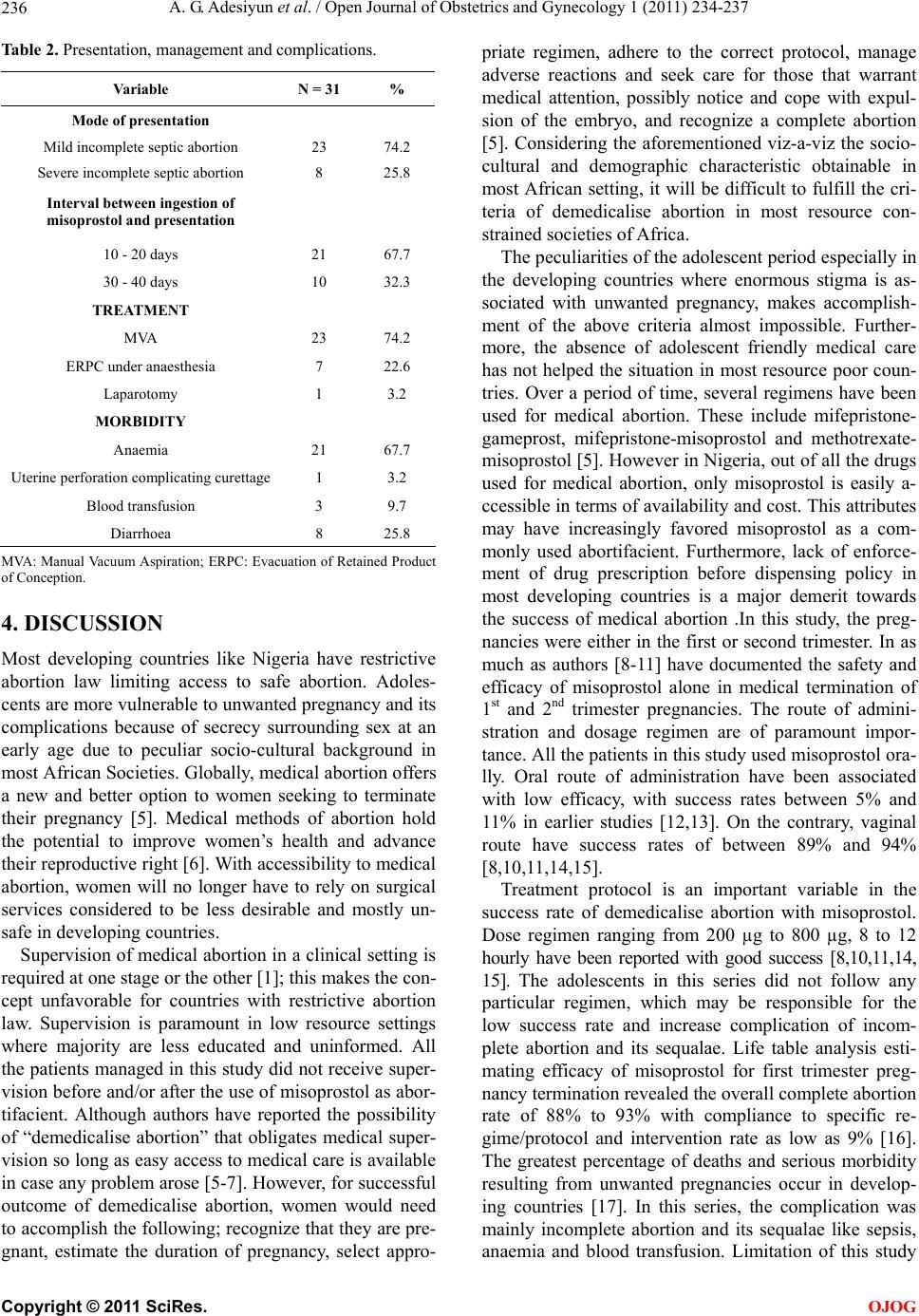 A. G. Adesiyun et al. / Open Journal of Obstetrics and Gynecology 1 (2011) 234-237 236 Table 2. Presentation, management and complications. Varia bl e N = 31 % Mode of presentation Mild incomplete septic abortion 23 74.2 Severe incomplete septic abortion 8 25.8 Interval between ingestion of misoprostol and presentation 10 - 20 days 21 67.7 30 - 40 days 10 32.3 TREATMENT MVA 23 74.2 ERPC under anaesthesia 7 22.6 Laparotomy 1 3.2 MORBIDITY Anaemia 21 67.7 Uterine perforation complicating curettage 1 3.2 Blood transfusion 3 9.7 Diarrhoea 8 25.8 MVA: Manual Vacuum Aspiration; ERPC: Evacuation of Retained Product of Conception. 4. DISCUSSION Most developing countries like Nigeria have restrictive abortion law limiting access to safe abortion. Adoles- cents are more vulnerable to unwanted pregnancy and its complications because of secrecy surrounding sex at an early age due to peculiar socio-cultural background in most African Societies. Globally, medical abortion offers a new and better option to women seeking to terminate their pregnancy [5]. Medical methods of abortion hold the potential to improve women’s health and advance their reproductive right [6]. With accessibility to medical abortion, women will no longer have to rely on surgical services considered to be less desirable and mostly un- safe in developing countries. Supervision of medical abortion in a clinical setting is required at one stage or the other [1]; this makes the con- cept unfavorable for countries with restrictive abortion law. Supervision is paramount in low resource settings where majority are less educated and uninformed. All the patients managed in this study did not receive super- vision before and/or after the use of misoprostol as abor- tifacient. Although authors have reported the possibility of “demedicalise abortion” that obligates medical super- vision so long as easy access to medical care is available in case any problem arose [5-7]. However, for successful outcome of demedicalise abortion, women would need to accomplish the following; recognize that they are pre- gnant, estimate the duration of pregnancy, select appro- priate regimen, adhere to the correct protocol, manage adverse reactions and seek care for those that warrant medical attention, possibly notice and cope with expul- sion of the embryo, and recognize a complete abortion [5]. Considering the aforementioned viz-a-viz the socio- cultural and demographic characteristic obtainable in most African setting, it will be difficult to fulfill the cri- teria of demedicalise abortion in most resource con- strained societies of Africa. The peculiarities of the adolescent period especially in the developing countries where enormous stigma is as- sociated with unwanted pregnancy, makes accomplish- ment of the above criteria almost impossible. Further- more, the absence of adolescent friendly medical care has not helped the situation in most resource poor coun- tries. Over a period of time, several regimens have been used for medical abortion. These include mifepristone- gameprost, mifepristone-misoprostol and methotrexate- misoprostol [5]. However in Nigeria, out of all the drugs used for medical abortion, only misoprostol is easily a- ccessible in terms of availability and cost. This attributes may have increasingly favored misoprostol as a com- monly used abortifacient. Furthermore, lack of enforce- ment of drug prescription before dispensing policy in most developing countries is a major demerit towards the success of medical abortion .In this study, the preg- nancies were either in the first or second trimester. In as much as authors [8-11] have documented the safety and efficacy of misoprostol alone in medical termination of 1st and 2nd trimester pregnancies. The route of admini- stration and dosage regimen are of paramount impor- tance. All the patients in this study used misoprostol ora- lly. Oral route of administration have been associated with low efficacy, with success rates between 5% and 11% in earlier studies [12,13]. On the contrary, vaginal route have success rates of between 89% and 94% [8,10,11,14,15]. Treatment protocol is an important variable in the success rate of demedicalise abortion with misoprostol. Dose regimen ranging from 200 µg to 800 µg, 8 to 12 hourly have been reported with good success [8,10,11,14, 15]. The adolescents in this series did not follow any particular regimen, which may be responsible for the low success rate and increase complication of incom- plete abortion and its sequalae. Life table analysis esti- mating efficacy of misoprostol for first trimester preg- nancy termination revealed the overall complete abortion rate of 88% to 93% with compliance to specific re- gime/protocol and intervention rate as low as 9% [16]. The greatest percentage of deaths and serious morbidity resulting from unwanted pregnancies occur in develop- ing countries [17]. In this series, the complication was mainly incomplete abortion and its sequalae like sepsis, anaemia and blood transfusion. Limitation of this study C opyright © 2011 SciRes. OJOG  A. G. Adesiyun et al. / Open Journal of Obstetrics and Gynecology 1 (2011) 234-237 Copyright © 2011 SciRes. 237 is that we did not rule out concomitant consumption of local herbal agents with abortifacient property. Even though induced abortion is a criminal act in Ni- geria, a lot of clandestine termination of pregnancy takes place on daily basis. Effort should be made towards set- ting up medical centers that are adolescent friendly, where counseling, routine medical assistance and care for abortion related complications can be rendered to patients. However, in other developing countries with unrestrictive abortion law, factors contributing to three tier delay in accessing health care must be considered in the success of demedicalise abortion [18]. OJOG REFERENCES [1] The Alan Guttmacher Institute (1998) Into a new world —young women’s sexual and reproductive lives: Young women in a changing world. New York, 5-9. [2] Treffers, P.E., Olukoya, A.A., Ferguson, B.J. and Lil- jestrand, J. (2001) Care for adolescent pregnancy and ch- ildbirth. International Journal of Gynecology & Obstet- rics, 75, 111-121. doi:10.1016/S0020-7292(01)00368-X [3] Okonofua, F.E. (2004) Editorial: Breaking the silence on prevention of unsafe abortion in Africa. African Journal of Reproductive Health, 8, 7-8. doi:10.2307/3583174 [4] Population Council (2001) Misoprostol: An emerging technology for women’s health, report of a seminar. In: Shannon, C.S. and Winikoff, B., Eds., New York, 2. [5] Ellertson, C., Elul, B. and Winikoff, B. (1997) Can wo- men use medical abortion without medical supervision? Reproductive Health Matters, 9, 149-161. doi:10.1016/S0968-8080(97)90019-7 [6] Elul, B. (1998) Medical methods of early abortion in developing countries. Consensus Statement, Contracep- tion, 58, 257-259. doi:10.1016/S0010-7824(98)00109-7 [7] Winikoff, B., Siviel, Coyaji, K.J., et al. (1997) Safety efficacy and acceptability of medical abortion in China, Cuba and India: A comparative trial of mifepristone— misoprostol versus surgical abortion. American Journal of Obstetrics & Gynecology, 176, 431-437. doi:10.1016/S0002-9378(97)70511-8 [8] Carabonell, J.L., Velazco, A., Varela, L., Tanda, R., San- chez, C., Barambio, S., Chami, S., Valero, F.-A., Sanchez, S. and Mari, J. (2001) Misoprostol for abortion at 9 weeks - 12 weeks gestation in adolescents. European Journal of Contraception and Reproductive Healthcare, 6, 39-45. doi:10.1080/13625180008500367 [9] Carabonell, J.L., Varela, L., Velazco, A., Tanda, R., Barambio, S. and Chami, S. (2000) Vaginal misoprostol 600 microgram for early abortion. European Journal of Contraception and Reproductive Healthcare, 5, 46-51 [10] Herabutya, Y., Chanrachakul, B. and Punyavachira, P. (2001) Second trimester pregnancy termination: A com- parison of 600 and 800 micrograms of intravaginal mi- soprostol. Journal of Obstetrics and Gynaecological Re- search, 27, 125-128. doi:10.1111/j.1447-0756.2001.tb01235.x [11] Wong, K.S., Ngai, C.S., Yeo, E.L., Tang, L.C. and Ho, P.C. (2000) A comparism of two regimens of intravaginal misoporstol for termination of second trimester preg- nancy: A randomized comparative trial. Human Repro- duction, 15, 709-712. doi:10.1093/humrep/15.3.709 [12] Rabe, T., Basse, H., Thuro, H., Kiesel, L. and Runne- baum, B. (1987) Effect of the PGE1 methyl analog miso- prostol on the pregnant uterus in the first trimester. Ge- burtshilfe Frauenheilkd, 47, 324-331. doi:10.1055/s-2008-1035830 [13] Norman, J.E., Thong, K.J. and Baird, D.T. (1991) Uterine contractility and induction of abortion in early pregnancy by misoprostol and mifepristone. Lancet, 338, 1233-1236. doi:10.1016/0140-6736(91)92102-8 [14] Carabonell, J.L., Varela, L., Velazco, A. and Fernandez, C. (1997) The use of misoprostol for early termination of pregnancy. Contraception, 55, 165-168. doi:10.1016/S0010-7824(97)00020-6 [15] Carabonell, J.L., Varela, L., Velazco, A., Fernandez, C. and Sanchez, C. (1997) The use of misoprostol for abor- tion at < or = 9 weeks gestation. European Journal of Contraception and Reproductive Healthcare, 2, 181-185. [16] Adjase, E.T. (2004) Misoprostol, an emerging technology for women’s health, report of a seminar. In: Shannon, C.S. and Winikoff, B., Eds., Population Council, New York, 200, 5-12. [17] World Health Organization (1994) Abortion: A tabulation of available data on the frequency and mortality of un- safe abortion. 2nd Edition, Geneva, Switzerland. [18] Ibrahim, S.A., Iliyasu, Z. and Musa, J. (2006) Maternal mortality in jos university teaching hospital, Nigeria. Trop Journal of Obstetrics and Gynaecology, 23, 152- 155. |